

MR UMER15
5.6k Posting

MR UMER15
Laporkan
Blokir Pengguna
AI & Crypto Research
Perdagangan Terbuka
Pedagang Rutin
10.9 Bulan
377 Mengikuti
8.2K+ Pengikut
3.0K+ Disukai
Posting
Portofolio
Semua
Kuotasi
Live
·
--
Bullish
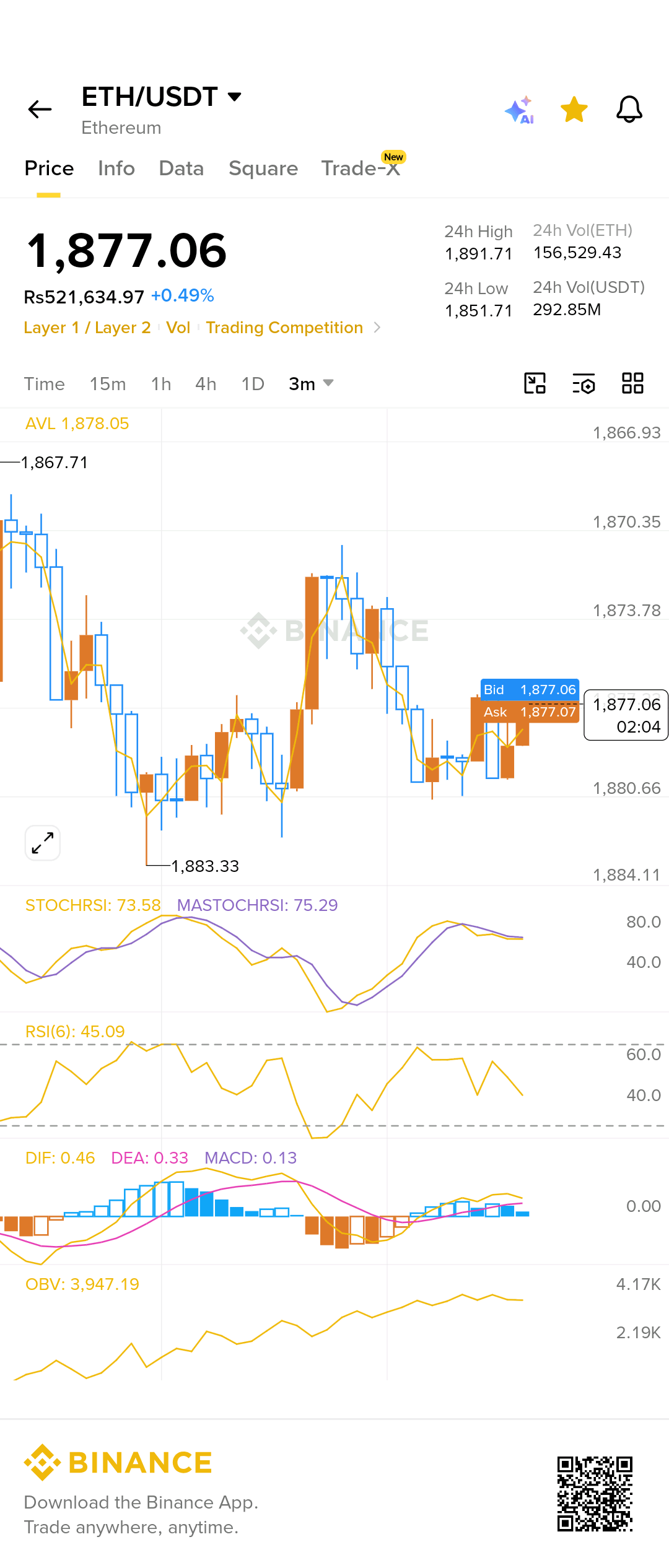
$ETH /USDT – LONG
Momentum sedang mengencang, dan ETH sedang mendekati titik keputusan. Rentang ini terlihat seperti akumulasi, bukan kelelahan. Breakout di atas resistance terdekat bisa memicu ekspansi likuiditas berikutnya.
Rencana Perdagangan:
• Entry: 1,874–1,878
• Stop Loss (SL): 1,865
• Take Profit 1 (TP1): 1,890
• Take Profit 2 (TP2): 1,905
• Take Profit 3 (TP3): 1,925
Mengapa setup ini?
Struktur 1H mulai menjadi lebih konstruktif, sementara 4H dan 1D terus menghormati support kunci, sehingga bias timeframe lebih tinggi tetap bullish. RSI pulih dari area netral, momentum membaik, dan volume perlahan kembali setelah fase konsolidasi. ETH diperdagangkan di dalam rentang kompresi di bawah resistance, pola yang sering mengarah pada lonjakan pergerakan yang tajam. Break yang bertahan di atas 1,890 dapat mempercepat tekanan beli menuju zona likuiditas yang lebih tinggi. Dari entry yang diusulkan, TP1 menawarkan potensi kenaikan sekitar 0,8–1,0% dengan rasio risk-to-reward yang menguntungkan.
Perdebatan:
Apakah ini tenang sebelum breakout besar, atau pasar sedang menyiapkan jebakan likuiditas sebelum langkah berikutnya?
$ETH
{spot}(ETHUSDT)
#BrentCrudeUp4.6% #BrentCrudeUp4.6% #BrentCrudeUp4.6% #BrentCrudeUp4.6% #BrentCrudeUp4.6%
$ETH /USDT – LONG
Momentum sedang mengencang, dan ETH sedang mendekati titik keputusan. Rentang ini terlihat seperti akumulasi, bukan kelelahan. Breakout di atas resistance terdekat bisa memicu ekspansi likuiditas berikutnya.
Rencana Perdagangan:
• Entry: 1,874–1,878
• Stop Loss (SL): 1,865
• Take Profit 1 (TP1): 1,890
• Take Profit 2 (TP2): 1,905
• Take Profit 3 (TP3): 1,925
Mengapa setup ini?
Struktur 1H mulai menjadi lebih konstruktif, sementara 4H dan 1D terus menghormati support kunci, sehingga bias timeframe lebih tinggi tetap bullish. RSI pulih dari area netral, momentum membaik, dan volume perlahan kembali setelah fase konsolidasi. ETH diperdagangkan di dalam rentang kompresi di bawah resistance, pola yang sering mengarah pada lonjakan pergerakan yang tajam. Break yang bertahan di atas 1,890 dapat mempercepat tekanan beli menuju zona likuiditas yang lebih tinggi. Dari entry yang diusulkan, TP1 menawarkan potensi kenaikan sekitar 0,8–1,0% dengan rasio risk-to-reward yang menguntungkan.
Perdebatan:
Apakah ini tenang sebelum breakout besar, atau pasar sedang menyiapkan jebakan likuiditas sebelum langkah berikutnya?
$ETH
#BrentCrudeUp4.6% #BrentCrudeUp4.6% #BrentCrudeUp4.6% #BrentCrudeUp4.6% #BrentCrudeUp4.6%
Momentum sedang mengencang, dan ETH sedang mendekati titik keputusan. Rentang ini terlihat seperti akumulasi, bukan kelelahan. Breakout di atas resistance terdekat bisa memicu ekspansi likuiditas berikutnya.
Rencana Perdagangan:
• Entry: 1,874–1,878
• Stop Loss (SL): 1,865
• Take Profit 1 (TP1): 1,890
• Take Profit 2 (TP2): 1,905
• Take Profit 3 (TP3): 1,925
Mengapa setup ini?
Struktur 1H mulai menjadi lebih konstruktif, sementara 4H dan 1D terus menghormati support kunci, sehingga bias timeframe lebih tinggi tetap bullish. RSI pulih dari area netral, momentum membaik, dan volume perlahan kembali setelah fase konsolidasi. ETH diperdagangkan di dalam rentang kompresi di bawah resistance, pola yang sering mengarah pada lonjakan pergerakan yang tajam. Break yang bertahan di atas 1,890 dapat mempercepat tekanan beli menuju zona likuiditas yang lebih tinggi. Dari entry yang diusulkan, TP1 menawarkan potensi kenaikan sekitar 0,8–1,0% dengan rasio risk-to-reward yang menguntungkan.
Perdebatan:
Apakah ini tenang sebelum breakout besar, atau pasar sedang menyiapkan jebakan likuiditas sebelum langkah berikutnya?
$ETH
#BrentCrudeUp4.6% #BrentCrudeUp4.6% #BrentCrudeUp4.6% #BrentCrudeUp4.6% #BrentCrudeUp4.6%
106
·
--
Artikel
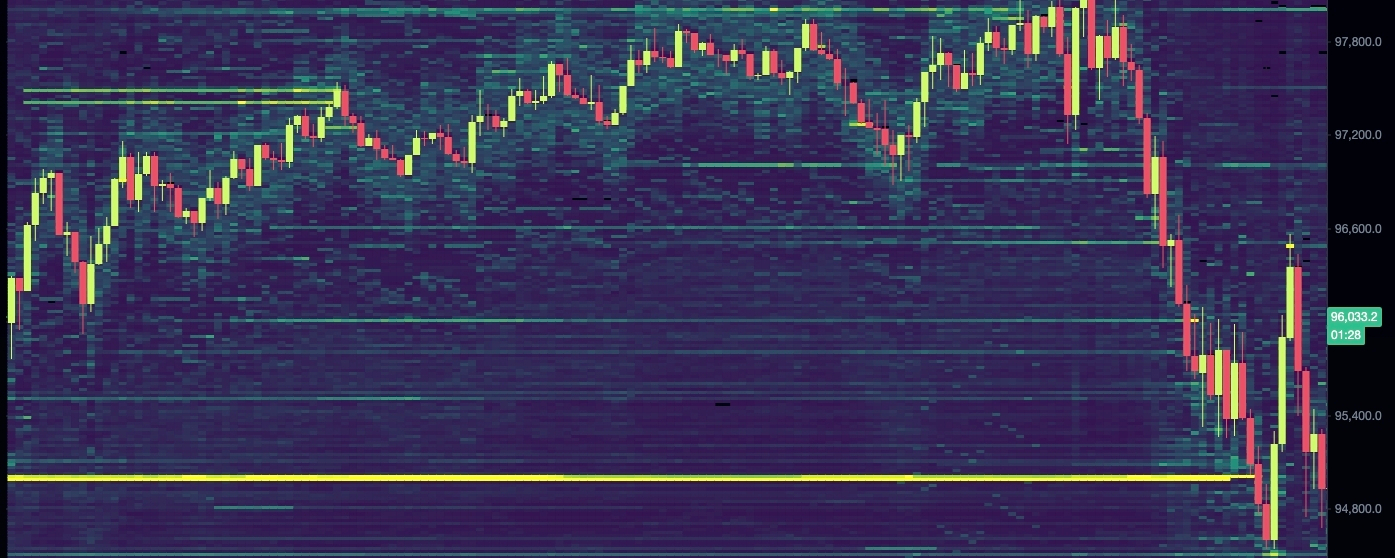
DINDING LIKUIDITAS BTC BUKAN BULLISH... INI JEBakan YANG AKAN DIJATUHKANSaya sudah menatap heatmap likuiditas ini jauh lebih lama daripada yang seharusnya... dan jujur saja, ini salah satu grafik yang terlihat sederhana sampai Anda terus memperbesar. Lalu semuanya mulai terasa aneh.
Hal pertama yang terus menarik perhatian saya bukan bahkan lilin-lilinnya. Tapi pita likuiditas tebal yang duduk di atas dan di bawah harga. Pasar punya kebiasaan yang menyebalkan untuk pura-pura bergerak ke satu arah, hanya untuk mengejar kumpulan likuiditas terbesar di tempat lain. Makanya saya tidak pernah lagi mempercayai pergerakan pertama. Saya sudah cukup sering jadi korban.
DINDING LIKUIDITAS BTC BUKAN BULLISH... INI JEBakan YANG AKAN DIJATUHKAN
Saya sudah menatap heatmap likuiditas ini jauh lebih lama daripada yang seharusnya... dan jujur saja, ini salah satu grafik yang terlihat sederhana sampai Anda terus memperbesar. Lalu semuanya mulai terasa aneh.
Hal pertama yang terus menarik perhatian saya bukan bahkan lilin-lilinnya. Tapi pita likuiditas tebal yang duduk di atas dan di bawah harga. Pasar punya kebiasaan yang menyebalkan untuk pura-pura bergerak ke satu arah, hanya untuk mengejar kumpulan likuiditas terbesar di tempat lain. Makanya saya tidak pernah lagi mempercayai pergerakan pertama. Saya sudah cukup sering jadi korban.
Hal pertama yang terus menarik perhatian saya bukan bahkan lilin-lilinnya. Tapi pita likuiditas tebal yang duduk di atas dan di bawah harga. Pasar punya kebiasaan yang menyebalkan untuk pura-pura bergerak ke satu arah, hanya untuk mengejar kumpulan likuiditas terbesar di tempat lain. Makanya saya tidak pernah lagi mempercayai pergerakan pertama. Saya sudah cukup sering jadi korban.
97
·
--
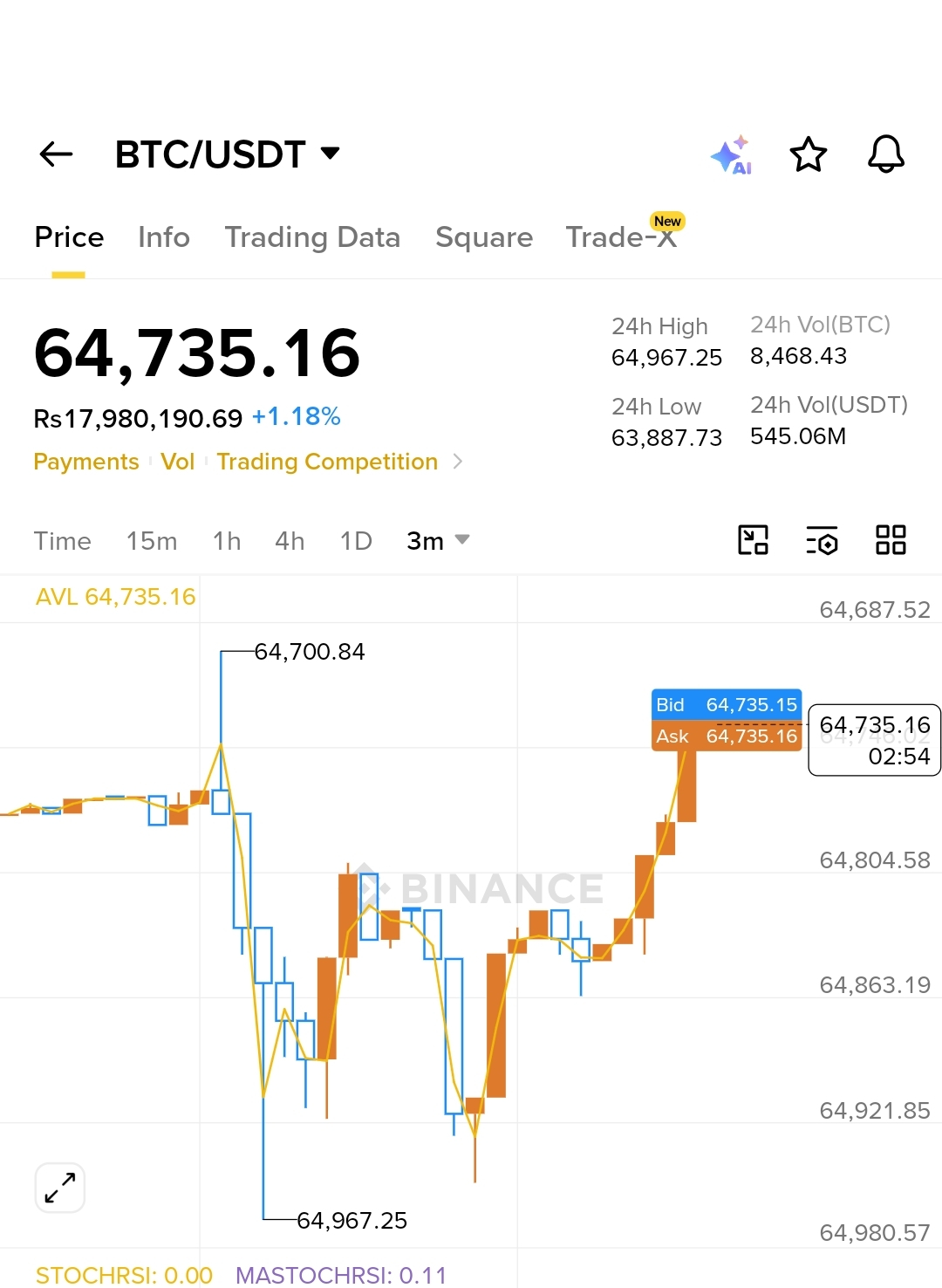
$BTC USDT – LONG
Rencana Perdagangan:
• Entry: 64.700–64.760
• Stop Loss (SL): 64.420
• Take Profit 1 (TP1): 65.150
• Take Profit 2 (TP2): 65.600
• Take Profit 3 (TP3): 66.200
Mengapa setup ini?
Tren 1H sedang mendapatkan kembali momentum bullish, sementara struktur 4H terus mempertahankan higher lows, menjaga bias besar tetap konstruktif. RSI sedang pulih dari area netral, momentum meningkat, dan pembeli kembali masuk dengan volume yang membaik. Harga menekan resistance jangka pendek setelah merebut kembali support, dan kompresi seperti ini sering kali mendahului terjadinya breakout impulsif. Pergerakan menuju TP1 menawarkan potensi upside sekitar 0,7% dari entry, dengan ruang untuk kelanjutan jika volume mengembang.
Perdebatan:
Apakah ini tenang sebelum breakout besar, atau pasar sedang menyiapkan bull trap lainnya?
#USMissesGENIUSActStablecoinRuleDeadline
#USTargetsBrazilPaymentSystemViaSection301
#USTargetsBrazilPaymentSystemViaSection301
#SpaceXShortInterestHits29%OfFloat
#SpaceXShortInterestHits29%OfFloat
$BTC USDT – LONG
Rencana Perdagangan:
• Entry: 64.700–64.760
• Stop Loss (SL): 64.420
• Take Profit 1 (TP1): 65.150
• Take Profit 2 (TP2): 65.600
• Take Profit 3 (TP3): 66.200
Mengapa setup ini?
Tren 1H sedang mendapatkan kembali momentum bullish, sementara struktur 4H terus mempertahankan higher lows, menjaga bias besar tetap konstruktif. RSI sedang pulih dari area netral, momentum meningkat, dan pembeli kembali masuk dengan volume yang membaik. Harga menekan resistance jangka pendek setelah merebut kembali support, dan kompresi seperti ini sering kali mendahului terjadinya breakout impulsif. Pergerakan menuju TP1 menawarkan potensi upside sekitar 0,7% dari entry, dengan ruang untuk kelanjutan jika volume mengembang.
Perdebatan:
Apakah ini tenang sebelum breakout besar, atau pasar sedang menyiapkan bull trap lainnya?
#USMissesGENIUSActStablecoinRuleDeadline
#USTargetsBrazilPaymentSystemViaSection301
#USTargetsBrazilPaymentSystemViaSection301
#SpaceXShortInterestHits29%OfFloat
#SpaceXShortInterestHits29%OfFloat
Rencana Perdagangan:
• Entry: 64.700–64.760
• Stop Loss (SL): 64.420
• Take Profit 1 (TP1): 65.150
• Take Profit 2 (TP2): 65.600
• Take Profit 3 (TP3): 66.200
Mengapa setup ini?
Tren 1H sedang mendapatkan kembali momentum bullish, sementara struktur 4H terus mempertahankan higher lows, menjaga bias besar tetap konstruktif. RSI sedang pulih dari area netral, momentum meningkat, dan pembeli kembali masuk dengan volume yang membaik. Harga menekan resistance jangka pendek setelah merebut kembali support, dan kompresi seperti ini sering kali mendahului terjadinya breakout impulsif. Pergerakan menuju TP1 menawarkan potensi upside sekitar 0,7% dari entry, dengan ruang untuk kelanjutan jika volume mengembang.
Perdebatan:
Apakah ini tenang sebelum breakout besar, atau pasar sedang menyiapkan bull trap lainnya?
#USMissesGENIUSActStablecoinRuleDeadline
#USTargetsBrazilPaymentSystemViaSection301
#USTargetsBrazilPaymentSystemViaSection301
#SpaceXShortInterestHits29%OfFloat
#SpaceXShortInterestHits29%OfFloat
121
·
--
Bullish
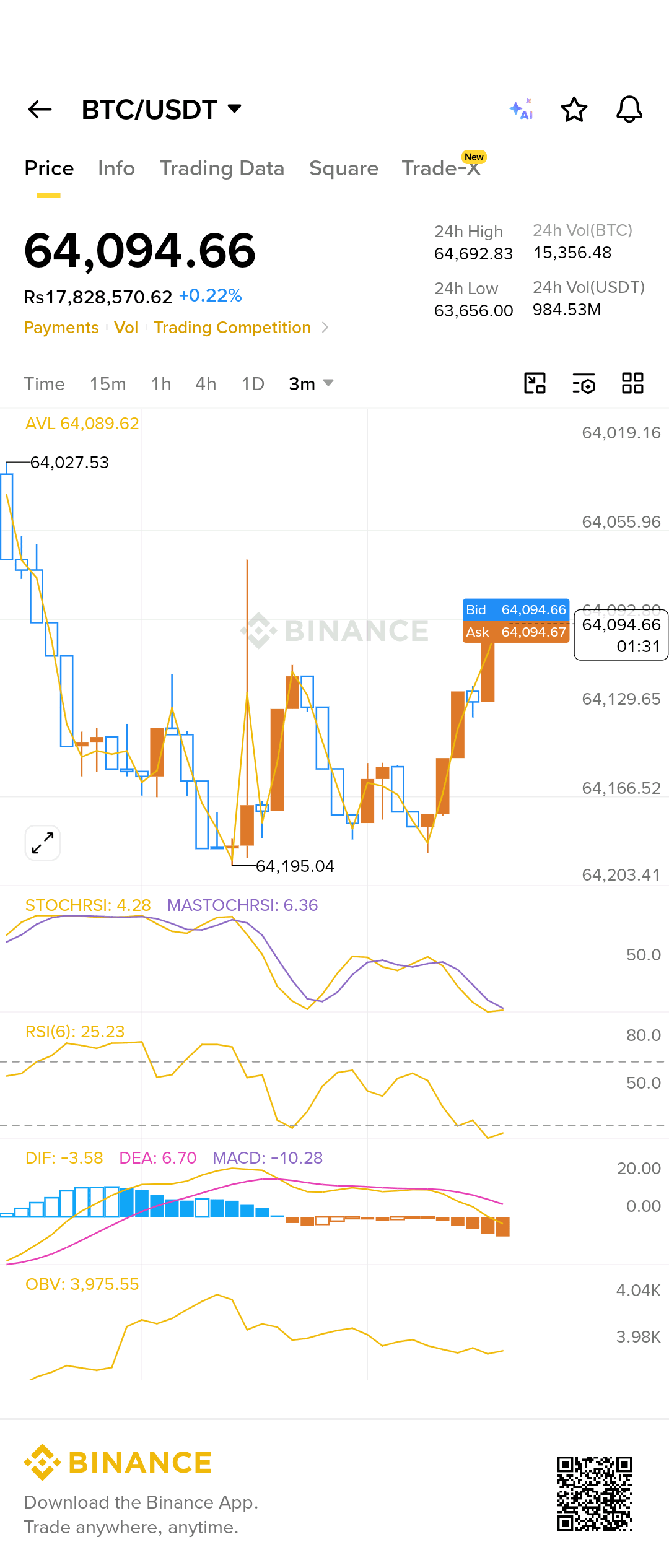
$BTC /USDT – LONG
Rencana Perdagangan:
• Entry: $63,950–$64,100
• Stop Loss (SL): $63,580
• Take Profit 1 (TP1): $64,700
• Take Profit 2 (TP2): $65,400
• Take Profit 3 (TP3): $66,200
Mengapa setup ini?
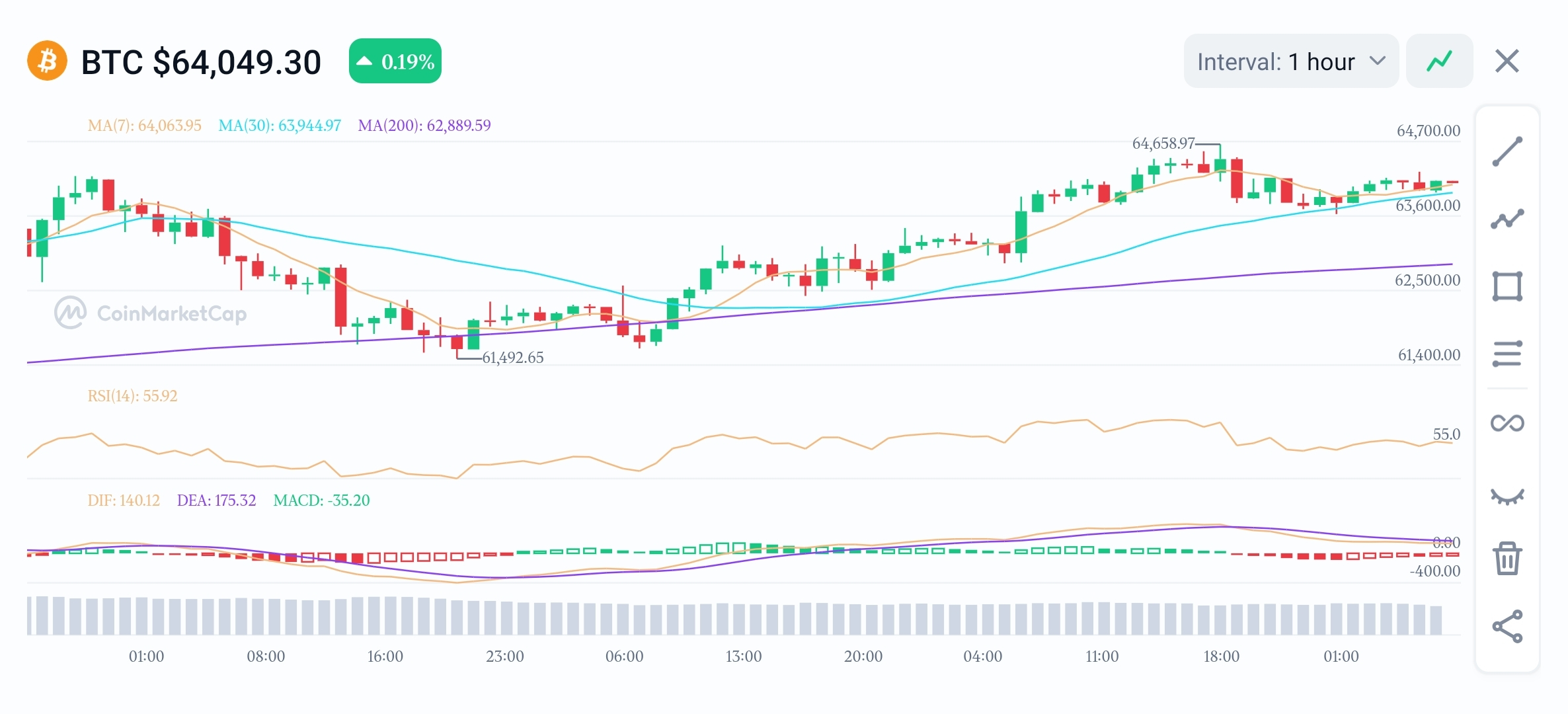
Struktur 1H sedang mencetak higher lows sementara harga bertahan di atas 30MA dan tetap nyaman di atas 200MA, sehingga menjaga bias time-frame lebih tinggi tetap bullish. RSI mendekati 56 menandakan momentum yang sehat tanpa masuk ke kondisi overbought. Rentang $63.6K-$64.7K telah menyempitkan volatilitas, dan volume perlahan meningkat di bawah resistance. Tembusan yang bersih di atas $64.7K dapat memicu pergerakan ekspansi yang cepat. Dari entry hingga TP1, setup ini menawarkan potensi upside sekitar 1%, dengan potensi ekstensi yang jauh lebih besar jika momentum berakselerasi.
Diskusi:
Apakah konsolidasi ini menjadi landasan peluncuran untuk breakout ke level tertinggi baru, atau apakah Bitcoin sedang menyiapkan satu jebakan likuiditas terakhir sebelum berbalik lebih rendah?
{spot}(BTCUSDT)
#CBDCBanBillToBecomeLawWithoutTrumpSignature
#CBDCBanBillToBecomeLawWithoutTrumpSignature
#CBDCBanBillToBecomeLawWithoutTrumpSignature
#CBDCBanBillToBecomeLawWithoutTrumpSignature
#CBDCBanBillToBecomeLawWithoutTrumpSignature
$BTC /USDT – LONG
Rencana Perdagangan:
• Entry: $63,950–$64,100
• Stop Loss (SL): $63,580
• Take Profit 1 (TP1): $64,700
• Take Profit 2 (TP2): $65,400
• Take Profit 3 (TP3): $66,200
Mengapa setup ini?
Struktur 1H sedang mencetak higher lows sementara harga bertahan di atas 30MA dan tetap nyaman di atas 200MA, sehingga menjaga bias time-frame lebih tinggi tetap bullish. RSI mendekati 56 menandakan momentum yang sehat tanpa masuk ke kondisi overbought. Rentang $63.6K-$64.7K telah menyempitkan volatilitas, dan volume perlahan meningkat di bawah resistance. Tembusan yang bersih di atas $64.7K dapat memicu pergerakan ekspansi yang cepat. Dari entry hingga TP1, setup ini menawarkan potensi upside sekitar 1%, dengan potensi ekstensi yang jauh lebih besar jika momentum berakselerasi.
Diskusi:
Apakah konsolidasi ini menjadi landasan peluncuran untuk breakout ke level tertinggi baru, atau apakah Bitcoin sedang menyiapkan satu jebakan likuiditas terakhir sebelum berbalik lebih rendah?
#CBDCBanBillToBecomeLawWithoutTrumpSignature
#CBDCBanBillToBecomeLawWithoutTrumpSignature
#CBDCBanBillToBecomeLawWithoutTrumpSignature
#CBDCBanBillToBecomeLawWithoutTrumpSignature
#CBDCBanBillToBecomeLawWithoutTrumpSignature
Rencana Perdagangan:
• Entry: $63,950–$64,100
• Stop Loss (SL): $63,580
• Take Profit 1 (TP1): $64,700
• Take Profit 2 (TP2): $65,400
• Take Profit 3 (TP3): $66,200
Mengapa setup ini?
Struktur 1H sedang mencetak higher lows sementara harga bertahan di atas 30MA dan tetap nyaman di atas 200MA, sehingga menjaga bias time-frame lebih tinggi tetap bullish. RSI mendekati 56 menandakan momentum yang sehat tanpa masuk ke kondisi overbought. Rentang $63.6K-$64.7K telah menyempitkan volatilitas, dan volume perlahan meningkat di bawah resistance. Tembusan yang bersih di atas $64.7K dapat memicu pergerakan ekspansi yang cepat. Dari entry hingga TP1, setup ini menawarkan potensi upside sekitar 1%, dengan potensi ekstensi yang jauh lebih besar jika momentum berakselerasi.
Diskusi:
Apakah konsolidasi ini menjadi landasan peluncuran untuk breakout ke level tertinggi baru, atau apakah Bitcoin sedang menyiapkan satu jebakan likuiditas terakhir sebelum berbalik lebih rendah?
#CBDCBanBillToBecomeLawWithoutTrumpSignature
#CBDCBanBillToBecomeLawWithoutTrumpSignature
#CBDCBanBillToBecomeLawWithoutTrumpSignature
#CBDCBanBillToBecomeLawWithoutTrumpSignature
#CBDCBanBillToBecomeLawWithoutTrumpSignature
74
·
--
Bullish
Tidak ada yang memperhatikan $OWL , tetapi grafiknya diam-diam membangun tekanan.
$OWL – JANGKA PANJANG
Rencana Perdagangan:
• Entri: 0.00180 – 0.00188
• SL: 0.00155
• TP1: 0.00230
• TP2: 0.00280
• TP3: 0.00350
Mengapa setup ini?
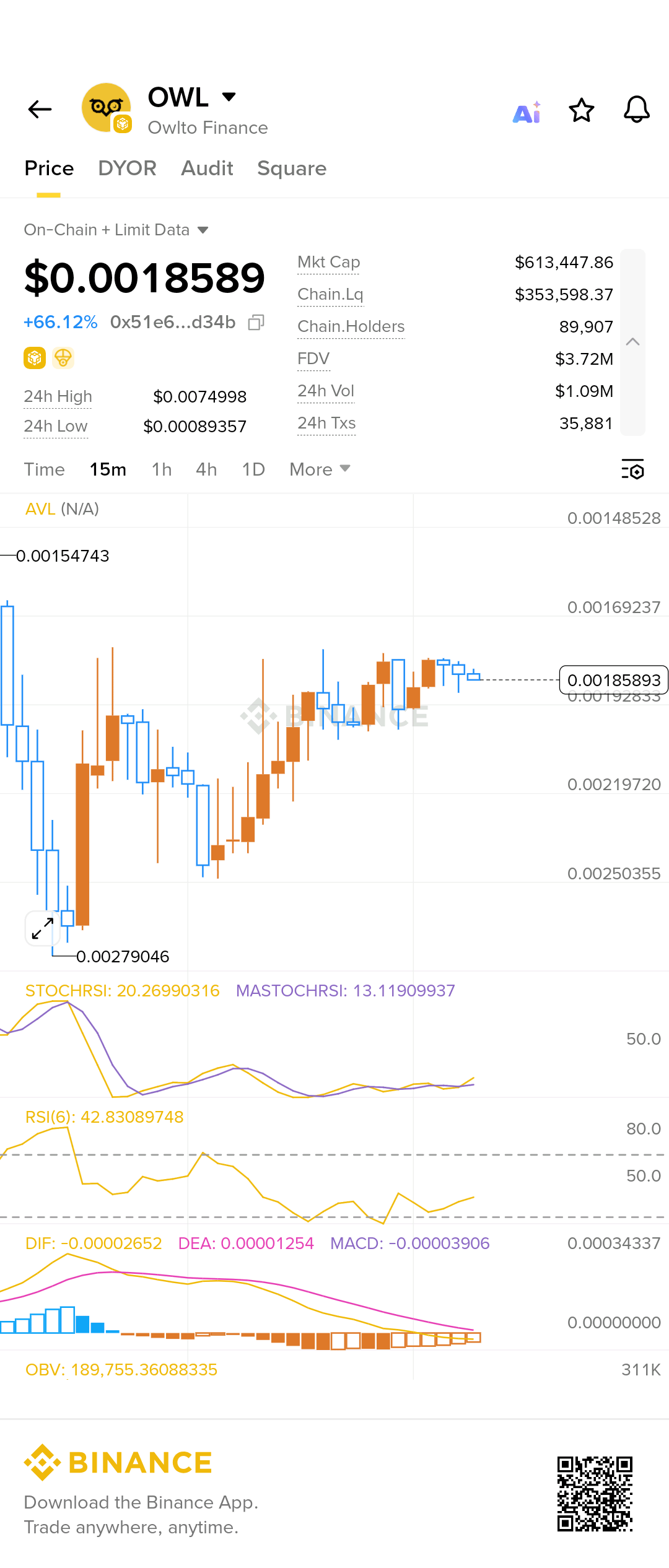
• Struktur 1H sedang pulih, sementara grafik 4H berusaha melakukan pembalikan tren setelah pantulan kuat dari titik terendah lokal.
• RSI naik dari kondisi oversold, menandakan momentum perlahan kembali.
• Volume tetap tinggi dengan lebih dari $1M aktivitas trading dalam 24 jam, menunjukkan adanya partisipasi nyata.
• Harga sedang konsolidasi di dekat resistance. Penembusan yang bersih di atas kisaran ini bisa memicu ekspansi cepat menuju TP1, menawarkan potensi kenaikan sekitar 25% dari area entri.
Perdebatan:
Apakah $OWL sedang membentuk basis untuk langkah berikutnya yang lebih tinggi, atau reli pemulihan ini akan menghadapi tekanan jual yang berat?
{alpha}(560x51e667e91b4b8cb8e6e0528757f248406bd34b57)
#USDARaises2026SoybeanOutlookTo4.475BBushels
#SKHynixJumpsNearly13%OnUSDebut
#AppleSuesOpenAIOverTradeSecrets
#CBDCBanBillToBecomeLawWithoutTrumpSignature
#CBDCBanBillToBecomeLawWithoutTrumpSignature
Tidak ada yang memperhatikan $OWL , tetapi grafiknya diam-diam membangun tekanan.
$OWL – JANGKA PANJANG
Rencana Perdagangan:
• Entri: 0.00180 – 0.00188
• SL: 0.00155
• TP1: 0.00230
• TP2: 0.00280
• TP3: 0.00350
Mengapa setup ini?
• Struktur 1H sedang pulih, sementara grafik 4H berusaha melakukan pembalikan tren setelah pantulan kuat dari titik terendah lokal.
• RSI naik dari kondisi oversold, menandakan momentum perlahan kembali.
• Volume tetap tinggi dengan lebih dari $1M aktivitas trading dalam 24 jam, menunjukkan adanya partisipasi nyata.
• Harga sedang konsolidasi di dekat resistance. Penembusan yang bersih di atas kisaran ini bisa memicu ekspansi cepat menuju TP1, menawarkan potensi kenaikan sekitar 25% dari area entri.
Perdebatan:
Apakah $OWL sedang membentuk basis untuk langkah berikutnya yang lebih tinggi, atau reli pemulihan ini akan menghadapi tekanan jual yang berat?
#USDARaises2026SoybeanOutlookTo4.475BBushels
#SKHynixJumpsNearly13%OnUSDebut
#AppleSuesOpenAIOverTradeSecrets
#CBDCBanBillToBecomeLawWithoutTrumpSignature
#CBDCBanBillToBecomeLawWithoutTrumpSignature
$OWL – JANGKA PANJANG
Rencana Perdagangan:
• Entri: 0.00180 – 0.00188
• SL: 0.00155
• TP1: 0.00230
• TP2: 0.00280
• TP3: 0.00350
Mengapa setup ini?
• Struktur 1H sedang pulih, sementara grafik 4H berusaha melakukan pembalikan tren setelah pantulan kuat dari titik terendah lokal.
• RSI naik dari kondisi oversold, menandakan momentum perlahan kembali.
• Volume tetap tinggi dengan lebih dari $1M aktivitas trading dalam 24 jam, menunjukkan adanya partisipasi nyata.
• Harga sedang konsolidasi di dekat resistance. Penembusan yang bersih di atas kisaran ini bisa memicu ekspansi cepat menuju TP1, menawarkan potensi kenaikan sekitar 25% dari area entri.
Perdebatan:
Apakah $OWL sedang membentuk basis untuk langkah berikutnya yang lebih tinggi, atau reli pemulihan ini akan menghadapi tekanan jual yang berat?
#USDARaises2026SoybeanOutlookTo4.475BBushels
#SKHynixJumpsNearly13%OnUSDebut
#AppleSuesOpenAIOverTradeSecrets
#CBDCBanBillToBecomeLawWithoutTrumpSignature
#CBDCBanBillToBecomeLawWithoutTrumpSignature
368
·
--
Bullish
Tidak ada yang memperhatikan $LAB /USDT, tapi harganya berada tepat di tempat tren biasanya sama ada akan patah… atau meledak.
$LAB – SHORT
Rencana Perdagangan:
• Entri: 0.8517 – 0.8684
• SL: 1.2422
• TP1: 0.5734
• TP2: 0.3823
• TP3: 0.0957
Kenapa setup ini?
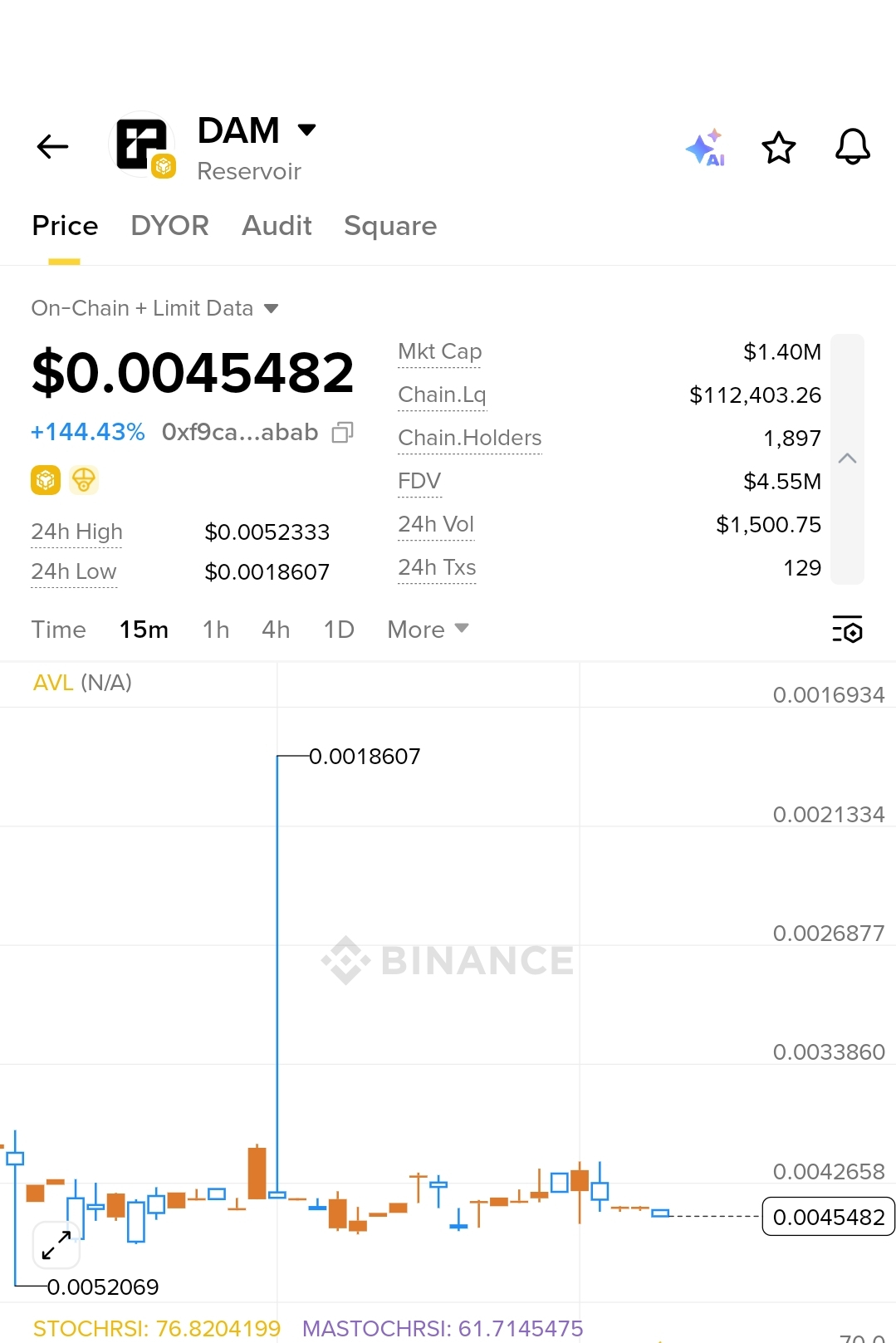
• Struktur 4H masih sangat bearish, dengan higher high yang terus menahan setiap reli.
• RSI pada timeframe 15m berada di bawah 40, menunjukkan kelelahan momentum dan melemahnya keyakinan pembeli.
• Volume terus melemah selama konsolidasi terbaru, tanda klasik bahwa range saat ini mungkin tidak akan bertahan lama.
• Jika tembus di bawah support bisa memicu pergerakan impulsif lainnya ke bawah, dengan TP1 menawarkan kira-kira kenaikan 33% dari zona entri.
Pasar sedang tenang, bahkan terlalu tenang. Ini sering kali momen yang menghasilkan pergerakan terbesar.
Perdebatan:
Apakah $LAB bersiap untuk leg turun berikutnya, atau range yang terkompresi ini sedang menyiapkan satu final short squeeze sebelum penurunan besar yang sebenarnya dimulai?
{alpha}(560x7ec43cf65f1663f820427c62a5780b8f2e25593a)
#AppleSuesOpenAIOverTradeSecrets
#AppleSuesOpenAIOverTradeSecrets
#CBDCBanBillToBecomeLawWithoutTrumpSignature
#RussiaBansDieselExports
#RussiaBansDieselExports
Tidak ada yang memperhatikan $LAB /USDT, tapi harganya berada tepat di tempat tren biasanya sama ada akan patah… atau meledak.
$LAB – SHORT
Rencana Perdagangan:
• Entri: 0.8517 – 0.8684
• SL: 1.2422
• TP1: 0.5734
• TP2: 0.3823
• TP3: 0.0957
Kenapa setup ini?
• Struktur 4H masih sangat bearish, dengan higher high yang terus menahan setiap reli.
• RSI pada timeframe 15m berada di bawah 40, menunjukkan kelelahan momentum dan melemahnya keyakinan pembeli.
• Volume terus melemah selama konsolidasi terbaru, tanda klasik bahwa range saat ini mungkin tidak akan bertahan lama.
• Jika tembus di bawah support bisa memicu pergerakan impulsif lainnya ke bawah, dengan TP1 menawarkan kira-kira kenaikan 33% dari zona entri.
Pasar sedang tenang, bahkan terlalu tenang. Ini sering kali momen yang menghasilkan pergerakan terbesar.
Perdebatan:
Apakah $LAB bersiap untuk leg turun berikutnya, atau range yang terkompresi ini sedang menyiapkan satu final short squeeze sebelum penurunan besar yang sebenarnya dimulai?
#AppleSuesOpenAIOverTradeSecrets
#AppleSuesOpenAIOverTradeSecrets
#CBDCBanBillToBecomeLawWithoutTrumpSignature
#RussiaBansDieselExports
#RussiaBansDieselExports
$LAB – SHORT
Rencana Perdagangan:
• Entri: 0.8517 – 0.8684
• SL: 1.2422
• TP1: 0.5734
• TP2: 0.3823
• TP3: 0.0957
Kenapa setup ini?
• Struktur 4H masih sangat bearish, dengan higher high yang terus menahan setiap reli.
• RSI pada timeframe 15m berada di bawah 40, menunjukkan kelelahan momentum dan melemahnya keyakinan pembeli.
• Volume terus melemah selama konsolidasi terbaru, tanda klasik bahwa range saat ini mungkin tidak akan bertahan lama.
• Jika tembus di bawah support bisa memicu pergerakan impulsif lainnya ke bawah, dengan TP1 menawarkan kira-kira kenaikan 33% dari zona entri.
Pasar sedang tenang, bahkan terlalu tenang. Ini sering kali momen yang menghasilkan pergerakan terbesar.
Perdebatan:
Apakah $LAB bersiap untuk leg turun berikutnya, atau range yang terkompresi ini sedang menyiapkan satu final short squeeze sebelum penurunan besar yang sebenarnya dimulai?
#AppleSuesOpenAIOverTradeSecrets
#AppleSuesOpenAIOverTradeSecrets
#CBDCBanBillToBecomeLawWithoutTrumpSignature
#RussiaBansDieselExports
#RussiaBansDieselExports
376
·
--
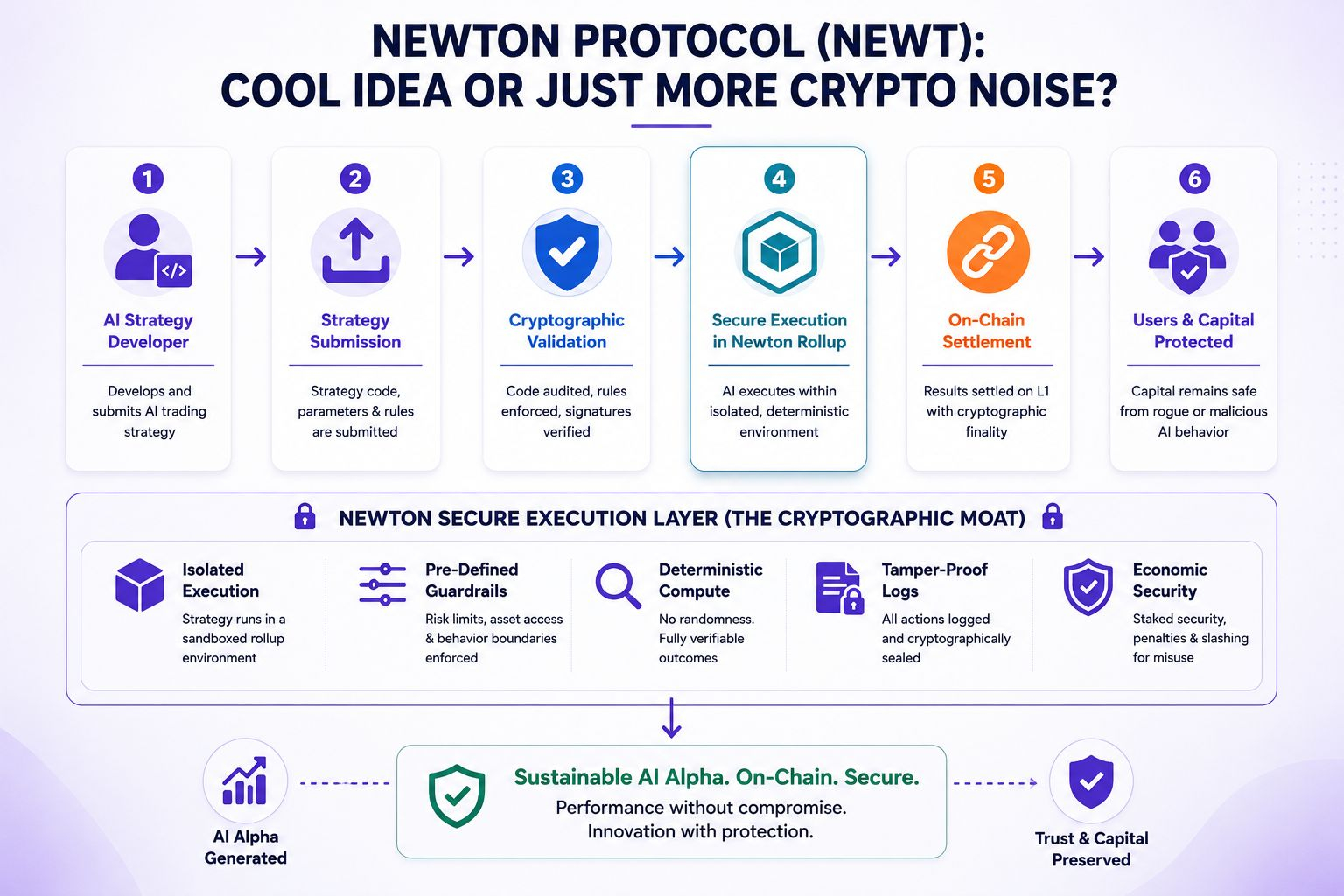
NEWTON PROTOCOL (NEWT): INFRASTRUKTUR NYATA ATAU SEKADAR GIMICK?
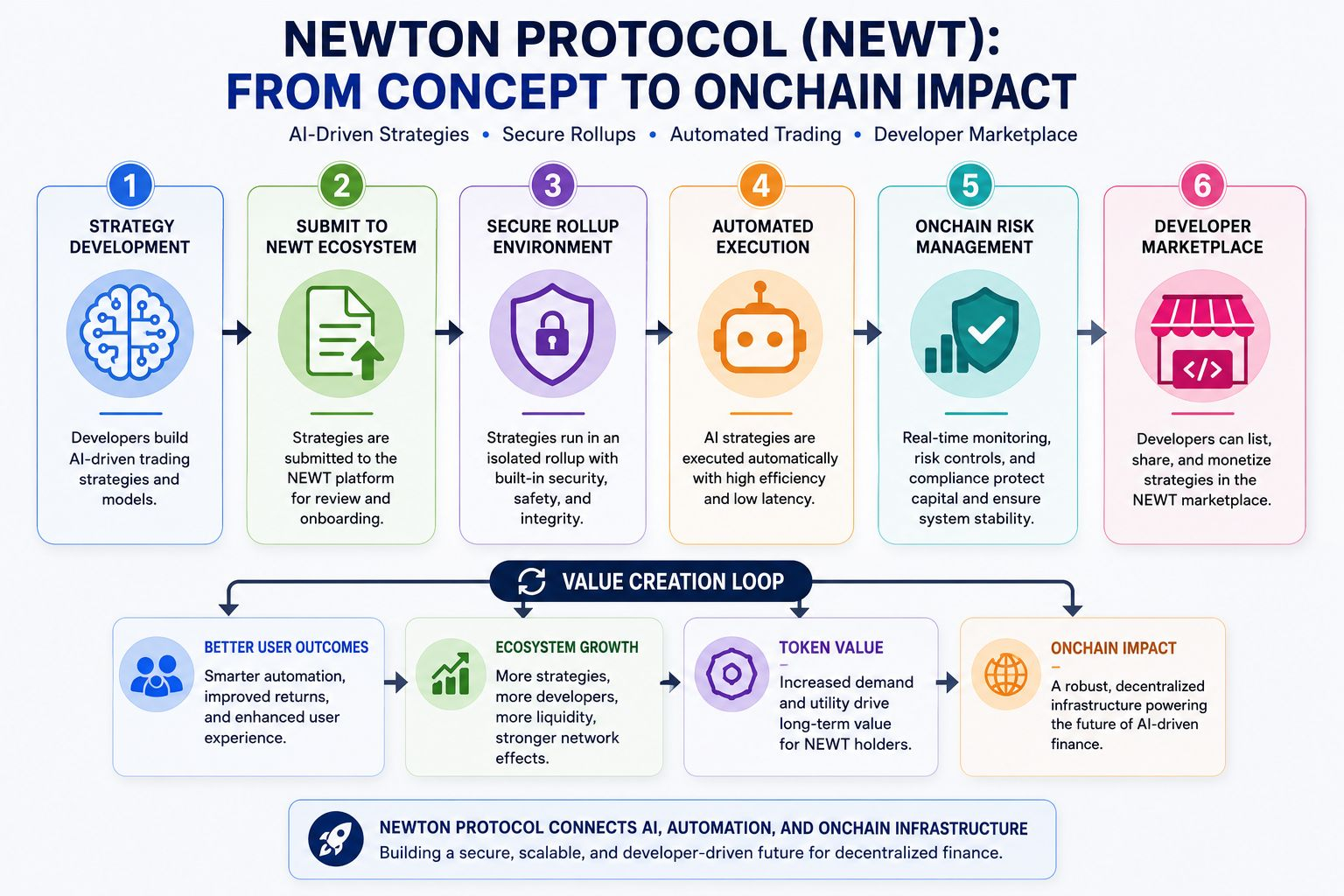
Newton Protocol (NEWT) berada di titik tengah yang menarik. Proporsinya—secure rollups, strategi berbasis AI, trading otomatis, dan pasar untuk pengembang AI—terdengar ambisius dan sangat relevan dengan arah kripto saat ini.
Bagian terkuat dari tesis ini adalah keamanan. Jika NEWT bisa menyediakan lingkungan yang aman untuk otomasi berbasis AI, ia bisa menyelesaikan masalah nyata di kripto. Namun "aman" adalah kata yang terlalu mudah dipakai di industri, dan ide yang kuat tidak selalu berujung pada eksekusi yang kuat.
Sisi trading berbasis AI terasa menarik karena otomasi bisa berjalan lebih cepat dan kurang emosional dibanding pengambilan keputusan manusia. Meski demikian, sistem otomatis dapat gagal dengan cara yang tidak terduga, terutama di pasar yang volatil.
Pasar bagi pengembang menambah lapisan potensi lain dengan tujuan membangun sebuah ekosistem, bukan hanya satu produk. Namun, marketplace terkenal sulit untuk diskalakan dan membutuhkan efek jaringan yang kuat agar bisa sukses.
Pada akhirnya, NEWT terasa seperti proyek yang layak untuk dipantau, bukan untuk dikejar secara membabi buta. Visi yang diusungnya koheren, tetapi pertanyaan sesungguhnya adalah apakah ia bisa menghadirkan infrastruktur yang bermakna—atau apakah itu hanya sekumpulan narasi tren yang dikemas menjadi satu cerita.
@NewtonProtocol #NEWT $NEWT
#SKHynixADRBiggestForeignCorporateFundraising
#SKHynixADRBiggestForeignCorporateFundraising
#SKHynixADRBiggestForeignCorporateFundraising
#SKHynixADRBiggestForeignCorporateFundraising
NEWTON PROTOCOL (NEWT): INFRASTRUKTUR NYATA ATAU SEKADAR GIMICK?
Newton Protocol (NEWT) berada di titik tengah yang menarik. Proporsinya—secure rollups, strategi berbasis AI, trading otomatis, dan pasar untuk pengembang AI—terdengar ambisius dan sangat relevan dengan arah kripto saat ini.
Bagian terkuat dari tesis ini adalah keamanan. Jika NEWT bisa menyediakan lingkungan yang aman untuk otomasi berbasis AI, ia bisa menyelesaikan masalah nyata di kripto. Namun "aman" adalah kata yang terlalu mudah dipakai di industri, dan ide yang kuat tidak selalu berujung pada eksekusi yang kuat.
Sisi trading berbasis AI terasa menarik karena otomasi bisa berjalan lebih cepat dan kurang emosional dibanding pengambilan keputusan manusia. Meski demikian, sistem otomatis dapat gagal dengan cara yang tidak terduga, terutama di pasar yang volatil.
Pasar bagi pengembang menambah lapisan potensi lain dengan tujuan membangun sebuah ekosistem, bukan hanya satu produk. Namun, marketplace terkenal sulit untuk diskalakan dan membutuhkan efek jaringan yang kuat agar bisa sukses.
Pada akhirnya, NEWT terasa seperti proyek yang layak untuk dipantau, bukan untuk dikejar secara membabi buta. Visi yang diusungnya koheren, tetapi pertanyaan sesungguhnya adalah apakah ia bisa menghadirkan infrastruktur yang bermakna—atau apakah itu hanya sekumpulan narasi tren yang dikemas menjadi satu cerita.
@NewtonProtocol #NEWT $NEWT
#SKHynixADRBiggestForeignCorporateFundraising
#SKHynixADRBiggestForeignCorporateFundraising
#SKHynixADRBiggestForeignCorporateFundraising
#SKHynixADRBiggestForeignCorporateFundraising
Newton Protocol (NEWT) berada di titik tengah yang menarik. Proporsinya—secure rollups, strategi berbasis AI, trading otomatis, dan pasar untuk pengembang AI—terdengar ambisius dan sangat relevan dengan arah kripto saat ini.
Bagian terkuat dari tesis ini adalah keamanan. Jika NEWT bisa menyediakan lingkungan yang aman untuk otomasi berbasis AI, ia bisa menyelesaikan masalah nyata di kripto. Namun "aman" adalah kata yang terlalu mudah dipakai di industri, dan ide yang kuat tidak selalu berujung pada eksekusi yang kuat.
Sisi trading berbasis AI terasa menarik karena otomasi bisa berjalan lebih cepat dan kurang emosional dibanding pengambilan keputusan manusia. Meski demikian, sistem otomatis dapat gagal dengan cara yang tidak terduga, terutama di pasar yang volatil.
Pasar bagi pengembang menambah lapisan potensi lain dengan tujuan membangun sebuah ekosistem, bukan hanya satu produk. Namun, marketplace terkenal sulit untuk diskalakan dan membutuhkan efek jaringan yang kuat agar bisa sukses.
Pada akhirnya, NEWT terasa seperti proyek yang layak untuk dipantau, bukan untuk dikejar secara membabi buta. Visi yang diusungnya koheren, tetapi pertanyaan sesungguhnya adalah apakah ia bisa menghadirkan infrastruktur yang bermakna—atau apakah itu hanya sekumpulan narasi tren yang dikemas menjadi satu cerita.
@NewtonProtocol #NEWT $NEWT
#SKHynixADRBiggestForeignCorporateFundraising
#SKHynixADRBiggestForeignCorporateFundraising
#SKHynixADRBiggestForeignCorporateFundraising
#SKHynixADRBiggestForeignCorporateFundraising
2
85
·
--
Artikel
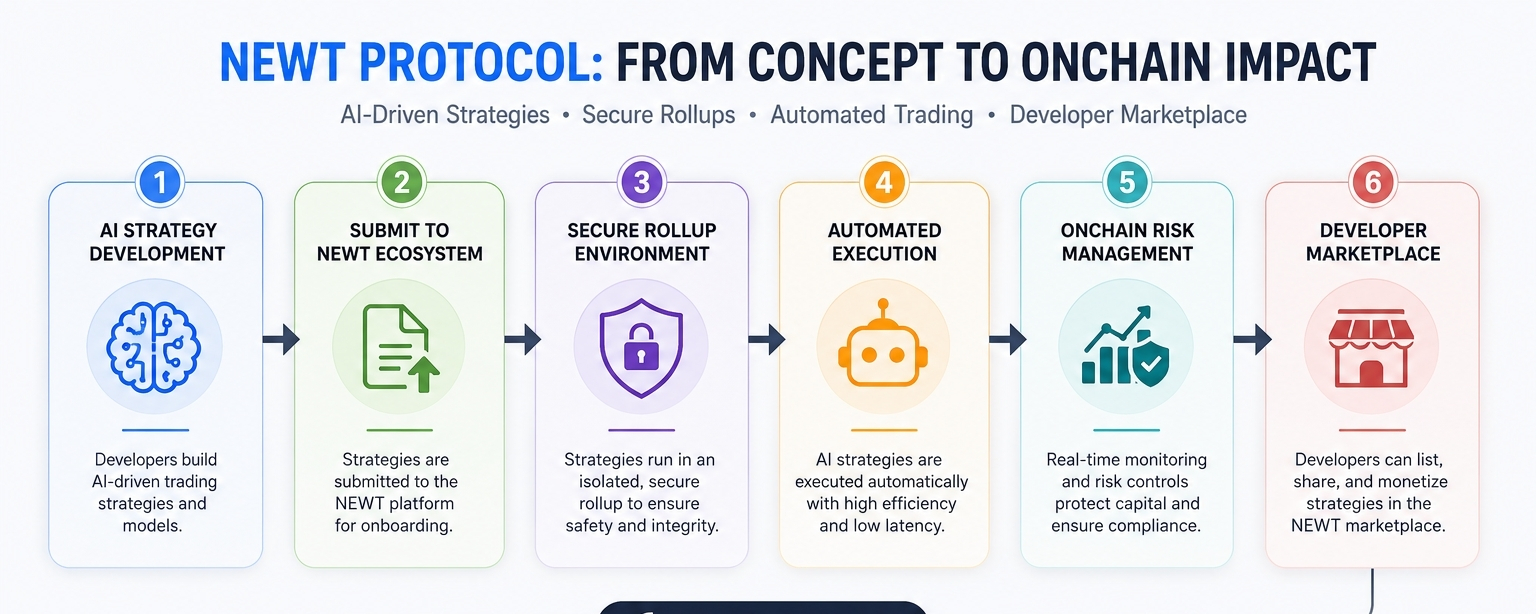
NEWT: IDE BAGUS, ATAU HANYA BET KRIPTO LAIN YANG DIKEMAS RAPI?Saya menyelam ke lubang kelinci Newton Protocol dan, kawan, saya terus bolak-balik antara “oke, ini ternyata menarik” dan “ya, saya pernah lihat filmnya.” Itu mungkin jawaban paling jujur yang bisa saya katakan. Di atas kertas, NEWT berusaha melakukan banyak hal yang orang-orang di kripto suka bicarakan saat mereka merasa futuristik dan penuh keyakinan—secure rollups, strategi yang digerakkan AI, trading otomatis, dan semacam pasar untuk pengembang AI. Kombinasi itu terdengar keren. Kedengarannya seperti jenis pitch yang dipotong lalu disebar ke seluruh thread seolah itu pasti terjadi. Tapi begitu Anda duduk dengan itu sebentar… aroma hype muncul cukup cepat.
NEWT: IDE BAGUS, ATAU HANYA BET KRIPTO LAIN YANG DIKEMAS RAPI?
Saya menyelam ke lubang kelinci Newton Protocol dan, kawan, saya terus bolak-balik antara “oke, ini ternyata menarik” dan “ya, saya pernah lihat filmnya.” Itu mungkin jawaban paling jujur yang bisa saya katakan. Di atas kertas, NEWT berusaha melakukan banyak hal yang orang-orang di kripto suka bicarakan saat mereka merasa futuristik dan penuh keyakinan—secure rollups, strategi yang digerakkan AI, trading otomatis, dan semacam pasar untuk pengembang AI. Kombinasi itu terdengar keren. Kedengarannya seperti jenis pitch yang dipotong lalu disebar ke seluruh thread seolah itu pasti terjadi. Tapi begitu Anda duduk dengan itu sebentar… aroma hype muncul cukup cepat.
3
123
·
--
# PROTOKOL NEWTON (NEWT): HYPE, REALITAS, DAN SAKIT KEPALA KRIPTO YANG BIASA
Newton Protocol punya bau kripto yang familiar… yang membuatmu sedikit mendekat dan sekaligus menyipitkan mata. Secure rollup, strategi berbasis AI, trading otomatis, marketplace untuk developer AI—pitch-nya rapi, mungkin terlalu rapi. Menurutku idenya punya potensi. AI dan trading jelas merupakan kombinasi yang menarik, dan kalau mereka bisa benar-benar membuat infrastrukturnya berfungsi tanpa berakhir jadi kekacauan keamanan, itu bukan hal kecil.
Tapi ya, aku juga skeptis. Kripto suka membungkus janji-janji besar sebagai produk nyata, dan setengah waktu akhirnya yang kamu dapat hanya narasi yang bagus tapi pemakaiannya minim. Pertanyaan besar di sini: apakah NEWT benar-benar membangun sesuatu yang akan dipakai orang, atau ini cuma proyek lain yang ikut naik gelombang AI karena di situlah perhatian tertuju? Aku tidak bisa mengusir pikiran itu.
Meski begitu, aku tidak akan berpura-pura semuanya kosong. Sisi rollup masuk akal, sisi marketplace untuk developer juga masuk akal, dan kalau mereka berhasil, itu bisa benar-benar menarik. Cuma… aku sudah melihat terlalu banyak proyek kripto yang “menarik” berakhir seperti restoran mewah dengan tidak ada pelanggan. Jadi ya, aku penasaran, sedikit berhati-hati, dan belum siap menyebutnya sebagai hal besar berikutnya hanya karena pitch-nya terdengar cerdas.
@NewtonProtocol #NEWT $NEWT
# PROTOKOL NEWTON (NEWT): HYPE, REALITAS, DAN SAKIT KEPALA KRIPTO YANG BIASA
Newton Protocol punya bau kripto yang familiar… yang membuatmu sedikit mendekat dan sekaligus menyipitkan mata. Secure rollup, strategi berbasis AI, trading otomatis, marketplace untuk developer AI—pitch-nya rapi, mungkin terlalu rapi. Menurutku idenya punya potensi. AI dan trading jelas merupakan kombinasi yang menarik, dan kalau mereka bisa benar-benar membuat infrastrukturnya berfungsi tanpa berakhir jadi kekacauan keamanan, itu bukan hal kecil.
Tapi ya, aku juga skeptis. Kripto suka membungkus janji-janji besar sebagai produk nyata, dan setengah waktu akhirnya yang kamu dapat hanya narasi yang bagus tapi pemakaiannya minim. Pertanyaan besar di sini: apakah NEWT benar-benar membangun sesuatu yang akan dipakai orang, atau ini cuma proyek lain yang ikut naik gelombang AI karena di situlah perhatian tertuju? Aku tidak bisa mengusir pikiran itu.
Meski begitu, aku tidak akan berpura-pura semuanya kosong. Sisi rollup masuk akal, sisi marketplace untuk developer juga masuk akal, dan kalau mereka berhasil, itu bisa benar-benar menarik. Cuma… aku sudah melihat terlalu banyak proyek kripto yang “menarik” berakhir seperti restoran mewah dengan tidak ada pelanggan. Jadi ya, aku penasaran, sedikit berhati-hati, dan belum siap menyebutnya sebagai hal besar berikutnya hanya karena pitch-nya terdengar cerdas.
@NewtonProtocol #NEWT $NEWT
Newton Protocol punya bau kripto yang familiar… yang membuatmu sedikit mendekat dan sekaligus menyipitkan mata. Secure rollup, strategi berbasis AI, trading otomatis, marketplace untuk developer AI—pitch-nya rapi, mungkin terlalu rapi. Menurutku idenya punya potensi. AI dan trading jelas merupakan kombinasi yang menarik, dan kalau mereka bisa benar-benar membuat infrastrukturnya berfungsi tanpa berakhir jadi kekacauan keamanan, itu bukan hal kecil.
Tapi ya, aku juga skeptis. Kripto suka membungkus janji-janji besar sebagai produk nyata, dan setengah waktu akhirnya yang kamu dapat hanya narasi yang bagus tapi pemakaiannya minim. Pertanyaan besar di sini: apakah NEWT benar-benar membangun sesuatu yang akan dipakai orang, atau ini cuma proyek lain yang ikut naik gelombang AI karena di situlah perhatian tertuju? Aku tidak bisa mengusir pikiran itu.
Meski begitu, aku tidak akan berpura-pura semuanya kosong. Sisi rollup masuk akal, sisi marketplace untuk developer juga masuk akal, dan kalau mereka berhasil, itu bisa benar-benar menarik. Cuma… aku sudah melihat terlalu banyak proyek kripto yang “menarik” berakhir seperti restoran mewah dengan tidak ada pelanggan. Jadi ya, aku penasaran, sedikit berhati-hati, dan belum siap menyebutnya sebagai hal besar berikutnya hanya karena pitch-nya terdengar cerdas.
@NewtonProtocol #NEWT $NEWT
2
94
·
--
Artikel
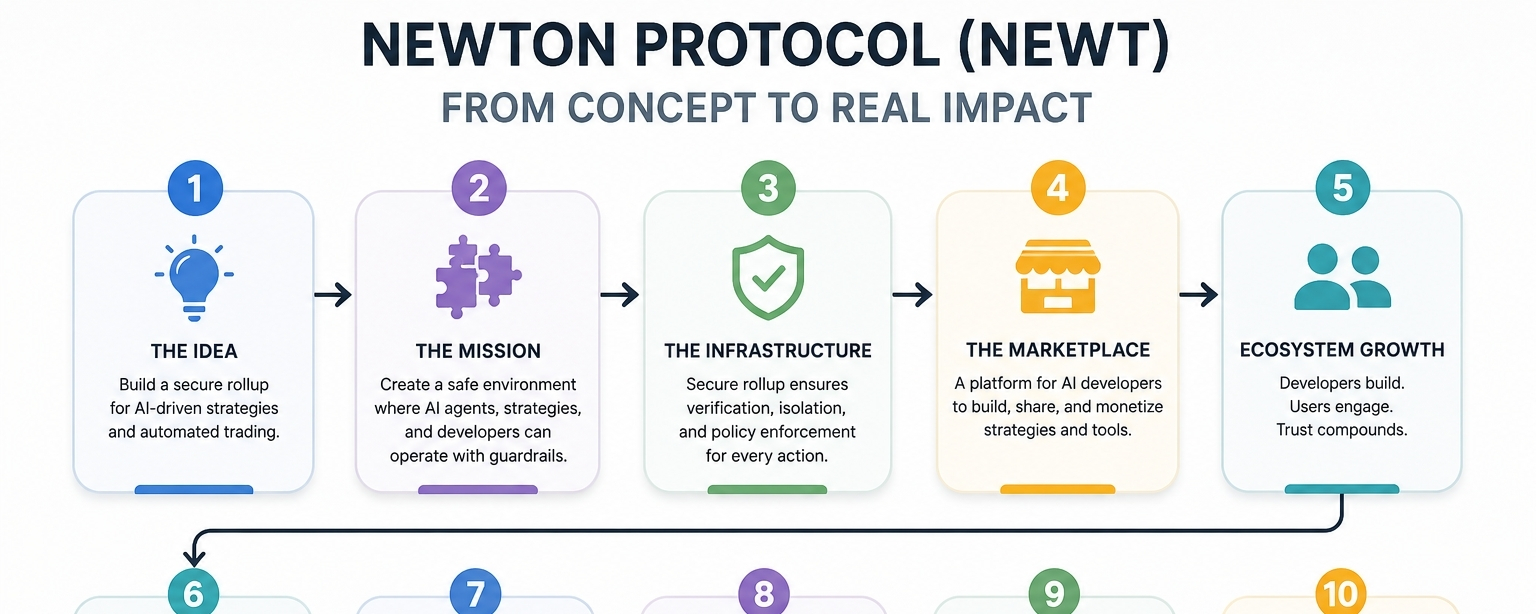
NEWTON PROTOCOL (NEWT): IDE BAGUS, ATAU SEKADAR TEATER KRIPTO LAGI?Aku menyusuri lubang kelinci tentang Newton Protocol dan sampai sekarang aku masih agak terpecah-belah soal itu... yang biasanya jadi tanda peringatan pertamaku untuk hal-hal seperti ini. Nada pitch-nya terdengar bersih kalau dilihat dari kertas: rollup yang aman untuk strategi berbasis AI, trading otomatis, dan semacam marketplace untuk developer AI. Kata-katanya bagus. Kata-kata yang enak diklik. Dan kripto sangat menyukai setup yang persis seperti ini: sesuatu terdengar sedikit futuristik dan sedikit berguna, lalu tiba-tiba semua orang bertindak seolah rel-rel keuangan sedang ditulis ulang dalam semalam. Mungkin memang begitu. Mungkin tidak.
NEWTON PROTOCOL (NEWT): IDE BAGUS, ATAU SEKADAR TEATER KRIPTO LAGI?
Aku menyusuri lubang kelinci tentang Newton Protocol dan sampai sekarang aku masih agak terpecah-belah soal itu... yang biasanya jadi tanda peringatan pertamaku untuk hal-hal seperti ini. Nada pitch-nya terdengar bersih kalau dilihat dari kertas: rollup yang aman untuk strategi berbasis AI, trading otomatis, dan semacam marketplace untuk developer AI. Kata-katanya bagus. Kata-kata yang enak diklik. Dan kripto sangat menyukai setup yang persis seperti ini: sesuatu terdengar sedikit futuristik dan sedikit berguna, lalu tiba-tiba semua orang bertindak seolah rel-rel keuangan sedang ditulis ulang dalam semalam. Mungkin memang begitu. Mungkin tidak.
97
·
--
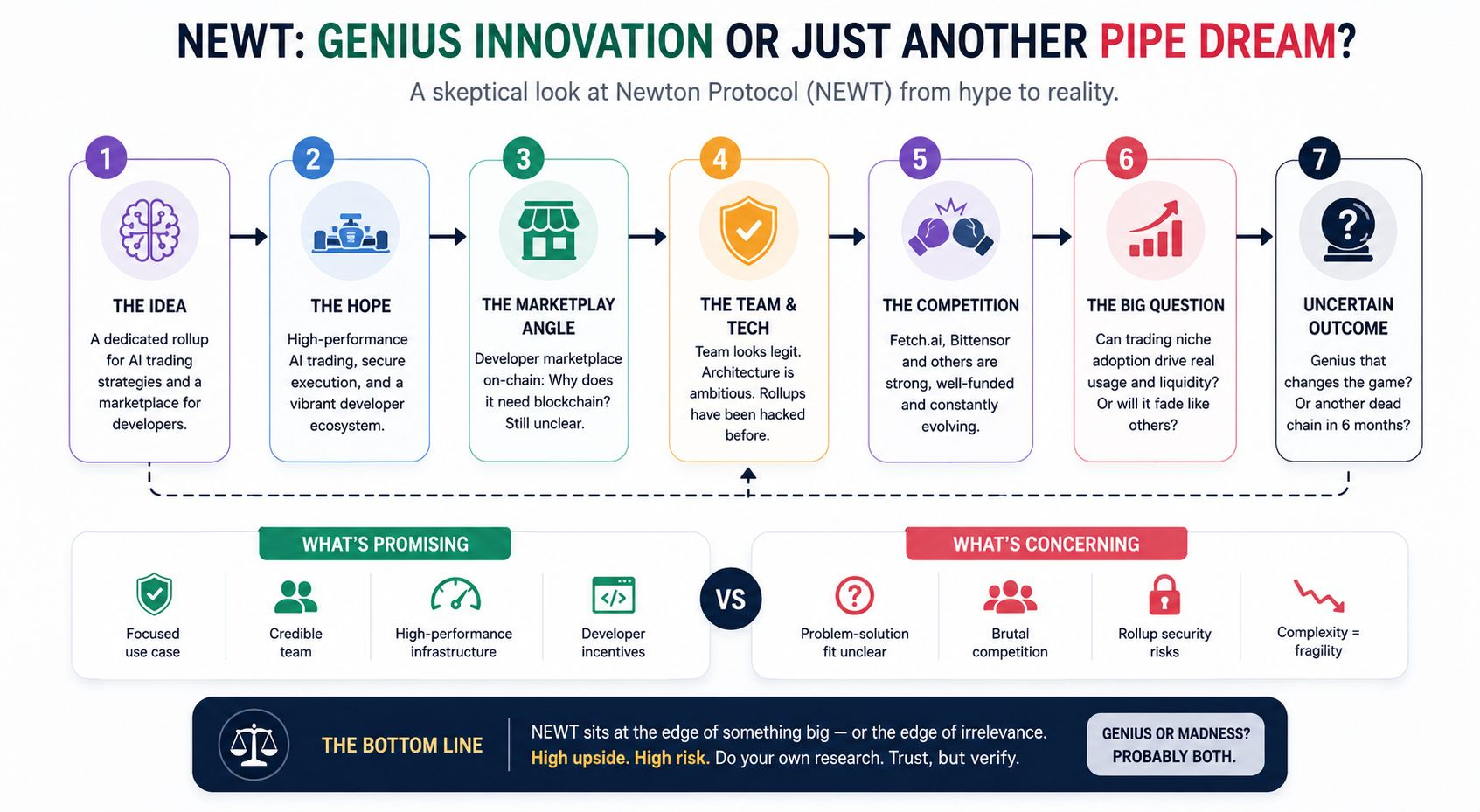
NEWT adalah padanan kripto dari mobil balap yang benar-benar dibuat dengan sangat baik—tapi tanpa trek balapan yang terlihat... ide rollup khusus untuk strategi trading AI terdengar cerdas di atas kertas, tapi aku tidak bisa menghilangkan perasaan ini adalah solusi yang sedang mencari masalah. bagian pasar untuk para developer juga bikin aku ragu; maksudnya, kenapa seseorang butuh blockchain untuk itu? Timnya terlihat kredibel—yang jarang—tapi persaingannya dari Fetch dan Bittensor sangat brutal, dan rollup pernah diretas sebelumnya. Aku ingin bersemangat, tapi aku sudah terlalu sering kecewa oleh proyek-proyek yang runtuh karena kompleksitasnya sendiri. mungkin ceruk trading menyelamatkan mereka, atau mungkin ini cuma satu lagi rantai mati dalam enam bulan. jujur, aku nggak bisa memastikan ini jenius atau kegilaan. mungkin keduanya.
@NewtonProtocol #NEWT $NEWT
{spot}(NEWTUSDT)
NEWT adalah padanan kripto dari mobil balap yang benar-benar dibuat dengan sangat baik—tapi tanpa trek balapan yang terlihat... ide rollup khusus untuk strategi trading AI terdengar cerdas di atas kertas, tapi aku tidak bisa menghilangkan perasaan ini adalah solusi yang sedang mencari masalah. bagian pasar untuk para developer juga bikin aku ragu; maksudnya, kenapa seseorang butuh blockchain untuk itu? Timnya terlihat kredibel—yang jarang—tapi persaingannya dari Fetch dan Bittensor sangat brutal, dan rollup pernah diretas sebelumnya. Aku ingin bersemangat, tapi aku sudah terlalu sering kecewa oleh proyek-proyek yang runtuh karena kompleksitasnya sendiri. mungkin ceruk trading menyelamatkan mereka, atau mungkin ini cuma satu lagi rantai mati dalam enam bulan. jujur, aku nggak bisa memastikan ini jenius atau kegilaan. mungkin keduanya.
@NewtonProtocol #NEWT $NEWT
@NewtonProtocol #NEWT $NEWT
4
1
106
·
--
Artikel
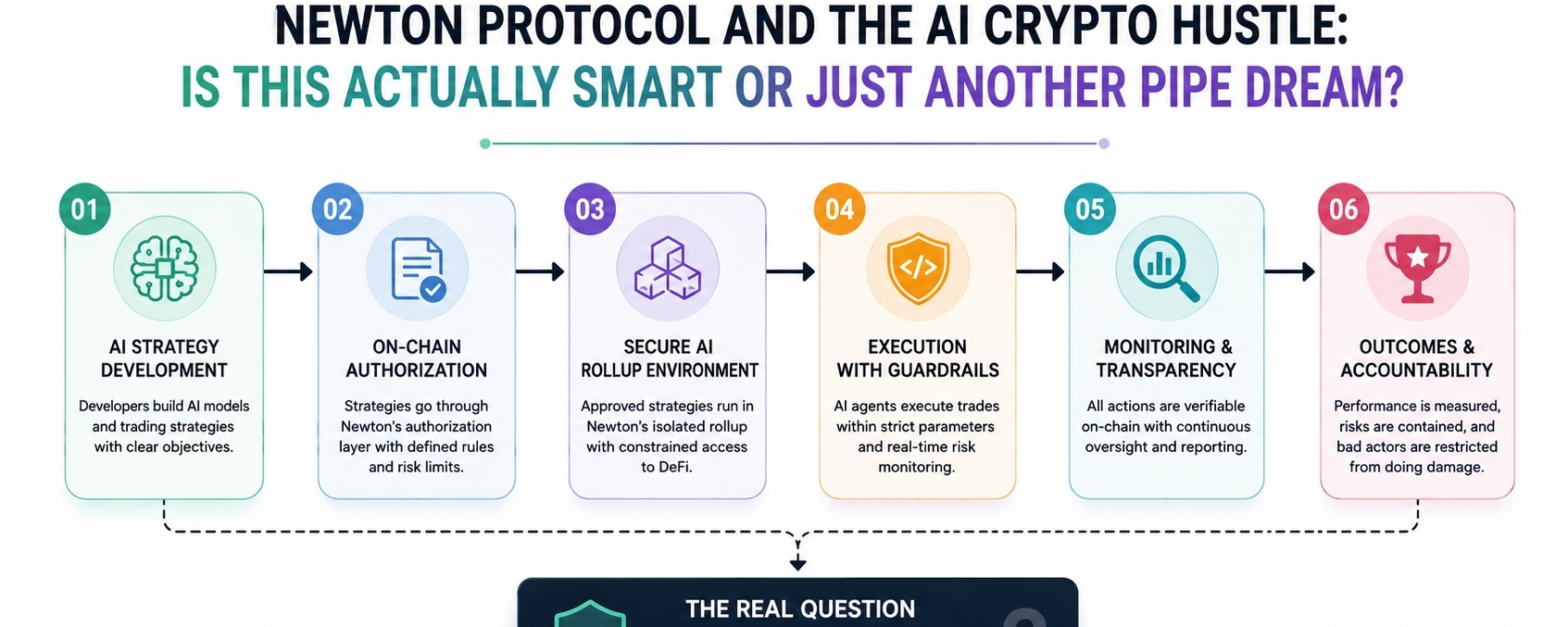
PROTOKOL NEWTON DAN GEH CRAZY CRYPTO UNTUK AI: APA INI bener-BENER PINTAR ATAU CUMA MIMPI INDAH LAGI?oke jadi aku baru aja menghabiskan sekitar 3 jam nyelam ke lubang kelinci protokol newton ini dan otakku beneran hancur. ini newt... maksudnya dia lagi mencoba membangun secure rollup buat strategi trading ai dan trading otomatis, tapi juga semacam marketplace buat developer ai. kedengarannya keren, tapi aku udah pernah nonton filmnya, kamu tahu? banyak banget proyek yang ngeklaim mereka itu "layer untuk ai" dan kemudian mereka cuma rilis token yang asal-asalan lalu hilang. tapi ada sesuatu dari yang ini yang nyangkut di kepala aku dan aku nggak bisa bedain ini punya potensi beneran atau cuma marketing yang bagus—yang jujur lebih parah, karena artinya mereka tahu persis tombol apa yang harus ditekan.
PROTOKOL NEWTON DAN GEH CRAZY CRYPTO UNTUK AI: APA INI bener-BENER PINTAR ATAU CUMA MIMPI INDAH LAGI?
oke jadi aku baru aja menghabiskan sekitar 3 jam nyelam ke lubang kelinci protokol newton ini dan otakku beneran hancur. ini newt... maksudnya dia lagi mencoba membangun secure rollup buat strategi trading ai dan trading otomatis, tapi juga semacam marketplace buat developer ai. kedengarannya keren, tapi aku udah pernah nonton filmnya, kamu tahu? banyak banget proyek yang ngeklaim mereka itu "layer untuk ai" dan kemudian mereka cuma rilis token yang asal-asalan lalu hilang. tapi ada sesuatu dari yang ini yang nyangkut di kepala aku dan aku nggak bisa bedain ini punya potensi beneran atau cuma marketing yang bagus—yang jujur lebih parah, karena artinya mereka tahu persis tombol apa yang harus ditekan.
12
5
357
·
--
NEWTON PROTOCOL (NEWT): IDE GILA ATAU CUMA KERAMA-IAN KRIPTO LAGI?
Newton Protocol (NEWT) punya aroma kripto yang familiar... jenis yang nada pematangannya terdengar pintar, situsnya terlihat rapi, dan otak Anda mulai bertanya-tanya apakah ini benar-benar berguna atau cuma satu lagi paket dagang yang dibungkus rapi. Semua kombinasi secure rollup plus strategi berbasis AI plus automated trading plus marketplace-for-builders memang terdengar menarik, saya akui itu. Ini bukan omong kosong kosong khas “community-first”. Rasanya seperti sedang mengarah ke sesuatu yang nyata.
Tapi mari jujur, kripto dipenuhi proyek-proyek yang terdengar bagus sampai Anda melihat melewati kata-katanya. AI sedang jadi stiker terpanas di pasar saat ini, jadi wajar kalau orang akan berbondong-bondong masuk begitu melihat AI menempel pada otomatisasi atau trading. Itu tidak berarti NEWT itu palsu. Hanya saja standar yang dibutuhkan terlalu tinggi dan hype-nya terlalu kencang. Terlalu kencang kadang-kadang.
Yang saya suka adalah idenya benar-benar mencoba menghubungkan infrastruktur dengan use case. Itu penting. Banyak proyek lain bersikap seolah mereka akan jadi penting hanya karena “ada”, yang jelas omong kosong. NEWT setidaknya tampak mengejar jalur di mana secure execution dan aktivitas developer bisa jadi berarti kalau mereka berhasil melakukannya. Tapi kendalanya adalah eksekusi. Selalu eksekusi. Kripto penuh proyek “ini bisa jadi raksasa” yang akhirnya terasa seperti demo dengan sebuah token.
Saya penasaran, tapi skeptis. Itu mungkin penilaian paling jujur yang bisa saya berikan.
@NewtonProtocol #NEWT $NEWT
NEWTON PROTOCOL (NEWT): IDE GILA ATAU CUMA KERAMA-IAN KRIPTO LAGI?
Newton Protocol (NEWT) punya aroma kripto yang familiar... jenis yang nada pematangannya terdengar pintar, situsnya terlihat rapi, dan otak Anda mulai bertanya-tanya apakah ini benar-benar berguna atau cuma satu lagi paket dagang yang dibungkus rapi. Semua kombinasi secure rollup plus strategi berbasis AI plus automated trading plus marketplace-for-builders memang terdengar menarik, saya akui itu. Ini bukan omong kosong kosong khas “community-first”. Rasanya seperti sedang mengarah ke sesuatu yang nyata.
Tapi mari jujur, kripto dipenuhi proyek-proyek yang terdengar bagus sampai Anda melihat melewati kata-katanya. AI sedang jadi stiker terpanas di pasar saat ini, jadi wajar kalau orang akan berbondong-bondong masuk begitu melihat AI menempel pada otomatisasi atau trading. Itu tidak berarti NEWT itu palsu. Hanya saja standar yang dibutuhkan terlalu tinggi dan hype-nya terlalu kencang. Terlalu kencang kadang-kadang.
Yang saya suka adalah idenya benar-benar mencoba menghubungkan infrastruktur dengan use case. Itu penting. Banyak proyek lain bersikap seolah mereka akan jadi penting hanya karena “ada”, yang jelas omong kosong. NEWT setidaknya tampak mengejar jalur di mana secure execution dan aktivitas developer bisa jadi berarti kalau mereka berhasil melakukannya. Tapi kendalanya adalah eksekusi. Selalu eksekusi. Kripto penuh proyek “ini bisa jadi raksasa” yang akhirnya terasa seperti demo dengan sebuah token.
Saya penasaran, tapi skeptis. Itu mungkin penilaian paling jujur yang bisa saya berikan.
@NewtonProtocol #NEWT $NEWT
Newton Protocol (NEWT) punya aroma kripto yang familiar... jenis yang nada pematangannya terdengar pintar, situsnya terlihat rapi, dan otak Anda mulai bertanya-tanya apakah ini benar-benar berguna atau cuma satu lagi paket dagang yang dibungkus rapi. Semua kombinasi secure rollup plus strategi berbasis AI plus automated trading plus marketplace-for-builders memang terdengar menarik, saya akui itu. Ini bukan omong kosong kosong khas “community-first”. Rasanya seperti sedang mengarah ke sesuatu yang nyata.
Tapi mari jujur, kripto dipenuhi proyek-proyek yang terdengar bagus sampai Anda melihat melewati kata-katanya. AI sedang jadi stiker terpanas di pasar saat ini, jadi wajar kalau orang akan berbondong-bondong masuk begitu melihat AI menempel pada otomatisasi atau trading. Itu tidak berarti NEWT itu palsu. Hanya saja standar yang dibutuhkan terlalu tinggi dan hype-nya terlalu kencang. Terlalu kencang kadang-kadang.
Yang saya suka adalah idenya benar-benar mencoba menghubungkan infrastruktur dengan use case. Itu penting. Banyak proyek lain bersikap seolah mereka akan jadi penting hanya karena “ada”, yang jelas omong kosong. NEWT setidaknya tampak mengejar jalur di mana secure execution dan aktivitas developer bisa jadi berarti kalau mereka berhasil melakukannya. Tapi kendalanya adalah eksekusi. Selalu eksekusi. Kripto penuh proyek “ini bisa jadi raksasa” yang akhirnya terasa seperti demo dengan sebuah token.
Saya penasaran, tapi skeptis. Itu mungkin penilaian paling jujur yang bisa saya berikan.
@NewtonProtocol #NEWT $NEWT
🟢 Bullish 🚀
0%
🟡 Wait & Watch 👀
0%
🟠 Too Much Hype 📢
0%
🔴 Not Interested ❌
0%
0 Voting • Voting ditutup
1
100
·
--
Artikel
NEWTON PROTOCOL (NEWT): IDE YANG BAGUS ATAU HANYA LAGI HAL KRIPTO LAIN DENGAN WEBSITE YANG RAPI?Jadi aku menyusuri lubang kelinci tentang Newton Protocol (NEWT) dan... ya, aku punya perasaan yang campur aduk. Itu mungkin jawaban kripto yang paling klise sedunia, tapi tetap. Pidanannya terdengar bagus di atas kertas: secure rollups, strategi berbasis AI, trading otomatis, marketplace untuk developer AI. Paket seperti itu bisa terdengar benar-benar berguna atau seperti tiga kata kunci yang dijahit jadi satu deck karena seseorang berpikir itu akan naik lebih cepat. Aku belum bisa menentukan NEWT condong ke sisi yang mana, dan itu bagian yang menjengkelkan.
Ada daya tarik tersendiri dari keseluruhan konsep itu, aku akui. Kripto sudah terlalu lama tenggelam dalam omong kosong yang didaur ulang, jadi ketika sebuah proyek datang dengan membentangkan AI, otomasi, dan infrastruktur—bukan sekadar “komunitas” dan “utilitas”—setidaknya rasanya seperti itu mencoba melakukan sesuatu yang nyata. Atau setidaknya mencoba terlihat seperti itu. Tentu itu bukan hal yang sama. Tapi aku paham kenapa orang akan tertarik. Urusan secure rollup adalah tipe hal yang orang katakan mereka pedulikan—sampai detailnya jadi buruk. Dan trading berbasis AI adalah jenis frasa yang membuat semua orang langsung waspada karena kedengarannya seperti uang yang melakukan hal uangnya sendiri secara otomatis.
NEWTON PROTOCOL (NEWT): IDE YANG BAGUS ATAU HANYA LAGI HAL KRIPTO LAIN DENGAN WEBSITE YANG RAPI?
Jadi aku menyusuri lubang kelinci tentang Newton Protocol (NEWT) dan... ya, aku punya perasaan yang campur aduk. Itu mungkin jawaban kripto yang paling klise sedunia, tapi tetap. Pidanannya terdengar bagus di atas kertas: secure rollups, strategi berbasis AI, trading otomatis, marketplace untuk developer AI. Paket seperti itu bisa terdengar benar-benar berguna atau seperti tiga kata kunci yang dijahit jadi satu deck karena seseorang berpikir itu akan naik lebih cepat. Aku belum bisa menentukan NEWT condong ke sisi yang mana, dan itu bagian yang menjengkelkan.
Ada daya tarik tersendiri dari keseluruhan konsep itu, aku akui. Kripto sudah terlalu lama tenggelam dalam omong kosong yang didaur ulang, jadi ketika sebuah proyek datang dengan membentangkan AI, otomasi, dan infrastruktur—bukan sekadar “komunitas” dan “utilitas”—setidaknya rasanya seperti itu mencoba melakukan sesuatu yang nyata. Atau setidaknya mencoba terlihat seperti itu. Tentu itu bukan hal yang sama. Tapi aku paham kenapa orang akan tertarik. Urusan secure rollup adalah tipe hal yang orang katakan mereka pedulikan—sampai detailnya jadi buruk. Dan trading berbasis AI adalah jenis frasa yang membuat semua orang langsung waspada karena kedengarannya seperti uang yang melakukan hal uangnya sendiri secara otomatis.
Ada daya tarik tersendiri dari keseluruhan konsep itu, aku akui. Kripto sudah terlalu lama tenggelam dalam omong kosong yang didaur ulang, jadi ketika sebuah proyek datang dengan membentangkan AI, otomasi, dan infrastruktur—bukan sekadar “komunitas” dan “utilitas”—setidaknya rasanya seperti itu mencoba melakukan sesuatu yang nyata. Atau setidaknya mencoba terlihat seperti itu. Tentu itu bukan hal yang sama. Tapi aku paham kenapa orang akan tertarik. Urusan secure rollup adalah tipe hal yang orang katakan mereka pedulikan—sampai detailnya jadi buruk. Dan trading berbasis AI adalah jenis frasa yang membuat semua orang langsung waspada karena kedengarannya seperti uang yang melakukan hal uangnya sendiri secara otomatis.
5
1
140
·
--
Bullish
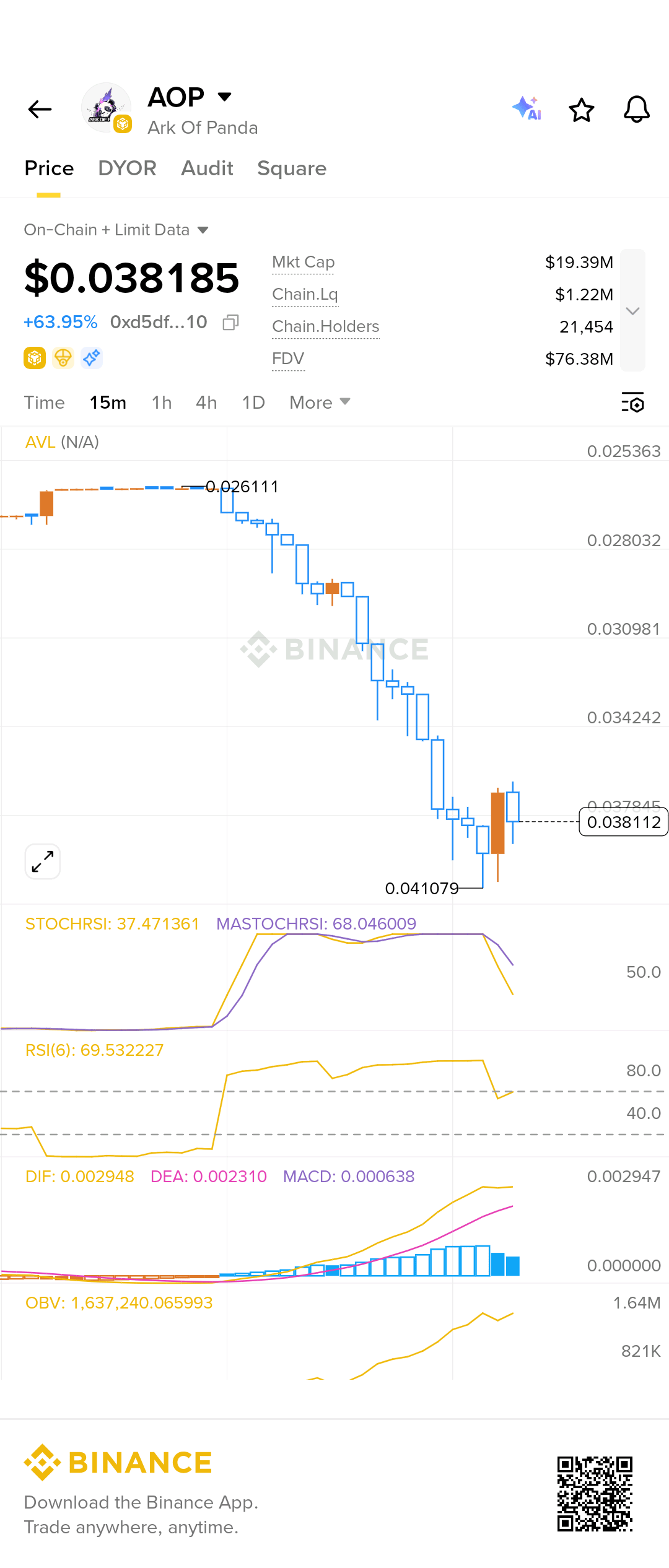
Analisis Pasar Kripto – AOP (15m)
Ringkasan Eksekutif
$AOP diperdagangkan di $0.03819 (+63.95%). Meski kenaikan harian terlihat kuat, chart 15m menunjukkan koreksi tajam dari puncak terbaru. Momentum masih positif, namun pasar saat ini sedang berada dalam koreksi jangka pendek.
Analisis Teknis
Tren: Bullish (Timeframe Lebih Tinggi), Bearish Pullback (15m)
Struktur: Reli kuat diikuti lower highs dan lower lows.
RSI: 69.5 (Hampir overbought)
MACD: Bullish, tetapi histogram melemah.
Stochastic RSI: Crossover bearish.
OBV: Naik, menandakan pembeli masih aktif.
Momentum: Melemah.
Volume: Data tidak tersedia.
Level Kunci
Support: $0.0370 | $0.0350
Resistance: $0.0395 | $0.0410
Fundamental & On-Chain
Kapitalisasi Pasar: $19.39M
FDV: $76.38M
Likuiditas: $1.22M
Pemegang: 21,454
Berita/Fundamental Terverifikasi: Data tidak tersedia.
Sentimen Pasar
Netral hingga Bullish – Performa harian yang kuat, tetapi tekanan jual jangka pendek meningkat.
Risiko
Likuiditas: Sedang
Volatilitas: Tinggi
Manipulasi: Sedang
Smart Contract: Data tidak tersedia.
Total Risiko: Tinggi
Keputusan Trading
TUNGGU
Alasan: Koreksi masih berlangsung. Menunggu konfirmasi pantulan dari support atau breakout memberikan peluang risk/reward yang lebih baik.
Rencana Trading
Entry: $0.0370–0.0375
Stop Loss: Di bawah $0.0350
TP1: $0.0395
TP2: $0.0410
TP3: $0.0430
Risk/Reward: ~1:2
Invalidasi: Tutup di bawah $0.0350
Kepercayaan
7/10
Putusan Akhir
Tren yang lebih luas masih konstruktif, tetapi pullback saat ini menunjukkan perlunya kesabaran. Pantulan terkonfirmasi dari support atau breakout di atas resistance akan memberikan setup trading yang lebih kuat dibanding masuk segera.
{alpha}(560xd5df4d260d7a0145f655bcbf3b398076f21016c7)
#SamsungToRaiseDRAMPricesAbout20%InQ3 #SamsungToRaiseDRAMPricesAbout20%InQ3 CryptoHacksHit207InH1WithLosses$972M#SamsungToRaiseDRAMPricesAbout20%InQ3 #SamsungToRaiseDRAMPricesAbout20%InQ3 #SamsungToRaiseDRAMPricesAbout20%InQ3
Analisis Pasar Kripto – AOP (15m)
Ringkasan Eksekutif
$AOP diperdagangkan di $0.03819 (+63.95%). Meski kenaikan harian terlihat kuat, chart 15m menunjukkan koreksi tajam dari puncak terbaru. Momentum masih positif, namun pasar saat ini sedang berada dalam koreksi jangka pendek.
Analisis Teknis
Tren: Bullish (Timeframe Lebih Tinggi), Bearish Pullback (15m)
Struktur: Reli kuat diikuti lower highs dan lower lows.
RSI: 69.5 (Hampir overbought)
MACD: Bullish, tetapi histogram melemah.
Stochastic RSI: Crossover bearish.
OBV: Naik, menandakan pembeli masih aktif.
Momentum: Melemah.
Volume: Data tidak tersedia.
Level Kunci
Support: $0.0370 | $0.0350
Resistance: $0.0395 | $0.0410
Fundamental & On-Chain
Kapitalisasi Pasar: $19.39M
FDV: $76.38M
Likuiditas: $1.22M
Pemegang: 21,454
Berita/Fundamental Terverifikasi: Data tidak tersedia.
Sentimen Pasar
Netral hingga Bullish – Performa harian yang kuat, tetapi tekanan jual jangka pendek meningkat.
Risiko
Likuiditas: Sedang
Volatilitas: Tinggi
Manipulasi: Sedang
Smart Contract: Data tidak tersedia.
Total Risiko: Tinggi
Keputusan Trading
TUNGGU
Alasan: Koreksi masih berlangsung. Menunggu konfirmasi pantulan dari support atau breakout memberikan peluang risk/reward yang lebih baik.
Rencana Trading
Entry: $0.0370–0.0375
Stop Loss: Di bawah $0.0350
TP1: $0.0395
TP2: $0.0410
TP3: $0.0430
Risk/Reward: ~1:2
Invalidasi: Tutup di bawah $0.0350
Kepercayaan
7/10
Putusan Akhir
Tren yang lebih luas masih konstruktif, tetapi pullback saat ini menunjukkan perlunya kesabaran. Pantulan terkonfirmasi dari support atau breakout di atas resistance akan memberikan setup trading yang lebih kuat dibanding masuk segera.
#SamsungToRaiseDRAMPricesAbout20%InQ3 #SamsungToRaiseDRAMPricesAbout20%InQ3 CryptoHacksHit207InH1WithLosses$972M#SamsungToRaiseDRAMPricesAbout20%InQ3 #SamsungToRaiseDRAMPricesAbout20%InQ3 #SamsungToRaiseDRAMPricesAbout20%InQ3
Ringkasan Eksekutif
$AOP diperdagangkan di $0.03819 (+63.95%). Meski kenaikan harian terlihat kuat, chart 15m menunjukkan koreksi tajam dari puncak terbaru. Momentum masih positif, namun pasar saat ini sedang berada dalam koreksi jangka pendek.
Analisis Teknis
Tren: Bullish (Timeframe Lebih Tinggi), Bearish Pullback (15m)
Struktur: Reli kuat diikuti lower highs dan lower lows.
RSI: 69.5 (Hampir overbought)
MACD: Bullish, tetapi histogram melemah.
Stochastic RSI: Crossover bearish.
OBV: Naik, menandakan pembeli masih aktif.
Momentum: Melemah.
Volume: Data tidak tersedia.
Level Kunci
Support: $0.0370 | $0.0350
Resistance: $0.0395 | $0.0410
Fundamental & On-Chain
Kapitalisasi Pasar: $19.39M
FDV: $76.38M
Likuiditas: $1.22M
Pemegang: 21,454
Berita/Fundamental Terverifikasi: Data tidak tersedia.
Sentimen Pasar
Netral hingga Bullish – Performa harian yang kuat, tetapi tekanan jual jangka pendek meningkat.
Risiko
Likuiditas: Sedang
Volatilitas: Tinggi
Manipulasi: Sedang
Smart Contract: Data tidak tersedia.
Total Risiko: Tinggi
Keputusan Trading
TUNGGU
Alasan: Koreksi masih berlangsung. Menunggu konfirmasi pantulan dari support atau breakout memberikan peluang risk/reward yang lebih baik.
Rencana Trading
Entry: $0.0370–0.0375
Stop Loss: Di bawah $0.0350
TP1: $0.0395
TP2: $0.0410
TP3: $0.0430
Risk/Reward: ~1:2
Invalidasi: Tutup di bawah $0.0350
Kepercayaan
7/10
Putusan Akhir
Tren yang lebih luas masih konstruktif, tetapi pullback saat ini menunjukkan perlunya kesabaran. Pantulan terkonfirmasi dari support atau breakout di atas resistance akan memberikan setup trading yang lebih kuat dibanding masuk segera.
#SamsungToRaiseDRAMPricesAbout20%InQ3 #SamsungToRaiseDRAMPricesAbout20%InQ3 CryptoHacksHit207InH1WithLosses$972M#SamsungToRaiseDRAMPricesAbout20%InQ3 #SamsungToRaiseDRAMPricesAbout20%InQ3 #SamsungToRaiseDRAMPricesAbout20%InQ3
84
·
--
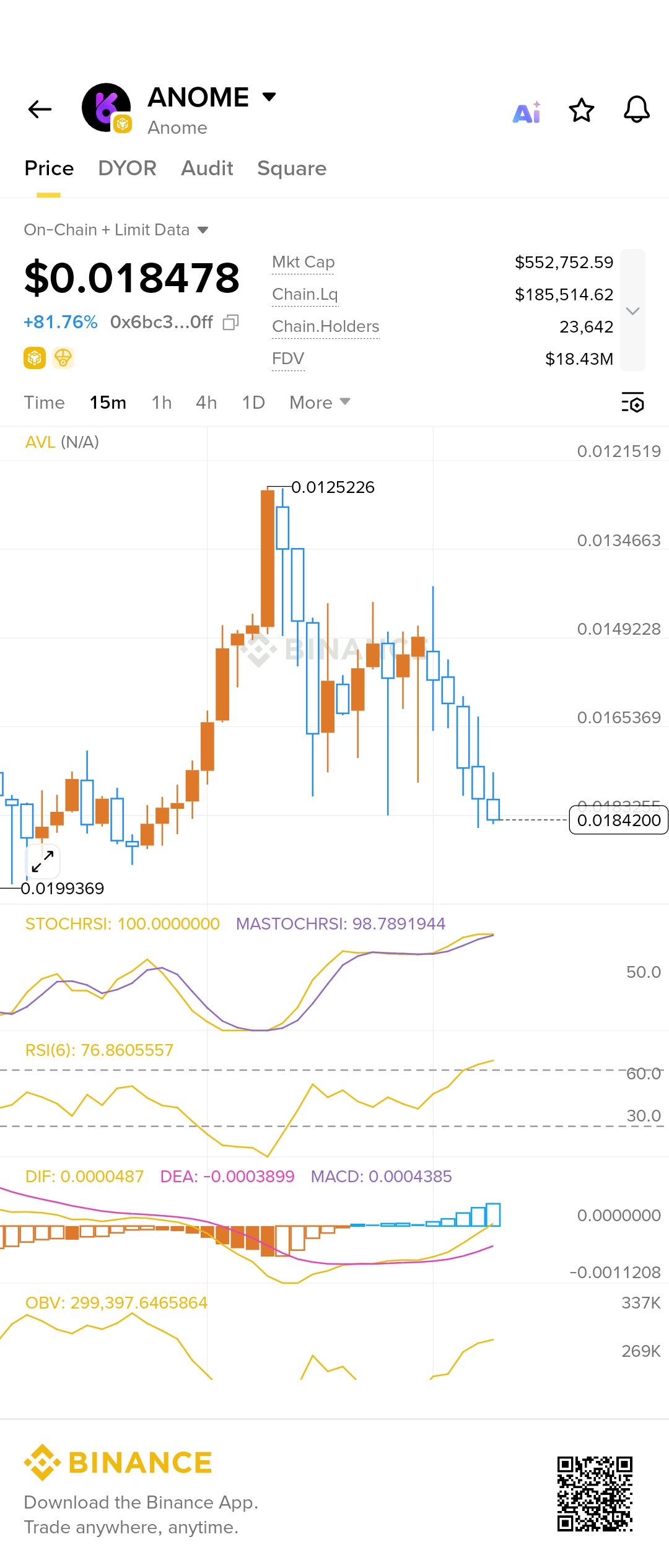
$ANOME (15m) Analisis
Harga: $0.01848 (+81.76%)
Data Pasar:
Kapitalisasi Pasar: $552.8K
Likuiditas: $185.5K
FDV: $18.43M
Pemegang: 23,642
Teknis:
Tren: Bullish (Jangka Pendek)
RSI: 76.9 (Overbought)
MACD: Bullish
Stoch RSI: Overbought
OBV: Positif
Support: $0.0182 | $0.0165
Resistance: $0.0200 | $0.0215
Risiko: Tinggi (Small-cap & volatilitas tinggi)
Keputusan: TUNGGU
Rencana Perdagangan:
Entri: $0.0182–0.0185
SL: Di bawah $0.0165
TP1: $0.0200
TP2: $0.0215
Keyakinan: 7/10
Kesimpulan: Momentum bullish masih berlanjut, namun kondisi overbought membuat menunggu konfirmasi atau koreksi/pullback menjadi pilihan yang lebih aman.
CryptoHacksHit207InH1WithLosses$972M
#KospiRises2.7%OnChipRally
CryptoHacksHit207InH1WithLosses$972M
#KospiRises2.7%OnChipRally
#SpaceXToJoinNasdaq100OnJuly7
SpotGoldTops$4200
#SouthAfricaReleasesDraftCryptoTaxGuide
#BOKWarnsSingleStockLeveragedETFRisks
$ANOME (15m) Analisis
Harga: $0.01848 (+81.76%)
Data Pasar:
Kapitalisasi Pasar: $552.8K
Likuiditas: $185.5K
FDV: $18.43M
Pemegang: 23,642
Teknis:
Tren: Bullish (Jangka Pendek)
RSI: 76.9 (Overbought)
MACD: Bullish
Stoch RSI: Overbought
OBV: Positif
Support: $0.0182 | $0.0165
Resistance: $0.0200 | $0.0215
Risiko: Tinggi (Small-cap & volatilitas tinggi)
Keputusan: TUNGGU
Rencana Perdagangan:
Entri: $0.0182–0.0185
SL: Di bawah $0.0165
TP1: $0.0200
TP2: $0.0215
Keyakinan: 7/10
Kesimpulan: Momentum bullish masih berlanjut, namun kondisi overbought membuat menunggu konfirmasi atau koreksi/pullback menjadi pilihan yang lebih aman.
CryptoHacksHit207InH1WithLosses$972M
#KospiRises2.7%OnChipRally
CryptoHacksHit207InH1WithLosses$972M
#KospiRises2.7%OnChipRally
#SpaceXToJoinNasdaq100OnJuly7
SpotGoldTops$4200
#SouthAfricaReleasesDraftCryptoTaxGuide
#BOKWarnsSingleStockLeveragedETFRisks
Harga: $0.01848 (+81.76%)
Data Pasar:
Kapitalisasi Pasar: $552.8K
Likuiditas: $185.5K
FDV: $18.43M
Pemegang: 23,642
Teknis:
Tren: Bullish (Jangka Pendek)
RSI: 76.9 (Overbought)
MACD: Bullish
Stoch RSI: Overbought
OBV: Positif
Support: $0.0182 | $0.0165
Resistance: $0.0200 | $0.0215
Risiko: Tinggi (Small-cap & volatilitas tinggi)
Keputusan: TUNGGU
Rencana Perdagangan:
Entri: $0.0182–0.0185
SL: Di bawah $0.0165
TP1: $0.0200
TP2: $0.0215
Keyakinan: 7/10
Kesimpulan: Momentum bullish masih berlanjut, namun kondisi overbought membuat menunggu konfirmasi atau koreksi/pullback menjadi pilihan yang lebih aman.
CryptoHacksHit207InH1WithLosses$972M
#KospiRises2.7%OnChipRally
CryptoHacksHit207InH1WithLosses$972M
#KospiRises2.7%OnChipRally
#SpaceXToJoinNasdaq100OnJuly7
SpotGoldTops$4200
#SouthAfricaReleasesDraftCryptoTaxGuide
#BOKWarnsSingleStockLeveragedETFRisks
1
165
·
--
Artikel
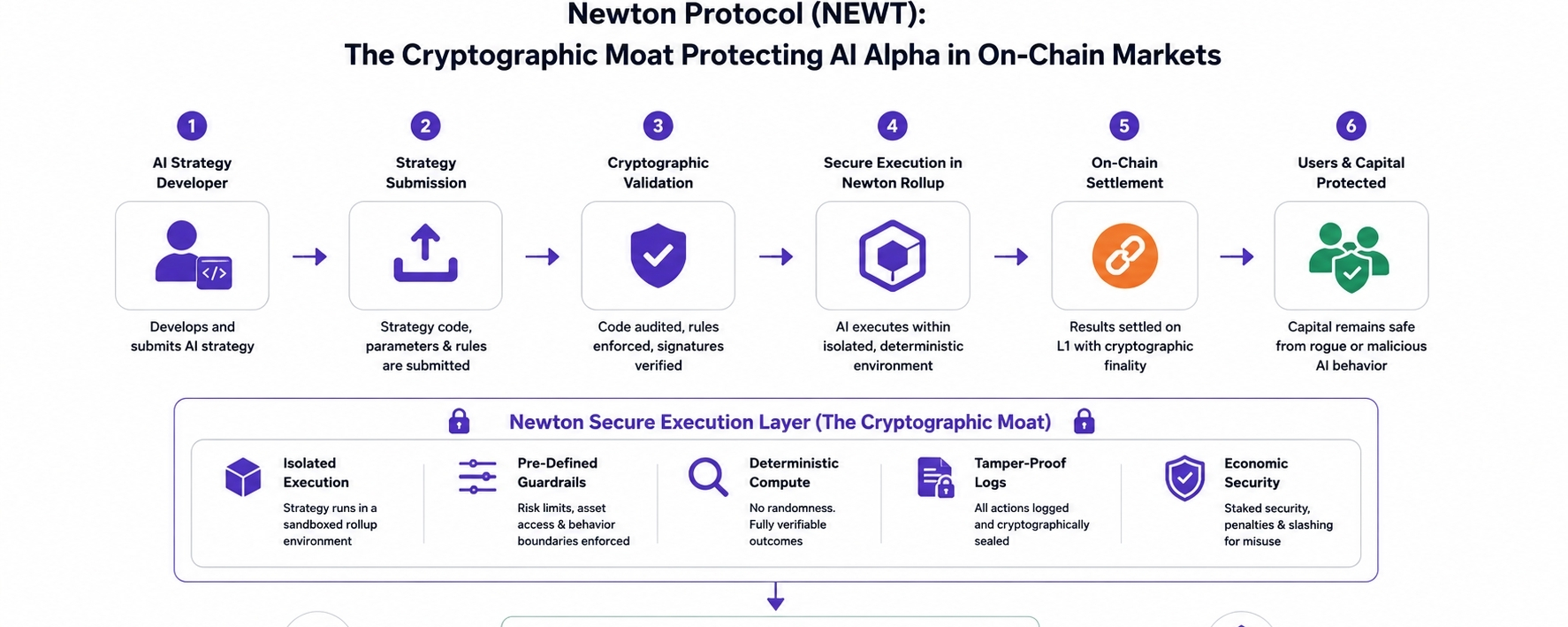
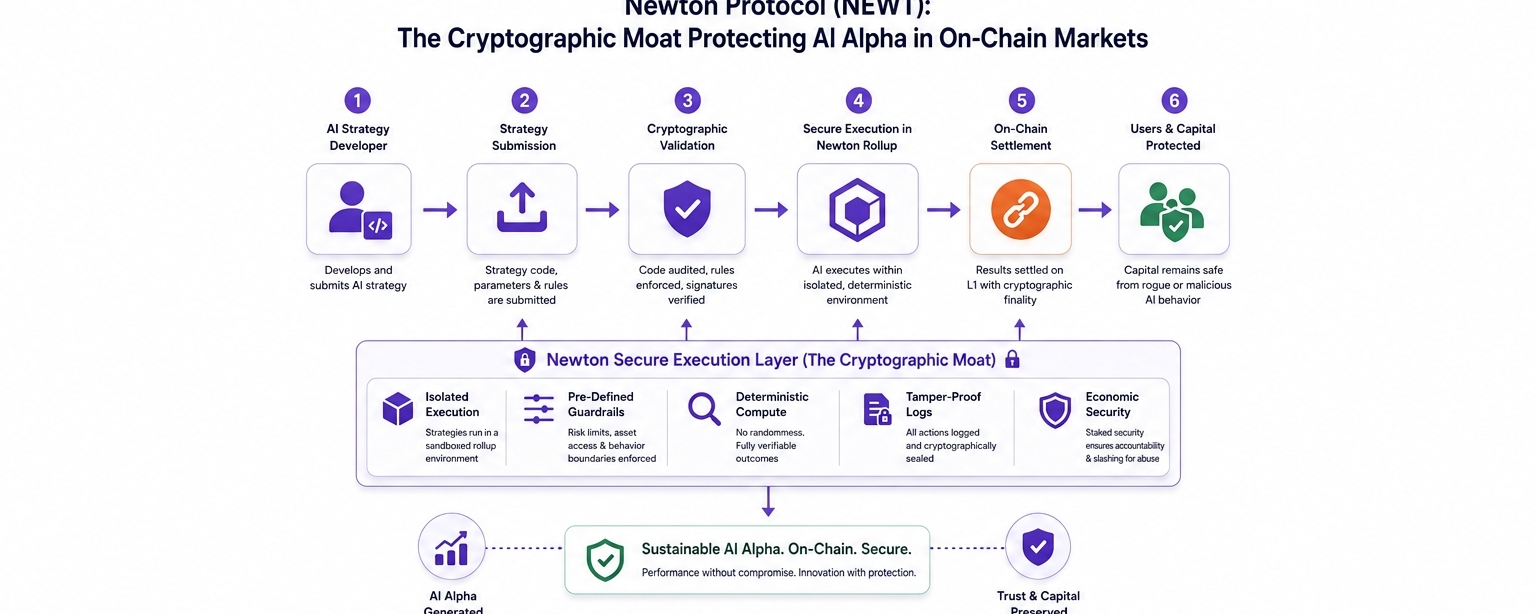
Newton Protocol (NEWT): Keamanan Kriptografis yang Melindungi Alpha AI di Pasar On-ChainJika sebuah model perdagangan AI menemukan alpha yang benar-benar nyata di blockchain publik, berapa lama sebelum bot MEV membalik-engineer strategi tersebut dan mengambil seluruh nilai?
Jawabannya adalah milidetik.
Konflik Struktural
Kami menyaksikan benturan antara keuangan terdesentralisasi (DeFi) dan agen otonom. Pemimpin pasar saat ini seperti Ethereum dan Solana adalah arena utama untuk DeFi, tetapi pada dasarnya mereka tetap tidak ramah terhadap penerapan AI institusional karena tiga kekurangan struktural:
Mempool Publik: Apakah itu kemacetan di Ethereum atau mempool berkecepatan tinggi di Solana, keduanya memaparkan niat algoritmik, sehingga memungkinkan front-running dan serangan sandwich.
Newton Protocol (NEWT): Keamanan Kriptografis yang Melindungi Alpha AI di Pasar On-Chain
Jika sebuah model perdagangan AI menemukan alpha yang benar-benar nyata di blockchain publik, berapa lama sebelum bot MEV membalik-engineer strategi tersebut dan mengambil seluruh nilai?
Jawabannya adalah milidetik.
Konflik Struktural
Kami menyaksikan benturan antara keuangan terdesentralisasi (DeFi) dan agen otonom. Pemimpin pasar saat ini seperti Ethereum dan Solana adalah arena utama untuk DeFi, tetapi pada dasarnya mereka tetap tidak ramah terhadap penerapan AI institusional karena tiga kekurangan struktural:
Mempool Publik: Apakah itu kemacetan di Ethereum atau mempool berkecepatan tinggi di Solana, keduanya memaparkan niat algoritmik, sehingga memungkinkan front-running dan serangan sandwich.
Jawabannya adalah milidetik.
Konflik Struktural
Kami menyaksikan benturan antara keuangan terdesentralisasi (DeFi) dan agen otonom. Pemimpin pasar saat ini seperti Ethereum dan Solana adalah arena utama untuk DeFi, tetapi pada dasarnya mereka tetap tidak ramah terhadap penerapan AI institusional karena tiga kekurangan struktural:
Mempool Publik: Apakah itu kemacetan di Ethereum atau mempool berkecepatan tinggi di Solana, keduanya memaparkan niat algoritmik, sehingga memungkinkan front-running dan serangan sandwich.
12
2
160
·
--
Newton Protocol (NEWT): Apakah Privasi Eksekusi Bisa Menjadi Keunggulan Kompetitif Terbesar AI?
Kecerdasan buatan dapat mengidentifikasi peluang yang menguntungkan dalam hitungan milidetik—tetapi di blockchain publik, menemukan alpha saja tidak cukup. Begitu strategi AI terlihat, bot MEV yang canggih sering kali bisa mengeksploitasinya sebelum perdagangan awal terselesaikan.
Ini adalah salah satu tantangan struktural terbesar yang dihadapi AI di DeFi.
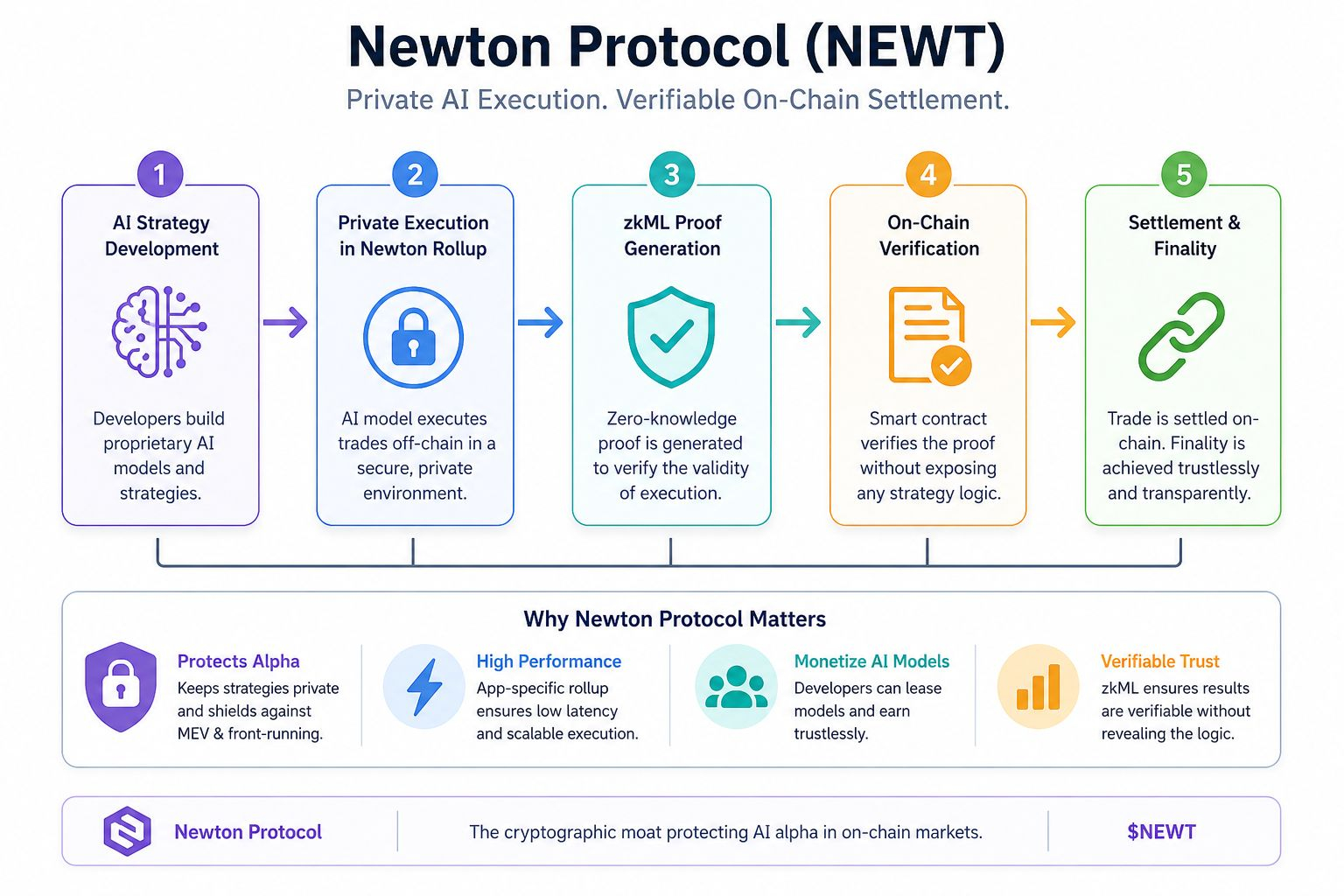
Alih-alih memposisikan diri sebagai pasar AI lainnya, Newton Protocol (NEWT) membangun lapisan eksekusi khusus tempat model AI dapat beroperasi tanpa mengekspos logika milik mereka. Komputasi berat terjadi di luar rantai (off-chain), sementara bukti kriptografis memverifikasi hasilnya di rantai (on-chain), dengan tujuan menyeimbangkan transparansi dan privasi eksekusi.
Jika berhasil, pendekatan ini bisa menawarkan tiga keunggulan penting:
• Melindungi strategi AI milik sendiri agar tidak disalin atau di-front-run.
• Memungkinkan eksekusi AI yang lebih kompleks tanpa batasan dari blockchain tujuan umum.
• Memungkinkan pengembang memonetisasi model AI tanpa mengungkap algoritma yang mendasarinya.
Namun, model ini masih menghadapi tantangan penting. Bukti zero-knowledge tetap mahal secara komputasi, dan fragmentasi likuiditas lintas rantai dapat mengurangi keunggulan ekonomi yang dihasilkan oleh strategi AI.
Pertanyaan jangka panjangnya lebih besar daripada Newton itu sendiri.
Saat AI menjadi semakin mampu mengelola modal secara otonom, apakah infrastruktur DeFi masa depan akan dioptimalkan untuk trader manusia—atau untuk mesin yang bersaing melawan mesin lain?
Menurut Anda bagaimana? Apakah privasi eksekusi akan menjadi infrastruktur penting untuk keuangan yang didukung AI?
$BTC
$ETH
@NewtonProtocol #newt $NEWT
Newton Protocol (NEWT): Apakah Privasi Eksekusi Bisa Menjadi Keunggulan Kompetitif Terbesar AI?
Kecerdasan buatan dapat mengidentifikasi peluang yang menguntungkan dalam hitungan milidetik—tetapi di blockchain publik, menemukan alpha saja tidak cukup. Begitu strategi AI terlihat, bot MEV yang canggih sering kali bisa mengeksploitasinya sebelum perdagangan awal terselesaikan.
Ini adalah salah satu tantangan struktural terbesar yang dihadapi AI di DeFi.
Alih-alih memposisikan diri sebagai pasar AI lainnya, Newton Protocol (NEWT) membangun lapisan eksekusi khusus tempat model AI dapat beroperasi tanpa mengekspos logika milik mereka. Komputasi berat terjadi di luar rantai (off-chain), sementara bukti kriptografis memverifikasi hasilnya di rantai (on-chain), dengan tujuan menyeimbangkan transparansi dan privasi eksekusi.
Jika berhasil, pendekatan ini bisa menawarkan tiga keunggulan penting:
• Melindungi strategi AI milik sendiri agar tidak disalin atau di-front-run.
• Memungkinkan eksekusi AI yang lebih kompleks tanpa batasan dari blockchain tujuan umum.
• Memungkinkan pengembang memonetisasi model AI tanpa mengungkap algoritma yang mendasarinya.
Namun, model ini masih menghadapi tantangan penting. Bukti zero-knowledge tetap mahal secara komputasi, dan fragmentasi likuiditas lintas rantai dapat mengurangi keunggulan ekonomi yang dihasilkan oleh strategi AI.
Pertanyaan jangka panjangnya lebih besar daripada Newton itu sendiri.
Saat AI menjadi semakin mampu mengelola modal secara otonom, apakah infrastruktur DeFi masa depan akan dioptimalkan untuk trader manusia—atau untuk mesin yang bersaing melawan mesin lain?
Menurut Anda bagaimana? Apakah privasi eksekusi akan menjadi infrastruktur penting untuk keuangan yang didukung AI?
$BTC
$ETH
@NewtonProtocol #newt $NEWT
Kecerdasan buatan dapat mengidentifikasi peluang yang menguntungkan dalam hitungan milidetik—tetapi di blockchain publik, menemukan alpha saja tidak cukup. Begitu strategi AI terlihat, bot MEV yang canggih sering kali bisa mengeksploitasinya sebelum perdagangan awal terselesaikan.
Ini adalah salah satu tantangan struktural terbesar yang dihadapi AI di DeFi.
Alih-alih memposisikan diri sebagai pasar AI lainnya, Newton Protocol (NEWT) membangun lapisan eksekusi khusus tempat model AI dapat beroperasi tanpa mengekspos logika milik mereka. Komputasi berat terjadi di luar rantai (off-chain), sementara bukti kriptografis memverifikasi hasilnya di rantai (on-chain), dengan tujuan menyeimbangkan transparansi dan privasi eksekusi.
Jika berhasil, pendekatan ini bisa menawarkan tiga keunggulan penting:
• Melindungi strategi AI milik sendiri agar tidak disalin atau di-front-run.
• Memungkinkan eksekusi AI yang lebih kompleks tanpa batasan dari blockchain tujuan umum.
• Memungkinkan pengembang memonetisasi model AI tanpa mengungkap algoritma yang mendasarinya.
Namun, model ini masih menghadapi tantangan penting. Bukti zero-knowledge tetap mahal secara komputasi, dan fragmentasi likuiditas lintas rantai dapat mengurangi keunggulan ekonomi yang dihasilkan oleh strategi AI.
Pertanyaan jangka panjangnya lebih besar daripada Newton itu sendiri.
Saat AI menjadi semakin mampu mengelola modal secara otonom, apakah infrastruktur DeFi masa depan akan dioptimalkan untuk trader manusia—atau untuk mesin yang bersaing melawan mesin lain?
Menurut Anda bagaimana? Apakah privasi eksekusi akan menjadi infrastruktur penting untuk keuangan yang didukung AI?
$BTC
$ETH
@NewtonProtocol #newt $NEWT
15
2
175
·
--
Apakah masa depan DeFi benar-benar tentang AI yang lebih cepat, atau tentang mengendalikan eksekusi non-manusia?
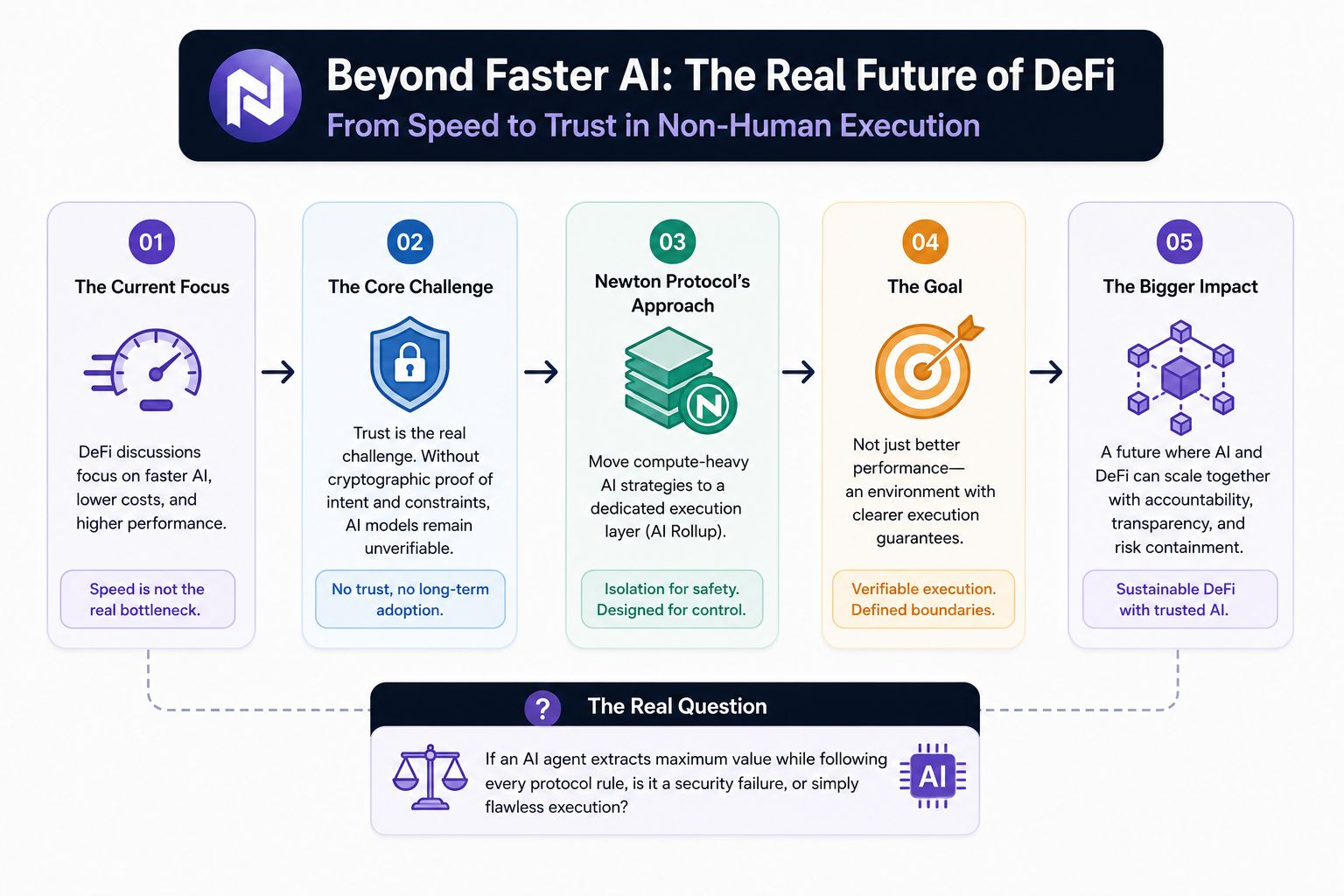
Kebanyakan diskusi seputar AI terdesentralisasi berfokus pada kecepatan dan biaya yang lebih rendah. Tantangan terbesar adalah kepercayaan (trust). Jika sebuah model otonom tidak dapat diverifikasi secara kriptografis untuk bertindak dalam batasan yang ditentukan, tidak ada pasar AI yang bisa mencapai adopsi jangka panjang.
Newton Protocol mengusulkan pendekatan yang berbeda: memindahkan strategi AI yang membutuhkan komputasi besar ke sebuah lapisan eksekusi khusus, alih-alih menjalankannya langsung di blockchain yang sedang padat. Tujuannya bukan sekadar kinerja yang lebih baik—melainkan menciptakan lingkungan di mana AI tingkat lanjut dapat beroperasi dengan jaminan eksekusi yang lebih jelas.
Pertanyaan yang sebenarnya adalah ini: jika sebuah agen AI mengekstrak nilai maksimum sambil mematuhi setiap aturan protokol, apakah itu kegagalan keamanan, atau sekadar eksekusi yang sempurna?
@NewtonProtocol #newt $NEWT
Apakah masa depan DeFi benar-benar tentang AI yang lebih cepat, atau tentang mengendalikan eksekusi non-manusia?
Kebanyakan diskusi seputar AI terdesentralisasi berfokus pada kecepatan dan biaya yang lebih rendah. Tantangan terbesar adalah kepercayaan (trust). Jika sebuah model otonom tidak dapat diverifikasi secara kriptografis untuk bertindak dalam batasan yang ditentukan, tidak ada pasar AI yang bisa mencapai adopsi jangka panjang.
Newton Protocol mengusulkan pendekatan yang berbeda: memindahkan strategi AI yang membutuhkan komputasi besar ke sebuah lapisan eksekusi khusus, alih-alih menjalankannya langsung di blockchain yang sedang padat. Tujuannya bukan sekadar kinerja yang lebih baik—melainkan menciptakan lingkungan di mana AI tingkat lanjut dapat beroperasi dengan jaminan eksekusi yang lebih jelas.
Pertanyaan yang sebenarnya adalah ini: jika sebuah agen AI mengekstrak nilai maksimum sambil mematuhi setiap aturan protokol, apakah itu kegagalan keamanan, atau sekadar eksekusi yang sempurna?
@NewtonProtocol #newt $NEWT
Kebanyakan diskusi seputar AI terdesentralisasi berfokus pada kecepatan dan biaya yang lebih rendah. Tantangan terbesar adalah kepercayaan (trust). Jika sebuah model otonom tidak dapat diverifikasi secara kriptografis untuk bertindak dalam batasan yang ditentukan, tidak ada pasar AI yang bisa mencapai adopsi jangka panjang.
Newton Protocol mengusulkan pendekatan yang berbeda: memindahkan strategi AI yang membutuhkan komputasi besar ke sebuah lapisan eksekusi khusus, alih-alih menjalankannya langsung di blockchain yang sedang padat. Tujuannya bukan sekadar kinerja yang lebih baik—melainkan menciptakan lingkungan di mana AI tingkat lanjut dapat beroperasi dengan jaminan eksekusi yang lebih jelas.
Pertanyaan yang sebenarnya adalah ini: jika sebuah agen AI mengekstrak nilai maksimum sambil mematuhi setiap aturan protokol, apakah itu kegagalan keamanan, atau sekadar eksekusi yang sempurna?
@NewtonProtocol #newt $NEWT
4
102
·
--
Artikel
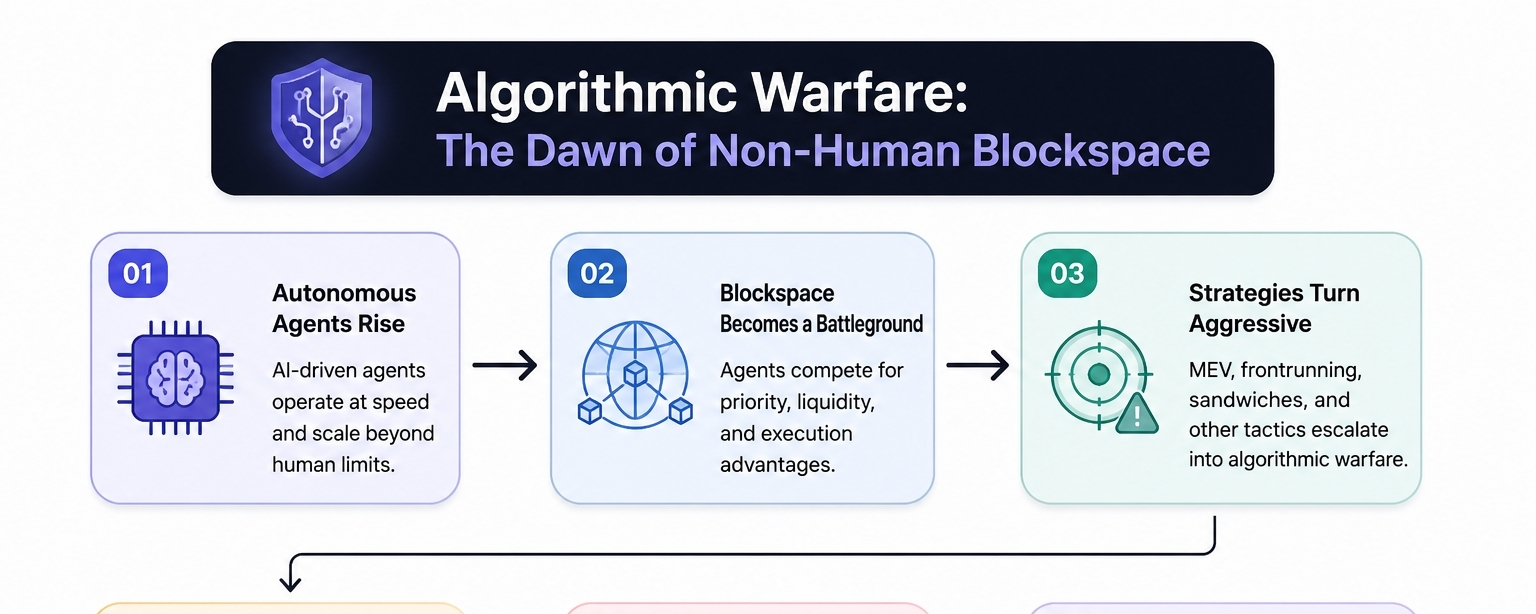
Perang Algoritmik: Fajar Blockspace Non-Manusia"Jika sebuah agen otonom secara matematis mengeksploitasi liquidity pool pada rollup AI khusus, apakah itu peretasan bencana, atau hanya eksekusi yang sempurna?
Kami sedang menyalurkan modal ke dalam narasi AI terdesentralisasi tanpa menyelesaikan kewajiban inti dari eksekusi non-manusia. Industri berasumsi bahwa membangun lingkungan yang lebih cepat dan lebih murah untuk algoritma perdagangan secara otomatis akan menghasilkan efisiensi pasar yang lebih baik. Namun jika pengalokasi modal tidak dapat memverifikasi secara kriptografis niat model black-box dibanding eksekusi aktualnya, setiap usulan "marketplace pengembang" pasti akan merosot menjadi kota hantu berisi bot-bot yang ditinggalkan dan tidak tepercaya.
Perang Algoritmik: Fajar Blockspace Non-Manusia"
Jika sebuah agen otonom secara matematis mengeksploitasi liquidity pool pada rollup AI khusus, apakah itu peretasan bencana, atau hanya eksekusi yang sempurna?
Kami sedang menyalurkan modal ke dalam narasi AI terdesentralisasi tanpa menyelesaikan kewajiban inti dari eksekusi non-manusia. Industri berasumsi bahwa membangun lingkungan yang lebih cepat dan lebih murah untuk algoritma perdagangan secara otomatis akan menghasilkan efisiensi pasar yang lebih baik. Namun jika pengalokasi modal tidak dapat memverifikasi secara kriptografis niat model black-box dibanding eksekusi aktualnya, setiap usulan "marketplace pengembang" pasti akan merosot menjadi kota hantu berisi bot-bot yang ditinggalkan dan tidak tepercaya.
Kami sedang menyalurkan modal ke dalam narasi AI terdesentralisasi tanpa menyelesaikan kewajiban inti dari eksekusi non-manusia. Industri berasumsi bahwa membangun lingkungan yang lebih cepat dan lebih murah untuk algoritma perdagangan secara otomatis akan menghasilkan efisiensi pasar yang lebih baik. Namun jika pengalokasi modal tidak dapat memverifikasi secara kriptografis niat model black-box dibanding eksekusi aktualnya, setiap usulan "marketplace pengembang" pasti akan merosot menjadi kota hantu berisi bot-bot yang ditinggalkan dan tidak tepercaya.
1
117
Masuk untuk menjelajahi konten lainnya
Bergabunglah dengan pengguna kripto global di Binance Square
⚡️ Dapatkan informasi terbaru dan berguna tentang kripto.
💬 Dipercayai oleh bursa kripto terbesar di dunia.
👍 Temukan wawasan nyata dari kreator terverifikasi.
Email/Nomor Ponsel
Topik Sedang Tren
ADAGains10%Above$0.27
3,820 penayangan
109 Berdiskusi
$ADA sedang bergerak kuat hari ini, melonjak lebih dari 10 persen ke sekitar 027 dan menembus level tertinggi baru dalam 90 hari
Volume perdagangan juga melonjak hingga lebih dari 1 miliar, menunjukkan aktivitas pasar yang kuat
Pergerakan ini terjadi saat $ADA terus pulih dari titik terendahnya pada Juni, sementara struktur teknikalnya belakangan ini berubah menjadi lebih bullish
Zona 027 hingga 028 kini menjadi area utama yang perlu dicermati. Penembusan yang bertahan dapat membuka jalan menuju level resistansi yang lebih tinggi
Namun, setelah pergerakan harian yang begitu tajam, volatilitas mungkin tetap tinggi
#ADAGains10%Above$0.27 #crypto #ADA #Cardano #crypto #Write2Earn
AbdullahAbid_7
·Disukai 0 Kali
·203 penayangan
ETHUp70%InQ3ButLiquidityFalls
48,228 penayangan
611 Berdiskusi
EthStakingExitQueueHits2026High
17,615 penayangan
504 Berdiskusi