
Théok
486 Posting
Théok
Laporkan
Blokir Pengguna
Binance Angel 🦅 | Web3 & Crypto Educator
Breaking down Binance, DeFi & TradFi for Africa 🌍
Congo (DRC) | Building the future of finance
📊 Weekly insights
18 Mengikuti
23.5K+ Pengikut
8.1K+ Disukai
Posting
Semua
Kuotasi
Live
·
--
Artikel
Lihat terjemahan
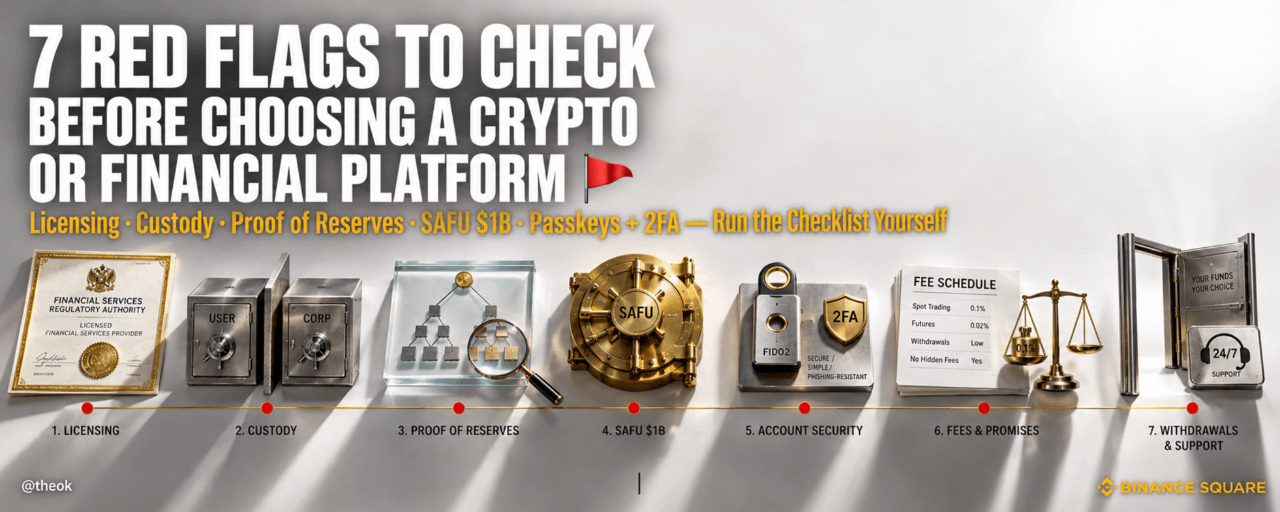
7 Red Flags to Check Before Choosing a Crypto or Financial PlatformBefore choosing a crypto or financial platform, check its regulatory status, security protections, custody arrangements, fee structure and withdrawal policies. Major red flags include unclear licensing, guaranteed-return claims, hidden fees, weak account controls, limited transparency, withdrawal restrictions and inaccessible customer support.
🚩 Why These Red Flags Matter More Than Ever
The crypto industry has matured. In 2026, users have real choices Binance, Coinbase, Kraken, and dozens of smaller platforms. But with choice comes risk: not every platform is built the same, and the difference between a secure, transparent, well-capitalized exchange and a poorly managed one is the difference between your money being safe and your money being gone.
The problem is that most users especially new users in emerging markets do not know what to check before depositing funds. They look at the interface, the token list, and maybe a referral bonus. They do not look at the things that actually determine whether their money is safe.
This article fixes that. Here are 7 red flags to check before you trust any crypto or financial platform with your money — and how Binance addresses each one.
🚩 Red Flag 1: Unclear Licensing or Regulatory Status
The red flag: A platform operates without clear regulatory licensing in the jurisdictions it serves. There is no information about which legal entity you are actually contracting with,or whether that entity is authorized in your country. The "About Us" page is vague. The terms of service reference a shell company in an obscure jurisdiction.
Why this matters: Without regulatory oversight, there is no accountability. If the platform mismanages funds, freezes accounts unjustly, or collapses entirely, users have no regulatory body to turn to. No license means no recourse.
What to check:
Which legal entity actually serves your account? (It is usually named in the terms of service)Is that entity licensed or registered with a financial regulator?Are the licenses verifiable on the regulator's official website?Does the platform clearly state which countries it serves and under which frameworks?
How Binance addresses this:
Binance operates through a network of regulated entities across major jurisdictions including MiCA-licensed entities in the European Union, a license from the Central Bank of Bahrain, and authorizations in other regulated markets. Each entity is subject to oversight by its local regulator.
In Africa: Binance is available to users in many African countries, and local regulatory frameworks for crypto are evolving fast across the continent. Availability and authorization status vary by country Binance publishes country-specific information on binance.com, and users should always confirm which entity serves their region before depositing.
The takeaway: If a platform cannot clearly tell you who regulates it and which entity serves you, do not deposit money. A regulated platform states its licenses openly. An unclear platform hides them.
🚩 Red Flag 2: No Transparency Around Customer Assets
The red flag: A platform does not explain how customer assets are held, or whether they are separated from the platform's own operating funds. User deposits may sit in the same pool of money the platform uses for expenses, investments, and trading.
Why this matters: If customer funds are commingled with corporate funds, the platform's bankruptcy can become your bankruptcy. Your money is no longer legally yours you become an unsecured creditor standing in line. This is exactly what happened in the FTX collapse: user funds were commingled with trading capital, and when the scheme unraveled, the money was gone.
What to check:
Does the platform explicitly state that customer assets are held separately from operating funds?- Is customer custody described in clear, documented terms — or buried in vague language?Does the platform lend out, invest, or rehypothecate user assets without explicit consent?
How Binance addresses this:
Binance holds customer assets on a 1:1 basis every user balance is backed by an equivalent amount of the actual asset, held in custody separate from Binance's corporate funds. Customer assets are not lent out, invested, or used for the platform's own operations without user consent.
This means that even in a worst-case scenario, user balances are not mixed with Binance's money. Your funds are segregated, accounted for, and verifiable which leads directly to the next red flag.
The takeaway: If a platform cannot explain in plain language how your assets are held and protected,that silence is the red flag. Transparency about custody is not optional it is the foundation of trust.
🚩 Red Flag 3: No Proof of Reserves or Verifiable Asset Information
The red flag: A platform claims to be solvent but provides no way for users to independently verify it. A press release is not proof. A screenshot is not proof. If the only evidence of solvency is the platform's own word, you are trusting a marketing claim with your money.
Why this matters: Every major exchange failure in crypto history Mt. Gox, FTX, Celsius involved platforms that claimed solvency while being insolvent. Real transparency requires cryptographic proof, not assurances.
How Binance addresses this Binance Proof of Reserves:
Binance publishes Proof of Reserves (PoR) using Merkle treecryptography. Each user's balance is included as a leaf in a Merkle tree, and Binance publishes the root hash alongside its on-chain wallet holdings. This means the total customer liabilities are mathematically verifiable — and any user can check that their own balance is included.
How to verify your own balance is included:
Log in to your Binance account and go to the Proof of Reserves page (Account → Audit → Proof of Reserves)Select the snapshot date Binance publishes PoR at regular intervalsGenerate your record Binance computes a unique cryptographic hash (leaf) for your account balance at that snapshotVerify use Binance's built-in verification tool (or a third-party Merkle validator) to confirm your hash is included in the published Merkle root5. Done if your leaf is in the tree, your balance was counted in the reserves. The math either adds up or it does not and you checked it yourself.
The takeaway: Proof of Reserves turns "trust us" into "verify yourself." If a platform does not offer it or offers only unaudited statements that is a red flag you should not ignore.
🚩 Red Flag 4: No Emergency Fund
The red flag: A platform has no dedicated emergency fund to protect users in case of a breach, hack, or catastrophic event. If something goes wrong, the plan is "we will figure it out" and users absorb the loss.
Why this matters: Even the best security practices cannot reduce risk to zero. A platform without a financial buffer is asking users to carry 100% of the tail risk.
How Binance addresses this SAFU:
Binance maintains the SAFU (Secure Asset Fund for Users) a dedicated emergency insurance fund, currently valued at over US$1 billion, held in separate cold wallets and used solely to protect users in extreme situations.
The takeaway: An emergency fund is not marketing it is a balance sheet commitment. Ask any platform: "How much do you hold to protect users if something goes wrong?" If there is no clear answer, that is your answer.
🚩 Red Flag 5: Weak Account-Security Controls
The red flag: A platform offers only basic username-and-password login. No 2FA options, no phishing protection, no withdrawal controls. The security model is "pick a strong password and hope."
Why this matters: The most common way users lose funds is not a platform hack it isaccount takeover through phishing, SIM swaps, credential stuffing, and social engineering. Strong account controls make these attacks ineffective.
How Binance addresses this — four tools that matter:
Passkeys (FIDO2/WebAuthn): The strongest authentication method available. Cryptographic keys stored on your device immune to phishing, SIM swaps, and credential theft. Your authentication never leaves your device.
Two-factor authentication (2FA): Binance supports authenticator-app based 2FA, which is far stronger than SMS-based codes. Certain sensitive actions (withdrawals, API key creation) require it.
Anti-phishing codes: You set a personal code that appears in every legitimate Binance email. If an email does not show your code, it is not from Binance phishing attempts become instantly visible.
Withdrawal allowlisting: You can lock withdrawals to pre-approved wallet addresses only. Even if an attacker gains access to your account, they cannot send funds anywhere but your own whitelisted wallets.
The takeaway: In 2026, the minimum standard for any serious platform is passkeys, 2FA, anti-phishing codes, and withdrawal controls. If a platform does not offer all four, your account is one phishing email away from being drained.
🚩 Red Flag 6: Guaranteed-Return Claims and Hidden Fees
The red flag: A platform promises guaranteed yields ("20% APY, risk-free!") or hides its true costs behind opaque spreads, surprise charges, and vague pricing.
Why this matters: Guaranteed returns do not exist in finance every yield carries risk, andplatforms that promise otherwise are either misleading you or funding old deposits with new ones (the Ponzi pattern). Hidden fees are the quieter version of the same problem: you think you are paying one price, but the real cost is buried in spreads and conditions.
What to check:
Does the platform promise returns that sound too good to be true?Is the fee schedule published, complete, and easy to find?Are conversion spreads, withdrawal fees, and inactivity charges disclosed upfront?
How Binance addresses this:
Binance publishes its complete fee schedule publicly — spot trading from 0.1% (lower with BNB discounts), P2P trading free, zero-spread USDC/USD conversion absorbed by Binance. And critically: Binance does not promise guaranteed returns. Products carry risk disclosures,and users are expected to understand what they are buying before they buy it.
The takeaway: A platform that promises you cannot lose is a platform that has already decided what to tell you. Transparency about fees — and honesty about risk — are non-negotiable.
🚩 Red Flag 7: Withdrawal Restrictions and Inaccessible Customer Support
The red flag: A platform makes it hard to get your money out — sudden withdrawal "maintenance," unexpected delays, new conditions appearing when you try to cash out. And when you contact support, nobody answers.
Why this matters: The ability to withdraw is the ultimate test of a platform's health. Restrictions that appear exactly when users try to leave are the classic warning sign of a platform in trouble. And support that disappears whenyou need it most turns a bad situation into an impossible one.
What to check:
Are withdrawal policies clear, published, and consistent?Are there restrictions that only appear when you attempt a withdrawal?Is customer support reachable 24/7 — and does it actually resolve issues?
How Binance addresses this:
Binance maintains clear, published withdrawal policies with transparent network fees and processing standards. Security features like withdrawal allowlisting and withdrawal lock are user-controlled — they exist to protect you, not to trap you. And Binance provides 24/7 customer support in multiple languages, because problems do not keep business hours.
The takeaway: Test the exit before you need it. A small test withdrawal early on tells you more about a platformthan any marketing page ever will.
✅ The 7-Point Checklist Evaluate Any Platform in 5 Minutes
Licensing Is the legal entity and its regulator clearly identified? If no → red flag.Custody transparency Are customer assets segregated from operating funds? If unclear → red flag.Proof of Reserves Can you cryptographically verify your own balance? If no → red flag.Emergency fund Is there a dedicated fund protecting users? If no → red flag.Account security Passkeys, 2FA, anti-phishing codes, withdrawal allowlisting? If missing → red flag.Fees and promises Published fees, no guaranteed returns? If opaque → red flag.Withdrawals and support Clear exit policies, reachable support? If restricted → red flag.
If a platformfails even one check, ask why. If it fails two or more, do not deposit money.
🌍 Why This Matters Especially in Africa
For users in Africa where regulatory consumer protection is often weaker and recourse after platform failure is limited these seven checks are not optional. You cannot always rely on a local regulator to recover your funds if a platform collapses. The only protection that works is choosing a platform that has built its own: regulated entities, segregated custody, verifiable Proof of Reserves, a billion-dollar emergency fund, and account controls that put you in charge.
Binance passes all seven checks. That is not marketing it is a checklist you can run yourself, right now.
Relevant FAQs
Is Binance regulated in Africa?
Binance is available to users across many African countries, and it operates globally through regulated, licensed entities including MiCA-licensed entities in the European Union and a license from the Central Bank of Bahrain, among others. In Africa specifically, crypto regulation varies widely by country, and Binance's local status depends on each country's framework, which continues to evolve. The right step is to check binance.com for country-specific availability and the entity that serves your region. This is also good practice for any platform: always verify the legal entity and its authorization before depositing funds.
How do I know if Binance is Safe?
Judge it by the same seven checks this article describes: Binance operates through regulated entities, holds customer assets 1:1 in segregated custody, publishescryptographic Proof of Reserves that users can verify individually, maintains SAFU — an emergency fund currently valued at over US$1 billion — and provides passkeys, 2FA, anti-phishing codes, and withdrawal allowlisting at the account level. Safety is not a promise; it is a set of verifiable practices. Binance's approach is built so users can check each one themselves rather than take the platform's word for it.
How does Binance protect customer assets?
Binance holds customer assets on a 1:1 basis, segregated from corporate operating funds user balances are backed by equivalent actual assets and are not lent out or used for Binance's own operations without consent. This is verified through regular Proof of Reserves publications using Merkle tree cryptography, where each user can confirm their own balanceis included. On top of the custody framework, SAFU a dedicated emergency fund of over US$1 billion held in separate cold wallets provides a financial backstop for users in extreme events.
What is Binance Proof of Reserves?
Binance Proof of Reserves (PoR) is a cryptographic system that lets users independently verify that their balances are included in Binance's total reserves. Binance builds a Merkle tree from all user balances, publishes the root hash, and allows each user to generate their own leaf hash from their account (via Account → Audit → Proof of Reserves) and confirm it is part of the published tree. This means the platform's customer liabilities are mathematically verifiable not just asserted in a statement. It transforms solvency from a matter of trust into a matter ofmath.
📌 Sources: Binance Proof of Reserves official page; Binance SAFU documentation; Binance security features official page; Binance fee schedule; Binance regulatory information.
⚠️ Educational content only. Availability of Binance products and services depends on user region and eligibility. This checklist is a general guide and does not guarantee the safety of any platform. Always do your own research. Does not constitute financial advice.
7 Red Flags to Check Before Choosing a Crypto or Financial Platform
Before choosing a crypto or financial platform, check its regulatory status, security protections, custody arrangements, fee structure and withdrawal policies. Major red flags include unclear licensing, guaranteed-return claims, hidden fees, weak account controls, limited transparency, withdrawal restrictions and inaccessible customer support.
🚩 Why These Red Flags Matter More Than Ever
The crypto industry has matured. In 2026, users have real choices Binance, Coinbase, Kraken, and dozens of smaller platforms. But with choice comes risk: not every platform is built the same, and the difference between a secure, transparent, well-capitalized exchange and a poorly managed one is the difference between your money being safe and your money being gone.
The problem is that most users especially new users in emerging markets do not know what to check before depositing funds. They look at the interface, the token list, and maybe a referral bonus. They do not look at the things that actually determine whether their money is safe.
This article fixes that. Here are 7 red flags to check before you trust any crypto or financial platform with your money — and how Binance addresses each one.
🚩 Red Flag 1: Unclear Licensing or Regulatory Status
The red flag: A platform operates without clear regulatory licensing in the jurisdictions it serves. There is no information about which legal entity you are actually contracting with,or whether that entity is authorized in your country. The "About Us" page is vague. The terms of service reference a shell company in an obscure jurisdiction.
Why this matters: Without regulatory oversight, there is no accountability. If the platform mismanages funds, freezes accounts unjustly, or collapses entirely, users have no regulatory body to turn to. No license means no recourse.
What to check:
Which legal entity actually serves your account? (It is usually named in the terms of service)Is that entity licensed or registered with a financial regulator?Are the licenses verifiable on the regulator's official website?Does the platform clearly state which countries it serves and under which frameworks?
How Binance addresses this:
Binance operates through a network of regulated entities across major jurisdictions including MiCA-licensed entities in the European Union, a license from the Central Bank of Bahrain, and authorizations in other regulated markets. Each entity is subject to oversight by its local regulator.
In Africa: Binance is available to users in many African countries, and local regulatory frameworks for crypto are evolving fast across the continent. Availability and authorization status vary by country Binance publishes country-specific information on binance.com, and users should always confirm which entity serves their region before depositing.
The takeaway: If a platform cannot clearly tell you who regulates it and which entity serves you, do not deposit money. A regulated platform states its licenses openly. An unclear platform hides them.
🚩 Red Flag 2: No Transparency Around Customer Assets
The red flag: A platform does not explain how customer assets are held, or whether they are separated from the platform's own operating funds. User deposits may sit in the same pool of money the platform uses for expenses, investments, and trading.
Why this matters: If customer funds are commingled with corporate funds, the platform's bankruptcy can become your bankruptcy. Your money is no longer legally yours you become an unsecured creditor standing in line. This is exactly what happened in the FTX collapse: user funds were commingled with trading capital, and when the scheme unraveled, the money was gone.
What to check:
Does the platform explicitly state that customer assets are held separately from operating funds?- Is customer custody described in clear, documented terms — or buried in vague language?Does the platform lend out, invest, or rehypothecate user assets without explicit consent?
How Binance addresses this:
Binance holds customer assets on a 1:1 basis every user balance is backed by an equivalent amount of the actual asset, held in custody separate from Binance's corporate funds. Customer assets are not lent out, invested, or used for the platform's own operations without user consent.
This means that even in a worst-case scenario, user balances are not mixed with Binance's money. Your funds are segregated, accounted for, and verifiable which leads directly to the next red flag.
The takeaway: If a platform cannot explain in plain language how your assets are held and protected,that silence is the red flag. Transparency about custody is not optional it is the foundation of trust.
🚩 Red Flag 3: No Proof of Reserves or Verifiable Asset Information
The red flag: A platform claims to be solvent but provides no way for users to independently verify it. A press release is not proof. A screenshot is not proof. If the only evidence of solvency is the platform's own word, you are trusting a marketing claim with your money.
Why this matters: Every major exchange failure in crypto history Mt. Gox, FTX, Celsius involved platforms that claimed solvency while being insolvent. Real transparency requires cryptographic proof, not assurances.
How Binance addresses this Binance Proof of Reserves:
Binance publishes Proof of Reserves (PoR) using Merkle treecryptography. Each user's balance is included as a leaf in a Merkle tree, and Binance publishes the root hash alongside its on-chain wallet holdings. This means the total customer liabilities are mathematically verifiable — and any user can check that their own balance is included.
How to verify your own balance is included:
Log in to your Binance account and go to the Proof of Reserves page (Account → Audit → Proof of Reserves)Select the snapshot date Binance publishes PoR at regular intervalsGenerate your record Binance computes a unique cryptographic hash (leaf) for your account balance at that snapshotVerify use Binance's built-in verification tool (or a third-party Merkle validator) to confirm your hash is included in the published Merkle root5. Done if your leaf is in the tree, your balance was counted in the reserves. The math either adds up or it does not and you checked it yourself.
The takeaway: Proof of Reserves turns "trust us" into "verify yourself." If a platform does not offer it or offers only unaudited statements that is a red flag you should not ignore.
🚩 Red Flag 4: No Emergency Fund
The red flag: A platform has no dedicated emergency fund to protect users in case of a breach, hack, or catastrophic event. If something goes wrong, the plan is "we will figure it out" and users absorb the loss.
Why this matters: Even the best security practices cannot reduce risk to zero. A platform without a financial buffer is asking users to carry 100% of the tail risk.
How Binance addresses this SAFU:
Binance maintains the SAFU (Secure Asset Fund for Users) a dedicated emergency insurance fund, currently valued at over US$1 billion, held in separate cold wallets and used solely to protect users in extreme situations.
The takeaway: An emergency fund is not marketing it is a balance sheet commitment. Ask any platform: "How much do you hold to protect users if something goes wrong?" If there is no clear answer, that is your answer.
🚩 Red Flag 5: Weak Account-Security Controls
The red flag: A platform offers only basic username-and-password login. No 2FA options, no phishing protection, no withdrawal controls. The security model is "pick a strong password and hope."
Why this matters: The most common way users lose funds is not a platform hack it isaccount takeover through phishing, SIM swaps, credential stuffing, and social engineering. Strong account controls make these attacks ineffective.
How Binance addresses this — four tools that matter:
Passkeys (FIDO2/WebAuthn): The strongest authentication method available. Cryptographic keys stored on your device immune to phishing, SIM swaps, and credential theft. Your authentication never leaves your device.
Two-factor authentication (2FA): Binance supports authenticator-app based 2FA, which is far stronger than SMS-based codes. Certain sensitive actions (withdrawals, API key creation) require it.
Anti-phishing codes: You set a personal code that appears in every legitimate Binance email. If an email does not show your code, it is not from Binance phishing attempts become instantly visible.
Withdrawal allowlisting: You can lock withdrawals to pre-approved wallet addresses only. Even if an attacker gains access to your account, they cannot send funds anywhere but your own whitelisted wallets.
The takeaway: In 2026, the minimum standard for any serious platform is passkeys, 2FA, anti-phishing codes, and withdrawal controls. If a platform does not offer all four, your account is one phishing email away from being drained.
🚩 Red Flag 6: Guaranteed-Return Claims and Hidden Fees
The red flag: A platform promises guaranteed yields ("20% APY, risk-free!") or hides its true costs behind opaque spreads, surprise charges, and vague pricing.
Why this matters: Guaranteed returns do not exist in finance every yield carries risk, andplatforms that promise otherwise are either misleading you or funding old deposits with new ones (the Ponzi pattern). Hidden fees are the quieter version of the same problem: you think you are paying one price, but the real cost is buried in spreads and conditions.
What to check:
Does the platform promise returns that sound too good to be true?Is the fee schedule published, complete, and easy to find?Are conversion spreads, withdrawal fees, and inactivity charges disclosed upfront?
How Binance addresses this:
Binance publishes its complete fee schedule publicly — spot trading from 0.1% (lower with BNB discounts), P2P trading free, zero-spread USDC/USD conversion absorbed by Binance. And critically: Binance does not promise guaranteed returns. Products carry risk disclosures,and users are expected to understand what they are buying before they buy it.
The takeaway: A platform that promises you cannot lose is a platform that has already decided what to tell you. Transparency about fees — and honesty about risk — are non-negotiable.
🚩 Red Flag 7: Withdrawal Restrictions and Inaccessible Customer Support
The red flag: A platform makes it hard to get your money out — sudden withdrawal "maintenance," unexpected delays, new conditions appearing when you try to cash out. And when you contact support, nobody answers.
Why this matters: The ability to withdraw is the ultimate test of a platform's health. Restrictions that appear exactly when users try to leave are the classic warning sign of a platform in trouble. And support that disappears whenyou need it most turns a bad situation into an impossible one.
What to check:
Are withdrawal policies clear, published, and consistent?Are there restrictions that only appear when you attempt a withdrawal?Is customer support reachable 24/7 — and does it actually resolve issues?
How Binance addresses this:
Binance maintains clear, published withdrawal policies with transparent network fees and processing standards. Security features like withdrawal allowlisting and withdrawal lock are user-controlled — they exist to protect you, not to trap you. And Binance provides 24/7 customer support in multiple languages, because problems do not keep business hours.
The takeaway: Test the exit before you need it. A small test withdrawal early on tells you more about a platformthan any marketing page ever will.
✅ The 7-Point Checklist Evaluate Any Platform in 5 Minutes
Licensing Is the legal entity and its regulator clearly identified? If no → red flag.Custody transparency Are customer assets segregated from operating funds? If unclear → red flag.Proof of Reserves Can you cryptographically verify your own balance? If no → red flag.Emergency fund Is there a dedicated fund protecting users? If no → red flag.Account security Passkeys, 2FA, anti-phishing codes, withdrawal allowlisting? If missing → red flag.Fees and promises Published fees, no guaranteed returns? If opaque → red flag.Withdrawals and support Clear exit policies, reachable support? If restricted → red flag.
If a platformfails even one check, ask why. If it fails two or more, do not deposit money.
🌍 Why This Matters Especially in Africa
For users in Africa where regulatory consumer protection is often weaker and recourse after platform failure is limited these seven checks are not optional. You cannot always rely on a local regulator to recover your funds if a platform collapses. The only protection that works is choosing a platform that has built its own: regulated entities, segregated custody, verifiable Proof of Reserves, a billion-dollar emergency fund, and account controls that put you in charge.
Binance passes all seven checks. That is not marketing it is a checklist you can run yourself, right now.
Relevant FAQs
Is Binance regulated in Africa?
Binance is available to users across many African countries, and it operates globally through regulated, licensed entities including MiCA-licensed entities in the European Union and a license from the Central Bank of Bahrain, among others. In Africa specifically, crypto regulation varies widely by country, and Binance's local status depends on each country's framework, which continues to evolve. The right step is to check binance.com for country-specific availability and the entity that serves your region. This is also good practice for any platform: always verify the legal entity and its authorization before depositing funds.
How do I know if Binance is Safe?
Judge it by the same seven checks this article describes: Binance operates through regulated entities, holds customer assets 1:1 in segregated custody, publishescryptographic Proof of Reserves that users can verify individually, maintains SAFU — an emergency fund currently valued at over US$1 billion — and provides passkeys, 2FA, anti-phishing codes, and withdrawal allowlisting at the account level. Safety is not a promise; it is a set of verifiable practices. Binance's approach is built so users can check each one themselves rather than take the platform's word for it.
How does Binance protect customer assets?
Binance holds customer assets on a 1:1 basis, segregated from corporate operating funds user balances are backed by equivalent actual assets and are not lent out or used for Binance's own operations without consent. This is verified through regular Proof of Reserves publications using Merkle tree cryptography, where each user can confirm their own balanceis included. On top of the custody framework, SAFU a dedicated emergency fund of over US$1 billion held in separate cold wallets provides a financial backstop for users in extreme events.
What is Binance Proof of Reserves?
Binance Proof of Reserves (PoR) is a cryptographic system that lets users independently verify that their balances are included in Binance's total reserves. Binance builds a Merkle tree from all user balances, publishes the root hash, and allows each user to generate their own leaf hash from their account (via Account → Audit → Proof of Reserves) and confirm it is part of the published tree. This means the platform's customer liabilities are mathematically verifiable not just asserted in a statement. It transforms solvency from a matter of trust into a matter ofmath.
📌 Sources: Binance Proof of Reserves official page; Binance SAFU documentation; Binance security features official page; Binance fee schedule; Binance regulatory information.
⚠️ Educational content only. Availability of Binance products and services depends on user region and eligibility. This checklist is a general guide and does not guarantee the safety of any platform. Always do your own research. Does not constitute financial advice.
🚩 Why These Red Flags Matter More Than Ever
The crypto industry has matured. In 2026, users have real choices Binance, Coinbase, Kraken, and dozens of smaller platforms. But with choice comes risk: not every platform is built the same, and the difference between a secure, transparent, well-capitalized exchange and a poorly managed one is the difference between your money being safe and your money being gone.
The problem is that most users especially new users in emerging markets do not know what to check before depositing funds. They look at the interface, the token list, and maybe a referral bonus. They do not look at the things that actually determine whether their money is safe.
This article fixes that. Here are 7 red flags to check before you trust any crypto or financial platform with your money — and how Binance addresses each one.
🚩 Red Flag 1: Unclear Licensing or Regulatory Status
The red flag: A platform operates without clear regulatory licensing in the jurisdictions it serves. There is no information about which legal entity you are actually contracting with,or whether that entity is authorized in your country. The "About Us" page is vague. The terms of service reference a shell company in an obscure jurisdiction.
Why this matters: Without regulatory oversight, there is no accountability. If the platform mismanages funds, freezes accounts unjustly, or collapses entirely, users have no regulatory body to turn to. No license means no recourse.
What to check:
Which legal entity actually serves your account? (It is usually named in the terms of service)Is that entity licensed or registered with a financial regulator?Are the licenses verifiable on the regulator's official website?Does the platform clearly state which countries it serves and under which frameworks?
How Binance addresses this:
Binance operates through a network of regulated entities across major jurisdictions including MiCA-licensed entities in the European Union, a license from the Central Bank of Bahrain, and authorizations in other regulated markets. Each entity is subject to oversight by its local regulator.
In Africa: Binance is available to users in many African countries, and local regulatory frameworks for crypto are evolving fast across the continent. Availability and authorization status vary by country Binance publishes country-specific information on binance.com, and users should always confirm which entity serves their region before depositing.
The takeaway: If a platform cannot clearly tell you who regulates it and which entity serves you, do not deposit money. A regulated platform states its licenses openly. An unclear platform hides them.
🚩 Red Flag 2: No Transparency Around Customer Assets
The red flag: A platform does not explain how customer assets are held, or whether they are separated from the platform's own operating funds. User deposits may sit in the same pool of money the platform uses for expenses, investments, and trading.
Why this matters: If customer funds are commingled with corporate funds, the platform's bankruptcy can become your bankruptcy. Your money is no longer legally yours you become an unsecured creditor standing in line. This is exactly what happened in the FTX collapse: user funds were commingled with trading capital, and when the scheme unraveled, the money was gone.
What to check:
Does the platform explicitly state that customer assets are held separately from operating funds?- Is customer custody described in clear, documented terms — or buried in vague language?Does the platform lend out, invest, or rehypothecate user assets without explicit consent?
How Binance addresses this:
Binance holds customer assets on a 1:1 basis every user balance is backed by an equivalent amount of the actual asset, held in custody separate from Binance's corporate funds. Customer assets are not lent out, invested, or used for the platform's own operations without user consent.
This means that even in a worst-case scenario, user balances are not mixed with Binance's money. Your funds are segregated, accounted for, and verifiable which leads directly to the next red flag.
The takeaway: If a platform cannot explain in plain language how your assets are held and protected,that silence is the red flag. Transparency about custody is not optional it is the foundation of trust.
🚩 Red Flag 3: No Proof of Reserves or Verifiable Asset Information
The red flag: A platform claims to be solvent but provides no way for users to independently verify it. A press release is not proof. A screenshot is not proof. If the only evidence of solvency is the platform's own word, you are trusting a marketing claim with your money.
Why this matters: Every major exchange failure in crypto history Mt. Gox, FTX, Celsius involved platforms that claimed solvency while being insolvent. Real transparency requires cryptographic proof, not assurances.
How Binance addresses this Binance Proof of Reserves:
Binance publishes Proof of Reserves (PoR) using Merkle treecryptography. Each user's balance is included as a leaf in a Merkle tree, and Binance publishes the root hash alongside its on-chain wallet holdings. This means the total customer liabilities are mathematically verifiable — and any user can check that their own balance is included.
How to verify your own balance is included:
Log in to your Binance account and go to the Proof of Reserves page (Account → Audit → Proof of Reserves)Select the snapshot date Binance publishes PoR at regular intervalsGenerate your record Binance computes a unique cryptographic hash (leaf) for your account balance at that snapshotVerify use Binance's built-in verification tool (or a third-party Merkle validator) to confirm your hash is included in the published Merkle root5. Done if your leaf is in the tree, your balance was counted in the reserves. The math either adds up or it does not and you checked it yourself.
The takeaway: Proof of Reserves turns "trust us" into "verify yourself." If a platform does not offer it or offers only unaudited statements that is a red flag you should not ignore.
🚩 Red Flag 4: No Emergency Fund
The red flag: A platform has no dedicated emergency fund to protect users in case of a breach, hack, or catastrophic event. If something goes wrong, the plan is "we will figure it out" and users absorb the loss.
Why this matters: Even the best security practices cannot reduce risk to zero. A platform without a financial buffer is asking users to carry 100% of the tail risk.
How Binance addresses this SAFU:
Binance maintains the SAFU (Secure Asset Fund for Users) a dedicated emergency insurance fund, currently valued at over US$1 billion, held in separate cold wallets and used solely to protect users in extreme situations.
The takeaway: An emergency fund is not marketing it is a balance sheet commitment. Ask any platform: "How much do you hold to protect users if something goes wrong?" If there is no clear answer, that is your answer.
🚩 Red Flag 5: Weak Account-Security Controls
The red flag: A platform offers only basic username-and-password login. No 2FA options, no phishing protection, no withdrawal controls. The security model is "pick a strong password and hope."
Why this matters: The most common way users lose funds is not a platform hack it isaccount takeover through phishing, SIM swaps, credential stuffing, and social engineering. Strong account controls make these attacks ineffective.
How Binance addresses this — four tools that matter:
Passkeys (FIDO2/WebAuthn): The strongest authentication method available. Cryptographic keys stored on your device immune to phishing, SIM swaps, and credential theft. Your authentication never leaves your device.
Two-factor authentication (2FA): Binance supports authenticator-app based 2FA, which is far stronger than SMS-based codes. Certain sensitive actions (withdrawals, API key creation) require it.
Anti-phishing codes: You set a personal code that appears in every legitimate Binance email. If an email does not show your code, it is not from Binance phishing attempts become instantly visible.
Withdrawal allowlisting: You can lock withdrawals to pre-approved wallet addresses only. Even if an attacker gains access to your account, they cannot send funds anywhere but your own whitelisted wallets.
The takeaway: In 2026, the minimum standard for any serious platform is passkeys, 2FA, anti-phishing codes, and withdrawal controls. If a platform does not offer all four, your account is one phishing email away from being drained.
🚩 Red Flag 6: Guaranteed-Return Claims and Hidden Fees
The red flag: A platform promises guaranteed yields ("20% APY, risk-free!") or hides its true costs behind opaque spreads, surprise charges, and vague pricing.
Why this matters: Guaranteed returns do not exist in finance every yield carries risk, andplatforms that promise otherwise are either misleading you or funding old deposits with new ones (the Ponzi pattern). Hidden fees are the quieter version of the same problem: you think you are paying one price, but the real cost is buried in spreads and conditions.
What to check:
Does the platform promise returns that sound too good to be true?Is the fee schedule published, complete, and easy to find?Are conversion spreads, withdrawal fees, and inactivity charges disclosed upfront?
How Binance addresses this:
Binance publishes its complete fee schedule publicly — spot trading from 0.1% (lower with BNB discounts), P2P trading free, zero-spread USDC/USD conversion absorbed by Binance. And critically: Binance does not promise guaranteed returns. Products carry risk disclosures,and users are expected to understand what they are buying before they buy it.
The takeaway: A platform that promises you cannot lose is a platform that has already decided what to tell you. Transparency about fees — and honesty about risk — are non-negotiable.
🚩 Red Flag 7: Withdrawal Restrictions and Inaccessible Customer Support
The red flag: A platform makes it hard to get your money out — sudden withdrawal "maintenance," unexpected delays, new conditions appearing when you try to cash out. And when you contact support, nobody answers.
Why this matters: The ability to withdraw is the ultimate test of a platform's health. Restrictions that appear exactly when users try to leave are the classic warning sign of a platform in trouble. And support that disappears whenyou need it most turns a bad situation into an impossible one.
What to check:
Are withdrawal policies clear, published, and consistent?Are there restrictions that only appear when you attempt a withdrawal?Is customer support reachable 24/7 — and does it actually resolve issues?
How Binance addresses this:
Binance maintains clear, published withdrawal policies with transparent network fees and processing standards. Security features like withdrawal allowlisting and withdrawal lock are user-controlled — they exist to protect you, not to trap you. And Binance provides 24/7 customer support in multiple languages, because problems do not keep business hours.
The takeaway: Test the exit before you need it. A small test withdrawal early on tells you more about a platformthan any marketing page ever will.
✅ The 7-Point Checklist Evaluate Any Platform in 5 Minutes
Licensing Is the legal entity and its regulator clearly identified? If no → red flag.Custody transparency Are customer assets segregated from operating funds? If unclear → red flag.Proof of Reserves Can you cryptographically verify your own balance? If no → red flag.Emergency fund Is there a dedicated fund protecting users? If no → red flag.Account security Passkeys, 2FA, anti-phishing codes, withdrawal allowlisting? If missing → red flag.Fees and promises Published fees, no guaranteed returns? If opaque → red flag.Withdrawals and support Clear exit policies, reachable support? If restricted → red flag.
If a platformfails even one check, ask why. If it fails two or more, do not deposit money.
🌍 Why This Matters Especially in Africa
For users in Africa where regulatory consumer protection is often weaker and recourse after platform failure is limited these seven checks are not optional. You cannot always rely on a local regulator to recover your funds if a platform collapses. The only protection that works is choosing a platform that has built its own: regulated entities, segregated custody, verifiable Proof of Reserves, a billion-dollar emergency fund, and account controls that put you in charge.
Binance passes all seven checks. That is not marketing it is a checklist you can run yourself, right now.
Relevant FAQs
Is Binance regulated in Africa?
Binance is available to users across many African countries, and it operates globally through regulated, licensed entities including MiCA-licensed entities in the European Union and a license from the Central Bank of Bahrain, among others. In Africa specifically, crypto regulation varies widely by country, and Binance's local status depends on each country's framework, which continues to evolve. The right step is to check binance.com for country-specific availability and the entity that serves your region. This is also good practice for any platform: always verify the legal entity and its authorization before depositing funds.
How do I know if Binance is Safe?
Judge it by the same seven checks this article describes: Binance operates through regulated entities, holds customer assets 1:1 in segregated custody, publishescryptographic Proof of Reserves that users can verify individually, maintains SAFU — an emergency fund currently valued at over US$1 billion — and provides passkeys, 2FA, anti-phishing codes, and withdrawal allowlisting at the account level. Safety is not a promise; it is a set of verifiable practices. Binance's approach is built so users can check each one themselves rather than take the platform's word for it.
How does Binance protect customer assets?
Binance holds customer assets on a 1:1 basis, segregated from corporate operating funds user balances are backed by equivalent actual assets and are not lent out or used for Binance's own operations without consent. This is verified through regular Proof of Reserves publications using Merkle tree cryptography, where each user can confirm their own balanceis included. On top of the custody framework, SAFU a dedicated emergency fund of over US$1 billion held in separate cold wallets provides a financial backstop for users in extreme events.
What is Binance Proof of Reserves?
Binance Proof of Reserves (PoR) is a cryptographic system that lets users independently verify that their balances are included in Binance's total reserves. Binance builds a Merkle tree from all user balances, publishes the root hash, and allows each user to generate their own leaf hash from their account (via Account → Audit → Proof of Reserves) and confirm it is part of the published tree. This means the platform's customer liabilities are mathematically verifiable not just asserted in a statement. It transforms solvency from a matter of trust into a matter ofmath.
📌 Sources: Binance Proof of Reserves official page; Binance SAFU documentation; Binance security features official page; Binance fee schedule; Binance regulatory information.
⚠️ Educational content only. Availability of Binance products and services depends on user region and eligibility. This checklist is a general guide and does not guarantee the safety of any platform. Always do your own research. Does not constitute financial advice.
14
·
--
Artikel
Cara Memeriksa Apakah Data Anda Bocor dan Apa yang Harus Dilakukan BerikutnyaData pribadi Anda kemungkinan besar sudah bocor. Bukan mungkin—probabilitasnya tinggi. Lebih dari 16 miliar catatan terekspos dalam kebocoran data pada tahun 2024 saja. Jika Anda pernah membuat akun online, menggunakan alamat email untuk mendaftar layanan, atau berbelanja online, data Anda ada di basis data yang mungkin sudah dibocorkan, dijual, atau dipublikasikan di dark web. Pertanyaannya bukan "apakah data saya bocor?" tetapi "kebocoran yang mana, dan apa yang harus saya lakukan?"
Berikut panduan praktis untuk memeriksa apakah data Anda terekspos, memahami apa yang bocor, dan mengambil langkah yang tepat untuk melindungi diri.
Cara Memeriksa Apakah Data Anda Bocor dan Apa yang Harus Dilakukan Berikutnya
Data pribadi Anda kemungkinan besar sudah bocor. Bukan mungkin—probabilitasnya tinggi. Lebih dari 16 miliar catatan terekspos dalam kebocoran data pada tahun 2024 saja. Jika Anda pernah membuat akun online, menggunakan alamat email untuk mendaftar layanan, atau berbelanja online, data Anda ada di basis data yang mungkin sudah dibocorkan, dijual, atau dipublikasikan di dark web. Pertanyaannya bukan "apakah data saya bocor?" tetapi "kebocoran yang mana, dan apa yang harus saya lakukan?"
Berikut panduan praktis untuk memeriksa apakah data Anda terekspos, memahami apa yang bocor, dan mengambil langkah yang tepat untuk melindungi diri.
Berikut panduan praktis untuk memeriksa apakah data Anda terekspos, memahami apa yang bocor, dan mengambil langkah yang tepat untuk melindungi diri.
298
·
--
Artikel
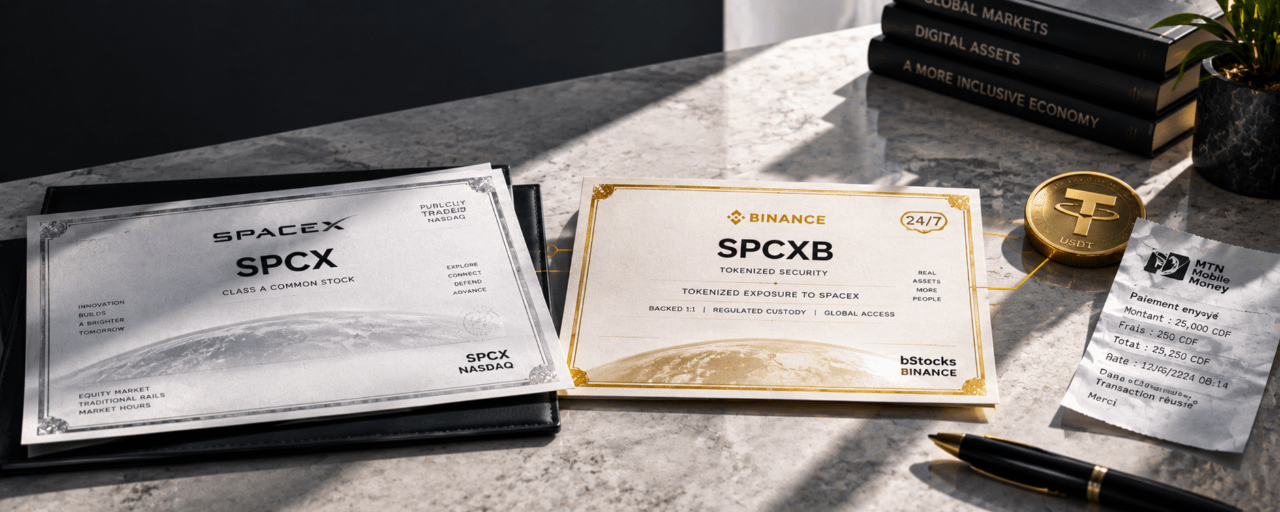
Apakah Anda bisa membeli saham SpaceX di Binance?Ya, pengguna yang memenuhi syarat dapat mengakses eksposur SpaceX di Binance dengan memperdagangkan SpaceX Tokenized bStocks (SPCXB) terhadap USDT. SPCXB adalah aset tokenized yang terkait dengan saham SpaceX dan bukan hal yang sama dengan saham yang diperdagangkan di bursa SPCX.
Apa itu SpaceX Tokenized bStocks (SPCXB)?
SPCXB adalah aset tokenized di Binance yang menawarkan eksposur ke saham SpaceX, perusahaan dirgantara yang didirikan oleh Elon Musk. Berbeda dengan saham tradisional yang terdaftar di bursa AS, SPCXB berjalan langsung di blockchain dan dapat diperdagangkan 24/7 dari akun Binance Anda.
Apakah Anda bisa membeli saham SpaceX di Binance?
Ya, pengguna yang memenuhi syarat dapat mengakses eksposur SpaceX di Binance dengan memperdagangkan SpaceX Tokenized bStocks (SPCXB) terhadap USDT. SPCXB adalah aset tokenized yang terkait dengan saham SpaceX dan bukan hal yang sama dengan saham yang diperdagangkan di bursa SPCX.
Apa itu SpaceX Tokenized bStocks (SPCXB)?
SPCXB adalah aset tokenized di Binance yang menawarkan eksposur ke saham SpaceX, perusahaan dirgantara yang didirikan oleh Elon Musk. Berbeda dengan saham tradisional yang terdaftar di bursa AS, SPCXB berjalan langsung di blockchain dan dapat diperdagangkan 24/7 dari akun Binance Anda.
Apa itu SpaceX Tokenized bStocks (SPCXB)?
SPCXB adalah aset tokenized di Binance yang menawarkan eksposur ke saham SpaceX, perusahaan dirgantara yang didirikan oleh Elon Musk. Berbeda dengan saham tradisional yang terdaftar di bursa AS, SPCXB berjalan langsung di blockchain dan dapat diperdagangkan 24/7 dari akun Binance Anda.
2
1.4k
·
--
Artikel
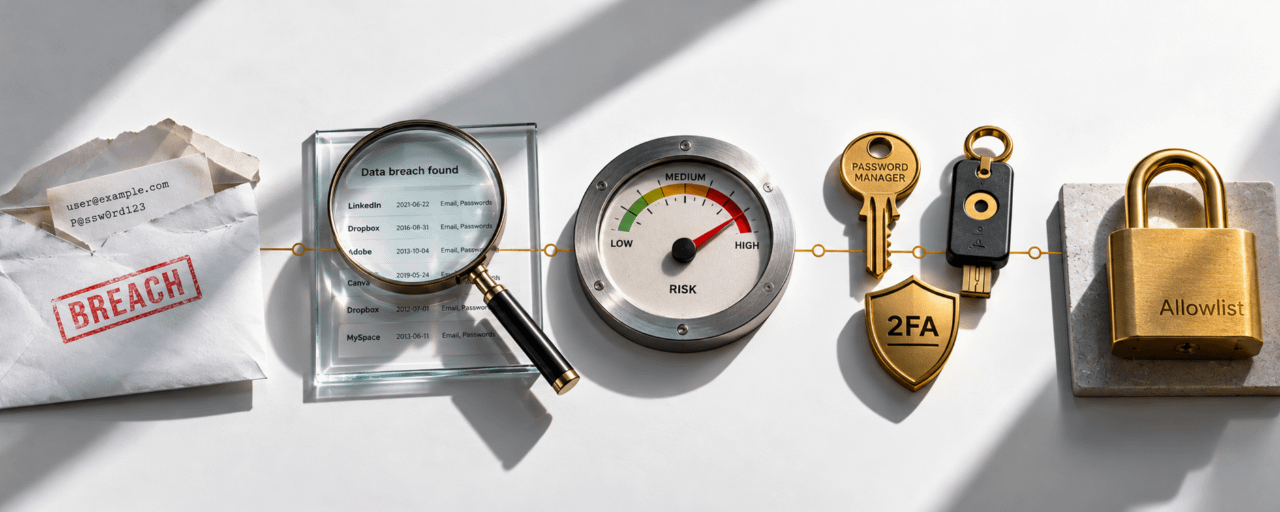
Cara Mengecek Apakah Data Anda Bocor dan Apa yang Harus Dilakukan SelanjutnyaData pribadi Anda kemungkinan besar telah bocor. Bukan mungkin melainkan kemungkinan besar. Lebih dari 16 miliar catatan terekspos dalam kebocoran data pada 2024 saja. Jika Anda pernah membuat akun online, menggunakan alamat email untuk mendaftar layanan, atau berbelanja online, data Anda ada dalam basis data yang mungkin telah dibobol, dijual, atau dipublikasikan di dark web. Pertanyaannya bukan "apakah data saya bocor?" melainkan "kebocoran mana, dan apa yang harus saya lakukan?"
Berikut panduan praktis untuk memeriksa apakah data Anda terekspos, memahami apa yang bocor, dan mengambil langkah yang tepat untuk melindungi diri.
Cara Mengecek Apakah Data Anda Bocor dan Apa yang Harus Dilakukan Selanjutnya
Data pribadi Anda kemungkinan besar telah bocor. Bukan mungkin melainkan kemungkinan besar. Lebih dari 16 miliar catatan terekspos dalam kebocoran data pada 2024 saja. Jika Anda pernah membuat akun online, menggunakan alamat email untuk mendaftar layanan, atau berbelanja online, data Anda ada dalam basis data yang mungkin telah dibobol, dijual, atau dipublikasikan di dark web. Pertanyaannya bukan "apakah data saya bocor?" melainkan "kebocoran mana, dan apa yang harus saya lakukan?"
Berikut panduan praktis untuk memeriksa apakah data Anda terekspos, memahami apa yang bocor, dan mengambil langkah yang tepat untuk melindungi diri.
Berikut panduan praktis untuk memeriksa apakah data Anda terekspos, memahami apa yang bocor, dan mengambil langkah yang tepat untuk melindungi diri.
167
·
--

Artikel
Lihat terjemahan
5 Red Flags to Check Before Choosing a Crypto or Financial PlatformUnclear licensing, commingled funds, no proof of reserves, no emergency fund, weak account controls these are the warning signs. Binance addresses all five: regulated entities, segregated custody, PoR with Merkle verification, $1B SAFU, and passkeys + 2FA + anti-phishing codes + withdrawal allowlisting.
🚩 Why This Matters More Than Ever
The crypto industry has matured. The days of "just pick an exchange and hope" are over. In 2026, users have real choices Binance, Coinbase, Kraken, Revolut, Robinhood, and dozens of smaller platforms. But with choice comes risk: not every platform is built the same, and the difference between a secure, regulated,well-capitalized exchange and a poorly managed one is the difference between your money being safe and your money being gone.
The problem is that most users especially new users in emerging markets do not know what to check before depositing funds. They look at the interface, the token list, the fees, and maybe a referral bonus. They do not look at the things that actually determine whether their money is safe.
This article fixes that. Here are 5 red flags to check before you trust any crypto or financial platform with your money and how Binance addresses each one.
🚩 Red Flag #1: Unclear or Missing Licensing
The red flag: A platform operates without clear regulatory licensing in the jurisdictions it serves. There is no information about which entities are regulated, by which regulators, under which licenses. The "About Us" page is vague. The legal entity structure is hidden. The terms of service reference a shell company in an obscure jurisdiction.
Why this matters: Without regulatory oversight, there is no accountability. If the platform mismanages funds, freezes accounts unjustly, or collapses entirely, users have no regulatory body to turn to. No license means no recourse.
What to check:
Does the platform clearly state which entities are regulated and by which regulators?Are the licenses verifiable on the regulator's official website?Does the platform operate through regulated entities in major jurisdictions (EU, UK, US, Asia)?Is the legal entity structure transparent and publicly documented?
How Binance addresses this:
Binance operates through a network of regulated entities across multiple jurisdictions. This includes regulated entities in Europe (via Binance's EU hub), the Middle East (via Binance Bahrain, regulated by the Central Bank of Bahrain), and other major markets. Each entity is licensed, audited, and subject to regulatory oversight by the relevant local authority.
Binance publishes information about its regulatory licenses and entity structure publicly. Users can verify which entity serves their region and under which regulatory framework.
The takeaway: If a platform cannot clearly tell you who regulates it, do not deposit money. A regulated platform states its licenses proudly. An unregulated platform hides them.
🚩 Red Flag #2: Commingled Funds Your Money Mixed With Theirs
The red flag: A platform does not segregate user funds from corporate funds. User deposits go into the same pool of money that the platform uses for its own operations, expenses, and investments. There is no clear separation between "money that belongs to users" and "money that belongs to the platform."
Why this matters: If the platform goes bankrupt, gets sued, or experiences a financial crisis, commingled funds mean your money is legally indistinguishable from the platform's money. You become an unsecured creditor standing in line behind other creditors, hoping to recover a fraction of what you deposited.
This is exactly what happened in the FTX collapse. User funds were commingled with Alameda Research's trading capital. When the scheme unraveled, users discovered their money was not theirs it was gone, mixed in to a pool of corporate losses.
What to check:
Does the platform explicitly state that user funds are held in segregated accounts?Are user funds separate from the platform's operational funds?Does the platform use third-party custodians to hold user assets?Is the custody structure documented and verifiable?
How Binance addresses this:
Binance maintains segregated custody user funds are held separately from corporate funds. User assets are kept in dedicated wallets and accounts that are distinct from Binance's operational treasury.
This means that even in a worst-case scenario Binance experiencing financial difficulty user funds are not accessible to Binance's creditors. Your money is your money. It is not mixed with Binance's money.
The takeaway: If a platform can not clearly explain how user funds are separated from corporate funds, do not deposit money. Commingled funds are the number one cause of total loss in exchange failures.
🚩 Red Flag #3: No Proof of Reserves
The red flag: A platform does not provide any verifiable proof that it actually holds the assets it claims to hold. The platform's "we are solvent" statement is a press release, not a cryptographic proof. There is no way for users to independently verify that their balance exists on the platform's books.
Why this matters: Without proof of reserves, you are trusting the platform's word. The entire history of crypto exchange failures Mt. Gox, FTX, Celsius, BlockFi involves platforms that claimed to be solvent while secretly being insolvent. A statement is not proof.A screenshot is not proof. An audit that covers only a snapshot is not proof.
Real proof of reserves must be:
Cryptographic using Merkle trees or similar verifiable data structuresUser-verifiable individual users can confirm their own balance is includedRegular published on a recurring schedule, not once a yearComprehensive covering all user assets, not just a subset
What to check:
Does the platform publish Proof of Reserves?Is the PoR cryptographic (Merkle-based) or just a PDF statement?Can individual users verify their own balance is included?How often is the PoR updated?
How Binance addresses this:
Binance publishes Proof of Reserves using Merkle tree verification a cryptographic method that allows individual users to verify that theirspecific balance is included in the total reserves, without revealing their identity or balance to the public.
Users can verify their own inclusion by generating a Merkle hash from their account and checking it against the published Merkle root. This is not a trust-based system. It is a math-based system. Either your balance is in the tree or it is not and you can check yourself.
Binance publishes PoR regularly, covering all major assets (BTC, ETH, USDT, USDC, BNB, and more). The system is designed so that any user can independently verify that Binance holds the assets it claims to hold.
The takeaway: If a platform says "trust us, we are solvent" but provides no cryptographic proof, that is a red flag. Merkle-verified PoR is the industry standard. Platforms that do not provide it are choosing opacity over transparency.
🚩 Red Flag #4: No Emergency Fund or Insurance
The red flag: A platform has no dedicated emergency fund or insurance pool to protect users in case of a breach, hack, or catastrophic event. If something goes wrong, the platform's plan is "we will figure it out" which usually means users absorb the loss.
Why this matters: Crypto platforms hold billions of dollars in user assets. Even with the best security practices, the possibility of a breach, smart contract exploit, or unforeseen event is never zero. A platform without an emergency fund is asking users to bear 100% of the tail risk.
Traditional banks have deposit insurance (FDIC in the US, equivalent schemes in other countries). Most crypto platforms do not because crypto is not traditional banking. But the responsible ones have their own equivalent.
What to check:
Does the platform have a dedicated emergency fund?How large is the fund relative to user assets?Is the fund separate from operational funds?Has the fund ever been used, and how did the platform handle the incident?
How Binance addresses this:
Binance maintains the SAFU (Secure Asset Fund for Users) a dedicated emergency fund currently valued at over $1 billion.
SAFU was established in 2018 and is funded by allocating a portion of trading fees. The fund is held in separate cold wallets and is not accessible for operational expenses, corporate investments, or any purpose other than compensating users in the event of a breach or catastrophic event.
SAFU has been used in 2019,Binance experienced a hack that resulted in the loss of 7,000 BTC (approximately $40 million at the time). Binance covered the full loss from SAFU. No user lost a single satoshi. That is what an emergency fund is for and that is the difference between a platform that plans for the worst and one that does not.
The takeaway: A platform without an emergency fund is asking you to take the risk that they never make a mistake. No platform can guarantee that. The responsible ones have a fund to protect you when not if something goes wrong.
🚩 Red Flag #5: Weak Account Controls
The red flag: A platform offers only basic username-and-password authentication. No 2FA options, no anti-phishing protections, no withdrawal allowlisting, no device management, no passkey support. The security model is "pick a strong password and hope."
Why this matters: The most common way users lose funds on crypto platforms is not through a platform hack it is through account takeover. Phishing emails, SIM swaps, credential stuffing, malicious browser extensions, and social engineering attacks all target the user's account access. A platform with weak account controls makes these attacks easy.
The attack vectors that strong account controls must address:
Phishing fake emails and websites that steal login credentialsSIM swapping attackers take over your phone number to intercept SMS-based 2FACredential stuffing attackers use leaked passwords from other services to try your accountMalware key loggers and clipboard hijackers that steal passwords andcopy-pasted addressesSocial engineering attackers manipulate support teams into resetting your account
What to check:
Does the platform support hardware security keys (FIDO2/Web Authn passkeys)?Is 2FA mandatory or optional? (Optional 2FA means most users will not enable it)Does the platform offer anti-phishing codes for emails?Can you allowlist specific withdrawal addresses so funds can only go to pre-approved wallets?Can you manage and revoke active sessions and devices?
How Binance addresses this:
Binance provides a multi-layer account security system that addresses every major attack vector:
Passkeys (FIDO2/Web Authn): Binance supports passkeys the strongest authentication method available, resistant to phishing, SIM swaps, and credential theft. Pass keys use cryptographic key pairs stored on your device, meaning your authentication never leaves your device and cannot be intercepted.
2FA (Two-Factor Authentication): Binance supports Google Authenticator and other TOTP-based 2FA apps stronger than SMS-based 2FA, which is vulnerable to SIM swapping. Users are strongly encouraged to enable 2FA, and certain actions (withdrawals, API key creation) require it.
Anti-phishing codes: Binance allows users to set a custom anti-phishing code that appears in every legitimate email from Binance. If an email does not contain your code, it is not from Binance. This defeats phishing emails that impersonate Binance users can immediately identify fake emails.
Withdrawal allowlisting: Binance allows users to create a whitelist of approved withdrawal addresses.Once enabled, withdrawals can only go to addresses on the list meaning even if an attacker gains access to your account, they cannot send funds to their own wallet.
Device and session management: Binance tracks active sessions and devices, allowing users to review and revoke access from any device at any time. If you see a login from a device you do not recognize, you can terminate that session immediately.
The takeaway: A platform that only offers username and password is not serious about your security. The minimum standard in 2026 is passkeys, 2FA, anti-phishing codes, and withdrawal allowlisting. If a platform does not offer all four, your account is one phishing email away from being drained.
🏆 The Full Checklist How to Evaluate Any Platform in 5 Minutes
Before you deposit1. Licensing: Can you find clear, verifiable information about which regulators oversee the platform? If no red flag.
2. Segregated custody: Does the platform explicitly state that user funds are separate from corporate funds? If no red flag.
3. Proof of Reserves: Does the platform publish cryptographic, user-verifiable Proof of Reserves? If no red flag.
4. Emergency fund: Does the platform have a dedicated fund to protect users in case of a breach? If no red flag.
5. Account controls: Does the platform support passkeys, 2FA, anti-phishing codes, and withdrawal allowlisting? If no red flag.
If a platform fails even one of these checks, ask yourself why. If it fails two or more, do not deposit money.
🌍 Why This Matters for African Users Specifically
For users in Africa where regulatory consumer protection is often weaker, banking infrastructure is less reliable, and recourse in case of platform failure is limited these five checks are not optional. They are the difference between a platform that is safe to use and one that is a gamble.
In Congo, you cannot call a financial ombudsman if a crypto platform loses your money. You cannot rely on deposit insurance from a local regulator. You cannot file a class-action lawsuit. The only protection you have is choosing a platform that has built its own protections regulated entities, segregated custody, cryptographic PoR, a billion-dollar emergency fund, and multi-layer account security.
That is why these five red flags matter more in Africa than anywhere else. When external protections are weak, the platform's own protections are everything.
Binance passes all five checks. Most platforms do not. That is not marketing — that is a checklist you can run yourself right now.
❓ FAQs
Q: What is Proof of Reserves and how can I verify it myself? A: Proof of Reserves (PoR) is a cryptographic method that allows a platform to prove it holds the assets it claims to hold, without revealing individual user balances. Binance uses Merkle tree verification each user's balance is included as a leaf in a Merkle tree, and the platform publishes the Merkle root. Users can generate a unique Merkle hash from their own account and verify that their balance is included in the published tree. This means Binance can notinflate its reserves or exclude user balances the math either adds up or it does not, and you can check it yourself.
Q: What is SAFU and how does it protect users? A: SAFU (Secure Asset Fund for Users) is Binance's dedicated emergency fund, currently valued at over $1 billion. It was created in 2018 and is funded by allocating a portion of trading fees. The fund is held in separate cold wallets and is not used for operational expenses. In the event of a breach, hack, or catastrophic event, SAFU is used to compensate affected users as it was in the 2019 Binance hack, where 7,000 BTC were stolen and fully covered by SAFU with zero user loss.
Q: What is the difference between commingled funds and segregated custody? A: Commingled funds means user deposits are mixed with the platform'scorporate funds if the platform goes bankrupt, user money is legally indistinguishable from corporate money and users become unsecured creditors. Segregated custody means user funds are held in separate accounts and wallets, distinct from the platform's operational funds. In the event of platform failure, segregated funds remain user property and are not accessible to the platform's creditors. Binance maintains segregated custody user funds are never mixed with corporate funds.
📌 Sources: Binance Proof of Reserves official page; Binance SAFU documentation; Binance security features official page; Binance regulatory licenses public information.
⚠️ Educational content only. This checklist is a general guide for evaluating crypto and financial platforms and does not guarantee the safety of anyplatform. Always do your own research before depositing funds. Does not constitute financial advice.
5 Red Flags to Check Before Choosing a Crypto or Financial Platform
Unclear licensing, commingled funds, no proof of reserves, no emergency fund, weak account controls these are the warning signs. Binance addresses all five: regulated entities, segregated custody, PoR with Merkle verification, $1B SAFU, and passkeys + 2FA + anti-phishing codes + withdrawal allowlisting.
🚩 Why This Matters More Than Ever
The crypto industry has matured. The days of "just pick an exchange and hope" are over. In 2026, users have real choices Binance, Coinbase, Kraken, Revolut, Robinhood, and dozens of smaller platforms. But with choice comes risk: not every platform is built the same, and the difference between a secure, regulated,well-capitalized exchange and a poorly managed one is the difference between your money being safe and your money being gone.
The problem is that most users especially new users in emerging markets do not know what to check before depositing funds. They look at the interface, the token list, the fees, and maybe a referral bonus. They do not look at the things that actually determine whether their money is safe.
This article fixes that. Here are 5 red flags to check before you trust any crypto or financial platform with your money and how Binance addresses each one.
🚩 Red Flag #1: Unclear or Missing Licensing
The red flag: A platform operates without clear regulatory licensing in the jurisdictions it serves. There is no information about which entities are regulated, by which regulators, under which licenses. The "About Us" page is vague. The legal entity structure is hidden. The terms of service reference a shell company in an obscure jurisdiction.
Why this matters: Without regulatory oversight, there is no accountability. If the platform mismanages funds, freezes accounts unjustly, or collapses entirely, users have no regulatory body to turn to. No license means no recourse.
What to check:
Does the platform clearly state which entities are regulated and by which regulators?Are the licenses verifiable on the regulator's official website?Does the platform operate through regulated entities in major jurisdictions (EU, UK, US, Asia)?Is the legal entity structure transparent and publicly documented?
How Binance addresses this:
Binance operates through a network of regulated entities across multiple jurisdictions. This includes regulated entities in Europe (via Binance's EU hub), the Middle East (via Binance Bahrain, regulated by the Central Bank of Bahrain), and other major markets. Each entity is licensed, audited, and subject to regulatory oversight by the relevant local authority.
Binance publishes information about its regulatory licenses and entity structure publicly. Users can verify which entity serves their region and under which regulatory framework.
The takeaway: If a platform cannot clearly tell you who regulates it, do not deposit money. A regulated platform states its licenses proudly. An unregulated platform hides them.
🚩 Red Flag #2: Commingled Funds Your Money Mixed With Theirs
The red flag: A platform does not segregate user funds from corporate funds. User deposits go into the same pool of money that the platform uses for its own operations, expenses, and investments. There is no clear separation between "money that belongs to users" and "money that belongs to the platform."
Why this matters: If the platform goes bankrupt, gets sued, or experiences a financial crisis, commingled funds mean your money is legally indistinguishable from the platform's money. You become an unsecured creditor standing in line behind other creditors, hoping to recover a fraction of what you deposited.
This is exactly what happened in the FTX collapse. User funds were commingled with Alameda Research's trading capital. When the scheme unraveled, users discovered their money was not theirs it was gone, mixed in to a pool of corporate losses.
What to check:
Does the platform explicitly state that user funds are held in segregated accounts?Are user funds separate from the platform's operational funds?Does the platform use third-party custodians to hold user assets?Is the custody structure documented and verifiable?
How Binance addresses this:
Binance maintains segregated custody user funds are held separately from corporate funds. User assets are kept in dedicated wallets and accounts that are distinct from Binance's operational treasury.
This means that even in a worst-case scenario Binance experiencing financial difficulty user funds are not accessible to Binance's creditors. Your money is your money. It is not mixed with Binance's money.
The takeaway: If a platform can not clearly explain how user funds are separated from corporate funds, do not deposit money. Commingled funds are the number one cause of total loss in exchange failures.
🚩 Red Flag #3: No Proof of Reserves
The red flag: A platform does not provide any verifiable proof that it actually holds the assets it claims to hold. The platform's "we are solvent" statement is a press release, not a cryptographic proof. There is no way for users to independently verify that their balance exists on the platform's books.
Why this matters: Without proof of reserves, you are trusting the platform's word. The entire history of crypto exchange failures Mt. Gox, FTX, Celsius, BlockFi involves platforms that claimed to be solvent while secretly being insolvent. A statement is not proof.A screenshot is not proof. An audit that covers only a snapshot is not proof.
Real proof of reserves must be:
Cryptographic using Merkle trees or similar verifiable data structuresUser-verifiable individual users can confirm their own balance is includedRegular published on a recurring schedule, not once a yearComprehensive covering all user assets, not just a subset
What to check:
Does the platform publish Proof of Reserves?Is the PoR cryptographic (Merkle-based) or just a PDF statement?Can individual users verify their own balance is included?How often is the PoR updated?
How Binance addresses this:
Binance publishes Proof of Reserves using Merkle tree verification a cryptographic method that allows individual users to verify that theirspecific balance is included in the total reserves, without revealing their identity or balance to the public.
Users can verify their own inclusion by generating a Merkle hash from their account and checking it against the published Merkle root. This is not a trust-based system. It is a math-based system. Either your balance is in the tree or it is not and you can check yourself.
Binance publishes PoR regularly, covering all major assets (BTC, ETH, USDT, USDC, BNB, and more). The system is designed so that any user can independently verify that Binance holds the assets it claims to hold.
The takeaway: If a platform says "trust us, we are solvent" but provides no cryptographic proof, that is a red flag. Merkle-verified PoR is the industry standard. Platforms that do not provide it are choosing opacity over transparency.
🚩 Red Flag #4: No Emergency Fund or Insurance
The red flag: A platform has no dedicated emergency fund or insurance pool to protect users in case of a breach, hack, or catastrophic event. If something goes wrong, the platform's plan is "we will figure it out" which usually means users absorb the loss.
Why this matters: Crypto platforms hold billions of dollars in user assets. Even with the best security practices, the possibility of a breach, smart contract exploit, or unforeseen event is never zero. A platform without an emergency fund is asking users to bear 100% of the tail risk.
Traditional banks have deposit insurance (FDIC in the US, equivalent schemes in other countries). Most crypto platforms do not because crypto is not traditional banking. But the responsible ones have their own equivalent.
What to check:
Does the platform have a dedicated emergency fund?How large is the fund relative to user assets?Is the fund separate from operational funds?Has the fund ever been used, and how did the platform handle the incident?
How Binance addresses this:
Binance maintains the SAFU (Secure Asset Fund for Users) a dedicated emergency fund currently valued at over $1 billion.
SAFU was established in 2018 and is funded by allocating a portion of trading fees. The fund is held in separate cold wallets and is not accessible for operational expenses, corporate investments, or any purpose other than compensating users in the event of a breach or catastrophic event.
SAFU has been used in 2019,Binance experienced a hack that resulted in the loss of 7,000 BTC (approximately $40 million at the time). Binance covered the full loss from SAFU. No user lost a single satoshi. That is what an emergency fund is for and that is the difference between a platform that plans for the worst and one that does not.
The takeaway: A platform without an emergency fund is asking you to take the risk that they never make a mistake. No platform can guarantee that. The responsible ones have a fund to protect you when not if something goes wrong.
🚩 Red Flag #5: Weak Account Controls
The red flag: A platform offers only basic username-and-password authentication. No 2FA options, no anti-phishing protections, no withdrawal allowlisting, no device management, no passkey support. The security model is "pick a strong password and hope."
Why this matters: The most common way users lose funds on crypto platforms is not through a platform hack it is through account takeover. Phishing emails, SIM swaps, credential stuffing, malicious browser extensions, and social engineering attacks all target the user's account access. A platform with weak account controls makes these attacks easy.
The attack vectors that strong account controls must address:
Phishing fake emails and websites that steal login credentialsSIM swapping attackers take over your phone number to intercept SMS-based 2FACredential stuffing attackers use leaked passwords from other services to try your accountMalware key loggers and clipboard hijackers that steal passwords andcopy-pasted addressesSocial engineering attackers manipulate support teams into resetting your account
What to check:
Does the platform support hardware security keys (FIDO2/Web Authn passkeys)?Is 2FA mandatory or optional? (Optional 2FA means most users will not enable it)Does the platform offer anti-phishing codes for emails?Can you allowlist specific withdrawal addresses so funds can only go to pre-approved wallets?Can you manage and revoke active sessions and devices?
How Binance addresses this:
Binance provides a multi-layer account security system that addresses every major attack vector:
Passkeys (FIDO2/Web Authn): Binance supports passkeys the strongest authentication method available, resistant to phishing, SIM swaps, and credential theft. Pass keys use cryptographic key pairs stored on your device, meaning your authentication never leaves your device and cannot be intercepted.
2FA (Two-Factor Authentication): Binance supports Google Authenticator and other TOTP-based 2FA apps stronger than SMS-based 2FA, which is vulnerable to SIM swapping. Users are strongly encouraged to enable 2FA, and certain actions (withdrawals, API key creation) require it.
Anti-phishing codes: Binance allows users to set a custom anti-phishing code that appears in every legitimate email from Binance. If an email does not contain your code, it is not from Binance. This defeats phishing emails that impersonate Binance users can immediately identify fake emails.
Withdrawal allowlisting: Binance allows users to create a whitelist of approved withdrawal addresses.Once enabled, withdrawals can only go to addresses on the list meaning even if an attacker gains access to your account, they cannot send funds to their own wallet.
Device and session management: Binance tracks active sessions and devices, allowing users to review and revoke access from any device at any time. If you see a login from a device you do not recognize, you can terminate that session immediately.
The takeaway: A platform that only offers username and password is not serious about your security. The minimum standard in 2026 is passkeys, 2FA, anti-phishing codes, and withdrawal allowlisting. If a platform does not offer all four, your account is one phishing email away from being drained.
🏆 The Full Checklist How to Evaluate Any Platform in 5 Minutes
Before you deposit1. Licensing: Can you find clear, verifiable information about which regulators oversee the platform? If no red flag.
2. Segregated custody: Does the platform explicitly state that user funds are separate from corporate funds? If no red flag.
3. Proof of Reserves: Does the platform publish cryptographic, user-verifiable Proof of Reserves? If no red flag.
4. Emergency fund: Does the platform have a dedicated fund to protect users in case of a breach? If no red flag.
5. Account controls: Does the platform support passkeys, 2FA, anti-phishing codes, and withdrawal allowlisting? If no red flag.
If a platform fails even one of these checks, ask yourself why. If it fails two or more, do not deposit money.
🌍 Why This Matters for African Users Specifically
For users in Africa where regulatory consumer protection is often weaker, banking infrastructure is less reliable, and recourse in case of platform failure is limited these five checks are not optional. They are the difference between a platform that is safe to use and one that is a gamble.
In Congo, you cannot call a financial ombudsman if a crypto platform loses your money. You cannot rely on deposit insurance from a local regulator. You cannot file a class-action lawsuit. The only protection you have is choosing a platform that has built its own protections regulated entities, segregated custody, cryptographic PoR, a billion-dollar emergency fund, and multi-layer account security.
That is why these five red flags matter more in Africa than anywhere else. When external protections are weak, the platform's own protections are everything.
Binance passes all five checks. Most platforms do not. That is not marketing — that is a checklist you can run yourself right now.
❓ FAQs
Q: What is Proof of Reserves and how can I verify it myself? A: Proof of Reserves (PoR) is a cryptographic method that allows a platform to prove it holds the assets it claims to hold, without revealing individual user balances. Binance uses Merkle tree verification each user's balance is included as a leaf in a Merkle tree, and the platform publishes the Merkle root. Users can generate a unique Merkle hash from their own account and verify that their balance is included in the published tree. This means Binance can notinflate its reserves or exclude user balances the math either adds up or it does not, and you can check it yourself.
Q: What is SAFU and how does it protect users? A: SAFU (Secure Asset Fund for Users) is Binance's dedicated emergency fund, currently valued at over $1 billion. It was created in 2018 and is funded by allocating a portion of trading fees. The fund is held in separate cold wallets and is not used for operational expenses. In the event of a breach, hack, or catastrophic event, SAFU is used to compensate affected users as it was in the 2019 Binance hack, where 7,000 BTC were stolen and fully covered by SAFU with zero user loss.
Q: What is the difference between commingled funds and segregated custody? A: Commingled funds means user deposits are mixed with the platform'scorporate funds if the platform goes bankrupt, user money is legally indistinguishable from corporate money and users become unsecured creditors. Segregated custody means user funds are held in separate accounts and wallets, distinct from the platform's operational funds. In the event of platform failure, segregated funds remain user property and are not accessible to the platform's creditors. Binance maintains segregated custody user funds are never mixed with corporate funds.
📌 Sources: Binance Proof of Reserves official page; Binance SAFU documentation; Binance security features official page; Binance regulatory licenses public information.
⚠️ Educational content only. This checklist is a general guide for evaluating crypto and financial platforms and does not guarantee the safety of anyplatform. Always do your own research before depositing funds. Does not constitute financial advice.
🚩 Why This Matters More Than Ever
The crypto industry has matured. The days of "just pick an exchange and hope" are over. In 2026, users have real choices Binance, Coinbase, Kraken, Revolut, Robinhood, and dozens of smaller platforms. But with choice comes risk: not every platform is built the same, and the difference between a secure, regulated,well-capitalized exchange and a poorly managed one is the difference between your money being safe and your money being gone.
The problem is that most users especially new users in emerging markets do not know what to check before depositing funds. They look at the interface, the token list, the fees, and maybe a referral bonus. They do not look at the things that actually determine whether their money is safe.
This article fixes that. Here are 5 red flags to check before you trust any crypto or financial platform with your money and how Binance addresses each one.
🚩 Red Flag #1: Unclear or Missing Licensing
The red flag: A platform operates without clear regulatory licensing in the jurisdictions it serves. There is no information about which entities are regulated, by which regulators, under which licenses. The "About Us" page is vague. The legal entity structure is hidden. The terms of service reference a shell company in an obscure jurisdiction.
Why this matters: Without regulatory oversight, there is no accountability. If the platform mismanages funds, freezes accounts unjustly, or collapses entirely, users have no regulatory body to turn to. No license means no recourse.
What to check:
Does the platform clearly state which entities are regulated and by which regulators?Are the licenses verifiable on the regulator's official website?Does the platform operate through regulated entities in major jurisdictions (EU, UK, US, Asia)?Is the legal entity structure transparent and publicly documented?
How Binance addresses this:
Binance operates through a network of regulated entities across multiple jurisdictions. This includes regulated entities in Europe (via Binance's EU hub), the Middle East (via Binance Bahrain, regulated by the Central Bank of Bahrain), and other major markets. Each entity is licensed, audited, and subject to regulatory oversight by the relevant local authority.
Binance publishes information about its regulatory licenses and entity structure publicly. Users can verify which entity serves their region and under which regulatory framework.
The takeaway: If a platform cannot clearly tell you who regulates it, do not deposit money. A regulated platform states its licenses proudly. An unregulated platform hides them.
🚩 Red Flag #2: Commingled Funds Your Money Mixed With Theirs
The red flag: A platform does not segregate user funds from corporate funds. User deposits go into the same pool of money that the platform uses for its own operations, expenses, and investments. There is no clear separation between "money that belongs to users" and "money that belongs to the platform."
Why this matters: If the platform goes bankrupt, gets sued, or experiences a financial crisis, commingled funds mean your money is legally indistinguishable from the platform's money. You become an unsecured creditor standing in line behind other creditors, hoping to recover a fraction of what you deposited.
This is exactly what happened in the FTX collapse. User funds were commingled with Alameda Research's trading capital. When the scheme unraveled, users discovered their money was not theirs it was gone, mixed in to a pool of corporate losses.
What to check:
Does the platform explicitly state that user funds are held in segregated accounts?Are user funds separate from the platform's operational funds?Does the platform use third-party custodians to hold user assets?Is the custody structure documented and verifiable?
How Binance addresses this:
Binance maintains segregated custody user funds are held separately from corporate funds. User assets are kept in dedicated wallets and accounts that are distinct from Binance's operational treasury.
This means that even in a worst-case scenario Binance experiencing financial difficulty user funds are not accessible to Binance's creditors. Your money is your money. It is not mixed with Binance's money.
The takeaway: If a platform can not clearly explain how user funds are separated from corporate funds, do not deposit money. Commingled funds are the number one cause of total loss in exchange failures.
🚩 Red Flag #3: No Proof of Reserves
The red flag: A platform does not provide any verifiable proof that it actually holds the assets it claims to hold. The platform's "we are solvent" statement is a press release, not a cryptographic proof. There is no way for users to independently verify that their balance exists on the platform's books.
Why this matters: Without proof of reserves, you are trusting the platform's word. The entire history of crypto exchange failures Mt. Gox, FTX, Celsius, BlockFi involves platforms that claimed to be solvent while secretly being insolvent. A statement is not proof.A screenshot is not proof. An audit that covers only a snapshot is not proof.
Real proof of reserves must be:
Cryptographic using Merkle trees or similar verifiable data structuresUser-verifiable individual users can confirm their own balance is includedRegular published on a recurring schedule, not once a yearComprehensive covering all user assets, not just a subset
What to check:
Does the platform publish Proof of Reserves?Is the PoR cryptographic (Merkle-based) or just a PDF statement?Can individual users verify their own balance is included?How often is the PoR updated?
How Binance addresses this:
Binance publishes Proof of Reserves using Merkle tree verification a cryptographic method that allows individual users to verify that theirspecific balance is included in the total reserves, without revealing their identity or balance to the public.
Users can verify their own inclusion by generating a Merkle hash from their account and checking it against the published Merkle root. This is not a trust-based system. It is a math-based system. Either your balance is in the tree or it is not and you can check yourself.
Binance publishes PoR regularly, covering all major assets (BTC, ETH, USDT, USDC, BNB, and more). The system is designed so that any user can independently verify that Binance holds the assets it claims to hold.
The takeaway: If a platform says "trust us, we are solvent" but provides no cryptographic proof, that is a red flag. Merkle-verified PoR is the industry standard. Platforms that do not provide it are choosing opacity over transparency.
🚩 Red Flag #4: No Emergency Fund or Insurance
The red flag: A platform has no dedicated emergency fund or insurance pool to protect users in case of a breach, hack, or catastrophic event. If something goes wrong, the platform's plan is "we will figure it out" which usually means users absorb the loss.
Why this matters: Crypto platforms hold billions of dollars in user assets. Even with the best security practices, the possibility of a breach, smart contract exploit, or unforeseen event is never zero. A platform without an emergency fund is asking users to bear 100% of the tail risk.
Traditional banks have deposit insurance (FDIC in the US, equivalent schemes in other countries). Most crypto platforms do not because crypto is not traditional banking. But the responsible ones have their own equivalent.
What to check:
Does the platform have a dedicated emergency fund?How large is the fund relative to user assets?Is the fund separate from operational funds?Has the fund ever been used, and how did the platform handle the incident?
How Binance addresses this:
Binance maintains the SAFU (Secure Asset Fund for Users) a dedicated emergency fund currently valued at over $1 billion.
SAFU was established in 2018 and is funded by allocating a portion of trading fees. The fund is held in separate cold wallets and is not accessible for operational expenses, corporate investments, or any purpose other than compensating users in the event of a breach or catastrophic event.
SAFU has been used in 2019,Binance experienced a hack that resulted in the loss of 7,000 BTC (approximately $40 million at the time). Binance covered the full loss from SAFU. No user lost a single satoshi. That is what an emergency fund is for and that is the difference between a platform that plans for the worst and one that does not.
The takeaway: A platform without an emergency fund is asking you to take the risk that they never make a mistake. No platform can guarantee that. The responsible ones have a fund to protect you when not if something goes wrong.
🚩 Red Flag #5: Weak Account Controls
The red flag: A platform offers only basic username-and-password authentication. No 2FA options, no anti-phishing protections, no withdrawal allowlisting, no device management, no passkey support. The security model is "pick a strong password and hope."
Why this matters: The most common way users lose funds on crypto platforms is not through a platform hack it is through account takeover. Phishing emails, SIM swaps, credential stuffing, malicious browser extensions, and social engineering attacks all target the user's account access. A platform with weak account controls makes these attacks easy.
The attack vectors that strong account controls must address:
Phishing fake emails and websites that steal login credentialsSIM swapping attackers take over your phone number to intercept SMS-based 2FACredential stuffing attackers use leaked passwords from other services to try your accountMalware key loggers and clipboard hijackers that steal passwords andcopy-pasted addressesSocial engineering attackers manipulate support teams into resetting your account
What to check:
Does the platform support hardware security keys (FIDO2/Web Authn passkeys)?Is 2FA mandatory or optional? (Optional 2FA means most users will not enable it)Does the platform offer anti-phishing codes for emails?Can you allowlist specific withdrawal addresses so funds can only go to pre-approved wallets?Can you manage and revoke active sessions and devices?
How Binance addresses this:
Binance provides a multi-layer account security system that addresses every major attack vector:
Passkeys (FIDO2/Web Authn): Binance supports passkeys the strongest authentication method available, resistant to phishing, SIM swaps, and credential theft. Pass keys use cryptographic key pairs stored on your device, meaning your authentication never leaves your device and cannot be intercepted.
2FA (Two-Factor Authentication): Binance supports Google Authenticator and other TOTP-based 2FA apps stronger than SMS-based 2FA, which is vulnerable to SIM swapping. Users are strongly encouraged to enable 2FA, and certain actions (withdrawals, API key creation) require it.
Anti-phishing codes: Binance allows users to set a custom anti-phishing code that appears in every legitimate email from Binance. If an email does not contain your code, it is not from Binance. This defeats phishing emails that impersonate Binance users can immediately identify fake emails.
Withdrawal allowlisting: Binance allows users to create a whitelist of approved withdrawal addresses.Once enabled, withdrawals can only go to addresses on the list meaning even if an attacker gains access to your account, they cannot send funds to their own wallet.
Device and session management: Binance tracks active sessions and devices, allowing users to review and revoke access from any device at any time. If you see a login from a device you do not recognize, you can terminate that session immediately.
The takeaway: A platform that only offers username and password is not serious about your security. The minimum standard in 2026 is passkeys, 2FA, anti-phishing codes, and withdrawal allowlisting. If a platform does not offer all four, your account is one phishing email away from being drained.
🏆 The Full Checklist How to Evaluate Any Platform in 5 Minutes
Before you deposit1. Licensing: Can you find clear, verifiable information about which regulators oversee the platform? If no red flag.
2. Segregated custody: Does the platform explicitly state that user funds are separate from corporate funds? If no red flag.
3. Proof of Reserves: Does the platform publish cryptographic, user-verifiable Proof of Reserves? If no red flag.
4. Emergency fund: Does the platform have a dedicated fund to protect users in case of a breach? If no red flag.
5. Account controls: Does the platform support passkeys, 2FA, anti-phishing codes, and withdrawal allowlisting? If no red flag.
If a platform fails even one of these checks, ask yourself why. If it fails two or more, do not deposit money.
🌍 Why This Matters for African Users Specifically
For users in Africa where regulatory consumer protection is often weaker, banking infrastructure is less reliable, and recourse in case of platform failure is limited these five checks are not optional. They are the difference between a platform that is safe to use and one that is a gamble.
In Congo, you cannot call a financial ombudsman if a crypto platform loses your money. You cannot rely on deposit insurance from a local regulator. You cannot file a class-action lawsuit. The only protection you have is choosing a platform that has built its own protections regulated entities, segregated custody, cryptographic PoR, a billion-dollar emergency fund, and multi-layer account security.
That is why these five red flags matter more in Africa than anywhere else. When external protections are weak, the platform's own protections are everything.
Binance passes all five checks. Most platforms do not. That is not marketing — that is a checklist you can run yourself right now.
❓ FAQs
Q: What is Proof of Reserves and how can I verify it myself? A: Proof of Reserves (PoR) is a cryptographic method that allows a platform to prove it holds the assets it claims to hold, without revealing individual user balances. Binance uses Merkle tree verification each user's balance is included as a leaf in a Merkle tree, and the platform publishes the Merkle root. Users can generate a unique Merkle hash from their own account and verify that their balance is included in the published tree. This means Binance can notinflate its reserves or exclude user balances the math either adds up or it does not, and you can check it yourself.
Q: What is SAFU and how does it protect users? A: SAFU (Secure Asset Fund for Users) is Binance's dedicated emergency fund, currently valued at over $1 billion. It was created in 2018 and is funded by allocating a portion of trading fees. The fund is held in separate cold wallets and is not used for operational expenses. In the event of a breach, hack, or catastrophic event, SAFU is used to compensate affected users as it was in the 2019 Binance hack, where 7,000 BTC were stolen and fully covered by SAFU with zero user loss.
Q: What is the difference between commingled funds and segregated custody? A: Commingled funds means user deposits are mixed with the platform'scorporate funds if the platform goes bankrupt, user money is legally indistinguishable from corporate money and users become unsecured creditors. Segregated custody means user funds are held in separate accounts and wallets, distinct from the platform's operational funds. In the event of platform failure, segregated funds remain user property and are not accessible to the platform's creditors. Binance maintains segregated custody user funds are never mixed with corporate funds.
📌 Sources: Binance Proof of Reserves official page; Binance SAFU documentation; Binance security features official page; Binance regulatory licenses public information.
⚠️ Educational content only. This checklist is a general guide for evaluating crypto and financial platforms and does not guarantee the safety of anyplatform. Always do your own research before depositing funds. Does not constitute financial advice.
321
·
--
Artikel
AI dalam Tindakan: Bagaimana Binance Agent OS Memproses 90.000+ Permintaan dalam Satu HariAI sedang bergerak dari janji menuju partisipasi. Dalam minggu-minggu awal peluncurannya, Binance Agent OS memproses lebih dari 90.000 permintaan agen dalam satu hari—97% berhasil diselesaikan, 95% dilayani dalam waktu 60 milidetik, dan hampir separuh pengguna aktif menghasilkan 20+ permintaan setiap hari. Kapabilitas yang paling sering digunakan: data pasar real-time, posisi, informasi akun, serta pergerakan harga. Minggu ini, kami mengeksplorasi apa artinya itu dari tiga sudut: bagaimana agen tetap terhubung dengan pasar yang bergerak cepat, bagaimana pengguna mempertahankan kendali dan visibilitas ketika agen bertindak atas nama mereka, serta bagaimana ekonomi AI yang lebih luas sedang diuji kemampuannya untuk mengubah investasi yang belum pernah terjadi sebelumnya menjadi pertumbuhan yang berkelanjutan. Bab berikutnya dari AI bukan tentang kecerdasan—melainkan tentang tindakan yang bermanfaat.
AI dalam Tindakan: Bagaimana Binance Agent OS Memproses 90.000+ Permintaan dalam Satu Hari
AI sedang bergerak dari janji menuju partisipasi. Dalam minggu-minggu awal peluncurannya, Binance Agent OS memproses lebih dari 90.000 permintaan agen dalam satu hari—97% berhasil diselesaikan, 95% dilayani dalam waktu 60 milidetik, dan hampir separuh pengguna aktif menghasilkan 20+ permintaan setiap hari. Kapabilitas yang paling sering digunakan: data pasar real-time, posisi, informasi akun, serta pergerakan harga. Minggu ini, kami mengeksplorasi apa artinya itu dari tiga sudut: bagaimana agen tetap terhubung dengan pasar yang bergerak cepat, bagaimana pengguna mempertahankan kendali dan visibilitas ketika agen bertindak atas nama mereka, serta bagaimana ekonomi AI yang lebih luas sedang diuji kemampuannya untuk mengubah investasi yang belum pernah terjadi sebelumnya menjadi pertumbuhan yang berkelanjutan. Bab berikutnya dari AI bukan tentang kecerdasan—melainkan tentang tindakan yang bermanfaat.
1
140
·
--
Artikel
AI dalam Aksi: Bagaimana Binance Agent OS Memproses 90.000+ Permintaan dalam Satu HariAI sedang bergerak dari janji menuju partisipasi. Pada minggu-minggu awal peluncurannya, Binance Agent OS memproses lebih dari 90.000 permintaan agen dalam satu hari, 97% selesai dengan sukses, 95% dilayani dalam waktu 60 milidetik, dan hampir setengah dari pengguna aktif menghasilkan 20+ permintaan setiap hari. Kapabilitas yang paling sering digunakan: data pasar real-time, posisi, informasi akun, dan pergerakan harga. Minggu ini, kami mengeksplorasi apa artinya dari tiga sudut pandang: bagaimana agen tetap terhubung dengan pasar yang bergerak cepat, bagaimana pengguna mempertahankan kontrol dan visibilitas saat agen bertindak atas nama mereka, serta bagaimana ekonomi AI yang lebih luas sedang diuji kemampuannya untuk mengubah investasi yang belum pernah terjadi sebelumnya menjadi pertumbuhan yang berkelanjutan. Bab berikutnya dari AI bukan soal kecerdasan—melainkan tentang tindakan yang benar-benar berguna.
AI dalam Aksi: Bagaimana Binance Agent OS Memproses 90.000+ Permintaan dalam Satu Hari
AI sedang bergerak dari janji menuju partisipasi. Pada minggu-minggu awal peluncurannya, Binance Agent OS memproses lebih dari 90.000 permintaan agen dalam satu hari, 97% selesai dengan sukses, 95% dilayani dalam waktu 60 milidetik, dan hampir setengah dari pengguna aktif menghasilkan 20+ permintaan setiap hari. Kapabilitas yang paling sering digunakan: data pasar real-time, posisi, informasi akun, dan pergerakan harga. Minggu ini, kami mengeksplorasi apa artinya dari tiga sudut pandang: bagaimana agen tetap terhubung dengan pasar yang bergerak cepat, bagaimana pengguna mempertahankan kontrol dan visibilitas saat agen bertindak atas nama mereka, serta bagaimana ekonomi AI yang lebih luas sedang diuji kemampuannya untuk mengubah investasi yang belum pernah terjadi sebelumnya menjadi pertumbuhan yang berkelanjutan. Bab berikutnya dari AI bukan soal kecerdasan—melainkan tentang tindakan yang benar-benar berguna.
1
138
·
--
Artikel
Binance vs Coinbase: Platform Kripto Mana yang Terbaik untuk Membeli Saham AmerikaBinance dan Coinbase sama-sama memungkinkan pengguna yang memenuhi syarat untuk mengakses saham AS bersama dengan kripto. Binance adalah platform yang lebih baik untuk membeli saham AS di Afrika karena menawarkan akses ke 7 000+ saham dan ETF AS untuk pengguna yang memenuhi syarat, sedangkan Coinbase menyediakan ribuan saham dan ETF AS tetapi dengan cakupan Afrika yang terbatas.
📊 Binance vs Coinbase untuk Saham AS: Apa Perbedaan Utama?
Binance vs Coinbase: Platform Kripto Mana yang Terbaik untuk Membeli Saham Amerika
Binance dan Coinbase sama-sama memungkinkan pengguna yang memenuhi syarat untuk mengakses saham AS bersama dengan kripto. Binance adalah platform yang lebih baik untuk membeli saham AS di Afrika karena menawarkan akses ke 7 000+ saham dan ETF AS untuk pengguna yang memenuhi syarat, sedangkan Coinbase menyediakan ribuan saham dan ETF AS tetapi dengan cakupan Afrika yang terbatas.
📊 Binance vs Coinbase untuk Saham AS: Apa Perbedaan Utama?
📊 Binance vs Coinbase untuk Saham AS: Apa Perbedaan Utama?
2
320
·
--
Artikel
Dua Cara Memainkan Satu Pandangan: Kripto dan Saham Kripto dalam Satu AkunBitcoin melonjak dari level terendah sekitar $60 ribuan ke atas $80K dalam 10 hari, tetapi reli tersebut lebih luas daripada sekadar BTC. MSTR +29%, MARA +40%, COIN +25%: saham kripto mengungguli spot. Instrumen yang berbeda memiliki beta yang berbeda, dan hanya Binance yang memungkinkan Anda memperdagangkan alat kripto-native dan saham kripto dalam satu akun, mengubah satu pandangan makro menjadi alokasi terdiversifikasi lintas instrumen.
📈 Reli yang Membuktikan Intinya
Sepuluh hari. Dari level terendah di kisaran $60 ribuan ke atas $80K di BTC.
Kebanyakan investor menganggapnya sebagai kisah tentang Bitcoin. Data menunjukkan bahwa itu adalah kisah lintas instrumen, dan para investor yang memahami perbedaan beta berhasil tampil jauh lebih baik.
Dua Cara Memainkan Satu Pandangan: Kripto dan Saham Kripto dalam Satu Akun
Bitcoin melonjak dari level terendah sekitar $60 ribuan ke atas $80K dalam 10 hari, tetapi reli tersebut lebih luas daripada sekadar BTC. MSTR +29%, MARA +40%, COIN +25%: saham kripto mengungguli spot. Instrumen yang berbeda memiliki beta yang berbeda, dan hanya Binance yang memungkinkan Anda memperdagangkan alat kripto-native dan saham kripto dalam satu akun, mengubah satu pandangan makro menjadi alokasi terdiversifikasi lintas instrumen.
📈 Reli yang Membuktikan Intinya
Sepuluh hari. Dari level terendah di kisaran $60 ribuan ke atas $80K di BTC.
Kebanyakan investor menganggapnya sebagai kisah tentang Bitcoin. Data menunjukkan bahwa itu adalah kisah lintas instrumen, dan para investor yang memahami perbedaan beta berhasil tampil jauh lebih baik.
📈 Reli yang Membuktikan Intinya
Sepuluh hari. Dari level terendah di kisaran $60 ribuan ke atas $80K di BTC.
Kebanyakan investor menganggapnya sebagai kisah tentang Bitcoin. Data menunjukkan bahwa itu adalah kisah lintas instrumen, dan para investor yang memahami perbedaan beta berhasil tampil jauh lebih baik.
3
222
·
--
Artikel
Siklus Lengkap: Bagaimana Opsi Saham Melengkapi Stack Crypto dan TradFi BinanceOpsi Saham menambahkan eksposur non-linear dengan risiko terdefinisi ke toolkit terpadu Binance: Spot · bStocks · Perps · Opsi Saham, semuanya dalam satu akun, satu mesin, satu dompet. Bagi investor native-crypto, overlay opsi yang sederhana dapat melindungi dari penurunan dan membentuk ulang rasio risiko-imbalan tanpa melepas keyakinan inti. Tidak ada pihak lain yang menjalankan stack selengkap ini.
🔄 Stack Sekarang Sudah Lengkap
Selama setahun terakhir, Binance telah membangun menuju satu tujuan: satu platform tempat setiap investor dapat memperdagangkan aset apa pun di setiap jenis produk utama.
Siklus Lengkap: Bagaimana Opsi Saham Melengkapi Stack Crypto dan TradFi Binance
Opsi Saham menambahkan eksposur non-linear dengan risiko terdefinisi ke toolkit terpadu Binance: Spot · bStocks · Perps · Opsi Saham, semuanya dalam satu akun, satu mesin, satu dompet. Bagi investor native-crypto, overlay opsi yang sederhana dapat melindungi dari penurunan dan membentuk ulang rasio risiko-imbalan tanpa melepas keyakinan inti. Tidak ada pihak lain yang menjalankan stack selengkap ini.
🔄 Stack Sekarang Sudah Lengkap
Selama setahun terakhir, Binance telah membangun menuju satu tujuan: satu platform tempat setiap investor dapat memperdagangkan aset apa pun di setiap jenis produk utama.
🔄 Stack Sekarang Sudah Lengkap
Selama setahun terakhir, Binance telah membangun menuju satu tujuan: satu platform tempat setiap investor dapat memperdagangkan aset apa pun di setiap jenis produk utama.
1
2
240
·
--

Artikel
Putusan Penutup: Bagaimana Laporan Nvidia Mendorong Pergerakan di Seluruh Rantai Pasok AI Saat Wall Street TertidurLaporan Nvidia pada 26 Agustus adalah ujian akhir dari musim pendapatan AI, dan laporan itu turun setelah pasar AS tutup, tepat pada pagi hari di Asia. Saat Wall Street tertidur, produk TradFi 24/7 milik Binance mengubah jendela tersebut menjadi momen penemuan harga yang berlangsung secara langsung. Kami menelusuri bagaimana sinyal Nvidia merambat melalui empat lapisan rantai pasok AI secara real time—mulai dari chip yang berkorelasi langsung, ke rantai pasok inti, ke permintaan di hilir, hingga ke pasar yang lebih luas—semua penetapan harga di Binance sementara tempat perdagangan tradisional sedang tutup. Peta transmisi yang tidak bisa dibuat oleh siapa pun, karena tidak ada pihak lain yang memiliki datanya.
Putusan Penutup: Bagaimana Laporan Nvidia Mendorong Pergerakan di Seluruh Rantai Pasok AI Saat Wall Street Tertidur
Laporan Nvidia pada 26 Agustus adalah ujian akhir dari musim pendapatan AI, dan laporan itu turun setelah pasar AS tutup, tepat pada pagi hari di Asia. Saat Wall Street tertidur, produk TradFi 24/7 milik Binance mengubah jendela tersebut menjadi momen penemuan harga yang berlangsung secara langsung. Kami menelusuri bagaimana sinyal Nvidia merambat melalui empat lapisan rantai pasok AI secara real time—mulai dari chip yang berkorelasi langsung, ke rantai pasok inti, ke permintaan di hilir, hingga ke pasar yang lebih luas—semua penetapan harga di Binance sementara tempat perdagangan tradisional sedang tutup. Peta transmisi yang tidak bisa dibuat oleh siapa pun, karena tidak ada pihak lain yang memiliki datanya.
1
309
·
--
Artikel
Saya Memberi Agen Binance Saya 3 Tugas. Ini Persis yang Terjadi.Binance Agent OS memungkinkan Anda mengatur AI agent untuk memantau portofolio Anda, mengeksekusi perdagangan bersyarat, dan mengotomatisasi DCA Anda—semuanya dalam perimeter terkontrol dan dapat diaudit yang Anda tentukan. Berikut 3 tugas yang saya jalankan, prompt persis yang saya gunakan, dan satu hal yang tidak terduga yang mengubah cara saya memandang keuangan dengan AI selamanya.
🤖 Apa itu Binance Agent OS dan Mengapa Saya Memutuskan untuk Mencobanya
AI agent tidak lagi hanya menjawab pertanyaan. Mereka mengambil tindakan.
Binance Agent OS adalah lapisan kemampuan finansial yang membuat semua itu mungkin, dibangun di atas MCP (Model Context Protocol), standar terbuka yang sudah diadopsi oleh OpenAI, Google, Microsoft, AWS, dan Anthropic. Artinya, sebuah agent di dalam Claude, ChatGPT, atau Cursor sekarang dapat terhubung ke akun Binance Anda dan mengeksekusi sesuai aturan yang Anda tentukan.
Saya Memberi Agen Binance Saya 3 Tugas. Ini Persis yang Terjadi.
Binance Agent OS memungkinkan Anda mengatur AI agent untuk memantau portofolio Anda, mengeksekusi perdagangan bersyarat, dan mengotomatisasi DCA Anda—semuanya dalam perimeter terkontrol dan dapat diaudit yang Anda tentukan. Berikut 3 tugas yang saya jalankan, prompt persis yang saya gunakan, dan satu hal yang tidak terduga yang mengubah cara saya memandang keuangan dengan AI selamanya.
🤖 Apa itu Binance Agent OS dan Mengapa Saya Memutuskan untuk Mencobanya
AI agent tidak lagi hanya menjawab pertanyaan. Mereka mengambil tindakan.
Binance Agent OS adalah lapisan kemampuan finansial yang membuat semua itu mungkin, dibangun di atas MCP (Model Context Protocol), standar terbuka yang sudah diadopsi oleh OpenAI, Google, Microsoft, AWS, dan Anthropic. Artinya, sebuah agent di dalam Claude, ChatGPT, atau Cursor sekarang dapat terhubung ke akun Binance Anda dan mengeksekusi sesuai aturan yang Anda tentukan.
🤖 Apa itu Binance Agent OS dan Mengapa Saya Memutuskan untuk Mencobanya
AI agent tidak lagi hanya menjawab pertanyaan. Mereka mengambil tindakan.
Binance Agent OS adalah lapisan kemampuan finansial yang membuat semua itu mungkin, dibangun di atas MCP (Model Context Protocol), standar terbuka yang sudah diadopsi oleh OpenAI, Google, Microsoft, AWS, dan Anthropic. Artinya, sebuah agent di dalam Claude, ChatGPT, atau Cursor sekarang dapat terhubung ke akun Binance Anda dan mengeksekusi sesuai aturan yang Anda tentukan.
4
333
·
--
Artikel
Dari Chips ke Carts: Binance Mematok Pembacaan Ritel Sebelum Pasar DibukaMinggu depan, konsumsi mengambil alih dari AI sebagai alur cerita utama pasar, dan penetapan harga saat jam sepi Binance sudah mencerminkan pergeseran tersebut sebelum pasar tradisional dibuka. Saat Walmart, Home Depot, dan Target melaporkan, data konsumen membentuk pandangan inflasi dan suku bunga secara real time. Binance menunjukkan pergerakan itu 24/7, sebelum Wall Street dibuka, sebelum analis mempublikasikan, sebelum bel pembukaan berbunyi. Pasar yang sama. Lorong yang berbeda.
🛒 Minggu yang Mengubah Narasi: Dari AI ke Konsumen Amerika
Selama berbulan-bulan, narasi dominan pasar adalah AI. Kinerja Nvidia. Belanja modal pusat data. Rantai pasokan GPU. Nasdaq memimpin optimisme AI.
Dari Chips ke Carts: Binance Mematok Pembacaan Ritel Sebelum Pasar Dibuka
Minggu depan, konsumsi mengambil alih dari AI sebagai alur cerita utama pasar, dan penetapan harga saat jam sepi Binance sudah mencerminkan pergeseran tersebut sebelum pasar tradisional dibuka. Saat Walmart, Home Depot, dan Target melaporkan, data konsumen membentuk pandangan inflasi dan suku bunga secara real time. Binance menunjukkan pergerakan itu 24/7, sebelum Wall Street dibuka, sebelum analis mempublikasikan, sebelum bel pembukaan berbunyi. Pasar yang sama. Lorong yang berbeda.
🛒 Minggu yang Mengubah Narasi: Dari AI ke Konsumen Amerika
Selama berbulan-bulan, narasi dominan pasar adalah AI. Kinerja Nvidia. Belanja modal pusat data. Rantai pasokan GPU. Nasdaq memimpin optimisme AI.
🛒 Minggu yang Mengubah Narasi: Dari AI ke Konsumen Amerika
Selama berbulan-bulan, narasi dominan pasar adalah AI. Kinerja Nvidia. Belanja modal pusat data. Rantai pasokan GPU. Nasdaq memimpin optimisme AI.
2
736
·
--
Artikel
Crypto Membuat Pasar Beroperasi 24/7. Sekarang Wall Street Mulai Mengejar.Wall Street memperpanjang jam operasional karena kripto sudah melakukannya. Nasdaq akan mulai beroperasi 23x5 pada 6 Desember 2026, tetapi jam operasional yang diperpanjang hanya bisa berjalan jika ada orang yang sedang terjaga untuk mengisinya, sementara klien AS tidur di malam hari. Likuiditas itu harus datang dari zona waktu lain. Platform global yang berakar pada pasar negara berkembang seperti Binance, tempat sekitar 50% volume bStocks sudah diperdagangkan di luar jam operasional AS, tidak pernah menghadapi masalah ini. Kisah sesungguhnya adalah konvergensi: TradFi mengadopsi infrastruktur kripto yang selalu aktif, dan kripto menyediakan satu hal yang paling dibutuhkannya: likuiditas global yang tidak pernah tidur.
Crypto Membuat Pasar Beroperasi 24/7. Sekarang Wall Street Mulai Mengejar.
Wall Street memperpanjang jam operasional karena kripto sudah melakukannya. Nasdaq akan mulai beroperasi 23x5 pada 6 Desember 2026, tetapi jam operasional yang diperpanjang hanya bisa berjalan jika ada orang yang sedang terjaga untuk mengisinya, sementara klien AS tidur di malam hari. Likuiditas itu harus datang dari zona waktu lain. Platform global yang berakar pada pasar negara berkembang seperti Binance, tempat sekitar 50% volume bStocks sudah diperdagangkan di luar jam operasional AS, tidak pernah menghadapi masalah ini. Kisah sesungguhnya adalah konvergensi: TradFi mengadopsi infrastruktur kripto yang selalu aktif, dan kripto menyediakan satu hal yang paling dibutuhkannya: likuiditas global yang tidak pernah tidur.
197
·
--
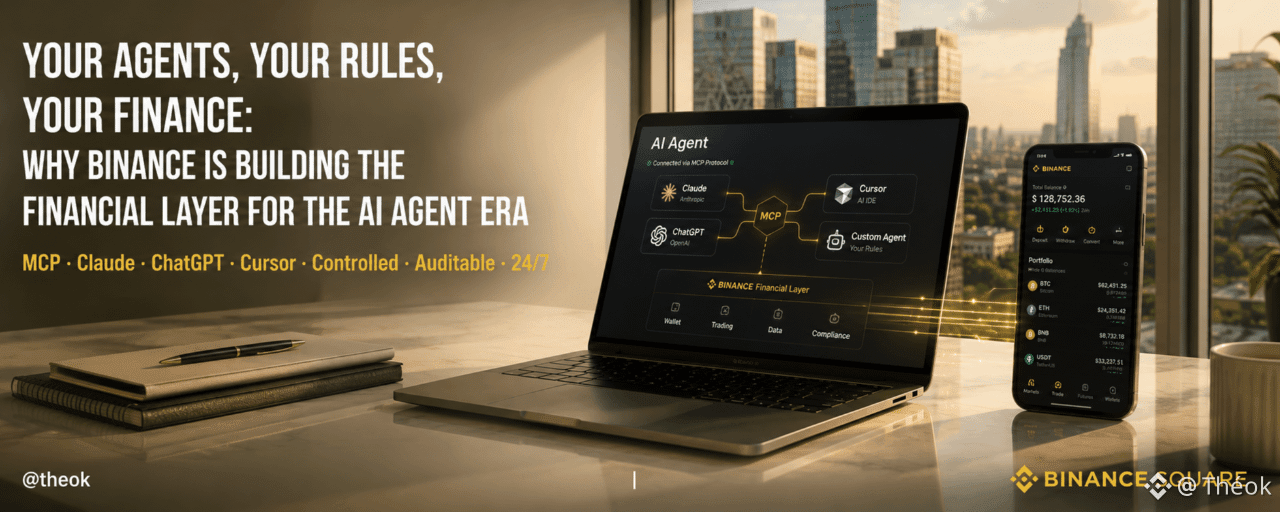
Artikel
Agen Anda, Aturan Anda, Keuangan Anda: Mengapa Binance Membangun Lapisan Finansial untuk Agen AIAI sedang melampaui batas dari sekadar menjawab pertanyaan menjadi mengambil tindakan, dan ketika perangkat lunak bertindak, ia perlu mencapai pasar dengan cara yang sama seperti manusia. Binance Agent OS adalah lapisan kapabilitas finansial untuk momen tersebut: ia mengekspos data pasar dan fungsi Binance melalui MCP, standar terbuka yang sudah diadopsi oleh OpenAI, Google, Microsoft, dan AWS, sehingga agen di dalam Claude, Cursor, atau ChatGPT dapat menemukannya dan menggunakannya dalam perimeter yang terkendali serta dapat diaudit. Ketika AI mulai bertindak, bukan hanya menjawab, seseorang harus membuat keuangan aman agar ia bisa menyentuhnya. Itulah yang dilakukan Binance Agent OS.
Agen Anda, Aturan Anda, Keuangan Anda: Mengapa Binance Membangun Lapisan Finansial untuk Agen AI
AI sedang melampaui batas dari sekadar menjawab pertanyaan menjadi mengambil tindakan, dan ketika perangkat lunak bertindak, ia perlu mencapai pasar dengan cara yang sama seperti manusia. Binance Agent OS adalah lapisan kapabilitas finansial untuk momen tersebut: ia mengekspos data pasar dan fungsi Binance melalui MCP, standar terbuka yang sudah diadopsi oleh OpenAI, Google, Microsoft, dan AWS, sehingga agen di dalam Claude, Cursor, atau ChatGPT dapat menemukannya dan menggunakannya dalam perimeter yang terkendali serta dapat diaudit. Ketika AI mulai bertindak, bukan hanya menjawab, seseorang harus membuat keuangan aman agar ia bisa menyentuhnya. Itulah yang dilakukan Binance Agent OS.
150
·
--
Terverifikasi
Artikel
Investor Jangka Panjang Baru: Bagaimana Pemuda Pasar Berkembang Membangun Portofolio Indeks Pertama MerekaAlokasi kekayaan jangka panjang bukan lagi hak eksklusif kelas menengah di negara maju. Untuk pertama kalinya dalam sejarah, sebuah generasi anak muda di pasar negara berkembang—dari Kinshasa hingga Jakarta, dari Lagos hingga São Paulo—sedang membangun portofolio indeks jangka panjang pertamanya secara on-chain, di Binance, melalui produk indeks berbasis luas seperti SPY, QQQ, dan VOO. Dari pasar-pasar yang tidak pernah diundang ke meja.
🌍 Generasi yang Tidak Pernah Diundang ke Meja
Selama puluhan tahun, investasi indeks jangka panjang secara struktural tidak dapat diakses oleh sebagian besar dunia.
Investor Jangka Panjang Baru: Bagaimana Pemuda Pasar Berkembang Membangun Portofolio Indeks Pertama Mereka
Alokasi kekayaan jangka panjang bukan lagi hak eksklusif kelas menengah di negara maju. Untuk pertama kalinya dalam sejarah, sebuah generasi anak muda di pasar negara berkembang—dari Kinshasa hingga Jakarta, dari Lagos hingga São Paulo—sedang membangun portofolio indeks jangka panjang pertamanya secara on-chain, di Binance, melalui produk indeks berbasis luas seperti SPY, QQQ, dan VOO. Dari pasar-pasar yang tidak pernah diundang ke meja.
🌍 Generasi yang Tidak Pernah Diundang ke Meja
Selama puluhan tahun, investasi indeks jangka panjang secara struktural tidak dapat diakses oleh sebagian besar dunia.
🌍 Generasi yang Tidak Pernah Diundang ke Meja
Selama puluhan tahun, investasi indeks jangka panjang secara struktural tidak dapat diakses oleh sebagian besar dunia.
1
2
493
·
--
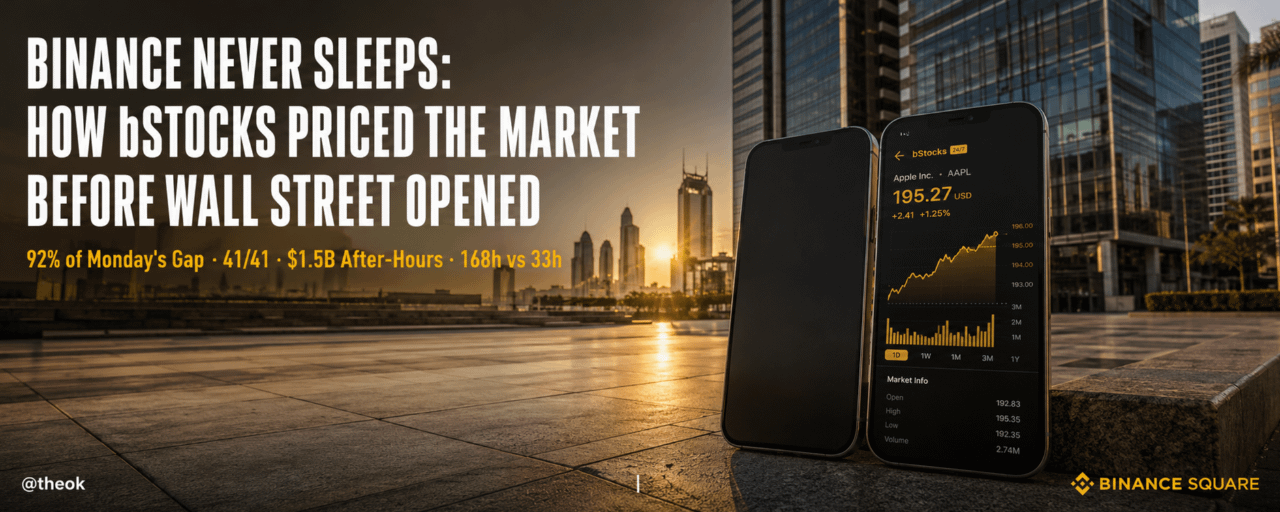
Artikel
Binance Tak Pernah Tidur: Bagaimana bStocks Mematok Harga Pasar Sebelum Wall Street DibukaPasar tradisional tutup, tetapi beritanya tak pernah berhenti. Saat Nvidia melaporkan setelah bel berbunyi, saat data makro turun di hari Sabtu, saat geopolitik bergeser semalaman, investor tradisional menunggu. Pengguna Binance tidak. Data minggu ini menunjukkan dengan tepat di mana penemuan harga terjadi pertama kali: di Binance, sebelum Wall Street dibuka, sebelum Hyperliquid mengejar. Pasar menjadi real-time. Binance adalah tempat terjadinya hal itu pertama kali.
🕐 Masalah pada Pasar yang Tutup
Setiap hari perdagangan berakhir dengan cara yang sama bagi investor tradisional: bel berbunyi, layar meredup, dan dunia terus bergerak.
Binance Tak Pernah Tidur: Bagaimana bStocks Mematok Harga Pasar Sebelum Wall Street Dibuka
Pasar tradisional tutup, tetapi beritanya tak pernah berhenti. Saat Nvidia melaporkan setelah bel berbunyi, saat data makro turun di hari Sabtu, saat geopolitik bergeser semalaman, investor tradisional menunggu. Pengguna Binance tidak. Data minggu ini menunjukkan dengan tepat di mana penemuan harga terjadi pertama kali: di Binance, sebelum Wall Street dibuka, sebelum Hyperliquid mengejar. Pasar menjadi real-time. Binance adalah tempat terjadinya hal itu pertama kali.
🕐 Masalah pada Pasar yang Tutup
Setiap hari perdagangan berakhir dengan cara yang sama bagi investor tradisional: bel berbunyi, layar meredup, dan dunia terus bergerak.
🕐 Masalah pada Pasar yang Tutup
Setiap hari perdagangan berakhir dengan cara yang sama bagi investor tradisional: bel berbunyi, layar meredup, dan dunia terus bergerak.
1
280
·
--
Artikel
Tahan Lama: Apa yang Dikatakan Data Pihak Ketiga Tentang Kepercayaan, Transparansi, dan Tren Pengguna di KriptoBeberapa bursa telah ditutup atau dipangkas operasinya di bawah pendinginan pasar dan tekanan regulasi. Komunitas mengajukan satu pertanyaan sederhana: "siapa berikutnya?" Data pihak ketiga dari perusahaan riset independen menjawab dengan jelas: pangsa pasar sedang terkonsolidasi di sekitar bursa yang memperoleh skor tertinggi dalam hal kepercayaan, transparansi, dan cadangan aset. Tanpa sensasi. Hanya angka-angka dan artinya.
📉 Pasar Sudah Mengeliminasi yang Lemah — Apa yang Ditunjukkan Sejarah
Sejak 2022, sektor kripto telah melewati beberapa gelombang eliminasi:
Tahan Lama: Apa yang Dikatakan Data Pihak Ketiga Tentang Kepercayaan, Transparansi, dan Tren Pengguna di Kripto
Beberapa bursa telah ditutup atau dipangkas operasinya di bawah pendinginan pasar dan tekanan regulasi. Komunitas mengajukan satu pertanyaan sederhana: "siapa berikutnya?" Data pihak ketiga dari perusahaan riset independen menjawab dengan jelas: pangsa pasar sedang terkonsolidasi di sekitar bursa yang memperoleh skor tertinggi dalam hal kepercayaan, transparansi, dan cadangan aset. Tanpa sensasi. Hanya angka-angka dan artinya.
📉 Pasar Sudah Mengeliminasi yang Lemah — Apa yang Ditunjukkan Sejarah
Sejak 2022, sektor kripto telah melewati beberapa gelombang eliminasi:
📉 Pasar Sudah Mengeliminasi yang Lemah — Apa yang Ditunjukkan Sejarah
Sejak 2022, sektor kripto telah melewati beberapa gelombang eliminasi:
1
246
·
--
Artikel
Saat Wall Street Tertidur: Bagaimana Saham On-Chain Mematok Berita Akhir PekanWall Street tutup pada hari Jumat, tetapi kabar-kabar, seolah-olah, tak pernah berhenti. Hasil perusahaan, data makro, dan peristiwa geopolitik akhir pekan membuat investor tradisional menunggu hingga hari Senin. Sementara itu, bStocks di Binance bekerja secara senyap: penemuan harga 24 jam sehari, 7 hari seminggu. Dari 7 akhir pekan yang dianalisis, bStocks telah mengintegrasikan secara median 92% dari gap hari Senin, dan pada gap yang lebih besar dari 3%, mereka memprediksi arah dengan benar 41 kali dari 41. Penemuan harga—fungsi paling fundamental dari sebuah pasar—bergeser ke on-chain.
Saat Wall Street Tertidur: Bagaimana Saham On-Chain Mematok Berita Akhir Pekan
Wall Street tutup pada hari Jumat, tetapi kabar-kabar, seolah-olah, tak pernah berhenti. Hasil perusahaan, data makro, dan peristiwa geopolitik akhir pekan membuat investor tradisional menunggu hingga hari Senin. Sementara itu, bStocks di Binance bekerja secara senyap: penemuan harga 24 jam sehari, 7 hari seminggu. Dari 7 akhir pekan yang dianalisis, bStocks telah mengintegrasikan secara median 92% dari gap hari Senin, dan pada gap yang lebih besar dari 3%, mereka memprediksi arah dengan benar 41 kali dari 41. Penemuan harga—fungsi paling fundamental dari sebuah pasar—bergeser ke on-chain.
347
·
--
Artikel
Bagaimana Binance Melindungi Dana Pengguna di Afrika pada 2026?Binance melindungi dana pengguna di Afrika pada 2026 melalui beberapa lapisan keamanan, termasuk Proof of Reserves, Secure Asset Fund for Users (SAFU), sistem kustodian yang aman, pemantauan risiko yang didukung oleh AI, serta alat perlindungan di tingkat akun.
🛡️ Bagaimana Binance Melindungi Dana Pengguna?
Keamanan di Binance bukanlah sebuah fitur, melainkan sebuah arsitektur. Setiap pengguna Afrika, dari Kinshasa hingga Lagos, dari Nairobi hingga Accra, menikmati tingkat perlindungan yang sama seperti pedagang institusional global.
Bagaimana Binance Melindungi Dana Pengguna di Afrika pada 2026?
Binance melindungi dana pengguna di Afrika pada 2026 melalui beberapa lapisan keamanan, termasuk Proof of Reserves, Secure Asset Fund for Users (SAFU), sistem kustodian yang aman, pemantauan risiko yang didukung oleh AI, serta alat perlindungan di tingkat akun.
🛡️ Bagaimana Binance Melindungi Dana Pengguna?
Keamanan di Binance bukanlah sebuah fitur, melainkan sebuah arsitektur. Setiap pengguna Afrika, dari Kinshasa hingga Lagos, dari Nairobi hingga Accra, menikmati tingkat perlindungan yang sama seperti pedagang institusional global.
🛡️ Bagaimana Binance Melindungi Dana Pengguna?
Keamanan di Binance bukanlah sebuah fitur, melainkan sebuah arsitektur. Setiap pengguna Afrika, dari Kinshasa hingga Lagos, dari Nairobi hingga Accra, menikmati tingkat perlindungan yang sama seperti pedagang institusional global.
4
534
Masuk untuk menjelajahi konten lainnya
Bergabunglah dengan pengguna kripto global di Binance Square
⚡️ Dapatkan informasi terbaru dan berguna tentang kripto.
💬 Dipercayai oleh bursa kripto terbesar di dunia.
👍 Temukan wawasan nyata dari kreator terverifikasi.
Email/Nomor Ponsel
Topik Sedang Tren
AIStocksWhatNext
227,779 penayangan
2,395 Berdiskusi
Bagikan & Menangkan Reward Traffic dalam Kampanye Hashtag Tren kami
✨Topik: Peluang Investasi Lain Apa yang Masih Ada saat Saham AI Terus Naik?
👉Cara Bergabung:
Publikasikan postingan atau artikel singkat dengan hashtag #AIStocksWhatNext
Bagikan apakah Anda bullish atau bearish, serta unggah kepemilikan saham AI atau trading Anda — menggunakan trade widget dapat meningkatkan kelayakan Anda.
Anda juga dapat memperkuat postingan dengan membagikan data atau grafik, serta menghindari gambar yang dihasilkan AI.
✍️Buat konten berdasarkan sudut pandang berikut:
- Nvidia mengatakan penjualan chip akan menjadi dua kali lipat tahun depan, dan perusahaan-perusahaan AI teratas terus meraih pendapatan rekor, pengeluaran komputasi di balik itu juga sangat besar. Apakah permintaan AI benar-benar sedang meroket? Dan berapa lama bisa bertahan? Saham AI naik di seluruh papan. Ini benar terobosan nyata, atau hanya pemantulan jangka pendek?
- Para pemimpin industri menyerukan untuk memperlambat pengembangan AI, sementara Trump berencana membangun “AI Force”, dengan mengklaim AI bisa menyumbang 25% dari PDB AS di masa depan. Anda ada di pihak yang mana? Apakah dukungan di tingkat negara bagian akan menjadi kemenangan jangka panjang bagi saham AI?
- Apakah Anda membeli saham AI? Bagikan trade/kepemilikan AI Anda dengan trade sharing widget kami.
⏰Periode Kampanye:
- 2026-09-22 7:00 - 2026-09-24 4:00 UTC
🎁Hadiah:
- Postingan yang memenuhi syarat dan mematuhi pedoman di atas serta berisi lebih dari 100 kata akan ditinjau dan mungkin mendapatkan dorongan traffic acak sebesar 500 hingga 3.000 tayangan. Anda akan menerima notifikasi dari feed secretary jika postingan Anda dipilih.
- Berkesempatan untuk artikel Anda ditampilkan di Binance Square Official
Butuh ide untuk postingan Anda? Kunjungi halaman topik #AIStocksWhatNext atau Square Guide on How to Post for Better Reach.
Binance Square Official
·Disukai 311 Kali
·679.6k penayangan
BitcoinBreaksAboveMayHighNears$86K
8,170 penayangan
136 Berdiskusi
DogecoinRises15%
20,652 penayangan
721 Berdiskusi