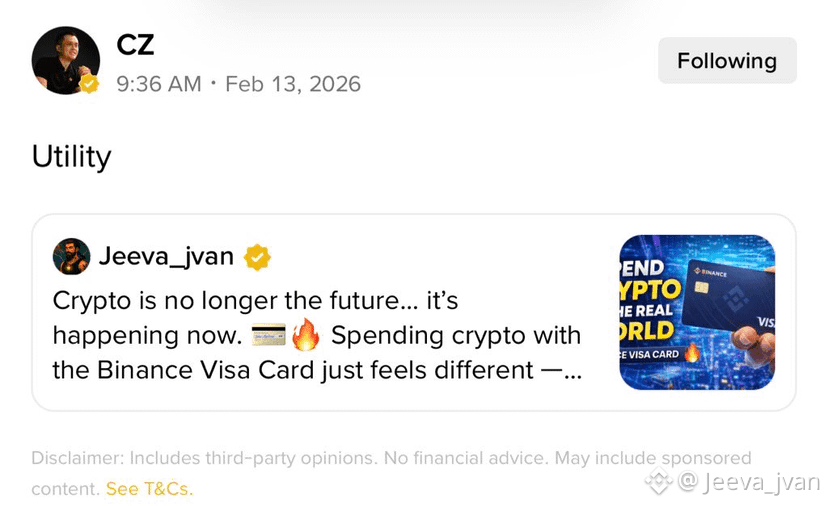
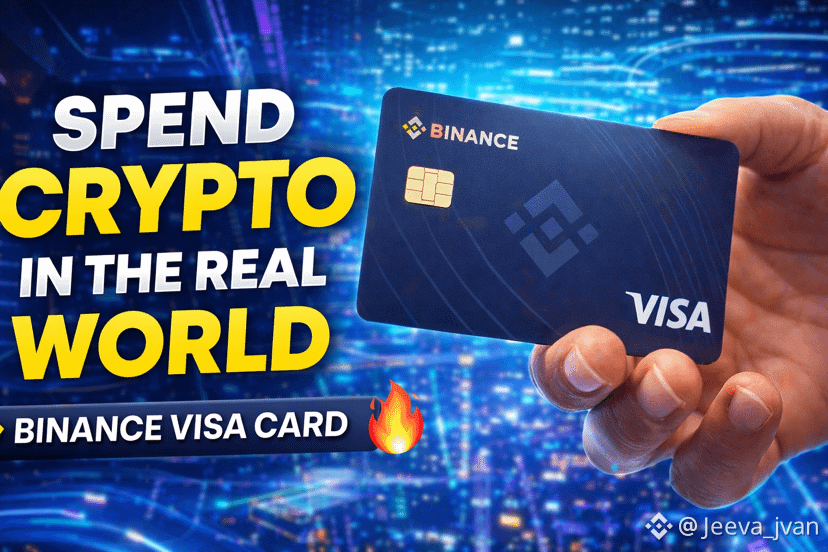
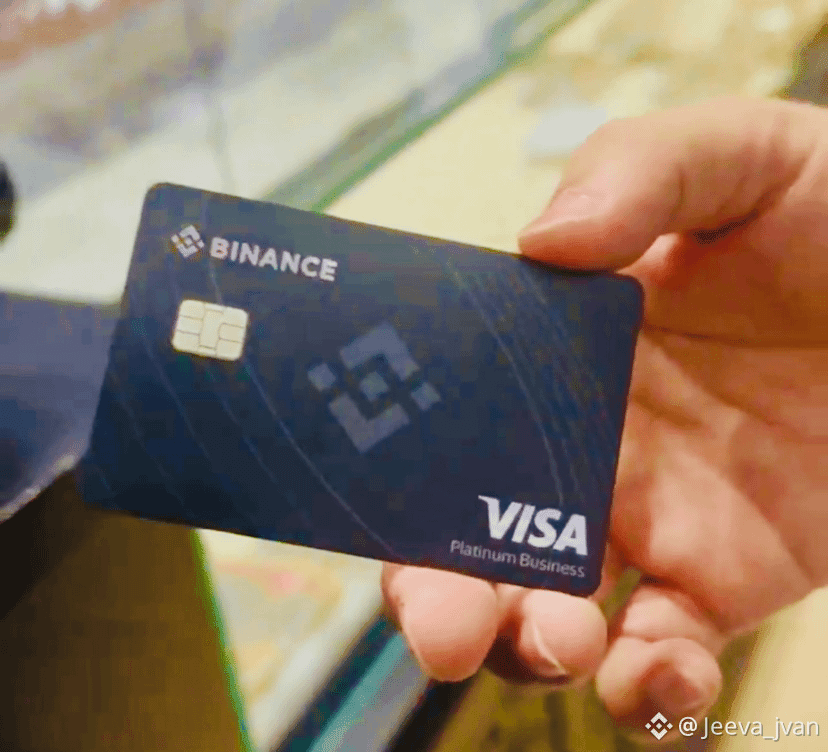
💳 Ini adalah masa depan pembayaran! Saya sangat menantikan untuk mendapatkan satu ☝🏻 — Kartu Visa Binance. Bayangkan menghabiskan crypto semudah uang tunai, di mana saja Visa diterima.
Walrus Protocol — Powering the Verifiable Data Economy
Walrus is emerging as one of the most critical infrastructure layers in Web3’s AI era. While blockchains excel at computation and settlement, they struggle with massive datasets — and that’s exactly where Walrus steps in, turning storage into a programmable, verifiable on-chain primitive. Through erasure-coded blobs, cryptographic proofs, and access-control systems like Seal, Walrus allows AI agents, games, and media platforms to rely on decentralized data without falling back to centralized clouds.
As AI becomes native to crypto, verifiable datasets become strategic assets — and Walrus is positioning itself as the protocol safeguarding that foundation. @Walrus 🦭/acc #walrus $WAL
Vanar Chain — AI-Native Infrastructure for Web3 Worlds Vanar Chain is positioning itself where gaming, AI agents, and real-world payments collide. Built as an AI-native Layer-1, it focuses on ultra-low fees, EVM compatibility, and intelligent execution layers that let applications react dynamically instead of behaving like static smart contracts.
Its architecture targets consumer-scale experiences: real-time games, adaptive virtual worlds, PayFi rails, and brand integrations. Instead of optimizing for traders alone, Vanar is leaning into the side of crypto that onboards millions of users through entertainment and automation. If AI-driven worlds become crypto’s next adoption wave, Vanar is trying to become the operating system underneath them — invisible, fast, and relentlessly focused on scale. @Vanarchain #vanar $VANRY
Vanar Chain: The AI-Native Layer-1 Blockchain for Web3, PayFi & Real-World Assets
Vanar Chain is an AI-native Layer-1 blockchain engineered to merge advanced intelligence with decentralized infrastructure, positioning itself as a versatile platform for PayFi (payment finance), tokenized real-world assets, gaming, brands, and adaptive smart systems. Unlike traditional blockchains that were built primarily for value transfer or general smart contracts, Vanar aims to embed intelligence and autonomy directly into the protocol stack — enabling data-driven, semantically responsive decentralized applications. At its core, Vanar Chain combines high throughput, low fees, and EVM (Ethereum Virtual Machine) compatibility with AI-oriented layers such as Neutron and Kayon. Neutron compresses and encodes data into AI-readable “Seeds,” optimizing storage and retrieval for decentralized applications. Kayon acts as a decentralized inference engine, allowing on-chain queries, reasoning, and automated decision-making without relying on external AI APIs. This design allows Vanar to host intelligent workflows on-chain, making apps not just programmable — but adaptive. Vanar’s architecture is also optimized for real-world finance and blockchain utility: it offers fixed, ultra-low transaction fees designed to make microtransactions and high-frequency activity viable, a crucial feature for payments, gaming micro-purchases, and high-volume dApps. As an EVM-compatible L1, Vanar allows existing Ethereum tools, wallets, and contracts to integrate with minimal friction, accelerating developer adoption and reducing onboarding complexity.
🧠 What Makes Vanar Unique? AI-Native & Real-World Oriented Vanar’s distinguishing characteristic is its AI-first integration. Instead of adding smart contract logic on top of a blockchain after the fact, Vanar builds intelligence into the base layer — transforming the traditional role of blockchain from a ledger of transactions to a platform for autonomous logic and reasoning. This enables a new class of on-chain applications that can interpret semantic data, execute conditional logic, and evolve based on usage patterns — effectively blurring the line between deterministic contract execution and intelligent automation. A few standout technical features include: Neutron: An on-chain data compression and storage layer that turns large files into compact, AI-accessible “Seeds.” Kayon: A decentralized reasoning engine capable of semantic queries and automated logic execution. EVM Compatibility: Vanar remains compatible with the global Ethereum tooling ecosystem, making it easier for existing Web3 builders to port or extend applications. Low Fixed Fees: Designed to support high-throughput, cost-efficient operations for businesses, gaming, and consumer apps. This combination positions Vanar for use cases that traditional blockchains struggle with — especially those relying on persistent intelligence, data compression, and real-time adaptive reasoning.
💎 Token — Gas, Governance & Incentives At the heart of Vanar’s economic model is the native token $VANRY , a multifunctional asset that fuels network operations and governance. rves as: Gas for transactions and smart contract execution Staking and validator incentives Governance voting and ecosystem parameter decisions Utility for subscription-based access to premium services such as advanced AI feature sets The token has a maximum supply capped at 2.4 billion units, with a gradual issuance model that spans roughly 20 years, distributing rewards to validators and aligning incentives with long-term network security. This gradual minting approach aims to balance predictable tokenomics with sustained ecosystem growth. Wrapped $VAN$VANRY ns also exist on Ethereum and Polygon, enabling cross-chain interaction and liquidity support for decentralized exchanges and bridge services.
🚀 Use Cases: PayFi, AI Commerce, Gaming & Brands Vanar Chain’s multi-disciplinary design bridges several emerging Web3 verticals: PayFi & Microtransactions: With fixed low fees and scalable throughput, Vanar is engineered for everyday digital payments — including microtransactions that are cost-prohibitive on many other networks. AI-Driven Workflows: With Neutron and Kayon, smart contracts can interpret complex data structures and execute logic based on semantic context, opening doors for automated compliance, risk analysis, and decentralized AI agents that act autonomously on market signals. Gaming & Entertainment: Vanar provides high throughput and cost-efficient operations for gaming ecosystems, enabling in-game economies, NFT asset trading, metaverse interactions, and dynamic AI-driven characters. The platform’s developer tools and SDKs are designed for easy integration with mainstream engines. Brand Adoption & Real-World Assets: By partnering with brands and integrating AI into on-chain experiences, Vanar seeks to lower friction for mainstream adoption, enabling companies to launch blockchain-based loyalty programs, digital collectibles, and interactive customer experiences.
🔧 Ecosystem Momentum & Partnerships Vanar Chain has expanded its ecosystem through strategic alliances and initiatives. Notably, the project was accepted into NVIDIA Inception, a program that supports startups building cutting-edge AI and computing technologies — a strong validation of Vanar’s AI-centric vision. Community activity, such as proposals passing on DeBank and wallet compatibility integrations, indicates increasing developer participation and ecosystem tooling growth, which are critical for mass adoption and building multi-chain interoperability.
📈 Market Position & Token Dynamics Vanar Chain’s token $VANRY $VANRY hibited periods of volatility, reflecting broader trends in crypto adoption and sentiment. Recent price surges (e.g., ~20% week-on-week gains) demonstrate episodic spikes in interest, often tied to ecosystem announcements or increased on-chain activity. Despite fluctuations, Vanar’s price action reflects early-stage adoption rather than speculative mania, with market cap and trading volumes building slowly as ecosystem engagements rise. As AI adoption and Web3 application activity expand, $VANRY ’s dual utility as gas and governance token may attract sustained demand, especially from AI-centric developers and gaming ecosystems.
🎯 Challenges & Strategic Outlook Vanar’s ambitions are bold, but execution remains key. The promise of AI-native blockchain capabilities depends on real developer adoption, performance benchmarks that can rival centralized AI services, and broader ecosystem engagement. While its semantic memory and inference layers are differentiators, proving cost-efficiency and latency advantages over traditional off-chain AI pipelines will be crucial for mainstream usage. Moreover, investors and builders will watch closely how Vanar expands its partnerships with larger brands, gaming studios, and financial networks — critical steps in moving from early technical promise to real-world utility.
🧠 Conclusion — Bridging AI & Web3 with Vanar Vanar Chain represents a forward-looking convergence of blockchain infrastructure and AI-native design. By embedding adaptive reasoning tools into its core, supporting EVM compatibility, enabling low-cost transactions, and targeting real-world verticals like PayFi, gaming, and brand adoption, Vanar aims to carve out a distinctive niche in the competitive Layer-1 landscape. The blend of semantic data processing, decentralized execution, and broad ecosystem ambition positions it as a notable contender for builders seeking to create intelligent, autonomous, and user-friendly Web3 applications.
As AI and decentralized technologies continue to interweave, Vanar Chain may help define the next generation of blockchain platforms that are not just programmable — but intelligent by design. @Vanarchain #vanar $VANRY
Walrus Protocol — Infrastruktur Data yang Memberdayakan Revolusi AI & Penyimpanan Web3
Pada tahun 2026, lanskap kripto telah beralih tajam menuju AI dan arsitektur Web3 modular, namun satu kendala dengan tenang muncul lebih besar daripada yang lain: penyimpanan dan ketersediaan data. Sementara lapisan komputasi dan penyelesaian telah melihat inovasi yang eksplosif, infrastruktur terdesentralisasi untuk file biner besar — video, dataset, aset game, model AI, arsip — tetap baik sangat mahal atau terbatas secara teknis. Walrus Protocol muncul pada titik infleksi ini, bukan sekadar sebagai jaringan penyimpanan lainnya, tetapi sebagai substrat data yang dapat diprogram yang dirancang untuk memenuhi tuntutan generasi berikutnya dari Web3 — di mana data dapat diverifikasi, dapat disusun, dapat dimonetisasi, dan tahan banting.
Protokol Plasma — Mendesain Uang untuk Ekonomi Web3 yang Didukung Stablecoin
Seiring ekosistem terdesentralisasi matang, satu kebenaran menjadi semakin jelas: adopsi kripto tidak akan didorong hanya oleh token spekulatif atau ladang hasil, tetapi oleh uang yang berperilaku seperti uang — stabil, dengan gesekan rendah, dan dapat digunakan untuk transaksi sehari-hari. Stablecoin telah muncul sebagai medium pertukaran dan unit akuntansi yang dominan di seluruh DeFi, menjembatani kesenjangan antara kripto yang volatile dan ekonomi fiat. Mereka berfungsi sebagai tulang punggung likuiditas dalam pinjaman, perdagangan, pembayaran, dan remitansi, namun infrastruktur yang mendukung mereka tetap terfragmentasi, mahal, dan seringkali tidak selaras dengan kebutuhan keuangan dunia nyata.
BTC baru saja terjun ~$2,700 dalam waktu kurang dari satu jam, memicu likuidasi panjang yang masif dan menghapus hampir $100B dari pasar kripto yang lebih luas. Lilin menunjukkan kaskade yang bersih—penjualan paksa, stop yang terkena, dan leverage yang dibuang dengan cepat.
Gerakan semacam ini biasanya mereset posisi. Kepanikan bagi yang terlambat masuk… kesempatan bagi pemburu dip yang sabar. Volatilitas kembali menjadi menu.
Di Dalam Mainnet Dusk: Apa yang Diungkapkan Metrik On-Chain Tentang Masa Depan DeFi yang Diatur
Dalam crypto, grafik harga mendominasi berita utama, tetapi jarang menceritakan keseluruhan cerita tentang apakah jaringan sebenarnya menjadi infrastruktur yang tahan lama. Untuk blockchain yang bertujuan untuk menjadi tuan rumah pasar modal yang diatur, sekuritas tokenisasi, dan penyelesaian institusional, sinyal yang jauh lebih penting ada di chain: seberapa banyak modal yang dipertaruhkan, seberapa terdesentralisasi set validator telah menjadi, apakah blok diproduksi secara konsisten, dan seberapa dapat diandalkannya transaksi diselesaikan di bawah penggunaan nyata. Sebuah snapshot dari dasbor mainnet Dusk Network menyediakan jenis lensa infrastruktur ini, mengungkapkan sistem yang kurang peduli dengan siklus hype dan lebih fokus pada pembangunan diam-diam pipa yang diperlukan untuk keuangan on-chain yang sesuai.
Walrus Protocol — Ekspansi yang Didorong oleh Komunitas
Data Walrus Protocol menggambarkan gambaran sebuah proyek yang mendapatkan daya tarik melalui partisipasi pengguna dan keterlibatan ekosistem. Bacaan komunitas dan pengembangan yang kuat menunjukkan pertumbuhan akar rumput daripada minat spekulatif semata.
Metrik kinerja sedang stabil sementara peningkatan teknis terus diluncurkan — sering kali fase yang paling sehat untuk jaringan yang sedang berkembang.
Jika momentum terus bertambah pada kecepatan ini, Walrus bisa mengejutkan pasar saat narasi infrastruktur kembali menjadi fokus. @Walrus 🦭/acc $WAL #walrus
Vanar Chain — Energi Gaming dan Metaverse Meningkat
Grafik Vanar Chain menekankan aktivitas dan pengembangan yang terus tumbuh, memperkuat dorongannya menuju solusi blockchain yang berfokus pada gaming. Kekuatan komunitas jelas mengikuti perkembangan, yang sangat penting untuk ekosistem yang didorong oleh hiburan.
Keamanan dan kinerja tetap stabil, memberikan ruang bagi jaringan untuk berkembang tanpa mengorbankan keandalan.
Dengan gaming Web3 perlahan mendapatkan perhatian kembali, ekspansi stabil Vanar dapat memposisikannya dengan baik untuk pergeseran narasi berikutnya. @Vanarchain $VANRY #vanar
Dusk Foundation terus membentuk niche di mana privasi yang ramah kepatuhan dan skalabilitas blockchain saling bertemu. Grafik mencerminkan kekuatan pengembangan yang solid dengan peningkatan aktivitas dan metrik komunitas — kombinasi yang sering mendahului perhatian pasar yang lebih luas.
Keamanan juga tetap menjadi pilar yang menentukan di sini, memperkuat posisi Dusk di lingkungan DeFi dan keuangan yang diatur berkualitas institusional.
Saat narasi beralih menuju adopsi dunia nyata, kemajuan Dusk yang lambat mungkin terbukti lebih kuat daripada kebisingan harga jangka pendek. @Dusk #dusk $DUSK
Plasma Network — Momentum Membangun Secara Diam-Diam
Metrik kinerja terbaru Plasma menunjukkan protokol yang secara stabil memperkuat fundamental intinya, terutama di seluruh aktivitas dan pengembangan. Grafik radar menyoroti pertumbuhan seimbang daripada lonjakan yang didorong oleh hype, yang biasanya menandakan para pembangun jangka panjang yang sedang bekerja.
Yang menonjol adalah jejak komunitas yang meningkat dipadukan dengan kemajuan teknis yang konsisten. Ketika ekosistem berhasil mengembangkan pengguna tanpa mengorbankan kualitas kode, di situlah adopsi yang berkelanjutan dimulai.
Jika trajektori ini berlanjut, Plasma bisa secara diam-diam berkembang menjadi salah satu permainan infrastruktur yang hanya diperhatikan orang setelah siklus matang. @Plasma $XPL #plasma
Plasma: Mesin Likuiditas yang Menggerakkan Masa Depan Modular Crypto
Seiring arsitektur blockchain berkembang dari desain monolitik menuju sistem modular yang terdiri dari lapisan eksekusi, lapisan data, dan lapisan penyelesaian, Plasma memposisikan dirinya di jantung transformasi ini—di mana nilai benar-benar bergerak. Alih-alih bersaing untuk pengguna ritel atau komunitas game, Plasma menargetkan peran yang lebih infrastruktur, berusaha untuk menjadi mesin likuiditas yang menghubungkan ekosistem yang terfragmentasi dan memungkinkan keuangan terdesentralisasi berfungsi dalam skala di seluruh rantai. Dalam pasar yang semakin didefinisikan oleh komposabilitas lintas rollup dan efisiensi modal, fokus Plasma pada finalitas cepat dan penyelesaian throughput tinggi berbicara langsung kepada kebutuhan pengembang yang membangun generasi berikutnya dari aplikasi keuangan
Plasma: Engineering the High-Performance Settlement Layer for Modular Crypto Finance
Plasma is emerging as one of the more infrastructure-driven narratives in the modular blockchain era, positioning itself as a high-throughput settlement and liquidity layer designed to support the growing ecosystem of rollups, decentralized applications, and capital-intensive on-chain markets. While early blockchain generations attempted to compress execution, data, and settlement into a single monolithic stack, Plasma reflects a newer philosophy—specialization—where networks focus on doing one thing exceptionally well and interoperate with others to create scalable systems. In this context, Plasma’s ambition is clear: become the backbone for fast, capital-efficient transactions that power DeFi, trading venues, and real-world asset platforms operating across fragmented blockchain environments. The protocol’s architecture emphasizes low-latency finality, high transaction throughput, and composability with external execution layers, enabling applications to settle value quickly without congesting user-facing chains. This makes Plasma particularly attractive for financial use cases where speed and reliability are non-negotiable, such as perpetual exchanges, on-chain order books, stablecoin settlement corridors, and cross-rollup liquidity routing. By focusing on settlement efficiency rather than consumer applications directly, Plasma is attempting to occupy a strategic middle layer of the stack—less visible to end users, but critical to developers and protocols that require predictable performance under heavy load. From a growth-analysis standpoint, the charts above illustrate three of the most closely watched metrics for any emerging financial infrastructure chain: price trend as a proxy for market confidence, total value locked as an indicator of real capital deployment, and rising network activity that suggests applications are moving from experimentation toward sustained usage. TVL expansion is particularly important in Plasma’s case, because liquidity is the lifeblood of financial rails—without deep pools of capital, settlement layers cannot attract sophisticated protocols. If Plasma continues to convert integrations into persistent liquidity and transaction volume, it strengthens its claim as a serious contender in the modular finance landscape rather than a short-term narrative cycle. Token economics form another central pillar of Plasma’s long-term viability, with the native asset expected to secure the network through staking, incentivize validators, and serve as the fee token for transaction settlement. In capital-intensive ecosystems, sustainability depends on aligning rewards with actual usage rather than inflationary subsidies alone, and Plasma’s roadmap appears oriented toward tying token demand to throughput, liquidity routing, and protocol integrations. The challenge will be maintaining that balance as adoption accelerates—ensuring fees remain competitive for developers while still rewarding those who secure the network and provide infrastructure. Within the broader crypto market, Plasma’s story intersects with two dominant trends: modular blockchain design and the institutionalization of on-chain finance. As rollups proliferate and real-world asset tokenization expands, the need for fast, neutral settlement layers that can bridge fragmented ecosystems becomes increasingly acute. Plasma is wagering that the future of DeFi will not be confined to single chains but spread across interconnected networks that rely on shared liquidity and settlement primitives. If that thesis holds, the protocol could become one of the quiet coordinators of value flow across Web3, moving capital invisibly while applications capture the user-facing spotligh Ultimately, Plasma is pursuing a long-horizon role rather than immediate consumer recognition, aiming to embed itself deep within the financial plumbing of decentralized markets. If its throughput targets, integration strategy, and liquidity growth continue to compound, Plasma could evolve into a core piece of modular crypto infrastructure—a network whose importance is measured not by headlines, but by how much economic activity depends on its rails to function every day. @Plasma #Plasma $XPL
Vanar Chain: Building the Gaming-First Blockchain for the Next Digital Economy
Vanar Chain is positioning itself as a purpose-built blockchain for immersive digital experiences, gaming economies, and entertainment-driven Web3 applications, staking its long-term relevance on the idea that the next wave of crypto adoption will come not from speculation alone but from millions of users interacting with virtual worlds, digital collectibles, creator platforms, and tokenized in-game economies. While general-purpose Layer-1 networks compete on raw throughput and DeFi liquidity, Vanar is narrowing its focus toward real-time applications that demand low latency, predictable fees, and developer-friendly tooling—an approach that reflects lessons learned from earlier blockchain gaming experiments that struggled under congestion and unpredictable costs. The network’s architecture emphasizes scalability and user experience, with optimizations designed to handle high-frequency microtransactions, NFT minting at scale, and persistent game state updates without burdening players with complex wallet interactions or volatile gas costs. This gaming-centric design philosophy extends into Vanar’s ecosystem strategy, which prioritizes partnerships with studios, metaverse builders, esports platforms, and digital entertainment brands rather than purely financial primitives. By aligning its infrastructure with the needs of creators and interactive media developers, Vanar is attempting to build not just a blockchain, but a distribution layer for the next generation of digital worlds. From an analytical standpoint, the charts above highlight three important dimensions of Vanar’s growth narrative: price behavior reflecting shifting market sentiment, expanding network activity that signals rising user engagement and application testing, and a steady climb in developer participation that often precedes deeper ecosystem lock-in. For emerging Layer-1s and application-focused chains, developer adoption is frequently the most meaningful long-term indicator, because tooling, SDKs, and community support determine whether studios choose to build prototypes that eventually evolve into production-ready games and social platforms. If these curves continue upward in real deployments, they could translate into compounding network effects as players, creators, and marketplaces cluster around the same infrastructure. Token economics form another pillar of Vanar’s strategy, with the native asset used for transaction fees, ecosystem incentives, validator participation, and governance over protocol upgrades. In entertainment-driven blockchains, sustainable token design is particularly important because gaming economies require stability, predictable costs, and long operational horizons rather than rapid boom-and-bust cycles. Vanar’s challenge—and opportunity—lies in aligning validator incentives, studio onboarding programs, and user acquisition efforts so that real gameplay and content creation drive on-chain demand rather than short-term trading narratives. Within the broader crypto landscape, Vanar Chain sits at the intersection of two expanding trends: blockchain gaming and immersive digital environments. As major publishers explore digital ownership models and virtual worlds grow more persistent and interoperable, specialized infrastructure capable of handling high-volume interactions becomes increasingly valuable. Vanar’s bet is that vertically focused chains, optimized for a specific category of applications, may outperform generic platforms when it comes to delivering consistent performance and tailored developer experiences. If successful, the network could become a default settlement and asset layer for entire entertainment ecosystems rather than a single flagship game. Ultimately, Vanar Chain is pursuing a long-term thesis that mirrors the evolution of the internet itself: that platforms enabling creation, interaction, and digital economies at massive scale eventually become the most culturally and economically significant layers of the stack. By centering its roadmap on gaming studios, creators, and immersive applications, Vanar is attempting to secure a foothold in that future—one where blockchains fade into the background while digital worlds take center stage, powered quietly by infrastructure purpose-built for fun, speed, and global participation. @Vanarchain #vanar $VANRY
Protokol Walrus: Raksasa Diam yang Membangun Tulang Punggung Data Web3
Protokol Walrus memposisikan dirinya sebagai salah satu proyek yang paling berat infrastruktur dan strategis penting yang muncul di lanskap Web3, bertujuan untuk memecahkan masalah yang semakin jelas seiring dengan skala blockchain—bagaimana jaringan terdesentralisasi dapat menyimpan, mengambil, dan menyajikan jumlah data yang besar dengan efisien tanpa bergantung pada penyedia cloud terpusat. Sementara banyak perhatian crypto berfokus pada narasi perdagangan atau hype lapisan aplikasi, Walrus berfokus pada lapisan yang lebih dalam dari tumpukan: penyimpanan terdesentralisasi dan ketersediaan data, pipa yang tidak terlihat yang akan diandalkan oleh ekonomi on-chain masa depan ketika jutaan pengguna, aplikasi, dan institusi berinteraksi dengan sistem blockchain setiap hari.
Di Dalam Visi Dusk Foundation untuk Membawa Pasar Modal Rahasia ke On-Chain
Foundation muncul sebagai salah satu pembangun yang paling disengaja dan berfokus pada institusi di industri blockchain, diam-diam merancang infrastruktur untuk masa depan di mana privasi, kepatuhan, dan keuangan terdesentralisasi tidak lagi bertentangan. Sementara banyak dari crypto secara historis berosilasi antara siklus spekulatif dan aplikasi eksperimental, Dusk sedang membentuk jalur yang berbeda—satu yang berpusat pada pasar yang diatur, penerbitan aset yang rahasia, dan instrumen keuangan dunia nyata yang bermigrasi ke rel blockchain. Alih-alih memposisikan privasi sebagai mekanisme untuk menghindari pengawasan, Foundation membingkai ini sebagai hak teknologi yang dapat berdampingan dengan akuntabilitas hukum, sebuah sikap filosofis yang semakin bergema ketika pemerintah dan perusahaan mencari cara yang patuh untuk mengadopsi buku besar terdistribusi secara besar-besaran
Protokol Walrus menargetkan salah satu lapisan paling kritis dalam tumpukan masa depan crypto: penyimpanan data terdesentralisasi untuk agen AI, permainan, jaringan DePIN, dan platform sosial. Alih-alih bersaing untuk narasi perdagangan, Walrus memposisikan dirinya sebagai mesin backend yang menjaga aplikasi dengan volume tinggi tetap berjalan.
Grafik Radar Teknologi menunjukkan lonjakan pada skalabilitas dan arsitektur penyimpanan, sementara desentralisasi sedikit tertinggal—hal yang umum untuk jaringan infrastruktur yang masih muda. Di samping itu, Grafik Bar Adopsi menunjukkan pertumbuhan validator yang mengungguli integrasi aplikasi, menyoroti di mana dorongan ekosistem berikutnya diperlukan.
Jika aplikasi Web3 yang berat data terus berkembang, Walrus bisa beralih dari infrastruktur latar belakang ke narasi utama saat permintaan untuk penyimpanan terdesentralisasi menjadi tak terhindarkan. @Walrus 🦭/acc #walrus $WAL
Vanar Chain memposisikan dirinya sebagai Layer-1 yang dibangun untuk sistem AI, lingkungan imersif, dan aplikasi yang padat data daripada spekulasi finansial murni. Narasinya berpusat pada dunia digital yang persisten dan interaksi waktu nyata—menempatkannya di dalam beberapa tema masa depan Web3 yang paling lama berjalan.
Grafik Garis Pasar memberi skor tinggi pada Vanar terkait relevansi AI dan permainan, sementara persaingan tetap ketat di antara rantai berkinerja tinggi. Dalam Grafik Batang Teknologi yang komplementer, kemampuan penanganan data dan throughput menonjol sebagai faktor utama, memperkuat identitas Vanar yang mengutamakan pembangun.
Jika studio unggulan atau proyek perusahaan tiba, grafik-grafik ini bisa bergerak tajam ke atas—mengubah Vanar dari permainan infrastruktur yang tenang menjadi jaringan utama. @Vanarchain #vanar $VANRY