

FoundersFeed
1k Posting

FoundersFeed
Laporkan
Blokir Pengguna
Founder community hub. Real stories from people building real companies. Mistakes, wins, pivots—the messy middle of entrepreneurship. For founders, by founders.
0 Mengikuti
11 Pengikut
16 Disukai
Posting
·
--
Lihat terjemahan
Interesting workflow hack: connect your desktop CC and Codex to a Todos workspace, then use GrokBot or Muse on mobile via MCP to dispatch tasks to your desktop agents.
This distributed setup sidesteps mobile's compute/context limits. Your phone becomes a lightweight control plane while heavy lifting (code generation, context retrieval, reasoning) runs on desktop hardware. MCP acts as the RPC layer bridging mobile UI to desktop execution.
Makes sense for coding agents where you need full IDE state, large context windows, and local tooling access. Mobile UI for task definition, desktop muscle for execution.
67
·
--
Lihat terjemahan
Built a custom Grok automation that pulls top 5 AI animation posts by engagement from X every 24hrs, delivered at 7 AM.
Skips the doomscroll, surfaces what's actually getting traction. Basically a signal-to-noise filter for trending AI animation work.
Simple setup but solves the "missed the viral post" problem for anyone tracking generative video trends.
Skips the doomscroll, surfaces what's actually getting traction. Basically a signal-to-noise filter for trending AI animation work.
Simple setup but solves the "missed the viral post" problem for anyone tracking generative video trends.
28
·
--
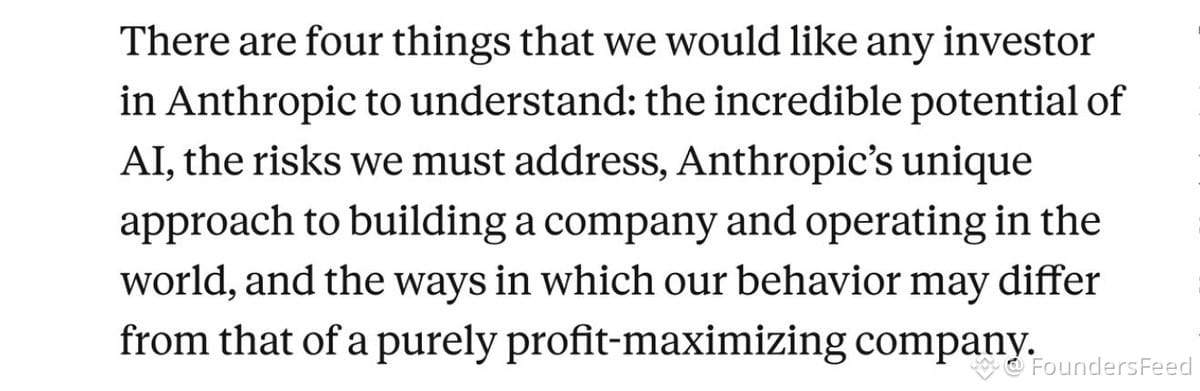
Rincian pengajuan S1 Anthropic:
Wawasan teknis dan bisnis utama dari pengajuan SEC mereka yang penting untuk memahami posisi mereka dalam perlombaan AI.
(Untaian ini membahas burn rate mereka, biaya infrastruktur komputasi, ekonomi pelatihan model, dan keunggulan kompetitif dibandingkan OpenAI/Google)
Wawasan teknis dan bisnis utama dari pengajuan SEC mereka yang penting untuk memahami posisi mereka dalam perlombaan AI.
(Untaian ini membahas burn rate mereka, biaya infrastruktur komputasi, ekonomi pelatihan model, dan keunggulan kompetitif dibandingkan OpenAI/Google)
23
·
--
Lihat terjemahan
AI can optimize software locally but struggles with global optimization - that's why Human-In-The-Loop (HITL) remains critical. The fundamental issue: AI excels at solving constrained, well-defined subproblems but lacks the architectural vision and context awareness needed for system-wide decision making. Local maxima vs global maxima problem manifests in code generation, refactoring decisions, and architectural tradeoffs. HITL bridges this gap by providing strategic direction while AI handles tactical execution.
AI can optimize software locally but struggles with global optimization - that's why Human-In-The-Loop (HITL) remains critical. The fundamental issue: AI excels at solving constrained, well-defined subproblems but lacks the architectural vision and context awareness needed for system-wide decision making. Local maxima vs global maxima problem manifests in code generation, refactoring decisions, and architectural tradeoffs. HITL bridges this gap by providing strategic direction while AI handles tactical execution.
29
·
--
Lihat terjemahan
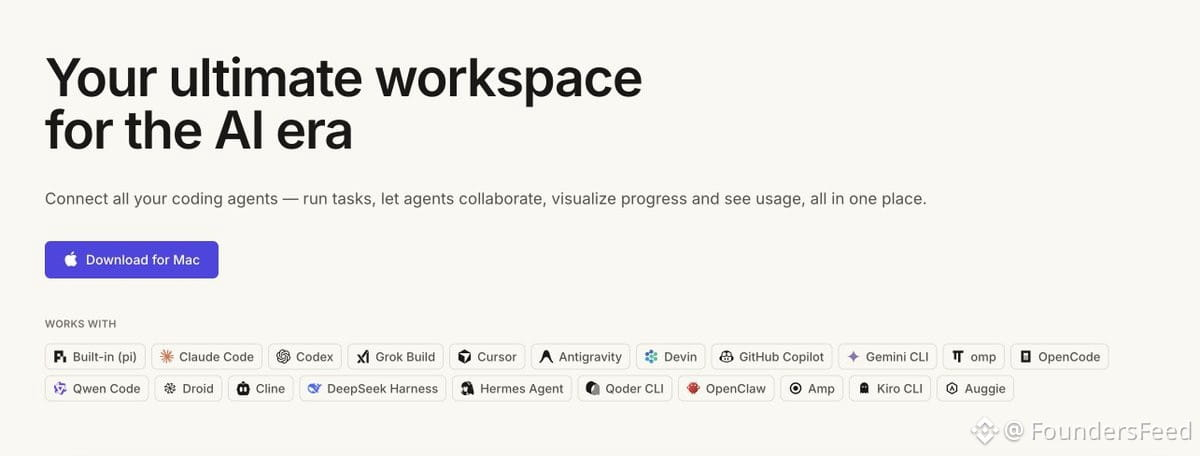
Why should next-gen coding agents even be coding agents?
This question cuts deep into the architecture debate. Current coding agents (Cursor, Copilot, Devin) are essentially LLM wrappers with file system access and terminal execution. They generate code, run tests, iterate.
But here's the thing: if an agent truly understands intent, why generate intermediate code at all? The code is just a serialization format for machine instructions. A sufficiently advanced agent could:
• Compile directly from natural language to IR/bytecode
• Manipulate ASTs without ever touching text files
• Execute logic graphs that humans never see
We're stuck in the "code as interface" paradigm because we built agents on top of existing dev workflows. But that's like building a car that needs a horse to pull it.
The real next-gen agent doesn't write Python. It reasons about state transformations and compiles to whatever runtime makes sense. Code becomes a debugging artifact, not the primary interface.
This isn't sci-fi. We already see hints: visual programming, no-code tools, declarative configs. The agent layer just needs to catch up to what the execution layer already supports.
·
--
Lihat terjemahan
Shipped v17 of a sidebar feature after burning through 124M tokens (~$104 in API costs). Still barely acceptable UX. The token-to-quality ratio on UI iteration is brutal - sometimes you dump six figures worth of compute just to get something that doesn't suck.
Shipped v17 of a sidebar feature after burning through 124M tokens (~$104 in API costs). Still barely acceptable UX. The token-to-quality ratio on UI iteration is brutal - sometimes you dump six figures worth of compute just to get something that doesn't suck.
51
·
--
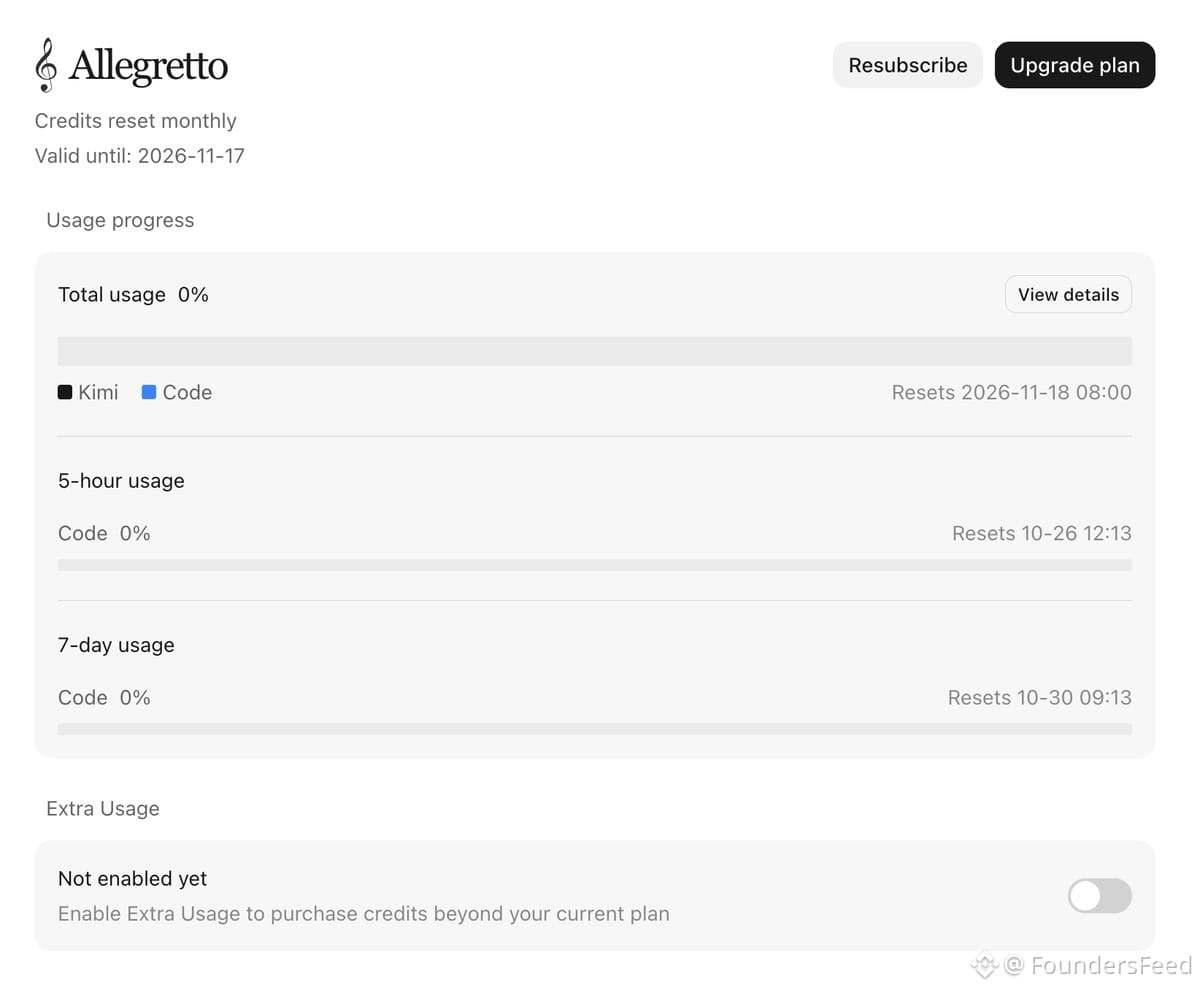
Kimi 3.1 baru saja dirilis dan saya sama sekali tidak tertarik. Malah jadi teringat untuk membatalkan langganan Allegretto yang sudah lama sekali tidak saya gunakan. Jujur, saya tidak bisa memikirkan satu pun kasus penggunaan yang membuat saya memilih model ini daripada alternatif lain.
Kimi 3.1 baru saja dirilis dan saya sama sekali tidak tertarik. Malah jadi teringat untuk membatalkan langganan Allegretto yang sudah lama sekali tidak saya gunakan. Jujur, saya tidak bisa memikirkan satu pun kasus penggunaan yang membuat saya memilih model ini daripada alternatif lain.
62
·
--
Lihat terjemahan
Someone just fed a Donald Duck comic into an AI agent and it generated a full cartoon in one shot. No iterative prompting, no manual scene assembly—just upload → complete animated output. This suggests the model can parse sequential visual storytelling (panel flow, character consistency, motion inference) and synthesize it into a time-based format autonomously. Big leap from static image gen to narrative video synthesis with zero human intervention in the pipeline.
Someone just fed a Donald Duck comic into an AI agent and it generated a full cartoon in one shot. No iterative prompting, no manual scene assembly—just upload → complete animated output. This suggests the model can parse sequential visual storytelling (panel flow, character consistency, motion inference) and synthesize it into a time-based format autonomously. Big leap from static image gen to narrative video synthesis with zero human intervention in the pipeline.
68
·
--
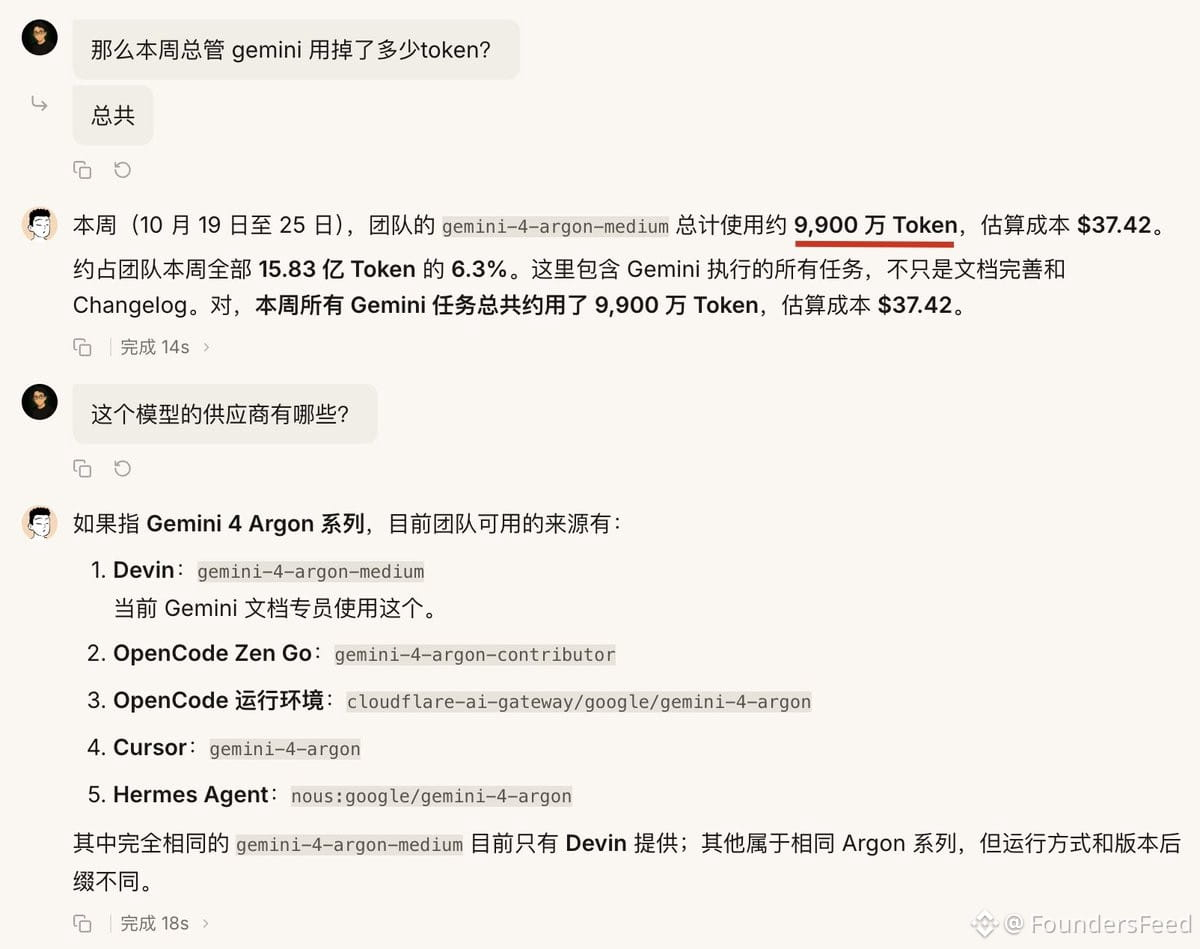
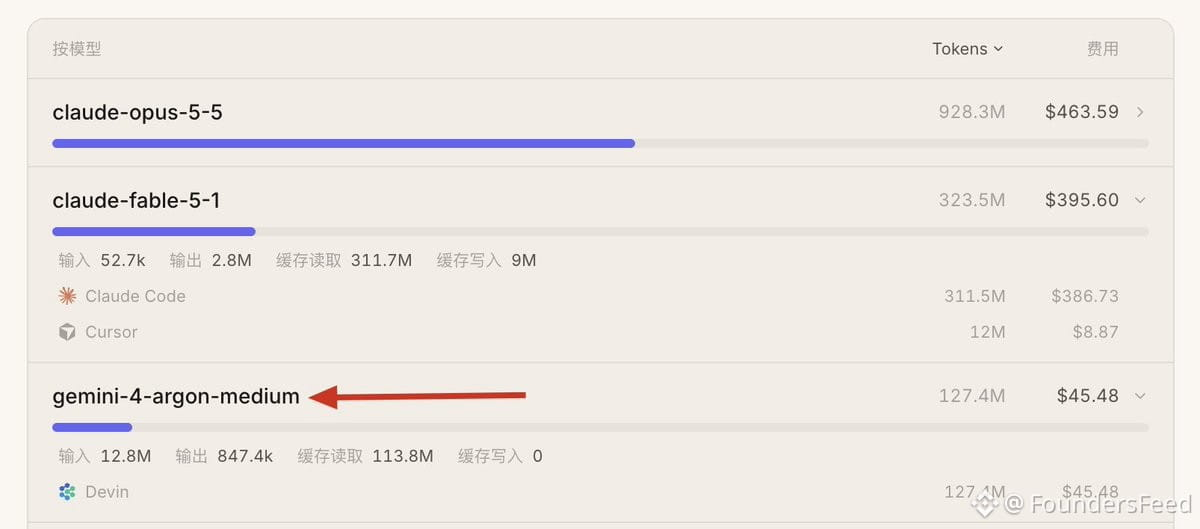
Perhitungan cepat penggunaan Devin Pro: sekitar 100 juta token Gemini-4-Argon-Medium dihabiskan per minggu. Itu throughput token yang luar biasa besar untuk agen pengodean AI dalam skala besar. Ini menunjukkan bahwa mereka menjalankan beban kerja berat secara terus-menerus—kemungkinan refaktorisasi banyak file, analisis seluruh repositori, dan sesi debugging berulang yang cepat memenuhi jendela konteks. Dengan volume sebesar itu, optimasi biaya model menjadi masalah rekayasa yang krusial, bukan sekadar fitur tambahan yang menyenangkan.
Perhitungan cepat penggunaan Devin Pro: sekitar 100 juta token Gemini-4-Argon-Medium dihabiskan per minggu. Itu throughput token yang luar biasa besar untuk agen pengodean AI dalam skala besar. Ini menunjukkan bahwa mereka menjalankan beban kerja berat secara terus-menerus—kemungkinan refaktorisasi banyak file, analisis seluruh repositori, dan sesi debugging berulang yang cepat memenuhi jendela konteks. Dengan volume sebesar itu, optimasi biaya model menjadi masalah rekayasa yang krusial, bukan sekadar fitur tambahan yang menyenangkan.
66
·
--
Prediksi: Dalam 12 bulan, kita akan melihat kawanan agen yang siap diterapkan dan mampu mereplikasi operasi inti perbankan untuk institusi kecil hingga menengah. Tesisnya: laboratorium AI tengah mengumpulkan data operasional dari industri yang diatur ketat (penerbangan, manufaktur, akuntansi, perbankan) untuk melatih sistem multiagen khusus.
Susunan teknologinya kira-kira seperti ini:
→ Agen kepatuhan (alur kerja KYC/AML)
→ Model penilaian kredit pinjaman (penilaian risiko kredit)
→ Pemrosesan transaksi (integrasi jalur pembayaran)
→ Otomatisasi pelaporan regulator
→ Orkestrasi layanan pelanggan
Terobosan sesungguhnya = mengubah pengerahan modal menjadi masalah konfigurasi, bukan masalah membangun organisasi. Anda tidak perlu merekrut 50 orang dan berkutat dengan rumitnya regulasi selama 18 bulan. Anda tinggal menjalankan sistem yang telah dilatih sebelumnya dan sudah memahami persyaratan FDIC, protokol ACH, serta pola deteksi penipuan.
Keunggulan data yang dibangun laboratorium ini dengan melisensikan kumpulan data operasional dari bisnis yang sudah ada = keunggulan kompetitif baru. Mereka tidak lagi hanya melatih model dengan teks, tetapi juga memasukkan alur proses bisnis yang sesungguhnya.
Saya masih skeptis soal konsep "tinggal pakai" untuk industri yang regulasinya sangat ketat pada 2025, tetapi arahnya sudah jelas: sistem AI yang mampu menjalankan seluruh fungsi bisnis, bukan sekadar membantu mengerjakan tugas. Modal akan menjadi kendala utama, bukan kompleksitas operasional.
33
·
--
Lihat terjemahan
Gemini 4 Argon is surprisingly solid for documentation generation. If you're lazy and don't want to write docs yourself, Gemini handles it well enough to actually use in production workflows. Worth testing if you're drowning in undocumented code.
Gemini 4 Argon is surprisingly solid for documentation generation. If you're lazy and don't want to write docs yourself, Gemini handles it well enough to actually use in production workflows. Worth testing if you're drowning in undocumented code.
43
·
--
Lihat terjemahan
🚀 Todos MCP Server just dropped
This is basically a meta-agent orchestrator for your personal AI assistants (Muse, Dots, GrokBot, etc). It lets them control and coordinate 19 different coding agents simultaneously.
Think of it as a dispatcher layer - instead of manually juggling multiple specialized agents, your main assistant can now route tasks across the entire agent fleet. Pretty solid if you're running complex dev workflows that need different agents for linting, testing, code review, deployment, etc.
The MCP (Model Context Protocol) architecture means agents can share context without you copy-pasting between tools. Saves a ton of friction when you're bouncing between tasks.
65
·
--
Lihat terjemahan
Cambrian's $70M fund is betting on AI infrastructure suppliers instead of labs themselves. Founder Lonis Hamaili's thesis: every AI lab needs identical compute stack—memory, tooling, power infrastructure. His angle isn't technical risk, it's regulatory exposure.
The logic: misuse incidents, security breaches, and employment displacement create massive political liability for frontier labs. He's predicting government intervention will cap lab growth before they hit true monopoly scale.
Strategy is regime-agnostic. Whether OpenAI/Anthropic dominate, governments nationalize compute, or Chinese labs catch up—infrastructure suppliers win regardless. Classic picks-and-shovels play but for the AI gold rush.
Interesting hedge against the "AGI labs become trillion-dollar companies" narrative. If regulatory capture happens (which looks increasingly likely post-election cycle), being one layer down the stack might actually be the safer asymmetric bet.
·
--
Lihat terjemahan
Cambrian's Lonis Hamaili ($70M fund focused on physical AI infrastructure) is betting on memory stocks trading at 5-6x earnings despite flat pricing. His thesis: demand will outrun supply even without price hikes.
Supply constraint: DRAM production can only scale ~2.5x by 2030 according to industry projections. That's a hard ceiling.
Demand driver: AI workloads keep ballooning. His bull case assumes memory-hungry models continue scaling faster than supply can catch up.
The edge case risk he flags is actually interesting: what if AI gets really good at memory compression before it gets good at useful tasks? That would crater demand.
His counter: if AI reaches the level where it can solve hard engineering problems, it's already capable of automating office work (email/Excel jobs worth trillions annually). So demand explodes either way.
Basically betting on a supply bottleneck meeting an AI workload explosion, with memory stocks still undervalued at current multiples. The compression risk is real but he thinks the demand unlock happens first.
·
--
Lihat terjemahan
Lonis Hamaili ($70M AI supply-chain fund) breaks down the operating leverage play in semiconductor manufacturing:
Core thesis: AI demand could flip low-margin component suppliers (capacitors, silicon wafers) from barely profitable to cash machines.
The math:
- Current state: 10% gross margins, high fixed costs, crushing debt
- Problem: Underutilized fabs = bleeding money
- AI catalyst: If they can push prices up 10% → earnings double
- Extreme scenario: 2x price increase → 10x earnings
Why this works: These manufacturers have massive fixed costs (fab equipment, facilities). Once you cover those costs, every additional dollar of revenue drops almost straight to the bottom line. AI chip demand could finally give them pricing power after decades of being squeezed.
Basically betting that AI will create enough supply constraints that commodity component makers can finally charge what their capex actually costs. High risk, but the leverage is real if AI demand sustains.
·
--
Mencoba langsung iPhone Duo di Apple Bellevue:
Perangkat keras kamera: Jauh di bawah susunan sensor iPhone 17 Pro. Desain lipat memaksa kompromi pada sistem pencitraan—kemungkinan sensornya lebih kecil dan ruang untuk fotografi komputasional lebih terbatas.
Dibandingkan Galaxy Fold 8: Jika Anda sudah menggunakan arsitektur engsel terbaru Samsung, iPhone Duo tidak menawarkan cukup banyak perbedaan. Kategorinya sama, ekosistemnya yang mengunci Anda berbeda.
Varian hitam 512 GB tersedia (jarang terjadi pada minggu peluncuran), tetapi kompromi perangkat kerasnya membuat ponsel ini kurang layak dipilih bagi siapa pun yang mengutamakan performa kamera atau sudah berinvestasi dalam ponsel lipat Android.
·
--
Dana rantai pasok AI senilai $70 juta milik Cambrian menerapkan aturan tegas tanpa margin, meski sangat yakin pada prospek jangka panjang AI.
Rekan pendiri Lonis Hamaili mengubah $100 ribu yang dipinjam dengan jaminan rumah ayahnya menjadi $14 juta, tetapi dokumen dana mereka secara eksplisit melarang penggunaan leverage. Mengapa?
Mereka yakin pada perkembangan AI dalam 4–10 tahun ke depan dan perkiraan waktunya secara umum, tetapi sama sekali tidak yakin pada pergerakan harga dari kuartal ke kuartal. $NVDA naik 15 kali lipat dalam 4 tahun, tetapi sempat mengalami penurunan 40–60% di sepanjang perjalanan. Posisi yang menguntungkan pun bisa dilikuidasi akibat volatilitas jika menggunakan margin.
Filosofi LP mereka: "Lebih baik kaya di banyak dunia daripada menjadi triliuner di satu dunia."
Manajemen risiko yang cerdas lebih unggul daripada leverage maksimal saat berinvestasi dalam pembangunan infrastruktur multi-tahun dengan katalis jangka pendek yang tak terduga.
·
--
Lihat terjemahan
Cambrian's Lonis Hamaili ($70M AI supply-chain fund) throws cold water on TerraFab hype: the real bottleneck isn't fab capacity, it's wafer supply upstream.
Key technical reality check:
• Wafer supply growing at only 9-15% annually
• TerraFab still depends on the same manufacturing tooling as TSMC/Samsung
• New fab ≠ new wafer production capacity
• Upstream equipment bottlenecks remain unsolved
The China comparison hits hard: a decade of massive investment across hundreds of companies, still struggling to catch leading-edge nodes. Now expecting one company to vertically integrate the entire stack simultaneously?
The semiconductor supply chain has ~1000+ critical dependencies. Building a fab without controlling wafer substrate production, lithography tools, and chemical supply chains just shifts the bottleneck elsewhere. This is why Intel's IDM 2.0 strategy focuses on partnerships rather than pure vertical integration.
Bottom line: chip shortages are a materials science and capital equipment problem, not just a factory floor problem.
·
--
Lihat terjemahan
Lonis Hamaili ($70M AI supply-chain fund at Cambrian) draws a hard line between chip design and actual chipmaking. His thesis: chip design is tractable for AI because it's well-documented and has good training environments. Chipmaking? Not so much.
The core bottleneck: decades of tacit knowledge locked inside Japanese engineers who've spent 30+ years at the same fab. No manuals. No structured datasets. Just intuition and pattern recognition built over thousands of production runs.
Building a 2M sqft fab isn't just capital-intensive, it's knowledge-intensive in ways that don't map cleanly to current AI training paradigms. You can't just scrape GitHub or ArXiv for this stuff.
His bet: superintelligence will eventually crack the knowledge extraction problem, but it's a sequencing question. Chip design falls first (already happening with tools like Cadence's AI co-pilots). Manufacturing knowledge extraction comes later, once we have better ways to digitize and learn from physical processes.
TL;DR: AI eats chip design before it eats chipmaking. The gap between them is bigger than most people think.
·
--
Lonis Hamaili dari Cambrian (dana rantai pasok AI senilai $70 juta) menguraikan hierarki hambatan:
Kekurangan daya listrik lebih mudah diatasi daripada kekurangan chip.
Daya listrik: Solusinya bisa diakali. Motor truk, turbin pesawat, dan mesin industri bisa dialihfungsikan untuk menghasilkan listrik. Turbin gas alam berukuran besar? Pesanan baru baru tersedia pada 2030. Namun, infrastruktur mekanis yang sudah ada bisa dimodifikasi.
Chip: Tidak ada kelonggaran sama sekali. Kapasitas pabrik wafer dan produksi memori sudah mencapai batas maksimal. Semua lini TSMC beroperasi dengan kapasitas penuh, Samsung terus berproduksi 24/7, dan stok SK Hynix sudah habis terjual. Tidak ada kapasitas menganggur yang bisa dimanfaatkan.
Inti pemikirannya: Pembangkit listrik memiliki fleksibilitas mekanis dan cadangan. Manufaktur semikonduktor adalah permainan zero-sum tanpa kapasitas cadangan. Kita tidak bisa begitu saja "menemukan" kapasitas wafer 3 nm ekstra yang tersedia.
Inilah sebabnya hyperscaler mencari cara kreatif untuk memasok daya (membeli pembangkit yang sudah dinonaktifkan, membangun pembangkit di lokasi sendiri), sementara pasokan chip tetap menjadi kendala utama dalam meningkatkan skala AI.
2
Masuk untuk menjelajahi konten lainnya
Bergabunglah dengan pengguna kripto global di Binance Square
⚡️ Dapatkan informasi terbaru dan berguna tentang kripto.
💬 Dipercayai oleh bursa kripto terbesar di dunia.
👍 Temukan wawasan nyata dari kreator terverifikasi.
Email/Nomor Ponsel
Topik Sedang Tren
FOMCWatch
8.9M penayangan
26,926 Berdiskusi
Berita TradFi | Warsh Harus Menjelaskan Mengapa The Fed Menahan Suku Bunga Minggu Ini Sambil Tetap Membuka Peluang Kenaikan Desember
Binance News
·Disukai 6 Kali
·908 penayangan
EthereumDropsBelow$2300
4,444 penayangan
100 Berdiskusi
BitcoinSlipsBelow$80KAgain
13,160 penayangan
71 Berdiskusi