
D E E N A
4.3k Posting

D E E N A
Laporkan
Blokir Pengguna
Crypto Lover
Perdagangan Terbuka
Pedagang Rutin
1.1 Tahun
222 Mengikuti
17.1K+ Pengikut
4.2K+ Disukai
Posting
Portofolio
Semua
Kuotasi
Live
·
--
🚨 KOMPETISI PUMP!
$G USDT: +73.82% di $0.007337
$ONE : +72.85% di $0.0018028
🔥 Hanya 0.97% yang memisahkan mereka!
Siapa yang akan memimpin berikutnya?
{spot}(ONEUSDT)
{spot}(GUSDT)
#BOJHikesRatesTo31YearHigh
#InjectiveLaunchesINJOnSolana
#SECGrantsInnovationExemptionForTokenizedStocks
#XRPGains3%AsRippleAddsMPPSupport
#XRPGains3%AsRippleAddsMPPSupport
🚨 KOMPETISI PUMP!
$G USDT: +73.82% di $0.007337
$ONE : +72.85% di $0.0018028
🔥 Hanya 0.97% yang memisahkan mereka!
Siapa yang akan memimpin berikutnya?
#BOJHikesRatesTo31YearHigh
#InjectiveLaunchesINJOnSolana
#SECGrantsInnovationExemptionForTokenizedStocks
#XRPGains3%AsRippleAddsMPPSupport
#XRPGains3%AsRippleAddsMPPSupport
$G USDT: +73.82% di $0.007337
$ONE : +72.85% di $0.0018028
🔥 Hanya 0.97% yang memisahkan mereka!
Siapa yang akan memimpin berikutnya?
#BOJHikesRatesTo31YearHigh
#InjectiveLaunchesINJOnSolana
#SECGrantsInnovationExemptionForTokenizedStocks
#XRPGains3%AsRippleAddsMPPSupport
#XRPGains3%AsRippleAddsMPPSupport
$GUSDT — +73.82%
$ONE — +72.85%
🟢 $GUSDT
🔵 $ONE
20 jam lagi
1.8k
·
--
Babylon (BABY): Taruhan Staking BTC yang Tak Ada yang Sepenuhnya Menghargai
Saya telah memantau Babylon sejak narasi staking BTC mulai memanas, dan ini adalah salah satu ketegangan paling menarik yang saya lihat di kripto saat ini. Protokolnya sendiri benar-benar mengesankan: Anda melakukan staking Bitcoin asli secara langsung, tanpa wrapping, tanpa bridging, tanpa kustodian, dan telah berhasil menghimpun lebih dari $5B BTC yang di-stake pada puncaknya — lebih dari sepertiga dari seluruh pasokan wrapped BTC, tanpa wrapping sama sekali. Ini adalah permintaan nyata untuk imbal hasil non-kustodian.
Namun, tokennya justru menceritakan kisah yang sangat berbeda. BABY mencapai rekor tertinggi sepanjang masa di sekitar $0,17 pada April 2025 dan sekarang diperdagangkan sekitar $0,012–0,015, penurunan kira-kira 92%. Kapitalisasi pasar berada di kisaran $50–55M dibandingkan dengan miliaran token yang masih terkunci. Pembukaan kunci untuk investor awal mulai pada Mei 2026, melepaskan beberapa bagian setiap bulan hingga 2029, yang berarti tekanan dilusi berkelanjutan apa pun seberapa kuat fundamental protokolnya.
Jadi saya memperhatikan dua hal secara ketat: apakah pertumbuhan TVL dan integrasi seperti Aave V4 terus mengungguli jadwal unlock, dan apakah pasar pernah memberi harga pada celah antara kekuatan protokol dan pasokan token. Ini bukan nasihat keuangan, hanya apa yang saya lihat dari data.
#BrentCrudeFallsAbout6%
#OilDropsAbout6%
#USStorageStocksExtendLosses
#KRXHaltsKOSPIAfterChipSelloff
#SKHynixSlumps11%OnAIChipSelloff
$COTI
{spot}(COTIUSDT)
$SNXX
{future}(SNXXUSDT)
$DIA
{spot}(DIAUSDT)
Babylon (BABY): Taruhan Staking BTC yang Tak Ada yang Sepenuhnya Menghargai
Saya telah memantau Babylon sejak narasi staking BTC mulai memanas, dan ini adalah salah satu ketegangan paling menarik yang saya lihat di kripto saat ini. Protokolnya sendiri benar-benar mengesankan: Anda melakukan staking Bitcoin asli secara langsung, tanpa wrapping, tanpa bridging, tanpa kustodian, dan telah berhasil menghimpun lebih dari $5B BTC yang di-stake pada puncaknya — lebih dari sepertiga dari seluruh pasokan wrapped BTC, tanpa wrapping sama sekali. Ini adalah permintaan nyata untuk imbal hasil non-kustodian.
Namun, tokennya justru menceritakan kisah yang sangat berbeda. BABY mencapai rekor tertinggi sepanjang masa di sekitar $0,17 pada April 2025 dan sekarang diperdagangkan sekitar $0,012–0,015, penurunan kira-kira 92%. Kapitalisasi pasar berada di kisaran $50–55M dibandingkan dengan miliaran token yang masih terkunci. Pembukaan kunci untuk investor awal mulai pada Mei 2026, melepaskan beberapa bagian setiap bulan hingga 2029, yang berarti tekanan dilusi berkelanjutan apa pun seberapa kuat fundamental protokolnya.
Jadi saya memperhatikan dua hal secara ketat: apakah pertumbuhan TVL dan integrasi seperti Aave V4 terus mengungguli jadwal unlock, dan apakah pasar pernah memberi harga pada celah antara kekuatan protokol dan pasokan token. Ini bukan nasihat keuangan, hanya apa yang saya lihat dari data.
#BrentCrudeFallsAbout6%
#OilDropsAbout6%
#USStorageStocksExtendLosses
#KRXHaltsKOSPIAfterChipSelloff
#SKHynixSlumps11%OnAIChipSelloff
$COTI
$SNXX
$DIA
Saya telah memantau Babylon sejak narasi staking BTC mulai memanas, dan ini adalah salah satu ketegangan paling menarik yang saya lihat di kripto saat ini. Protokolnya sendiri benar-benar mengesankan: Anda melakukan staking Bitcoin asli secara langsung, tanpa wrapping, tanpa bridging, tanpa kustodian, dan telah berhasil menghimpun lebih dari $5B BTC yang di-stake pada puncaknya — lebih dari sepertiga dari seluruh pasokan wrapped BTC, tanpa wrapping sama sekali. Ini adalah permintaan nyata untuk imbal hasil non-kustodian.
Namun, tokennya justru menceritakan kisah yang sangat berbeda. BABY mencapai rekor tertinggi sepanjang masa di sekitar $0,17 pada April 2025 dan sekarang diperdagangkan sekitar $0,012–0,015, penurunan kira-kira 92%. Kapitalisasi pasar berada di kisaran $50–55M dibandingkan dengan miliaran token yang masih terkunci. Pembukaan kunci untuk investor awal mulai pada Mei 2026, melepaskan beberapa bagian setiap bulan hingga 2029, yang berarti tekanan dilusi berkelanjutan apa pun seberapa kuat fundamental protokolnya.
Jadi saya memperhatikan dua hal secara ketat: apakah pertumbuhan TVL dan integrasi seperti Aave V4 terus mengungguli jadwal unlock, dan apakah pasar pernah memberi harga pada celah antara kekuatan protokol dan pasokan token. Ini bukan nasihat keuangan, hanya apa yang saya lihat dari data.
#BrentCrudeFallsAbout6%
#OilDropsAbout6%
#USStorageStocksExtendLosses
#KRXHaltsKOSPIAfterChipSelloff
#SKHynixSlumps11%OnAIChipSelloff
$COTI
$SNXX
$DIA
₿ Native BTC Staking
0%
📉 92% Token Drawdown
0%
🔓 Ongoing Unlock Pressure
0%
⚖️ Protocol vs Token Gap
0%
0 Voting • Voting ditutup
486
·
--
🚀 $ON sedang memanas!
$ON /USDT Perp (Orochi Network) naik +29,65% dalam 24 jam, diperdagangkan di $0,19198
📊 Tertinggi 24h: $0,23712
📉 Terendah 24h: $0,14064
💰 Volume 24h: 1,26B ON ($236,58M)
Lonjakan tajam dari $0,14064 ke puncak $0,23712, lalu terjadi penarikan kembali — volatilitasnya sedang tinggi di yang satu ini 🔥
Pergerakan besar berarti peluang besar — bertrading dengan cerdas dan kelola risikomu.
Ayo — bertrading sekarang $ON
{future}(ONUSDT)
🚀 $ON sedang memanas!
$ON /USDT Perp (Orochi Network) naik +29,65% dalam 24 jam, diperdagangkan di $0,19198
📊 Tertinggi 24h: $0,23712
📉 Terendah 24h: $0,14064
💰 Volume 24h: 1,26B ON ($236,58M)
Lonjakan tajam dari $0,14064 ke puncak $0,23712, lalu terjadi penarikan kembali — volatilitasnya sedang tinggi di yang satu ini 🔥
Pergerakan besar berarti peluang besar — bertrading dengan cerdas dan kelola risikomu.
Ayo — bertrading sekarang $ON
$ON /USDT Perp (Orochi Network) naik +29,65% dalam 24 jam, diperdagangkan di $0,19198
📊 Tertinggi 24h: $0,23712
📉 Terendah 24h: $0,14064
💰 Volume 24h: 1,26B ON ($236,58M)
Lonjakan tajam dari $0,14064 ke puncak $0,23712, lalu terjadi penarikan kembali — volatilitasnya sedang tinggi di yang satu ini 🔥
Pergerakan besar berarti peluang besar — bertrading dengan cerdas dan kelola risikomu.
Ayo — bertrading sekarang $ON
BULLISH 💚
60%
BEARISH ♥️
40%
5 Voting • Voting ditutup
165
·
--
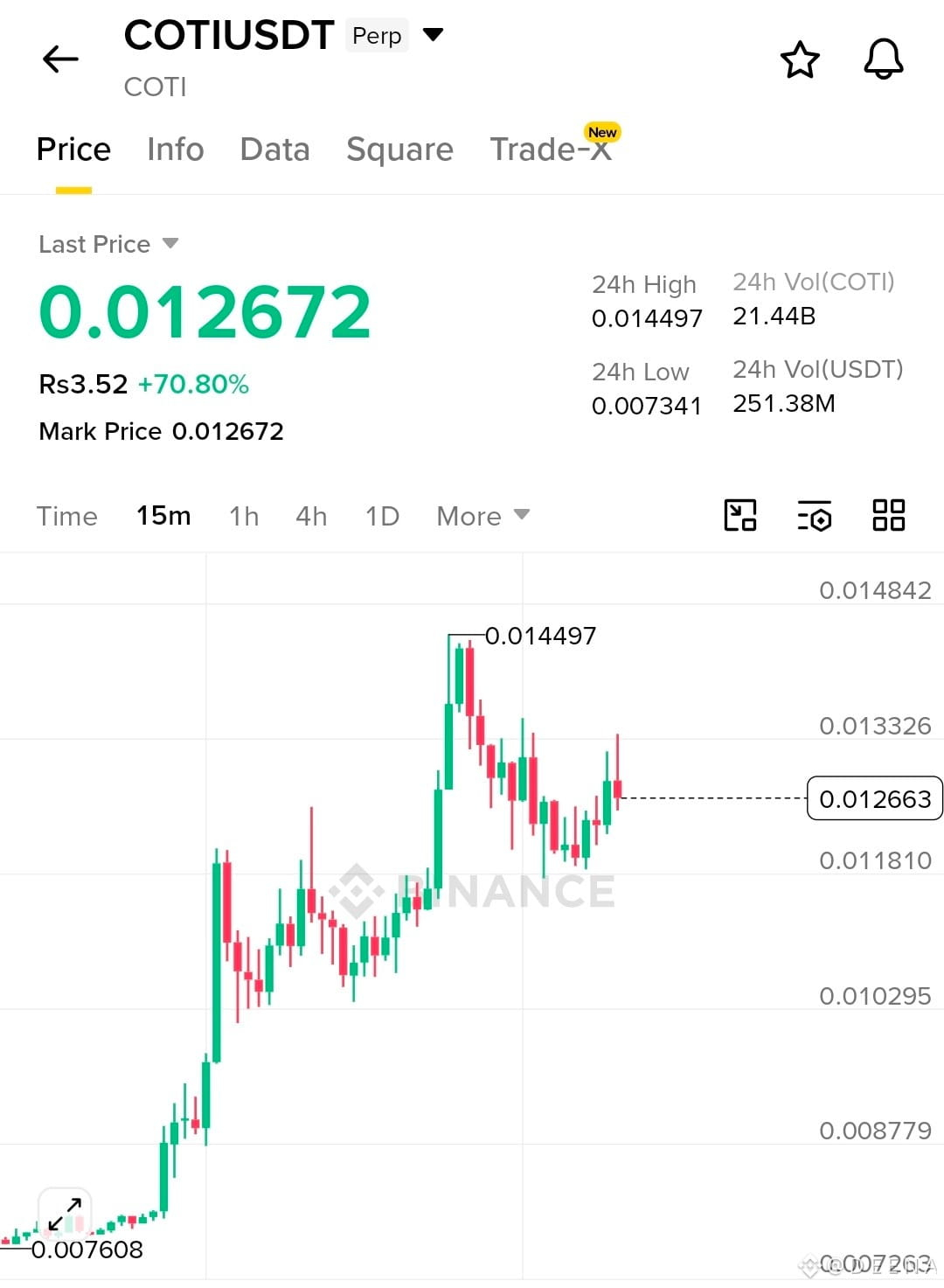
🚀 $COTI is ON FIRE right now!
$COTI /USDT Perp sedang naik +70.80% dalam 24 jam, diperdagangkan di $0.012672
📊 Tertinggi 24h: $0.014497
📉 Terendah 24h: $0.007341
💰 Volume 24h: 21.44B COTI ($251.38M)
Dari $0.007608 hingga mencapai puncak $0.014497 — hampir 2x dalam satu hari. Momentum jelas berada di pihak para bullish saat ini 🔥
Volatilitas setinggi ini berarti peluang besar — dan risiko besar. Selalu perdagangkan dengan manajemen risiko yang tepat.
Ayo — trading sekarang $COTI
{spot}(COTIUSDT)
🚀 $COTI is ON FIRE right now!
$COTI /USDT Perp sedang naik +70.80% dalam 24 jam, diperdagangkan di $0.012672
📊 Tertinggi 24h: $0.014497
📉 Terendah 24h: $0.007341
💰 Volume 24h: 21.44B COTI ($251.38M)
Dari $0.007608 hingga mencapai puncak $0.014497 — hampir 2x dalam satu hari. Momentum jelas berada di pihak para bullish saat ini 🔥
Volatilitas setinggi ini berarti peluang besar — dan risiko besar. Selalu perdagangkan dengan manajemen risiko yang tepat.
Ayo — trading sekarang $COTI
$COTI /USDT Perp sedang naik +70.80% dalam 24 jam, diperdagangkan di $0.012672
📊 Tertinggi 24h: $0.014497
📉 Terendah 24h: $0.007341
💰 Volume 24h: 21.44B COTI ($251.38M)
Dari $0.007608 hingga mencapai puncak $0.014497 — hampir 2x dalam satu hari. Momentum jelas berada di pihak para bullish saat ini 🔥
Volatilitas setinggi ini berarti peluang besar — dan risiko besar. Selalu perdagangkan dengan manajemen risiko yang tepat.
Ayo — trading sekarang $COTI
127
·
--
Bullish
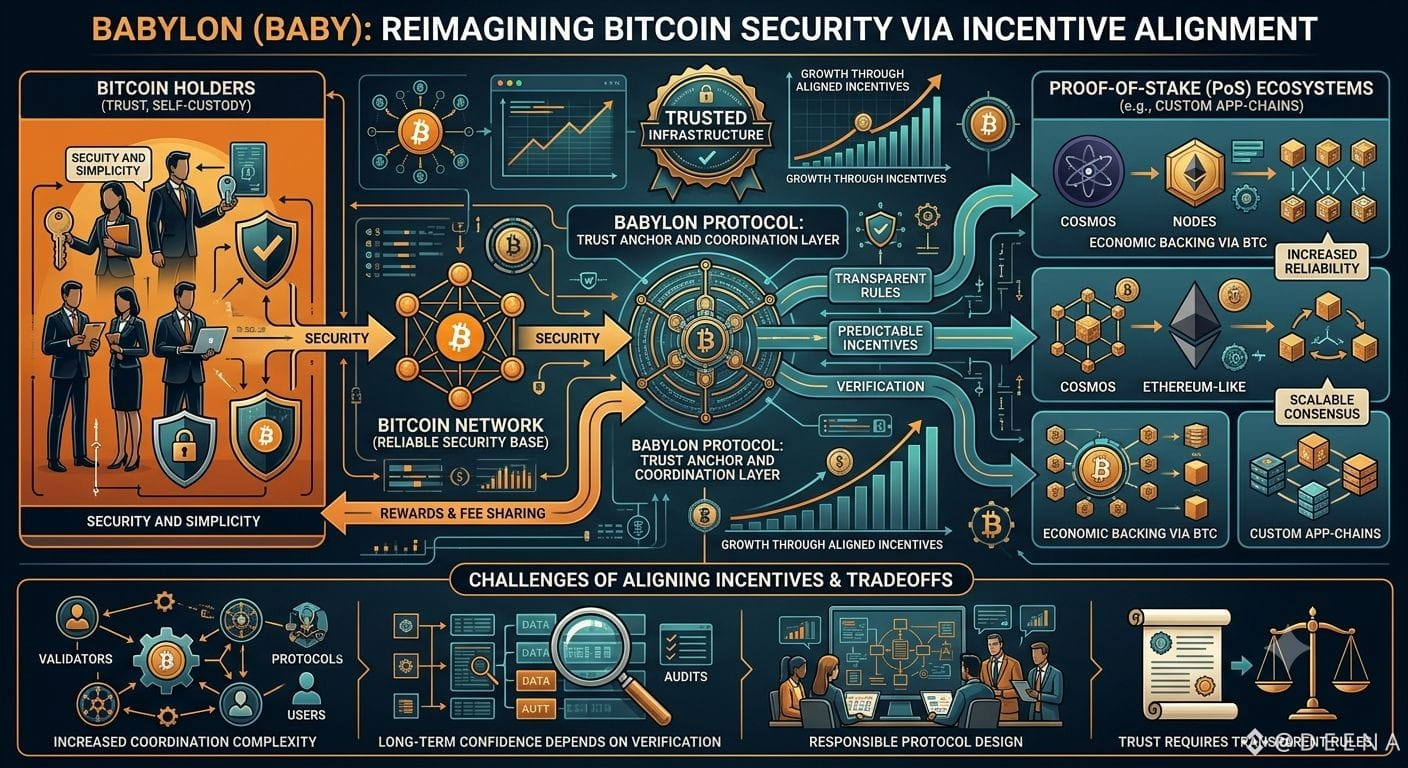
Satu hal yang menonjol bagi saya tentang Babylon ($BABY ) adalah bahwa proyek ini tidak benar-benar berusaha mengubah Bitcoin itu sendiri. Sebaliknya, Babylon mengeksplorasi bagaimana keamanan Bitcoin yang sudah ada dapat mendukung ekosistem Proof-of-Stake sekaligus memungkinkan pemegang BTC tetap memiliki kendali atas aset mereka. Ini terasa seperti percakapan yang berbeda dari fokus yang biasanya ada pada imbal hasil staking atau efisiensi modal.
Yang membuat Babylon menarik adalah tantangan untuk menyelaraskan insentif di antara para peserta yang sangat berbeda. Pemegang Bitcoin menginginkan keamanan dan kesederhanaan, sementara jaringan PoS membutuhkan dukungan ekonomi yang andal. Menggabungkan kepentingan-kepentingan tersebut memerlukan lebih dari sekadar teknologi yang kuat. Itu bergantung pada aturan yang transparan, insentif yang dapat diprediksi, dan sistem yang terus dipercaya orang bahkan setelah kegembiraan awal mereda.
Saya juga berpikir ada kompromi penting yang kurang dibahas. Ketika Bitcoin menjadi bagian dari pengamanan jaringan lain, koordinasi antara pengguna, validator, dan protokol secara alami menjadi lebih kompleks. Self-custody menyelesaikan satu masalah, tetapi kepercayaan jangka panjang tetap bergantung pada verifikasi, insentif yang jelas, dan desain protokol yang bertanggung jawab.
Karena itulah saya terus memantau Babylon sebagai proyek infrastruktur, bukan sebagai narasi pasar. Jika proyek ini bisa mempertahankan kepercayaan sambil memperluas peran Bitcoin di luar rantai miliknya, maka proyek ini bisa menunjukkan bahwa infrastruktur blockchain yang tahan lama dibangun melalui penyelarasan insentif, bukan sekadar inovasi teknis. Pertanyaan sebenarnya adalah apakah insentif-insentif itu akan tetap kuat saat ekosistem terus bertumbuh.
#baby @babylonlabs_io $BABY
Satu hal yang menonjol bagi saya tentang Babylon ($BABY ) adalah bahwa proyek ini tidak benar-benar berusaha mengubah Bitcoin itu sendiri. Sebaliknya, Babylon mengeksplorasi bagaimana keamanan Bitcoin yang sudah ada dapat mendukung ekosistem Proof-of-Stake sekaligus memungkinkan pemegang BTC tetap memiliki kendali atas aset mereka. Ini terasa seperti percakapan yang berbeda dari fokus yang biasanya ada pada imbal hasil staking atau efisiensi modal.
Yang membuat Babylon menarik adalah tantangan untuk menyelaraskan insentif di antara para peserta yang sangat berbeda. Pemegang Bitcoin menginginkan keamanan dan kesederhanaan, sementara jaringan PoS membutuhkan dukungan ekonomi yang andal. Menggabungkan kepentingan-kepentingan tersebut memerlukan lebih dari sekadar teknologi yang kuat. Itu bergantung pada aturan yang transparan, insentif yang dapat diprediksi, dan sistem yang terus dipercaya orang bahkan setelah kegembiraan awal mereda.
Saya juga berpikir ada kompromi penting yang kurang dibahas. Ketika Bitcoin menjadi bagian dari pengamanan jaringan lain, koordinasi antara pengguna, validator, dan protokol secara alami menjadi lebih kompleks. Self-custody menyelesaikan satu masalah, tetapi kepercayaan jangka panjang tetap bergantung pada verifikasi, insentif yang jelas, dan desain protokol yang bertanggung jawab.
Karena itulah saya terus memantau Babylon sebagai proyek infrastruktur, bukan sebagai narasi pasar. Jika proyek ini bisa mempertahankan kepercayaan sambil memperluas peran Bitcoin di luar rantai miliknya, maka proyek ini bisa menunjukkan bahwa infrastruktur blockchain yang tahan lama dibangun melalui penyelarasan insentif, bukan sekadar inovasi teknis. Pertanyaan sebenarnya adalah apakah insentif-insentif itu akan tetap kuat saat ekosistem terus bertumbuh.
#baby @BabylonLabs_io $BABY
Yang membuat Babylon menarik adalah tantangan untuk menyelaraskan insentif di antara para peserta yang sangat berbeda. Pemegang Bitcoin menginginkan keamanan dan kesederhanaan, sementara jaringan PoS membutuhkan dukungan ekonomi yang andal. Menggabungkan kepentingan-kepentingan tersebut memerlukan lebih dari sekadar teknologi yang kuat. Itu bergantung pada aturan yang transparan, insentif yang dapat diprediksi, dan sistem yang terus dipercaya orang bahkan setelah kegembiraan awal mereda.
Saya juga berpikir ada kompromi penting yang kurang dibahas. Ketika Bitcoin menjadi bagian dari pengamanan jaringan lain, koordinasi antara pengguna, validator, dan protokol secara alami menjadi lebih kompleks. Self-custody menyelesaikan satu masalah, tetapi kepercayaan jangka panjang tetap bergantung pada verifikasi, insentif yang jelas, dan desain protokol yang bertanggung jawab.
Karena itulah saya terus memantau Babylon sebagai proyek infrastruktur, bukan sebagai narasi pasar. Jika proyek ini bisa mempertahankan kepercayaan sambil memperluas peran Bitcoin di luar rantai miliknya, maka proyek ini bisa menunjukkan bahwa infrastruktur blockchain yang tahan lama dibangun melalui penyelarasan insentif, bukan sekadar inovasi teknis. Pertanyaan sebenarnya adalah apakah insentif-insentif itu akan tetap kuat saat ekosistem terus bertumbuh.
#baby @BabylonLabs_io $BABY
3
2
115
·
--
Bullish
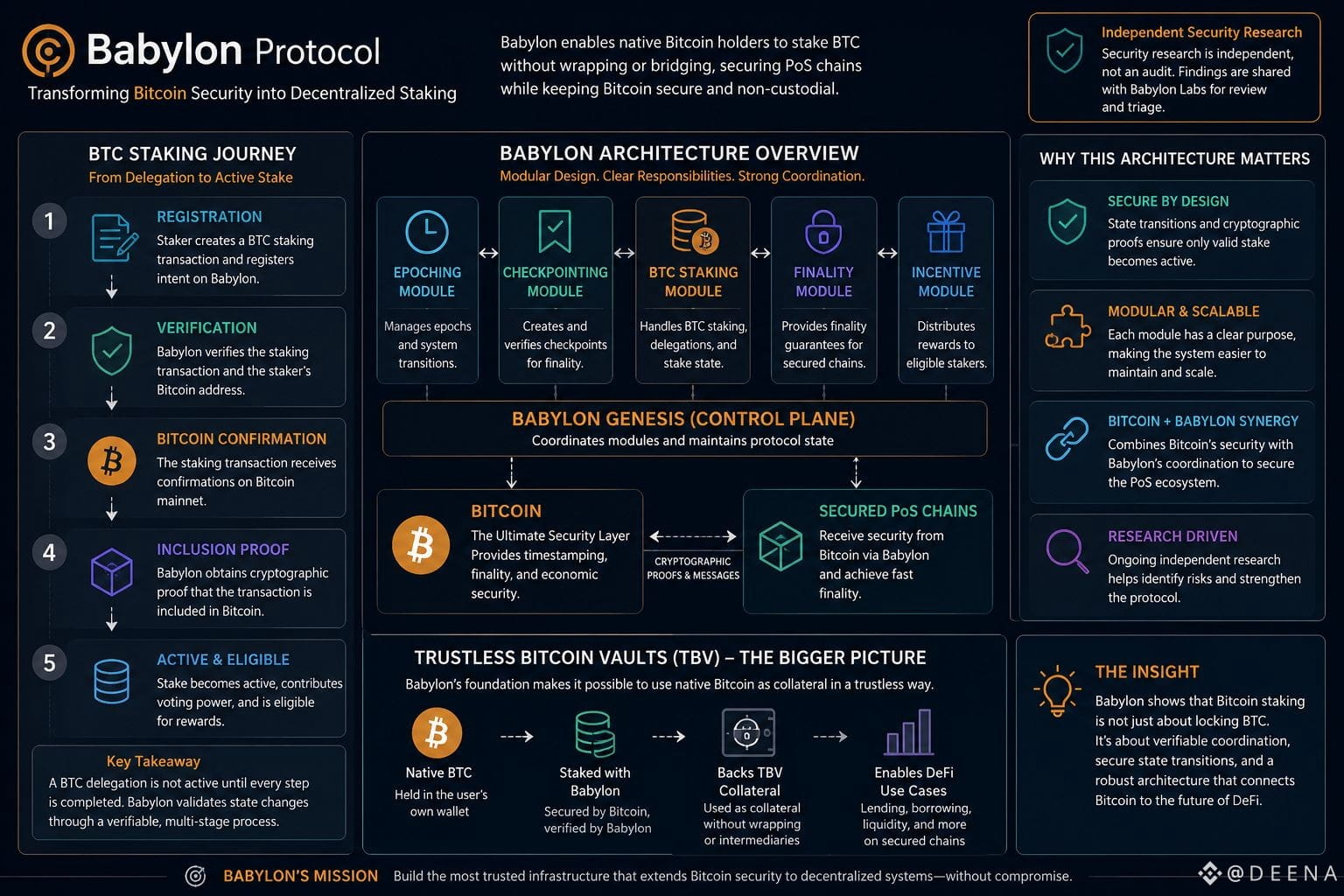
Saat menggali Babylon, saya menyadari bahwa selama ini saya memikirkan Bitcoin staking dengan cara yang jauh lebih sederhana daripada cara kerja protokol sebenarnya. Yang paling menonjol bagi saya bukanlah metrik utama atau klaim berani—melainkan bagaimana Babylon memperlakukan setiap peristiwa staking sebagai rangkaian perubahan status yang terverifikasi, bukan menganggap semuanya sudah lengkap sejak saat sebuah transaksi dibuat.
Yang menarik perhatian saya adalah perjalanan delegasi BTC sebelum menjadi aktif. Ia melewati proses pendaftaran, verifikasi, konfirmasi Bitcoin, dan bukti inklusi sebelum dapat berkontribusi pada kekuatan suara atau memperoleh imbalan. Itu mungkin terdengar seperti detail teknis, tetapi saya pikir ini adalah salah satu bagian terpenting dari desain, karena menunjukkan seberapa besar penekanan Babylon pada verifikasi ketimbang asumsi.
Wawasan yang tetap melekat pada saya adalah bahwa Babylon bukan sekadar membangun cara untuk melakukan stake Bitcoin. Babylon membangun lapisan koordinasi yang membuat Bitcoin staking dapat diandalkan di seluruh komponen protokol yang berbeda. Melihat arsitekturnya membuat saya memahami mengapa modul seperti Epoching, Checkpointing, BTC Staking, dan Finality dipisahkan, alih-alih digabung menjadi satu.
Percakapan kripto sering berfokus pada potensi masa depan, tetapi saya merasa kisah yang lebih menarik adalah apa yang sedang dibuktikan oleh sebuah protokol hari ini. Saat Babylon terus berkembang, akankah partisipasi yang terverifikasi menjadi metrik yang paling penting—bukan sekadar seberapa banyak BTC yang disetor?
#baby @babylonlabs_io $BABY
Saat menggali Babylon, saya menyadari bahwa selama ini saya memikirkan Bitcoin staking dengan cara yang jauh lebih sederhana daripada cara kerja protokol sebenarnya. Yang paling menonjol bagi saya bukanlah metrik utama atau klaim berani—melainkan bagaimana Babylon memperlakukan setiap peristiwa staking sebagai rangkaian perubahan status yang terverifikasi, bukan menganggap semuanya sudah lengkap sejak saat sebuah transaksi dibuat.
Yang menarik perhatian saya adalah perjalanan delegasi BTC sebelum menjadi aktif. Ia melewati proses pendaftaran, verifikasi, konfirmasi Bitcoin, dan bukti inklusi sebelum dapat berkontribusi pada kekuatan suara atau memperoleh imbalan. Itu mungkin terdengar seperti detail teknis, tetapi saya pikir ini adalah salah satu bagian terpenting dari desain, karena menunjukkan seberapa besar penekanan Babylon pada verifikasi ketimbang asumsi.
Wawasan yang tetap melekat pada saya adalah bahwa Babylon bukan sekadar membangun cara untuk melakukan stake Bitcoin. Babylon membangun lapisan koordinasi yang membuat Bitcoin staking dapat diandalkan di seluruh komponen protokol yang berbeda. Melihat arsitekturnya membuat saya memahami mengapa modul seperti Epoching, Checkpointing, BTC Staking, dan Finality dipisahkan, alih-alih digabung menjadi satu.
Percakapan kripto sering berfokus pada potensi masa depan, tetapi saya merasa kisah yang lebih menarik adalah apa yang sedang dibuktikan oleh sebuah protokol hari ini. Saat Babylon terus berkembang, akankah partisipasi yang terverifikasi menjadi metrik yang paling penting—bukan sekadar seberapa banyak BTC yang disetor?
#baby @BabylonLabs_io $BABY
Yang menarik perhatian saya adalah perjalanan delegasi BTC sebelum menjadi aktif. Ia melewati proses pendaftaran, verifikasi, konfirmasi Bitcoin, dan bukti inklusi sebelum dapat berkontribusi pada kekuatan suara atau memperoleh imbalan. Itu mungkin terdengar seperti detail teknis, tetapi saya pikir ini adalah salah satu bagian terpenting dari desain, karena menunjukkan seberapa besar penekanan Babylon pada verifikasi ketimbang asumsi.
Wawasan yang tetap melekat pada saya adalah bahwa Babylon bukan sekadar membangun cara untuk melakukan stake Bitcoin. Babylon membangun lapisan koordinasi yang membuat Bitcoin staking dapat diandalkan di seluruh komponen protokol yang berbeda. Melihat arsitekturnya membuat saya memahami mengapa modul seperti Epoching, Checkpointing, BTC Staking, dan Finality dipisahkan, alih-alih digabung menjadi satu.
Percakapan kripto sering berfokus pada potensi masa depan, tetapi saya merasa kisah yang lebih menarik adalah apa yang sedang dibuktikan oleh sebuah protokol hari ini. Saat Babylon terus berkembang, akankah partisipasi yang terverifikasi menjadi metrik yang paling penting—bukan sekadar seberapa banyak BTC yang disetor?
#baby @BabylonLabs_io $BABY
2
2
111
·
--
Bearish
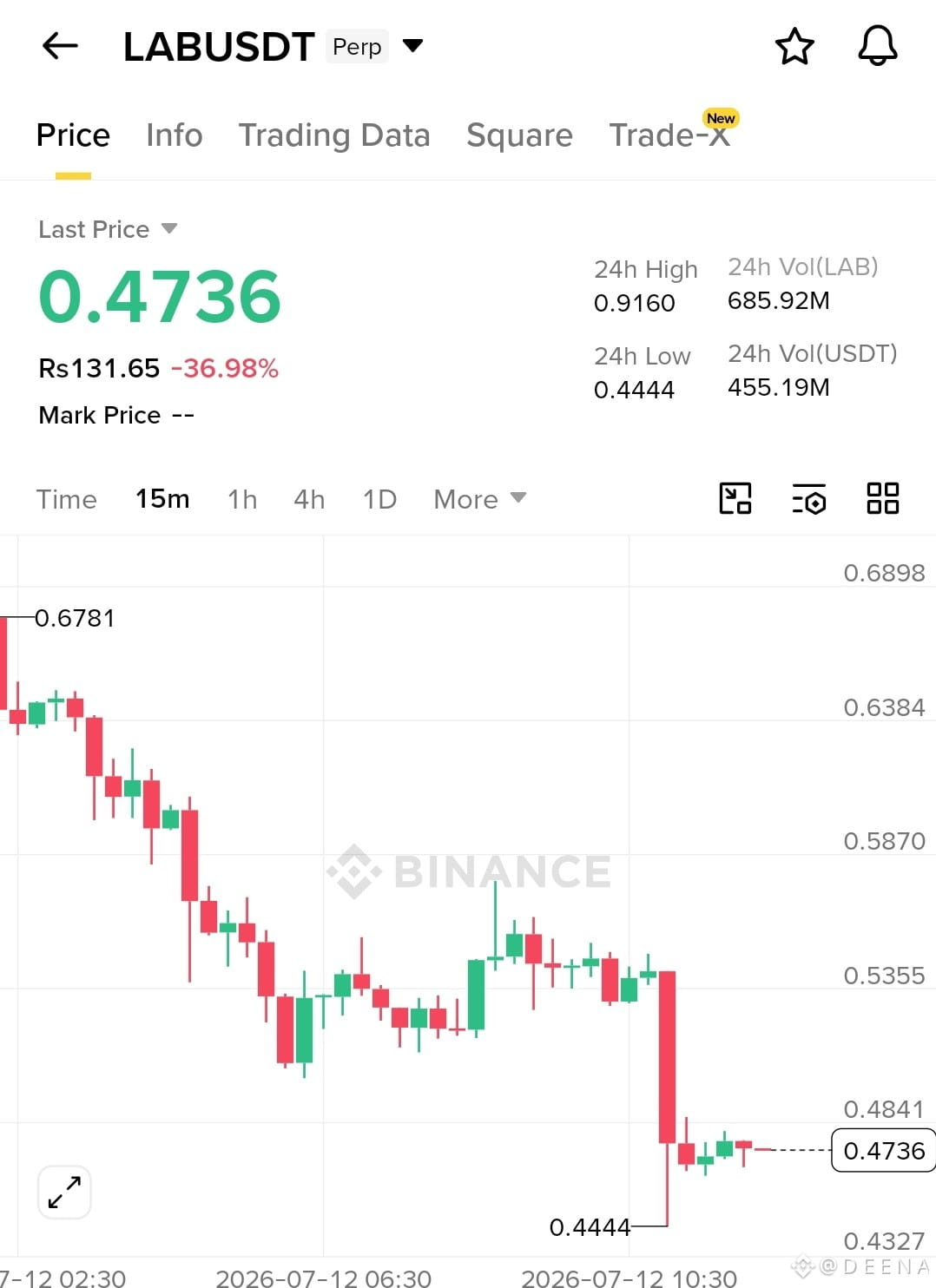
🚨 $LAB sedang dalam tekanan! Harga saat ini: $0.4736 setelah pergerakan -36.98% dalam 24H terakhir.
📉 Puncak 24H: $0.9160 📍 Terendah 24H: $0.4444 💰 Volume besar: 685.92M $LAB | 455.19M $USDT
Volatilitas ada di sini, dan di sinilah peluang nyata tercipta. Tetap disiplin, kelola risiko Anda, dan pantau support kunci di sekitar $0.4444.
Ayo! Trading sekarang $LAB 🚀📈
{future}(LABUSDT)
#BitcoinPlansECashHardFork
#SpaceXAnthropicOpenAIIPOsMayTopVCExitsSince2000
#MorganStanleyAdds1000BTC
#GOPSeeksSenateVoteOnCLARITYActWeekOfJuly20
#BPISeeksToInterveneInNoahDoeCase
🚨 $LAB sedang dalam tekanan! Harga saat ini: $0.4736 setelah pergerakan -36.98% dalam 24H terakhir.
📉 Puncak 24H: $0.9160 📍 Terendah 24H: $0.4444 💰 Volume besar: 685.92M $LAB | 455.19M $USDT
Volatilitas ada di sini, dan di sinilah peluang nyata tercipta. Tetap disiplin, kelola risiko Anda, dan pantau support kunci di sekitar $0.4444.
Ayo! Trading sekarang $LAB 🚀📈
#BitcoinPlansECashHardFork
#SpaceXAnthropicOpenAIIPOsMayTopVCExitsSince2000
#MorganStanleyAdds1000BTC
#GOPSeeksSenateVoteOnCLARITYActWeekOfJuly20
#BPISeeksToInterveneInNoahDoeCase
📉 Puncak 24H: $0.9160 📍 Terendah 24H: $0.4444 💰 Volume besar: 685.92M $LAB | 455.19M $USDT
Volatilitas ada di sini, dan di sinilah peluang nyata tercipta. Tetap disiplin, kelola risiko Anda, dan pantau support kunci di sekitar $0.4444.
Ayo! Trading sekarang $LAB 🚀📈
#BitcoinPlansECashHardFork
#SpaceXAnthropicOpenAIIPOsMayTopVCExitsSince2000
#MorganStanleyAdds1000BTC
#GOPSeeksSenateVoteOnCLARITYActWeekOfJuly20
#BPISeeksToInterveneInNoahDoeCase
1
213
·
--
Keterangan Trading Post yang Menggembirakan:
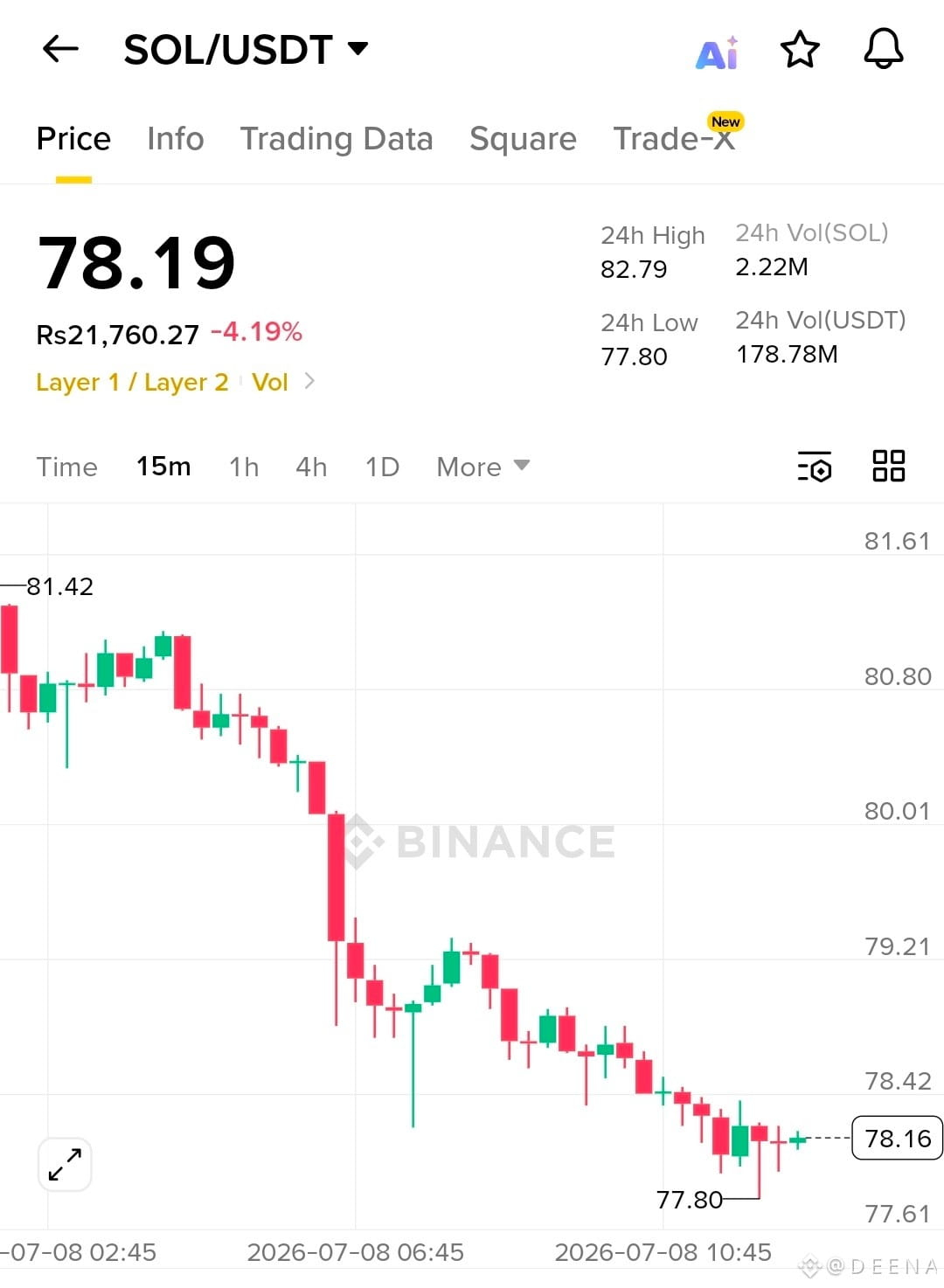
⚡ Pembaruan SOL/USDT ⚡
🔻 Beruang masih mengendalikan.
📉 Harga: $78.19
🎯 Dukungan Utama: $77.80
🚀 Pantulan dari area dukungan bisa memicu pemulihan jangka pendek.
❌ Jika $77.80 tembus, bersiaplah untuk penurunan lebih lanjut.
Berdaganglah dengan cerdas, kelola risiko Anda, dan jangan pernah FOMO. 💯
#SOL #Solana #Crypto #Binance #Trading #PriceAction #CryptoTrading #TechnicalAnalysis #BullOrBear
Keterangan Trading Post yang Menggembirakan:
⚡ Pembaruan SOL/USDT ⚡
🔻 Beruang masih mengendalikan.
📉 Harga: $78.19
🎯 Dukungan Utama: $77.80
🚀 Pantulan dari area dukungan bisa memicu pemulihan jangka pendek.
❌ Jika $77.80 tembus, bersiaplah untuk penurunan lebih lanjut.
Berdaganglah dengan cerdas, kelola risiko Anda, dan jangan pernah FOMO. 💯
#SOL #Solana #Crypto #Binance #Trading #PriceAction #CryptoTrading #TechnicalAnalysis #BullOrBear
⚡ Pembaruan SOL/USDT ⚡
🔻 Beruang masih mengendalikan.
📉 Harga: $78.19
🎯 Dukungan Utama: $77.80
🚀 Pantulan dari area dukungan bisa memicu pemulihan jangka pendek.
❌ Jika $77.80 tembus, bersiaplah untuk penurunan lebih lanjut.
Berdaganglah dengan cerdas, kelola risiko Anda, dan jangan pernah FOMO. 💯
#SOL #Solana #Crypto #Binance #Trading #PriceAction #CryptoTrading #TechnicalAnalysis #BullOrBear
1
110
·
--
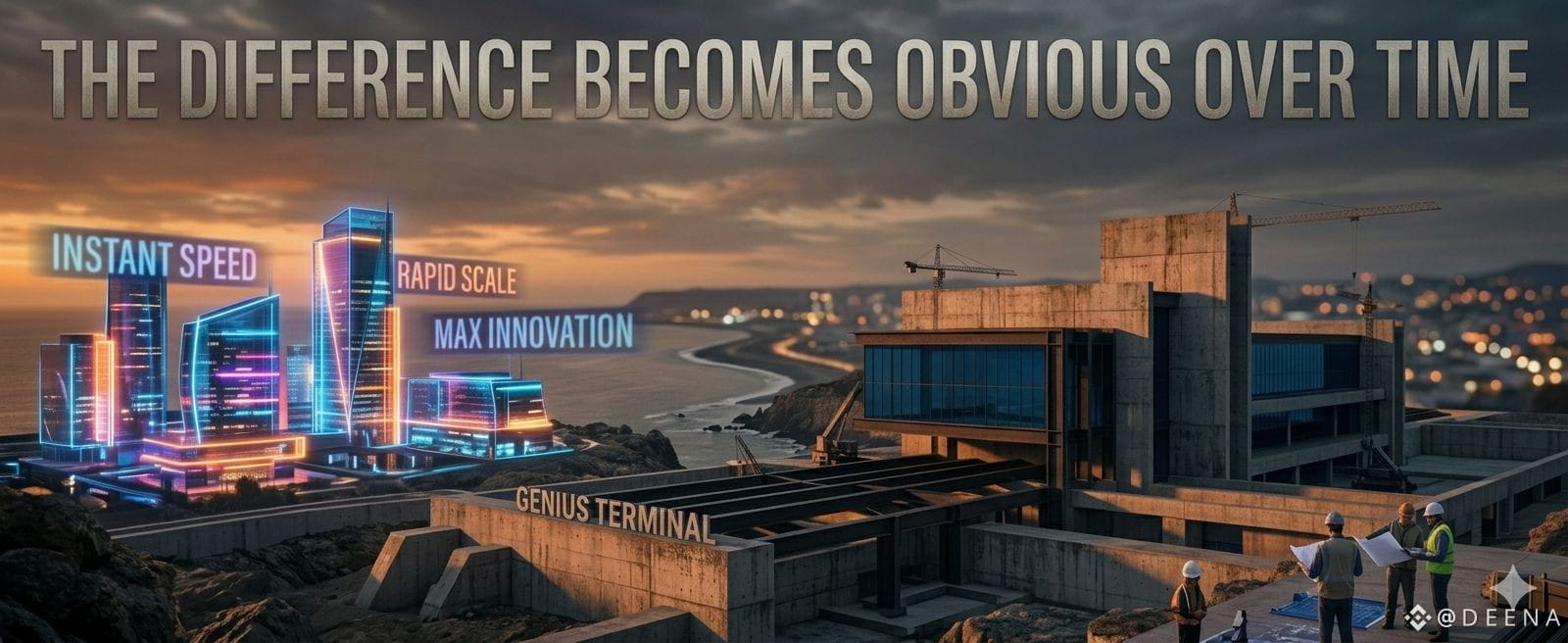
Perbedaan Menjadi Jelas Seiring Waktu
Saya sudah melihat banyak produk yang menjanjikan kecepatan, skala, dan inovasi, tetapi sangat sedikit yang meninggalkan kesan bahwa mereka dibangun dengan pemikiran permanen yang nyata.
Genius Terminal langsung terasa berbeda bagi saya.
Bukan karena mencoba mendominasi perhatian, tetapi karena bagaimana seluruh pengalaman terasa terkontrol dan disengaja. Segalanya tampak terstruktur dengan jelas. Tidak ada kompleksitas yang tidak perlu. Tidak ada posisi yang berlebihan. Hanya pemahaman yang kuat tentang seperti apa infrastruktur jangka panjang seharusnya ketika disiplin memimpin proses.
Yang paling menonjol adalah keseimbangan antara privasi, eksekusi, dan konsistensi. Di ruang yang dipenuhi dengan kebisingan, jenis pengendalian itu terasa langka. Produk ini tidak bergantung pada tontonan konstan untuk membuktikan relevansinya. Arahnya sudah berbicara melalui kualitas fondasi yang sedang dibangun.
Saya menghormati proyek-proyek yang memahami nilai ketepatan dibandingkan momentum. Sistem yang dibangun dengan cara ini biasanya lebih tahan lama karena dirancang untuk ketahanan dari awal, bukan kegembiraan sementara.
Semakin saya mengamati Genius Terminal, semakin terasa kurang seperti platform lain dan lebih seperti infrastruktur yang diam-diam memposisikan dirinya untuk signifikansi jangka panjang.
Beberapa produk meminta perhatian segera.
Yang terkuat mendapatkan kepercayaan seiring waktu.
#genius @GeniusOfficial $GENIUS
{spot}(GENIUSUSDT)
$STRAX
$GUN
Perbedaan Menjadi Jelas Seiring Waktu
Saya sudah melihat banyak produk yang menjanjikan kecepatan, skala, dan inovasi, tetapi sangat sedikit yang meninggalkan kesan bahwa mereka dibangun dengan pemikiran permanen yang nyata.
Genius Terminal langsung terasa berbeda bagi saya.
Bukan karena mencoba mendominasi perhatian, tetapi karena bagaimana seluruh pengalaman terasa terkontrol dan disengaja. Segalanya tampak terstruktur dengan jelas. Tidak ada kompleksitas yang tidak perlu. Tidak ada posisi yang berlebihan. Hanya pemahaman yang kuat tentang seperti apa infrastruktur jangka panjang seharusnya ketika disiplin memimpin proses.
Yang paling menonjol adalah keseimbangan antara privasi, eksekusi, dan konsistensi. Di ruang yang dipenuhi dengan kebisingan, jenis pengendalian itu terasa langka. Produk ini tidak bergantung pada tontonan konstan untuk membuktikan relevansinya. Arahnya sudah berbicara melalui kualitas fondasi yang sedang dibangun.
Saya menghormati proyek-proyek yang memahami nilai ketepatan dibandingkan momentum. Sistem yang dibangun dengan cara ini biasanya lebih tahan lama karena dirancang untuk ketahanan dari awal, bukan kegembiraan sementara.
Semakin saya mengamati Genius Terminal, semakin terasa kurang seperti platform lain dan lebih seperti infrastruktur yang diam-diam memposisikan dirinya untuk signifikansi jangka panjang.
Beberapa produk meminta perhatian segera.
Yang terkuat mendapatkan kepercayaan seiring waktu.
#genius @GeniusOfficial $GENIUS
$STRAX
$GUN
Saya sudah melihat banyak produk yang menjanjikan kecepatan, skala, dan inovasi, tetapi sangat sedikit yang meninggalkan kesan bahwa mereka dibangun dengan pemikiran permanen yang nyata.
Genius Terminal langsung terasa berbeda bagi saya.
Bukan karena mencoba mendominasi perhatian, tetapi karena bagaimana seluruh pengalaman terasa terkontrol dan disengaja. Segalanya tampak terstruktur dengan jelas. Tidak ada kompleksitas yang tidak perlu. Tidak ada posisi yang berlebihan. Hanya pemahaman yang kuat tentang seperti apa infrastruktur jangka panjang seharusnya ketika disiplin memimpin proses.
Yang paling menonjol adalah keseimbangan antara privasi, eksekusi, dan konsistensi. Di ruang yang dipenuhi dengan kebisingan, jenis pengendalian itu terasa langka. Produk ini tidak bergantung pada tontonan konstan untuk membuktikan relevansinya. Arahnya sudah berbicara melalui kualitas fondasi yang sedang dibangun.
Saya menghormati proyek-proyek yang memahami nilai ketepatan dibandingkan momentum. Sistem yang dibangun dengan cara ini biasanya lebih tahan lama karena dirancang untuk ketahanan dari awal, bukan kegembiraan sementara.
Semakin saya mengamati Genius Terminal, semakin terasa kurang seperti platform lain dan lebih seperti infrastruktur yang diam-diam memposisikan dirinya untuk signifikansi jangka panjang.
Beberapa produk meminta perhatian segera.
Yang terkuat mendapatkan kepercayaan seiring waktu.
#genius @GeniusOfficial $GENIUS
$STRAX
$GUN
1
2
109
·
--
Saya Mengira Genius Hanya Terminal Trading Lainnya. Lalu Saya Melihat Lebih Dekat.
Ketika saya pertama kali menemukan Genius, saya menempatkannya dalam kategori yang sama dengan banyak produk crypto lainnya.
Sebuah terminal trading.
Tempat untuk melihat velas, mengeksekusi transaksi, mengelola posisi, dan melanjutkan.
Tapi semakin banyak waktu yang saya habiskan untuk melihat apa yang sebenarnya dibangun Genius, semakin saya merasa deskripsi itu tidak tepat.
Yang menarik perhatian saya bukanlah pengalaman trading itu sendiri.
Tapi segala sesuatu yang mengelilinginya.
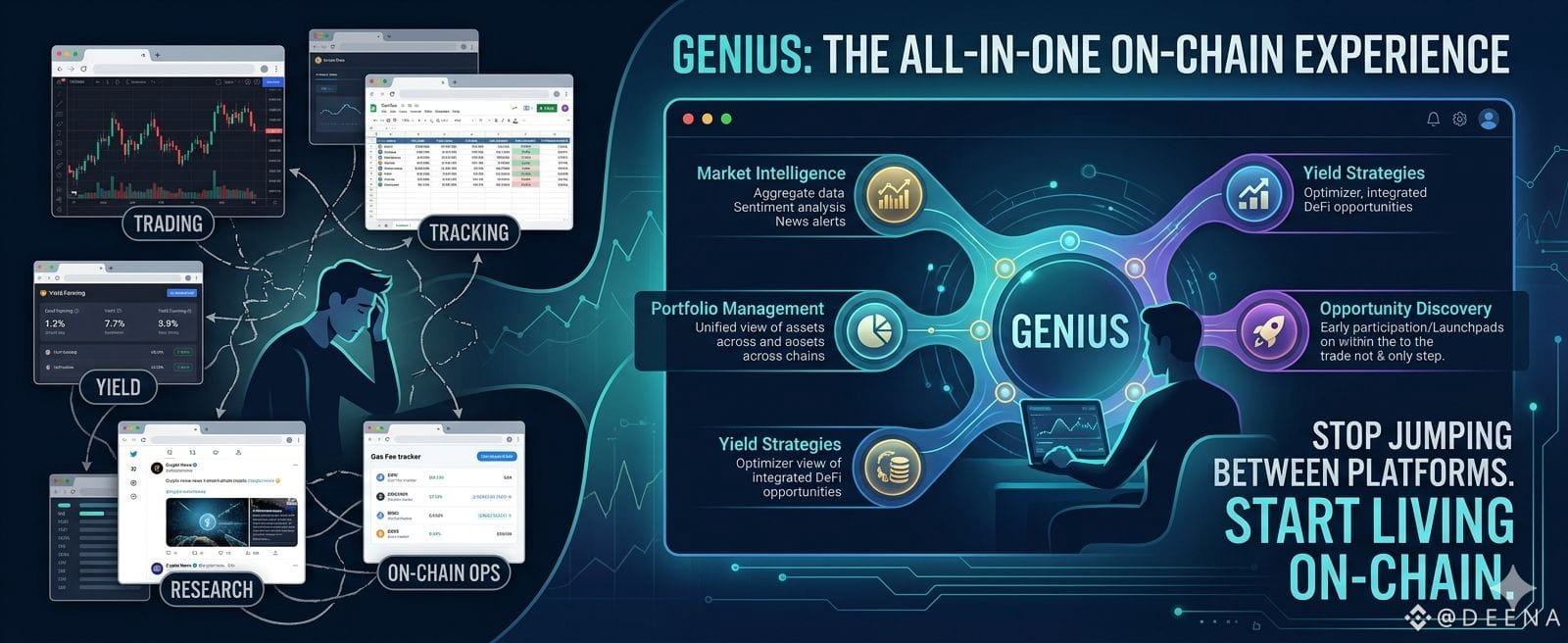
Saya menyadari bahwa sebagian besar waktu saya di crypto tidak dihabiskan untuk menekan tombol beli atau jual. Itu dihabiskan untuk mencari peluang, melacak portofolio, memantau pasar, meneliti narasi baru, mengeksplorasi strategi yield, dan berusaha untuk tetap di depan perubahan yang konstan.
Transaksi seringkali adalah langkah terakhir.
Tantangan sebenarnya adalah mengelola segala sesuatu yang mengarah ke situ.
Itu sebabnya saya pikir Genius sedang mendekati masalah yang jauh lebih besar.
Alih-alih memperlakukan trading, manajemen portofolio, penemuan pasar, peluang yield, dan partisipasi awal sebagai pengalaman terpisah, saya melihat sebuah platform yang mencoba menggabungkan semuanya di bawah satu atap.
Bagi saya, itu jauh lebih menarik daripada menambahkan fitur trading lainnya.
Crypto tidak kekurangan alat.
Crypto menderita dari fragmentasi.
Saya terus-menerus menemukan diri saya melompat antara platform hanya untuk mempertahankan konteks.
Apa yang saya lihat di Genius adalah upaya untuk mengurangi gesekan itu.
Dan jika berhasil, orang-orang mungkin akhirnya berhenti menganggapnya sebagai terminal trading sama sekali.
Mereka mungkin mulai memikirkan itu sebagai tempat di mana seluruh pengalaman on-chain mereka tinggal.
$STG
$PORTAL
#genius @GeniusOfficial $GENIUS
{spot}(GENIUSUSDT)
Saya Mengira Genius Hanya Terminal Trading Lainnya. Lalu Saya Melihat Lebih Dekat.
Ketika saya pertama kali menemukan Genius, saya menempatkannya dalam kategori yang sama dengan banyak produk crypto lainnya.
Sebuah terminal trading.
Tempat untuk melihat velas, mengeksekusi transaksi, mengelola posisi, dan melanjutkan.
Tapi semakin banyak waktu yang saya habiskan untuk melihat apa yang sebenarnya dibangun Genius, semakin saya merasa deskripsi itu tidak tepat.
Yang menarik perhatian saya bukanlah pengalaman trading itu sendiri.
Tapi segala sesuatu yang mengelilinginya.
Saya menyadari bahwa sebagian besar waktu saya di crypto tidak dihabiskan untuk menekan tombol beli atau jual. Itu dihabiskan untuk mencari peluang, melacak portofolio, memantau pasar, meneliti narasi baru, mengeksplorasi strategi yield, dan berusaha untuk tetap di depan perubahan yang konstan.
Transaksi seringkali adalah langkah terakhir.
Tantangan sebenarnya adalah mengelola segala sesuatu yang mengarah ke situ.
Itu sebabnya saya pikir Genius sedang mendekati masalah yang jauh lebih besar.
Alih-alih memperlakukan trading, manajemen portofolio, penemuan pasar, peluang yield, dan partisipasi awal sebagai pengalaman terpisah, saya melihat sebuah platform yang mencoba menggabungkan semuanya di bawah satu atap.
Bagi saya, itu jauh lebih menarik daripada menambahkan fitur trading lainnya.
Crypto tidak kekurangan alat.
Crypto menderita dari fragmentasi.
Saya terus-menerus menemukan diri saya melompat antara platform hanya untuk mempertahankan konteks.
Apa yang saya lihat di Genius adalah upaya untuk mengurangi gesekan itu.
Dan jika berhasil, orang-orang mungkin akhirnya berhenti menganggapnya sebagai terminal trading sama sekali.
Mereka mungkin mulai memikirkan itu sebagai tempat di mana seluruh pengalaman on-chain mereka tinggal.
$STG
$PORTAL
#genius @GeniusOfficial $GENIUS
Ketika saya pertama kali menemukan Genius, saya menempatkannya dalam kategori yang sama dengan banyak produk crypto lainnya.
Sebuah terminal trading.
Tempat untuk melihat velas, mengeksekusi transaksi, mengelola posisi, dan melanjutkan.
Tapi semakin banyak waktu yang saya habiskan untuk melihat apa yang sebenarnya dibangun Genius, semakin saya merasa deskripsi itu tidak tepat.
Yang menarik perhatian saya bukanlah pengalaman trading itu sendiri.
Tapi segala sesuatu yang mengelilinginya.
Saya menyadari bahwa sebagian besar waktu saya di crypto tidak dihabiskan untuk menekan tombol beli atau jual. Itu dihabiskan untuk mencari peluang, melacak portofolio, memantau pasar, meneliti narasi baru, mengeksplorasi strategi yield, dan berusaha untuk tetap di depan perubahan yang konstan.
Transaksi seringkali adalah langkah terakhir.
Tantangan sebenarnya adalah mengelola segala sesuatu yang mengarah ke situ.
Itu sebabnya saya pikir Genius sedang mendekati masalah yang jauh lebih besar.
Alih-alih memperlakukan trading, manajemen portofolio, penemuan pasar, peluang yield, dan partisipasi awal sebagai pengalaman terpisah, saya melihat sebuah platform yang mencoba menggabungkan semuanya di bawah satu atap.
Bagi saya, itu jauh lebih menarik daripada menambahkan fitur trading lainnya.
Crypto tidak kekurangan alat.
Crypto menderita dari fragmentasi.
Saya terus-menerus menemukan diri saya melompat antara platform hanya untuk mempertahankan konteks.
Apa yang saya lihat di Genius adalah upaya untuk mengurangi gesekan itu.
Dan jika berhasil, orang-orang mungkin akhirnya berhenti menganggapnya sebagai terminal trading sama sekali.
Mereka mungkin mulai memikirkan itu sebagai tempat di mana seluruh pengalaman on-chain mereka tinggal.
$STG
$PORTAL
#genius @GeniusOfficial $GENIUS
1
206
·
--
Saya pikir OpenLedger bertaruh pada bagian AI yang paling diinginkan oleh model untuk dilupakan
Dulu saya berpikir perlombaan AI akan berakhir dengan kecerdasan itu sendiri. Penalaran yang lebih baik, output yang lebih cepat, sistem multimodal yang lebih bersih, tolok ukur yang lebih kuat. Tapi belakangan ini saya merasa seluruh kompetisi itu kehilangan sesuatu yang lebih dalam.
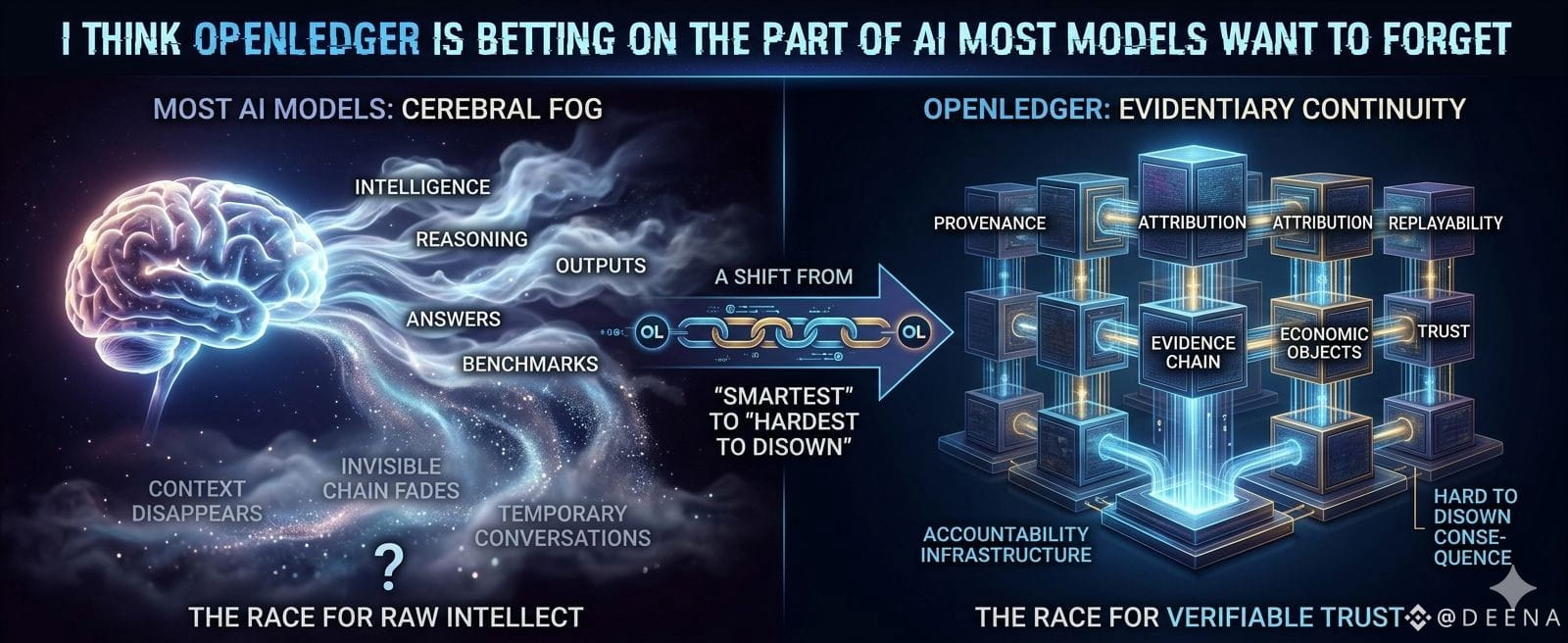
Kebanyakan model AI saat ini sangat baik dalam menghasilkan jawaban, tetapi sangat buruk dalam mempertahankan rantai tak terlihat yang memproduksi jawaban itu di tempat pertama. Output bertahan. Konteks menghilang.
Dan saya pikir itu menjadi masalah serius ketika output AI berhenti berperilaku seperti percakapan sementara dan mulai berperilaku seperti objek ekonomi yang bergerak antar sistem.
Mesin pencari memberi peringkat pada mereka. Sistem rekomendasi memperkuat mereka. Ekonomi kreator menyerap mereka. Model lain melatih kembali pada mereka. Pasar bereaksi terhadap mereka. Institusi secara perlahan mulai mempercayai mereka.
Tapi hampir tidak ada yang bertanya apa yang menghilang sebelum jawaban stabil.
Itulah mengapa OpenLedger terasa menarik bagi saya. Bukan karena mencoba membuat AI "lebih pintar," tetapi karena tampaknya fokus pada mempertahankan akuntabilitas setelah generasi terjadi. Provenance. Atribusi. Kemampuan untuk diulang. Kontinuitas bukti.
Semakin lama saya memikirkannya, semakin saya merasa kecerdasan mungkin menjadi komoditas lebih cepat daripada infrastruktur akuntabilitas.
Dan mungkin kompetisi AI di masa depan tidak akan:
"Model mana yang terdengar paling pintar?"
Mungkin menjadi:
"Model mana yang paling sulit untuk disangkal begitu konsekuensi tiba?"
#openledger @Openledger $OPEN
{spot}(OPENUSDT)
$HEI
$ID
Saya pikir OpenLedger bertaruh pada bagian AI yang paling diinginkan oleh model untuk dilupakan
Dulu saya berpikir perlombaan AI akan berakhir dengan kecerdasan itu sendiri. Penalaran yang lebih baik, output yang lebih cepat, sistem multimodal yang lebih bersih, tolok ukur yang lebih kuat. Tapi belakangan ini saya merasa seluruh kompetisi itu kehilangan sesuatu yang lebih dalam.
Kebanyakan model AI saat ini sangat baik dalam menghasilkan jawaban, tetapi sangat buruk dalam mempertahankan rantai tak terlihat yang memproduksi jawaban itu di tempat pertama. Output bertahan. Konteks menghilang.
Dan saya pikir itu menjadi masalah serius ketika output AI berhenti berperilaku seperti percakapan sementara dan mulai berperilaku seperti objek ekonomi yang bergerak antar sistem.
Mesin pencari memberi peringkat pada mereka. Sistem rekomendasi memperkuat mereka. Ekonomi kreator menyerap mereka. Model lain melatih kembali pada mereka. Pasar bereaksi terhadap mereka. Institusi secara perlahan mulai mempercayai mereka.
Tapi hampir tidak ada yang bertanya apa yang menghilang sebelum jawaban stabil.
Itulah mengapa OpenLedger terasa menarik bagi saya. Bukan karena mencoba membuat AI "lebih pintar," tetapi karena tampaknya fokus pada mempertahankan akuntabilitas setelah generasi terjadi. Provenance. Atribusi. Kemampuan untuk diulang. Kontinuitas bukti.
Semakin lama saya memikirkannya, semakin saya merasa kecerdasan mungkin menjadi komoditas lebih cepat daripada infrastruktur akuntabilitas.
Dan mungkin kompetisi AI di masa depan tidak akan:
"Model mana yang terdengar paling pintar?"
Mungkin menjadi:
"Model mana yang paling sulit untuk disangkal begitu konsekuensi tiba?"
#openledger @OpenLedger $OPEN
$HEI
$ID
Dulu saya berpikir perlombaan AI akan berakhir dengan kecerdasan itu sendiri. Penalaran yang lebih baik, output yang lebih cepat, sistem multimodal yang lebih bersih, tolok ukur yang lebih kuat. Tapi belakangan ini saya merasa seluruh kompetisi itu kehilangan sesuatu yang lebih dalam.
Kebanyakan model AI saat ini sangat baik dalam menghasilkan jawaban, tetapi sangat buruk dalam mempertahankan rantai tak terlihat yang memproduksi jawaban itu di tempat pertama. Output bertahan. Konteks menghilang.
Dan saya pikir itu menjadi masalah serius ketika output AI berhenti berperilaku seperti percakapan sementara dan mulai berperilaku seperti objek ekonomi yang bergerak antar sistem.
Mesin pencari memberi peringkat pada mereka. Sistem rekomendasi memperkuat mereka. Ekonomi kreator menyerap mereka. Model lain melatih kembali pada mereka. Pasar bereaksi terhadap mereka. Institusi secara perlahan mulai mempercayai mereka.
Tapi hampir tidak ada yang bertanya apa yang menghilang sebelum jawaban stabil.
Itulah mengapa OpenLedger terasa menarik bagi saya. Bukan karena mencoba membuat AI "lebih pintar," tetapi karena tampaknya fokus pada mempertahankan akuntabilitas setelah generasi terjadi. Provenance. Atribusi. Kemampuan untuk diulang. Kontinuitas bukti.
Semakin lama saya memikirkannya, semakin saya merasa kecerdasan mungkin menjadi komoditas lebih cepat daripada infrastruktur akuntabilitas.
Dan mungkin kompetisi AI di masa depan tidak akan:
"Model mana yang terdengar paling pintar?"
Mungkin menjadi:
"Model mana yang paling sulit untuk disangkal begitu konsekuensi tiba?"
#openledger @OpenLedger $OPEN
$HEI
$ID
1
180
·
--
Artikel
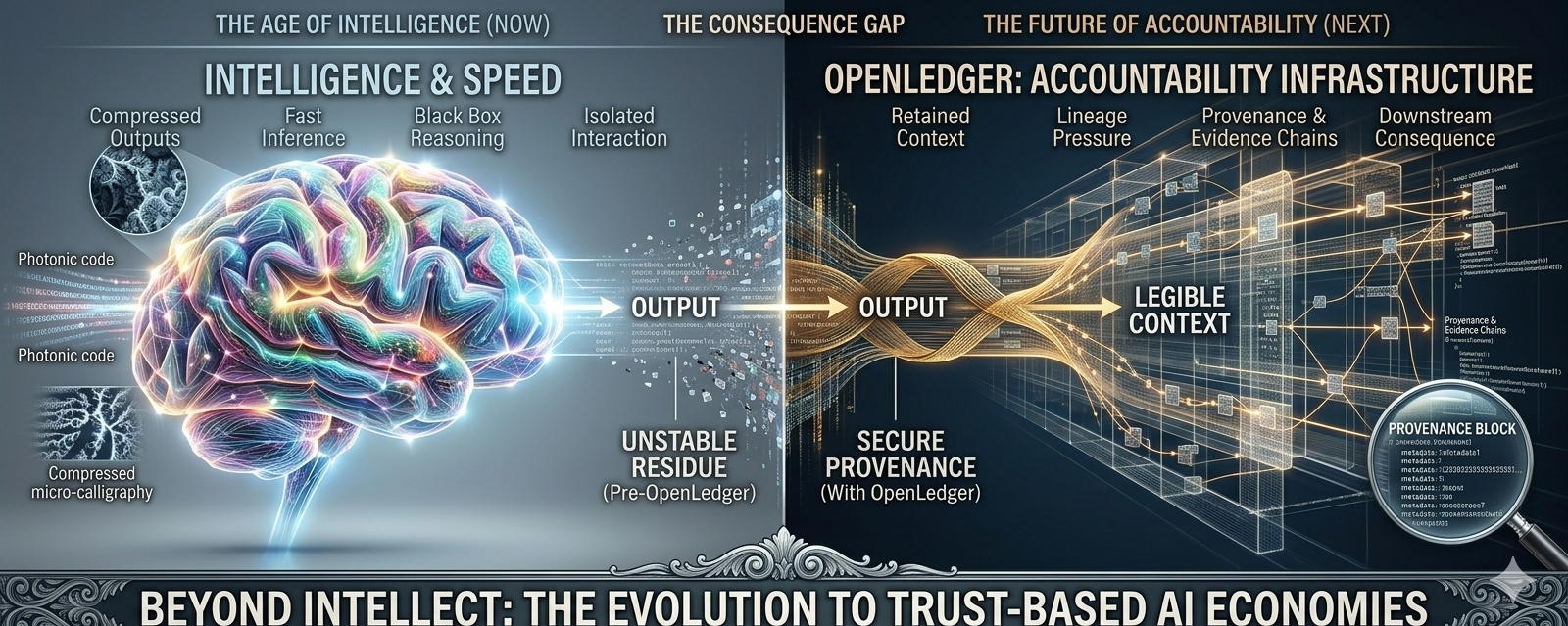
OpenLedger dan Masa Depan Akuntabilitas AISudah lama saya percaya bahwa perlombaan AI pada akhirnya akan menyusut menjadi satu hal saja: kecerdasan. Model yang lebih baik dalam berreasoning akan menang. Model dengan output yang lebih tajam, percakapan yang lebih bersih, inferensi yang lebih cepat, perilaku multimodal yang lebih kuat, dan angka benchmark yang lebih tinggi secara alami akan mendominasi pasar. Asumsi itu terasa jelas karena hampir setiap percakapan tentang AI masih berkisar pada kemampuan itu sendiri. Siapa yang lebih pintar. Siapa yang lebih cepat. Model mana yang terdengar lebih manusiawi. Sistem mana yang dapat menyelesaikan tugas yang lebih sulit dengan lebih sedikit kesalahan. Tapi semakin saya melihat proyek seperti OpenLedger, semakin tidak lengkap seluruh bingkai itu mulai terasa bagi saya. Tidak sepenuhnya salah. Hanya saja kehilangan sesuatu yang lebih dalam di bawah permukaan.
OpenLedger dan Masa Depan Akuntabilitas AI
Sudah lama saya percaya bahwa perlombaan AI pada akhirnya akan menyusut menjadi satu hal saja: kecerdasan. Model yang lebih baik dalam berreasoning akan menang. Model dengan output yang lebih tajam, percakapan yang lebih bersih, inferensi yang lebih cepat, perilaku multimodal yang lebih kuat, dan angka benchmark yang lebih tinggi secara alami akan mendominasi pasar. Asumsi itu terasa jelas karena hampir setiap percakapan tentang AI masih berkisar pada kemampuan itu sendiri. Siapa yang lebih pintar. Siapa yang lebih cepat. Model mana yang terdengar lebih manusiawi. Sistem mana yang dapat menyelesaikan tugas yang lebih sulit dengan lebih sedikit kesalahan. Tapi semakin saya melihat proyek seperti OpenLedger, semakin tidak lengkap seluruh bingkai itu mulai terasa bagi saya. Tidak sepenuhnya salah. Hanya saja kehilangan sesuatu yang lebih dalam di bawah permukaan.
284
·
--
Perbedaan Menjadi Jelas Seiring Waktu
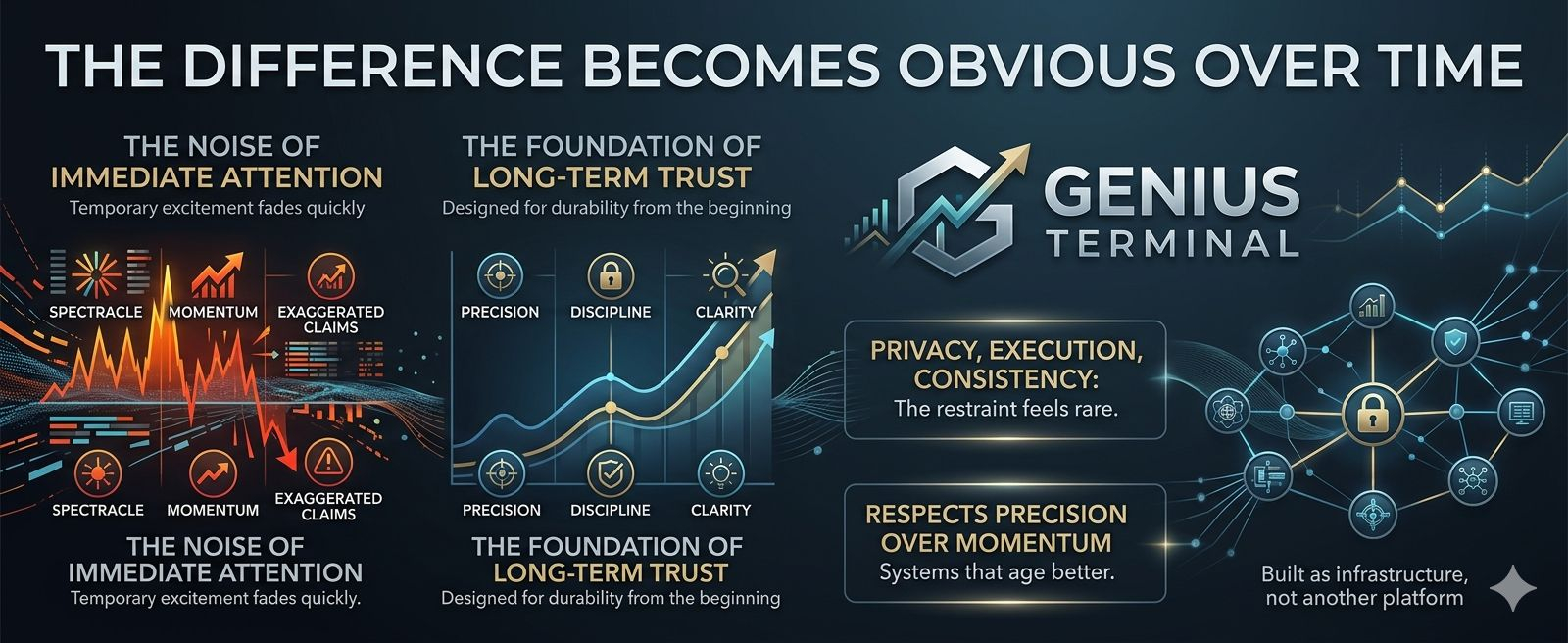
Saya telah melihat banyak produk yang menjanjikan kecepatan, skala, dan inovasi, tetapi sangat sedikit yang meninggalkan kesan bahwa mereka dibangun dengan pemikiran permanen yang nyata.
Genius Terminal langsung terasa berbeda bagi saya.
Bukan karena mencoba mendominasi perhatian, tetapi karena bagaimana pengalaman secara keseluruhan terasa terkontrol dan disengaja. Segalanya tampak terstruktur dengan jelas. Tidak ada kompleksitas yang tidak perlu. Tidak ada posisi yang berlebihan. Hanya pemahaman yang kuat tentang seperti apa infrastruktur jangka panjang ketika disiplin memimpin proses.
Yang paling menonjol adalah keseimbangan antara privasi, eksekusi, dan konsistensi. Di ruang yang dipenuhi kebisingan, jenis pengendalian seperti itu terasa jarang. Produk ini tidak bergantung pada tontonan konstan untuk membuktikan relevansinya. Arah yang diambil sudah berbicara melalui kualitas fondasi yang sedang dibangun.
Saya menghargai proyek yang memahami nilai presisi di atas momentum. Sistem yang dibangun dengan cara ini biasanya lebih tahan lama karena dirancang untuk ketahanan dari awal, bukan kegembiraan sementara.
Semakin saya mengamati Genius Terminal, semakin terasa kurang seperti platform lain dan lebih seperti infrastruktur yang diam-diam memposisikan dirinya untuk signifikansi jangka panjang.
Beberapa produk langsung meminta perhatian.
Yang terkuat mendapatkan kepercayaan seiring waktu.
#genius @GeniusOfficial $GENIUS
{spot}(GENIUSUSDT)
$HEI
$ID
Perbedaan Menjadi Jelas Seiring Waktu
Saya telah melihat banyak produk yang menjanjikan kecepatan, skala, dan inovasi, tetapi sangat sedikit yang meninggalkan kesan bahwa mereka dibangun dengan pemikiran permanen yang nyata.
Genius Terminal langsung terasa berbeda bagi saya.
Bukan karena mencoba mendominasi perhatian, tetapi karena bagaimana pengalaman secara keseluruhan terasa terkontrol dan disengaja. Segalanya tampak terstruktur dengan jelas. Tidak ada kompleksitas yang tidak perlu. Tidak ada posisi yang berlebihan. Hanya pemahaman yang kuat tentang seperti apa infrastruktur jangka panjang ketika disiplin memimpin proses.
Yang paling menonjol adalah keseimbangan antara privasi, eksekusi, dan konsistensi. Di ruang yang dipenuhi kebisingan, jenis pengendalian seperti itu terasa jarang. Produk ini tidak bergantung pada tontonan konstan untuk membuktikan relevansinya. Arah yang diambil sudah berbicara melalui kualitas fondasi yang sedang dibangun.
Saya menghargai proyek yang memahami nilai presisi di atas momentum. Sistem yang dibangun dengan cara ini biasanya lebih tahan lama karena dirancang untuk ketahanan dari awal, bukan kegembiraan sementara.
Semakin saya mengamati Genius Terminal, semakin terasa kurang seperti platform lain dan lebih seperti infrastruktur yang diam-diam memposisikan dirinya untuk signifikansi jangka panjang.
Beberapa produk langsung meminta perhatian.
Yang terkuat mendapatkan kepercayaan seiring waktu.
#genius @GeniusOfficial $GENIUS
$HEI
$ID
Saya telah melihat banyak produk yang menjanjikan kecepatan, skala, dan inovasi, tetapi sangat sedikit yang meninggalkan kesan bahwa mereka dibangun dengan pemikiran permanen yang nyata.
Genius Terminal langsung terasa berbeda bagi saya.
Bukan karena mencoba mendominasi perhatian, tetapi karena bagaimana pengalaman secara keseluruhan terasa terkontrol dan disengaja. Segalanya tampak terstruktur dengan jelas. Tidak ada kompleksitas yang tidak perlu. Tidak ada posisi yang berlebihan. Hanya pemahaman yang kuat tentang seperti apa infrastruktur jangka panjang ketika disiplin memimpin proses.
Yang paling menonjol adalah keseimbangan antara privasi, eksekusi, dan konsistensi. Di ruang yang dipenuhi kebisingan, jenis pengendalian seperti itu terasa jarang. Produk ini tidak bergantung pada tontonan konstan untuk membuktikan relevansinya. Arah yang diambil sudah berbicara melalui kualitas fondasi yang sedang dibangun.
Saya menghargai proyek yang memahami nilai presisi di atas momentum. Sistem yang dibangun dengan cara ini biasanya lebih tahan lama karena dirancang untuk ketahanan dari awal, bukan kegembiraan sementara.
Semakin saya mengamati Genius Terminal, semakin terasa kurang seperti platform lain dan lebih seperti infrastruktur yang diam-diam memposisikan dirinya untuk signifikansi jangka panjang.
Beberapa produk langsung meminta perhatian.
Yang terkuat mendapatkan kepercayaan seiring waktu.
#genius @GeniusOfficial $GENIUS
$HEI
$ID
240
·
--
Infrastruktur Senyap
Saya telah menghabiskan cukup banyak waktu di sekitar produk on-chain untuk mengenali perbedaan antara platform yang dibangun untuk mendapatkan perhatian dan platform yang dibangun untuk ketahanan.
Genius Terminal langsung memberi saya kesan kedua.
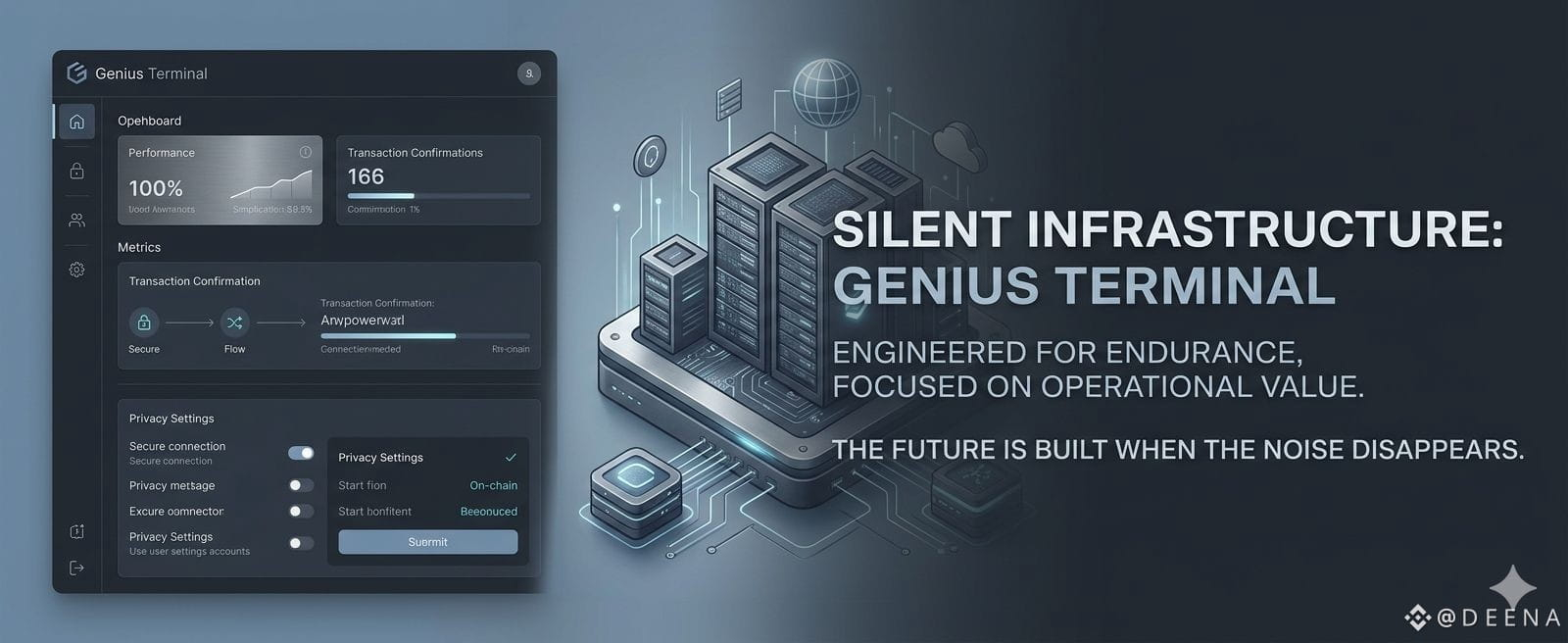
Hal pertama yang saya perhatikan adalah pengendalian diri. Tidak ada kompleksitas yang tidak perlu. Tidak ada kebisingan yang agresif. Tidak ada usaha untuk memaksa momentum melalui tontonan. Segalanya terasa disengaja, dari struktur hingga alur eksekusi. Ini membawa jenis kepercayaan diri yang biasanya datang dari tim yang lebih fokus pada kinerja daripada visibilitas.
Yang paling mencolok bagi saya adalah cara privasi terasa terintegrasi ke dalam pengalaman daripada ditambahkan sebagai lapisan naratif setelahnya. Itu mengubah suasana sepenuhnya. Terminal terasa terkontrol, fokus, dan dirancang untuk orang-orang yang menghargai presisi daripada reaksi.
Saya juga menghargai seberapa bersih arah keseluruhan terasa. Di ruang di mana banyak produk bersaing untuk relevansi jangka pendek, Genius Terminal terasa diposisikan untuk nilai operasional jangka panjang. Arsitekturnya menunjukkan disiplin. Antarmukanya menunjukkan kejelasan. Kehadiran keseluruhannya menunjukkan kedewasaan.
Saya percaya generasi berikutnya dari infrastruktur on-chain tidak akan ditentukan oleh siapa yang berbicara paling keras.
Ini akan ditentukan oleh siapa yang membangun sistem yang mampu tetap esensial saat kebisingan menghilang.
Genius Terminal sudah terasa sejalan dengan masa depan itu.
$ALLO
$NIGHT
#genius @GeniusOfficial $GENIUS
{spot}(GENIUSUSDT)
Infrastruktur Senyap
Saya telah menghabiskan cukup banyak waktu di sekitar produk on-chain untuk mengenali perbedaan antara platform yang dibangun untuk mendapatkan perhatian dan platform yang dibangun untuk ketahanan.
Genius Terminal langsung memberi saya kesan kedua.
Hal pertama yang saya perhatikan adalah pengendalian diri. Tidak ada kompleksitas yang tidak perlu. Tidak ada kebisingan yang agresif. Tidak ada usaha untuk memaksa momentum melalui tontonan. Segalanya terasa disengaja, dari struktur hingga alur eksekusi. Ini membawa jenis kepercayaan diri yang biasanya datang dari tim yang lebih fokus pada kinerja daripada visibilitas.
Yang paling mencolok bagi saya adalah cara privasi terasa terintegrasi ke dalam pengalaman daripada ditambahkan sebagai lapisan naratif setelahnya. Itu mengubah suasana sepenuhnya. Terminal terasa terkontrol, fokus, dan dirancang untuk orang-orang yang menghargai presisi daripada reaksi.
Saya juga menghargai seberapa bersih arah keseluruhan terasa. Di ruang di mana banyak produk bersaing untuk relevansi jangka pendek, Genius Terminal terasa diposisikan untuk nilai operasional jangka panjang. Arsitekturnya menunjukkan disiplin. Antarmukanya menunjukkan kejelasan. Kehadiran keseluruhannya menunjukkan kedewasaan.
Saya percaya generasi berikutnya dari infrastruktur on-chain tidak akan ditentukan oleh siapa yang berbicara paling keras.
Ini akan ditentukan oleh siapa yang membangun sistem yang mampu tetap esensial saat kebisingan menghilang.
Genius Terminal sudah terasa sejalan dengan masa depan itu.
$ALLO
$NIGHT
#genius @GeniusOfficial $GENIUS
Saya telah menghabiskan cukup banyak waktu di sekitar produk on-chain untuk mengenali perbedaan antara platform yang dibangun untuk mendapatkan perhatian dan platform yang dibangun untuk ketahanan.
Genius Terminal langsung memberi saya kesan kedua.
Hal pertama yang saya perhatikan adalah pengendalian diri. Tidak ada kompleksitas yang tidak perlu. Tidak ada kebisingan yang agresif. Tidak ada usaha untuk memaksa momentum melalui tontonan. Segalanya terasa disengaja, dari struktur hingga alur eksekusi. Ini membawa jenis kepercayaan diri yang biasanya datang dari tim yang lebih fokus pada kinerja daripada visibilitas.
Yang paling mencolok bagi saya adalah cara privasi terasa terintegrasi ke dalam pengalaman daripada ditambahkan sebagai lapisan naratif setelahnya. Itu mengubah suasana sepenuhnya. Terminal terasa terkontrol, fokus, dan dirancang untuk orang-orang yang menghargai presisi daripada reaksi.
Saya juga menghargai seberapa bersih arah keseluruhan terasa. Di ruang di mana banyak produk bersaing untuk relevansi jangka pendek, Genius Terminal terasa diposisikan untuk nilai operasional jangka panjang. Arsitekturnya menunjukkan disiplin. Antarmukanya menunjukkan kejelasan. Kehadiran keseluruhannya menunjukkan kedewasaan.
Saya percaya generasi berikutnya dari infrastruktur on-chain tidak akan ditentukan oleh siapa yang berbicara paling keras.
Ini akan ditentukan oleh siapa yang membangun sistem yang mampu tetap esensial saat kebisingan menghilang.
Genius Terminal sudah terasa sejalan dengan masa depan itu.
$ALLO
$NIGHT
#genius @GeniusOfficial $GENIUS
1
199
·
--
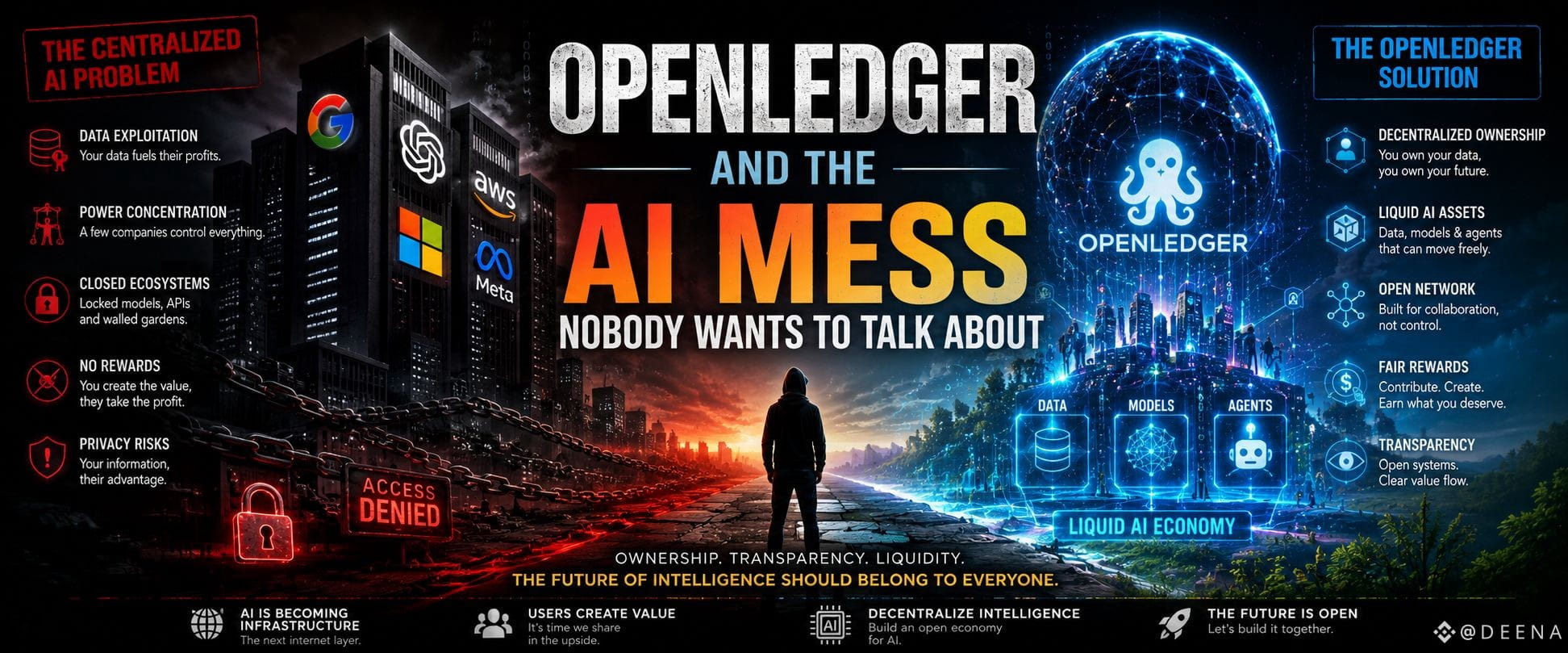
Dulu, saya berpikir sebagian besar proyek AI hanyalah hype yang didaur ulang dengan branding mahal. Janji yang sama. Kata-kata yang sama. Narasi "masa depan kecerdasan" diulang terus sampai tidak ada yang mempertanyakannya lagi. Tapi semakin dalam saya melihat OpenLedger, semakin saya menyadari bahwa cerita sebenarnya bukanlah AI itu sendiri — tetapi kepemilikan.
Saat ini, beberapa perusahaan raksasa mengontrol hampir segalanya. Model. Data. Infrastruktur. Distribusi. Sementara pengguna biasa memberi makan sistem-sistem ini setiap hari secara gratis tanpa menyadari seberapa banyak nilai yang mereka ciptakan. Itulah bagian yang terasa rusak bagi saya.
Apa yang menarik perhatian saya tentang OpenLedger adalah bahwa ia sebenarnya menunjukkan masalah infrastruktur alih-alih hanya bertani keterlibatan dengan narasi AI yang kosong. Gagasan bahwa data, model, dan agen AI seharusnya bergerak melalui ekonomi terbuka alih-alih terjebak di dalam tembok perusahaan jauh lebih masuk akal daripada yang disadari orang.
Dan sejujurnya, saya pikir kebanyakan orang masih meremehkan seberapa besar pergeseran ini akan terjadi.
AI bukan lagi sekadar perangkat lunak.
Ia sedang berubah menjadi infrastruktur ekonomi.
Pertarungan yang sebenarnya bukan tentang siapa yang membangun chatbot tercerdas.
Ini akan tentang siapa yang memiliki rel di bawah kecerdasan itu sendiri.
#openledger @Openledger $OPEN
{spot}(OPENUSDT)
$XLM
$ALLO
Dulu, saya berpikir sebagian besar proyek AI hanyalah hype yang didaur ulang dengan branding mahal. Janji yang sama. Kata-kata yang sama. Narasi "masa depan kecerdasan" diulang terus sampai tidak ada yang mempertanyakannya lagi. Tapi semakin dalam saya melihat OpenLedger, semakin saya menyadari bahwa cerita sebenarnya bukanlah AI itu sendiri — tetapi kepemilikan.
Saat ini, beberapa perusahaan raksasa mengontrol hampir segalanya. Model. Data. Infrastruktur. Distribusi. Sementara pengguna biasa memberi makan sistem-sistem ini setiap hari secara gratis tanpa menyadari seberapa banyak nilai yang mereka ciptakan. Itulah bagian yang terasa rusak bagi saya.
Apa yang menarik perhatian saya tentang OpenLedger adalah bahwa ia sebenarnya menunjukkan masalah infrastruktur alih-alih hanya bertani keterlibatan dengan narasi AI yang kosong. Gagasan bahwa data, model, dan agen AI seharusnya bergerak melalui ekonomi terbuka alih-alih terjebak di dalam tembok perusahaan jauh lebih masuk akal daripada yang disadari orang.
Dan sejujurnya, saya pikir kebanyakan orang masih meremehkan seberapa besar pergeseran ini akan terjadi.
AI bukan lagi sekadar perangkat lunak.
Ia sedang berubah menjadi infrastruktur ekonomi.
Pertarungan yang sebenarnya bukan tentang siapa yang membangun chatbot tercerdas.
Ini akan tentang siapa yang memiliki rel di bawah kecerdasan itu sendiri.
#openledger @OpenLedger $OPEN
$XLM
$ALLO
Saat ini, beberapa perusahaan raksasa mengontrol hampir segalanya. Model. Data. Infrastruktur. Distribusi. Sementara pengguna biasa memberi makan sistem-sistem ini setiap hari secara gratis tanpa menyadari seberapa banyak nilai yang mereka ciptakan. Itulah bagian yang terasa rusak bagi saya.
Apa yang menarik perhatian saya tentang OpenLedger adalah bahwa ia sebenarnya menunjukkan masalah infrastruktur alih-alih hanya bertani keterlibatan dengan narasi AI yang kosong. Gagasan bahwa data, model, dan agen AI seharusnya bergerak melalui ekonomi terbuka alih-alih terjebak di dalam tembok perusahaan jauh lebih masuk akal daripada yang disadari orang.
Dan sejujurnya, saya pikir kebanyakan orang masih meremehkan seberapa besar pergeseran ini akan terjadi.
AI bukan lagi sekadar perangkat lunak.
Ia sedang berubah menjadi infrastruktur ekonomi.
Pertarungan yang sebenarnya bukan tentang siapa yang membangun chatbot tercerdas.
Ini akan tentang siapa yang memiliki rel di bawah kecerdasan itu sendiri.
#openledger @OpenLedger $OPEN
$XLM
$ALLO
1
2
160
·
--
Artikel
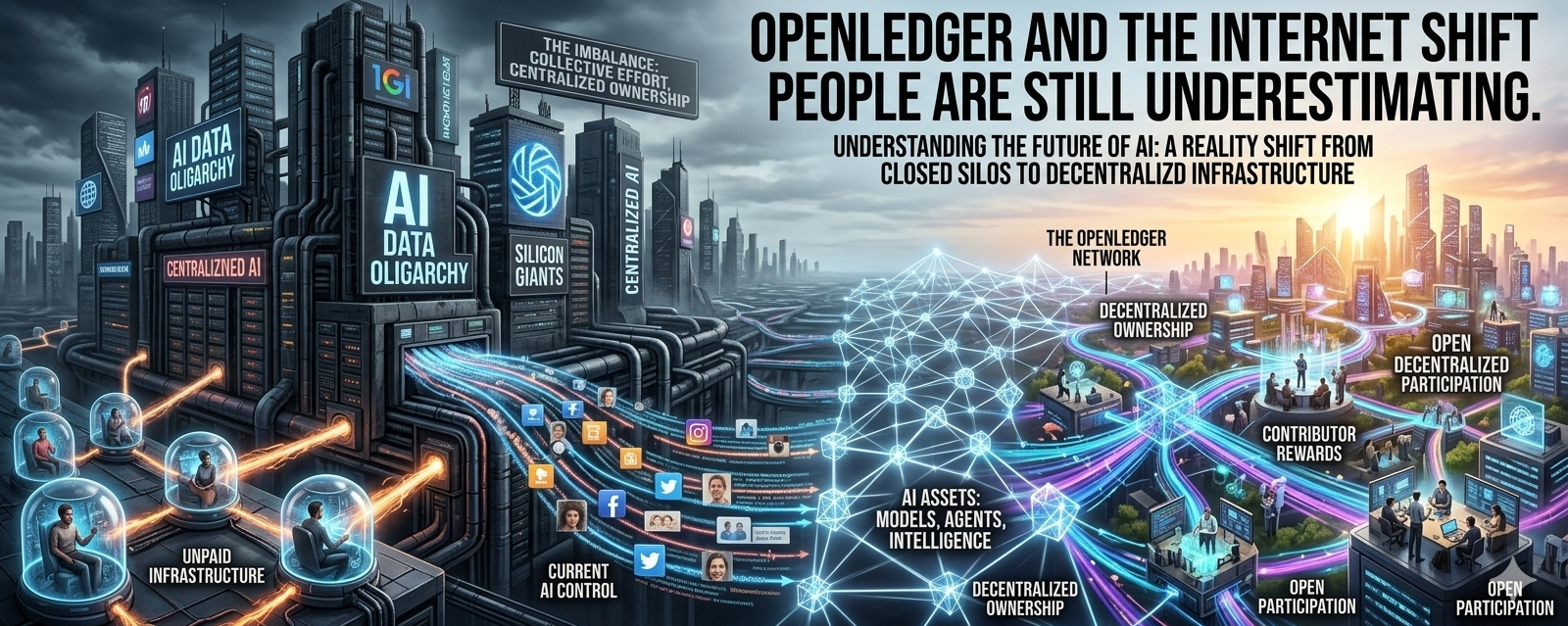
OPENLEDGER DAN PERGESERAN INTERNET YANG MASIH DIREMEHKAN ORANGSebagian besar proyek AI saat ini terasa hampa begitu kamu melihat lebih dalam dari sekadar pemasaran. Janji-janji yang sama terulang di mana-mana. Thread dramatis yang sama tentang 'mengubah masa depan.' Website yang dipoles dengan kata-kata yang bahkan tidak ada yang gunakan dalam kehidupan nyata. Setiap proyek tiba-tiba mengklaim sedang membangun generasi berikutnya dari kecerdasan, tapi saat kamu benar-benar menyelidiki, sebagian besar hanya mengemas ulang sistem terpusat yang sama dengan label crypto di atasnya. Itu sebabnya banyak orang berhenti peduli. Kegembiraan memudar karena ruang ini dibanjiri dengan kebisingan. Terlalu banyak pendiri yang mencoba memproduksi hype. Terlalu banyak token yang berpura-pura menjadi teknologi. Terlalu banyak orang yang mengejar tren tanpa bahkan memahami masalah apa yang seharusnya mereka selesaikan lagi.
OPENLEDGER DAN PERGESERAN INTERNET YANG MASIH DIREMEHKAN ORANG
Sebagian besar proyek AI saat ini terasa hampa begitu kamu melihat lebih dalam dari sekadar pemasaran. Janji-janji yang sama terulang di mana-mana. Thread dramatis yang sama tentang 'mengubah masa depan.' Website yang dipoles dengan kata-kata yang bahkan tidak ada yang gunakan dalam kehidupan nyata. Setiap proyek tiba-tiba mengklaim sedang membangun generasi berikutnya dari kecerdasan, tapi saat kamu benar-benar menyelidiki, sebagian besar hanya mengemas ulang sistem terpusat yang sama dengan label crypto di atasnya. Itu sebabnya banyak orang berhenti peduli. Kegembiraan memudar karena ruang ini dibanjiri dengan kebisingan. Terlalu banyak pendiri yang mencoba memproduksi hype. Terlalu banyak token yang berpura-pura menjadi teknologi. Terlalu banyak orang yang mengejar tren tanpa bahkan memahami masalah apa yang seharusnya mereka selesaikan lagi.
1
2
134
·
--
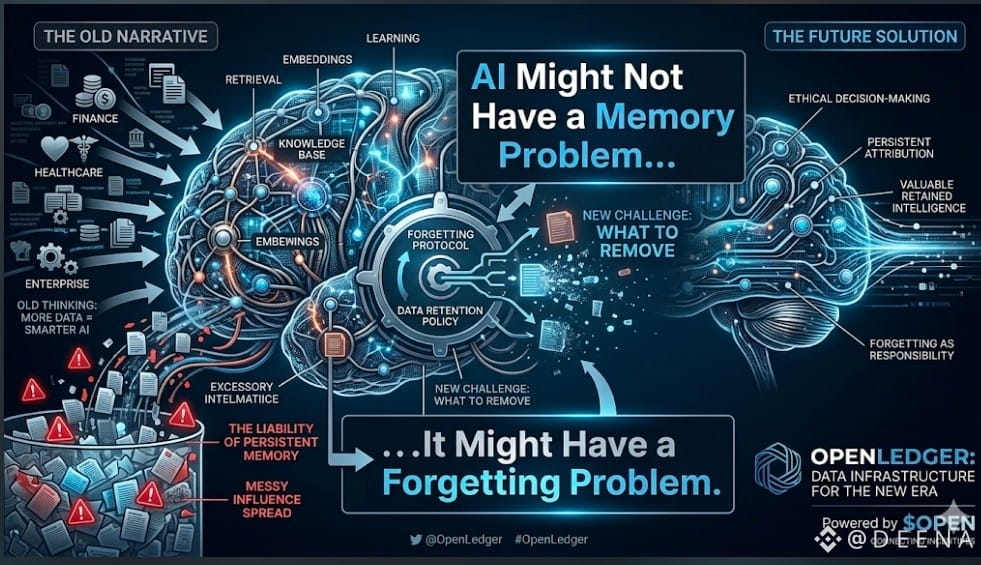
AI Mungkin Tidak Punya Masalah Memori… Mungkin Punya Masalah Melupakan
Akhir-akhir ini, aku mulai berpikir tentang AI dengan cara yang sangat berbeda. Selama bertahun-tahun, seluruh industri menganggap memori sebagai keuntungan yang tidak terbatas. Semakin banyak data yang bisa dikumpulkan, disimpan, dan dipelajari oleh sebuah sistem, semakin pintar sistem itu. Tapi semakin dalam AI bergerak ke dunia keuangan, kesehatan, operasi perusahaan, dan pengambilan keputusan nyata, semakin aku merasa tantangan sebenarnya secara perlahan bergeser.
Aku tidak berpikir masa depan milik sistem yang mengingat segalanya selamanya.
Aku pikir mungkin milik sistem yang memahami apa yang seharusnya tidak lagi diingat.
Itu sebabnya OpenLedger menarik perhatianku.
Kebanyakan orang menggambarkannya sebagai infrastruktur data AI di mana kontributor memberikan informasi, model menjadi lebih baik, dan $OPEN menghubungkan insentif. Tapi aku pikir ada lapisan yang lebih dalam yang terbentuk di bawah narasi itu. Begitu informasi masuk ke sistem AI, menghapus pengaruhnya menjadi sangat sulit. Data menyebar melalui pelatihan, embeddings, sistem pengambilan, dan pola perilaku dengan cara yang jauh lebih berantakan daripada yang disadari orang.
Dan begitu AI mulai menyentuh alur kerja yang sensitif, memori itu sendiri menjadi tanggung jawab.
Itu mengubah ekonomi sepenuhnya.
Jika atribusi menjadi persisten dan berharga, maka kecerdasan yang dipertahankan berhenti menjadi infrastruktur gratis. Tiba-tiba, melupakan menjadi sama pentingnya dengan belajar.
Dan jujur, aku tidak berpikir pasar telah sepenuhnya memperhitungkan hal itu.
#OpenLedger @Openledger $OPEN
{spot}(OPENUSDT)
AI Mungkin Tidak Punya Masalah Memori… Mungkin Punya Masalah Melupakan
Akhir-akhir ini, aku mulai berpikir tentang AI dengan cara yang sangat berbeda. Selama bertahun-tahun, seluruh industri menganggap memori sebagai keuntungan yang tidak terbatas. Semakin banyak data yang bisa dikumpulkan, disimpan, dan dipelajari oleh sebuah sistem, semakin pintar sistem itu. Tapi semakin dalam AI bergerak ke dunia keuangan, kesehatan, operasi perusahaan, dan pengambilan keputusan nyata, semakin aku merasa tantangan sebenarnya secara perlahan bergeser.
Aku tidak berpikir masa depan milik sistem yang mengingat segalanya selamanya.
Aku pikir mungkin milik sistem yang memahami apa yang seharusnya tidak lagi diingat.
Itu sebabnya OpenLedger menarik perhatianku.
Kebanyakan orang menggambarkannya sebagai infrastruktur data AI di mana kontributor memberikan informasi, model menjadi lebih baik, dan $OPEN menghubungkan insentif. Tapi aku pikir ada lapisan yang lebih dalam yang terbentuk di bawah narasi itu. Begitu informasi masuk ke sistem AI, menghapus pengaruhnya menjadi sangat sulit. Data menyebar melalui pelatihan, embeddings, sistem pengambilan, dan pola perilaku dengan cara yang jauh lebih berantakan daripada yang disadari orang.
Dan begitu AI mulai menyentuh alur kerja yang sensitif, memori itu sendiri menjadi tanggung jawab.
Itu mengubah ekonomi sepenuhnya.
Jika atribusi menjadi persisten dan berharga, maka kecerdasan yang dipertahankan berhenti menjadi infrastruktur gratis. Tiba-tiba, melupakan menjadi sama pentingnya dengan belajar.
Dan jujur, aku tidak berpikir pasar telah sepenuhnya memperhitungkan hal itu.
#OpenLedger @OpenLedger $OPEN
Akhir-akhir ini, aku mulai berpikir tentang AI dengan cara yang sangat berbeda. Selama bertahun-tahun, seluruh industri menganggap memori sebagai keuntungan yang tidak terbatas. Semakin banyak data yang bisa dikumpulkan, disimpan, dan dipelajari oleh sebuah sistem, semakin pintar sistem itu. Tapi semakin dalam AI bergerak ke dunia keuangan, kesehatan, operasi perusahaan, dan pengambilan keputusan nyata, semakin aku merasa tantangan sebenarnya secara perlahan bergeser.
Aku tidak berpikir masa depan milik sistem yang mengingat segalanya selamanya.
Aku pikir mungkin milik sistem yang memahami apa yang seharusnya tidak lagi diingat.
Itu sebabnya OpenLedger menarik perhatianku.
Kebanyakan orang menggambarkannya sebagai infrastruktur data AI di mana kontributor memberikan informasi, model menjadi lebih baik, dan $OPEN menghubungkan insentif. Tapi aku pikir ada lapisan yang lebih dalam yang terbentuk di bawah narasi itu. Begitu informasi masuk ke sistem AI, menghapus pengaruhnya menjadi sangat sulit. Data menyebar melalui pelatihan, embeddings, sistem pengambilan, dan pola perilaku dengan cara yang jauh lebih berantakan daripada yang disadari orang.
Dan begitu AI mulai menyentuh alur kerja yang sensitif, memori itu sendiri menjadi tanggung jawab.
Itu mengubah ekonomi sepenuhnya.
Jika atribusi menjadi persisten dan berharga, maka kecerdasan yang dipertahankan berhenti menjadi infrastruktur gratis. Tiba-tiba, melupakan menjadi sama pentingnya dengan belajar.
Dan jujur, aku tidak berpikir pasar telah sepenuhnya memperhitungkan hal itu.
#OpenLedger @OpenLedger $OPEN
97
·
--
Artikel
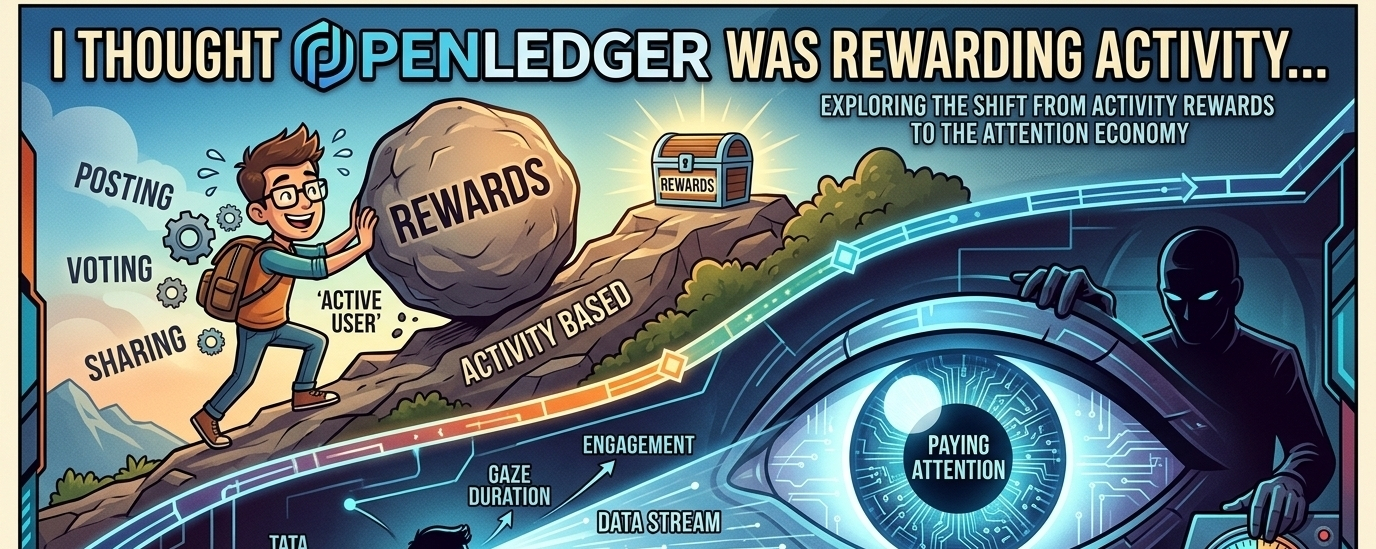
Saya Mengira OpenLedger Menghadiahi Aktivitas... Sampai Saya Menyadari Itu Memperhatikan Sesuatu
Ketika saya pertama kali mulai menggunakan OpenLedger, saya pikir saya cepat memahami sistemnya.
Rasanya mirip dengan banyak ekosistem lain yang pernah saya lihat sebelumnya. Tetap aktif, selesaikan tugas, terlibat secara konsisten, kembali besok, ulangi. Struktur ini terasa cukup familiar sehingga saya tidak berpikir terlalu dalam tentangnya di awal. Sejujurnya, saya menganggap seluruh ide ini sederhana: semakin terlihat Anda, semakin banyak nilai yang Anda ciptakan di dalam jaringan.
Dan untuk sementara, keyakinan itu masuk akal bagi saya.
Karena sistem online biasanya melatih kita untuk berpikir bahwa aktivitas sama dengan pentingnya. Jika Anda memposting lebih banyak, berinteraksi lebih banyak, dan tetap hadir secara konstan, pada akhirnya sistem akan memperhatikan Anda. Begitulah cara sebagian besar platform bekerja sekarang, jadi secara alami saya membawa pola pikir yang sama ke OpenLedger juga.
Ketika saya pertama kali mulai menggunakan OpenLedger, saya pikir saya cepat memahami sistemnya.
Rasanya mirip dengan banyak ekosistem lain yang pernah saya lihat sebelumnya. Tetap aktif, selesaikan tugas, terlibat secara konsisten, kembali besok, ulangi. Struktur ini terasa cukup familiar sehingga saya tidak berpikir terlalu dalam tentangnya di awal. Sejujurnya, saya menganggap seluruh ide ini sederhana: semakin terlihat Anda, semakin banyak nilai yang Anda ciptakan di dalam jaringan.
Dan untuk sementara, keyakinan itu masuk akal bagi saya.
Karena sistem online biasanya melatih kita untuk berpikir bahwa aktivitas sama dengan pentingnya. Jika Anda memposting lebih banyak, berinteraksi lebih banyak, dan tetap hadir secara konstan, pada akhirnya sistem akan memperhatikan Anda. Begitulah cara sebagian besar platform bekerja sekarang, jadi secara alami saya membawa pola pikir yang sama ke OpenLedger juga.
Saya Mengira OpenLedger Menghadiahi Aktivitas... Sampai Saya Menyadari Itu Memperhatikan Sesuatu
Ketika saya pertama kali mulai menggunakan OpenLedger, saya pikir saya cepat memahami sistemnya.
Rasanya mirip dengan banyak ekosistem lain yang pernah saya lihat sebelumnya. Tetap aktif, selesaikan tugas, terlibat secara konsisten, kembali besok, ulangi. Struktur ini terasa cukup familiar sehingga saya tidak berpikir terlalu dalam tentangnya di awal. Sejujurnya, saya menganggap seluruh ide ini sederhana: semakin terlihat Anda, semakin banyak nilai yang Anda ciptakan di dalam jaringan.
Dan untuk sementara, keyakinan itu masuk akal bagi saya.
Karena sistem online biasanya melatih kita untuk berpikir bahwa aktivitas sama dengan pentingnya. Jika Anda memposting lebih banyak, berinteraksi lebih banyak, dan tetap hadir secara konstan, pada akhirnya sistem akan memperhatikan Anda. Begitulah cara sebagian besar platform bekerja sekarang, jadi secara alami saya membawa pola pikir yang sama ke OpenLedger juga.
100
·
--
Mengapa Saya Berpikir Genius Terminal Diam-Diam Mengubah Cara Trading On-Chain
Dulu saya berpikir sebagian besar terminal on-chain pada dasarnya sama dengan antarmuka yang berbeda, branding yang berbeda, dan janji eksekusi yang sedikit lebih cepat. Namun, semakin saya mengamati bagaimana trader benar-benar bergerak di pasar, semakin saya menyadari bahwa celah sebenarnya bukan hanya kecepatan. Ini adalah privasi, kesederhanaan, dan perasaan kontrol saat semuanya di sekitar Anda bergerak dalam kekacauan. Di situlah Genius Terminal mulai menonjol bagi saya.
Apa yang menarik perhatian saya adalah ide menjadi terminal on-chain pribadi dan final pertama. Dalam crypto, orang sering berbicara tentang transparansi, tetapi sangat sedikit yang membahas biaya dari mengekspos setiap langkah sebelum eksekusi. Pasar mengawasi segalanya. Dompet dilacak. Strategi menjadi pola publik. Seiring waktu, itu mengubah perilaku trader itu sendiri. Saya pikir Genius Terminal memahami gesekan tersembunyi itu lebih baik daripada kebanyakan platform lainnya.
Apa yang membuat ini menarik bukanlah hype atau pemasaran yang mencolok. Ini adalah arah. Terminal terasa dibangun di sekitar fokus eksekusi alih-alih kebisingan. Aliran yang lebih bersih. Kurang gangguan. Lebih banyak kontrol atas bagaimana pengguna berinteraksi dengan likuiditas on-chain dan informasi.
Saya pikir fase berikutnya dari infrastruktur crypto akan menjadi milik produk yang secara diam-diam mengurangi gesekan sementara pengguna hampir tidak menyadari itu terjadi. Genius Terminal terasa seperti salah satu sistem itu.
#genius @GeniusOfficial $GENIUS
{spot}(GENIUSUSDT)
Mengapa Saya Berpikir Genius Terminal Diam-Diam Mengubah Cara Trading On-Chain
Dulu saya berpikir sebagian besar terminal on-chain pada dasarnya sama dengan antarmuka yang berbeda, branding yang berbeda, dan janji eksekusi yang sedikit lebih cepat. Namun, semakin saya mengamati bagaimana trader benar-benar bergerak di pasar, semakin saya menyadari bahwa celah sebenarnya bukan hanya kecepatan. Ini adalah privasi, kesederhanaan, dan perasaan kontrol saat semuanya di sekitar Anda bergerak dalam kekacauan. Di situlah Genius Terminal mulai menonjol bagi saya.
Apa yang menarik perhatian saya adalah ide menjadi terminal on-chain pribadi dan final pertama. Dalam crypto, orang sering berbicara tentang transparansi, tetapi sangat sedikit yang membahas biaya dari mengekspos setiap langkah sebelum eksekusi. Pasar mengawasi segalanya. Dompet dilacak. Strategi menjadi pola publik. Seiring waktu, itu mengubah perilaku trader itu sendiri. Saya pikir Genius Terminal memahami gesekan tersembunyi itu lebih baik daripada kebanyakan platform lainnya.
Apa yang membuat ini menarik bukanlah hype atau pemasaran yang mencolok. Ini adalah arah. Terminal terasa dibangun di sekitar fokus eksekusi alih-alih kebisingan. Aliran yang lebih bersih. Kurang gangguan. Lebih banyak kontrol atas bagaimana pengguna berinteraksi dengan likuiditas on-chain dan informasi.
Saya pikir fase berikutnya dari infrastruktur crypto akan menjadi milik produk yang secara diam-diam mengurangi gesekan sementara pengguna hampir tidak menyadari itu terjadi. Genius Terminal terasa seperti salah satu sistem itu.
#genius @GeniusOfficial $GENIUS
Dulu saya berpikir sebagian besar terminal on-chain pada dasarnya sama dengan antarmuka yang berbeda, branding yang berbeda, dan janji eksekusi yang sedikit lebih cepat. Namun, semakin saya mengamati bagaimana trader benar-benar bergerak di pasar, semakin saya menyadari bahwa celah sebenarnya bukan hanya kecepatan. Ini adalah privasi, kesederhanaan, dan perasaan kontrol saat semuanya di sekitar Anda bergerak dalam kekacauan. Di situlah Genius Terminal mulai menonjol bagi saya.
Apa yang menarik perhatian saya adalah ide menjadi terminal on-chain pribadi dan final pertama. Dalam crypto, orang sering berbicara tentang transparansi, tetapi sangat sedikit yang membahas biaya dari mengekspos setiap langkah sebelum eksekusi. Pasar mengawasi segalanya. Dompet dilacak. Strategi menjadi pola publik. Seiring waktu, itu mengubah perilaku trader itu sendiri. Saya pikir Genius Terminal memahami gesekan tersembunyi itu lebih baik daripada kebanyakan platform lainnya.
Apa yang membuat ini menarik bukanlah hype atau pemasaran yang mencolok. Ini adalah arah. Terminal terasa dibangun di sekitar fokus eksekusi alih-alih kebisingan. Aliran yang lebih bersih. Kurang gangguan. Lebih banyak kontrol atas bagaimana pengguna berinteraksi dengan likuiditas on-chain dan informasi.
Saya pikir fase berikutnya dari infrastruktur crypto akan menjadi milik produk yang secara diam-diam mengurangi gesekan sementara pengguna hampir tidak menyadari itu terjadi. Genius Terminal terasa seperti salah satu sistem itu.
#genius @GeniusOfficial $GENIUS
90
·
--
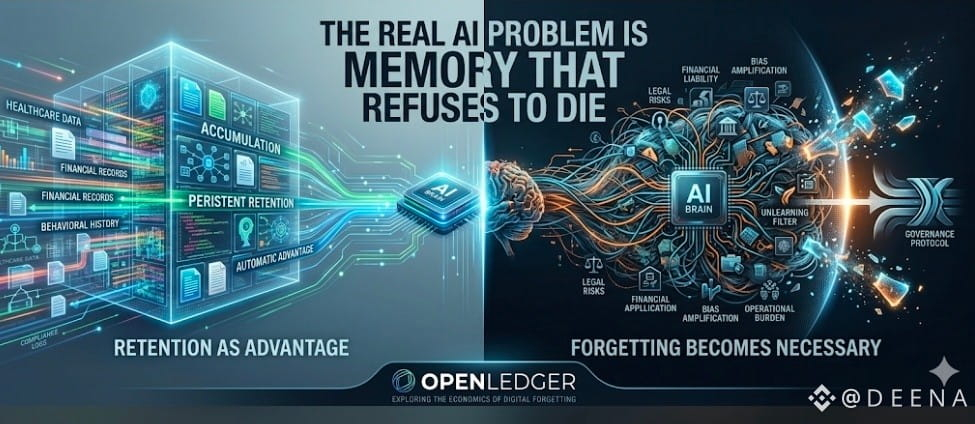
Masalah AI yang Sebenarnya Mungkin Bukan Kecerdasan... Tapi Memori yang Tak Mau Mati
Saya terus kembali ke satu pemikiran yang tidak nyaman tentang AI.
Masalah sebenarnya mungkin bukan kecerdasan sama sekali. Mungkin memori.
Selama bertahun-tahun, industri teknologi menganggap retensi sebagai keuntungan otomatis. Simpan lebih banyak data. Lacak lebih banyak perilaku. Pelihara lebih banyak sejarah. Asumsi itu sederhana: semakin banyak memori, semakin baik sistemnya.
Tapi semakin dalam AI masuk ke dalam kesehatan, keuangan, kepatuhan, operasional pelanggan, dan pengambilan keputusan, semakin sulit untuk mengabaikan sisi negatif dari logika itu.
Karena AI sebenarnya tidak benar-benar "lupa."
Begitu informasi masuk ke dalam pipeline pelatihan, lapisan pengambilan, atau sistem perilaku, ia menyebar ke seluruh model dengan cara yang sulit untuk diisolasi kemudian. Menghapus file itu mudah. Menghilangkan pengaruh informasi dari kecerdasan itu sendiri jauh lebih sulit.
Perubahan itu sebagian mengapa OpenLedger mulai terasa lebih menarik bagi saya.
Awalnya saya melihatnya sebagai narasi infrastruktur AI lain yang berfokus pada atribusi dan koordinasi data. Tetapi lapisan yang lebih dalam mungkin sesuatu yang sama sekali berbeda.
Begitu atribusi menjadi persisten dan bermakna secara ekonomi, memori berhenti menjadi infrastruktur gratis. Ia menjadi kewajiban, aset, dan pada akhirnya masalah tata kelola sekaligus.
Dan saat memori membawa bobot hukum, finansial, dan operasional, melupakan mulai terlihat tidak efisien.
Ia mulai terlihat perlu.
#openledger @Openledger $OPEN
{spot}(OPENUSDT)
Masalah AI yang Sebenarnya Mungkin Bukan Kecerdasan... Tapi Memori yang Tak Mau Mati
Saya terus kembali ke satu pemikiran yang tidak nyaman tentang AI.
Masalah sebenarnya mungkin bukan kecerdasan sama sekali. Mungkin memori.
Selama bertahun-tahun, industri teknologi menganggap retensi sebagai keuntungan otomatis. Simpan lebih banyak data. Lacak lebih banyak perilaku. Pelihara lebih banyak sejarah. Asumsi itu sederhana: semakin banyak memori, semakin baik sistemnya.
Tapi semakin dalam AI masuk ke dalam kesehatan, keuangan, kepatuhan, operasional pelanggan, dan pengambilan keputusan, semakin sulit untuk mengabaikan sisi negatif dari logika itu.
Karena AI sebenarnya tidak benar-benar "lupa."
Begitu informasi masuk ke dalam pipeline pelatihan, lapisan pengambilan, atau sistem perilaku, ia menyebar ke seluruh model dengan cara yang sulit untuk diisolasi kemudian. Menghapus file itu mudah. Menghilangkan pengaruh informasi dari kecerdasan itu sendiri jauh lebih sulit.
Perubahan itu sebagian mengapa OpenLedger mulai terasa lebih menarik bagi saya.
Awalnya saya melihatnya sebagai narasi infrastruktur AI lain yang berfokus pada atribusi dan koordinasi data. Tetapi lapisan yang lebih dalam mungkin sesuatu yang sama sekali berbeda.
Begitu atribusi menjadi persisten dan bermakna secara ekonomi, memori berhenti menjadi infrastruktur gratis. Ia menjadi kewajiban, aset, dan pada akhirnya masalah tata kelola sekaligus.
Dan saat memori membawa bobot hukum, finansial, dan operasional, melupakan mulai terlihat tidak efisien.
Ia mulai terlihat perlu.
#openledger @OpenLedger $OPEN
Saya terus kembali ke satu pemikiran yang tidak nyaman tentang AI.
Masalah sebenarnya mungkin bukan kecerdasan sama sekali. Mungkin memori.
Selama bertahun-tahun, industri teknologi menganggap retensi sebagai keuntungan otomatis. Simpan lebih banyak data. Lacak lebih banyak perilaku. Pelihara lebih banyak sejarah. Asumsi itu sederhana: semakin banyak memori, semakin baik sistemnya.
Tapi semakin dalam AI masuk ke dalam kesehatan, keuangan, kepatuhan, operasional pelanggan, dan pengambilan keputusan, semakin sulit untuk mengabaikan sisi negatif dari logika itu.
Karena AI sebenarnya tidak benar-benar "lupa."
Begitu informasi masuk ke dalam pipeline pelatihan, lapisan pengambilan, atau sistem perilaku, ia menyebar ke seluruh model dengan cara yang sulit untuk diisolasi kemudian. Menghapus file itu mudah. Menghilangkan pengaruh informasi dari kecerdasan itu sendiri jauh lebih sulit.
Perubahan itu sebagian mengapa OpenLedger mulai terasa lebih menarik bagi saya.
Awalnya saya melihatnya sebagai narasi infrastruktur AI lain yang berfokus pada atribusi dan koordinasi data. Tetapi lapisan yang lebih dalam mungkin sesuatu yang sama sekali berbeda.
Begitu atribusi menjadi persisten dan bermakna secara ekonomi, memori berhenti menjadi infrastruktur gratis. Ia menjadi kewajiban, aset, dan pada akhirnya masalah tata kelola sekaligus.
Dan saat memori membawa bobot hukum, finansial, dan operasional, melupakan mulai terlihat tidak efisien.
Ia mulai terlihat perlu.
#openledger @OpenLedger $OPEN
90
Masuk untuk menjelajahi konten lainnya
Bergabunglah dengan pengguna kripto global di Binance Square
⚡️ Dapatkan informasi terbaru dan berguna tentang kripto.
💬 Dipercayai oleh bursa kripto terbesar di dunia.
👍 Temukan wawasan nyata dari kreator terverifikasi.
Email/Nomor Ponsel
Topik Sedang Tren
HYPEJumpsOver11%
5,358 penayangan
279 Berdiskusi
#HYPEJumpsOver11%
Hyperliquid $HYPE kembali menunjukkan taringnya hari ini dengan lonjakan performa memukau di atas 11%! Setelah sempat bergerak konsolidasi, volume perdagangan 24 jam koin ini melonjak drastis, menandakan adanya dorongan akumulasi yang kuat dari para buyer
Brayen FA
·Disukai 1 Kali
·300 penayangan
ZcashDevelopersTargetNU7MainnetActivationNov5
0 penayangan
2 Berdiskusi
BitcoinSpotETFsNetInflow$159M
1,707 penayangan
73 Berdiskusi