
BitcoinPierre
385 Posting

BitcoinPierre
Laporkan
Blokir Pengguna
0 Mengikuti
11 Pengikut
42 Disukai
Posting
Lihat terjemahan
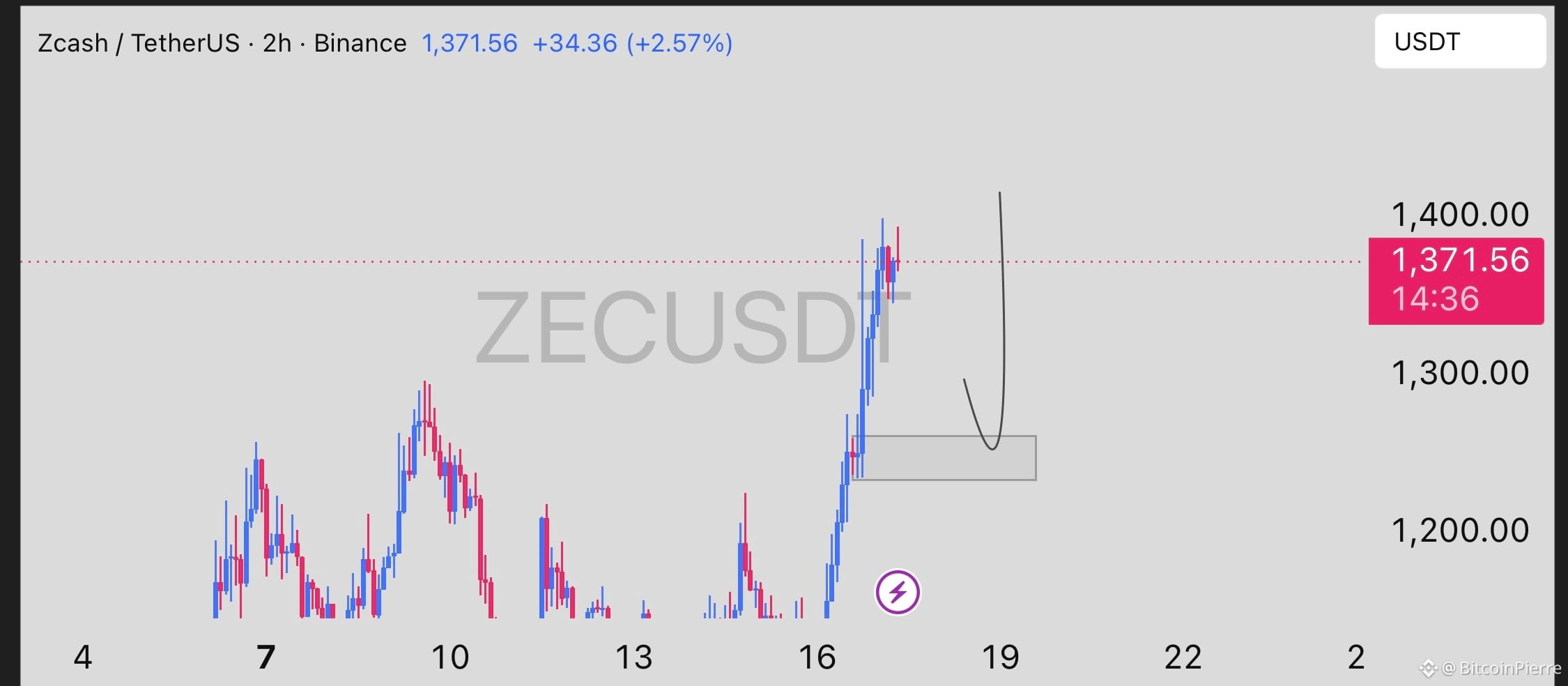
$ZEC will be hitting more highs soon! From my projection, ZEC will retrace a little before pumping back up. #BTC Price Analysis# #Macro Insights#
$ZEC will be hitting more highs soon! From my projection, ZEC will retrace a little before pumping back up. #BTC Price Analysis# #Macro Insights#
58
Lihat terjemahan
CoinEx has announced an orderly wind-down of its exchange, citing the prolonged crypto market downturn, declining trading volume and liquidity, as well as rising regulatory and compliance costs. The shutdown will happen in stages. Non-spot services are scheduled to end on September 22, while spot trading will stop on September 29. Users will still be able to withdraw their funds until December 22, 2026. CoinEx says user assets remain fully backed, with its reserve ratio above 100%. The exchange will also repurchase remaining CET at $0.005 during the wind-down process. The bigger takeaway is the pressure facing centralized exchanges. Lower trading activity means less fee revenue, while compliance requirements continue becoming more expensive across major markets. #BTC Price Analysis# #Macro Insights# $BTC $ETH
CoinEx has announced an orderly wind-down of its exchange, citing the prolonged crypto market downturn, declining trading volume and liquidity, as well as rising regulatory and compliance costs. The shutdown will happen in stages. Non-spot services are scheduled to end on September 22, while spot trading will stop on September 29. Users will still be able to withdraw their funds until December 22, 2026. CoinEx says user assets remain fully backed, with its reserve ratio above 100%. The exchange will also repurchase remaining CET at $0.005 during the wind-down process. The bigger takeaway is the pressure facing centralized exchanges. Lower trading activity means less fee revenue, while compliance requirements continue becoming more expensive across major markets. #BTC Price Analysis# #Macro Insights# $BTC $ETH
61
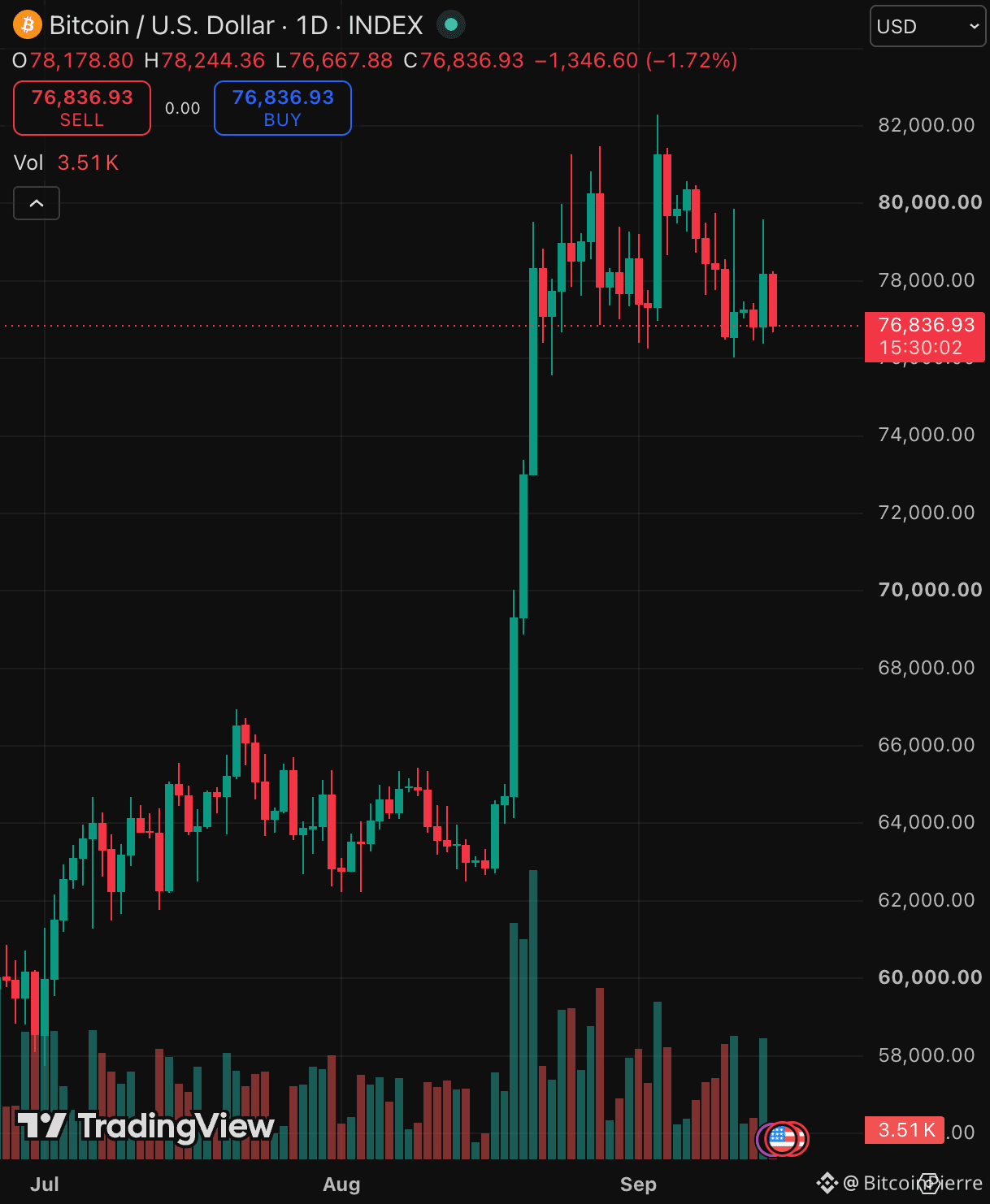
Bitcoin tergelincir di bawah level $77.000 telah memicu gelombang penjualan paksa lainnya, dengan laporan menunjukkan sekitar $95,34M posisi long kripto telah dilikuidasi dalam 12 jam terakhir. Pergerakan ini menyoroti seberapa besar leverage masih bertumpu di pasar. Ketika BTC menembus support kunci, posisi long yang terlalu ter-leverage dapat ditutup secara otomatis, menambah tekanan jual dan mempercepat penurunan. Area $77K baru-baru ini menjadi level penting bagi BTC. Bitcoin berulang kali menemukan pembeli di sekitar zona ini, jadi jika level itu hilang, wilayah $75K bisa kembali masuk perhatian para trader. Data derivatif saat ini juga menunjukkan adanya eksposur likuidasi yang signifikan mulai terbentuk di bawah $75K. Namun, itu tidak otomatis berarti pemulihan yang lebih luas sudah berakhir. Pembersihan likuidasi yang tajam dapat menghapus leverage berlebih dan memberi kesempatan bagi pembeli untuk membangun kembali posisi. Long senilai $95M+ sudah hilang. Kini kuncinya apakah BTC merebut kembali $77K atau mulai mencari support yang lebih rendah. #Analisis Harga BTC# #Musim Altcoin# $BTC
Bitcoin tergelincir di bawah level $77.000 telah memicu gelombang penjualan paksa lainnya, dengan laporan menunjukkan sekitar $95,34M posisi long kripto telah dilikuidasi dalam 12 jam terakhir. Pergerakan ini menyoroti seberapa besar leverage masih bertumpu di pasar. Ketika BTC menembus support kunci, posisi long yang terlalu ter-leverage dapat ditutup secara otomatis, menambah tekanan jual dan mempercepat penurunan. Area $77K baru-baru ini menjadi level penting bagi BTC. Bitcoin berulang kali menemukan pembeli di sekitar zona ini, jadi jika level itu hilang, wilayah $75K bisa kembali masuk perhatian para trader. Data derivatif saat ini juga menunjukkan adanya eksposur likuidasi yang signifikan mulai terbentuk di bawah $75K. Namun, itu tidak otomatis berarti pemulihan yang lebih luas sudah berakhir. Pembersihan likuidasi yang tajam dapat menghapus leverage berlebih dan memberi kesempatan bagi pembeli untuk membangun kembali posisi. Long senilai $95M+ sudah hilang. Kini kuncinya apakah BTC merebut kembali $77K atau mulai mencari support yang lebih rendah. #Analisis Harga BTC# #Musim Altcoin# $BTC
61
Lihat terjemahan
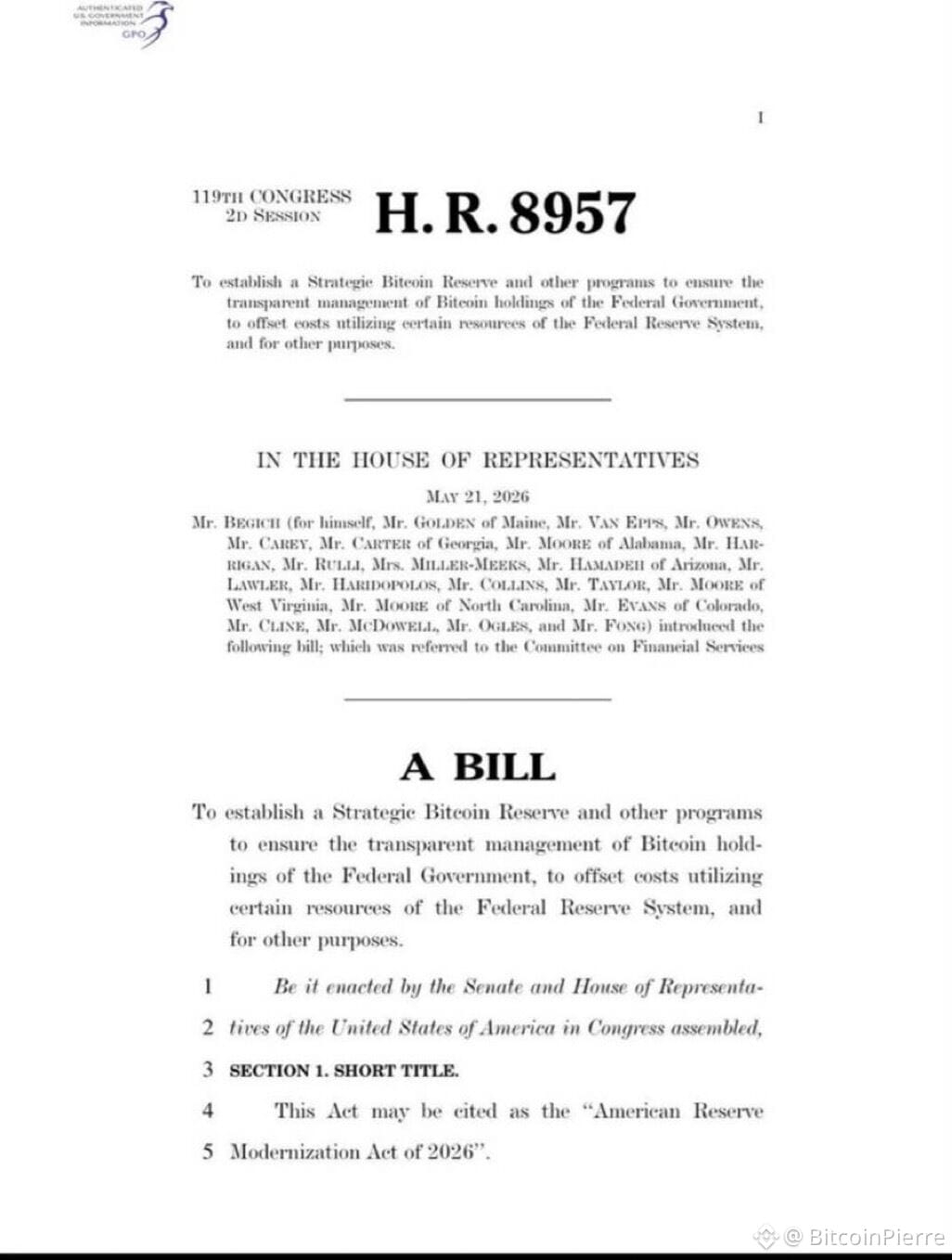
STRATEGIC BITCOIN RESERVE BILL HEADS TO HOUSE COMMITTEE THIS WEDNESDAY The American Reserve Modernization Act (H.R. 8957) is scheduled for review by the House Financial Services Committee on September 16. The bill would put Bitcoin already held by the U.S. government into a legally protected Strategic Bitcoin Reserve for 20 years, preventing the government from selling or trading those BTC during that period. It would also require quarterly third-party audits of the reserve. What makes this important is that the proposal would turn the existing executive-order framework into something backed by legislation. It is focused primarily on Bitcoin already acquired through government seizures, rather than immediately requiring taxpayers to fund massive new BTC purchases. For Bitcoin, this is another major step in the U.S. treating BTC as a strategic asset rather than simply something the government holds after seizures. The bill still has a long way to go, but Wednesday could be an important moment for the U.S. Bitcoin Reserve. #BTC Price Analysis# #BTC Above 60K# $BTC $ETH
STRATEGIC BITCOIN RESERVE BILL HEADS TO HOUSE COMMITTEE THIS WEDNESDAY The American Reserve Modernization Act (H.R. 8957) is scheduled for review by the House Financial Services Committee on September 16. The bill would put Bitcoin already held by the U.S. government into a legally protected Strategic Bitcoin Reserve for 20 years, preventing the government from selling or trading those BTC during that period. It would also require quarterly third-party audits of the reserve. What makes this important is that the proposal would turn the existing executive-order framework into something backed by legislation. It is focused primarily on Bitcoin already acquired through government seizures, rather than immediately requiring taxpayers to fund massive new BTC purchases. For Bitcoin, this is another major step in the U.S. treating BTC as a strategic asset rather than simply something the government holds after seizures. The bill still has a long way to go, but Wednesday could be an important moment for the U.S. Bitcoin Reserve. #BTC Price Analysis# #BTC Above 60K# $BTC $ETH

71
Lihat terjemahan
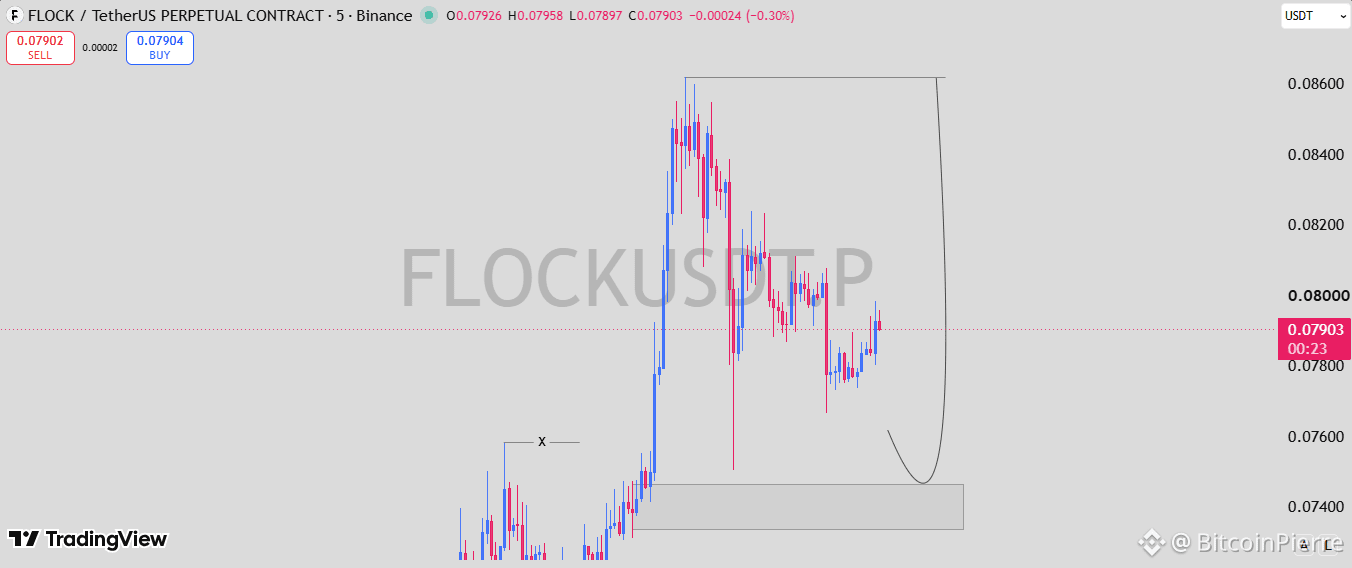
$FLOCK CONSOLIDATES AFTER THE SURGE, $0.074–$0.075 IS THE KEY LEVEL FLOCK is consolidating around $0.079 after a powerful impulsive move that took price from the $0.074–$0.075 area to nearly $0.086. Since that spike, price has been gradually cooling off, forming lower highs while holding above the marked demand zone. The important structure sits around $0.0735–$0.075, where the previous breakout originated. If FLOCK retraces into this zone and buyers defend it, the pullback could become a healthy retest rather than a trend reversal. A strong reaction there could put $0.080, $0.084 and eventually $0.086 back in focus. However, the short-term structure remains vulnerable while price stays below the recent high. A decisive loss of the $0.0735 area would weaken the continuation setup and increase the probability of a deeper retracement. $FLOCK has also experienced extreme volatility recently, with historical data showing several double-digit daily moves. #BTC Price Analysis# #Macro Insights#
$FLOCK CONSOLIDATES AFTER THE SURGE, $0.074–$0.075 IS THE KEY LEVEL FLOCK is consolidating around $0.079 after a powerful impulsive move that took price from the $0.074–$0.075 area to nearly $0.086. Since that spike, price has been gradually cooling off, forming lower highs while holding above the marked demand zone. The important structure sits around $0.0735–$0.075, where the previous breakout originated. If FLOCK retraces into this zone and buyers defend it, the pullback could become a healthy retest rather than a trend reversal. A strong reaction there could put $0.080, $0.084 and eventually $0.086 back in focus. However, the short-term structure remains vulnerable while price stays below the recent high. A decisive loss of the $0.0735 area would weaken the continuation setup and increase the probability of a deeper retracement. $FLOCK has also experienced extreme volatility recently, with historical data showing several double-digit daily moves. #BTC Price Analysis# #Macro Insights#
25
Lihat terjemahan
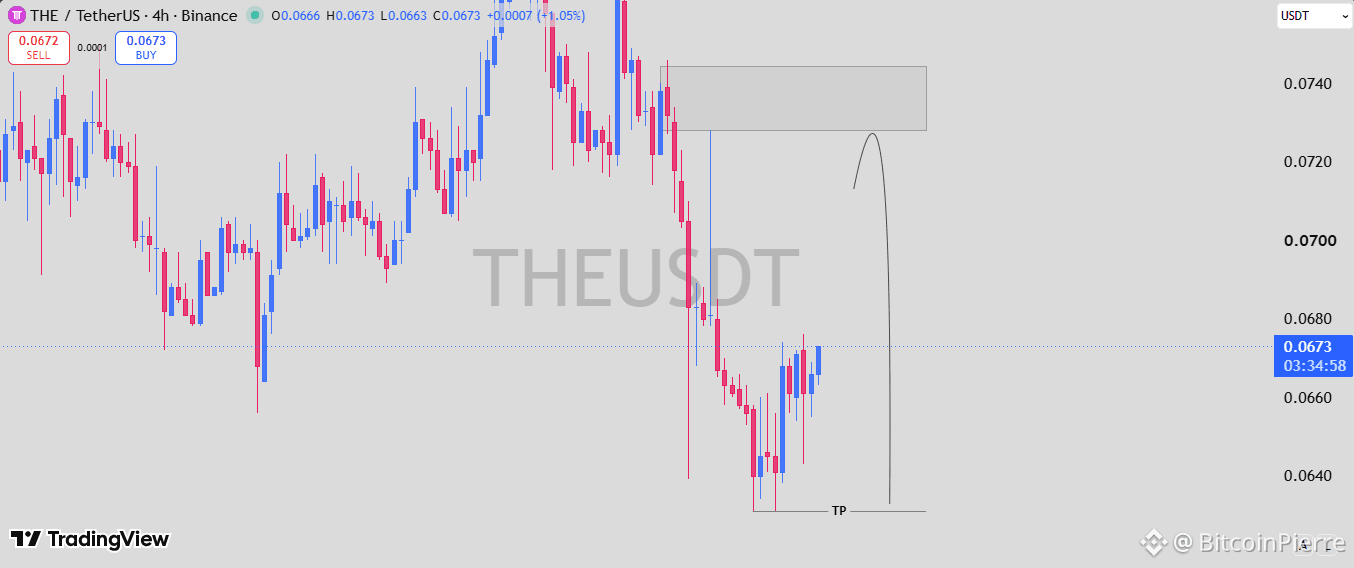
$THE BOUNCES FROM $0.064, BUT MAJOR SUPPLY IS STILL ABOVE $THE is attempting to recover after a sharp sell-off on the 4H chart. Price dropped from the $0.073–$0.075 region and eventually found support around $0.063–$0.064, where buyers have started producing a short-term rebound toward $0.0673. The recovery is notable, but the larger structure still faces resistance overhead. The marked $0.073–$0.075 supply zone remains the key area that bulls need to reclaim before the bearish structure can be meaningfully challenged. If THE continues higher and gets rejected from this supply, the chart suggests another move back toward the $0.063–$0.064 support area. A breakdown below that zone would further strengthen the downside setup. On the other hand, a clean 4H breakout above $0.075 followed by a successful retest would invalidate the immediate rejection scenario and could signal a stronger reversal. For now, the bounce looks like a recovery into resistance rather than a confirmed trend reversal. #BTC Price Analysis# #Macro Insights# #Meme Alpha#
$THE BOUNCES FROM $0.064, BUT MAJOR SUPPLY IS STILL ABOVE $THE is attempting to recover after a sharp sell-off on the 4H chart. Price dropped from the $0.073–$0.075 region and eventually found support around $0.063–$0.064, where buyers have started producing a short-term rebound toward $0.0673. The recovery is notable, but the larger structure still faces resistance overhead. The marked $0.073–$0.075 supply zone remains the key area that bulls need to reclaim before the bearish structure can be meaningfully challenged. If THE continues higher and gets rejected from this supply, the chart suggests another move back toward the $0.063–$0.064 support area. A breakdown below that zone would further strengthen the downside setup. On the other hand, a clean 4H breakout above $0.075 followed by a successful retest would invalidate the immediate rejection scenario and could signal a stronger reversal. For now, the bounce looks like a recovery into resistance rather than a confirmed trend reversal. #BTC Price Analysis# #Macro Insights# #Meme Alpha#
37
Lihat terjemahan
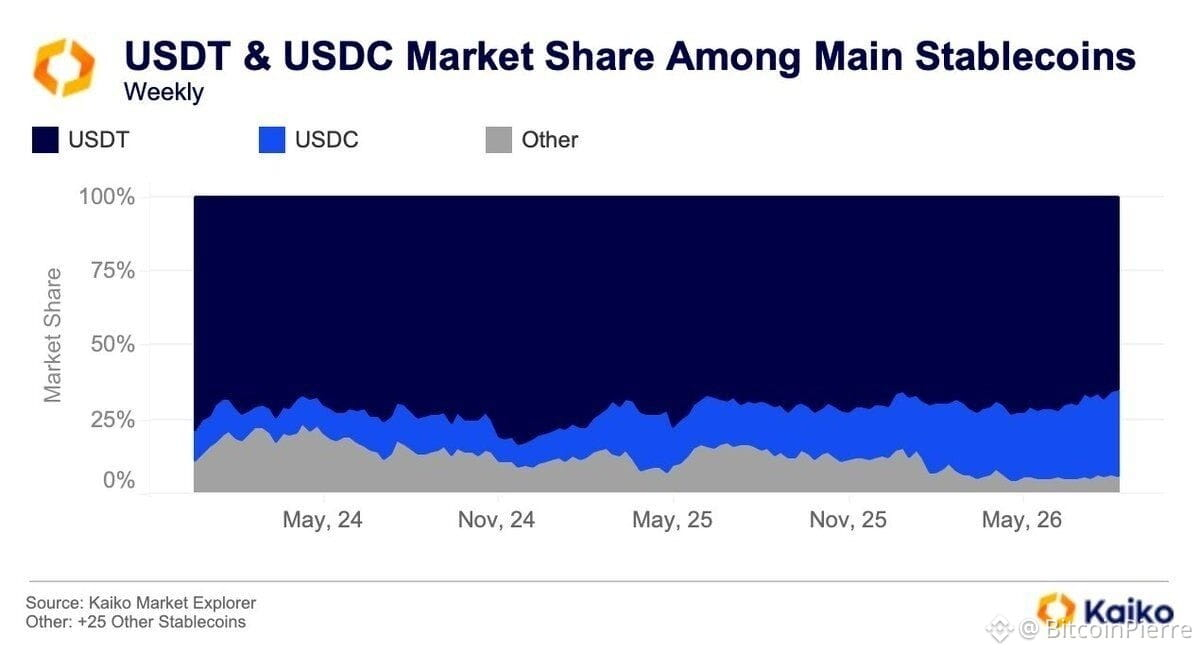
USDT and USDC now dominate the market. Together, Tether’s USDT and Circle’s USDC account for roughly 94% of circulating stablecoin supply, showing just how concentrated the stablecoin market remains. That dominance matters because stablecoins are becoming core infrastructure for trading, payments, DeFi and cross border settlement. The bigger question is whether new stablecoins can meaningfully challenge this duopoly as onchain finance keeps expanding. Two stablecoins still control almost the entire market. #Macro Insights# #StableCoin $USDT $ETH
USDT and USDC now dominate the market. Together, Tether’s USDT and Circle’s USDC account for roughly 94% of circulating stablecoin supply, showing just how concentrated the stablecoin market remains. That dominance matters because stablecoins are becoming core infrastructure for trading, payments, DeFi and cross border settlement. The bigger question is whether new stablecoins can meaningfully challenge this duopoly as onchain finance keeps expanding. Two stablecoins still control almost the entire market. #Macro Insights# #StableCoin $USDT $ETH
47
Lihat terjemahan
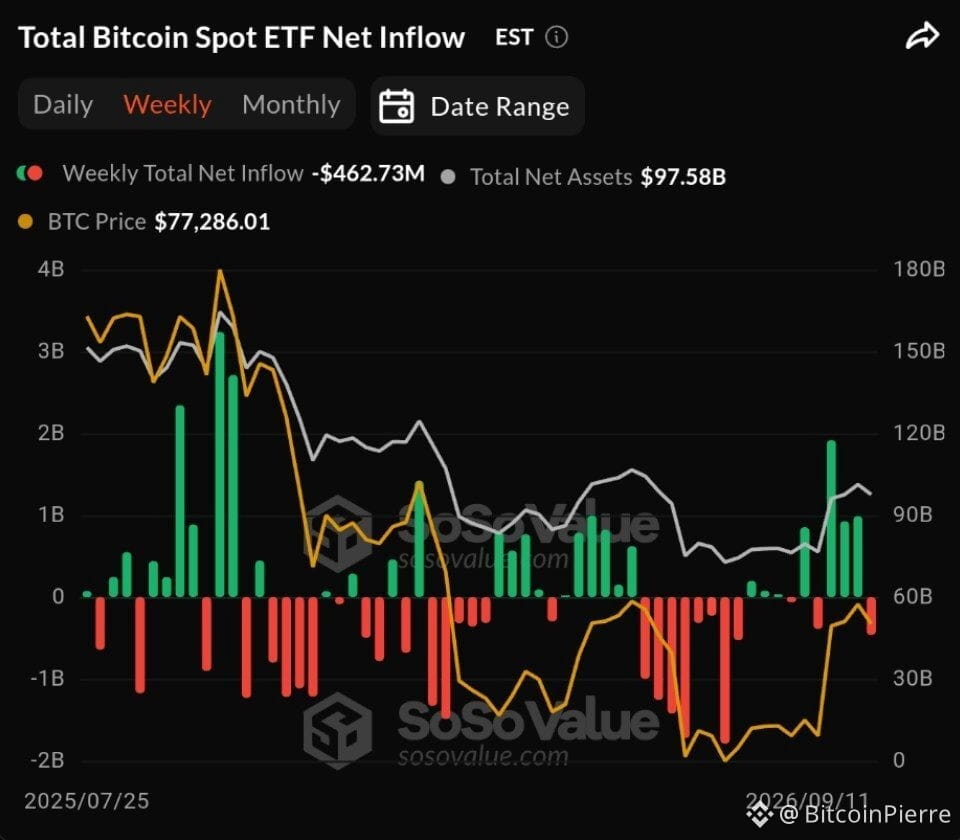
🚨 ETF WATCH: Bitcoin ETFs failed to extend their winning streak. After three consecutive weeks of net inflows, U.S. spot Bitcoin ETFs are now heading toward a fourth week without positive net flows, with several sessions seeing investors pull money out. That’s a notable shift, especially as Ethereum ETFs just recorded their fourth straight week of inflows. The macro backdrop isn’t helping either. Higher inflation and rising expectations for a Fed rate hike have kept pressure on risk assets. For BTC, the key question is whether these ETF outflows are just a temporary reaction to macro uncertainty or the beginning of a broader slowdown in institutional demand. ETH is attracting flows. Bitcoin is losing momentum. That divergence is worth watching. #BTC Price Analysis# #ETF $BTC $ETH
🚨 ETF WATCH: Bitcoin ETFs failed to extend their winning streak. After three consecutive weeks of net inflows, U.S. spot Bitcoin ETFs are now heading toward a fourth week without positive net flows, with several sessions seeing investors pull money out. That’s a notable shift, especially as Ethereum ETFs just recorded their fourth straight week of inflows. The macro backdrop isn’t helping either. Higher inflation and rising expectations for a Fed rate hike have kept pressure on risk assets. For BTC, the key question is whether these ETF outflows are just a temporary reaction to macro uncertainty or the beginning of a broader slowdown in institutional demand. ETH is attracting flows. Bitcoin is losing momentum. That divergence is worth watching. #BTC Price Analysis# #ETF $BTC $ETH
65
Lihat terjemahan
UniCredit is reportedly preparing to launch crypto trading and custody services. Italy’s second-largest bank is moving deeper into digital assets, giving its clients a potential route to buy, sell and hold crypto directly through a traditional banking institution. That’s significant because this isn’t a crypto native company entering finance. It’s an established European bank bringing crypto closer to its existing customer base. UniCredit already has a major presence across Europe, so its move could put further pressure on other banks to develop their own digital-asset offerings. European banking is slowly moving from watching crypto to building around it. #BTC Price Analysis# #Macro Insights# $BTC
UniCredit is reportedly preparing to launch crypto trading and custody services. Italy’s second-largest bank is moving deeper into digital assets, giving its clients a potential route to buy, sell and hold crypto directly through a traditional banking institution. That’s significant because this isn’t a crypto native company entering finance. It’s an established European bank bringing crypto closer to its existing customer base. UniCredit already has a major presence across Europe, so its move could put further pressure on other banks to develop their own digital-asset offerings. European banking is slowly moving from watching crypto to building around it. #BTC Price Analysis# #Macro Insights# $BTC

Lihat terjemahan
Canada just cleared the way for banks to put deposits onchain. Canada’s banking regulator says federally regulated financial institutions can offer tokenized and digitally represented deposits, provided they comply with existing laws and risk-management requirements. The important part is that the regulator is taking a technology-neutral approach: a deposit doesn’t become a different legal product simply because it runs on blockchain. That could open the door for faster settlement, programmable payments and deeper integration between traditional banking and onchain finance. Banks putting deposits onchain could be a much bigger deal than another crypto narrative. #BTC Price Analysis# #Macro Insights# $BTC $ETH
Canada just cleared the way for banks to put deposits onchain. Canada’s banking regulator says federally regulated financial institutions can offer tokenized and digitally represented deposits, provided they comply with existing laws and risk-management requirements. The important part is that the regulator is taking a technology-neutral approach: a deposit doesn’t become a different legal product simply because it runs on blockchain. That could open the door for faster settlement, programmable payments and deeper integration between traditional banking and onchain finance. Banks putting deposits onchain could be a much bigger deal than another crypto narrative. #BTC Price Analysis# #Macro Insights# $BTC $ETH

67
Lihat terjemahan
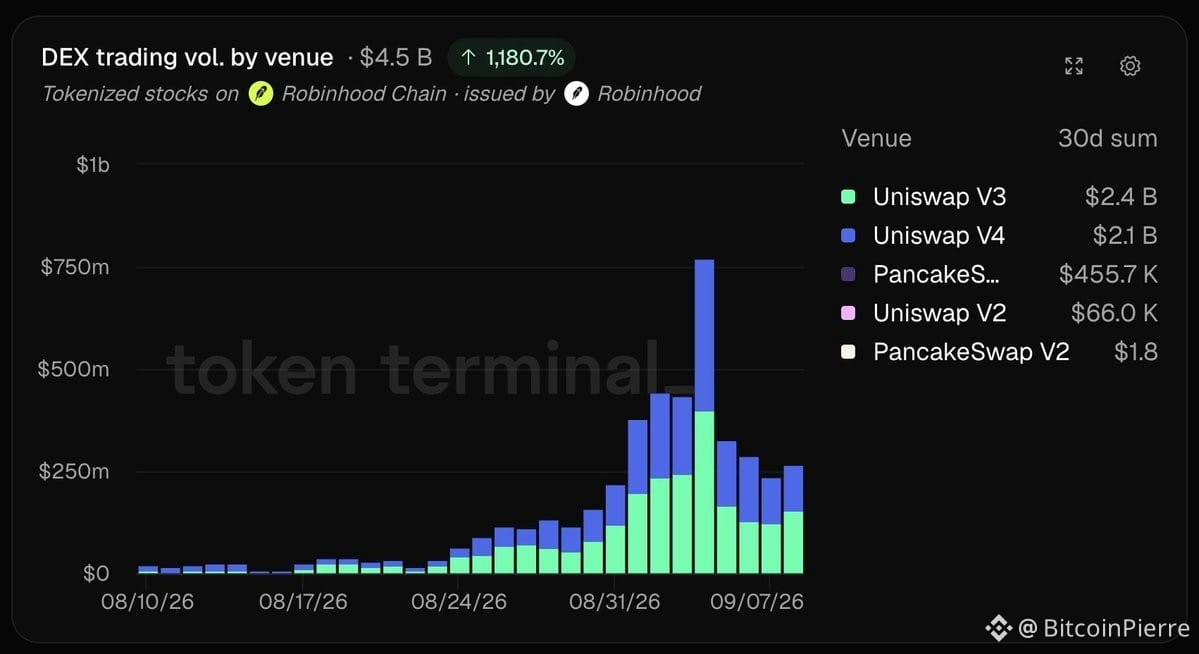
Robinhood’s stock-token ecosystem is seeing billions of dollars in onchain trading activity. Token Terminal data highlights just how quickly tokenized equities are gaining traction across decentralized markets. The growth is happening alongside Robinhood Chain’s rapid expansion, with more than 190 Stock Tokens now available and tokenized equities making up the majority of the network’s tokenized value. #BTC Price Analysis# #Macro Insights# $BTC $ETH
Robinhood’s stock-token ecosystem is seeing billions of dollars in onchain trading activity. Token Terminal data highlights just how quickly tokenized equities are gaining traction across decentralized markets. The growth is happening alongside Robinhood Chain’s rapid expansion, with more than 190 Stock Tokens now available and tokenized equities making up the majority of the network’s tokenized value. #BTC Price Analysis# #Macro Insights# $BTC $ETH
Meluncurkan token adalah satu hal. Memastikan ada jalur yang jelas dari perdagangan pertama menuju likuiditas yang berkelanjutan adalah tantangan yang sama sekali berbeda. Itulah sebabnya integrasi Stonks dengan Stonfi menarik perhatian saya. Stonks menghadirkan peluncuran token, custom bonding curves, seeding likuiditas, dan presales ke dalam satu ekosistem, sementara stonfi menyediakan infrastruktur likuiditas di sisi lain. Bagian pentingnya adalah apa yang terjadi di antara tahapan tersebut. Token yang diluncurkan melalui bonding curves bisa langsung lulus ke pool Stonfi, memungkinkan likuiditas terus bergerak maju alih-alih memaksa tim untuk membangun ulang prosesnya secara manual. Para builder juga dapat menyediakan likuiditas ke pool Stonfi secara langsung. Bagi pengguna, integrasi ini menambah lapisan aksesibilitas. Token STON.fi dapat ditukar melalui terminal Stonks dan bot Telegram, sementara Omniston dapat menyediakan rute yang dioptimalkan sebelum migrasi. Ini adalah jenis koneksi infrastruktur yang dapat membuat ekosistem DeFi TON lebih mudah disusun: peluncuran, likuiditas, dan perdagangan menjadi bagian dari satu alur yang sama, bukan produk yang terisolasi. #BTC Price Analysis# #Macro Insights# $BTC $ETH
Meluncurkan token adalah satu hal. Memastikan ada jalur yang jelas dari perdagangan pertama menuju likuiditas yang berkelanjutan adalah tantangan yang sama sekali berbeda. Itulah sebabnya integrasi Stonks dengan Stonfi menarik perhatian saya. Stonks menghadirkan peluncuran token, custom bonding curves, seeding likuiditas, dan presales ke dalam satu ekosistem, sementara stonfi menyediakan infrastruktur likuiditas di sisi lain. Bagian pentingnya adalah apa yang terjadi di antara tahapan tersebut. Token yang diluncurkan melalui bonding curves bisa langsung lulus ke pool Stonfi, memungkinkan likuiditas terus bergerak maju alih-alih memaksa tim untuk membangun ulang prosesnya secara manual. Para builder juga dapat menyediakan likuiditas ke pool Stonfi secara langsung. Bagi pengguna, integrasi ini menambah lapisan aksesibilitas. Token STON.fi dapat ditukar melalui terminal Stonks dan bot Telegram, sementara Omniston dapat menyediakan rute yang dioptimalkan sebelum migrasi. Ini adalah jenis koneksi infrastruktur yang dapat membuat ekosistem DeFi TON lebih mudah disusun: peluncuran, likuiditas, dan perdagangan menjadi bagian dari satu alur yang sama, bukan produk yang terisolasi. #BTC Price Analysis# #Macro Insights# $BTC $ETH
65
Lihat terjemahan
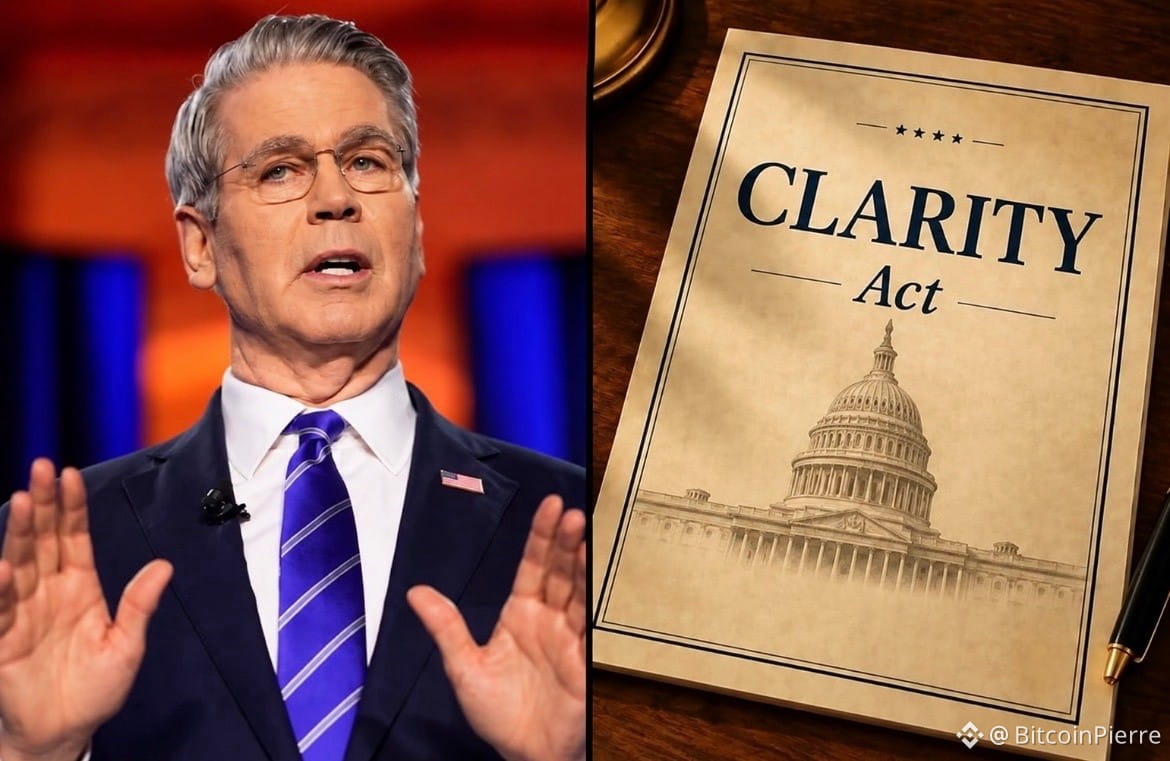
Treasury Secretary Scott Bessent is pushing lawmakers to advance the CLARITY Act, warning that failing to act would signal that the U.S. is unwilling to lead the future of digital assets. The timing is important. The Senate is preparing for a key procedural vote on the bill on September 15, while crypto and banking groups are intensifying their lobbying efforts. The CLARITY Act is designed to establish a clearer regulatory framework for digital assets, including defining which tokens and activities fall under different federal regulators. Supporters argue that clearer rules could give crypto companies more certainty and encourage innovation to remain in the U.S. But the bill still faces significant opposition, including concerns around consumer protection, illicit finance and its potential impact on the banking sector. For crypto markets, this is bigger than another Washington debate. Clearer legislation could reduce one of the industry’s biggest uncertainties: who regulates what. If the Senate moves the bill forward, it could become a major catalyst for the U.S. crypto industry. If lawmakers fail to reach a deal, the uncertainty continues. The next major test comes September 15. #BTC Price Analysis# #Macro Insights# $BTC $ETH
Treasury Secretary Scott Bessent is pushing lawmakers to advance the CLARITY Act, warning that failing to act would signal that the U.S. is unwilling to lead the future of digital assets. The timing is important. The Senate is preparing for a key procedural vote on the bill on September 15, while crypto and banking groups are intensifying their lobbying efforts. The CLARITY Act is designed to establish a clearer regulatory framework for digital assets, including defining which tokens and activities fall under different federal regulators. Supporters argue that clearer rules could give crypto companies more certainty and encourage innovation to remain in the U.S. But the bill still faces significant opposition, including concerns around consumer protection, illicit finance and its potential impact on the banking sector. For crypto markets, this is bigger than another Washington debate. Clearer legislation could reduce one of the industry’s biggest uncertainties: who regulates what. If the Senate moves the bill forward, it could become a major catalyst for the U.S. crypto industry. If lawmakers fail to reach a deal, the uncertainty continues. The next major test comes September 15. #BTC Price Analysis# #Macro Insights# $BTC $ETH
36
Lihat terjemahan
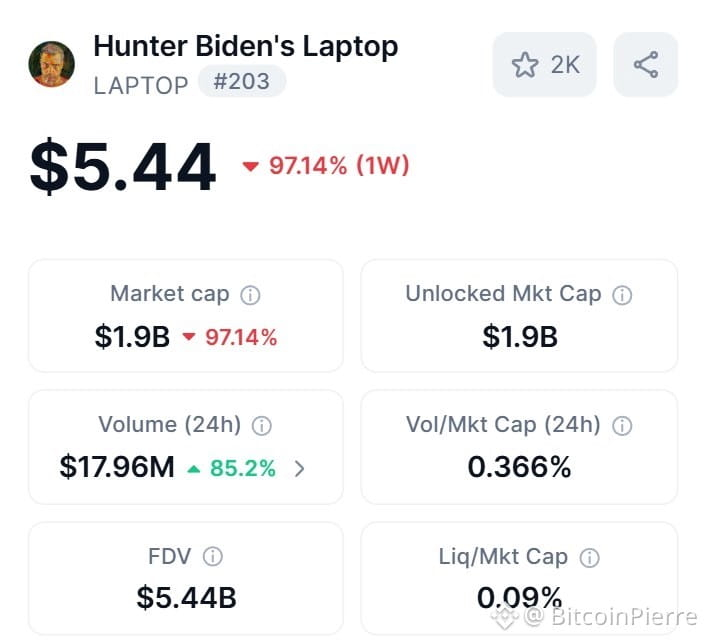
$LAPTOP entered the market with a highly controversial narrative, including a planned community allocation for people who lost money on $TRUMP . But even a strong story cannot guarantee sustained buying pressure. The bigger lesson is the same one the market keeps repeating: viral attention is not the same as lasting demand. $LAPTOP went from political spectacle to a 97%+ drawdown extremely fast. Now the question is whether buyers step back in, or whether the launch becomes another example of why chasing memecoin hype can be extremely dangerous. #BTC Price Analysis#
$LAPTOP entered the market with a highly controversial narrative, including a planned community allocation for people who lost money on $TRUMP . But even a strong story cannot guarantee sustained buying pressure. The bigger lesson is the same one the market keeps repeating: viral attention is not the same as lasting demand. $LAPTOP went from political spectacle to a 97%+ drawdown extremely fast. Now the question is whether buyers step back in, or whether the launch becomes another example of why chasing memecoin hype can be extremely dangerous. #BTC Price Analysis#
39
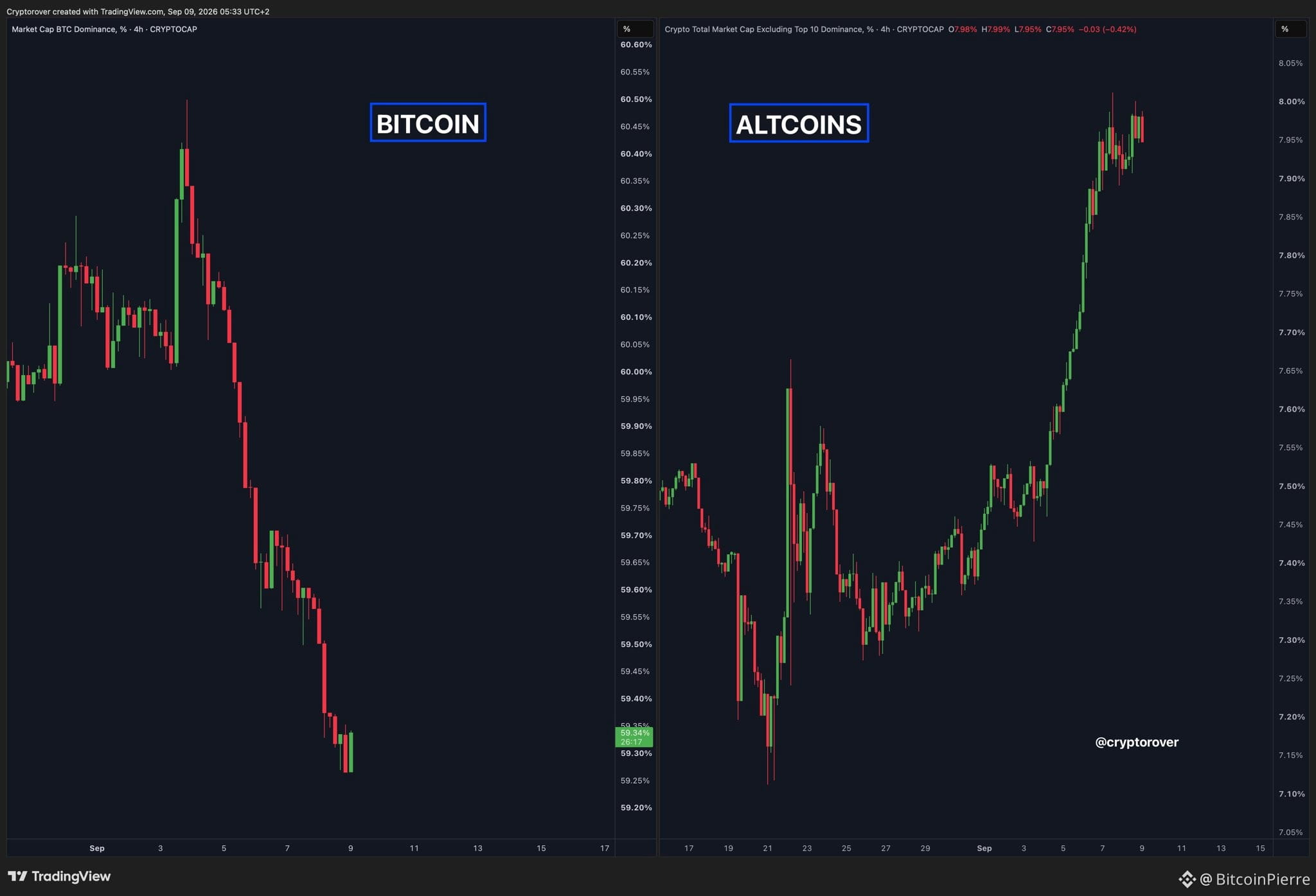
Dominasi Bitcoin mulai melemah sementara altcoin mengambil kembali pangsa pasar. Ini adalah jenis pengaturan yang dipantau trader ketika mencari potensi pergeseran dari musim Bitcoin ke altseason. Saat ini BTC masih berada di sekitar area $79K setelah mundur dari level tertinggi pekan lalu, sementara beberapa bagian pasar altcoin menunjukkan kinerja relatif yang lebih kuat. Menurunnya dominasi BTC saja tidak otomatis menjamin altseason. Sinyal yang lebih kuat muncul ketika dominasi BTC turun sementara kapitalisasi pasar total kripto terus meningkat, yang berarti modal benar-benar berputar ke aset dengan beta lebih tinggi, bukan sekadar keluar dari pasar. #Analisis Harga BTC# #Musim Altcoin# $ZEC $ARB
Dominasi Bitcoin mulai melemah sementara altcoin mengambil kembali pangsa pasar. Ini adalah jenis pengaturan yang dipantau trader ketika mencari potensi pergeseran dari musim Bitcoin ke altseason. Saat ini BTC masih berada di sekitar area $79K setelah mundur dari level tertinggi pekan lalu, sementara beberapa bagian pasar altcoin menunjukkan kinerja relatif yang lebih kuat. Menurunnya dominasi BTC saja tidak otomatis menjamin altseason. Sinyal yang lebih kuat muncul ketika dominasi BTC turun sementara kapitalisasi pasar total kripto terus meningkat, yang berarti modal benar-benar berputar ke aset dengan beta lebih tinggi, bukan sekadar keluar dari pasar. #Analisis Harga BTC# #Musim Altcoin# $ZEC $ARB
53
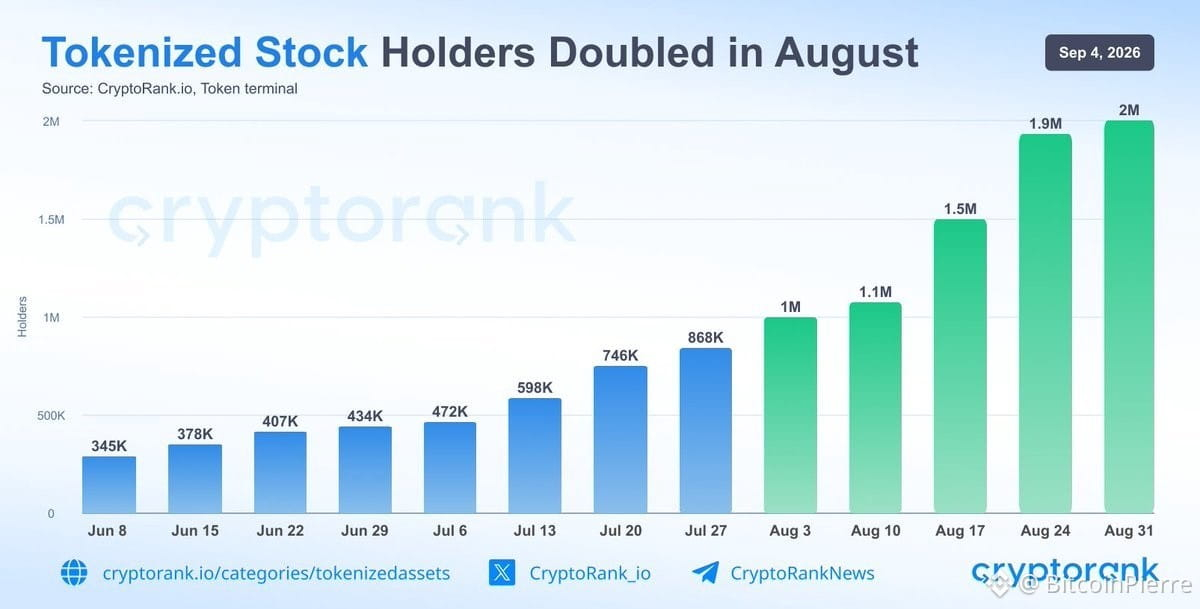
Pemegang saham token terpecah dua kali lipat pada bulan Agustus, mencapai 2 juta. Menurut data CryptoRank, jumlah dompet yang memegang saham token melonjak dari sekitar 1 juta menjadi 2 juta hanya dalam satu bulan. Ini merupakan percepatan yang signifikan untuk kelas aset yang masih relatif baru di pasar yang lebih luas. Yang lebih menarik lagi adalah di mana aktivitas tersebut terkonsentrasi. Robinhood Chain, BNB Chain, dan Solana menyumbang sekitar 95% dari seluruh pemegang saham token, menunjukkan bahwa hanya segelintir jaringan yang saat ini menangkap sebagian besar permintaan. Pertumbuhan ini juga terjadi seiring ekuitas token bergerak melampaui sekadar meniru saham tradisional di ranah onchain. Perdagangan menjadi salah satu kasus penggunaan terbesar, dengan volume spot mingguan ekuitas token mencapai hampir $3 miliar pada awal Agustus dan TVL onchain melampaui $110 juta pada akhir Agustus. Namun adopsi masih hanya sebagian dari cerita. Tahap berikutnya adalah apakah aset token ini menjadi berguna sebagai agunan, dalam aktivitas pinjaman, dan di berbagai aplikasi DeFi yang lebih luas. #BTC Price Analysis# #Altcoin Season# $BTC $BNB
Pemegang saham token terpecah dua kali lipat pada bulan Agustus, mencapai 2 juta. Menurut data CryptoRank, jumlah dompet yang memegang saham token melonjak dari sekitar 1 juta menjadi 2 juta hanya dalam satu bulan. Ini merupakan percepatan yang signifikan untuk kelas aset yang masih relatif baru di pasar yang lebih luas. Yang lebih menarik lagi adalah di mana aktivitas tersebut terkonsentrasi. Robinhood Chain, BNB Chain, dan Solana menyumbang sekitar 95% dari seluruh pemegang saham token, menunjukkan bahwa hanya segelintir jaringan yang saat ini menangkap sebagian besar permintaan. Pertumbuhan ini juga terjadi seiring ekuitas token bergerak melampaui sekadar meniru saham tradisional di ranah onchain. Perdagangan menjadi salah satu kasus penggunaan terbesar, dengan volume spot mingguan ekuitas token mencapai hampir $3 miliar pada awal Agustus dan TVL onchain melampaui $110 juta pada akhir Agustus. Namun adopsi masih hanya sebagian dari cerita. Tahap berikutnya adalah apakah aset token ini menjadi berguna sebagai agunan, dalam aktivitas pinjaman, dan di berbagai aplikasi DeFi yang lebih luas. #BTC Price Analysis# #Altcoin Season# $BTC $BNB
46
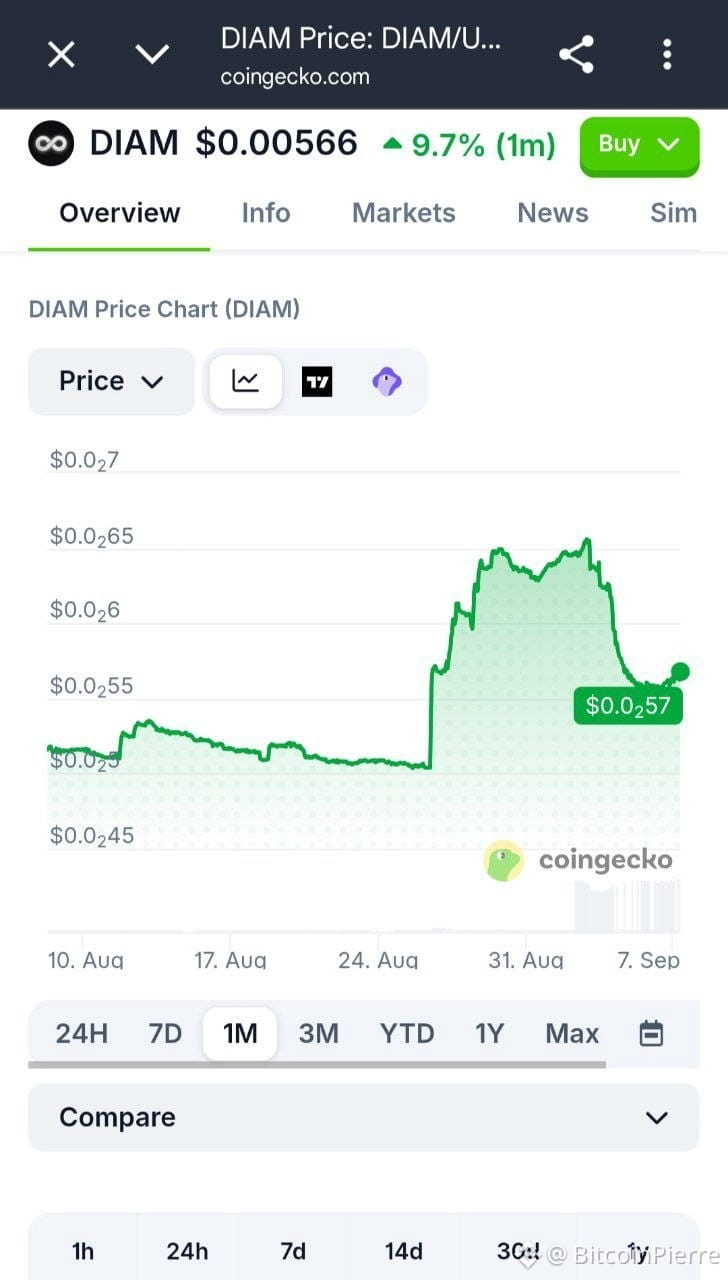
BTC terus menjadi penentu arah untuk pasar yang lebih luas, namun beberapa altcoin mulai menunjukkan tanda-tanda kekuatan yang baru. $DIAM adalah salah satunya, saat ini diperdagangkan sekitar $0.00566. Dengan kenaikan lebih dari 9% dalam sebulan terakhir, para pembeli tampaknya perlahan kembali masuk setelah konsolidasi terbaru. Level resistensi berikutnya adalah tempat di mana semuanya bisa menjadi menarik. Tembusan yang bersih disertai volume yang kuat akan memberi pergerakan tersebut lebih banyak kredibilitas dan dapat membuka peluang untuk kenaikan lebih lanjut. Untuk saat ini, tidak perlu memaksakan narasinya. Biarkan grafik yang mengonfirmasi pergerakan. @Diam #Analisis Harga BTC# #Wawasan Makro# $TAO
BTC terus menjadi penentu arah untuk pasar yang lebih luas, namun beberapa altcoin mulai menunjukkan tanda-tanda kekuatan yang baru. $DIAM adalah salah satunya, saat ini diperdagangkan sekitar $0.00566. Dengan kenaikan lebih dari 9% dalam sebulan terakhir, para pembeli tampaknya perlahan kembali masuk setelah konsolidasi terbaru. Level resistensi berikutnya adalah tempat di mana semuanya bisa menjadi menarik. Tembusan yang bersih disertai volume yang kuat akan memberi pergerakan tersebut lebih banyak kredibilitas dan dapat membuka peluang untuk kenaikan lebih lanjut. Untuk saat ini, tidak perlu memaksakan narasinya. Biarkan grafik yang mengonfirmasi pergerakan. @Diam #Analisis Harga BTC# #Wawasan Makro# $TAO
70
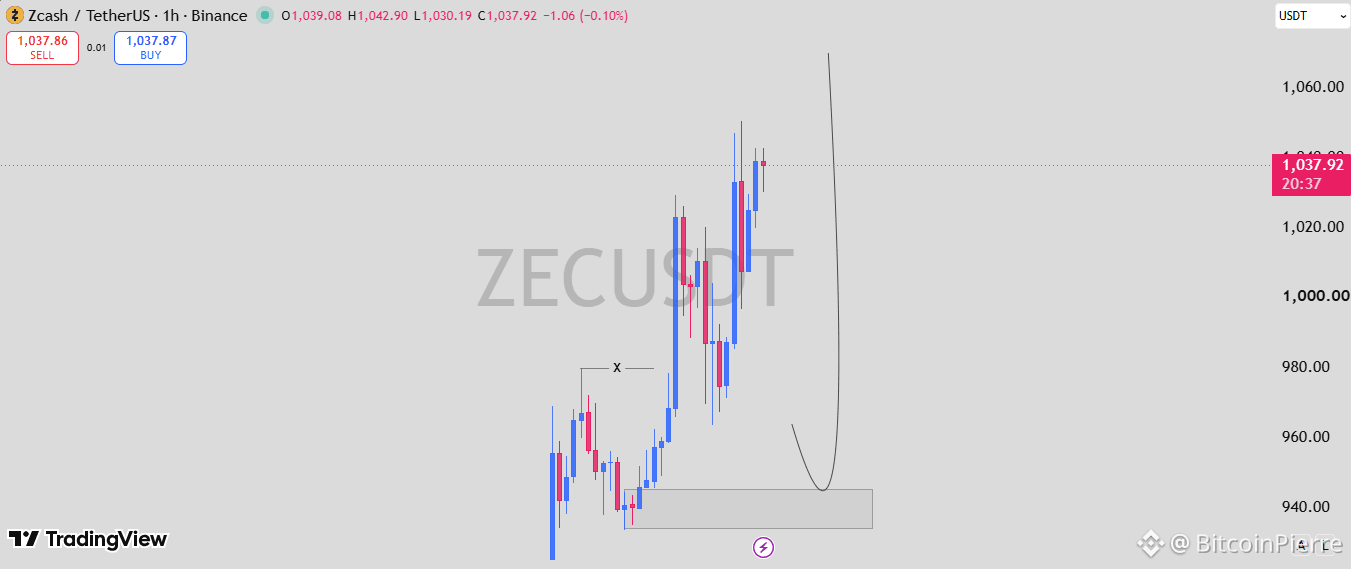
$ZEC BREAKS ABOVE $1,000 AS BUYERS TARGET A NEW HIGHER RANGE Zcash menunjukkan momentum agresif pada chart 1H, dengan ZEC naik dari zona permintaan $940–$950 dan merebut kembali level psikologis $1,000. Struktur ini jelas bullish dalam jangka pendek, dengan harga mencetak higher highs dan higher lows setelah konsolidasi sebelumnya. Pertanyaan langsungnya adalah apakah ZEC dapat mempertahankan breakout atau perlu pengujian ulang (retest) lagi. Harga sudah menembus ke area $1,030–$1,040, jadi wajar jika terjadi pengambilan profit di level-level tersebut setelah pergerakan yang panjang seperti itu. Zona permintaan $935–$950 yang ditandai tetap menjadi area kunci yang perlu dipantau setiap terjadi retracement. Jika pembeli mempertahankannya, struktur saat ini dapat mendukung kelanjutan menuju $1,060 dan berpotensi lebih tinggi. Namun, jika $935 hilang, setup bullish akan melemah dan mengindikasikan koreksi yang lebih dalam. Pergerakan yang lebih luas juga signifikan; ZEC telah menguat kuat selama beberapa sesi terakhir, dengan data terbaru menunjukkan kenaikan harian yang besar dan aktivitas perdagangan yang meningkat. #Zcash
$ZEC BREAKS ABOVE $1,000 AS BUYERS TARGET A NEW HIGHER RANGE Zcash menunjukkan momentum agresif pada chart 1H, dengan ZEC naik dari zona permintaan $940–$950 dan merebut kembali level psikologis $1,000. Struktur ini jelas bullish dalam jangka pendek, dengan harga mencetak higher highs dan higher lows setelah konsolidasi sebelumnya. Pertanyaan langsungnya adalah apakah ZEC dapat mempertahankan breakout atau perlu pengujian ulang (retest) lagi. Harga sudah menembus ke area $1,030–$1,040, jadi wajar jika terjadi pengambilan profit di level-level tersebut setelah pergerakan yang panjang seperti itu. Zona permintaan $935–$950 yang ditandai tetap menjadi area kunci yang perlu dipantau setiap terjadi retracement. Jika pembeli mempertahankannya, struktur saat ini dapat mendukung kelanjutan menuju $1,060 dan berpotensi lebih tinggi. Namun, jika $935 hilang, setup bullish akan melemah dan mengindikasikan koreksi yang lebih dalam. Pergerakan yang lebih luas juga signifikan; ZEC telah menguat kuat selama beberapa sesi terakhir, dengan data terbaru menunjukkan kenaikan harian yang besar dan aktivitas perdagangan yang meningkat. #Zcash
43
Lihat terjemahan
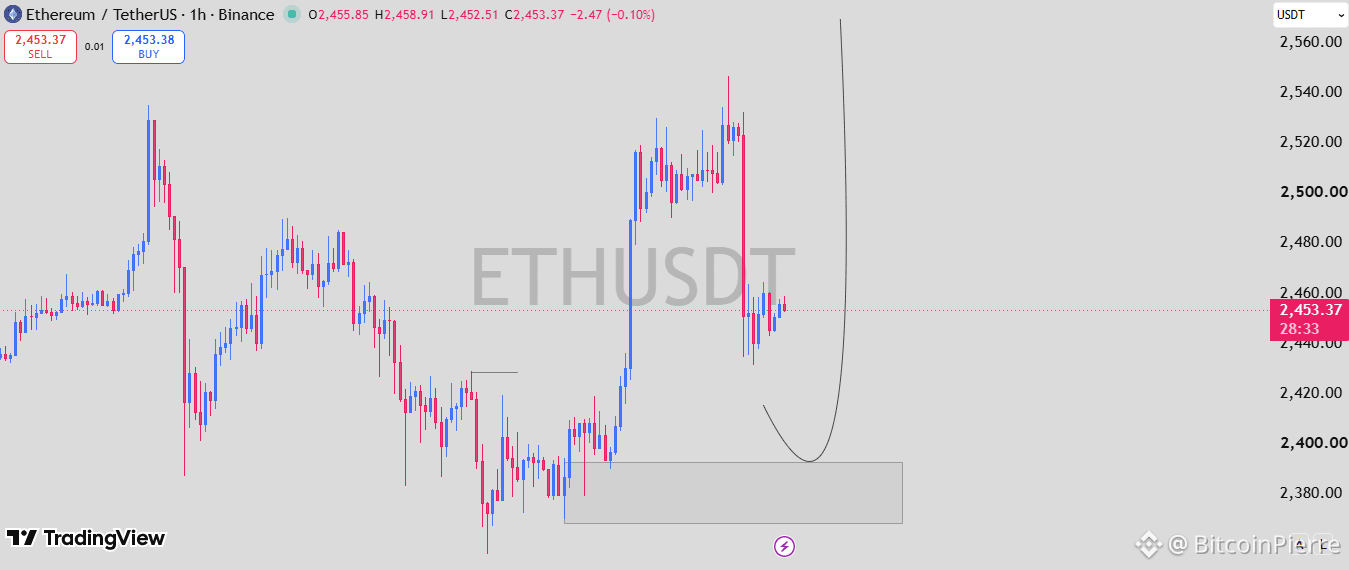
Ethereum is consolidating around $2,453 after a sharp rejection from the $2,520–$2,540 region. The 1H chart shows an aggressive impulsive move followed by a fast retracement, but buyers have managed to stabilize price around the $2,450 area rather than allowing a deeper breakdown. The key structure is the marked $2,370–$2,400 demand zone. This remains the area I would watch for a potential continuation setup. If $ETH retraces into this zone and buyers step in, the current higher low structure could support another attempt toward $2,520–$2,540, with $2,560 becoming the next major breakout level. A clean break above $2,560 would strengthen the bullish continuation scenario. However, losing $2,370 would significantly weaken the setup and suggest that the recent rally needs a deeper correction. This is also consistent with the broader market structure, where $2,550 remains a major resistance level while $2,438 has been identified as important support. #BTC Price Analysis# #Ethereum
Ethereum is consolidating around $2,453 after a sharp rejection from the $2,520–$2,540 region. The 1H chart shows an aggressive impulsive move followed by a fast retracement, but buyers have managed to stabilize price around the $2,450 area rather than allowing a deeper breakdown. The key structure is the marked $2,370–$2,400 demand zone. This remains the area I would watch for a potential continuation setup. If $ETH retraces into this zone and buyers step in, the current higher low structure could support another attempt toward $2,520–$2,540, with $2,560 becoming the next major breakout level. A clean break above $2,560 would strengthen the bullish continuation scenario. However, losing $2,370 would significantly weaken the setup and suggest that the recent rally needs a deeper correction. This is also consistent with the broader market structure, where $2,550 remains a major resistance level while $2,438 has been identified as important support. #BTC Price Analysis# #Ethereum
29
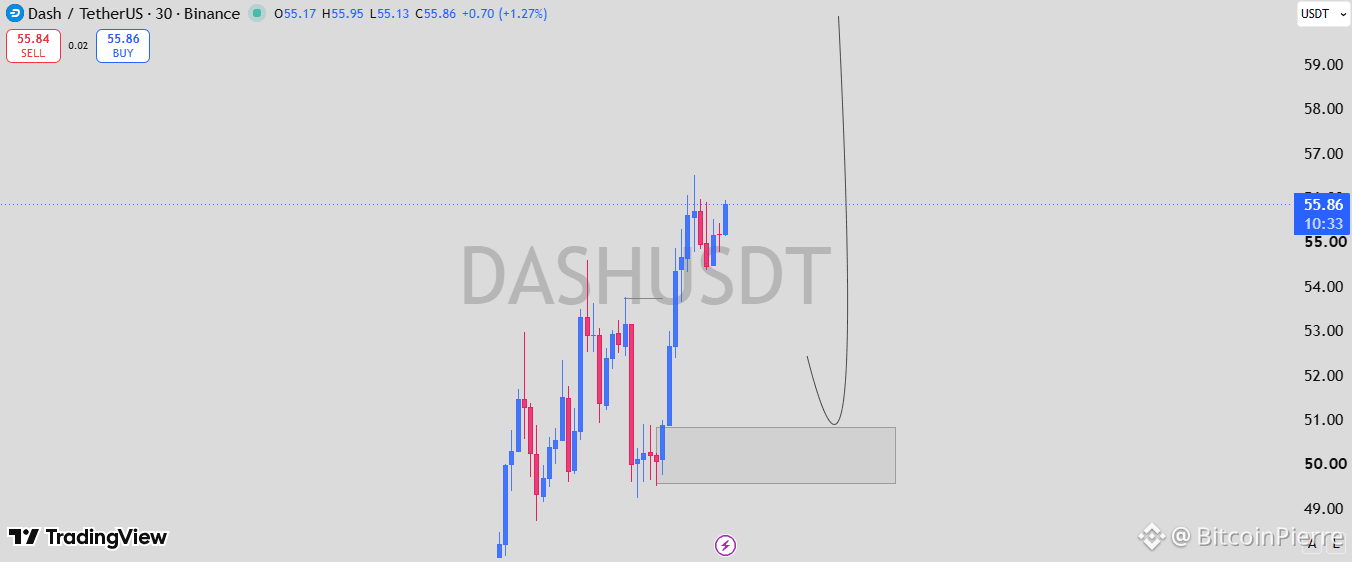
DASH MENGUASAI RALLY, TAPI $51–$50 ADALAH ZONA RETEST YANG MENJADI KUNCI $DASH sedang mempertahankan tren naik jangka pendek yang kuat pada chart 30 menit, saat ini diperdagangkan sekitar $55,86 setelah rangkaian higher highs dan higher lows. Perkembangan penting adalah pergerakan impulsif dari zona demand $50–$51, yang kini telah mendorong harga mendekati area $56. Namun, setelah ekspansi yang tajam seperti itu, koreksi/pullback tidak selalu berarti struktur bullish menjadi tidak valid. Zona demand yang ditandai $49,8–$50,9 adalah area utama yang perlu dipantau jika harga melakukan retracement. Reaksi yang terkendali di sana dapat menjadi landasan untuk dorongan berikutnya menuju $57–$59. Setup menjadi lebih lemah jika $DASH kehilangan zona demand tersebut secara tegas, terutama dengan perdagangan yang terus-menerus berada di bawah $49,80. Itu akan menunjukkan bahwa breakout terbaru mulai kehilangan momentum dan bisa memicu koreksi yang lebih dalam. Karena DASH juga mengalami momentum pasar yang luar biasa kuat hari ini, volatilitas kemungkinan akan tetap tinggi. #BTC Price Analysis# #DASH #Macro Insights#
DASH MENGUASAI RALLY, TAPI $51–$50 ADALAH ZONA RETEST YANG MENJADI KUNCI $DASH sedang mempertahankan tren naik jangka pendek yang kuat pada chart 30 menit, saat ini diperdagangkan sekitar $55,86 setelah rangkaian higher highs dan higher lows. Perkembangan penting adalah pergerakan impulsif dari zona demand $50–$51, yang kini telah mendorong harga mendekati area $56. Namun, setelah ekspansi yang tajam seperti itu, koreksi/pullback tidak selalu berarti struktur bullish menjadi tidak valid. Zona demand yang ditandai $49,8–$50,9 adalah area utama yang perlu dipantau jika harga melakukan retracement. Reaksi yang terkendali di sana dapat menjadi landasan untuk dorongan berikutnya menuju $57–$59. Setup menjadi lebih lemah jika $DASH kehilangan zona demand tersebut secara tegas, terutama dengan perdagangan yang terus-menerus berada di bawah $49,80. Itu akan menunjukkan bahwa breakout terbaru mulai kehilangan momentum dan bisa memicu koreksi yang lebih dalam. Karena DASH juga mengalami momentum pasar yang luar biasa kuat hari ini, volatilitas kemungkinan akan tetap tinggi. #BTC Price Analysis# #DASH #Macro Insights#
47
Masuk untuk menjelajahi konten lainnya
Bergabunglah dengan pengguna kripto global di Binance Square
⚡️ Dapatkan informasi terbaru dan berguna tentang kripto.
💬 Dipercayai oleh bursa kripto terbesar di dunia.
👍 Temukan wawasan nyata dari kreator terverifikasi.
Email/Nomor Ponsel
Topik Sedang Tren
BitcoinSurpasses$77000
177 penayangan
31 Berdiskusi
🚨$BTC Pembaruan ‼️ Keputusan Suku Bunga Fed ‼️Dump comic 🚨
Arah utama BTC Bearish 📉 Biarkan memantul menuju 76500-77000
Kita short di area ini
Zona entry: 76.500 – 77.150
Stop-loss: 78.800
Target 🎯
TP1: 75.500
TP2: 74.950
TP3: 74.200
$SOL ,$ETH dan $XRP akan turun dengan retracing Bitcoin
Keputusan Fed dapat menciptakan volatilitas di pasar, jadi hati-hati saat memilih leverage
Selalu DYOR dan jangan pernah invest semua dalam satu trade
Trade di sini 👇👇👇👇👇👇
#FedRateWatch
Panda Traders
·Disukai 9 Kali
·5.3k penayangan
ParadigmDisclosesZECHolding
0 penayangan
0 Berdiskusi
BitcoinETFsShed$450M
13,357 penayangan
118 Berdiskusi