

BitcoinKE
3.3k Posting

BitcoinKE
 Square Terverifikasi+
Laporkan
Blokir Pengguna
BitKE is a leading crypto and Web3 focussed media outlet in Africa publishing daily informative and investment news and content.
1 Mengikuti
28.3K+ Pengikut
5.0K+ Disukai
Posting
Semua
Kuotasi
·
--
Lihat terjemahan
REPORT | Tokenized Asset Market Up Over 140% YoY As On-Chain Trading Diverges From Traditional Ma...Tokenized real-world assets reached $34.5 billion in value in August 2026, up more than 140% from a year earlier but trading activity is increasingly showing that on-chain markets do not necessarily behave like the traditional assets they represent, according to data analytics firm, Dune.
Dune’s report found that cash equivalents accounted for nearly $18 billion of the market making them the largest tokenized asset class although most of the assets remain inactive. Equities, meanwhile, represented only about 8% of the market but generated 93% of on-chain trading activity.
The divergence was particularly evident in tokenized equities.
Single stocks accounted for 81% of tokenized equity supply, compared with 19% for exchange-traded funds, suggesting investors on-chain are showing a stronger preference for individual companies than for diversified funds.
Direct stocks on Binance Reached $1 Billion in Assets Under Management (AUM) Within 30 Days of Launch
#bStocks, tokenized 1:1 U.S. securities on Binance that trade 24/7, crossed $100 million in AUM within 2 weeks of launch.
47% of bStocks trading volume takes place outside U.S. market hours, reflecting #demand for round-the-clock market access.
Details: https://t.co/quho70TrB8
#Tokenisation
— BitKE (@BitcoinKE) August 25, 2026
The findings highlight a growing distinction between the size of the tokenized asset market and how those assets are actually being used. Dune said the four major asset classes
cash equivalents,
credit,
commodities, and
equities
had grown 141% over the year to August 2026.
The tokenized equity market remains small compared with traditional financial markets. Binance Research estimated its value at $4.43 billion as of September 15 2026, equivalent to just 0.0029% of the $151.9 trillion global listed-equity market.
U.S. regulators and financial exchanges are nevertheless moving to expand tokenized trading.
The Securities and Exchange Commission in September 2026 granted a temporary exemption allowing limited on-chain trading of tokenized U.S.-listed stocks while the New York Stock Exchange (NYSE) and Blockchain.com have announced plans for a digital trading platform offering tokenized stocks and ETFs subject to regulatory approval.
INSTITUTIONAL | NYSE and OKX File for 24/7 Tokenised U.S Stock Trading
The data suggests tokenization is moving beyond simply putting traditional assets on a blockchain. The emerging market is developing its own patterns of
liquidity,
asset selection, and
trading activity
raising questions about how closely on-chain markets will ultimately track the traditional financial markets they are designed to replicate.
STATISTICS | Tokenized Stock Transfer Volume Jump by Over 400% in August 2026
Stay tuned to BitKE on tokenization developments.
Join our WhatsApp channel here.
Follow us on X for the latest posts and updates
Join and interact with our Telegram community
__________
REPORT | Tokenized Asset Market Up Over 140% YoY As On-Chain Trading Diverges From Traditional Ma...
Tokenized real-world assets reached $34.5 billion in value in August 2026, up more than 140% from a year earlier but trading activity is increasingly showing that on-chain markets do not necessarily behave like the traditional assets they represent, according to data analytics firm, Dune.
Dune’s report found that cash equivalents accounted for nearly $18 billion of the market making them the largest tokenized asset class although most of the assets remain inactive. Equities, meanwhile, represented only about 8% of the market but generated 93% of on-chain trading activity.
The divergence was particularly evident in tokenized equities.
Single stocks accounted for 81% of tokenized equity supply, compared with 19% for exchange-traded funds, suggesting investors on-chain are showing a stronger preference for individual companies than for diversified funds.
Direct stocks on Binance Reached $1 Billion in Assets Under Management (AUM) Within 30 Days of Launch
#bStocks, tokenized 1:1 U.S. securities on Binance that trade 24/7, crossed $100 million in AUM within 2 weeks of launch.
47% of bStocks trading volume takes place outside U.S. market hours, reflecting #demand for round-the-clock market access.
Details: https://t.co/quho70TrB8
#Tokenisation
— BitKE (@BitcoinKE) August 25, 2026
The findings highlight a growing distinction between the size of the tokenized asset market and how those assets are actually being used. Dune said the four major asset classes
cash equivalents,
credit,
commodities, and
equities
had grown 141% over the year to August 2026.
The tokenized equity market remains small compared with traditional financial markets. Binance Research estimated its value at $4.43 billion as of September 15 2026, equivalent to just 0.0029% of the $151.9 trillion global listed-equity market.
U.S. regulators and financial exchanges are nevertheless moving to expand tokenized trading.
The Securities and Exchange Commission in September 2026 granted a temporary exemption allowing limited on-chain trading of tokenized U.S.-listed stocks while the New York Stock Exchange (NYSE) and Blockchain.com have announced plans for a digital trading platform offering tokenized stocks and ETFs subject to regulatory approval.
INSTITUTIONAL | NYSE and OKX File for 24/7 Tokenised U.S Stock Trading
The data suggests tokenization is moving beyond simply putting traditional assets on a blockchain. The emerging market is developing its own patterns of
liquidity,
asset selection, and
trading activity
raising questions about how closely on-chain markets will ultimately track the traditional financial markets they are designed to replicate.
STATISTICS | Tokenized Stock Transfer Volume Jump by Over 400% in August 2026
Stay tuned to BitKE on tokenization developments.
Join our WhatsApp channel here.
Follow us on X for the latest posts and updates
Join and interact with our Telegram community
__________
Dune’s report found that cash equivalents accounted for nearly $18 billion of the market making them the largest tokenized asset class although most of the assets remain inactive. Equities, meanwhile, represented only about 8% of the market but generated 93% of on-chain trading activity.
The divergence was particularly evident in tokenized equities.
Single stocks accounted for 81% of tokenized equity supply, compared with 19% for exchange-traded funds, suggesting investors on-chain are showing a stronger preference for individual companies than for diversified funds.
Direct stocks on Binance Reached $1 Billion in Assets Under Management (AUM) Within 30 Days of Launch
#bStocks, tokenized 1:1 U.S. securities on Binance that trade 24/7, crossed $100 million in AUM within 2 weeks of launch.
47% of bStocks trading volume takes place outside U.S. market hours, reflecting #demand for round-the-clock market access.
Details: https://t.co/quho70TrB8
#Tokenisation
— BitKE (@BitcoinKE) August 25, 2026
The findings highlight a growing distinction between the size of the tokenized asset market and how those assets are actually being used. Dune said the four major asset classes
cash equivalents,
credit,
commodities, and
equities
had grown 141% over the year to August 2026.
The tokenized equity market remains small compared with traditional financial markets. Binance Research estimated its value at $4.43 billion as of September 15 2026, equivalent to just 0.0029% of the $151.9 trillion global listed-equity market.
U.S. regulators and financial exchanges are nevertheless moving to expand tokenized trading.
The Securities and Exchange Commission in September 2026 granted a temporary exemption allowing limited on-chain trading of tokenized U.S.-listed stocks while the New York Stock Exchange (NYSE) and Blockchain.com have announced plans for a digital trading platform offering tokenized stocks and ETFs subject to regulatory approval.
INSTITUTIONAL | NYSE and OKX File for 24/7 Tokenised U.S Stock Trading
The data suggests tokenization is moving beyond simply putting traditional assets on a blockchain. The emerging market is developing its own patterns of
liquidity,
asset selection, and
trading activity
raising questions about how closely on-chain markets will ultimately track the traditional financial markets they are designed to replicate.
STATISTICS | Tokenized Stock Transfer Volume Jump by Over 400% in August 2026
Stay tuned to BitKE on tokenization developments.
Join our WhatsApp channel here.
Follow us on X for the latest posts and updates
Join and interact with our Telegram community
__________
·
--
Lihat terjemahan
INSTITUTIONAL | Circle Brings Its USDC, EURC Stablecoins Into SAP Enterprise Payments EcosystemCircle is moving to integrate its USDC and EURC stablecoins into enterprise payment workflows through a partnership with Tereina, a financial services company backed by German software group, SAP, as stablecoin issuers seek to expand beyond crypto markets into corporate payments.
The integration will allow eligible businesses using SAP’s financial software to send and receive USDC and EURC without leaving their existing applications. USDC will be the preferred stablecoin for dollar-denominated transactions while EURC will support Euro payments.
CASE STUDY | Why the World’s Largest Crypto Exchange Invested in the Most Regulated Stablecoin Globally
Tereina and Circle plan to conduct proof-of-value programs with customers over the coming months focusing on cross-border payments and corporate treasury operations. The integration will initially target SAP Cloud ERP through SAP Pay.
The companies said the SAP ecosystem accounts for 84% of global commerce potentially giving stablecoins access to a large base of corporate payment and treasury operations.
The move comes as Circle seeks to position stablecoins as payment infrastructure for businesses rather than primarily as crypto trading assets. SAP-backed Tereina also recently launched technology allowing companies to make payments directly from SAP software using traditional currencies and stablecoins.
AI | Leading Travel Platform Allows AI Agents to Book Hotels with USDC
Circle has also been expanding its infrastructure for institutional stablecoin payments with its Arc blockchain, launched in September 2026, focused on payments and financial markets and using USDC for transaction fees.
The partnership marks another step toward embedding stablecoins into existing corporate financial systems potentially reducing the need for businesses to operate separate crypto payment infrastructure.
STABLECOINS | Circle Invests in Africa’s Leading Fintech, Flutterwave, to Expand USDC Settlement
Stay tuned to BitKE on stablecoin institutional adoption globally.
Join our WhatsApp channel here.
Follow us on X for the latest posts and updates
Join and interact with our Telegram community
__________
INSTITUTIONAL | Circle Brings Its USDC, EURC Stablecoins Into SAP Enterprise Payments Ecosystem
Circle is moving to integrate its USDC and EURC stablecoins into enterprise payment workflows through a partnership with Tereina, a financial services company backed by German software group, SAP, as stablecoin issuers seek to expand beyond crypto markets into corporate payments.
The integration will allow eligible businesses using SAP’s financial software to send and receive USDC and EURC without leaving their existing applications. USDC will be the preferred stablecoin for dollar-denominated transactions while EURC will support Euro payments.
CASE STUDY | Why the World’s Largest Crypto Exchange Invested in the Most Regulated Stablecoin Globally
Tereina and Circle plan to conduct proof-of-value programs with customers over the coming months focusing on cross-border payments and corporate treasury operations. The integration will initially target SAP Cloud ERP through SAP Pay.
The companies said the SAP ecosystem accounts for 84% of global commerce potentially giving stablecoins access to a large base of corporate payment and treasury operations.
The move comes as Circle seeks to position stablecoins as payment infrastructure for businesses rather than primarily as crypto trading assets. SAP-backed Tereina also recently launched technology allowing companies to make payments directly from SAP software using traditional currencies and stablecoins.
AI | Leading Travel Platform Allows AI Agents to Book Hotels with USDC
Circle has also been expanding its infrastructure for institutional stablecoin payments with its Arc blockchain, launched in September 2026, focused on payments and financial markets and using USDC for transaction fees.
The partnership marks another step toward embedding stablecoins into existing corporate financial systems potentially reducing the need for businesses to operate separate crypto payment infrastructure.
STABLECOINS | Circle Invests in Africa’s Leading Fintech, Flutterwave, to Expand USDC Settlement
Stay tuned to BitKE on stablecoin institutional adoption globally.
Join our WhatsApp channel here.
Follow us on X for the latest posts and updates
Join and interact with our Telegram community
__________
The integration will allow eligible businesses using SAP’s financial software to send and receive USDC and EURC without leaving their existing applications. USDC will be the preferred stablecoin for dollar-denominated transactions while EURC will support Euro payments.
CASE STUDY | Why the World’s Largest Crypto Exchange Invested in the Most Regulated Stablecoin Globally
Tereina and Circle plan to conduct proof-of-value programs with customers over the coming months focusing on cross-border payments and corporate treasury operations. The integration will initially target SAP Cloud ERP through SAP Pay.
The companies said the SAP ecosystem accounts for 84% of global commerce potentially giving stablecoins access to a large base of corporate payment and treasury operations.
The move comes as Circle seeks to position stablecoins as payment infrastructure for businesses rather than primarily as crypto trading assets. SAP-backed Tereina also recently launched technology allowing companies to make payments directly from SAP software using traditional currencies and stablecoins.
AI | Leading Travel Platform Allows AI Agents to Book Hotels with USDC
Circle has also been expanding its infrastructure for institutional stablecoin payments with its Arc blockchain, launched in September 2026, focused on payments and financial markets and using USDC for transaction fees.
The partnership marks another step toward embedding stablecoins into existing corporate financial systems potentially reducing the need for businesses to operate separate crypto payment infrastructure.
STABLECOINS | Circle Invests in Africa’s Leading Fintech, Flutterwave, to Expand USDC Settlement
Stay tuned to BitKE on stablecoin institutional adoption globally.
Join our WhatsApp channel here.
Follow us on X for the latest posts and updates
Join and interact with our Telegram community
__________
1
69
·
--
Lihat terjemahan
REALITY CHECK | Leading Crypto News Outlet, Cointelegraph, Reportedly Up for Sale After an 80% Tr...Crypto news outlet, Cointelegraph, is seeking a buyer after a steep decline in website traffic, according to a person familiar with the matter, highlighting the growing pressure on crypto-focused media companies as search-driven traffic weakens.
The company has not disclosed a potential sale price. Cointelegraph did not immediately respond to requests for comment, but later said on X that it was “not for sale.”
Cointelegraph’s traffic has been hit particularly hard by changes to its visibility on Google. The site suffered an estimated 80% decline in organic traffic after Google imposed a manual penalty in October 2025 causing the website to disappear from search results, according to reports.
Similarweb data cited by sources showed Cointelegraph received more than 12 million monthly visits in December 2024. By Sept. 1, 2026, monthly traffic had fallen to just above 700,000.
The decline also comes after a prolonged period of relatively flat crypto prices which has reduced user attention across parts of the digital-asset media sector.
REALITY CHECK | The Crypto Startup is Dying. Regulation Didn’t Kill it Alone
Cointelegraph, founded in 2013, has more than 200 employees and has expanded beyond news into research, events, and regional operations. Its MENA franchise was acquired by Luna Media Corporation in July 2022 as part of efforts to fund international expansion.
The potential sale underscores a broader challenge for crypto media where audiences built around search traffic can become vulnerable when changes to search algorithms, platform policies, or market interest sharply reduce visibility and readership.
REALITY CHECK | Why Protocols Generating Over $10 Million in Monthly Fees Fell by Half YoY in H1 2026
Stay tuned to BitKE for the latest crypto developments globally.
Join our WhatsApp channel here.
Follow us on X for the latest posts and updates
Join and interact with our Telegram community
___________
REALITY CHECK | Leading Crypto News Outlet, Cointelegraph, Reportedly Up for Sale After an 80% Tr...
Crypto news outlet, Cointelegraph, is seeking a buyer after a steep decline in website traffic, according to a person familiar with the matter, highlighting the growing pressure on crypto-focused media companies as search-driven traffic weakens.
The company has not disclosed a potential sale price. Cointelegraph did not immediately respond to requests for comment, but later said on X that it was “not for sale.”
Cointelegraph’s traffic has been hit particularly hard by changes to its visibility on Google. The site suffered an estimated 80% decline in organic traffic after Google imposed a manual penalty in October 2025 causing the website to disappear from search results, according to reports.
Similarweb data cited by sources showed Cointelegraph received more than 12 million monthly visits in December 2024. By Sept. 1, 2026, monthly traffic had fallen to just above 700,000.
The decline also comes after a prolonged period of relatively flat crypto prices which has reduced user attention across parts of the digital-asset media sector.
REALITY CHECK | The Crypto Startup is Dying. Regulation Didn’t Kill it Alone
Cointelegraph, founded in 2013, has more than 200 employees and has expanded beyond news into research, events, and regional operations. Its MENA franchise was acquired by Luna Media Corporation in July 2022 as part of efforts to fund international expansion.
The potential sale underscores a broader challenge for crypto media where audiences built around search traffic can become vulnerable when changes to search algorithms, platform policies, or market interest sharply reduce visibility and readership.
REALITY CHECK | Why Protocols Generating Over $10 Million in Monthly Fees Fell by Half YoY in H1 2026
Stay tuned to BitKE for the latest crypto developments globally.
Join our WhatsApp channel here.
Follow us on X for the latest posts and updates
Join and interact with our Telegram community
___________
The company has not disclosed a potential sale price. Cointelegraph did not immediately respond to requests for comment, but later said on X that it was “not for sale.”
Cointelegraph’s traffic has been hit particularly hard by changes to its visibility on Google. The site suffered an estimated 80% decline in organic traffic after Google imposed a manual penalty in October 2025 causing the website to disappear from search results, according to reports.
Similarweb data cited by sources showed Cointelegraph received more than 12 million monthly visits in December 2024. By Sept. 1, 2026, monthly traffic had fallen to just above 700,000.
The decline also comes after a prolonged period of relatively flat crypto prices which has reduced user attention across parts of the digital-asset media sector.
REALITY CHECK | The Crypto Startup is Dying. Regulation Didn’t Kill it Alone
Cointelegraph, founded in 2013, has more than 200 employees and has expanded beyond news into research, events, and regional operations. Its MENA franchise was acquired by Luna Media Corporation in July 2022 as part of efforts to fund international expansion.
The potential sale underscores a broader challenge for crypto media where audiences built around search traffic can become vulnerable when changes to search algorithms, platform policies, or market interest sharply reduce visibility and readership.
REALITY CHECK | Why Protocols Generating Over $10 Million in Monthly Fees Fell by Half YoY in H1 2026
Stay tuned to BitKE for the latest crypto developments globally.
Join our WhatsApp channel here.
Follow us on X for the latest posts and updates
Join and interact with our Telegram community
___________
1
92
·
--
ANALISIS PASAR | Pasar Emas Kalshi Melampaui Ether, Menandakan Arah Pergerakan PerdaganganKontrak emas 15 menit Kalshi menghasilkan 542 juta kontrak dan sekitar $5 juta biaya pada September 2026, melampaui Ether yang mencatat 318 juta kontrak dan biaya $2,6 juta hanya beberapa minggu setelah peluncurannya.
Bitcoin tetap mendominasi dengan estimasi biaya sebesar $60,4 juta.
Wawasan yang lebih besar adalah perdagangan berdurasi singkat kini merambah ke luar dunia kripto.
Pasar 15 menit Kalshi untuk kripto, komoditas, dan aset keuangan menghasilkan biaya sebesar $20,4 juta dalam sepekan hingga 5 Oktober 2026, menyumbang 80% dari biaya non-olahraganya meski hanya mewakili 13% volume perdagangan.
ANALISIS PASAR | Pasar Emas Kalshi Melampaui Ether, Menandakan Arah Pergerakan Perdagangan
Kontrak emas 15 menit Kalshi menghasilkan 542 juta kontrak dan sekitar $5 juta biaya pada September 2026, melampaui Ether yang mencatat 318 juta kontrak dan biaya $2,6 juta hanya beberapa minggu setelah peluncurannya.
Bitcoin tetap mendominasi dengan estimasi biaya sebesar $60,4 juta.
Wawasan yang lebih besar adalah perdagangan berdurasi singkat kini merambah ke luar dunia kripto.
Pasar 15 menit Kalshi untuk kripto, komoditas, dan aset keuangan menghasilkan biaya sebesar $20,4 juta dalam sepekan hingga 5 Oktober 2026, menyumbang 80% dari biaya non-olahraganya meski hanya mewakili 13% volume perdagangan.
Bitcoin tetap mendominasi dengan estimasi biaya sebesar $60,4 juta.
Wawasan yang lebih besar adalah perdagangan berdurasi singkat kini merambah ke luar dunia kripto.
Pasar 15 menit Kalshi untuk kripto, komoditas, dan aset keuangan menghasilkan biaya sebesar $20,4 juta dalam sepekan hingga 5 Oktober 2026, menyumbang 80% dari biaya non-olahraganya meski hanya mewakili 13% volume perdagangan.
1
56
·
--
ANALISIS PASAR | Penurunan Mendadak Bitcoin Menyoroti Pengaruh Hyperliquid yang Kian Besar terhadap Penemuan Harga di...BTC turun 2,3% dalam dua jam hingga di bawah $84.000, memicu likuidasi kripto sekitar $550 juta. Tepat sebelum pergerakan itu, empat dompet Hyperliquid yang baru dibuat membuka posisi short BTC dengan leverage 40x senilai sekitar $12,5 juta.
Bitcoin ($BTC) turun di bawah $84.000 saat aksi jual mendadak melikuidasi posisi long kripto senilai lebih dari $500 juta.
Analis menandai posisi short BTC dengan leverage 40x di @HyperliquidX sebelum penurunan, sementara @rektcapital mengatakan bahwa penutupan harian atau tiga hari di atas $86.700 diperlukan untuk mengonfirmasi kelanjutan kenaikan.
ANALISIS PASAR | Penurunan Mendadak Bitcoin Menyoroti Pengaruh Hyperliquid yang Kian Besar terhadap Penemuan Harga di...
BTC turun 2,3% dalam dua jam hingga di bawah $84.000, memicu likuidasi kripto sekitar $550 juta. Tepat sebelum pergerakan itu, empat dompet Hyperliquid yang baru dibuat membuka posisi short BTC dengan leverage 40x senilai sekitar $12,5 juta.
Bitcoin ($BTC) turun di bawah $84.000 saat aksi jual mendadak melikuidasi posisi long kripto senilai lebih dari $500 juta.
Analis menandai posisi short BTC dengan leverage 40x di @HyperliquidX sebelum penurunan, sementara @rektcapital mengatakan bahwa penutupan harian atau tiga hari di atas $86.700 diperlukan untuk mengonfirmasi kelanjutan kenaikan.
Bitcoin ($BTC) turun di bawah $84.000 saat aksi jual mendadak melikuidasi posisi long kripto senilai lebih dari $500 juta.
Analis menandai posisi short BTC dengan leverage 40x di @HyperliquidX sebelum penurunan, sementara @rektcapital mengatakan bahwa penutupan harian atau tiga hari di atas $86.700 diperlukan untuk mengonfirmasi kelanjutan kenaikan.
2
598
·
--
Lihat terjemahan
INSTITUTIONAL | South African Bank, FNB, Partners With VALR to Offer Crypto Trading Through Banki...South Africa’s First National Bank (FNB) has partnered with local cryptocurrency platform, VALR, to allow customers to trade Bitcoin, Ethereum, XRP, Solana, and USDT directly through the bank’s app.
The service will provide 24/7 trading with customers able to fund their crypto purchases from their FNB accounts through existing share-investment products. The digital assets will remain ring-fenced within FNB’s infrastructure, meaning customers will not be able to transfer them to external wallets.
OPINION | Payments from Private Wallets Trigger a Cross-Border Flow Under Capital Controls Regulations in South Africa
The arrangement gives FNB greater control over custody, security, and compliance while allowing customers to access crypto through an existing banking relationship rather than a standalone exchange.
FNB said it plans to expand the range of cryptocurrencies available through the service and introduce educational resources covering the risks associated with digital-asset investing.
The latest development comes after ABSA bank said it has began offering crypto asset custody services initially available to institutional clients in South Africa.
The service provides the safekeeping, administration and transfer of digital assets within a regulated banking environment.
MILESTONE | ABSA Becomes First African Bank to Offer Crypto Asset Custody
The move comes as South Africa develops a more formal regulatory framework for crypto assets and as banks increasingly seek to serve customers already participating in the market.
For FNB, the partnership with VALR reflects a shift from treating crypto as a separate financial market to integrating digital assets into mainstream banking services while retaining controls around custody and transfers.
The launch also highlights the growing role of partnerships between traditional financial institutions and crypto platforms as banks look to meet demand for digital assets without exposing customers or their own systems to the full operational risks of external crypto wallets.
REGULATION | South African Crypto Exchange, Luno, Suspends Crypto Transfers to External Wallets in the European Union
Sign up to BitKE for all the regulatory updates globally.
Join our WhatsApp channel here.
Follow us on X for the latest posts and updates
Join and interact with our Telegram community
________
INSTITUTIONAL | South African Bank, FNB, Partners With VALR to Offer Crypto Trading Through Banki...
South Africa’s First National Bank (FNB) has partnered with local cryptocurrency platform, VALR, to allow customers to trade Bitcoin, Ethereum, XRP, Solana, and USDT directly through the bank’s app.
The service will provide 24/7 trading with customers able to fund their crypto purchases from their FNB accounts through existing share-investment products. The digital assets will remain ring-fenced within FNB’s infrastructure, meaning customers will not be able to transfer them to external wallets.
OPINION | Payments from Private Wallets Trigger a Cross-Border Flow Under Capital Controls Regulations in South Africa
The arrangement gives FNB greater control over custody, security, and compliance while allowing customers to access crypto through an existing banking relationship rather than a standalone exchange.
FNB said it plans to expand the range of cryptocurrencies available through the service and introduce educational resources covering the risks associated with digital-asset investing.
The latest development comes after ABSA bank said it has began offering crypto asset custody services initially available to institutional clients in South Africa.
The service provides the safekeeping, administration and transfer of digital assets within a regulated banking environment.
MILESTONE | ABSA Becomes First African Bank to Offer Crypto Asset Custody
The move comes as South Africa develops a more formal regulatory framework for crypto assets and as banks increasingly seek to serve customers already participating in the market.
For FNB, the partnership with VALR reflects a shift from treating crypto as a separate financial market to integrating digital assets into mainstream banking services while retaining controls around custody and transfers.
The launch also highlights the growing role of partnerships between traditional financial institutions and crypto platforms as banks look to meet demand for digital assets without exposing customers or their own systems to the full operational risks of external crypto wallets.
REGULATION | South African Crypto Exchange, Luno, Suspends Crypto Transfers to External Wallets in the European Union
Sign up to BitKE for all the regulatory updates globally.
Join our WhatsApp channel here.
Follow us on X for the latest posts and updates
Join and interact with our Telegram community
________
The service will provide 24/7 trading with customers able to fund their crypto purchases from their FNB accounts through existing share-investment products. The digital assets will remain ring-fenced within FNB’s infrastructure, meaning customers will not be able to transfer them to external wallets.
OPINION | Payments from Private Wallets Trigger a Cross-Border Flow Under Capital Controls Regulations in South Africa
The arrangement gives FNB greater control over custody, security, and compliance while allowing customers to access crypto through an existing banking relationship rather than a standalone exchange.
FNB said it plans to expand the range of cryptocurrencies available through the service and introduce educational resources covering the risks associated with digital-asset investing.
The latest development comes after ABSA bank said it has began offering crypto asset custody services initially available to institutional clients in South Africa.
The service provides the safekeeping, administration and transfer of digital assets within a regulated banking environment.
MILESTONE | ABSA Becomes First African Bank to Offer Crypto Asset Custody
The move comes as South Africa develops a more formal regulatory framework for crypto assets and as banks increasingly seek to serve customers already participating in the market.
For FNB, the partnership with VALR reflects a shift from treating crypto as a separate financial market to integrating digital assets into mainstream banking services while retaining controls around custody and transfers.
The launch also highlights the growing role of partnerships between traditional financial institutions and crypto platforms as banks look to meet demand for digital assets without exposing customers or their own systems to the full operational risks of external crypto wallets.
REGULATION | South African Crypto Exchange, Luno, Suspends Crypto Transfers to External Wallets in the European Union
Sign up to BitKE for all the regulatory updates globally.
Join our WhatsApp channel here.
Follow us on X for the latest posts and updates
Join and interact with our Telegram community
________
17
·
--
CEK REALITAS | Bank Sentral Eropa (ECB) Mengatakan Euro Digital Diperlukan untuk Melindungi Eropa dari M...Bank Sentral Eropa perlu melanjutkan rencana euro digital untuk mencegah fragmentasi sistem pembayaran Eropa dan mempertahankan peran uang bank sentral saat keuangan semakin terdigitalisasi, kata anggota Dewan Eksekutif ECB Piero Cipollone pada Selasa.
Cipollone mengatakan bahwa Eropa berisiko menjadi terlalu bergantung pada infrastruktur pembayaran yang dikendalikan pihak asing dan kedaulatan moneternya dapat melemah jika tidak menyediakan opsi pembayaran digital pan-Eropa. Ia juga memperingatkan bahwa keuangan bertokenisasi dapat berkembang di berbagai platform tertutup yang tidak kompatibel, sehingga berpotensi merusak “kesatuan” uang.
CEK REALITAS | Bank Sentral Eropa (ECB) Mengatakan Euro Digital Diperlukan untuk Melindungi Eropa dari M...
Bank Sentral Eropa perlu melanjutkan rencana euro digital untuk mencegah fragmentasi sistem pembayaran Eropa dan mempertahankan peran uang bank sentral saat keuangan semakin terdigitalisasi, kata anggota Dewan Eksekutif ECB Piero Cipollone pada Selasa.
Cipollone mengatakan bahwa Eropa berisiko menjadi terlalu bergantung pada infrastruktur pembayaran yang dikendalikan pihak asing dan kedaulatan moneternya dapat melemah jika tidak menyediakan opsi pembayaran digital pan-Eropa. Ia juga memperingatkan bahwa keuangan bertokenisasi dapat berkembang di berbagai platform tertutup yang tidak kompatibel, sehingga berpotensi merusak “kesatuan” uang.
Cipollone mengatakan bahwa Eropa berisiko menjadi terlalu bergantung pada infrastruktur pembayaran yang dikendalikan pihak asing dan kedaulatan moneternya dapat melemah jika tidak menyediakan opsi pembayaran digital pan-Eropa. Ia juga memperingatkan bahwa keuangan bertokenisasi dapat berkembang di berbagai platform tertutup yang tidak kompatibel, sehingga berpotensi merusak “kesatuan” uang.
12
·
--
REGULASI | Conduit Gugat Tether untuk Menuntut Ganti Rugi atas Pembekuan USDTPerusahaan pembayaran lintas negara Conduit Technology menggugat Tether, penerbit stablecoin USDT, dengan tuduhan bahwa penerbit stablecoin tersebut membekukan USDT senilai $2,76 juta miliknya tanpa alasan yang jelas dan menolak mencairkan dana tersebut selama lebih dari setahun.
Dalam pengaduan yang diajukan ke pengadilan federal AS di New York, Conduit mengatakan Tether membekukan dompet kasnya pada September 2025 sehubungan dengan penyelidikan polisi Brasil yang melibatkan mantan pelanggan Conduit, Onix Intermediações.
Conduit mengatakan pihak berwenang Brasil tidak mengidentifikasi dompetnya untuk dibekukan dan bahwa dana tersebut sepenuhnya merupakan modal kerja miliknya sendiri.
REGULASI | Conduit Gugat Tether untuk Menuntut Ganti Rugi atas Pembekuan USDT
Perusahaan pembayaran lintas negara Conduit Technology menggugat Tether, penerbit stablecoin USDT, dengan tuduhan bahwa penerbit stablecoin tersebut membekukan USDT senilai $2,76 juta miliknya tanpa alasan yang jelas dan menolak mencairkan dana tersebut selama lebih dari setahun.
Dalam pengaduan yang diajukan ke pengadilan federal AS di New York, Conduit mengatakan Tether membekukan dompet kasnya pada September 2025 sehubungan dengan penyelidikan polisi Brasil yang melibatkan mantan pelanggan Conduit, Onix Intermediações.
Conduit mengatakan pihak berwenang Brasil tidak mengidentifikasi dompetnya untuk dibekukan dan bahwa dana tersebut sepenuhnya merupakan modal kerja miliknya sendiri.
Dalam pengaduan yang diajukan ke pengadilan federal AS di New York, Conduit mengatakan Tether membekukan dompet kasnya pada September 2025 sehubungan dengan penyelidikan polisi Brasil yang melibatkan mantan pelanggan Conduit, Onix Intermediações.
Conduit mengatakan pihak berwenang Brasil tidak mengidentifikasi dompetnya untuk dibekukan dan bahwa dana tersebut sepenuhnya merupakan modal kerja miliknya sendiri.
118
·
--
INSTITUSIONAL | Mengapa Pemegang Bitcoin Terkemuka Menghabiskan Modal Lebih dari 6 Kali Lipat untuk Membeli Kembali Saham STRC...Strategy menghabiskan dana lebih dari enam kali lipat untuk membeli kembali saham preferen STRC-nya dibandingkan untuk membeli Bitcoin pekan lalu. Hal ini menegaskan bahwa perusahaan semakin berfokus memperkuat sekuritas yang digunakannya untuk membiayai treasury Bitcoin-nya.
Perusahaan membeli 334 Bitcoin senilai sekitar $28,7 juta antara 29 September 2026 dan 5 Oktober 2026, sehingga total kepemilikannya mencapai 848.000 BTC. Dalam periode yang sama, perusahaan menghabiskan $176,3 juta untuk membeli kembali sekitar 1,77 juta saham STRC, menurut laporan regulator.
INSTITUSIONAL | Mengapa Pemegang Bitcoin Terkemuka Menghabiskan Modal Lebih dari 6 Kali Lipat untuk Membeli Kembali Saham STRC...
Strategy menghabiskan dana lebih dari enam kali lipat untuk membeli kembali saham preferen STRC-nya dibandingkan untuk membeli Bitcoin pekan lalu. Hal ini menegaskan bahwa perusahaan semakin berfokus memperkuat sekuritas yang digunakannya untuk membiayai treasury Bitcoin-nya.
Perusahaan membeli 334 Bitcoin senilai sekitar $28,7 juta antara 29 September 2026 dan 5 Oktober 2026, sehingga total kepemilikannya mencapai 848.000 BTC. Dalam periode yang sama, perusahaan menghabiskan $176,3 juta untuk membeli kembali sekitar 1,77 juta saham STRC, menurut laporan regulator.
Perusahaan membeli 334 Bitcoin senilai sekitar $28,7 juta antara 29 September 2026 dan 5 Oktober 2026, sehingga total kepemilikannya mencapai 848.000 BTC. Dalam periode yang sama, perusahaan menghabiskan $176,3 juta untuk membeli kembali sekitar 1,77 juta saham STRC, menurut laporan regulator.
116
·
--
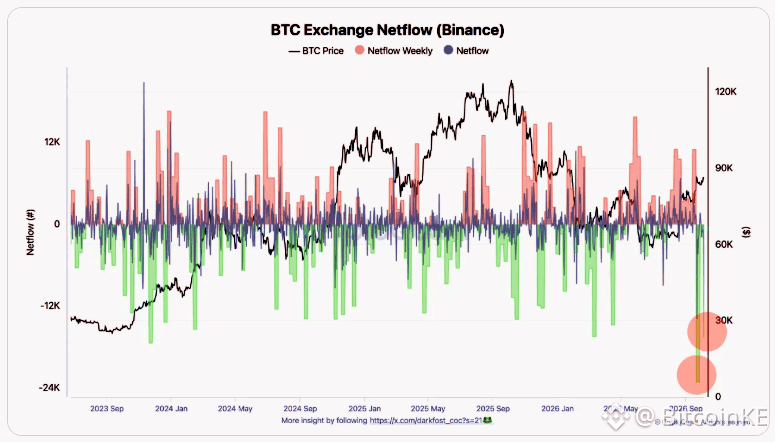
Artikel
BITCOIN | Mengapa Bursa Kripto Terbesar di Dunia Mencatat Arus Keluar Bitcoin Rekor pada September 2026Penarikan Bitcoin dari Binance mencapai level mingguan tertinggi dalam lebih dari tiga tahun pada akhir September 2026, sementara para pemegang besar meningkatkan setoran stablecoin di bursa tersebut, menurut perusahaan analitik on-chain CryptoQuant.
Binance mencatat arus keluar bersih Bitcoin sebesar 23.137 BTC selama tujuh hari hingga 27 September 2026, arus keluar mingguan terbesar sejak Juni 2023, ketika saldo Bitcoin-nya turun sebesar 44.942 BTC. Data menunjukkan bahwa cadangan Bitcoin di bursa tersebut telah berkurang hampir 40.000 BTC sejak 20 September 2026.
BITCOIN | Mengapa Bursa Kripto Terbesar di Dunia Mencatat Arus Keluar Bitcoin Rekor pada September 2026
Penarikan Bitcoin dari Binance mencapai level mingguan tertinggi dalam lebih dari tiga tahun pada akhir September 2026, sementara para pemegang besar meningkatkan setoran stablecoin di bursa tersebut, menurut perusahaan analitik on-chain CryptoQuant.
Binance mencatat arus keluar bersih Bitcoin sebesar 23.137 BTC selama tujuh hari hingga 27 September 2026, arus keluar mingguan terbesar sejak Juni 2023, ketika saldo Bitcoin-nya turun sebesar 44.942 BTC. Data menunjukkan bahwa cadangan Bitcoin di bursa tersebut telah berkurang hampir 40.000 BTC sejak 20 September 2026.
Binance mencatat arus keluar bersih Bitcoin sebesar 23.137 BTC selama tujuh hari hingga 27 September 2026, arus keluar mingguan terbesar sejak Juni 2023, ketika saldo Bitcoin-nya turun sebesar 44.942 BTC. Data menunjukkan bahwa cadangan Bitcoin di bursa tersebut telah berkurang hampir 40.000 BTC sejak 20 September 2026.
1
135
·
--
MENILIK FAKTA | Regulasi Kripto Ritel AS Tak Melindungi Investor Setelah CLARITY Act GagalKegagalan Senat AS untuk meloloskan CLARITY Act membuat pasar mata uang kripto ritel tidak memiliki kerangka kerja federal komprehensif yang ingin dibentuk oleh para anggota parlemen, sehingga tekanan terhadap Securities and Exchange Commission (SEC) dan Commodity Futures Trading Commission (CFTC) untuk mengisi kekosongan tersebut melalui kewenangan yang ada semakin besar.
REGULASI | CLARITY Act Gagal Melaju
CFTC mengusulkan kerangka kerja bagi bursa yang menawarkan transaksi kripto bermargin, berleverage, atau dibiayai kepada nasabah ritel. Usulan tersebut akan membentuk kategori baru tempat perdagangan yang diatur secara federal, yang disebut ‘pasar aset kripto’, dan mewajibkan kepatuhan terhadap sejumlah ketentuan, termasuk pengendalian manipulasi serta kewajiban bukti cadangan. Pedagang komisi berjangka terdaftar juga akan diwajibkan menjadi perantara dalam transaksi nasabah.
MENILIK FAKTA | Regulasi Kripto Ritel AS Tak Melindungi Investor Setelah CLARITY Act Gagal
Kegagalan Senat AS untuk meloloskan CLARITY Act membuat pasar mata uang kripto ritel tidak memiliki kerangka kerja federal komprehensif yang ingin dibentuk oleh para anggota parlemen, sehingga tekanan terhadap Securities and Exchange Commission (SEC) dan Commodity Futures Trading Commission (CFTC) untuk mengisi kekosongan tersebut melalui kewenangan yang ada semakin besar.
REGULASI | CLARITY Act Gagal Melaju
CFTC mengusulkan kerangka kerja bagi bursa yang menawarkan transaksi kripto bermargin, berleverage, atau dibiayai kepada nasabah ritel. Usulan tersebut akan membentuk kategori baru tempat perdagangan yang diatur secara federal, yang disebut ‘pasar aset kripto’, dan mewajibkan kepatuhan terhadap sejumlah ketentuan, termasuk pengendalian manipulasi serta kewajiban bukti cadangan. Pedagang komisi berjangka terdaftar juga akan diwajibkan menjadi perantara dalam transaksi nasabah.
REGULASI | CLARITY Act Gagal Melaju
CFTC mengusulkan kerangka kerja bagi bursa yang menawarkan transaksi kripto bermargin, berleverage, atau dibiayai kepada nasabah ritel. Usulan tersebut akan membentuk kategori baru tempat perdagangan yang diatur secara federal, yang disebut ‘pasar aset kripto’, dan mewajibkan kepatuhan terhadap sejumlah ketentuan, termasuk pengendalian manipulasi serta kewajiban bukti cadangan. Pedagang komisi berjangka terdaftar juga akan diwajibkan menjadi perantara dalam transaksi nasabah.
2
154
·
--
REGULASI | FinCEN Batalkan Usulan Penetapan Layanan Pencampur Kripto dan Aturan Pelaporan Kripto $10 Ribu untuk ...Financial Crimes Enforcement Network (FinCEN) mencabut usulan aturan berikut:
sebuah usulan yang akan memberlakukan persyaratan pencatatan, verifikasi, dan pelaporan atas transaksi tertentu yang melibatkan mata uang virtual yang dapat dikonversi dan dompet non-kustodial, serta
sebuah usulan yang akan memberlakukan tindakan khusus terkait pencampuran mata uang virtual yang dapat dikonversi.
Financial Crimes Enforcement Network (FinCEN) Departemen Keuangan AS telah mencabut usulan yang akan mewajibkan bank dan perusahaan mata uang kripto untuk melaporkan transaksi lebih dari $10.000 yang melibatkan dompet kripto milik pelanggan yang dikelola sendiri.
REGULASI | FinCEN Batalkan Usulan Penetapan Layanan Pencampur Kripto dan Aturan Pelaporan Kripto $10 Ribu untuk ...
Financial Crimes Enforcement Network (FinCEN) mencabut usulan aturan berikut:
sebuah usulan yang akan memberlakukan persyaratan pencatatan, verifikasi, dan pelaporan atas transaksi tertentu yang melibatkan mata uang virtual yang dapat dikonversi dan dompet non-kustodial, serta
sebuah usulan yang akan memberlakukan tindakan khusus terkait pencampuran mata uang virtual yang dapat dikonversi.
Financial Crimes Enforcement Network (FinCEN) Departemen Keuangan AS telah mencabut usulan yang akan mewajibkan bank dan perusahaan mata uang kripto untuk melaporkan transaksi lebih dari $10.000 yang melibatkan dompet kripto milik pelanggan yang dikelola sendiri.
sebuah usulan yang akan memberlakukan persyaratan pencatatan, verifikasi, dan pelaporan atas transaksi tertentu yang melibatkan mata uang virtual yang dapat dikonversi dan dompet non-kustodial, serta
sebuah usulan yang akan memberlakukan tindakan khusus terkait pencampuran mata uang virtual yang dapat dikonversi.
Financial Crimes Enforcement Network (FinCEN) Departemen Keuangan AS telah mencabut usulan yang akan mewajibkan bank dan perusahaan mata uang kripto untuk melaporkan transaksi lebih dari $10.000 yang melibatkan dompet kripto milik pelanggan yang dikelola sendiri.
31
·
--
FAKTA DI LAPANGAN | Fokus Kripto Bergeser dari Membangun Produk ke Memenangkan Pengguna SetiaPerusahaan kripto mengalihkan fokus dari membangun produk keuangan on-chain ke mendorong nasabah agar menggunakannya secara rutin, seiring upaya industri untuk semakin mendekati keuangan arus utama.
Manajer aset telah meluncurkan dana yang ditokenisasi,
bursa memperluas bisnis ke pinjaman dan pembayaran, sementara
jaringan blockchain berupaya menarik nasabah institusi.
Tantangannya kini semakin besar: menunjukkan penggunaan yang berkelanjutan, bukan sekadar membuktikan bahwa teknologinya berfungsi.
FAKTA DI LAPANGAN | Startup Kripto Sedang Sekarat. Regulasi Bukan Satu-satunya Penyebabnya
FAKTA DI LAPANGAN | Fokus Kripto Bergeser dari Membangun Produk ke Memenangkan Pengguna Setia
Perusahaan kripto mengalihkan fokus dari membangun produk keuangan on-chain ke mendorong nasabah agar menggunakannya secara rutin, seiring upaya industri untuk semakin mendekati keuangan arus utama.
Manajer aset telah meluncurkan dana yang ditokenisasi,
bursa memperluas bisnis ke pinjaman dan pembayaran, sementara
jaringan blockchain berupaya menarik nasabah institusi.
Tantangannya kini semakin besar: menunjukkan penggunaan yang berkelanjutan, bukan sekadar membuktikan bahwa teknologinya berfungsi.
FAKTA DI LAPANGAN | Startup Kripto Sedang Sekarat. Regulasi Bukan Satu-satunya Penyebabnya
Manajer aset telah meluncurkan dana yang ditokenisasi,
bursa memperluas bisnis ke pinjaman dan pembayaran, sementara
jaringan blockchain berupaya menarik nasabah institusi.
Tantangannya kini semakin besar: menunjukkan penggunaan yang berkelanjutan, bukan sekadar membuktikan bahwa teknologinya berfungsi.
FAKTA DI LAPANGAN | Startup Kripto Sedang Sekarat. Regulasi Bukan Satu-satunya Penyebabnya
34
·
--
Lihat terjemahan
FINTECH AFRICA | Egypt’s First Unicorn Is About to Go PublicEgyptian fintech MNT-Halan has raised more than $82 million through three bond sales providing additional funding for its lending business as the company prepares for a planned stock market listing.
The funds were raised through two subsidiaries,
Halan Consumer Finance and
Tasheel Finance.
Tasheel Finance, MNT-Halan’s microfinance arm, raised $24.6 million and $46.8 million through two separate bond sales, while Halan Consumer Finance raised a further $10.8 million.
Egyptian Fintech, MNT Halan, Now Africa’s 9th Unicorn Valued at Over $1 Billion After $400 Million in Funding
The bond sales allow MNT-Halan to borrow from investors and repay the funds over time with interest providing capital that can be deployed into new loans to customers.
Founded in 2018, MNT-Halan has grown into one of Egypt’s largest fintech companies and is the country’s biggest non-bank microfinance lender, according to estimates. The company has about 24.3% of Egypt’s non-bank microfinance market by outstanding loan value.
MNT-Halan’s outstanding loans are worth nearly $1 billion while the company says it has extended more than $6 billion in credit since its founding. Lending has been its fastest-growing business with nearly 2 million customers.
FUNDING | Egyptian Fintech Unicorn, MNT-Halan, Raises a Further $157 Million After Achieving Over 20x Customer Growth
The fundraising comes as MNT-Halan prepares to list 20% of its shares on the Egyptian Exchange. The company, Egypt’s first unicorn, said in June 2026 that it had reached a valuation of $1.4 billion and plans to offer 320 million shares.
The listing is expected in October 2026 and would give MNT-Halan another source of capital as it expands its lending operations while potentially attracting more foreign investment into Egypt’s stock market.
STATISTICS | Only 3 African Countries Host Companies Worth Over $1 Billion – Here is Why
Stay tuned to BitKE on fintech developments in Africa.
Join our WhatsApp channel here.
Follow us on X for the latest posts and updates
Join and interact with our Telegram community
___________
FINTECH AFRICA | Egypt’s First Unicorn Is About to Go Public
Egyptian fintech MNT-Halan has raised more than $82 million through three bond sales providing additional funding for its lending business as the company prepares for a planned stock market listing.
The funds were raised through two subsidiaries,
Halan Consumer Finance and
Tasheel Finance.
Tasheel Finance, MNT-Halan’s microfinance arm, raised $24.6 million and $46.8 million through two separate bond sales, while Halan Consumer Finance raised a further $10.8 million.
Egyptian Fintech, MNT Halan, Now Africa’s 9th Unicorn Valued at Over $1 Billion After $400 Million in Funding
The bond sales allow MNT-Halan to borrow from investors and repay the funds over time with interest providing capital that can be deployed into new loans to customers.
Founded in 2018, MNT-Halan has grown into one of Egypt’s largest fintech companies and is the country’s biggest non-bank microfinance lender, according to estimates. The company has about 24.3% of Egypt’s non-bank microfinance market by outstanding loan value.
MNT-Halan’s outstanding loans are worth nearly $1 billion while the company says it has extended more than $6 billion in credit since its founding. Lending has been its fastest-growing business with nearly 2 million customers.
FUNDING | Egyptian Fintech Unicorn, MNT-Halan, Raises a Further $157 Million After Achieving Over 20x Customer Growth
The fundraising comes as MNT-Halan prepares to list 20% of its shares on the Egyptian Exchange. The company, Egypt’s first unicorn, said in June 2026 that it had reached a valuation of $1.4 billion and plans to offer 320 million shares.
The listing is expected in October 2026 and would give MNT-Halan another source of capital as it expands its lending operations while potentially attracting more foreign investment into Egypt’s stock market.
STATISTICS | Only 3 African Countries Host Companies Worth Over $1 Billion – Here is Why
Stay tuned to BitKE on fintech developments in Africa.
Join our WhatsApp channel here.
Follow us on X for the latest posts and updates
Join and interact with our Telegram community
___________
The funds were raised through two subsidiaries,
Halan Consumer Finance and
Tasheel Finance.
Tasheel Finance, MNT-Halan’s microfinance arm, raised $24.6 million and $46.8 million through two separate bond sales, while Halan Consumer Finance raised a further $10.8 million.
Egyptian Fintech, MNT Halan, Now Africa’s 9th Unicorn Valued at Over $1 Billion After $400 Million in Funding
The bond sales allow MNT-Halan to borrow from investors and repay the funds over time with interest providing capital that can be deployed into new loans to customers.
Founded in 2018, MNT-Halan has grown into one of Egypt’s largest fintech companies and is the country’s biggest non-bank microfinance lender, according to estimates. The company has about 24.3% of Egypt’s non-bank microfinance market by outstanding loan value.
MNT-Halan’s outstanding loans are worth nearly $1 billion while the company says it has extended more than $6 billion in credit since its founding. Lending has been its fastest-growing business with nearly 2 million customers.
FUNDING | Egyptian Fintech Unicorn, MNT-Halan, Raises a Further $157 Million After Achieving Over 20x Customer Growth
The fundraising comes as MNT-Halan prepares to list 20% of its shares on the Egyptian Exchange. The company, Egypt’s first unicorn, said in June 2026 that it had reached a valuation of $1.4 billion and plans to offer 320 million shares.
The listing is expected in October 2026 and would give MNT-Halan another source of capital as it expands its lending operations while potentially attracting more foreign investment into Egypt’s stock market.
STATISTICS | Only 3 African Countries Host Companies Worth Over $1 Billion – Here is Why
Stay tuned to BitKE on fintech developments in Africa.
Join our WhatsApp channel here.
Follow us on X for the latest posts and updates
Join and interact with our Telegram community
___________
104
·
--
Lihat terjemahan
REGULATION | European Crypto Users Have More Trust in Regulated Platforms Under MiCA, Says Crypto...European crypto users are placing greater trust in regulated platforms following the rollout of the European Union’s Markets in Crypto-Assets (MiCA) framework, according to Bitpanda co-CEO, Christian Trummer.
Speaking on a podcast, Trummer said users have “more faith” in regulated market participants contrasting this with the focus on self-custody among parts of the crypto community. He said most retail users prefer regulated providers rather than managing their own private keys.
Trummer also called for stricter enforcement of MiCA saying some companies continue to serve European customers without the required authorization putting compliant firms at a competitive disadvantage.
“The problem there definitely is that it’s not strictly enforced by the regulators,” Trummer said, referring to firms offering services to European customers without a MiCA license.
REGULATION | BitPanda Fined €70,000 in Austria’s First Published MiCA Penalty
MiCA’s transition period for existing crypto service providers ended no later than July 1 2026 requiring unauthorized firms to wind down their EU operations. The European Securities and Markets Authority (ESMA) has urged national regulators to act against firms continuing to provide crypto services without authorization.
The comments come as EU regulators scrutinize how some offshore crypto firms continue serving European customers including through the narrowly defined “reverse solicitation” exemption.
REGULATION | EU Regulators Reportedly Question Binance Over Continued European Operations Despite Wind-Down Order
Stay tuned to BitKE for crypto regulatory developments globally.
Join our WhatsApp channel here.
Follow us on X for the latest posts and updates
Join and interact with our Telegram community
___________
REGULATION | European Crypto Users Have More Trust in Regulated Platforms Under MiCA, Says Crypto...
European crypto users are placing greater trust in regulated platforms following the rollout of the European Union’s Markets in Crypto-Assets (MiCA) framework, according to Bitpanda co-CEO, Christian Trummer.
Speaking on a podcast, Trummer said users have “more faith” in regulated market participants contrasting this with the focus on self-custody among parts of the crypto community. He said most retail users prefer regulated providers rather than managing their own private keys.
Trummer also called for stricter enforcement of MiCA saying some companies continue to serve European customers without the required authorization putting compliant firms at a competitive disadvantage.
“The problem there definitely is that it’s not strictly enforced by the regulators,” Trummer said, referring to firms offering services to European customers without a MiCA license.
REGULATION | BitPanda Fined €70,000 in Austria’s First Published MiCA Penalty
MiCA’s transition period for existing crypto service providers ended no later than July 1 2026 requiring unauthorized firms to wind down their EU operations. The European Securities and Markets Authority (ESMA) has urged national regulators to act against firms continuing to provide crypto services without authorization.
The comments come as EU regulators scrutinize how some offshore crypto firms continue serving European customers including through the narrowly defined “reverse solicitation” exemption.
REGULATION | EU Regulators Reportedly Question Binance Over Continued European Operations Despite Wind-Down Order
Stay tuned to BitKE for crypto regulatory developments globally.
Join our WhatsApp channel here.
Follow us on X for the latest posts and updates
Join and interact with our Telegram community
___________
Speaking on a podcast, Trummer said users have “more faith” in regulated market participants contrasting this with the focus on self-custody among parts of the crypto community. He said most retail users prefer regulated providers rather than managing their own private keys.
Trummer also called for stricter enforcement of MiCA saying some companies continue to serve European customers without the required authorization putting compliant firms at a competitive disadvantage.
“The problem there definitely is that it’s not strictly enforced by the regulators,” Trummer said, referring to firms offering services to European customers without a MiCA license.
REGULATION | BitPanda Fined €70,000 in Austria’s First Published MiCA Penalty
MiCA’s transition period for existing crypto service providers ended no later than July 1 2026 requiring unauthorized firms to wind down their EU operations. The European Securities and Markets Authority (ESMA) has urged national regulators to act against firms continuing to provide crypto services without authorization.
The comments come as EU regulators scrutinize how some offshore crypto firms continue serving European customers including through the narrowly defined “reverse solicitation” exemption.
REGULATION | EU Regulators Reportedly Question Binance Over Continued European Operations Despite Wind-Down Order
Stay tuned to BitKE for crypto regulatory developments globally.
Join our WhatsApp channel here.
Follow us on X for the latest posts and updates
Join and interact with our Telegram community
___________
9
·
--
INSTITUSIONAL | NYSE dan OKX Ajukan Permohonan untuk Perdagangan Saham AS Tertokenisasi 24/7OKXICE, usaha patungan antara bursa mata uang kripto OKX dan Intercontinental Exchange (ICE), pemilik New York Stock Exchange (NYSE), telah mengajukan permohonan kepada regulator AS untuk meluncurkan platform perdagangan saham AS tertokenisasi sepanjang waktu.
Pengajuan kepada Komisi Sekuritas dan Bursa AS (SEC) ini dilakukan saat perusahaan keuangan dan perusahaan kripto berlomba-lomba memperluas akses ke pasar saham di luar jam perdagangan tradisional.
Menurut laporan, OKXICE berencana menawarkan saham tertokenisasi dari 63 perusahaan yang terdaftar di bursa AS pada tahap awal.
INSTITUSIONAL | NYSE dan OKX Ajukan Permohonan untuk Perdagangan Saham AS Tertokenisasi 24/7
OKXICE, usaha patungan antara bursa mata uang kripto OKX dan Intercontinental Exchange (ICE), pemilik New York Stock Exchange (NYSE), telah mengajukan permohonan kepada regulator AS untuk meluncurkan platform perdagangan saham AS tertokenisasi sepanjang waktu.
Pengajuan kepada Komisi Sekuritas dan Bursa AS (SEC) ini dilakukan saat perusahaan keuangan dan perusahaan kripto berlomba-lomba memperluas akses ke pasar saham di luar jam perdagangan tradisional.
Menurut laporan, OKXICE berencana menawarkan saham tertokenisasi dari 63 perusahaan yang terdaftar di bursa AS pada tahap awal.
Pengajuan kepada Komisi Sekuritas dan Bursa AS (SEC) ini dilakukan saat perusahaan keuangan dan perusahaan kripto berlomba-lomba memperluas akses ke pasar saham di luar jam perdagangan tradisional.
Menurut laporan, OKXICE berencana menawarkan saham tertokenisasi dari 63 perusahaan yang terdaftar di bursa AS pada tahap awal.
19
·
--
BITCOIN | El Salvador Membuka Dana IMF yang Dipatok agar Membatasi Akumulasi dan Paparan BitcoinEl Salvador telah memperoleh pencairan sebesar $138 juta secara langsung dari Dana Moneter Internasional setelah pemberi pinjaman memberikan penangguhan (waiver) untuk kriteria kinerja yang terlewat terkait dengan akumulasi Bitcoin negara tersebut.
Dewan Eksekutif IMF menyelesaikan tinjauan kedua dan ketiga atas Fasilitas Perpanjangan Dana (Extended Fund Facility) berdurasi 40 bulan untuk El Salvador pada Kamis, sehingga memungkinkan dana dilepaskan berdasarkan program pembiayaan senilai $1,4 miliar negara tersebut.
Dana tersebut mengatakan bahwa beberapa kriteria kinerja belum dipenuhi, termasuk yang berkaitan dengan akumulasi Bitcoin, namun memberikan penangguhan berdasarkan apa yang disebutnya sebagai “langkah-langkah korektif yang kuat dan komitmen yang diperbarui.”
BITCOIN | El Salvador Membuka Dana IMF yang Dipatok agar Membatasi Akumulasi dan Paparan Bitcoin
El Salvador telah memperoleh pencairan sebesar $138 juta secara langsung dari Dana Moneter Internasional setelah pemberi pinjaman memberikan penangguhan (waiver) untuk kriteria kinerja yang terlewat terkait dengan akumulasi Bitcoin negara tersebut.
Dewan Eksekutif IMF menyelesaikan tinjauan kedua dan ketiga atas Fasilitas Perpanjangan Dana (Extended Fund Facility) berdurasi 40 bulan untuk El Salvador pada Kamis, sehingga memungkinkan dana dilepaskan berdasarkan program pembiayaan senilai $1,4 miliar negara tersebut.
Dana tersebut mengatakan bahwa beberapa kriteria kinerja belum dipenuhi, termasuk yang berkaitan dengan akumulasi Bitcoin, namun memberikan penangguhan berdasarkan apa yang disebutnya sebagai “langkah-langkah korektif yang kuat dan komitmen yang diperbarui.”
Dewan Eksekutif IMF menyelesaikan tinjauan kedua dan ketiga atas Fasilitas Perpanjangan Dana (Extended Fund Facility) berdurasi 40 bulan untuk El Salvador pada Kamis, sehingga memungkinkan dana dilepaskan berdasarkan program pembiayaan senilai $1,4 miliar negara tersebut.
Dana tersebut mengatakan bahwa beberapa kriteria kinerja belum dipenuhi, termasuk yang berkaitan dengan akumulasi Bitcoin, namun memberikan penangguhan berdasarkan apa yang disebutnya sebagai “langkah-langkah korektif yang kuat dan komitmen yang diperbarui.”
457
·
--
TONGGAK SEJARAH | Kementerian Keuangan Rusia Membayar Karyawan dalam Rubel CBDC untuk Pertama KaliKementerian Keuangan Rusia telah membayar sebagian karyawannya upah dalam rubel digital untuk pertama kalinya, memindahkan mata uang digital bank sentral ke penggajian pemerintah seiring negara itu memperluas penggunaannya.
Pembayaran gaji dimulai pada 1 Oktober 2026 dan bersifat sukarela, dengan karyawan yang ikut serta diharuskan membuka akun Rubel digital di platform Bank of Russia, kata Kementerian Keuangan.
Kementerian tersebut tidak mengungkapkan jumlah karyawan yang menerima upah dalam rubel digital atau nilai total dari pembayaran tersebut.
TONGGAK SEJARAH | Kementerian Keuangan Rusia Membayar Karyawan dalam Rubel CBDC untuk Pertama Kali
Kementerian Keuangan Rusia telah membayar sebagian karyawannya upah dalam rubel digital untuk pertama kalinya, memindahkan mata uang digital bank sentral ke penggajian pemerintah seiring negara itu memperluas penggunaannya.
Pembayaran gaji dimulai pada 1 Oktober 2026 dan bersifat sukarela, dengan karyawan yang ikut serta diharuskan membuka akun Rubel digital di platform Bank of Russia, kata Kementerian Keuangan.
Kementerian tersebut tidak mengungkapkan jumlah karyawan yang menerima upah dalam rubel digital atau nilai total dari pembayaran tersebut.
Pembayaran gaji dimulai pada 1 Oktober 2026 dan bersifat sukarela, dengan karyawan yang ikut serta diharuskan membuka akun Rubel digital di platform Bank of Russia, kata Kementerian Keuangan.
Kementerian tersebut tidak mengungkapkan jumlah karyawan yang menerima upah dalam rubel digital atau nilai total dari pembayaran tersebut.
108
·
--
STUDI KASUS | Mengapa Aplikasi Terdesentralisasi, BitChat, Terus Dimatikan oleh PemerintahIndia telah memerintahkan Apple dan Google untuk menghapus Bitchat, aplikasi pesan offline yang dikembangkan oleh pendiri Twitter bersama Jack Dorsey, dari toko aplikasi mereka di India berdasarkan Bagian 69A dari Undang-Undang Teknologi Informasi tahun 2000, dengan alasan kekhawatiran bahwa aplikasi tersebut dapat memungkinkan komunikasi anonim di luar jaringan telekomunikasi konvensional.
PERATURAN | Apple Menghapus BitChat milik Jack Dorsey dari Toko Aplikasi India Setelah Permintaan Pemerintah
Tim Peninjauan Aplikasi Apple memberi Dorsey dalam email pada hari Sabtu bahwa Bitchat “akan dihapus dari Toko Aplikasi India” setelah permintaan dari Kementerian Elektronika dan Teknologi Informasi India (MeitY), menurut salinan yang diposting Dorsey di X.
STUDI KASUS | Mengapa Aplikasi Terdesentralisasi, BitChat, Terus Dimatikan oleh Pemerintah
India telah memerintahkan Apple dan Google untuk menghapus Bitchat, aplikasi pesan offline yang dikembangkan oleh pendiri Twitter bersama Jack Dorsey, dari toko aplikasi mereka di India berdasarkan Bagian 69A dari Undang-Undang Teknologi Informasi tahun 2000, dengan alasan kekhawatiran bahwa aplikasi tersebut dapat memungkinkan komunikasi anonim di luar jaringan telekomunikasi konvensional.
PERATURAN | Apple Menghapus BitChat milik Jack Dorsey dari Toko Aplikasi India Setelah Permintaan Pemerintah
Tim Peninjauan Aplikasi Apple memberi Dorsey dalam email pada hari Sabtu bahwa Bitchat “akan dihapus dari Toko Aplikasi India” setelah permintaan dari Kementerian Elektronika dan Teknologi Informasi India (MeitY), menurut salinan yang diposting Dorsey di X.
PERATURAN | Apple Menghapus BitChat milik Jack Dorsey dari Toko Aplikasi India Setelah Permintaan Pemerintah
Tim Peninjauan Aplikasi Apple memberi Dorsey dalam email pada hari Sabtu bahwa Bitchat “akan dihapus dari Toko Aplikasi India” setelah permintaan dari Kementerian Elektronika dan Teknologi Informasi India (MeitY), menurut salinan yang diposting Dorsey di X.
105
·
--
REGULASI | Apple Menghapus BitChat Jack Dorsey dari App Store India Setelah Permintaan PemerintahApple telah menghapus aplikasi pesan offline, BitChat, dari App Store India setelah adanya permintaan dari Kementerian Elektronika dan Teknologi Informasi (MeitY) negara tersebut, kata Jack Dorsey dalam unggahan di X.
“Pemerintah India secara resmi menghapus BitChat dari App Store,” tulis pengembang aplikasi dan pendiri Twitter (sekarang X), Jack Dorsey, dalam unggahannya, bersama tangkapan layar yang tampaknya merupakan pemberitahuan dari tim Peninjauan Aplikasi Apple.
pemerintah India secara resmi menghapus bitchat dari App Store https://t.co/9oHHiwquec
REGULASI | Apple Menghapus BitChat Jack Dorsey dari App Store India Setelah Permintaan Pemerintah
Apple telah menghapus aplikasi pesan offline, BitChat, dari App Store India setelah adanya permintaan dari Kementerian Elektronika dan Teknologi Informasi (MeitY) negara tersebut, kata Jack Dorsey dalam unggahan di X.
“Pemerintah India secara resmi menghapus BitChat dari App Store,” tulis pengembang aplikasi dan pendiri Twitter (sekarang X), Jack Dorsey, dalam unggahannya, bersama tangkapan layar yang tampaknya merupakan pemberitahuan dari tim Peninjauan Aplikasi Apple.
pemerintah India secara resmi menghapus bitchat dari App Store https://t.co/9oHHiwquec
“Pemerintah India secara resmi menghapus BitChat dari App Store,” tulis pengembang aplikasi dan pendiri Twitter (sekarang X), Jack Dorsey, dalam unggahannya, bersama tangkapan layar yang tampaknya merupakan pemberitahuan dari tim Peninjauan Aplikasi Apple.
pemerintah India secara resmi menghapus bitchat dari App Store https://t.co/9oHHiwquec
70
Masuk untuk menjelajahi konten lainnya
Bergabunglah dengan pengguna kripto global di Binance Square
⚡️ Dapatkan informasi terbaru dan berguna tentang kripto.
💬 Dipercayai oleh bursa kripto terbesar di dunia.
👍 Temukan wawasan nyata dari kreator terverifikasi.
Email/Nomor Ponsel
Topik Sedang Tren
FedMinutesFocusOnOctoberPause
388,568 penayangan
2,447 Berdiskusi
#fedminutesfocusonoctoberpause
🚨 PELUANG FED NAIK SUKU BUNGA OKTOBER MAKIN TURUN — BTC MALAH TERTEKAN? 😱
Pasar kini lebih condong ke Fed tahan suku bunga pada meeting 27–28 Oktober. Data terbaru menunjukkan peluang hike 25 bps turun ke sekitar 17,2%, dari 19,9% sehari sebelumnya.
MarketWatch
Tapi ada plot twist.
Risalah FOMC menunjukkan mayoritas pejabat masih melihat kemungkinan kenaikan lain sebelum akhir tahun, meski beberapa pejabat lebih memilih menunggu dan melihat data berikutnya.
Dan BTC sekarang justru berada di bawah tekanan.
Bitcoin sempat turun ke area $83K, sementara yield Treasury 10 tahun berada di sekitar 5,3%+ dan dolar menguat.
📊 JADI PASAR SEKARANG PUNYA DUA CERITA:
🟢 Fed lebih dovish → ekspektasi hike turun → tekanan likuiditas berkurang → BTC berpeluang mendapat napas.
🔴 Fed tetap hawkish → yield & dolar makin kuat → aset berisiko bisa kembali ditekan.
🔥 PERTANYAANNYA SEKARANG:
Apakah pasar sedang menyiapkan rebound BTC karena peluang hike Oktober makin kecil?
Atau justru yield Treasury yang tinggi bakal terus jadi rem buat Bitcoin?
BTC + FED + YIELD — kombinasi yang wajib dipantau beberapa minggu ke depan.
#Bitcoin #BTC #FederalReserve #Fed #Crypto #InterestRates
$BTC
$ETH
$SOL
Catatan Market
·Disukai 0 Kali
·1.8k penayangan
VitalikWarnsAICouldWeakenCryptographySecurity
2,789 penayangan
168 Berdiskusi
XRPSpotETFsHold$1.7BWeeklyInflowsSlow
474 penayangan
25 Berdiskusi