Binance Square
cryptoJet 1
171 Posting

cryptoJet 1

Simply here to share a crypto story, tale, news, or alpha.
0 Mengikuti
7 Pengikut
47 Disukai
Posting
·
--
Lihat terjemahan
#Ripple has been shipping updates at a steady pace lately. The latest is Ripple Mint, a platform that lets institutions mint, redeem, and manage $RLUSD through a web interface or APIs. What stands out to me isn't just the product itself it's the focus on making things easier for the end user. The best infrastructure is often the part you don't notice because it quietly simplifies the experience. That reminded me of a feature on @ston_fi DEX that I think doesn't get nearly enough attention: The Impermanent Loss Calculator. I feel like a lot of people jump into liquidity pools because they see an attractive APR, but skip one of the most important steps understanding the risk. Before providing liquidity, the calculator lets you estimate how changes in token prices could affect your LP position compared to simply holding the assets. I've found it useful because it helps set realistic expectations before committing capital instead of learning the hard way afterward. Sometimes the most valuable tools aren't the ones making headlines. They're the ones that help you make better decisions. Whether it's Ripple building better tools for institutions or STON.fi giving DeFi users practical tools to manage risk, both are reminders that good infrastructure isn't just about adding features it's about helping people use them more confidently. $XRP
Lihat terjemahan
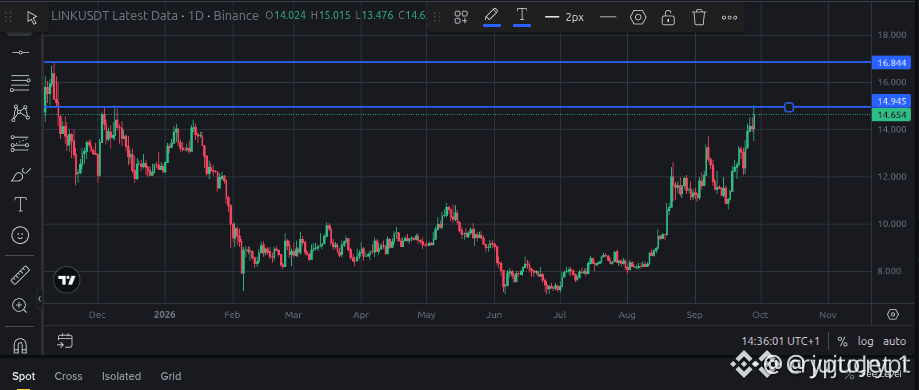
$LINK continues to show why it's one of the strongest infrastructure projects in crypto. Spot Chainlink ETFs just recorded $2.68 million in net inflows, ending a two-week streak of zero flows. That now brings ETF holdings to 1.78% of LINK's circulating supply. To me, this isn't just about the inflow amount. It's another sign that institutional interest in blockchain infrastructure is still growing. While everyone watches price action, capital continues flowing into projects that provide the tools and rails other ecosystems rely on. That reminds me of how I look at @ston_fi i. Most people notice the swaps, but what interests me more is the infrastructure behind them. With Omniston powering cross-chain liquidity across the GRAM ecosystem, the focus isn't only on moving assets from one chain to another it's about making that process simple enough that users don't have to think about what's happening behind the scenes. Whether it's Chainlink building data infrastructure or STON.fi building liquidity infrastructure, the pattern feels similar. The projects doing the heavy lifting behind the scenes often end up becoming some of the most important pieces of the ecosystem. $BEAT #Altcoin Season#
Lihat terjemahan
Charts are starting to look a lot more interesting as we head toward the weekend. $BANK has been picking up momentum, but it's also approaching a key resistance around the $0.298 area. If buyers can't push through, I wouldn't be surprised to see a small pullback before the next attempt. $ESPORTS is also ending the week on a strong note. The chart has been holding up well, and it's another one I'm keeping on my watchlist. While watching these setups, I finally decided to explore another route on @ston_fi 's cross-chain feature moving stablecoins between the TON and TRON ecosystems. I like seeing more networks being connected because it gives users more flexibility. Instead of being locked into one ecosystem, you can move liquidity to wherever the opportunity is. To me, that's one of the more practical parts of cross-chain. The charts help you spot opportunities, while the infrastructure helps you reach them. That's why I've been spending as much time exploring the tools as I do watching the markets. #Altcoin Season#
Lihat terjemahan
I saw NVIDIA's CEO make a post on X today, and my first reaction was: "Maybe I should add a bit more to my NVDA xStocks position on STON.fi." Then I had to remind myself that stocks don't usually move the way crypto does. A single post can send a low-cap token like $RE flying, but companies like NVIDIA are driven by much bigger factors earnings, product launches, AI demand, guidance, and long-term business performance. Still, it made me think about why I started exploring xStocks in the first place. One idea that stuck with me came from an article I read on the @ston_fi blog about diversification. The takeaway wasn't to chase every opportunity it was to avoid relying on a single type of asset. That's something I've been trying to apply more. I still enjoy trading crypto, but having exposure to companies like NVIDIA through xStocks gives me another way to participate in markets without putting all my focus on one asset class. For me, diversification isn't about owning everything. It's about building a portfolio where different assets can play different roles over time. Some days it's crypto that leads the way. Other days, it might be stocks. I'm just trying to stay positioned for both. $UP #Altcoin Season#
Lihat terjemahan
For now, it's mostly just quiet conversations on the timeline... but that's usually how new narratives begin. Lately, I've been seeing more people talk about $GRAM , and what's interesting is that the conversation isn't only about the token—it's gradually shifting toward the ecosystem that's growing around it. That's the part that has my attention. While the broader market is still uncertain, builders haven't really slowed down. I've been following @ston_fi for a while now, and despite the market conditions, the platform keeps seeing more activity through new integrations, growing swap volume, and steady user participation. To me, that's a healthier signal than price alone. When people continue using a protocol during a quieter market, it usually means they're finding real utility not just chasing the latest trend. On the trading side, $AKE is telling a different story. Right now, sellers seem to have the upper hand, and the chart is still leaning downward. Unless momentum shifts back to the buyers, I'd rather stay patient and see how it develops. For now, I'm watching both sides of the market: The charts tell me where capital is moving today, while ecosystem activity often gives clues about where attention could be heading tomorrow. #Altcoin Season#
Lihat terjemahan
Seeing more altcoins getting attention outside of BTC and ETH is honestly a good sign for the market. According to The Block, Solana $SOL and Hyperliquid $HYPE ETFs now make up nearly 80% of non-BTC/ETH ETF volume For a long time, the conversation around crypto investment products was mainly focused on Bitcoin and Ethereum. Seeing other ecosystems start to gain traction shows that investors are beginning to look beyond the two biggest assets and explore different networks with strong activity behind them. And that's where I think the infrastructure side becomes interesting. As more ecosystems grow, the biggest challenge won't just be finding opportunities—it will be moving liquidity between them easily. A trader might see an opportunity on Solana today, Hyperliquid tomorrow, or another ecosystem next week. The ability to move assets smoothly becomes just as important as the assets themselves. That's why I've been paying attention to what @ston_fi i is building with **Omniston**. with GRAM getting bigger and more users coming onboard platforms like stonfi will even become more important in the ecosystem The next phase of DeFi won't just be about which chain has the biggest hype. It will also be about which ecosystems make it easiest for users and capital to move around. More chains gaining attention is exciting but the rails connecting them might be just as important. 👀
Lihat terjemahan
Just checked the $RE chart and it's been quietly building momentum for a while now. The way it's been holding up after the consolidation phase is interesting, and a move toward the $0.50 area doesn't look too far away if the momentum continues. $LAB on the other hand is giving a different kind of setup. After the recent dip, I still have that feeling that it could attempt another move, especially if early buyers start stepping back in. But as always, the chart will decide crypto has a way of surprising both buyers and sellers. While watching these moves, I also found myself looking at the bigger picture on TON DeFi. One thing I like about @ston_fi is that it keeps focusing on making liquidity easier to access. With features like Omniston cross-chain swaps, users aren't limited to opportunities on just one network. Moving assets between ecosystems becomes smoother, which matters when different tokens and opportunities are appearing across multiple chains. Because in DeFi, timing matters. Sometimes the opportunity is on one chain today and another chain tomorrow. Having the infrastructure to move liquidity efficiently is what allows users to actually participate instead of just watching from the sidelines. #Altcoin Season#
Lihat terjemahan
It feels like we're slowly moving into the era where AI agents aren't just a concept they're actually interacting with blockchains. A good example is the $XRP Ledger, which has now surpassed 1 million agentic transactions. To me, that's more interesting than the number itself. It suggests that automated systems are beginning to do more than simple transfers. They're interacting with on-chain applications, executing tasks, and becoming active participants in blockchain ecosystems. That got me thinking about where DeFi is heading. As AI agents become more common, they'll need infrastructure that's fast, reliable, and able to move liquidity across different ecosystems without unnecessary friction. That's one reason I keep following what @ston_fi is building with Omniston. Today, it's making cross-chain stablecoin movement simpler for users. Tomorrow, that same infrastructure could be just as valuable for AI agents that need to move funds, execute strategies, or interact with multiple chains automatically. I don't think the future of DeFi is just about humans clicking buttons. It's also about building the rails that both people and intelligent agents can rely on to move value efficiently. We're still early, but milestones like this make me think that future is getting a little closer. $HYPE #Altcoin Season#
Lihat terjemahan
Telegram just dropped one of the more interesting updates I've seen in a while. A native, non-custodial $GRAM wallet is set to roll out to over 1 billion users, with instant, zero-fee transfers expected to arrive this summer, according to Pavel Durov. If that rollout goes as planned, the bigger story isn't just the wallet. It's the number of new people who could suddenly have direct access to the GRAM ecosystem without needing to download another app or learn a completely new interface. That's what caught my attention. Getting people into crypto has never just been about offering more features—it's about making the experience feel familiar and removing as much friction as possible. It also makes me think about everything being built around the ecosystem. As more users gain access to GRAM, they'll naturally start looking for ways to swap assets, explore DeFi, provide liquidity, or move funds across different networks. That's where infrastructure like @ston_fi becomes interesting to watch. With Omniston expanding cross-chain support and STON.fi continuing to build the liquidity layer for GRAM, it's easy to imagine how a smoother onboarding experience could connect with a growing DeFi ecosystem. We'll have to see how adoption plays out, but if millions of new users begin interacting with GRAM through Telegram, the projects that quietly power the experience behind the scenes could have a much bigger role to play than many people realize. $XRP
Lihat terjemahan
Massive sell might be coming to $ENA A wallet withdrew 16M ENA (~$1.37M) from their Gnosis multisig wallet and then transferred it to Binance, likely to sell.
Lihat terjemahan
Ethereum has been looking a lot stronger lately, and I came across an interesting take that might explain part of the momentum. Tom Lee believes $ETH is strengthening as AI-related downstream assets continue gaining traction. Whether that's the main catalyst or just one piece of the puzzle, it's another reminder that narratives still matter. When a sector starts attracting attention, capital usually follows. At the same time, $XRP has also been quietly putting together some decent moves of its own. While keeping an eye on the market, I've also been exploring the latest updates on @ston_fi . One thing I like is that the cross-chain network keeps expanding. As more ecosystems are added, it opens up more places to move liquidity without changing the way you interact with the platform. Today's plan is actually to make my **first cross-chain transfer into the TRON ecosystem**. I'm curious to see how the experience compares and how smoothly everything comes together. That's one thing I enjoy about DeFi there's always something new to try. Sometimes the best way to understand a feature isn't by reading about it, but by using it yourself. #Altcoin Season#
Lihat terjemahan
Seeing $ONDO putting together a strong move reminded me of something I haven't paid enough attention to lately xStocks on STONfi. To be honest, I've been so focused on testing the new cross-chain features that I almost forgot about the stock side of the platform. Then I looked back at the market and realized something: A lot of stocks have quietly been performing well. That made me revisit how I approach trading them. One habit that's helped me the most is **following the news before following the chart. I always keep an eye on what's happening with companies like NVIDIA and Apple. Earnings, new product launches, AI announcements, partnerships, and even regulatory news can completely change market sentiment. The chart tells me *what* is happening. The news often explains *why* it's happening. That's why I like having xStocks available on STON.fi. It gives me a way to react to those market-moving events without leaving the DeFi ecosystem. If a company releases strong earnings or a major announcement, I can quickly check how the market is responding and decide whether it's worth taking a position. I'm still learning every day, but one lesson I've picked up is this: Don't just study the price study the business behind it. Sometimes the biggest opportunities come from understanding the story before everyone else notices it. That's the mindset I'm trying to bring with me whenever I explore xStocks. $XRP
Lihat terjemahan
Lately, I've been paying less attention to the noise and more attention to what's still holding up. $ONDO and $ADA are two tokens that continue to stand out. Even with the current market conditions, they've managed to stay relatively strong compared to many others. If the market eventually turns around, these are the kinds of projects I'd expect to still be in the conversation. The same mindset applies to DeFi. When the market slows down, I like to look at which protocols people are still actively using. That's something I've noticed with STONfi. Looking at the June numbers, there were 882,000+ swaps and 87,000+ active wallets. To me, those figures say more than the headline itself. They represent thousands of people choosing to swap, provide liquidity, or move funds instead of leaving their assets sitting idle. Markets will always move in cycles. Some tokens will pump, others will fade. But when I see users consistently returning to a protocol month after month even in a quieter market that's the kind of signal I pay attention to. Sometimes, real usage tells a much bigger story than price action. #Altcoin Season# #TON
Lihat terjemahan
I spent some time going through one of the short learning guides on STONfi today, and it reminded me that sometimes the smallest features make the biggest difference. Whenever I try a new DeFi platform, I like to put myself in the shoes of someone using it for the first time. Questions like "How do I make my first swap?", "How does this feature work?", or "Where do I even start?" are things every beginner asks. That's why I appreciate the bite-sized lessons on STONfi. They're simple, straight to the point, and don't try to overwhelm you with technical jargon. Whether it's learning how to swap, provide liquidity, or explore newer features like xStocks, the guides break things down into manageable steps. I actually think this is something that's often overlooked in DeFi. We spend so much time building new features that we sometimes forget new users need help understanding how to use them. Good documentation isn't just about explaining a product it's about giving people the confidence to try it. For me, I'd rather have a short, practical guide that I can finish in a few minutes than a long article filled with technical terms. It's a small detail, but it's the kind of thing that makes getting started with DeFi feel a lot less intimidating. $UP $ADA #Altcoin Season#
Lihat terjemahan
Last week, it felt like Robinhood Chain was everywhere on my timeline. From the discussions to the new tokens getting attention, it quickly became one of the most talked-about ecosystems. Whether the hype lasts or not, one thing stood out to me: when a new ecosystem starts attracting users, the next question is always **how easily people can move their funds into it. That's why I found @ston_fi latest Omniston update interesting. Robinhood Chain has now been added to the cross-chain flow, which means users can move USDG between Robinhood Chain, TON, and other supported networks without having to piece together multiple tools themselves. I like looking at updates from the user's perspective rather than the headline. If I spot an opportunity on another chain, I don't want to spend 20 minutes figuring out bridges, wrapped assets, or which route to take. I just want to know what I'll receive before I hit confirm. From what I've seen, that's what Omniston is trying to improve. You choose the asset, choose the destination, review the quote, and the system coordinates the cross-chain settlement behind the scenes. Most swaps complete in 15–40 seconds, with an initial transaction limit of $1,000. To me, that's the bigger story. Cross-chain isn't becoming useful because there are more chains. It's becoming useful because it's getting easier to move between them. As new ecosystems like Robinhood Chain continue to grow, I think the projects that quietly connect liquidity across networks will become just as important as the ecosystems themselves. That's the kind of infrastructure I find myself paying more attention to these days. $ADA $ONDO #Altcoin Season#
Sesuatu yang semakin jelas bagiku adalah bahwa blockchain pelan-pelan bergeser dari sekadar spekulasi menuju penggunaan nyata di dunia nyata. Contoh yang bagus adalah Made In USA Inc. yang memilih <t-2/> $XRP Ledger untuk verifikasi rantai pasok. Awalnya, itu mungkin tidak terdengar seperti berita utama terbesar. Namun jika dilihat lebih dekat, itu adalah tanda lain bahwa perusahaan mulai menggunakan blockchain untuk memecahkan masalah praktis—memudahkan verifikasi produk, meningkatkan transparansi, dan membuat catatan yang lebih sulit untuk dimanipulasi. Jika semakin banyak bisnis mengadopsi blockchain untuk rantai pasok, pembayaran, dan verifikasi, manfaatnya menjadi jauh melampaui harga token. Itu juga membuatku berpikir tentang masa depan teknologi lintas-chain. Seiring makin banyak perusahaan dan aplikasi membangun di berbagai blockchain, pengguna tidak seharusnya perlu khawatir tentang jaringan mana yang mereka gunakan. Tantangan sebenarnya adalah menghubungkan ekosistem tersebut dengan cara yang terasa mulus. Itulah salah satu alasan aku memperhatikan apa yang STON.fi bangun bersama Omniston. Bagiku, tujuannya bukan hanya swap lintas-chain—melainkan memindahkan likuiditas antar ekosistem dengan gesekan serendah mungkin, agar pengguna bisa fokus pada apa yang ingin mereka lakukan, bukan pada cara untuk sampai ke sana. Menurutku, di situlah DeFi akan menuju. Pada akhirnya, blockchain yang kamu gunakan seharusnya kurang penting dibanding pengalaman yang kamu dapatkan. Jika infrastrukturnya menjalankan tugas dengan baik, sebagian besar pengguna bahkan tidak akan menyadari keberadaannya—dan itu mungkin hasil terbaik untuk adopsi massal. #Ripple $SPCX
Satu hal yang belakangan ini saya perhatikan adalah infrastruktur yang baik cenderung menarik likuiditas. Contoh yang baik adalah Robinhood Chain. Jumlah $ETH yang di-bridge dari Ethereum (L1) ke Robinhood Chain (L2) telah melonjak hampir 70x hanya dalam satu minggu, sekarang melampaui $70M. Karena Robinhood Chain menggunakan ETH sebagai token gas alaminya, aktivitas yang tumbuh di jaringan dapat diterjemahkan menjadi permintaan ETH yang lebih besar dari waktu ke waktu. Ini juga menunjukkan tren yang lebih besar dalam kripto. Seiring semakin banyak chain bermunculan, pengguna tidak hanya membutuhkan tempat untuk menyimpan aset, tetapi juga cara yang sederhana untuk memindahkan likuiditas antar-ekosistem. Itulah salah satu alasan saya terus mengikuti apa yang @ston_fi i bangun dengan Omniston. Seiring lebih banyak jaringan terhubung melalui infrastruktur lintas-chain, pemindahan likuiditas stablecoin menjadi jauh lebih mulus, tanpa gesekan biasa ketika harus berpindah melalui banyak bridge dan wallet. Bagi saya, masa depan bukan tentang satu chain yang menang. Masa depan adalah tentang membuat nilai bergerak dengan mulus lintas chain, sehingga pengguna bisa fokus pada peluang, bukan khawatir tentang langkah teknis di antaranya. $LAB #Altcoin Season# #TON
$EVAA akhirnya membuat langkah yang sudah lama saya tunggu. Setelah berkonsolidasi untuk sementara, harga menembus dengan dorongan kuat sebelum mengembalikan sebagian dari kenaikan tersebut. Biasanya begitulah pergerakan seperti ini: momentum masuk, trader awal mengambil profit, dan pasar yang menentukan apa yang terjadi selanjutnya. $TAG juga terlihat menarik. Ini sedang bergerak menuju level resistance kunci, dan jika para pembeli berhasil menembusnya, hal itu bisa membuka peluang untuk kenaikan tahap berikutnya. Untuk saat ini, itu level yang sedang saya pantau. Sambil memantau chart, saya juga melihat farm aktif minggu ini di @ston_fi. Ada beberapa pool yang menonjol: USDT/JETTON – 106% APR TONG/GRAM – 69% APR STON/USDT – 15% APR Satu hal yang sudah saya pelajari adalah saya tidak lagi hanya melihat APR tertinggi. Saya juga memperhatikan pasangan asetnya, aktivitas trading, dan apakah itu sesuai dengan strategi saya. Terkadang peluang terbaik bukanlah pool dengan angka terbesar—melainkan yang tetap aktif dan berkelanjutan dari waktu ke waktu. Ini jelas beberapa pool yang akan saya pantau minggu ini untuk melihat perkembangannya. #Altcoin Season#
$LAB kembali melakukan langkah lagi. Saya yakin banyak trader yang mencoba long di area $1.50 akhirnya ketangkap ketika pasar melakukan hal yang paling ia kuasai: menghukum entry yang tidak sabar. $ARROW tidak berbeda. Ada pump yang bagus, tapi dump datang secepat itu. Jika melihat ke belakang, setup short itu akan menjadi pilihan yang bagus kalau saja timing-nya tepat. Sementara pasar terus mengguncang para trader, saya memperhatikan sesuatu yang sedang terjadi di sisi DeFi. Satu hal yang saya pelajari adalah: pasar akan selalu volatil, tetapi infrastruktur yang baik terus membaik terlepas dari pergerakan harga. Itulah sebabnya update Omniston terbaru menarik perhatian saya. Avalanche dan Arbitrum kini telah bergabung dengan jaringan lintas-chain STON.fi untuk swap stablecoin. Bagi saya, ini bukan sekadar menambah lebih banyak chain. Artinya likuiditas stablecoin bisa bergerak melintasi lebih banyak ekosistem dengan gesekan yang lebih rendah, memberi pengguna lebih banyak fleksibilitas tanpa harus bergantung pada proses bridging yang biasa. Saya pikir di sinilah DeFi akan menuju. Bukan ke alat yang lebih rumit, melainkan ke arah membuat transaksi lintas-chain terasa sesederhana mengirim dana dari satu wallet ke wallet lainnya. Grafik akan terus memompa dan membuang. Tapi justru infrastruktur yang sedang dibangun selama periode-periode tenang itulah yang sering membentuk gelombang adopsi berikutnya. #Altcoin Season# #Macro Insights#
$ESPORTS mulai lagi menarik perhatian saya. Ini sedang menyusun langkah yang cukup bagus dan perlahan mendorong menuju zona $0.25. Sementara itu, $LAB sudah mendingin, tapi begitulah crypto: ketika satu narasi melambat, narasi lain biasanya mulai bergerak lagi. Saat menonton chart hari ini, ada satu angka lain yang menonjol bagi saya. @ston_fi sekarang telah memproses lebih dari 35 juta swap sepanjang masa. Awalnya, mudah melihatnya hanya sebagai sekadar tonggak lain. Tapi yang benar-benar menarik perhatian saya adalah aktivitas di baliknya. Sepanjang Juni 2026, rata-rata wallet membuat sekitar 10 swap. Bagi saya, itu mengatakan lebih banyak daripada angka headline-nya. Artinya orang tidak hanya mencoba platform sekali lalu menghilang. Mereka kembali, melakukan swap lagi, menyediakan likuiditas, mengeksplorasi peluang baru, dan benar-benar menggunakan DeFi sebagai bagian dari rutinitas mereka. Begitulah sebuah ekosistem tumbuh: bukan dari satu hari besar, melainkan dari ribuan pengguna yang terus kembali dari waktu ke waktu. Pasar akan selalu punya pemenang dan pecundang. Tapi aktivitas yang konsisten biasanya menjadi salah satu tanda terkuat bahwa sesuatu sedang terus dibangun, bahkan ketika chart terlihat sepi. #Macro Insights# #BTC Price Analysis#
Masuk untuk menjelajahi konten lainnya
Bergabunglah dengan pengguna kripto global di Binance Square
⚡️ Dapatkan informasi terbaru dan berguna tentang kripto.
💬 Dipercayai oleh bursa kripto terbesar di dunia.
👍 Temukan wawasan nyata dari kreator terverifikasi.
Email/Nomor Ponsel
Sitemap
Preferensi Cookie
S&K Platform