
Alex Nick
3.5k Posting

Alex Nick
Laporkan
Blokir Pengguna
Trader | Analyst | Investor | Builder | Dreamer | Believer
Perdagangan Terbuka

Pemilik LINEA
Pedagang Rutin
2.9 Tahun
78 Mengikuti
7.4K+ Pengikut
30.5K+ Disukai
Posting
Portofolio
Semua
Kuotasi
Live
·
--
#XAUUSD
#GOLD
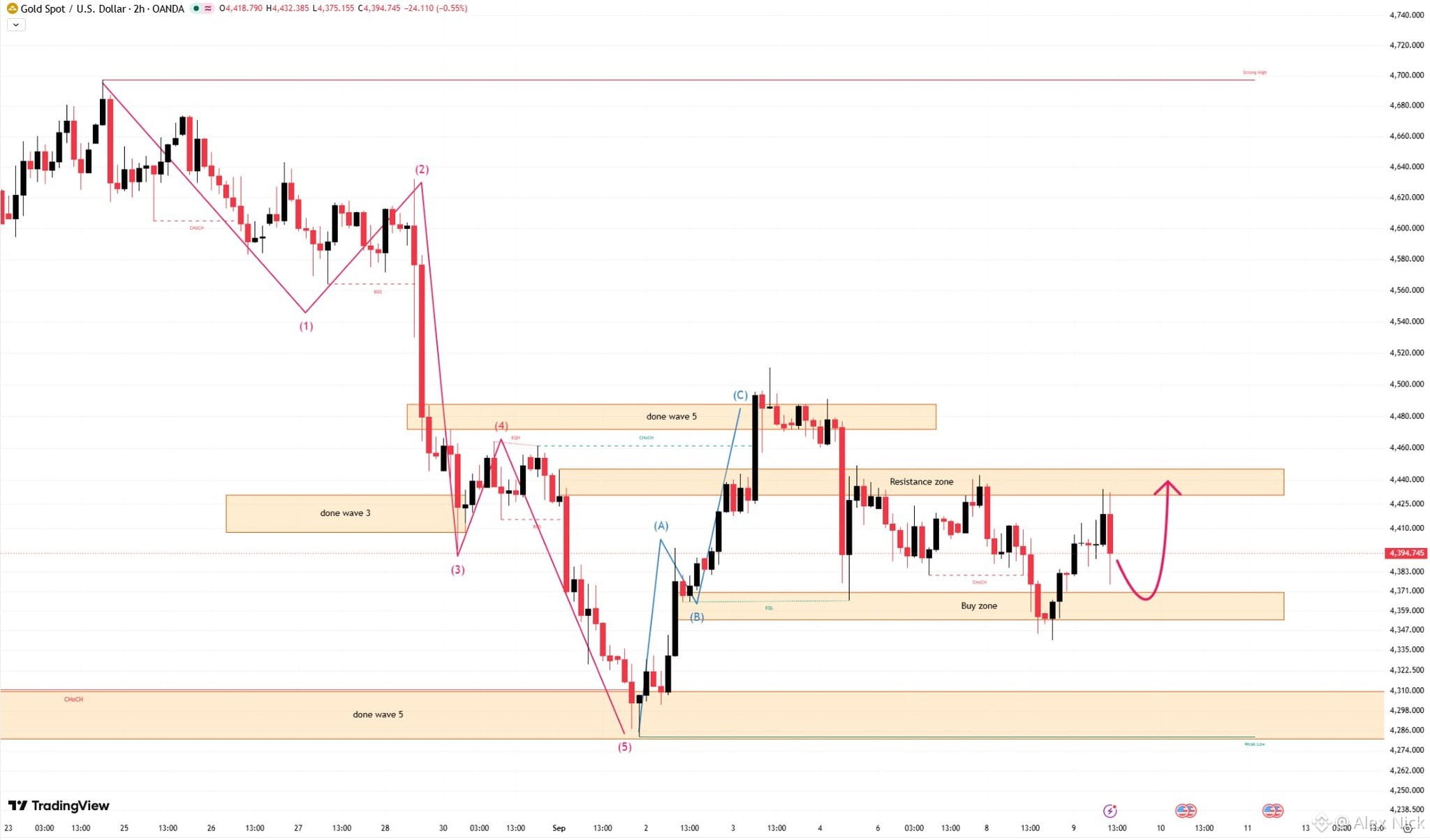
Untuk sesi perdagangan AS, perhatikan zona support antara 4355 dan 4370.
Pertimbangkan untuk membeli dalam zona support ini.
Jika harga bertahan di atas level ini, Anda dapat masuk ke posisi long, dengan target level resistance 4440.
Terima kasih atas like dan dukungannya; saya akan terus membagikan pembaruan. 💙
#XAUUSD
#GOLD
Untuk sesi perdagangan AS, perhatikan zona support antara 4355 dan 4370.
Pertimbangkan untuk membeli dalam zona support ini.
Jika harga bertahan di atas level ini, Anda dapat masuk ke posisi long, dengan target level resistance 4440.
Terima kasih atas like dan dukungannya; saya akan terus membagikan pembaruan. 💙
#GOLD
Untuk sesi perdagangan AS, perhatikan zona support antara 4355 dan 4370.
Pertimbangkan untuk membeli dalam zona support ini.
Jika harga bertahan di atas level ini, Anda dapat masuk ke posisi long, dengan target level resistance 4440.
Terima kasih atas like dan dukungannya; saya akan terus membagikan pembaruan. 💙
148
·
--
#XAUUSD #GOLD
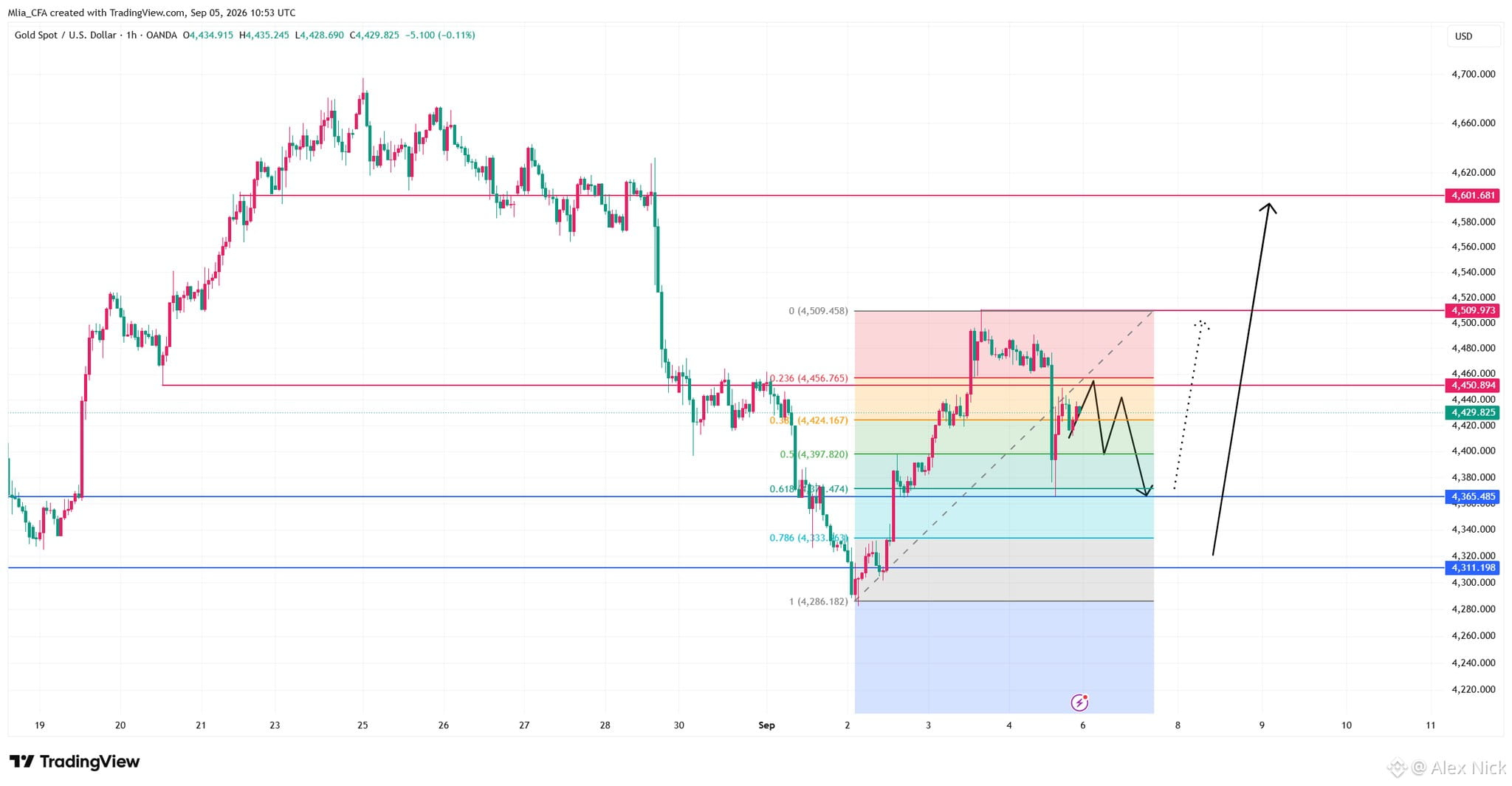
Perhatikan resistensi di zona 4430–4450 pada hari Senin depan. Jika harga gagal menembus area ini, pertimbangkan untuk menjual dan menunggu pullback ke rentang 4380–4360.
Perhatikan rentang 4360–4380 sebagai support. Jika harga menembus di bawah level ini, lanjutkan menjual dan targetkan zona 4310–4300.
Namun, jika support bertahan, pertimbangkan posisi jangka panjang dengan target di 4530–4600.
#XAUUSD #GOLD
Perhatikan resistensi di zona 4430–4450 pada hari Senin depan. Jika harga gagal menembus area ini, pertimbangkan untuk menjual dan menunggu pullback ke rentang 4380–4360.
Perhatikan rentang 4360–4380 sebagai support. Jika harga menembus di bawah level ini, lanjutkan menjual dan targetkan zona 4310–4300.
Namun, jika support bertahan, pertimbangkan posisi jangka panjang dengan target di 4530–4600.
Perhatikan resistensi di zona 4430–4450 pada hari Senin depan. Jika harga gagal menembus area ini, pertimbangkan untuk menjual dan menunggu pullback ke rentang 4380–4360.
Perhatikan rentang 4360–4380 sebagai support. Jika harga menembus di bawah level ini, lanjutkan menjual dan targetkan zona 4310–4300.
Namun, jika support bertahan, pertimbangkan posisi jangka panjang dengan target di 4530–4600.
130
·
--
#XAUUSD
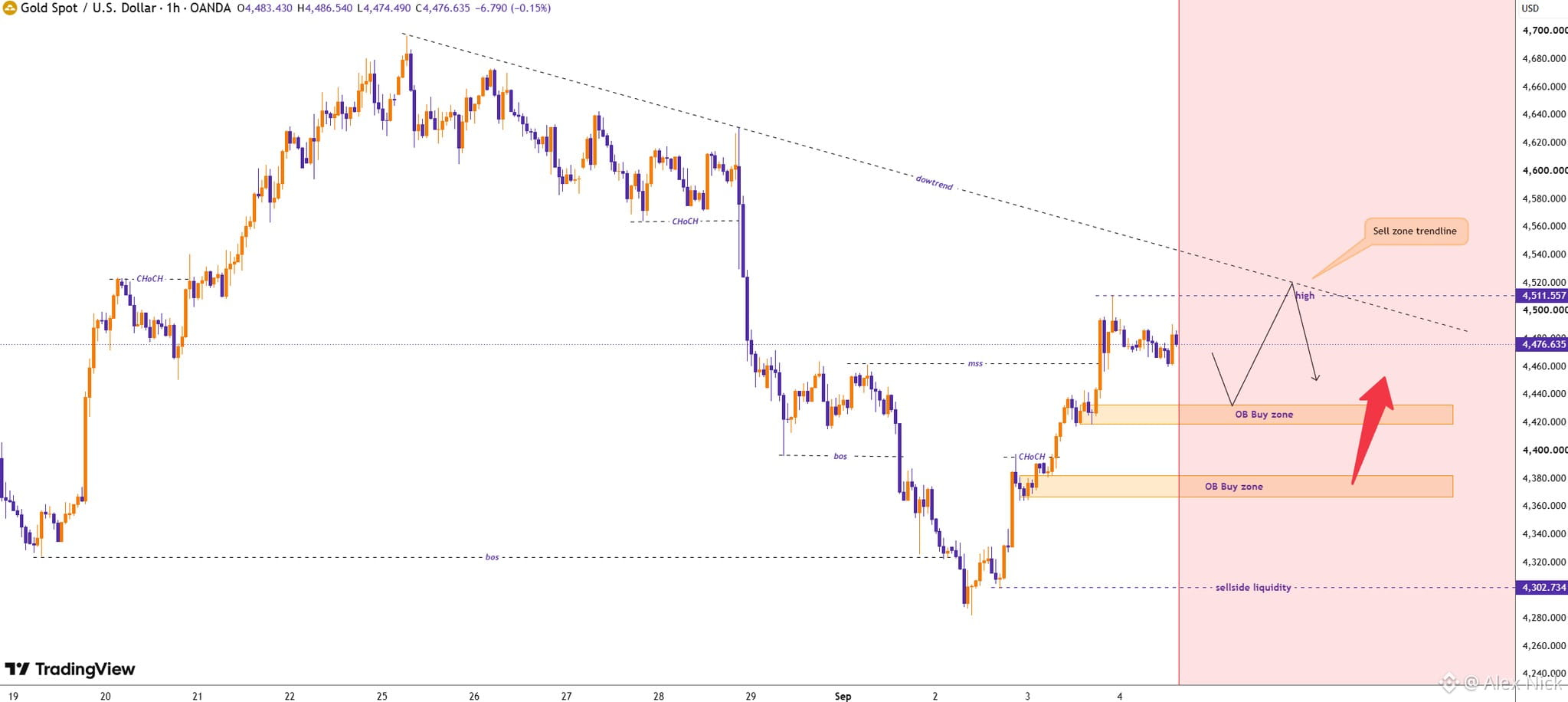
#Gold membuat rebound kuat dari area likuiditas sell-side 4,302 dan bergeser menjadi koreksi bullish jangka pendek.
Pemulihan terbaru mematahkan struktur minor dan mendorong harga kembali mendekati 4,480. Namun, sekarang harga sedang berada di bawah garis tren menurun dan high 4,511. Ini adalah area penolakan kunci bagi para penjual.
Dukungan pertama yang perlu diperhatikan adalah OB Buy Zone di sekitar 4,420 - 4,430. Jika emas terkoreksi turun kembali ke zona ini dan pembeli mempertahankannya, pemulihan dapat berlanjut menuju 4,500 - 4,511.
Namun jika emas mencapai 4,500 - 4,511 dan gagal menembus garis tren, area ini berpotensi menjadi bull trap. Penolakan di sana dapat mendorong harga kembali ke arah 4,430, lalu 4,375 - 4,385.
OB Buy Zone yang lebih dalam sekitar 4,370 - 4,385 tetap penting. Kehilangan zona ini akan melemahkan pemulihan dan membuka peluang untuk pengujian lain menuju 4,302.
#XAUUSD
#Gold membuat rebound kuat dari area likuiditas sell-side 4,302 dan bergeser menjadi koreksi bullish jangka pendek.
Pemulihan terbaru mematahkan struktur minor dan mendorong harga kembali mendekati 4,480. Namun, sekarang harga sedang berada di bawah garis tren menurun dan high 4,511. Ini adalah area penolakan kunci bagi para penjual.
Dukungan pertama yang perlu diperhatikan adalah OB Buy Zone di sekitar 4,420 - 4,430. Jika emas terkoreksi turun kembali ke zona ini dan pembeli mempertahankannya, pemulihan dapat berlanjut menuju 4,500 - 4,511.
Namun jika emas mencapai 4,500 - 4,511 dan gagal menembus garis tren, area ini berpotensi menjadi bull trap. Penolakan di sana dapat mendorong harga kembali ke arah 4,430, lalu 4,375 - 4,385.
OB Buy Zone yang lebih dalam sekitar 4,370 - 4,385 tetap penting. Kehilangan zona ini akan melemahkan pemulihan dan membuka peluang untuk pengujian lain menuju 4,302.
#Gold membuat rebound kuat dari area likuiditas sell-side 4,302 dan bergeser menjadi koreksi bullish jangka pendek.
Pemulihan terbaru mematahkan struktur minor dan mendorong harga kembali mendekati 4,480. Namun, sekarang harga sedang berada di bawah garis tren menurun dan high 4,511. Ini adalah area penolakan kunci bagi para penjual.
Dukungan pertama yang perlu diperhatikan adalah OB Buy Zone di sekitar 4,420 - 4,430. Jika emas terkoreksi turun kembali ke zona ini dan pembeli mempertahankannya, pemulihan dapat berlanjut menuju 4,500 - 4,511.
Namun jika emas mencapai 4,500 - 4,511 dan gagal menembus garis tren, area ini berpotensi menjadi bull trap. Penolakan di sana dapat mendorong harga kembali ke arah 4,430, lalu 4,375 - 4,385.
OB Buy Zone yang lebih dalam sekitar 4,370 - 4,385 tetap penting. Kehilangan zona ini akan melemahkan pemulihan dan membuka peluang untuk pengujian lain menuju 4,302.
155
·
--
#XAUUSD
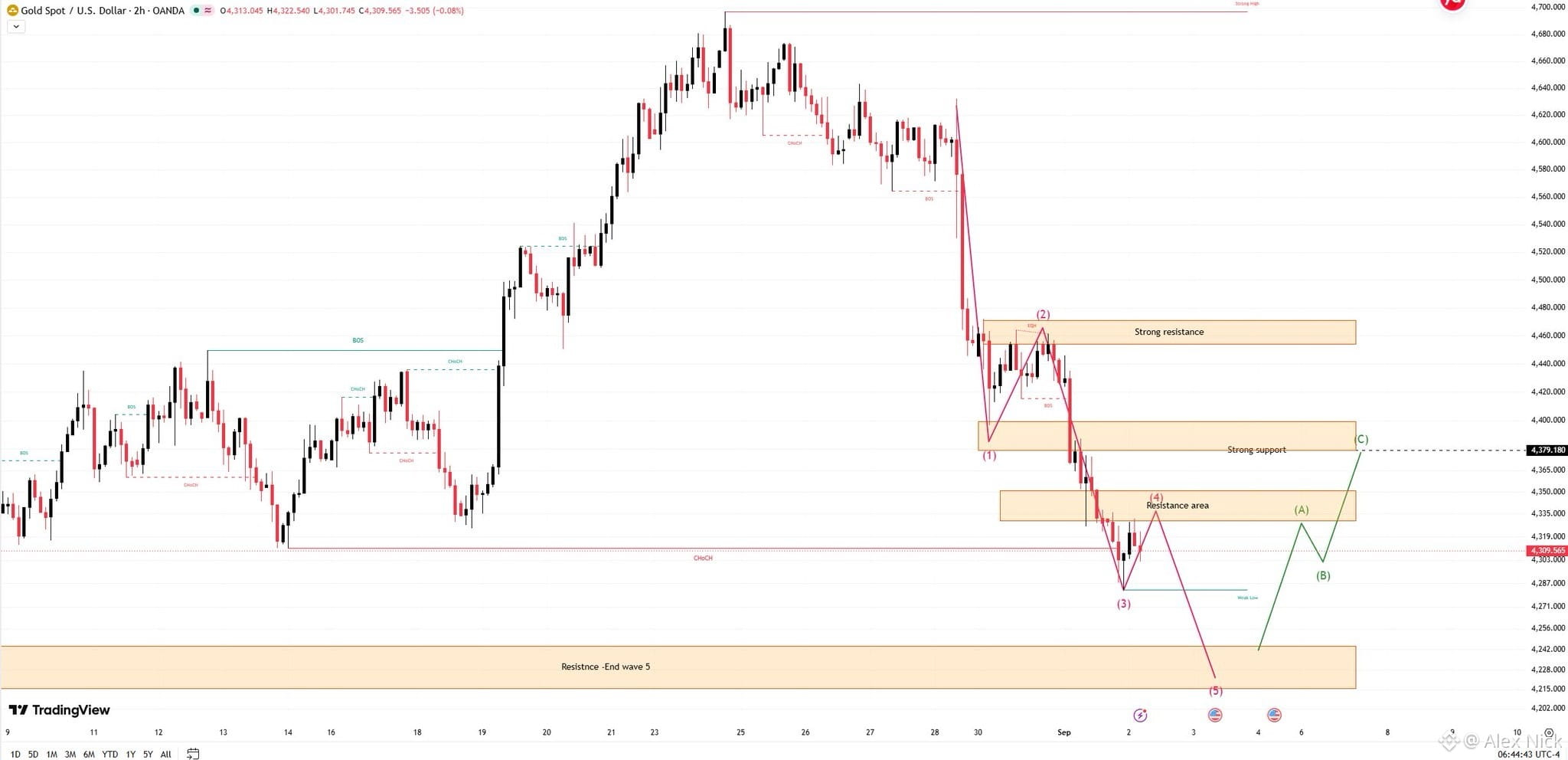
Pasar saat ini sedang tren ke bawah, dan pasar beruang terus berlanjut. 📉
#GOLD
Pasar diperkirakan akan turun hingga sekitar 4250 untuk menyelesaikan gelombang (5) lalu kemudian memantul (rebound).
Resistance berada di 4330-4350, di mana peluang untuk menjual masih ada.
Support berada di 4230-4250, tempat peluang untuk rebound dapat ditemukan.
#XAUUSD
Pasar saat ini sedang tren ke bawah, dan pasar beruang terus berlanjut. 📉
#GOLD
Pasar diperkirakan akan turun hingga sekitar 4250 untuk menyelesaikan gelombang (5) lalu kemudian memantul (rebound).
Resistance berada di 4330-4350, di mana peluang untuk menjual masih ada.
Support berada di 4230-4250, tempat peluang untuk rebound dapat ditemukan.
Pasar saat ini sedang tren ke bawah, dan pasar beruang terus berlanjut. 📉
#GOLD
Pasar diperkirakan akan turun hingga sekitar 4250 untuk menyelesaikan gelombang (5) lalu kemudian memantul (rebound).
Resistance berada di 4330-4350, di mana peluang untuk menjual masih ada.
Support berada di 4230-4250, tempat peluang untuk rebound dapat ditemukan.
169
·
--
$BTC
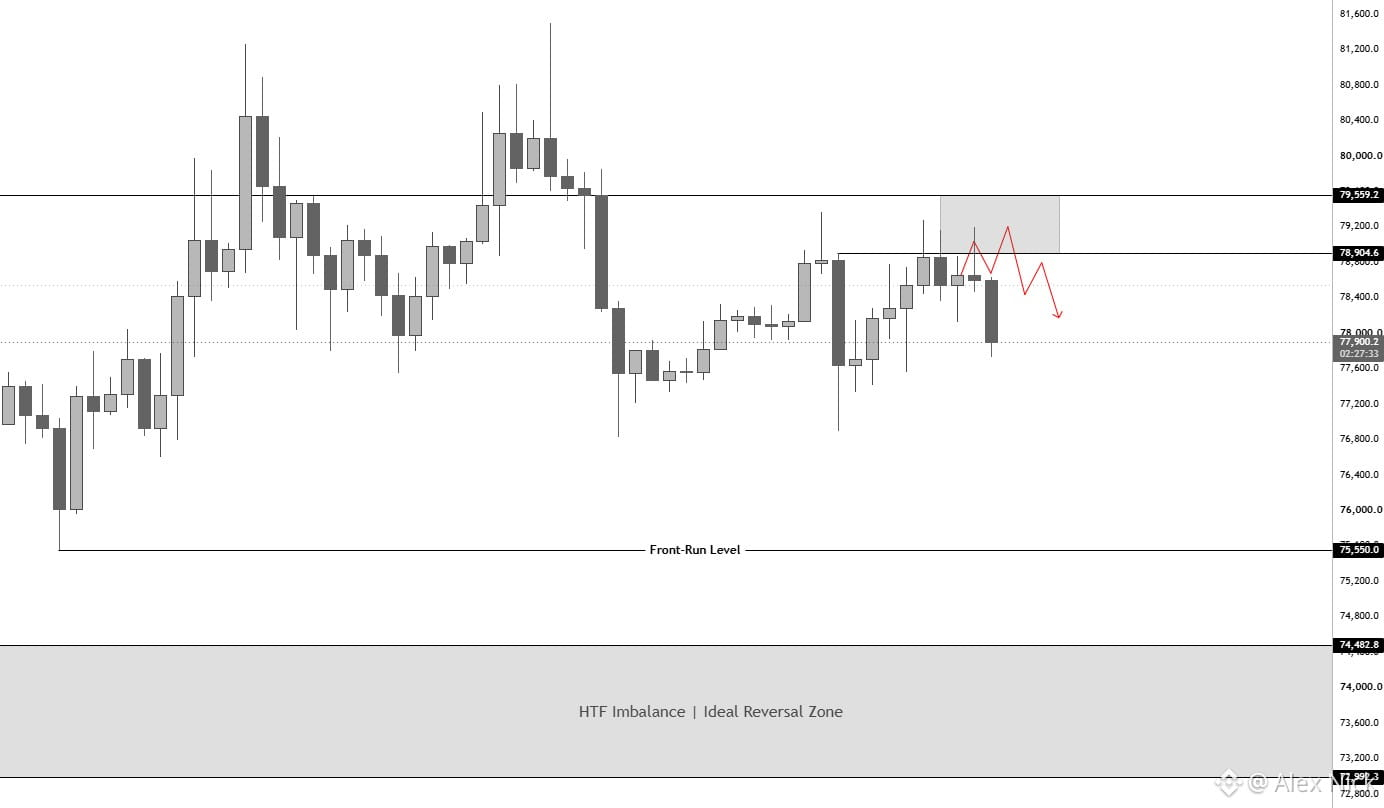
Berjalan Sesuai Rencana dan Ditolak dengan Sempurna.
Candle bulanan yang baru saja dibuka, dan dengan itu, saya memperkirakan akan ada penyapuan ke area low / likuiditas sisi bawah terlebih dahulu sebelum kita bergerak kembali ke sisi atas.
Pergerakan pertama saat bulan baru dimulai biasanya hanyalah umpan.
Jadi, akan sangat masuk akal untuk melihat penurunan ke wilayah 75,5K-74,4K sebelum kita mulai pulih mulai minggu depan.
$BTC
Berjalan Sesuai Rencana dan Ditolak dengan Sempurna.
Candle bulanan yang baru saja dibuka, dan dengan itu, saya memperkirakan akan ada penyapuan ke area low / likuiditas sisi bawah terlebih dahulu sebelum kita bergerak kembali ke sisi atas.
Pergerakan pertama saat bulan baru dimulai biasanya hanyalah umpan.
Jadi, akan sangat masuk akal untuk melihat penurunan ke wilayah 75,5K-74,4K sebelum kita mulai pulih mulai minggu depan.
Berjalan Sesuai Rencana dan Ditolak dengan Sempurna.
Candle bulanan yang baru saja dibuka, dan dengan itu, saya memperkirakan akan ada penyapuan ke area low / likuiditas sisi bawah terlebih dahulu sebelum kita bergerak kembali ke sisi atas.
Pergerakan pertama saat bulan baru dimulai biasanya hanyalah umpan.
Jadi, akan sangat masuk akal untuk melihat penurunan ke wilayah 75,5K-74,4K sebelum kita mulai pulih mulai minggu depan.
74
·
--
#XAUUSD #GOLD #FX
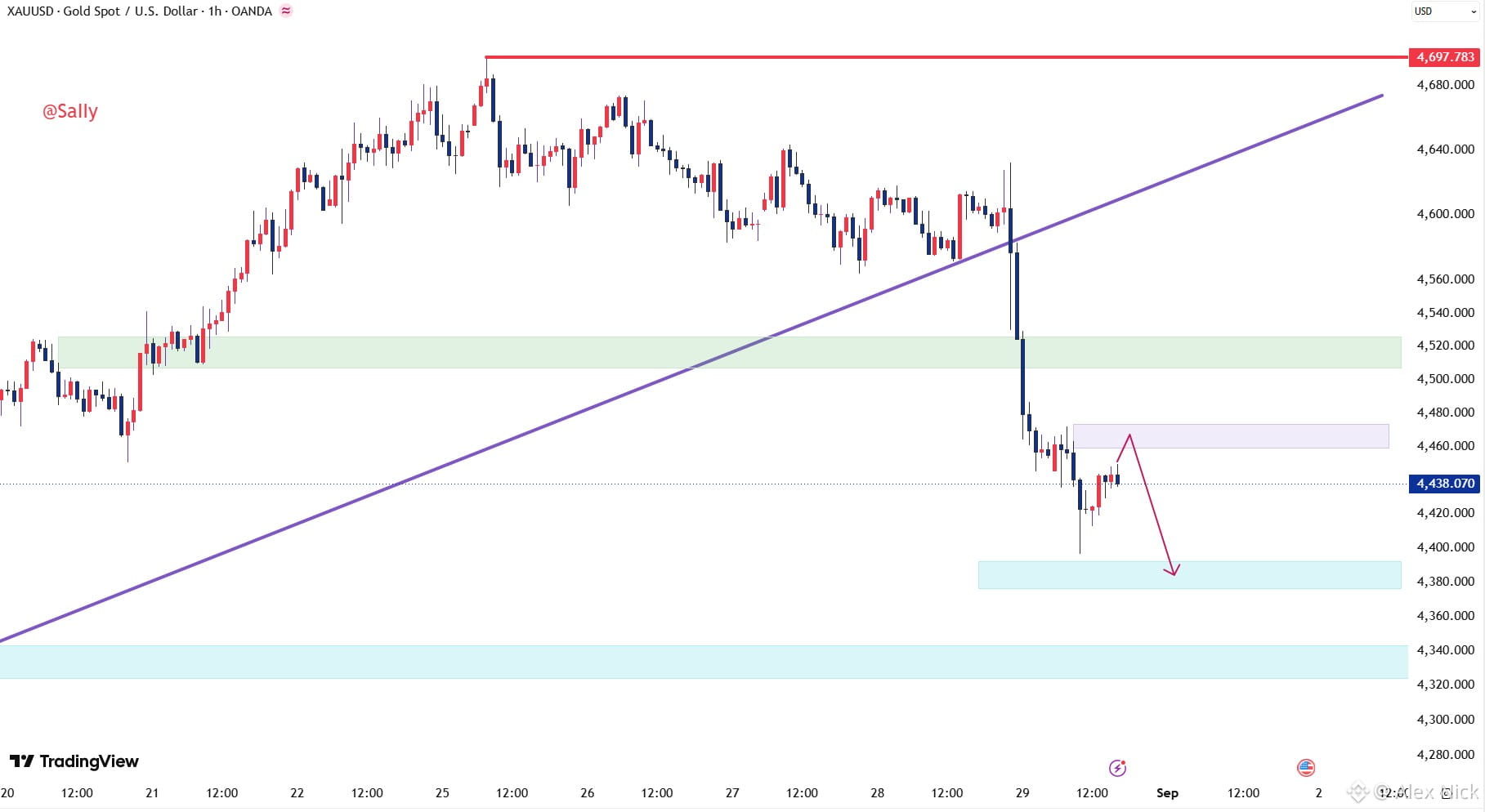
Emas menghadapi resistance di sekitar 4450, dan koreksi masih berlanjut.
Strategi emas jangka pendek: Jual (short) jika resistance ditemui di level yang lebih tinggi.
Emas saat ini bergerak sesuai prediksi saya, dan strategi saya untuk jual (short) di sekitar 4450 sudah menghasilkan profit.
Pasar sedang volatil, jadi ingat untuk melindungi profit Anda.
Jika emas memantul dan menembus 4450-4455, peluang jual berikutnya berada di sekitar 4470-4480.
Jangan langsung long untuk emas dalam jangka pendek. Tunggu hingga emas rebound ke sekitar 4445-4455 sebelum melakukan jual (short) lagi.
Suka analisis saya? Ingat untuk like dan ikuti saya.
#XAUUSD #GOLD #FX
Emas menghadapi resistance di sekitar 4450, dan koreksi masih berlanjut.
Strategi emas jangka pendek: Jual (short) jika resistance ditemui di level yang lebih tinggi.
Emas saat ini bergerak sesuai prediksi saya, dan strategi saya untuk jual (short) di sekitar 4450 sudah menghasilkan profit.
Pasar sedang volatil, jadi ingat untuk melindungi profit Anda.
Jika emas memantul dan menembus 4450-4455, peluang jual berikutnya berada di sekitar 4470-4480.
Jangan langsung long untuk emas dalam jangka pendek. Tunggu hingga emas rebound ke sekitar 4445-4455 sebelum melakukan jual (short) lagi.
Suka analisis saya? Ingat untuk like dan ikuti saya.
Emas menghadapi resistance di sekitar 4450, dan koreksi masih berlanjut.
Strategi emas jangka pendek: Jual (short) jika resistance ditemui di level yang lebih tinggi.
Emas saat ini bergerak sesuai prediksi saya, dan strategi saya untuk jual (short) di sekitar 4450 sudah menghasilkan profit.
Pasar sedang volatil, jadi ingat untuk melindungi profit Anda.
Jika emas memantul dan menembus 4450-4455, peluang jual berikutnya berada di sekitar 4470-4480.
Jangan langsung long untuk emas dalam jangka pendek. Tunggu hingga emas rebound ke sekitar 4445-4455 sebelum melakukan jual (short) lagi.
Suka analisis saya? Ingat untuk like dan ikuti saya.
119
·
--
#XAUUSD #GOLD
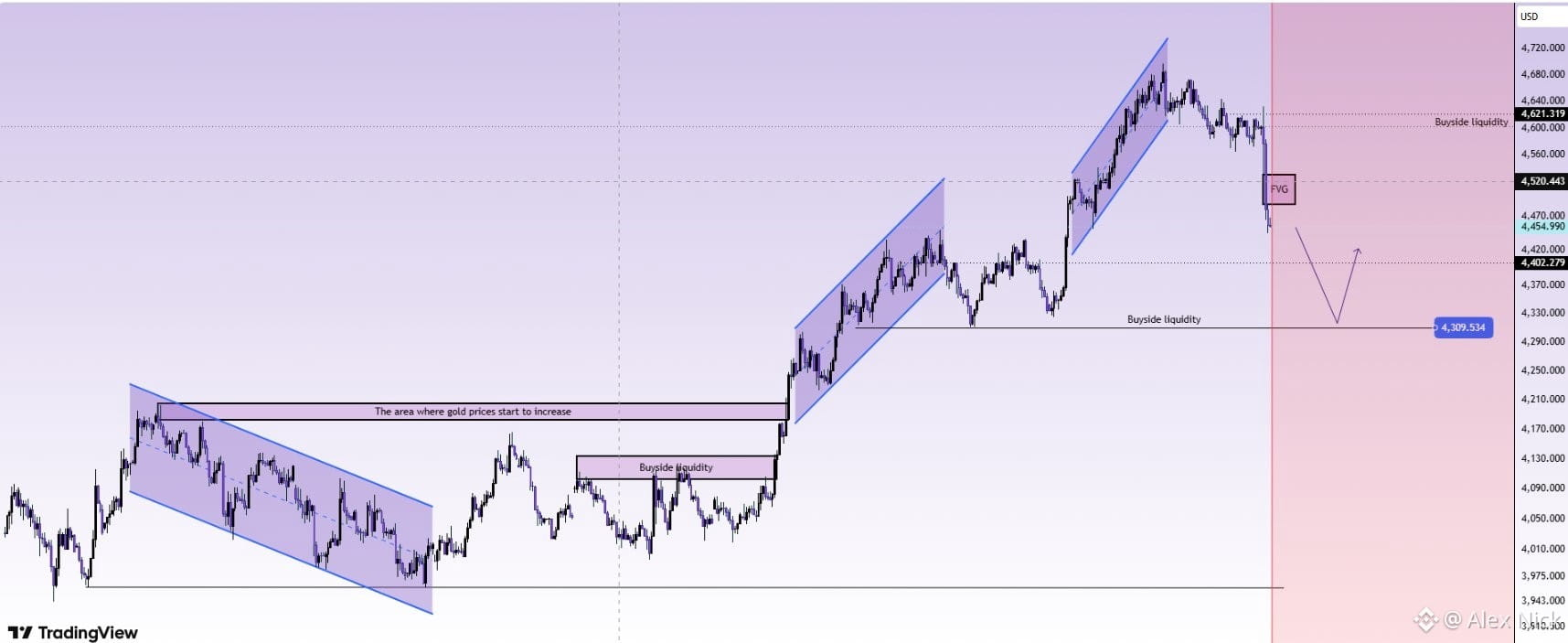
Pertimbangkan untuk mengambil posisi short hanya jika harga emas menghadapi resistance dan melakukan pullback dalam rentang 4470–4520, atau jika tembus di bawah level 4402 dengan momentum yang kuat.
Area Entry: Rentang 4470–4520 (setelah penolakan/pullback)
Entry Alternatif: Setelah terjadi tembus yang terkonfirmasi di bawah 4402
Target 1 (TP1): 4402
Target 2 (TP2): 4350
Target 3 (TP3): 4309
Jika harga emas melakukan pemulihan kuat kembali di atas 4560, prospek bearish yang dijelaskan di atas menjadi lebih rumit. Dalam skenario tersebut, penurunan mungkin berubah menjadi deep liquidity sweep, dengan rebound yang baru terjadi setelahnya.
#XAUUSD #GOLD
Pertimbangkan untuk mengambil posisi short hanya jika harga emas menghadapi resistance dan melakukan pullback dalam rentang 4470–4520, atau jika tembus di bawah level 4402 dengan momentum yang kuat.
Area Entry: Rentang 4470–4520 (setelah penolakan/pullback)
Entry Alternatif: Setelah terjadi tembus yang terkonfirmasi di bawah 4402
Target 1 (TP1): 4402
Target 2 (TP2): 4350
Target 3 (TP3): 4309
Jika harga emas melakukan pemulihan kuat kembali di atas 4560, prospek bearish yang dijelaskan di atas menjadi lebih rumit. Dalam skenario tersebut, penurunan mungkin berubah menjadi deep liquidity sweep, dengan rebound yang baru terjadi setelahnya.
Pertimbangkan untuk mengambil posisi short hanya jika harga emas menghadapi resistance dan melakukan pullback dalam rentang 4470–4520, atau jika tembus di bawah level 4402 dengan momentum yang kuat.
Area Entry: Rentang 4470–4520 (setelah penolakan/pullback)
Entry Alternatif: Setelah terjadi tembus yang terkonfirmasi di bawah 4402
Target 1 (TP1): 4402
Target 2 (TP2): 4350
Target 3 (TP3): 4309
Jika harga emas melakukan pemulihan kuat kembali di atas 4560, prospek bearish yang dijelaskan di atas menjadi lebih rumit. Dalam skenario tersebut, penurunan mungkin berubah menjadi deep liquidity sweep, dengan rebound yang baru terjadi setelahnya.
118
·
--
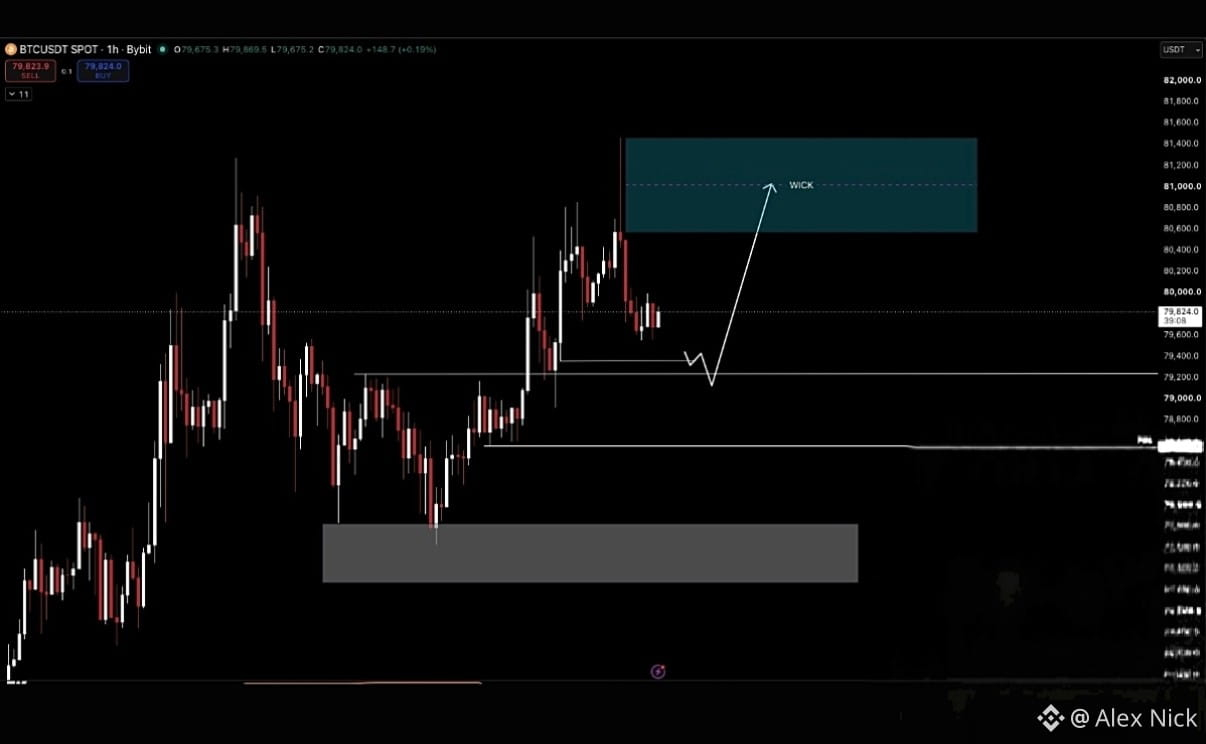
$BTC mengambil PDH 80,8K dan menunjukkan penolakan kecil lagi.
Penolakan ini meninggalkan wick besar pada 1H/4H; secara pribadi saya sedang mencari untuk mengisi wick tersebut.
Jadi satu-satunya potensi setup yang saya lihat untuk hari ini adalah scalp-long menuju pengisian 50% wick di sekitar 81K.
Secara statistik, ketika harga menembus PDH, peluang untuk menahan PDL pada hari itu jauh lebih tinggi.
Itulah sebabnya saya menggunakan PDL 78,5K sebagai invalidasi untuk tesis scalp-long saya hari ini.
Saya bersedia mencari scalp-long jika Bitcoin menyapu low 79,3K.
Saat itu terjadi, saya akan mencari pemicu menuju pengisian 50% wick sekaligus membiarkan runner terbuka untuk potensi upside yang lebih besar.
Momentum jelas bullish, tapi kita juga sedang trading di resistance HTF, jadi saya mengelola risiko sewajarnya.
$BTC mengambil PDH 80,8K dan menunjukkan penolakan kecil lagi.
Penolakan ini meninggalkan wick besar pada 1H/4H; secara pribadi saya sedang mencari untuk mengisi wick tersebut.
Jadi satu-satunya potensi setup yang saya lihat untuk hari ini adalah scalp-long menuju pengisian 50% wick di sekitar 81K.
Secara statistik, ketika harga menembus PDH, peluang untuk menahan PDL pada hari itu jauh lebih tinggi.
Itulah sebabnya saya menggunakan PDL 78,5K sebagai invalidasi untuk tesis scalp-long saya hari ini.
Saya bersedia mencari scalp-long jika Bitcoin menyapu low 79,3K.
Saat itu terjadi, saya akan mencari pemicu menuju pengisian 50% wick sekaligus membiarkan runner terbuka untuk potensi upside yang lebih besar.
Momentum jelas bullish, tapi kita juga sedang trading di resistance HTF, jadi saya mengelola risiko sewajarnya.
Penolakan ini meninggalkan wick besar pada 1H/4H; secara pribadi saya sedang mencari untuk mengisi wick tersebut.
Jadi satu-satunya potensi setup yang saya lihat untuk hari ini adalah scalp-long menuju pengisian 50% wick di sekitar 81K.
Secara statistik, ketika harga menembus PDH, peluang untuk menahan PDL pada hari itu jauh lebih tinggi.
Itulah sebabnya saya menggunakan PDL 78,5K sebagai invalidasi untuk tesis scalp-long saya hari ini.
Saya bersedia mencari scalp-long jika Bitcoin menyapu low 79,3K.
Saat itu terjadi, saya akan mencari pemicu menuju pengisian 50% wick sekaligus membiarkan runner terbuka untuk potensi upside yang lebih besar.
Momentum jelas bullish, tapi kita juga sedang trading di resistance HTF, jadi saya mengelola risiko sewajarnya.
68
·
--
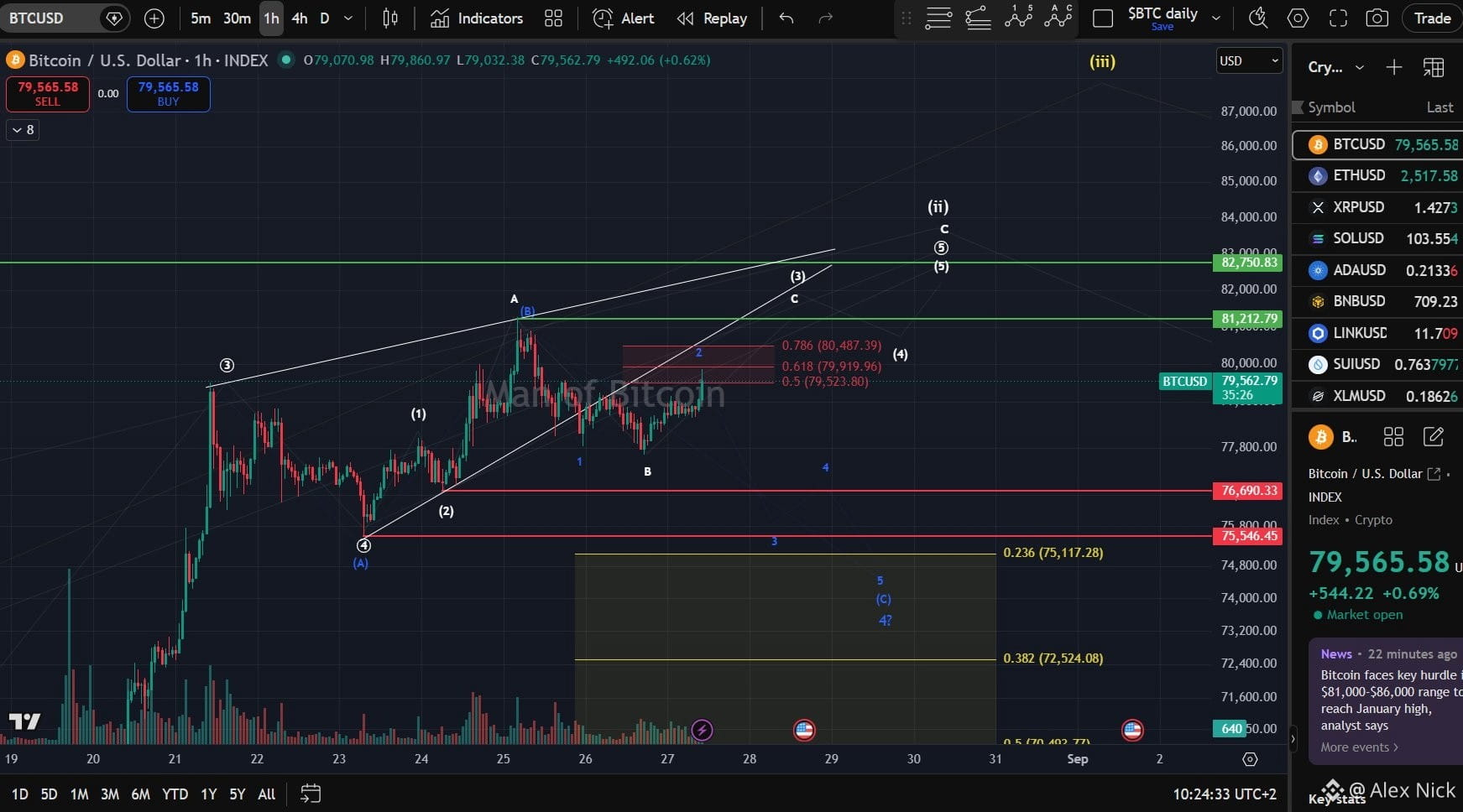
$BTC : Harga bereaksi terhadap area resistensi untuk potensi puncak gelombang-2. Volume rendah, dan pergerakannya sejauh ini terlalu korektif untuk dianggap sebagai gelombang-c (3) yang andal. Mari kita lihat, masih ada 30 menit tersisa sampai candle per jam ditutup.
Selama harga tetap di atas $77,618, harga masih bisa naik lebih tinggi secara langsung.
$BTC : Harga bereaksi terhadap area resistensi untuk potensi puncak gelombang-2. Volume rendah, dan pergerakannya sejauh ini terlalu korektif untuk dianggap sebagai gelombang-c (3) yang andal. Mari kita lihat, masih ada 30 menit tersisa sampai candle per jam ditutup.
Selama harga tetap di atas $77,618, harga masih bisa naik lebih tinggi secara langsung.
Selama harga tetap di atas $77,618, harga masih bisa naik lebih tinggi secara langsung.
76
·
--
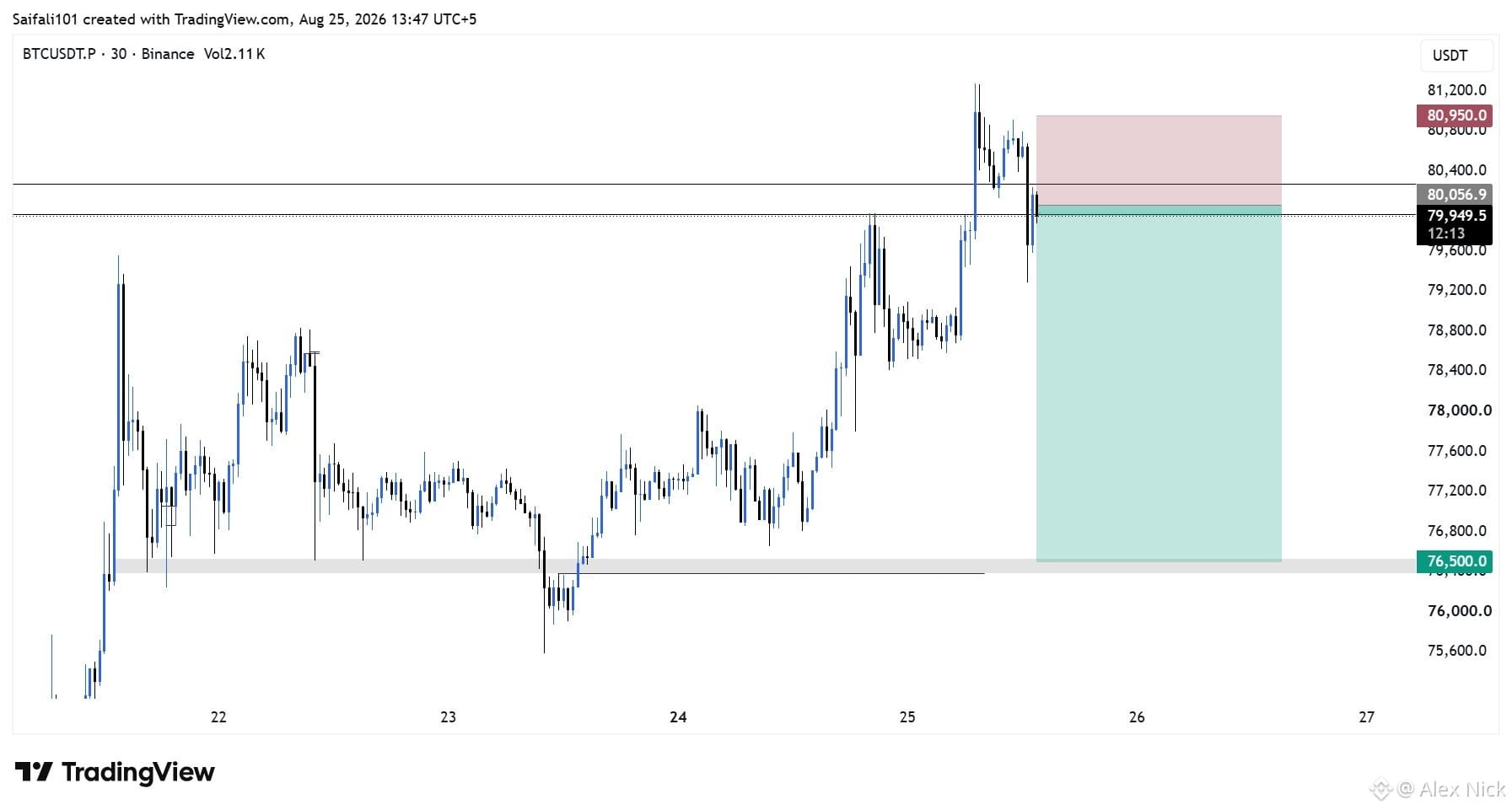
$BTC Short Trade📉
Entry CMP: 80,050
SL: 80,950
TP: 76,500
BTC menyimpang di atas HTF short POI kami dan kini telah kembali ke dalam range LTF.
Mengambil posisi short di sini, menargetkan area bawah range $76,5K. Risiko rendah.
$BTC Short Trade📉
Entry CMP: 80,050
SL: 80,950
TP: 76,500
BTC menyimpang di atas HTF short POI kami dan kini telah kembali ke dalam range LTF.
Mengambil posisi short di sini, menargetkan area bawah range $76,5K. Risiko rendah.
Entry CMP: 80,050
SL: 80,950
TP: 76,500
BTC menyimpang di atas HTF short POI kami dan kini telah kembali ke dalam range LTF.
Mengambil posisi short di sini, menargetkan area bawah range $76,5K. Risiko rendah.
98
·
--
#XAUUSD #GOLD
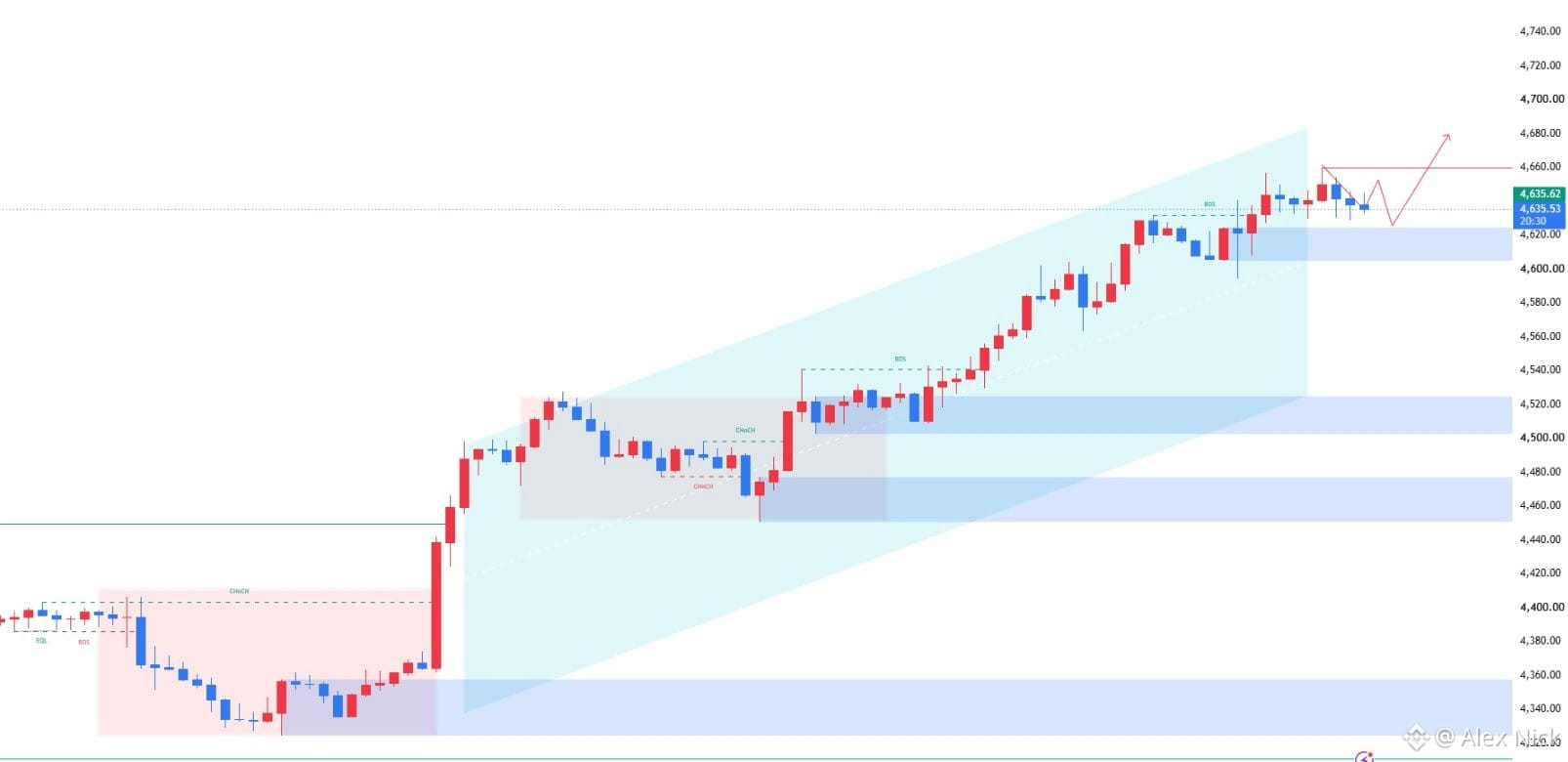
Harga saat ini sedang diperdagangkan dekat 4.636; tunggu koreksi/pullback ke zona permintaan utama dan amati reaksi yang jelas sebelum masuk ke pasar.
Target kenaikan:
→ 4,655–4,665
Jika harga menembus di atas 4,665 dan stabil, kelanjutan tren bullish dapat membuka peluang untuk keuntungan lebih lanjut.
Skenario alternatif: Jika harga mencapai kisaran 4,655–4,665 dan menunjukkan tanda penolakan yang kuat disertai konfirmasi bearish, pertimbangkan perdagangan short jangka pendek "scalp" yang menargetkan pullback ke area 4,620.
#XAUUSD #GOLD
Harga saat ini sedang diperdagangkan dekat 4.636; tunggu koreksi/pullback ke zona permintaan utama dan amati reaksi yang jelas sebelum masuk ke pasar.
Target kenaikan:
→ 4,655–4,665
Jika harga menembus di atas 4,665 dan stabil, kelanjutan tren bullish dapat membuka peluang untuk keuntungan lebih lanjut.
Skenario alternatif: Jika harga mencapai kisaran 4,655–4,665 dan menunjukkan tanda penolakan yang kuat disertai konfirmasi bearish, pertimbangkan perdagangan short jangka pendek "scalp" yang menargetkan pullback ke area 4,620.
Harga saat ini sedang diperdagangkan dekat 4.636; tunggu koreksi/pullback ke zona permintaan utama dan amati reaksi yang jelas sebelum masuk ke pasar.
Target kenaikan:
→ 4,655–4,665
Jika harga menembus di atas 4,665 dan stabil, kelanjutan tren bullish dapat membuka peluang untuk keuntungan lebih lanjut.
Skenario alternatif: Jika harga mencapai kisaran 4,655–4,665 dan menunjukkan tanda penolakan yang kuat disertai konfirmasi bearish, pertimbangkan perdagangan short jangka pendek "scalp" yang menargetkan pullback ke area 4,620.
125
·
--
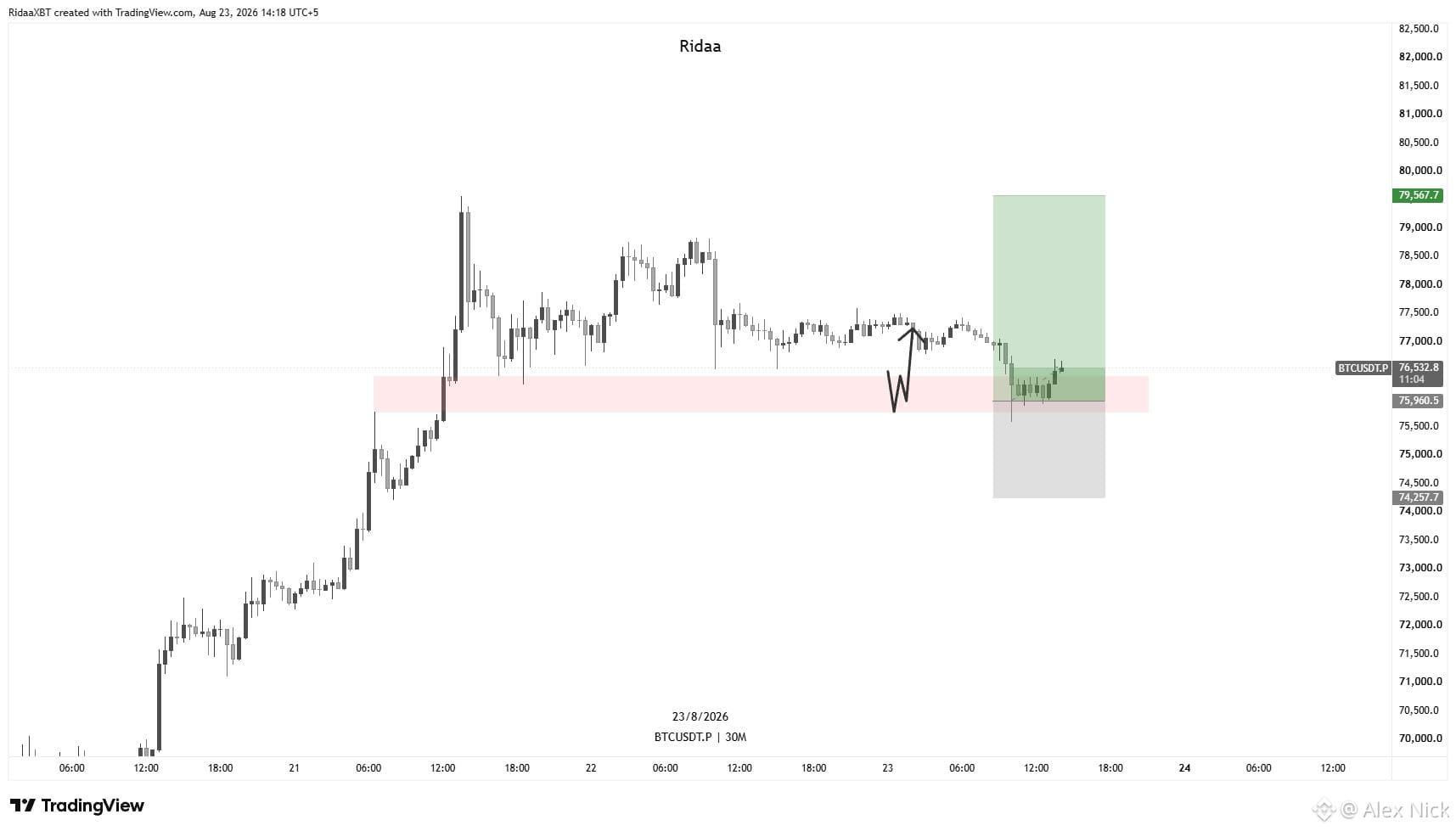
$BTC
Jika batas Anda ditetapkan pada longs, seharusnya sudah terisi di sini.
Saya membatalkannya karena akhir pekan, jadi saya tidak bisa masuk.
Rencananya masih berlaku, dan longs Anda harusnya dicetak dari sini.
$BTC
Jika batas Anda ditetapkan pada longs, seharusnya sudah terisi di sini.
Saya membatalkannya karena akhir pekan, jadi saya tidak bisa masuk.
Rencananya masih berlaku, dan longs Anda harusnya dicetak dari sini.
Jika batas Anda ditetapkan pada longs, seharusnya sudah terisi di sini.
Saya membatalkannya karena akhir pekan, jadi saya tidak bisa masuk.
Rencananya masih berlaku, dan longs Anda harusnya dicetak dari sini.
94
·
--
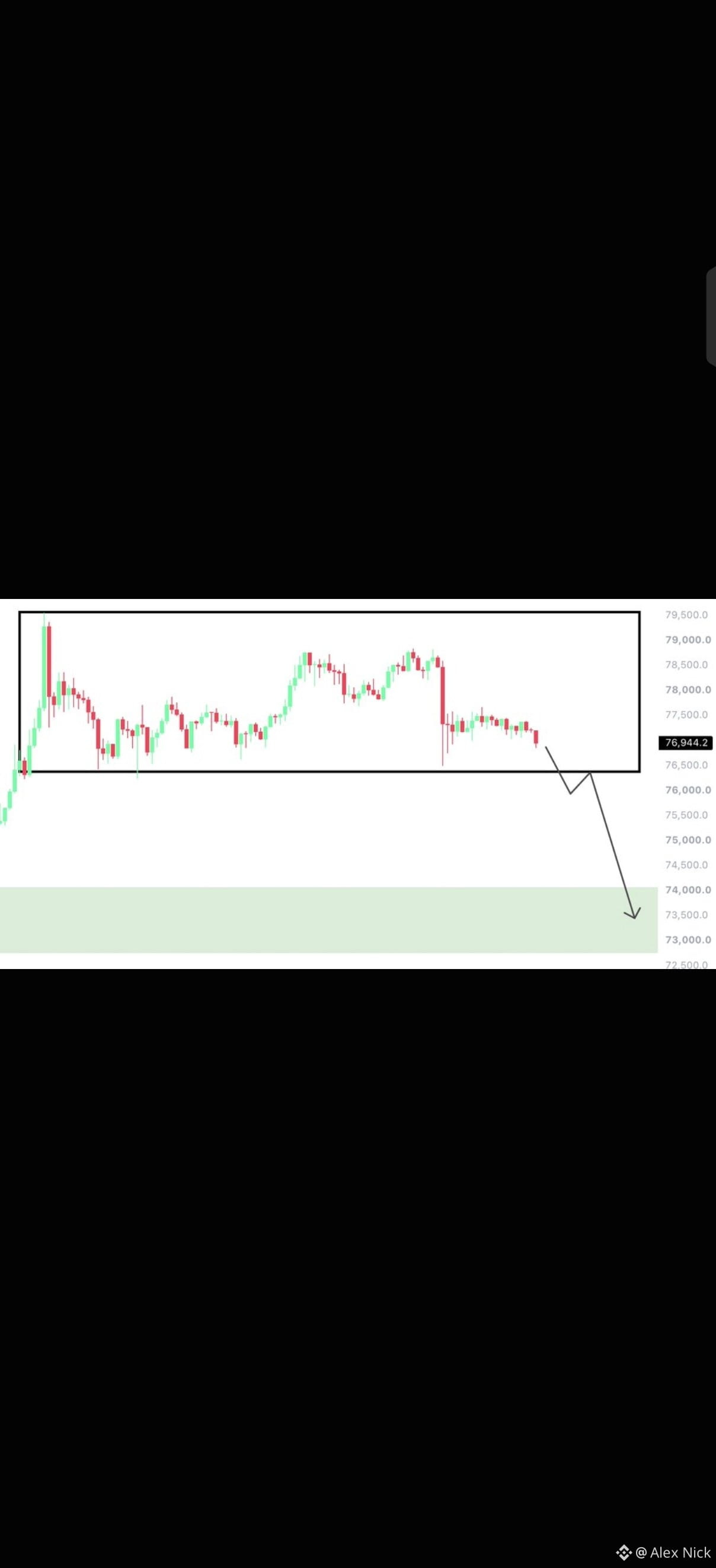
$BTC saat ini membentuk kisaran menyamping pada time frame yang lebih rendah.
Level yang harus dipertahankan adalah $76,500.
Jika level itu ditembus, area kunci berikutnya yang perlu diawasi adalah $73,000–$74,000.
$BTC saat ini membentuk kisaran menyamping pada time frame yang lebih rendah.
Level yang harus dipertahankan adalah $76,500.
Jika level itu ditembus, area kunci berikutnya yang perlu diawasi adalah $73,000–$74,000.
Level yang harus dipertahankan adalah $76,500.
Jika level itu ditembus, area kunci berikutnya yang perlu diawasi adalah $73,000–$74,000.
116
·
--
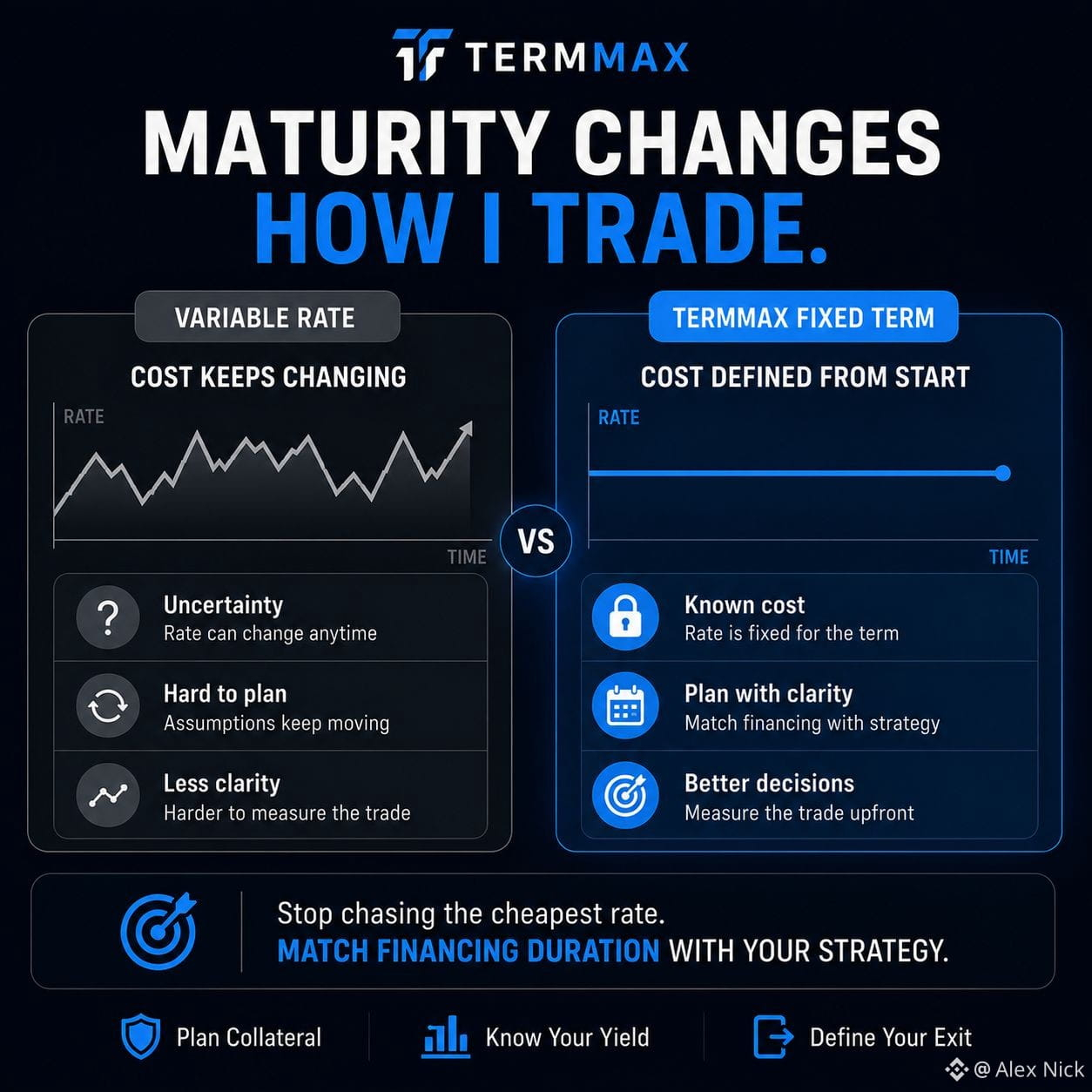
Satu hal yang menurut saya kurang dihargai dari kredit berjangka tetap adalah bahwa jatuh tempo mengubah cara saya memikirkan sebuah trade. Di pasar DeFi dengan suku bunga variabel, saya bisa membiarkan posisi tetap terbuka sementara biaya pendanaan berubah diam-diam di bawah saya. Dengan @TermMax, tingkat pinjaman ditetapkan untuk jangka waktu tertentu, sehingga asumsi pendanaan menjadi bagian dari tesis trade awal, bukan variabel yang baru saya temukan belakangan. Itu penting ketika saya mencoba memutuskan apakah imbal hasil yang diharapkan membenarkan biaya modal. #TermMax
Trade-off yang menarik adalah komitmen versus ketidakpastian. Saya kehilangan sebagian fleksibilitas karena modal disusun berdasarkan jatuh tempo, tetapi saya mendapatkan horizon waktu yang lebih jelas untuk merencanakan agunan, imbal hasil yang diharapkan, dan kondisi keluar. Saya bisa mengajukan pertanyaan yang jauh lebih berguna sebelum masuk: seperti apa posisi ini jika biaya pendanaan saya sudah diketahui sampai jatuh tempo? Itu membuat keputusan kurang berfokus pada mengejar tingkat bunga termurah saat ini dan lebih pada mencocokkan durasi pendanaan dengan strategi yang sebenarnya. Bagi saya, di situlah kredit berbunga tetap menjadi lebih dari sekadar fitur peminjaman. Itu menjadi cara untuk membuat asumsi di balik trade lebih mudah diukur. Bisakah jatuh tempo pendanaan yang terdefinisi menjadi sama pentingnya dengan harga masuk saat menyusun posisi DeFi?
@termmax #TermMax
Satu hal yang menurut saya kurang dihargai dari kredit berjangka tetap adalah bahwa jatuh tempo mengubah cara saya memikirkan sebuah trade. Di pasar DeFi dengan suku bunga variabel, saya bisa membiarkan posisi tetap terbuka sementara biaya pendanaan berubah diam-diam di bawah saya. Dengan @TermMax, tingkat pinjaman ditetapkan untuk jangka waktu tertentu, sehingga asumsi pendanaan menjadi bagian dari tesis trade awal, bukan variabel yang baru saya temukan belakangan. Itu penting ketika saya mencoba memutuskan apakah imbal hasil yang diharapkan membenarkan biaya modal. #TermMax
Trade-off yang menarik adalah komitmen versus ketidakpastian. Saya kehilangan sebagian fleksibilitas karena modal disusun berdasarkan jatuh tempo, tetapi saya mendapatkan horizon waktu yang lebih jelas untuk merencanakan agunan, imbal hasil yang diharapkan, dan kondisi keluar. Saya bisa mengajukan pertanyaan yang jauh lebih berguna sebelum masuk: seperti apa posisi ini jika biaya pendanaan saya sudah diketahui sampai jatuh tempo? Itu membuat keputusan kurang berfokus pada mengejar tingkat bunga termurah saat ini dan lebih pada mencocokkan durasi pendanaan dengan strategi yang sebenarnya. Bagi saya, di situlah kredit berbunga tetap menjadi lebih dari sekadar fitur peminjaman. Itu menjadi cara untuk membuat asumsi di balik trade lebih mudah diukur. Bisakah jatuh tempo pendanaan yang terdefinisi menjadi sama pentingnya dengan harga masuk saat menyusun posisi DeFi?
@TermMax #TermMax
Trade-off yang menarik adalah komitmen versus ketidakpastian. Saya kehilangan sebagian fleksibilitas karena modal disusun berdasarkan jatuh tempo, tetapi saya mendapatkan horizon waktu yang lebih jelas untuk merencanakan agunan, imbal hasil yang diharapkan, dan kondisi keluar. Saya bisa mengajukan pertanyaan yang jauh lebih berguna sebelum masuk: seperti apa posisi ini jika biaya pendanaan saya sudah diketahui sampai jatuh tempo? Itu membuat keputusan kurang berfokus pada mengejar tingkat bunga termurah saat ini dan lebih pada mencocokkan durasi pendanaan dengan strategi yang sebenarnya. Bagi saya, di situlah kredit berbunga tetap menjadi lebih dari sekadar fitur peminjaman. Itu menjadi cara untuk membuat asumsi di balik trade lebih mudah diukur. Bisakah jatuh tempo pendanaan yang terdefinisi menjadi sama pentingnya dengan harga masuk saat menyusun posisi DeFi?
@TermMax #TermMax
72
·
--
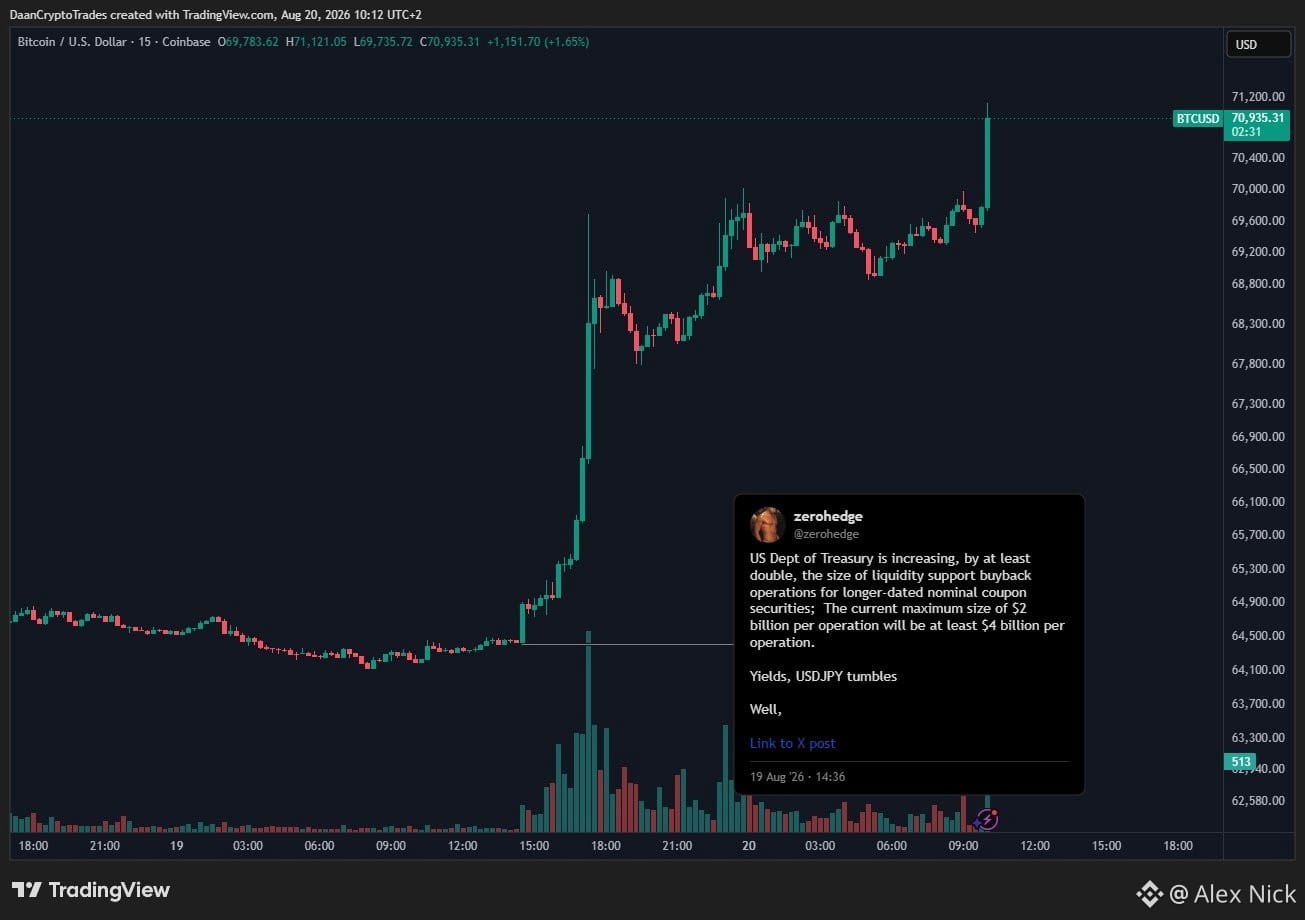
$BTC & Crypto love yang merendahkan.
Yang kita butuhkan hanyalah sedikit petunjuk tentang QE/YCC atau apa pun namanya untuk memulai momentumnya.
$BTC & Crypto love yang merendahkan.
Yang kita butuhkan hanyalah sedikit petunjuk tentang QE/YCC atau apa pun namanya untuk memulai momentumnya.
Yang kita butuhkan hanyalah sedikit petunjuk tentang QE/YCC atau apa pun namanya untuk memulai momentumnya.
2
91
·
--
Dulu saya mengira masalah terbesar dalam pinjaman DeFi hanyalah menemukan suku bunga yang bagus. Sekarang saya pikir masalah yang lebih besar adalah pergeseran suku bunga. Suku bunga pinjaman variabel bisa terlihat murah saat saya membuka posisi, tetapi tekanan likuiditas mendadak atau lonjakan pasar dapat mengubah ekonominya sebelum perdagangan saya mencapai titik keluar yang direncanakan. Di situlah @TermMax menarik perhatian saya. Struktur suku bunga tetap dan tenor tetapnya membuat saya mengetahui biaya pendanaan sejak awal, sehingga saya bisa menilai posisi berdasarkan biaya carry yang sudah ditentukan, alih-alih terus-menerus menghitung ulang asumsi saya.
Komprominya adalah fleksibilitas. Mengunci biaya pinjaman hingga jatuh tempo berarti saya melepaskan sebagian kebebasan untuk merespons perubahan suku bunga, tetapi batasan itu bisa berguna ketika strategi saya sudah memiliki horizon waktu yang jelas. Saya bisa merencanakan kebutuhan agunan, imbal hasil yang diharapkan, dan kondisi keluar berdasarkan beban pendanaan yang sudah diketahui, alih-alih memperlakukan suku bunga sebagai variabel lain yang terus bergerak. Bagi pemberi pinjaman, struktur yang sama mengubah persamaan dengan membuat imbal hasil dapat diprediksi hingga jatuh tempo, bukan bergantung pada perubahan kondisi pool. Menurut saya, pertanyaan menariknya adalah apakah pendanaan yang dapat diprediksi menjadi lebih bernilai daripada fleksibilitas maksimum ketika pasar menjadi sangat volatil.
#TermMax @termmax
Dulu saya mengira masalah terbesar dalam pinjaman DeFi hanyalah menemukan suku bunga yang bagus. Sekarang saya pikir masalah yang lebih besar adalah pergeseran suku bunga. Suku bunga pinjaman variabel bisa terlihat murah saat saya membuka posisi, tetapi tekanan likuiditas mendadak atau lonjakan pasar dapat mengubah ekonominya sebelum perdagangan saya mencapai titik keluar yang direncanakan. Di situlah @TermMax menarik perhatian saya. Struktur suku bunga tetap dan tenor tetapnya membuat saya mengetahui biaya pendanaan sejak awal, sehingga saya bisa menilai posisi berdasarkan biaya carry yang sudah ditentukan, alih-alih terus-menerus menghitung ulang asumsi saya.
Komprominya adalah fleksibilitas. Mengunci biaya pinjaman hingga jatuh tempo berarti saya melepaskan sebagian kebebasan untuk merespons perubahan suku bunga, tetapi batasan itu bisa berguna ketika strategi saya sudah memiliki horizon waktu yang jelas. Saya bisa merencanakan kebutuhan agunan, imbal hasil yang diharapkan, dan kondisi keluar berdasarkan beban pendanaan yang sudah diketahui, alih-alih memperlakukan suku bunga sebagai variabel lain yang terus bergerak. Bagi pemberi pinjaman, struktur yang sama mengubah persamaan dengan membuat imbal hasil dapat diprediksi hingga jatuh tempo, bukan bergantung pada perubahan kondisi pool. Menurut saya, pertanyaan menariknya adalah apakah pendanaan yang dapat diprediksi menjadi lebih bernilai daripada fleksibilitas maksimum ketika pasar menjadi sangat volatil.
#TermMax @TermMax
Komprominya adalah fleksibilitas. Mengunci biaya pinjaman hingga jatuh tempo berarti saya melepaskan sebagian kebebasan untuk merespons perubahan suku bunga, tetapi batasan itu bisa berguna ketika strategi saya sudah memiliki horizon waktu yang jelas. Saya bisa merencanakan kebutuhan agunan, imbal hasil yang diharapkan, dan kondisi keluar berdasarkan beban pendanaan yang sudah diketahui, alih-alih memperlakukan suku bunga sebagai variabel lain yang terus bergerak. Bagi pemberi pinjaman, struktur yang sama mengubah persamaan dengan membuat imbal hasil dapat diprediksi hingga jatuh tempo, bukan bergantung pada perubahan kondisi pool. Menurut saya, pertanyaan menariknya adalah apakah pendanaan yang dapat diprediksi menjadi lebih bernilai daripada fleksibilitas maksimum ketika pasar menjadi sangat volatil.
#TermMax @TermMax

2
2
59
·
--
$BTC
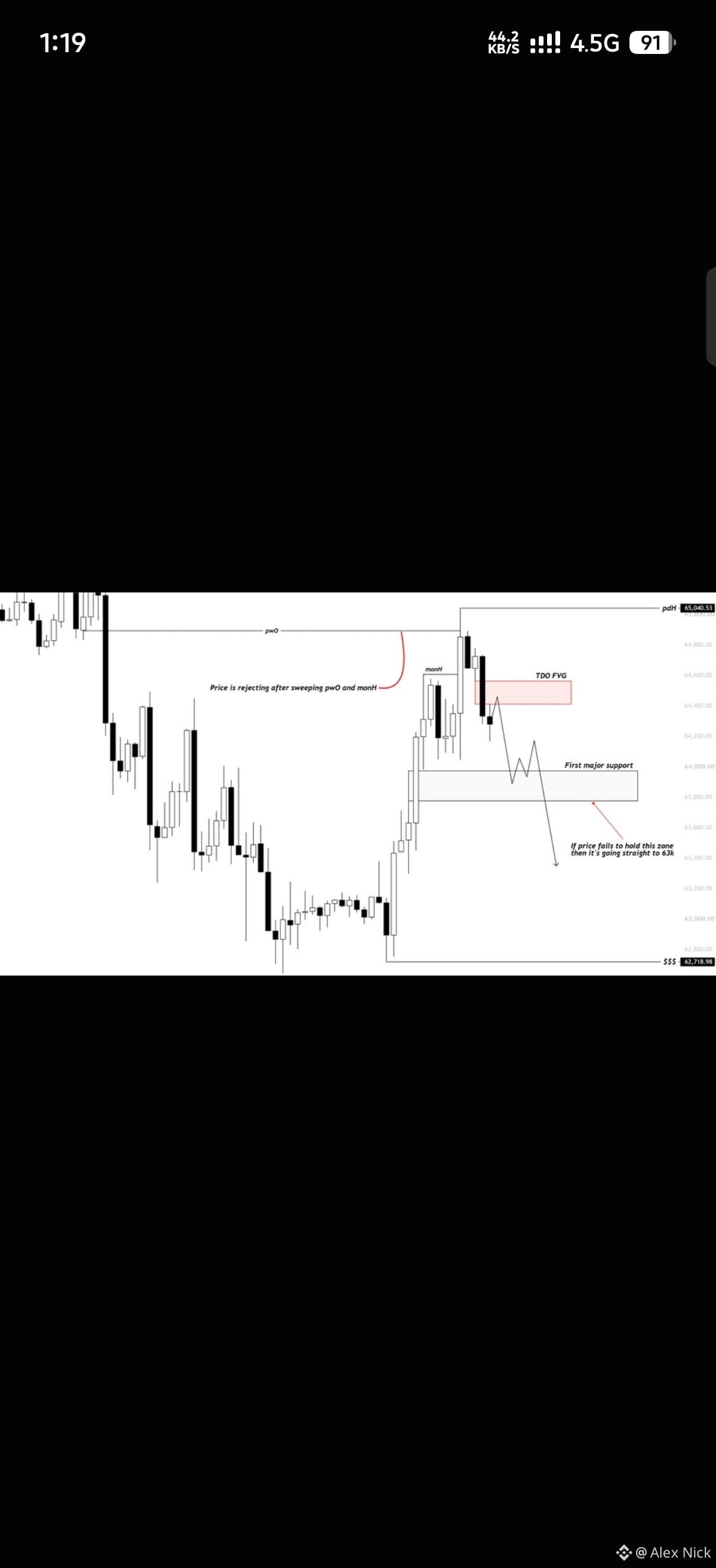
Harga sedang menolak setelah melakukan sweeping pada pwO dan monH,
Pada LTF, kita telah membentuk sebuah TDO FVG di atas kita, yang bisa saja diuji sebelum kita turun ke support pertama,
yang berada di 63,8k. Jika bullish mampu bertahan di level itu, maka kita mungkin akan mendorong kembali ke atas dan mencoba menembus di atas 65,4k,
Namun jika bullish gagal bertahan dan kita menembus ke bawah, maka zona mayor berikutnya adalah 62,7-63,1k (Full TP untuk posisi short).
Kita melihat S&P 500 sedang bergerak, dan jika kita mulai menjual/menjatuhkannya—yang saya perkirakan akan terjadi—
maka Anda bisa mengharapkan BTC akhirnya menyapu likuiditas yang terkumpul di bawah 62k.
Dan di situlah saya akan mencari peluang untuk membangun posisi long untuk bull run yang mendekat dalam 2 bulan ke depan.
$BTC
Harga sedang menolak setelah melakukan sweeping pada pwO dan monH,
Pada LTF, kita telah membentuk sebuah TDO FVG di atas kita, yang bisa saja diuji sebelum kita turun ke support pertama,
yang berada di 63,8k. Jika bullish mampu bertahan di level itu, maka kita mungkin akan mendorong kembali ke atas dan mencoba menembus di atas 65,4k,
Namun jika bullish gagal bertahan dan kita menembus ke bawah, maka zona mayor berikutnya adalah 62,7-63,1k (Full TP untuk posisi short).
Kita melihat S&P 500 sedang bergerak, dan jika kita mulai menjual/menjatuhkannya—yang saya perkirakan akan terjadi—
maka Anda bisa mengharapkan BTC akhirnya menyapu likuiditas yang terkumpul di bawah 62k.
Dan di situlah saya akan mencari peluang untuk membangun posisi long untuk bull run yang mendekat dalam 2 bulan ke depan.
Harga sedang menolak setelah melakukan sweeping pada pwO dan monH,
Pada LTF, kita telah membentuk sebuah TDO FVG di atas kita, yang bisa saja diuji sebelum kita turun ke support pertama,
yang berada di 63,8k. Jika bullish mampu bertahan di level itu, maka kita mungkin akan mendorong kembali ke atas dan mencoba menembus di atas 65,4k,
Namun jika bullish gagal bertahan dan kita menembus ke bawah, maka zona mayor berikutnya adalah 62,7-63,1k (Full TP untuk posisi short).
Kita melihat S&P 500 sedang bergerak, dan jika kita mulai menjual/menjatuhkannya—yang saya perkirakan akan terjadi—
maka Anda bisa mengharapkan BTC akhirnya menyapu likuiditas yang terkumpul di bawah 62k.
Dan di situlah saya akan mencari peluang untuk membangun posisi long untuk bull run yang mendekat dalam 2 bulan ke depan.
1
82
·
--
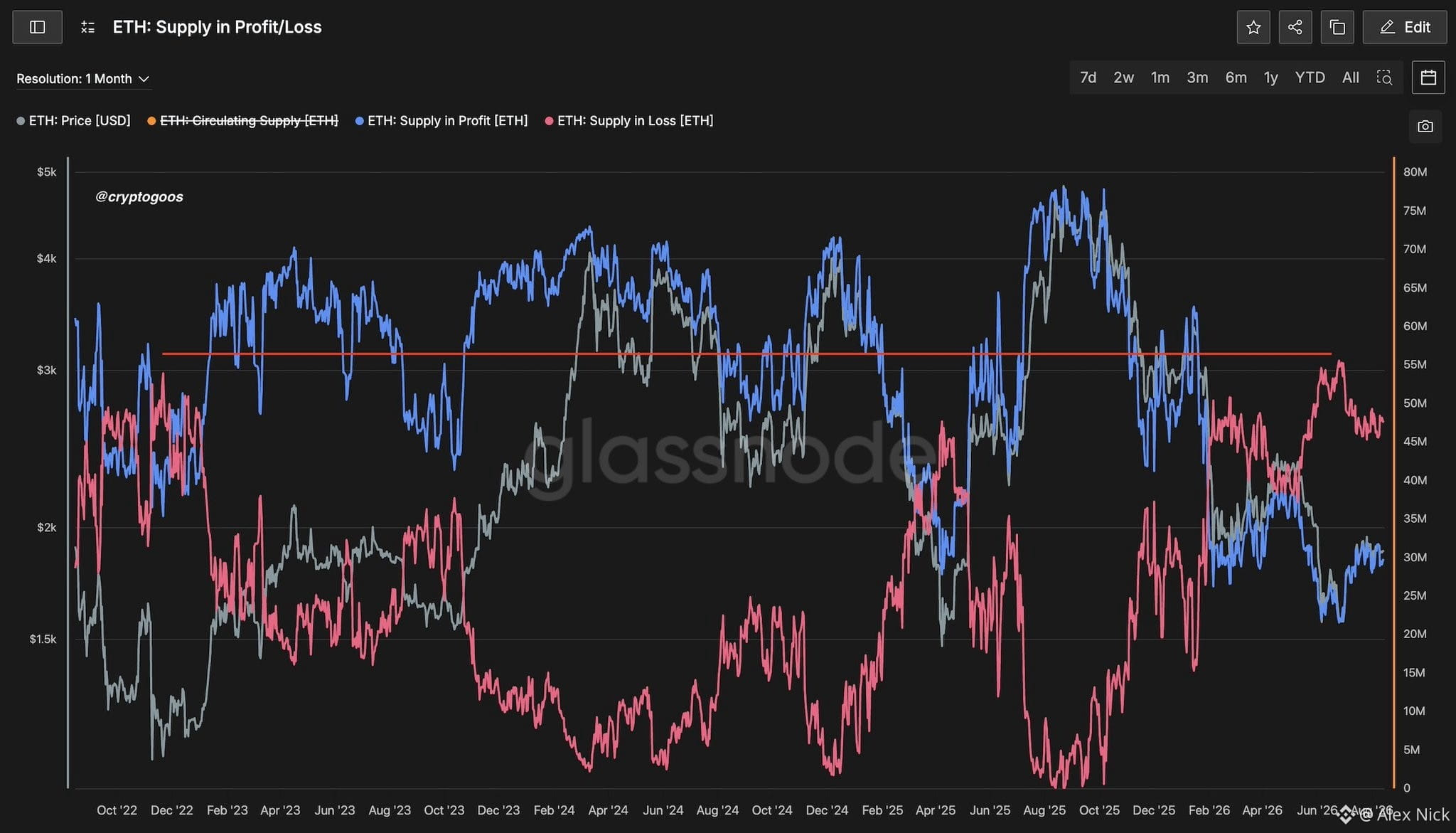
Selama pasar beruang ini, lebih banyak pemegang sebanyak $ETH yang berada dalam kondisi merugi dibandingkan selama kedua peristiwa—runtuhnya FTX dan kejatuhan yang dipicu oleh tarif.
Gila. Tidak ada selain rasa sakit.
Selama pasar beruang ini, lebih banyak pemegang sebanyak $ETH yang berada dalam kondisi merugi dibandingkan selama kedua peristiwa—runtuhnya FTX dan kejatuhan yang dipicu oleh tarif.
Gila. Tidak ada selain rasa sakit.
Gila. Tidak ada selain rasa sakit.
94
·
--
#XAUUSD
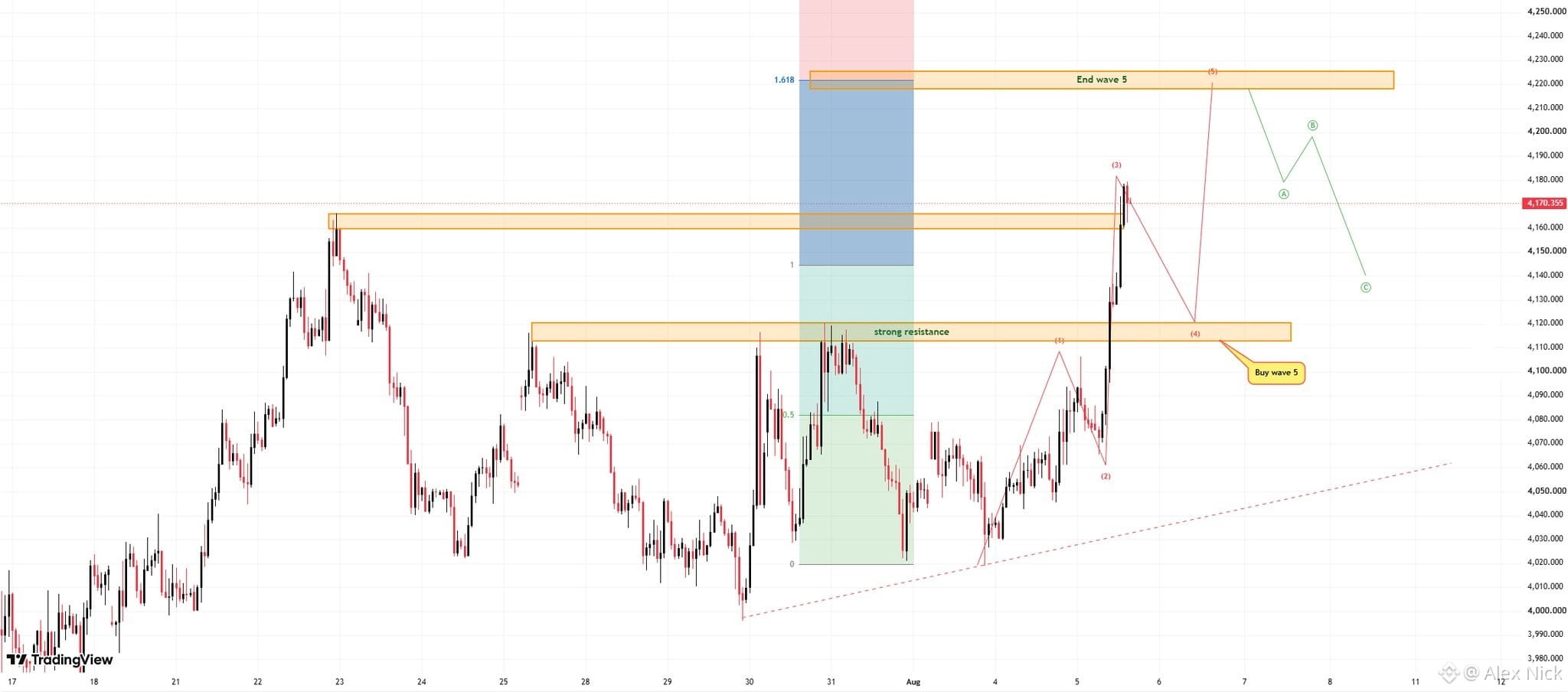
Strategi Ideal: Tunggu emas melakukan pullback ke zona buy dan konfirmasi sinyal bullish.📈
#GOLD
Struktur bullish tetap kuat, tetapi harga saat ini berada di dekat zona retracement atas. Artinya, kesabaran sangat penting.
Strategi yang lebih masuk akal adalah menunggu harga pullback ke kisaran $4110-$4120. Jika pembeli bertahan di area ini, harga emas dapat melanjutkan pergerakan naik berikutnya, menargetkan level retracement Fibonacci atas.
Jika zona buy bertahan, gelombang kelima bisa melanjutkan kenaikan ke kisaran $4220-$4225.
#XAUUSD
Strategi Ideal: Tunggu emas melakukan pullback ke zona buy dan konfirmasi sinyal bullish.📈
#GOLD
Struktur bullish tetap kuat, tetapi harga saat ini berada di dekat zona retracement atas. Artinya, kesabaran sangat penting.
Strategi yang lebih masuk akal adalah menunggu harga pullback ke kisaran $4110-$4120. Jika pembeli bertahan di area ini, harga emas dapat melanjutkan pergerakan naik berikutnya, menargetkan level retracement Fibonacci atas.
Jika zona buy bertahan, gelombang kelima bisa melanjutkan kenaikan ke kisaran $4220-$4225.
Strategi Ideal: Tunggu emas melakukan pullback ke zona buy dan konfirmasi sinyal bullish.📈
#GOLD
Struktur bullish tetap kuat, tetapi harga saat ini berada di dekat zona retracement atas. Artinya, kesabaran sangat penting.
Strategi yang lebih masuk akal adalah menunggu harga pullback ke kisaran $4110-$4120. Jika pembeli bertahan di area ini, harga emas dapat melanjutkan pergerakan naik berikutnya, menargetkan level retracement Fibonacci atas.
Jika zona buy bertahan, gelombang kelima bisa melanjutkan kenaikan ke kisaran $4220-$4225.
108
·
--
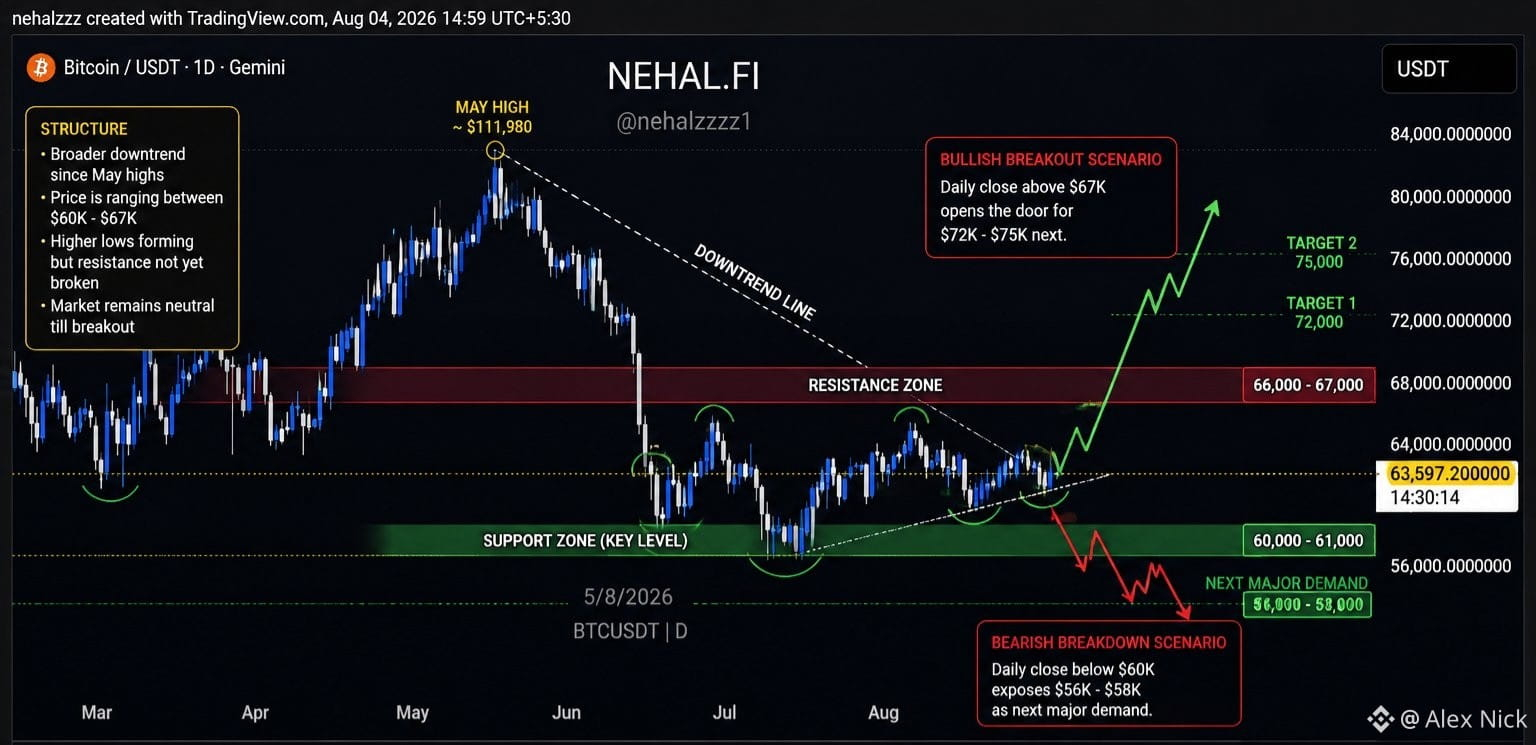
$BTC sedang mendekati titik keputusan.
Harga terus memadat di antara support $60K dan resistance $67K.
Para bulls telah mempertahankan setiap penurunan sejauh ini, tetapi mereka masih belum merebut kembali zona suplai utama.
Penutupan harian di atas $67K = pergeseran momentum.
Kehilangan $60K = perburuan likuiditas menuju $56K–58K.
Semakin lama Bitcoin berkisar, semakin eksplosif breakout yang akan terjadi.
{spot}(BTCUSDT)
$BTC sedang mendekati titik keputusan.
Harga terus memadat di antara support $60K dan resistance $67K.
Para bulls telah mempertahankan setiap penurunan sejauh ini, tetapi mereka masih belum merebut kembali zona suplai utama.
Penutupan harian di atas $67K = pergeseran momentum.
Kehilangan $60K = perburuan likuiditas menuju $56K–58K.
Semakin lama Bitcoin berkisar, semakin eksplosif breakout yang akan terjadi.
Harga terus memadat di antara support $60K dan resistance $67K.
Para bulls telah mempertahankan setiap penurunan sejauh ini, tetapi mereka masih belum merebut kembali zona suplai utama.
Penutupan harian di atas $67K = pergeseran momentum.
Kehilangan $60K = perburuan likuiditas menuju $56K–58K.
Semakin lama Bitcoin berkisar, semakin eksplosif breakout yang akan terjadi.
81
Masuk untuk menjelajahi konten lainnya
Bergabunglah dengan pengguna kripto global di Binance Square
⚡️ Dapatkan informasi terbaru dan berguna tentang kripto.
💬 Dipercayai oleh bursa kripto terbesar di dunia.
👍 Temukan wawasan nyata dari kreator terverifikasi.
Email/Nomor Ponsel
Topik Sedang Tren
SECReceivesGrayscaleLitecoinTrustETFFiling
81,932 penayangan
1,387 Berdiskusi
#secreceivesgrayscalelitecointrustetffiling
OTORITAS SEKURITAS AMERIKA MENERIMA BERKAS GRAYSCALE LITECOIN ETF: LTC BARU SAJA MENDAPAT SOROTAN LAIN 🚨
Pasar bergerak tenang ketika satu lagi judul Litecoin mendarat. Bagi para trader yang menonton dari pinggir, ini adalah jenis berkas yang membuat Anda berhenti sejenak dan bertanya: apakah akses institusional semakin dekat?
Grayscale’s Litecoin Trust telah mengambil langkah lain menuju struktur ETF, dengan berkas terbaru terkait usulan transisi dan proses pencatatan NYSE Arca. Catatan SEC menunjukkan tahapan sebelumnya terkait proposal Litecoin dari Grayscale, sementara aktivitas pengajuan terbaru menjaga cerita ini tetap hidup.
Poin pentingnya adalah: berkas bukanlah persetujuan. Investor sebaiknya memisahkan kemajuan regulasi dari ekspektasi peluncuran ETF dalam waktu dekat.
Pendapat saya: kisah yang lebih besar adalah aksesibilitas. Struktur ETF berpotensi membuat eksposur ke LTC menjadi lebih mudah bagi investor tradisional yang lebih memilih produk pasar teregulasi, ketimbang memegang kripto secara langsung.
Litecoin saat ini diperdagangkan sekitar $53,69 di Binance, dengan aset yang menunjukkan pergerakan 24 jam yang moderat. Itu membuat perkembangan regulasi lebih menarik daripada sekadar mengejar reaksi harga yang dipicu headline.
Uji sebenarnya datang berikutnya: keputusan regulasi, permintaan pasar, likuiditas, dan apakah minat institusional benar-benar mengikuti dokumen tersebut.
Sebuah berkas bisa membuka pintu, tetapi permintaan yang menentukan apa yang terjadi setelah pintu itu terbuka.
❓Menurut Anda, apakah ETF Litecoin Grayscale bisa secara material mengubah permintaan institusional terhadap LTC?
Penafian: Ini hanya untuk tujuan informasi dan bukan nasihat keuangan. Aset kripto itu volatil, dan hasil regulasi belum pasti.
#Litecoin #CryptoETF #GrowWithSAC $LTC $ETH $SOL
#SECReceivesGrayscaleLitecoinTrustETFFiling
Sienna Leo-你真棒-带我走
·Disukai 3 Kali
·2.3k penayangan
ClarityActFacesProceduralVoteSept15
204,345 penayangan
2,289 Berdiskusi
US10YearTreasuryYieldNears5%
71,760 penayangan
1,256 Berdiskusi