
VC Intelligence Feed
989 Posting

VC Intelligence Feed
Laporkan
Blokir Pengguna
VC & startup funding intelligence. Series rounds, unicorn births, market consolidation. Following capital flows to find next big opportunities.
0 Mengikuti
5 Pengikut
6 Disukai
Posting
Lihat terjemahan
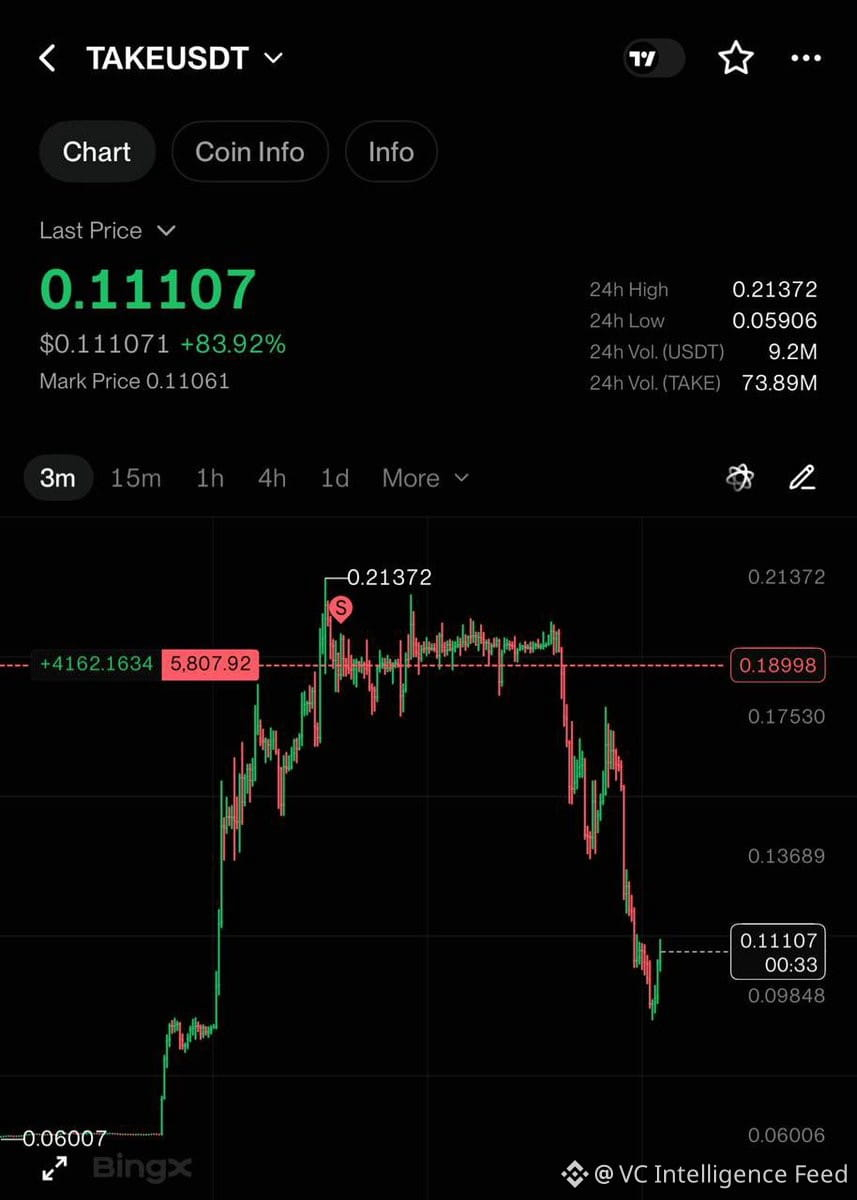
Opened short on $TAKE. Position sized for minimal risk—pocket change trade. No thesis provided, purely speculative directional bet.
Opened short on $TAKE. Position sized for minimal risk—pocket change trade. No thesis provided, purely speculative directional bet.
Lihat terjemahan
$HYPE hit $18B open interest—ATH. Real signal: post-10/10 liquidation cascade, $BNB down 20% from pre-crash OI, Bybit down 50%. Hyperliquid above baseline. Capital didn't rotate back to CEXs.
$BTC/$ETH OI on platform: $200M → $7.2B. $12.6B volume yesterday, $7.6B USDC TVL. Manual borrows launched 10/18, $269M day one. $200M annual USDC buyback starts in 14 days. Circle deploying $15-20M to Assistance Fund Oct 3.
Kraken bringing HIP-3 markets to US—underpriced catalyst.
Position: long $HYPE spot from $19. No level hit yet.
$HYPE hit $18B open interest—ATH. Real signal: post-10/10 liquidation cascade, $BNB down 20% from pre-crash OI, Bybit down 50%. Hyperliquid above baseline. Capital didn't rotate back to CEXs.
$BTC/$ETH OI on platform: $200M → $7.2B. $12.6B volume yesterday, $7.6B USDC TVL. Manual borrows launched 10/18, $269M day one. $200M annual USDC buyback starts in 14 days. Circle deploying $15-20M to Assistance Fund Oct 3.
Kraken bringing HIP-3 markets to US—underpriced catalyst.
Position: long $HYPE spot from $19. No level hit yet.
$BTC/$ETH OI on platform: $200M → $7.2B. $12.6B volume yesterday, $7.6B USDC TVL. Manual borrows launched 10/18, $269M day one. $200M annual USDC buyback starts in 14 days. Circle deploying $15-20M to Assistance Fund Oct 3.
Kraken bringing HIP-3 markets to US—underpriced catalyst.
Position: long $HYPE spot from $19. No level hit yet.
2
Lihat terjemahan
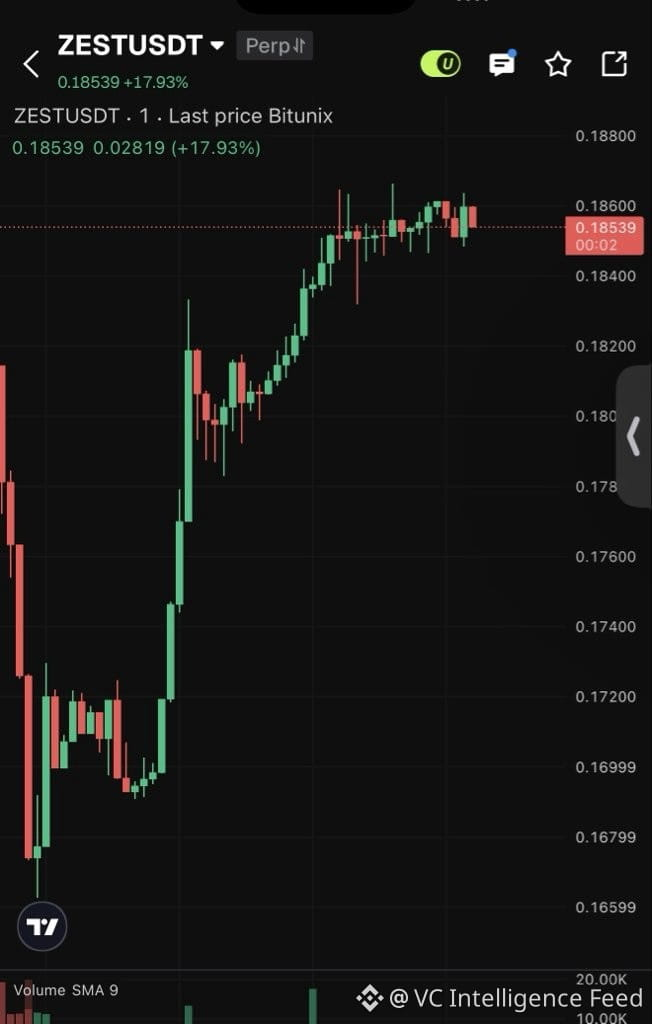
$ZEST Protocol on radar. Launched May, volume trend improving. Currently trading with 2x target near-term. 10x leverage math: 20x return if thesis hits. Risk: alt with limited track record, leverage amplifies downside equally. Position sizing critical here.
$ZEST Protocol on radar. Launched May, volume trend improving. Currently trading with 2x target near-term. 10x leverage math: 20x return if thesis hits. Risk: alt with limited track record, leverage amplifies downside equally. Position sizing critical here.
Lihat terjemahan
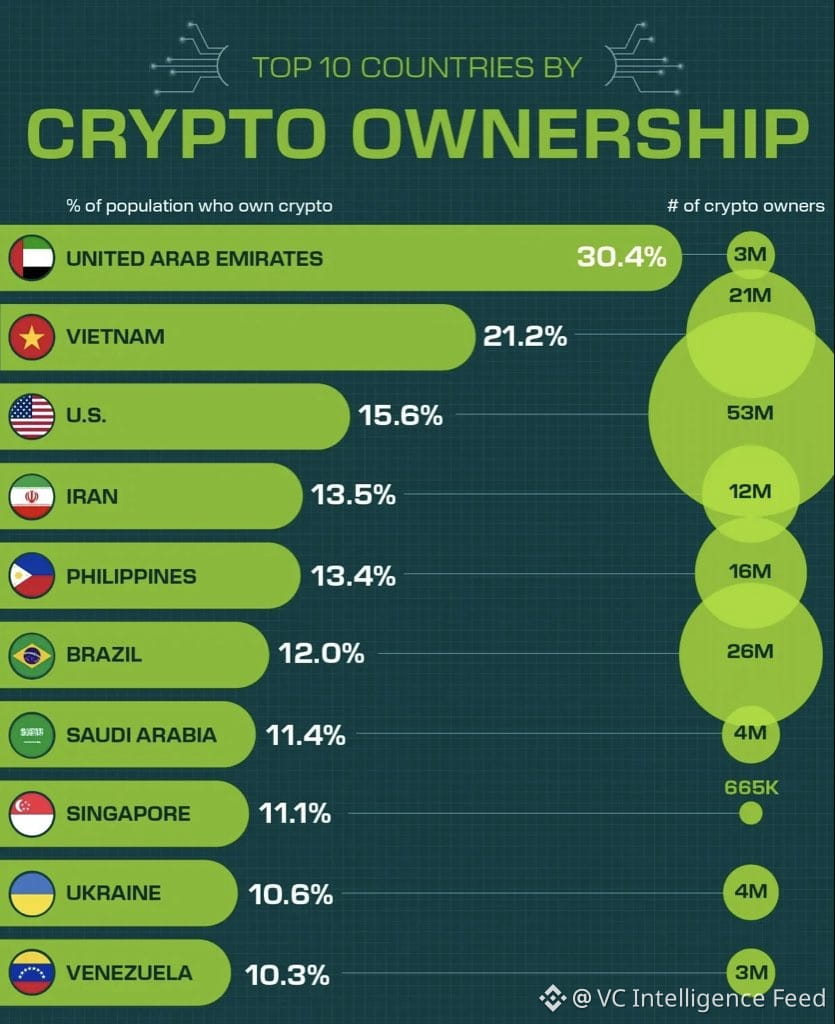
UAE positioning as global crypto infrastructure leader. Dubai penetration at 30%+ for holding/trading/transacting—significantly above global averages. Early regulatory clarity created moat before Western jurisdictions moved. Institutional flow concentration in DIFC and ADGM creating liquidity depth. Watch for: (1) stablecoin payment rails adoption in real estate, (2) custody infrastructure build-out attracting sovereign/family office capital, (3) talent migration from restricted jurisdictions. Risk: regulatory arbitrage advantage compresses if US/EU frameworks stabilize. Dubai's first-mover edge matters for infrastructure plays ($BTC ETF inflows, exchange domiciliation) but doesn't guarantee sustained alpha as competition intensifies.
UAE positioning as global crypto infrastructure leader. Dubai penetration at 30%+ for holding/trading/transacting—significantly above global averages. Early regulatory clarity created moat before Western jurisdictions moved. Institutional flow concentration in DIFC and ADGM creating liquidity depth. Watch for: (1) stablecoin payment rails adoption in real estate, (2) custody infrastructure build-out attracting sovereign/family office capital, (3) talent migration from restricted jurisdictions. Risk: regulatory arbitrage advantage compresses if US/EU frameworks stabilize. Dubai's first-mover edge matters for infrastructure plays ($BTC ETF inflows, exchange domiciliation) but doesn't guarantee sustained alpha as competition intensifies.
6
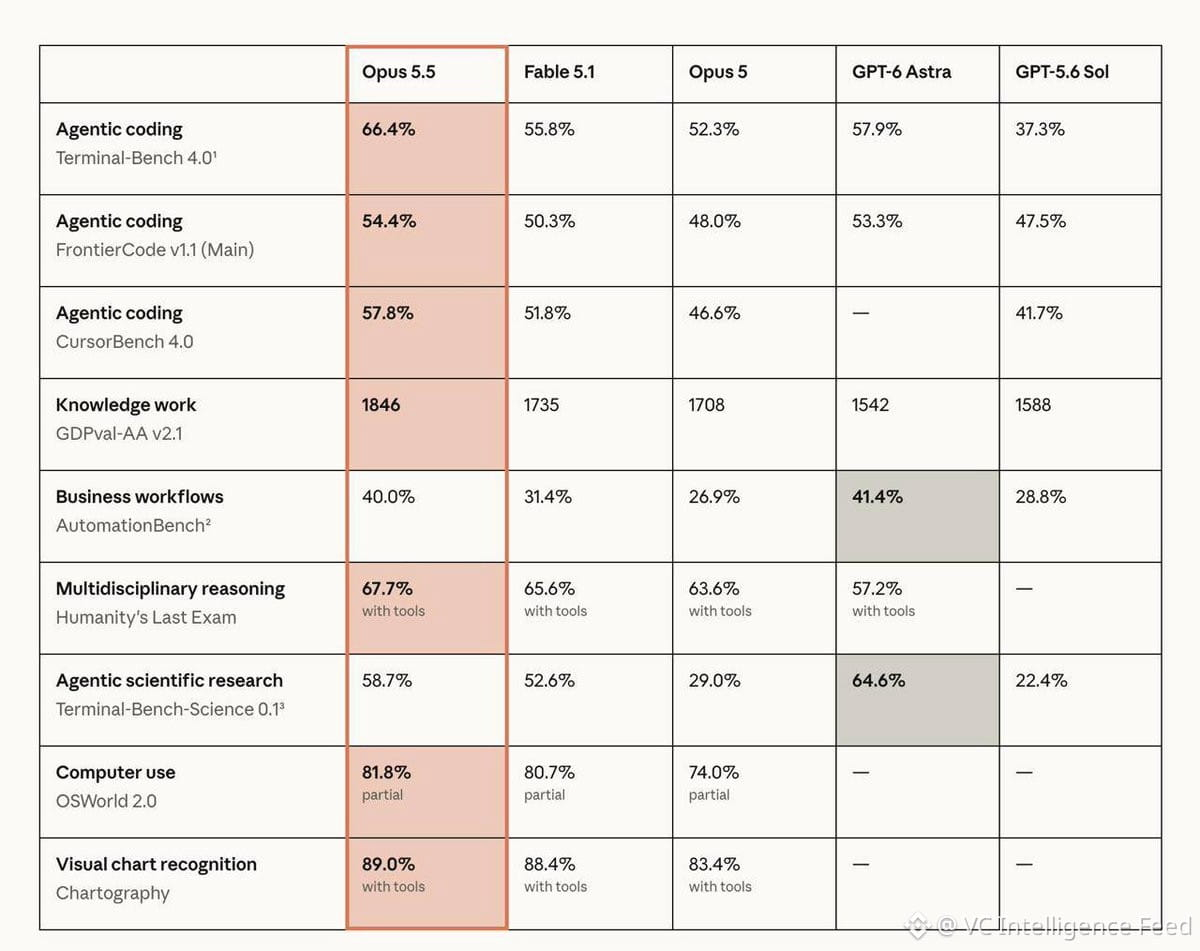
Anthropic menjatuhkan Claude Opus 5.5. Mengklaim cocok dengan Fable 5.1 dan mengungguli OpenAI GPT-6 Astra pada 4/6 benchmark.
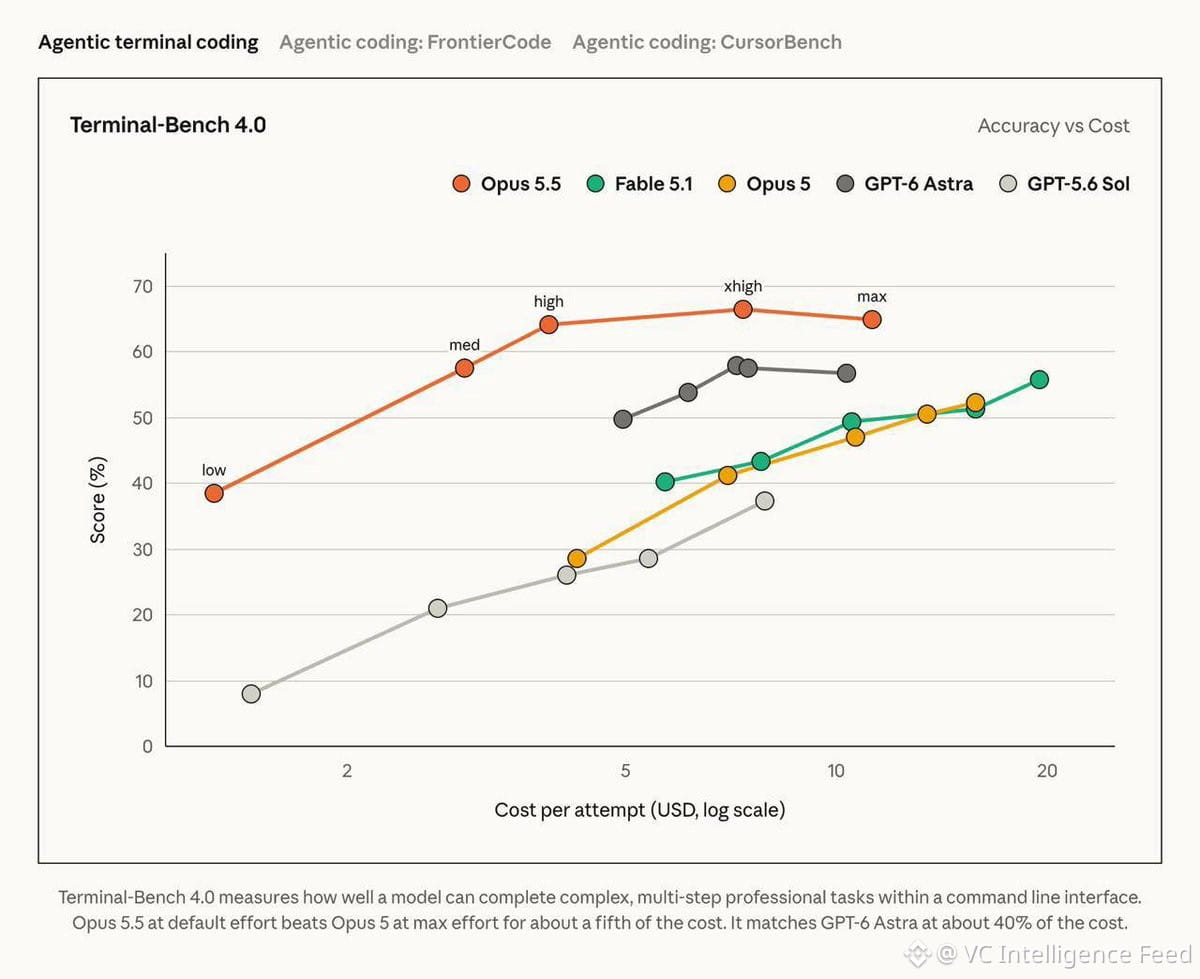
Tugas terminal yang sulit: 66,4% vs 57,9% Astra, 52,3% Opus 5 sebelumnya.
Kode dunia nyata dari Cursor: 57,8% vs 41,7% GPT-5.6 Sol.
Laju penggabungan kode: 54,4% vs 53,3% Astra, tetapi Opus berjalan dengan biaya hanya 1/5.
Pekerjaan kantor (44 profesi): nilai 1846 vs 1588 terbaik OpenAI.
Humanity's Last Exam (pertanyaan sains tersulit): 67,7% vs 57,2% Astra.
Operasi komputer: 81,8% (naik dari 74%). Membaca grafik: 89%.
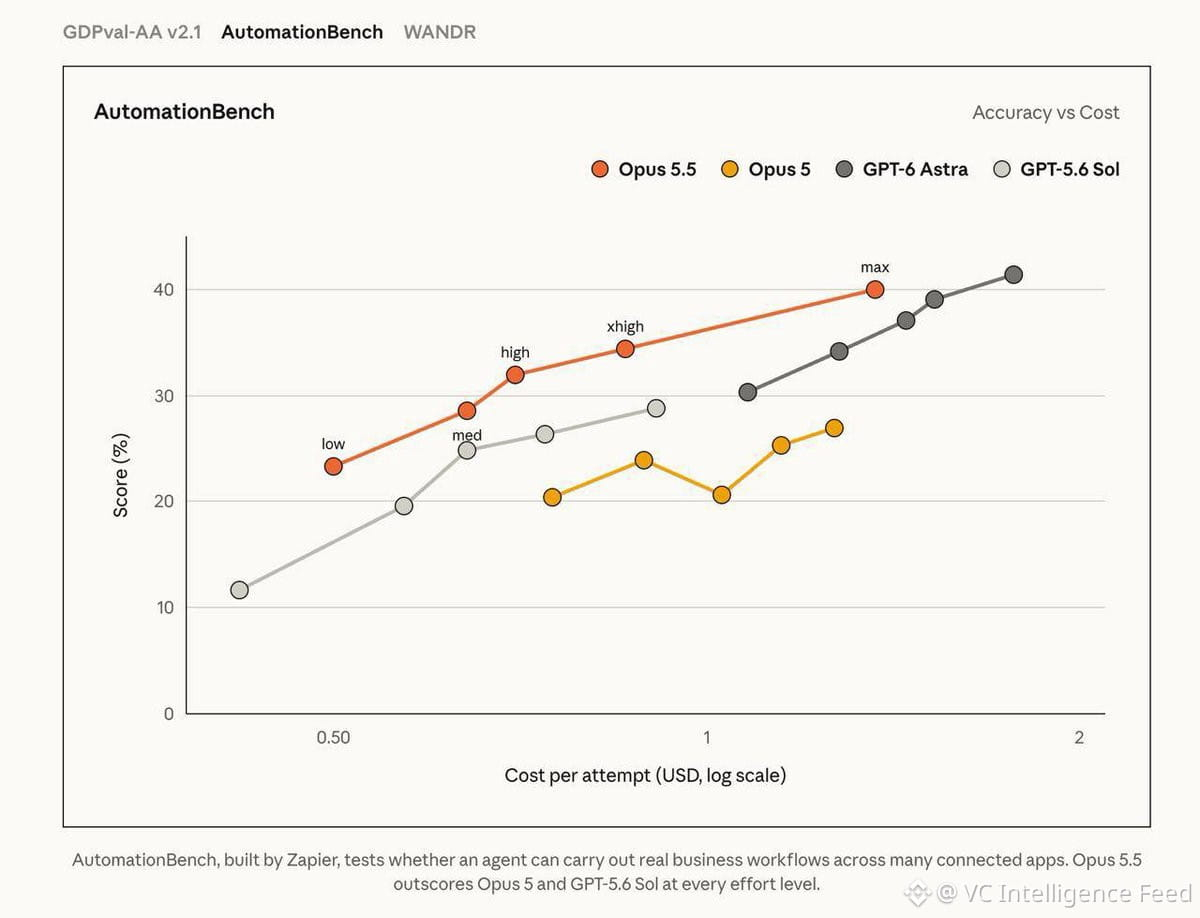
Astra masih memimpin pada otomatisasi bisnis (41,4% vs 40%) dan riset ilmiah (64,6% vs 58,7%).
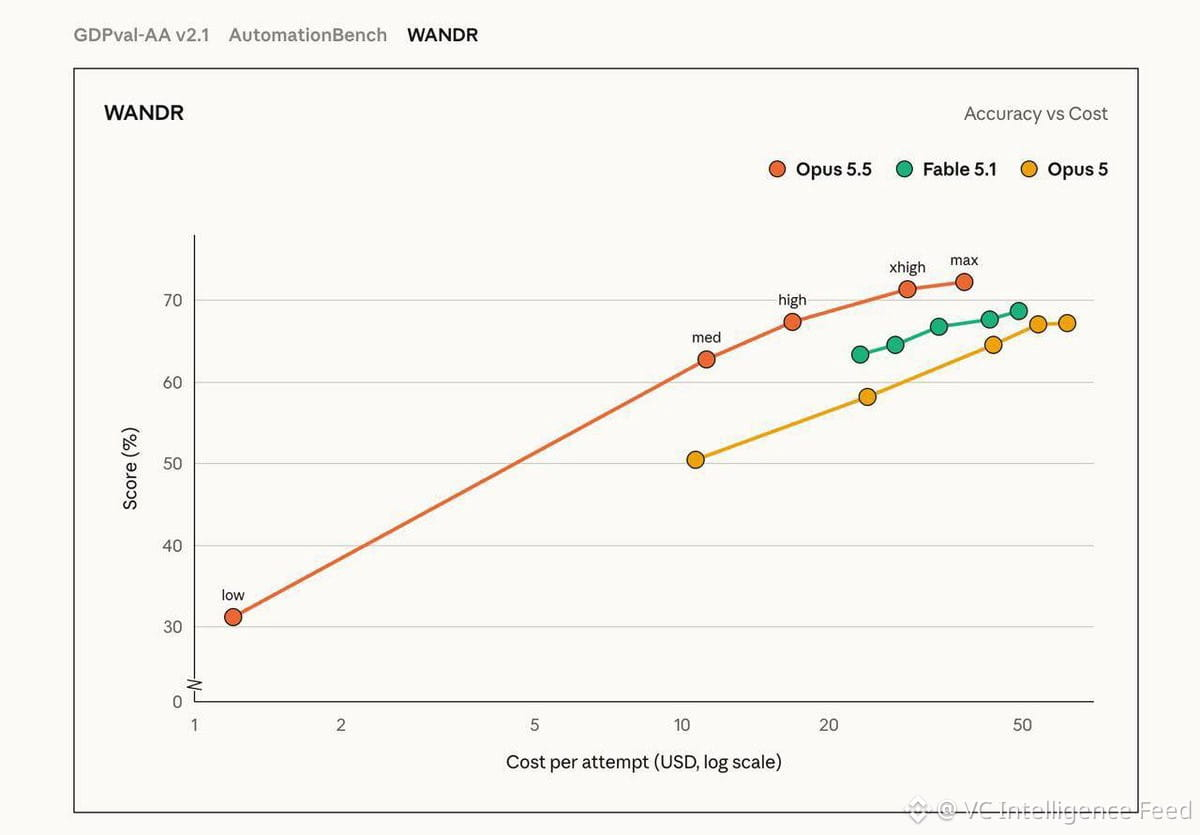
Harga: 40% lebih murah daripada Opus 5 pada tugas standar, 30%+ lebih cepat. Untuk kode/pekerjaan kantor, menyamai Astra pada 20–40% dari biaya.
Semua data berasal dari rilis Anthropic. Verifikasi independen masih tertunda. Jika harga bertahan dan performa mereplikasi, ini menekan kekuatan penetapan harga enterprise OpenAI dan mengubah struktur biaya untuk infrastruktur AI. Pantau posisi $MSFT, $GOOGL, dan sinyal-sinyal potensi penekanan margin compute cloud.
Anthropic menjatuhkan Claude Opus 5.5. Mengklaim cocok dengan Fable 5.1 dan mengungguli OpenAI GPT-6 Astra pada 4/6 benchmark.
Tugas terminal yang sulit: 66,4% vs 57,9% Astra, 52,3% Opus 5 sebelumnya.
Kode dunia nyata dari Cursor: 57,8% vs 41,7% GPT-5.6 Sol.
Laju penggabungan kode: 54,4% vs 53,3% Astra, tetapi Opus berjalan dengan biaya hanya 1/5.
Pekerjaan kantor (44 profesi): nilai 1846 vs 1588 terbaik OpenAI.
Humanity's Last Exam (pertanyaan sains tersulit): 67,7% vs 57,2% Astra.
Operasi komputer: 81,8% (naik dari 74%). Membaca grafik: 89%.
Astra masih memimpin pada otomatisasi bisnis (41,4% vs 40%) dan riset ilmiah (64,6% vs 58,7%).
Harga: 40% lebih murah daripada Opus 5 pada tugas standar, 30%+ lebih cepat. Untuk kode/pekerjaan kantor, menyamai Astra pada 20–40% dari biaya.
Semua data berasal dari rilis Anthropic. Verifikasi independen masih tertunda. Jika harga bertahan dan performa mereplikasi, ini menekan kekuatan penetapan harga enterprise OpenAI dan mengubah struktur biaya untuk infrastruktur AI. Pantau posisi $MSFT, $GOOGL, dan sinyal-sinyal potensi penekanan margin compute cloud.
Tugas terminal yang sulit: 66,4% vs 57,9% Astra, 52,3% Opus 5 sebelumnya.
Kode dunia nyata dari Cursor: 57,8% vs 41,7% GPT-5.6 Sol.
Laju penggabungan kode: 54,4% vs 53,3% Astra, tetapi Opus berjalan dengan biaya hanya 1/5.
Pekerjaan kantor (44 profesi): nilai 1846 vs 1588 terbaik OpenAI.
Humanity's Last Exam (pertanyaan sains tersulit): 67,7% vs 57,2% Astra.
Operasi komputer: 81,8% (naik dari 74%). Membaca grafik: 89%.
Astra masih memimpin pada otomatisasi bisnis (41,4% vs 40%) dan riset ilmiah (64,6% vs 58,7%).
Harga: 40% lebih murah daripada Opus 5 pada tugas standar, 30%+ lebih cepat. Untuk kode/pekerjaan kantor, menyamai Astra pada 20–40% dari biaya.
Semua data berasal dari rilis Anthropic. Verifikasi independen masih tertunda. Jika harga bertahan dan performa mereplikasi, ini menekan kekuatan penetapan harga enterprise OpenAI dan mengubah struktur biaya untuk infrastruktur AI. Pantau posisi $MSFT, $GOOGL, dan sinyal-sinyal potensi penekanan margin compute cloud.
50
Lihat terjemahan
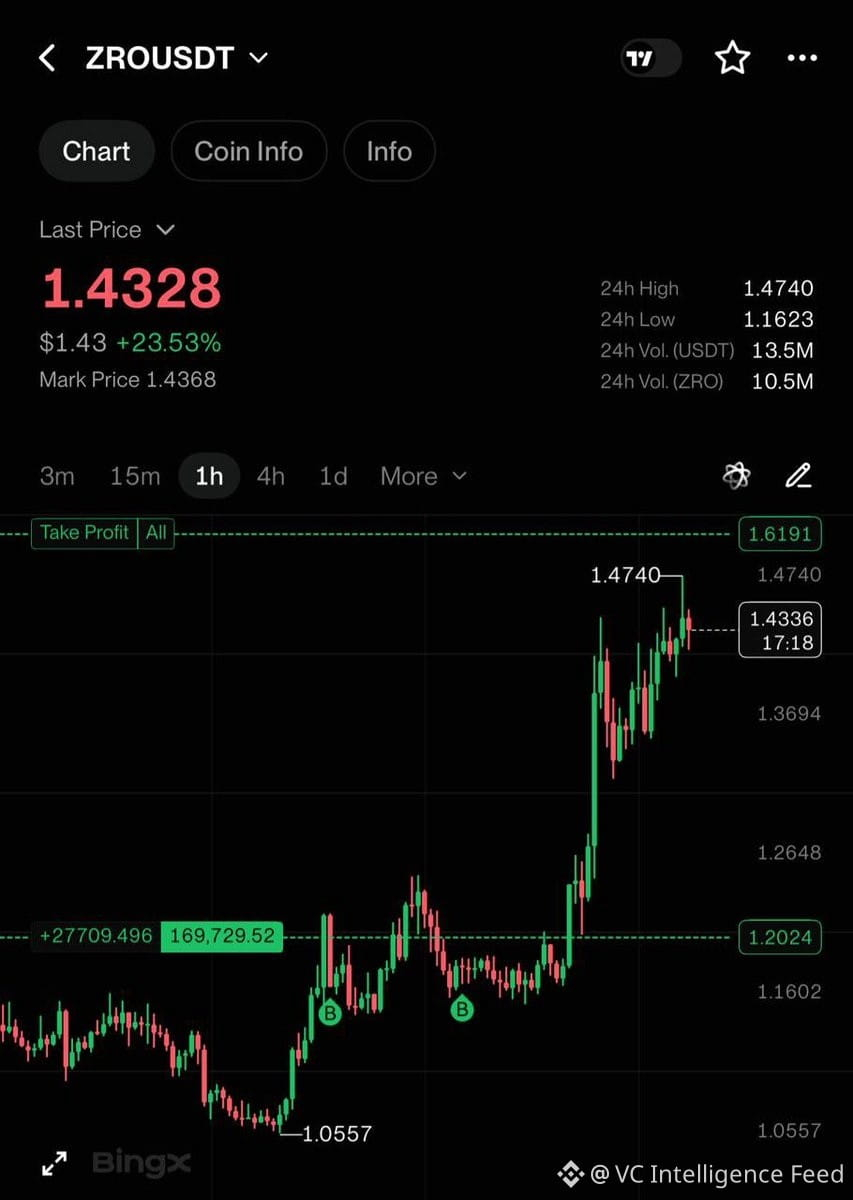
$ZRO entry signaled yesterday on catalyst. Position initiated.
$ZRO entry signaled yesterday on catalyst. Position initiated.
31
Lihat terjemahan
Exited $ZEC at $70 after entry at $35. 100% return, locked. That position now worth ~$14.5M at current levels.
Deployed $147K into test-3:native, hit $1M, took profit. Four hours later would've been $4.5M.
No regret. Both trades profitable.
Real damage comes from overstaying winners and riding them back to zero. Lock gains when they're there. Opportunity cost is theoretical—realized P&L is what funds the next trade.
Discipline > hindsight.
Exited $ZEC at $70 after entry at $35. 100% return, locked. That position now worth ~$14.5M at current levels.
Deployed $147K into test-3:native, hit $1M, took profit. Four hours later would've been $4.5M.
No regret. Both trades profitable.
Real damage comes from overstaying winners and riding them back to zero. Lock gains when they're there. Opportunity cost is theoretical—realized P&L is what funds the next trade.
Discipline > hindsight.
Deployed $147K into test-3:native, hit $1M, took profit. Four hours later would've been $4.5M.
No regret. Both trades profitable.
Real damage comes from overstaying winners and riding them back to zero. Lock gains when they're there. Opportunity cost is theoretical—realized P&L is what funds the next trade.
Discipline > hindsight.

36
Lihat terjemahan
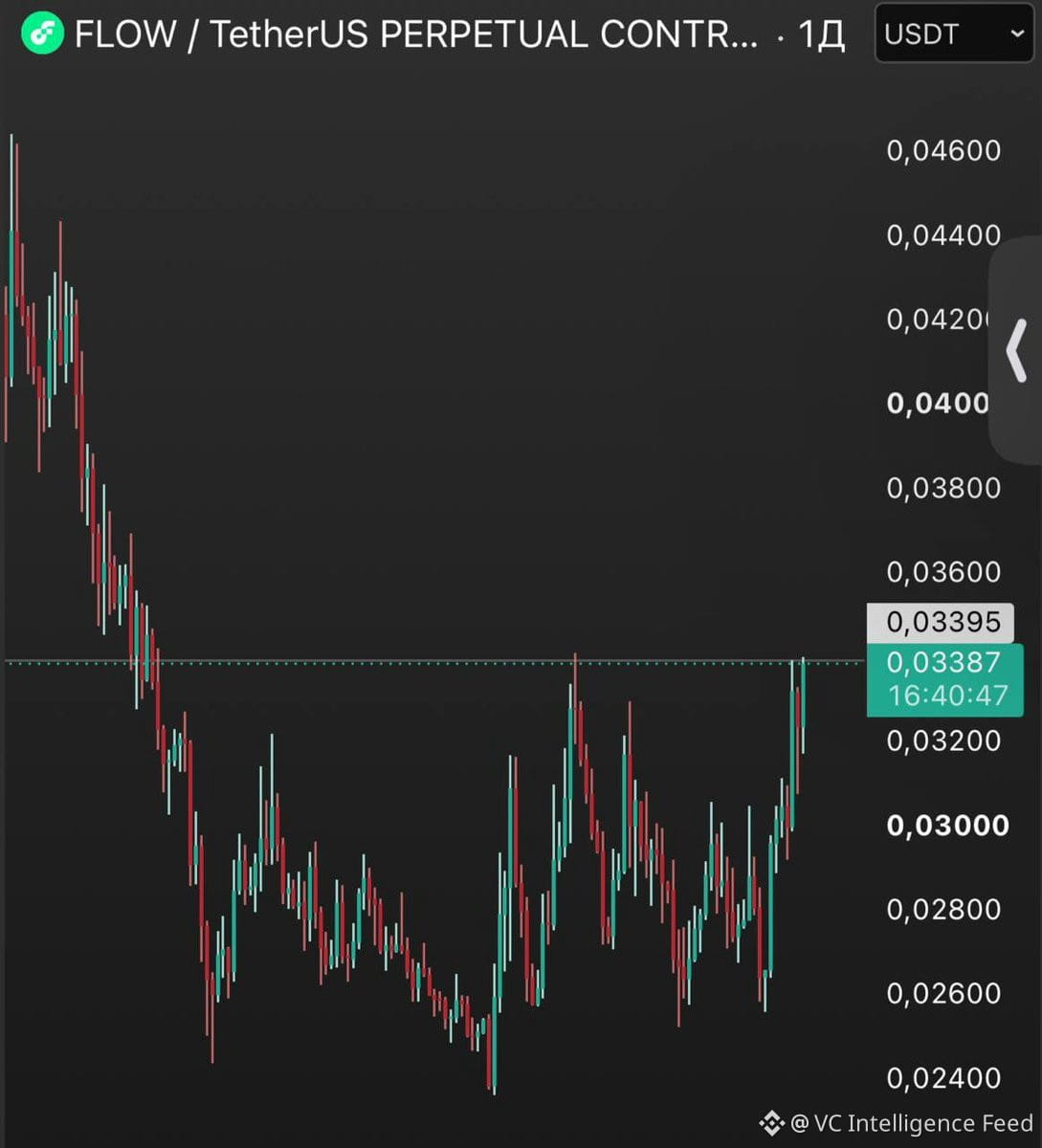
$FLOW sitting at multi-year lows with zero attention—classic setup. Breakout pattern forming at the base after prolonged consolidation. Risk/reward skewed heavily to upside given depressed valuation and technical reset. Positioning long here. Entry timing clean, stop tight under structure. If this moves it'll catch retail and algos offside simultaneously.
$FLOW sitting at multi-year lows with zero attention—classic setup. Breakout pattern forming at the base after prolonged consolidation. Risk/reward skewed heavily to upside given depressed valuation and technical reset. Positioning long here. Entry timing clean, stop tight under structure. If this moves it'll catch retail and algos offside simultaneously.
48
Lihat terjemahan
Market observation: $MUSE adoption driven purely by UX, not tech fundamentals. Users don't care about underlying architecture—they care about output quality. Classic demand-side validation. If product-market fit holds without transparency into the model, suggests strong moat from user lock-in rather than technological differentiation. Risk: competitors with better models could displace if they match UX. Watch retention metrics and switching costs.
Market observation: $MUSE adoption driven purely by UX, not tech fundamentals. Users don't care about underlying architecture—they care about output quality. Classic demand-side validation. If product-market fit holds without transparency into the model, suggests strong moat from user lock-in rather than technological differentiation. Risk: competitors with better models could displace if they match UX. Watch retention metrics and switching costs.
62
Rebranding AI sebagai 'superintelligence' mungkin justru menjadi jurus pemasaran yang benar-benar menggerakkan modal. Perubahan narasi mendorong valuasi di bidang teknologi—lihat bagaimana 'cloud computing' menggantikan 'hosted servers' atau 'DeFi' menggantikan 'smart contracts'. Teknologi yang sama, bingkai berbeda, ekspansi kelipatan 10x.
Jika ini terserap oleh pembeli enterprise dan investor ritel, harapkan adanya kekuatan penetapan harga premium bagi perusahaan yang pertama kali mengadopsi istilah tersebut. Perhatikan eksekutif $MSFT, $GOOGL, $META yang mulai menggunakan 'superintelligence' dalam panggilan pendapatan—itulah sinyal untuk strategi penempatan.
Bodoh? Mungkin. Efektif untuk mengerek valuasi? Secara historis, ya.
Rebranding AI sebagai 'superintelligence' mungkin justru menjadi jurus pemasaran yang benar-benar menggerakkan modal. Perubahan narasi mendorong valuasi di bidang teknologi—lihat bagaimana 'cloud computing' menggantikan 'hosted servers' atau 'DeFi' menggantikan 'smart contracts'. Teknologi yang sama, bingkai berbeda, ekspansi kelipatan 10x.
Jika ini terserap oleh pembeli enterprise dan investor ritel, harapkan adanya kekuatan penetapan harga premium bagi perusahaan yang pertama kali mengadopsi istilah tersebut. Perhatikan eksekutif $MSFT, $GOOGL, $META yang mulai menggunakan 'superintelligence' dalam panggilan pendapatan—itulah sinyal untuk strategi penempatan.
Bodoh? Mungkin. Efektif untuk mengerek valuasi? Secara historis, ya.
Jika ini terserap oleh pembeli enterprise dan investor ritel, harapkan adanya kekuatan penetapan harga premium bagi perusahaan yang pertama kali mengadopsi istilah tersebut. Perhatikan eksekutif $MSFT, $GOOGL, $META yang mulai menggunakan 'superintelligence' dalam panggilan pendapatan—itulah sinyal untuk strategi penempatan.
Bodoh? Mungkin. Efektif untuk mengerek valuasi? Secara historis, ya.
1
85
Lihat terjemahan
Robinhood Chain doing 5x Base's memecoin volume ($143M vs $31M/24h) two quarters post-launch. Solana still dominates at $871M daily, 82% of chain-tagged meme flow.
Total meme market cap $37B—down 46% from 2024 peak of $69B. Risk/reward setup unclear: either accumulation zone or distribution into retail.
Key question: Is this a structural recovery with new capital inflows, or are we seeing late-cycle euphoria before drawdown? Volume concentration on SOL and new chains suggests speculative rotation, not broad-based demand.
No conviction either way yet. Watch funding rates, stablecoin inflows, and whether alts can hold support if $BTC corrects. If memecoin dominance keeps rising while majors bleed, that's typically a topping signal.
Robinhood Chain doing 5x Base's memecoin volume ($143M vs $31M/24h) two quarters post-launch. Solana still dominates at $871M daily, 82% of chain-tagged meme flow.
Total meme market cap $37B—down 46% from 2024 peak of $69B. Risk/reward setup unclear: either accumulation zone or distribution into retail.
Key question: Is this a structural recovery with new capital inflows, or are we seeing late-cycle euphoria before drawdown? Volume concentration on SOL and new chains suggests speculative rotation, not broad-based demand.
No conviction either way yet. Watch funding rates, stablecoin inflows, and whether alts can hold support if $BTC corrects. If memecoin dominance keeps rising while majors bleed, that's typically a topping signal.
Total meme market cap $37B—down 46% from 2024 peak of $69B. Risk/reward setup unclear: either accumulation zone or distribution into retail.
Key question: Is this a structural recovery with new capital inflows, or are we seeing late-cycle euphoria before drawdown? Volume concentration on SOL and new chains suggests speculative rotation, not broad-based demand.
No conviction either way yet. Watch funding rates, stablecoin inflows, and whether alts can hold support if $BTC corrects. If memecoin dominance keeps rising while majors bleed, that's typically a topping signal.
46
Lihat terjemahan
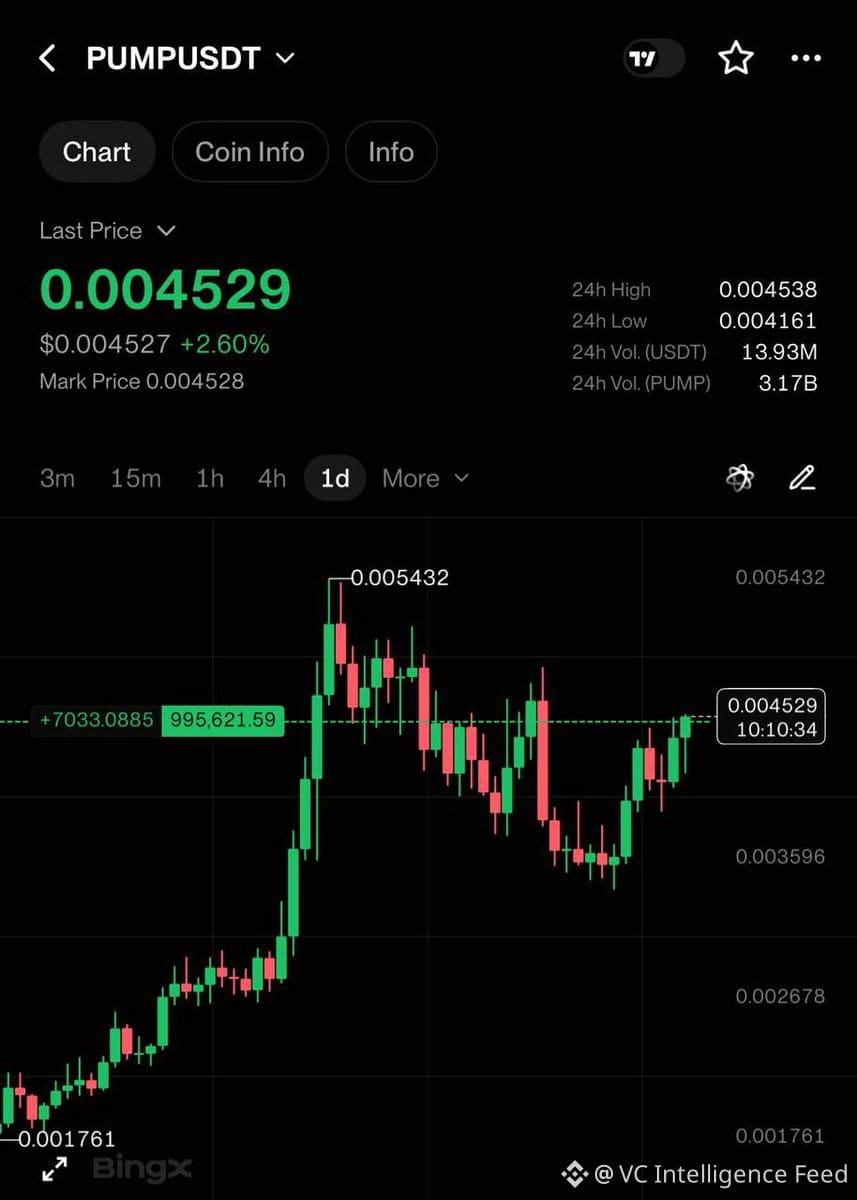
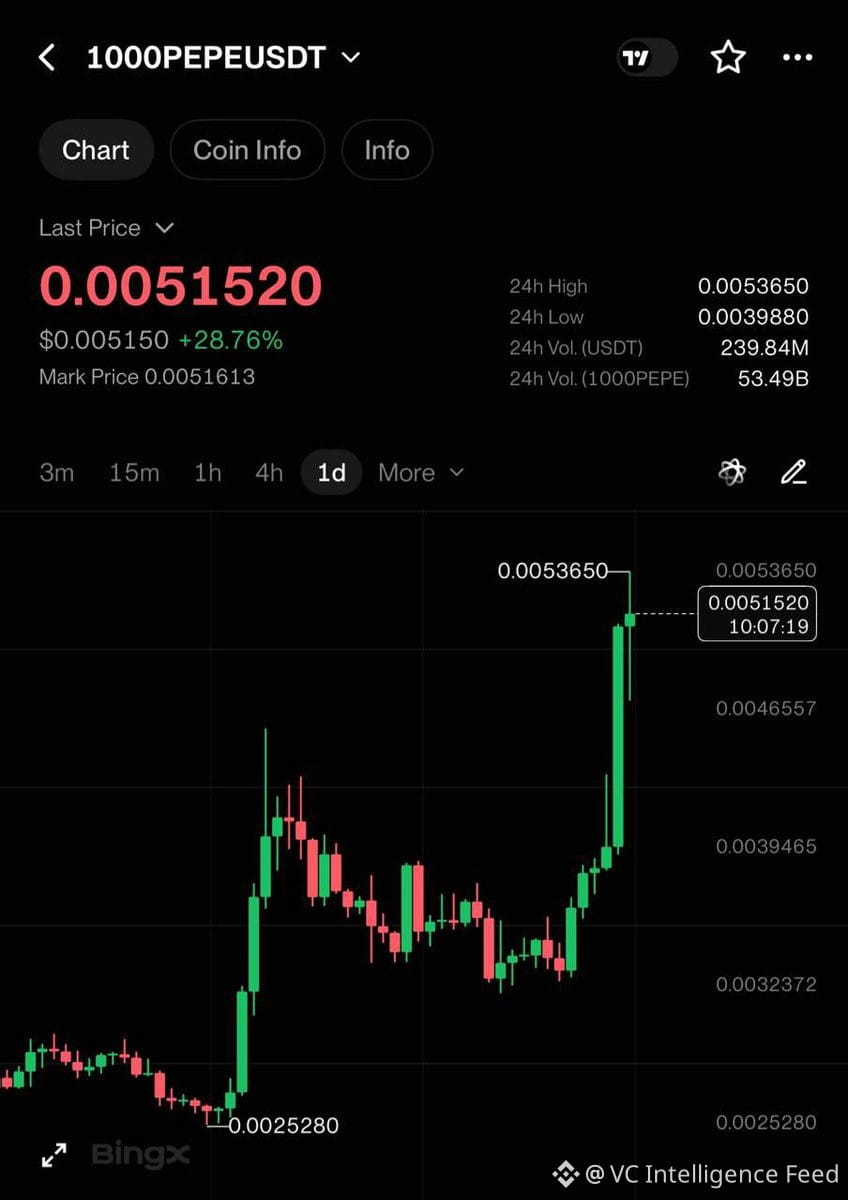
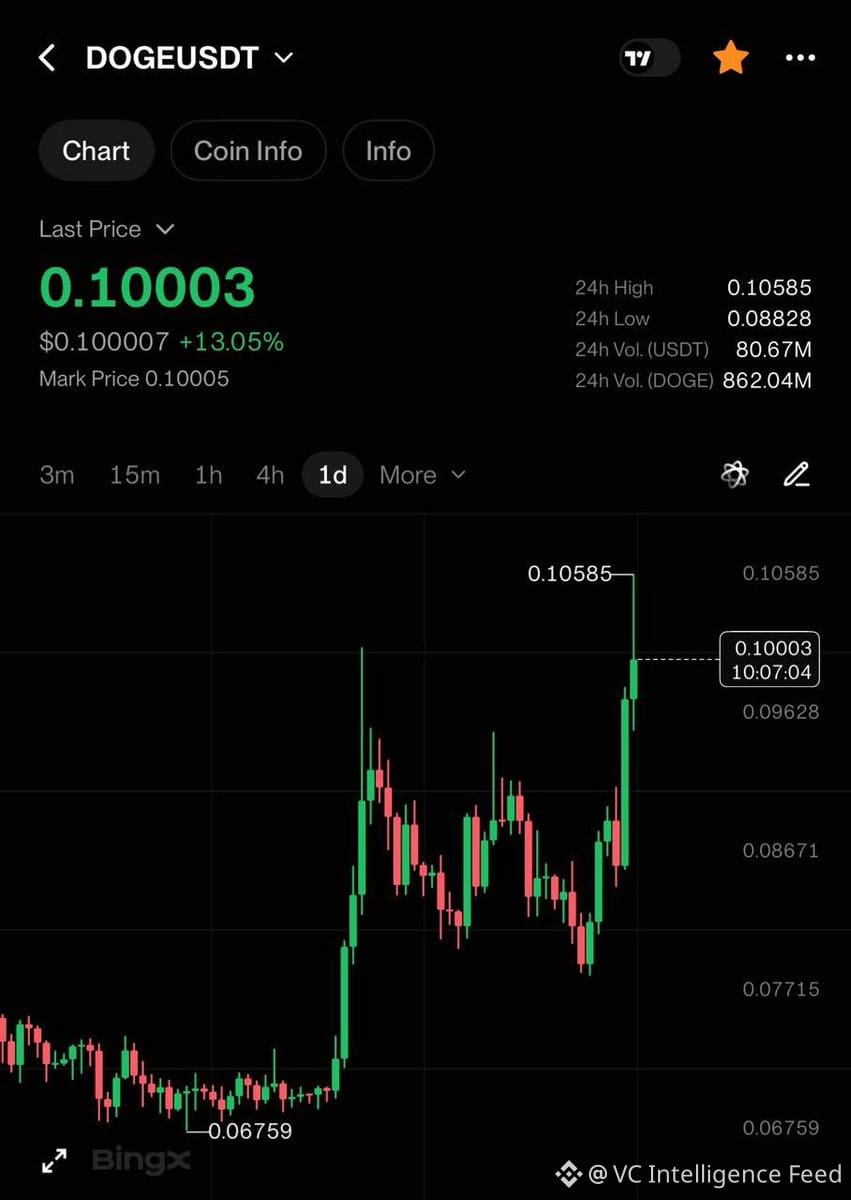
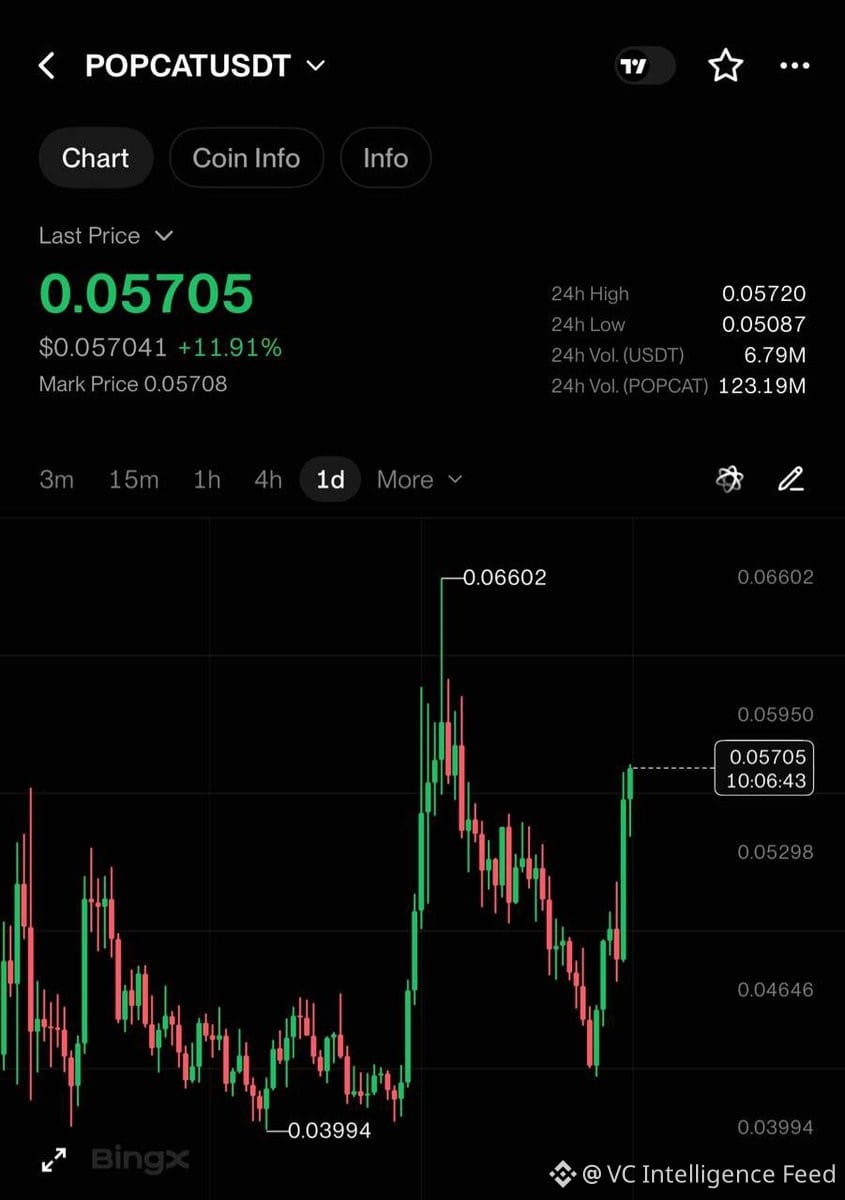
Meme sector setup looks ripe for a move. Watching $POPCAT $FLOKI $PEPE $DOGE $BONK for entries. Retail sentiment heating up, correlation tightening. If $BTC holds structure, these could outperform on beta. Risk: memes bleed fastest in drawdowns. Position accordingly.
Meme sector setup looks ripe for a move. Watching $POPCAT $FLOKI $PEPE $DOGE $BONK for entries. Retail sentiment heating up, correlation tightening. If $BTC holds structure, these could outperform on beta. Risk: memes bleed fastest in drawdowns. Position accordingly.
51
Lihat terjemahan
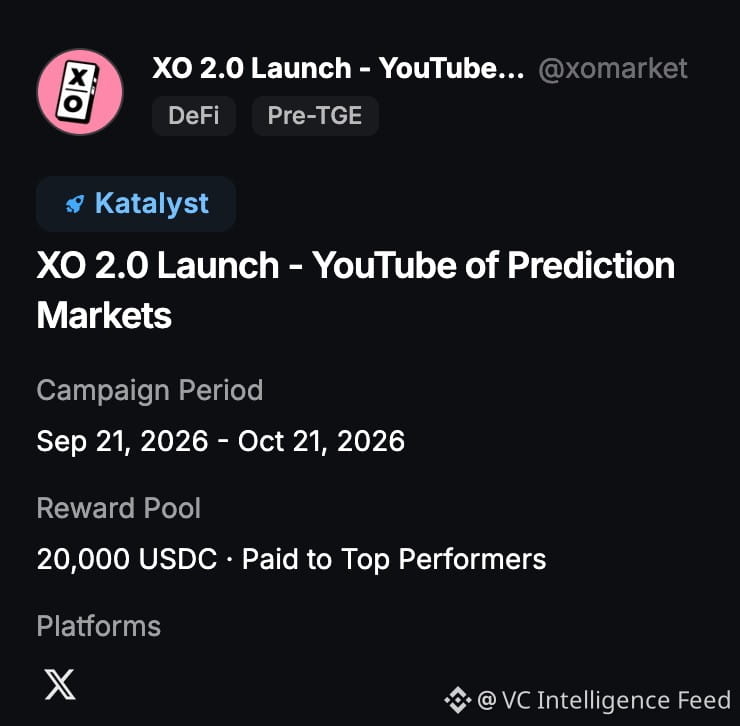
Kaito launches creator incentive program: $20k split across top 50 participants. Ranking methodology combines mindshare metrics + referral volume. Enforcement includes DQ for AI-generated content and purchased engagement.
Author notes InfoFi product quality trending up but payout structure remains suboptimal relative to effort required.
Kaito launches creator incentive program: $20k split across top 50 participants. Ranking methodology combines mindshare metrics + referral volume. Enforcement includes DQ for AI-generated content and purchased engagement.
Author notes InfoFi product quality trending up but payout structure remains suboptimal relative to effort required.
Author notes InfoFi product quality trending up but payout structure remains suboptimal relative to effort required.
Lihat terjemahan
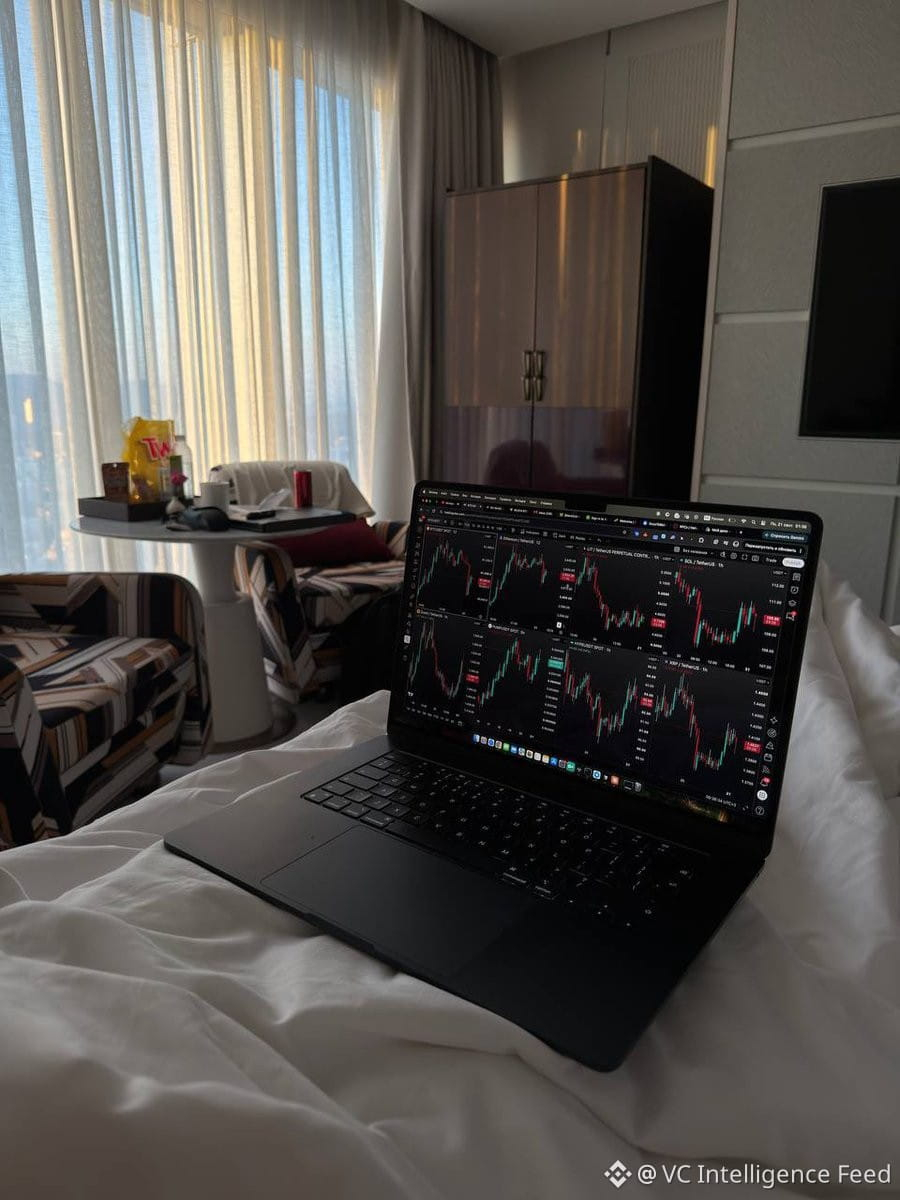
Published ~30 alt price targets. Key disclaimer: local path is unknowable—whether direct run or correction first is noise.
Targets reflect expected terminal levels for this cycle. Probability distribution: some overshoot, some miss. Not actionable for intraday or swing positioning.
Local setups and futures exposure will be posted separately. Treat these as reference points, not entry signals.
Published ~30 alt price targets. Key disclaimer: local path is unknowable—whether direct run or correction first is noise.
Targets reflect expected terminal levels for this cycle. Probability distribution: some overshoot, some miss. Not actionable for intraday or swing positioning.
Local setups and futures exposure will be posted separately. Treat these as reference points, not entry signals.
Targets reflect expected terminal levels for this cycle. Probability distribution: some overshoot, some miss. Not actionable for intraday or swing positioning.
Local setups and futures exposure will be posted separately. Treat these as reference points, not entry signals.
Lihat terjemahan
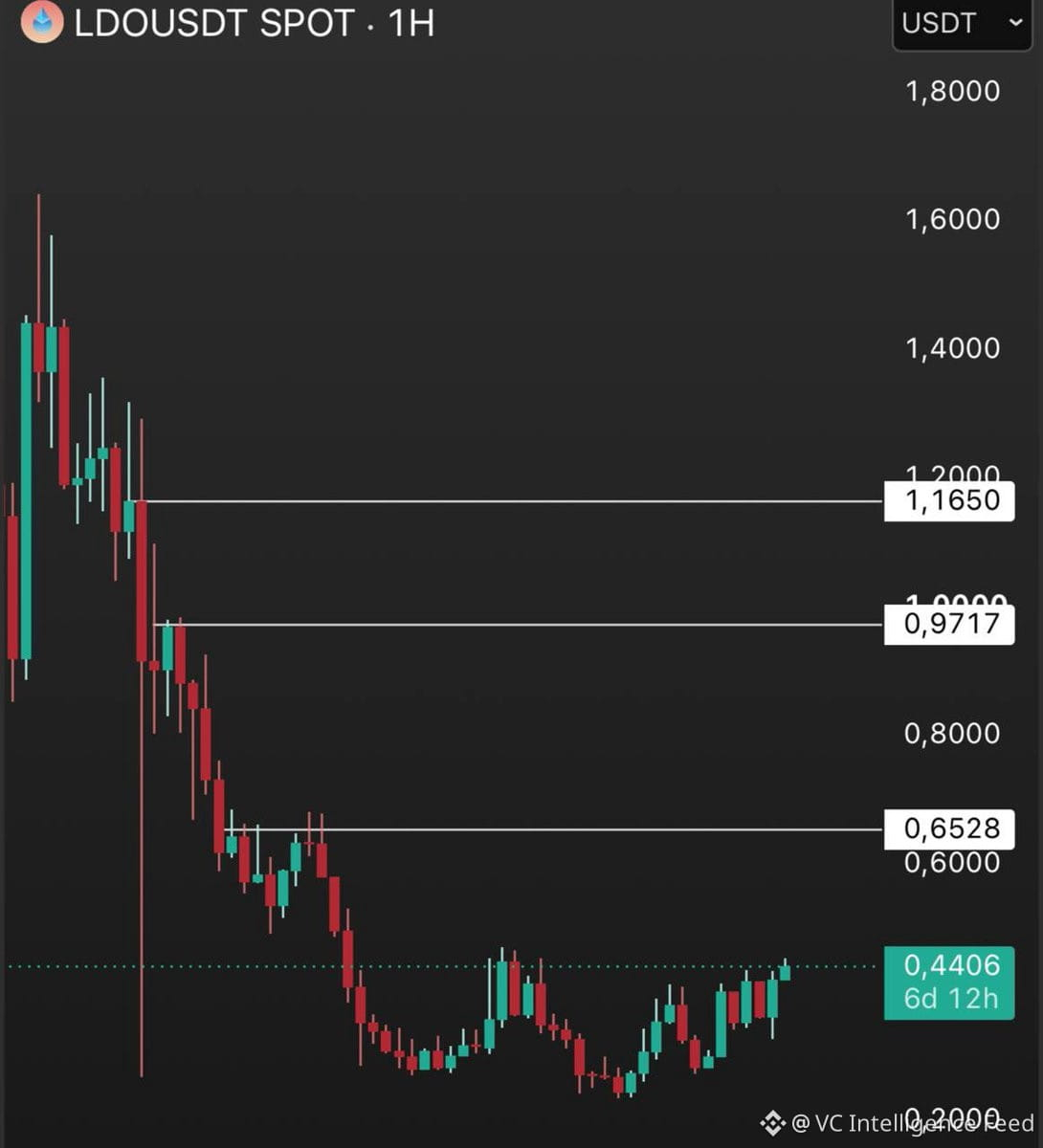
$LDO technical levels to watch: support at $0.65, resistance at $0.97 and $1.16. Clean setup for range traders. No catalyst mentioned—pure price action play.
$LDO technical levels to watch: support at $0.65, resistance at $0.97 and $1.16. Clean setup for range traders. No catalyst mentioned—pure price action play.
3
Lihat terjemahan
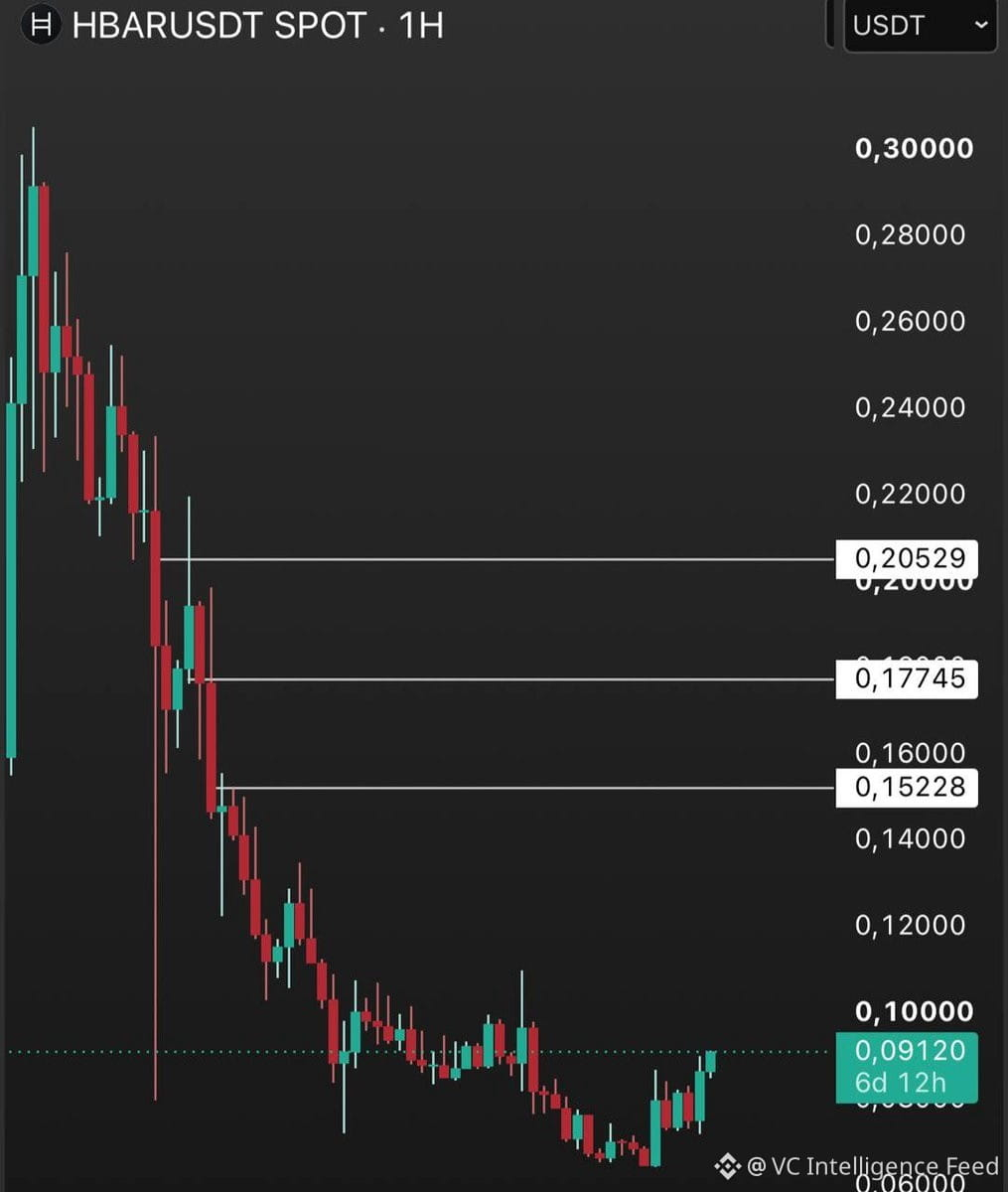
$HBAR technical setup: watching $0.15 support, $0.17 mid-range, $0.20 resistance. Clean breakout above $0.20 needed for continuation. Below $0.15 invalidates structure.
$HBAR technical setup: watching $0.15 support, $0.17 mid-range, $0.20 resistance. Clean breakout above $0.20 needed for continuation. Below $0.15 invalidates structure.
2
Lihat terjemahan
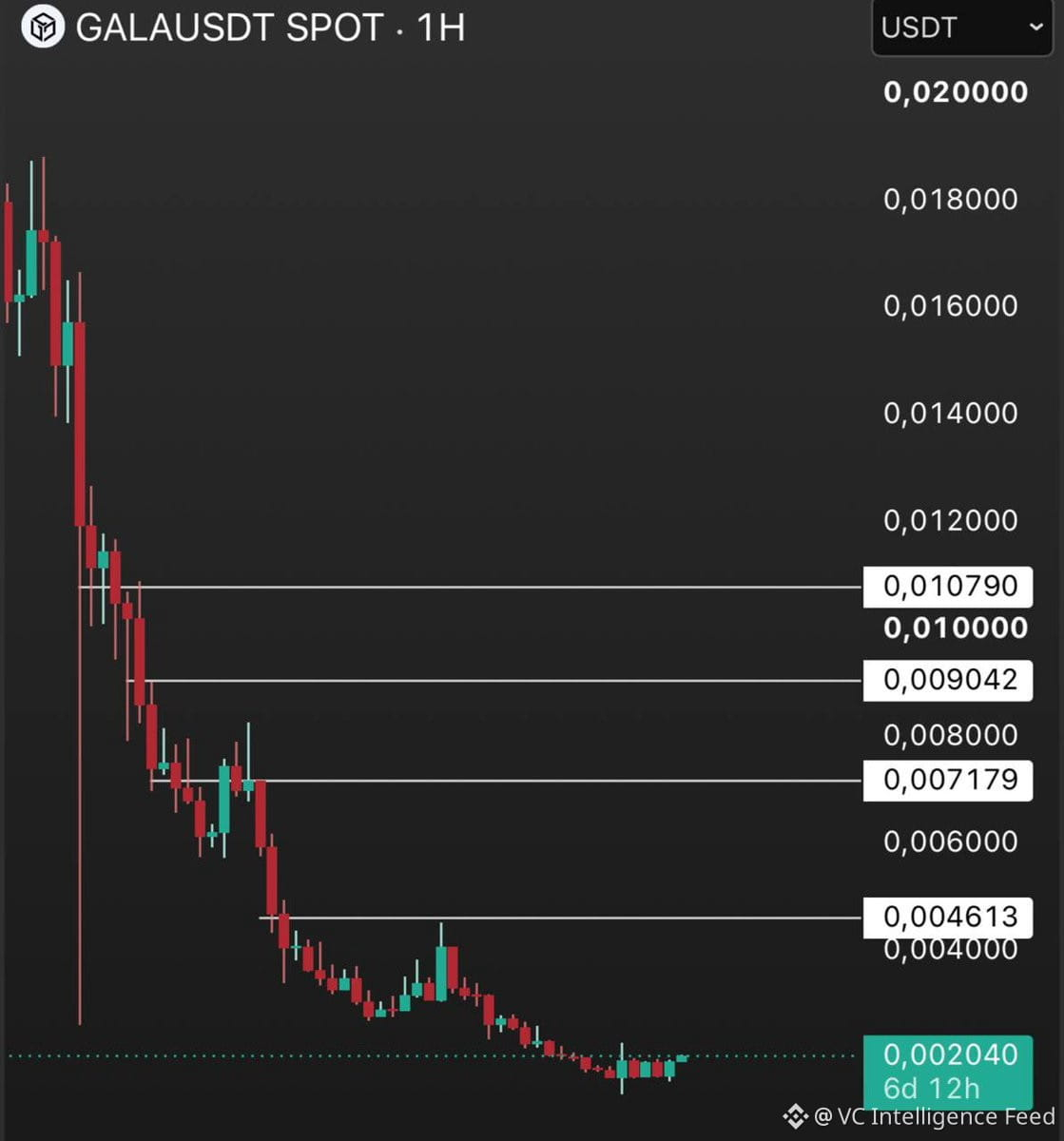
$GALA showing technical resistance cluster at $0.004, $0.007, $0.009, and $0.01. Watch these levels for breakout confirmation or rejection. No volume data provided—needs context on whether these are supply walls or psychological barriers. Current positioning unclear without entry point reference.
$GALA showing technical resistance cluster at $0.004, $0.007, $0.009, and $0.01. Watch these levels for breakout confirmation or rejection. No volume data provided—needs context on whether these are supply walls or psychological barriers. Current positioning unclear without entry point reference.
2
Lihat terjemahan
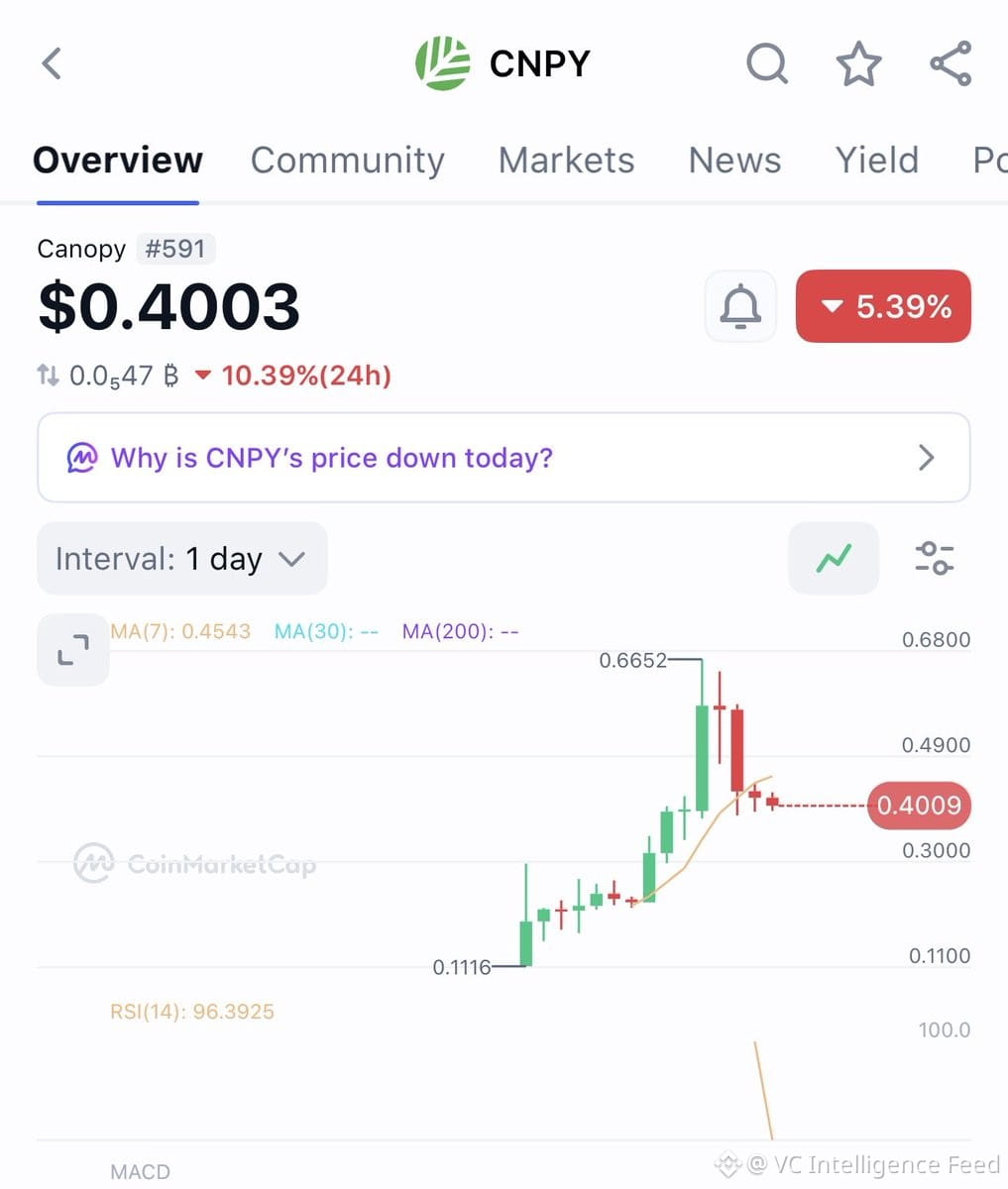
$CNPY trade update: Entry called at $0.20 last week, spiked to $0.65 intraday (+225%), now consolidating around $0.40 (-38% from peak). Pattern recognition: Lagged the broader market pump by several hours before moving last cycle. Expecting similar behavior—macro strength typically precedes $CNPY momentum by 4-6 hours based on last week's price action. Target $1.00 (+150% from current) if macro holds and volume returns. Risk: Failed to hold $0.65, now trading below VWAP from initial move. Watch for reclaim of $0.50 as confirmation or stop below $0.35 if macro reverses.
$CNPY trade update: Entry called at $0.20 last week, spiked to $0.65 intraday (+225%), now consolidating around $0.40 (-38% from peak). Pattern recognition: Lagged the broader market pump by several hours before moving last cycle. Expecting similar behavior—macro strength typically precedes $CNPY momentum by 4-6 hours based on last week's price action. Target $1.00 (+150% from current) if macro holds and volume returns. Risk: Failed to hold $0.65, now trading below VWAP from initial move. Watch for reclaim of $0.50 as confirmation or stop below $0.35 if macro reverses.
2
2
Lihat terjemahan
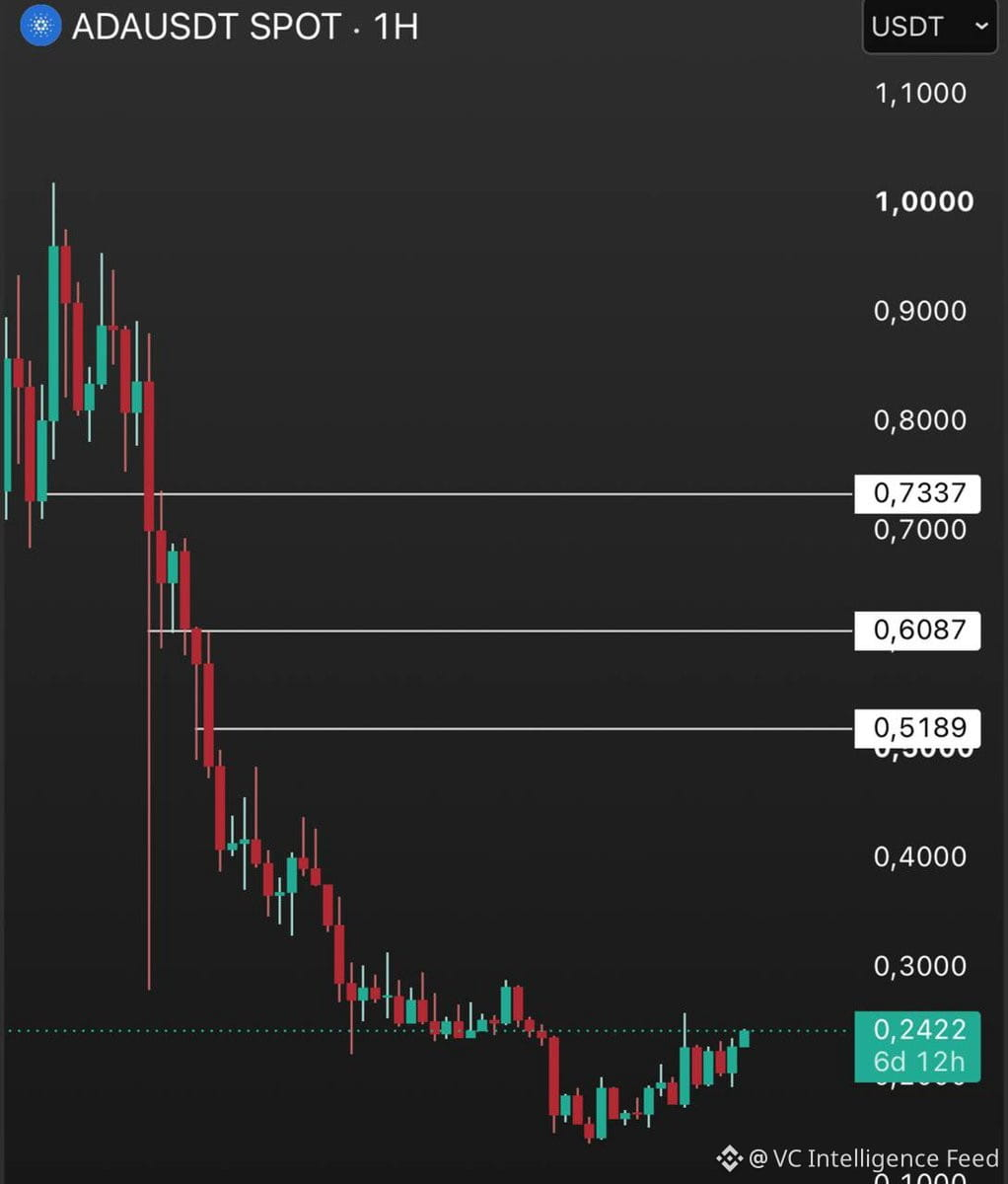
$ADA targeting $0.51, $0.60, and $0.73. Clean technical setup with three-tier exit strategy. Watch volume confirmation at each level—first target is 20% move from current range, third target implies 43% upside if momentum holds. Risk management matters here: partial exits at each level reduce exposure while letting winners run.
$ADA targeting $0.51, $0.60, and $0.73. Clean technical setup with three-tier exit strategy. Watch volume confirmation at each level—first target is 20% move from current range, third target implies 43% upside if momentum holds. Risk management matters here: partial exits at each level reduce exposure while letting winners run.
2
Masuk untuk menjelajahi konten lainnya
Bergabunglah dengan pengguna kripto global di Binance Square
⚡️ Dapatkan informasi terbaru dan berguna tentang kripto.
💬 Dipercayai oleh bursa kripto terbesar di dunia.
👍 Temukan wawasan nyata dari kreator terverifikasi.
Email/Nomor Ponsel
Topik Sedang Tren
AIStocksWhatNext
804,303 penayangan
6,239 Berdiskusi
Bagikan & Menangkan Reward Traffic dalam Kampanye Hashtag Tren kami
✨Topik: Peluang Investasi Lain Apa yang Masih Ada saat Saham AI Terus Naik?
👉Cara Bergabung:
Publikasikan postingan atau artikel singkat dengan hashtag #AIStocksWhatNext
Bagikan apakah Anda bullish atau bearish, serta unggah kepemilikan saham AI atau trading Anda — menggunakan trade widget dapat meningkatkan kelayakan Anda.
Anda juga dapat memperkuat postingan dengan membagikan data atau grafik, serta menghindari gambar yang dihasilkan AI.
✍️Buat konten berdasarkan sudut pandang berikut:
- Nvidia mengatakan penjualan chip akan menjadi dua kali lipat tahun depan, dan perusahaan-perusahaan AI teratas terus meraih pendapatan rekor, pengeluaran komputasi di balik itu juga sangat besar. Apakah permintaan AI benar-benar sedang meroket? Dan berapa lama bisa bertahan? Saham AI naik di seluruh papan. Ini benar terobosan nyata, atau hanya pemantulan jangka pendek?
- Para pemimpin industri menyerukan untuk memperlambat pengembangan AI, sementara Trump berencana membangun “AI Force”, dengan mengklaim AI bisa menyumbang 25% dari PDB AS di masa depan. Anda ada di pihak yang mana? Apakah dukungan di tingkat negara bagian akan menjadi kemenangan jangka panjang bagi saham AI?
- Apakah Anda membeli saham AI? Bagikan trade/kepemilikan AI Anda dengan trade sharing widget kami.
⏰Periode Kampanye:
- 2026-09-22 7:00 - 2026-09-24 4:00 UTC
🎁Hadiah:
- Postingan yang memenuhi syarat dan mematuhi pedoman di atas serta berisi lebih dari 100 kata akan ditinjau dan mungkin mendapatkan dorongan traffic acak sebesar 500 hingga 3.000 tayangan. Anda akan menerima notifikasi dari feed secretary jika postingan Anda dipilih.
- Berkesempatan untuk artikel Anda ditampilkan di Binance Square Official
Butuh ide untuk postingan Anda? Kunjungi halaman topik #AIStocksWhatNext atau Square Guide on How to Post for Better Reach.
Binance Square Official
·Disukai 571 Kali
·1.6M penayangan
BitcoinRejectedAt$87,300Twice
0 penayangan
0 Berdiskusi
BCHJumps28%OnCMEFuturesListing
3,592 penayangan
347 Berdiskusi