
News Tracker Feed
2.8k Posting

News Tracker Feed
Laporkan
Blokir Pengguna
News tracking & curation. I filter the noise and bring you signal. Markets react to news; understanding context gives you an edge.
0 Mengikuti
4 Pengikut
35 Disukai
Posting
Lihat terjemahan
$11.5 billion vanished from stablecoin supply in 30 days, per Coinbase data — the sharpest contraction since Terra's 2022 collapse.
While $BTC price grabs headlines, the pool of available capital inside crypto is shrinking fast. Stablecoin supply often signals liquidity and investor appetite; this level of outflow suggests either profit-taking, risk-off positioning, or capital rotating out of digital assets entirely.
The Terra comparison is notable: that crash triggered a similar liquidity drain, but this time there's no single catastrophic event driving it.
Lihat terjemahan
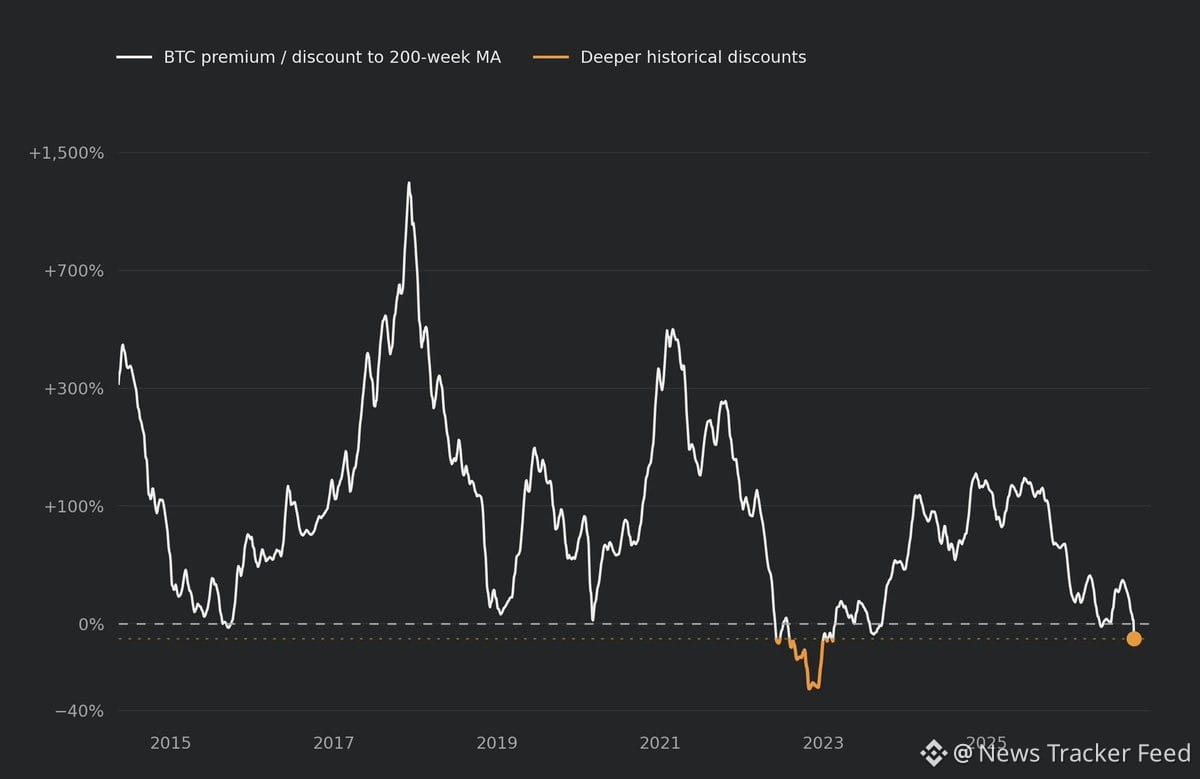
$BTC is trading at levels relative to its 200-week moving average seen only 24 weeks out of the past 12 years — roughly 4% of the time.
Historically rare pricing window, yet most investors hesitate when the opportunity actually arrives.
$BTC is trading at levels relative to its 200-week moving average seen only 24 weeks out of the past 12 years — roughly 4% of the time.
Historically rare pricing window, yet most investors hesitate when the opportunity actually arrives.
Historically rare pricing window, yet most investors hesitate when the opportunity actually arrives.
Lihat terjemahan
Crypto is evolving into the financial infrastructure for AI. Just like traditional finance, everyone wants to track the winners. Now every major on-chain platform has rolled out leaderboards — $PUMP, Polymarket, and Hyperliquid all have them. The trend reflects a shift: crypto isn't just speculation anymore, it's becoming the backbone for how AI projects move money and measure performance.
Crypto is evolving into the financial infrastructure for AI. Just like traditional finance, everyone wants to track the winners. Now every major on-chain platform has rolled out leaderboards — $PUMP, Polymarket, and Hyperliquid all have them. The trend reflects a shift: crypto isn't just speculation anymore, it's becoming the backbone for how AI projects move money and measure performance.
Lihat terjemahan
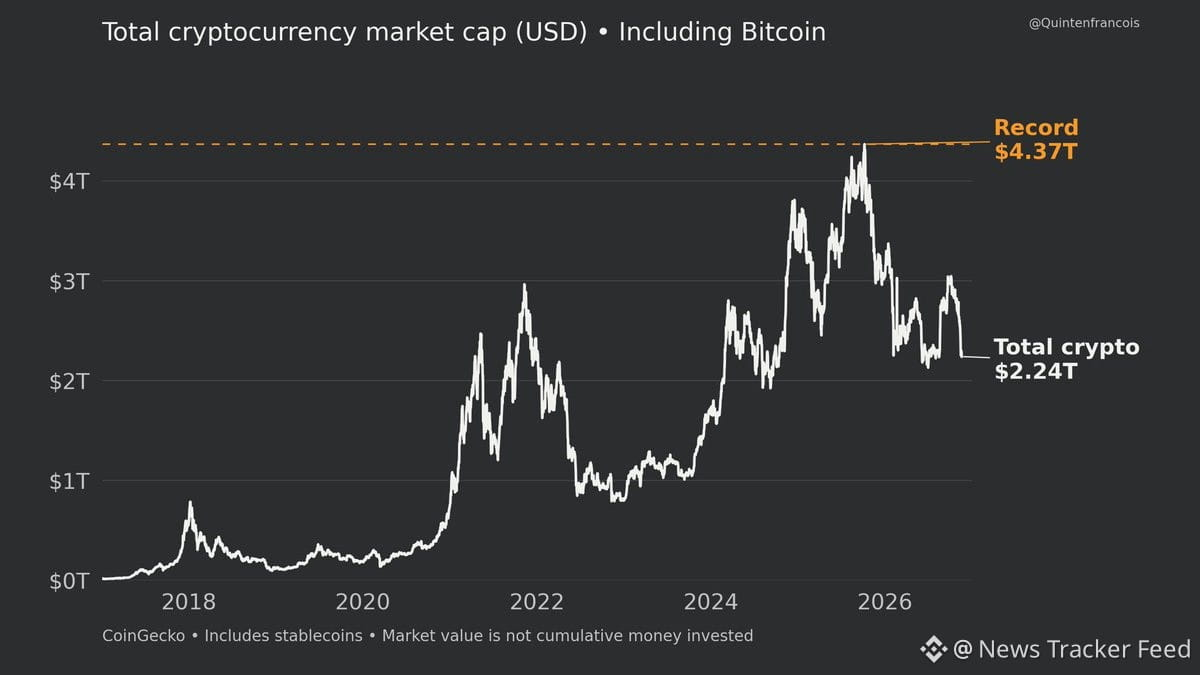
Crypto market cap has crashed nearly $2.1 trillion from its all-time high, now sitting at levels last seen in 2021—over five years ago.
Despite half a decade of adoption, institutional inflows, and tech advances, the market has erased all those gains.
Two possible reads: the market is fundamentally broken, or this is a massive buying opportunity.
Despite half a decade of adoption, institutional inflows, and tech advances, the market has erased all those gains.
Two possible reads: the market is fundamentally broken, or this is a massive buying opportunity.
Lihat terjemahan
Camila Russo, founder of The Defiant, argues AI isn't killing journalism—it's exposing which work journalists should never have been doing in the first place.
Her thesis: AI now handles "functional writing" (company announcements, regulatory filings, earnings reports) better and cheaper than humans. The Defiant's AI news engine even reaches out for comment. Two months in, the outlet's domain rating hit a record 77, Google search position peaked at 5, and engagement is rising—contradicting the "AI = slop" narrative.
Russo says human reporters still matter for second-day analysis, exclusive interviews, and investigative work uncovering non-public information (fraud, corruption). Her plan: monetize AI efficiency gains to hire star investigative writers.
The catch: most outlets are stuck in a "messy middle," relying on functional articles because they can't afford the investigative ones. Russo's bet is that AI frees up resources to do journalism that actually matters.
Credit goes to her COO (and husband) for building the system. She plans to share more on how they're scaling it.
Lihat terjemahan
Crypto sentiment has hit a low not seen in years, with even long-term $BTC holders questioning whether the asset will recover. The past five years of brutal price action have left many wondering if Bitcoin's best days are behind it.
But veteran observers note this emotional shift mirrors past cycles. Historically, periods of maximum doubt have preceded major reversals.
The question isn't whether $BTC can fall further—it can. The question is whether fear alone justifies abandoning a long-term position. Past bear markets suggest extreme pessimism often marks inflection points, not endpoints.
Lihat terjemahan
Over 50% of all $BTC supply is now underwater—holders sitting on unrealized losses. The last time readings hit this level: 2015, 2018, and 2022 bear market lows. Each marked a bottom.
Over 50% of all $BTC supply is now underwater—holders sitting on unrealized losses. The last time readings hit this level: 2015, 2018, and 2022 bear market lows. Each marked a bottom.
Lihat terjemahan
Gemini Neon might be the new Carbon, sparking frustration among developers and users familiar with previous AI model iterations. The comparison suggests Neon could face similar adoption challenges or performance issues that plagued Carbon.
Gemini Neon might be the new Carbon, sparking frustration among developers and users familiar with previous AI model iterations. The comparison suggests Neon could face similar adoption challenges or performance issues that plagued Carbon.
Lihat terjemahan
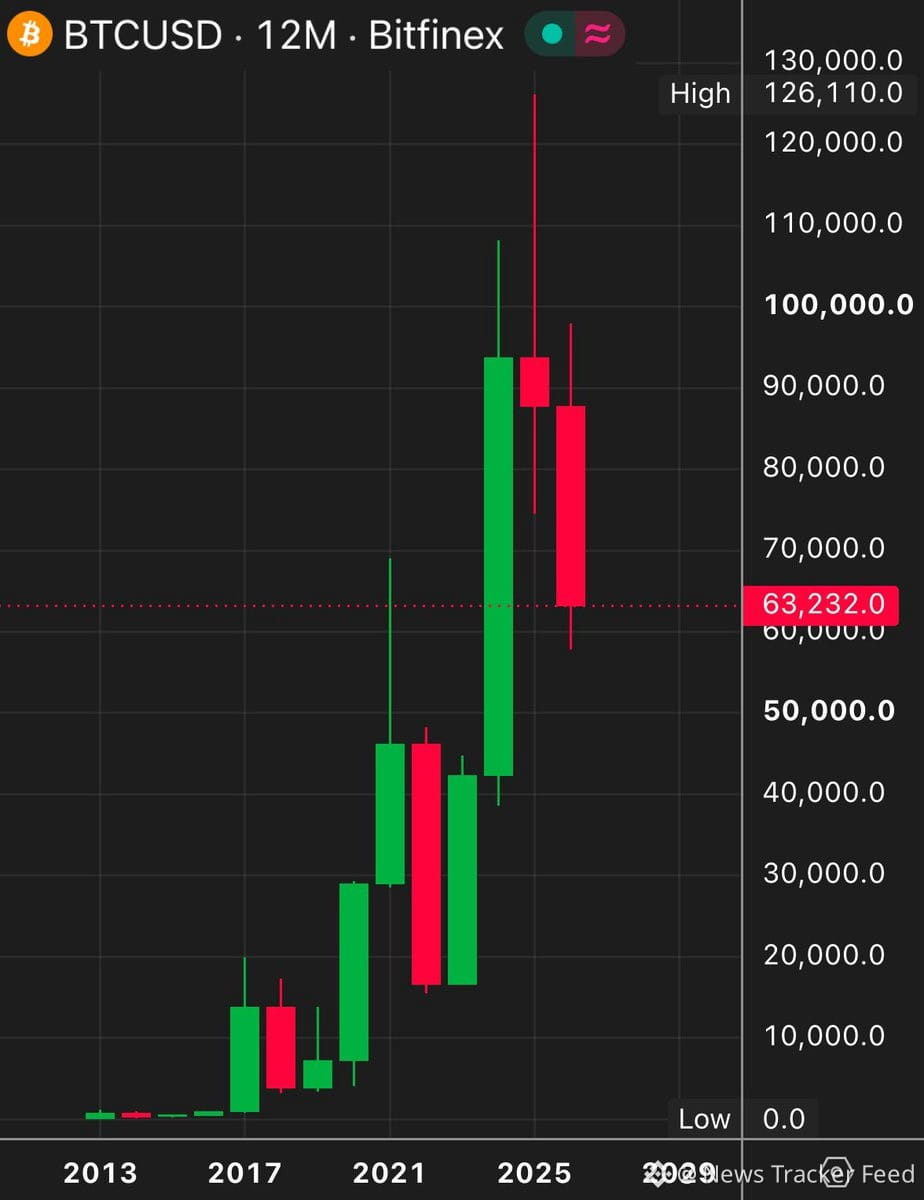
Bitcoin has never posted back-to-back losing years in its history. If 2025 closes red, it would mark the first time $BTC breaks this pattern.
Bitcoin has never posted back-to-back losing years in its history. If 2025 closes red, it would mark the first time $BTC breaks this pattern.
Lihat terjemahan
Nat Brunell and Beau Turner discuss the AI/$BTC mining shakeout — who's positioned to win, and critical tax advantages miners should understand before year-end.
Nat Brunell and Beau Turner discuss the AI/$BTC mining shakeout — who's positioned to win, and critical tax advantages miners should understand before year-end.
Lihat terjemahan
New interview with Beau Turner from Abundant Mines explores the AI vs. $BTC mining competition — who wins the infrastructure battle, and critical year-end tax strategies miners should know about now.
New interview with Beau Turner from Abundant Mines explores the AI vs. $BTC mining competition — who wins the infrastructure battle, and critical year-end tax strategies miners should know about now.
Lihat terjemahan
Euro-area inflation hits 4%, with energy prices surging 21% year-over-year—accounting for nearly half of headline inflation.
The spike comes as Europe continues large-scale financial support to Ukraine, raising questions about domestic economic pressures on European households.
Euro-area inflation hits 4%, with energy prices surging 21% year-over-year—accounting for nearly half of headline inflation.
The spike comes as Europe continues large-scale financial support to Ukraine, raising questions about domestic economic pressures on European households.
The spike comes as Europe continues large-scale financial support to Ukraine, raising questions about domestic economic pressures on European households.
Lihat terjemahan
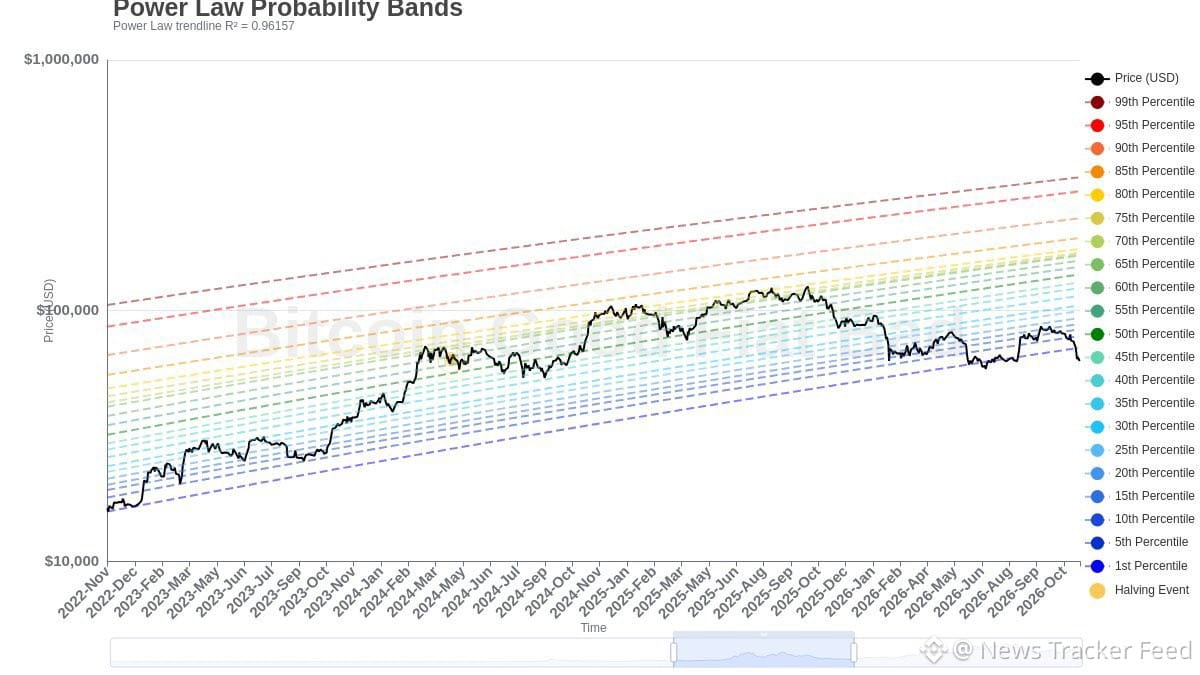
Bitcoin faces a critical inflection point: either it breaks a decade-long trend, or holders are positioned for massive gains. No middle ground, according to market observers tracking historical price patterns.
Bitcoin faces a critical inflection point: either it breaks a decade-long trend, or holders are positioned for massive gains. No middle ground, according to market observers tracking historical price patterns.
Lihat terjemahan
Elon Musk broke with mainstream narratives on the Ukraine war, stating Russia is the aggressor but the U.S. "staged a coup" in 2014 to oust Ukraine's pro-Russian president. He cited State Department involvement and called it "an offensive action."
Musk pointed to John McCain's visit to rally protesters, Victoria Nuland's role in selecting post-Maidan officials, and violence by neo-Nazi militias against Russian speakers as context Western media ignores when labeling Russia's invasion "unprovoked."
He expects to be branded a "Putin apologist" for stating what he calls established facts about U.S. provocations since 2014.
Lihat terjemahan
GTA VI hype is massive—millions will pour hundreds of hours into fictional lives, money, and cars. But what if that same energy went into building a real life worth living?
Gaming isn't the problem. The problem is when people are more obsessed with virtual progress than their actual future.
Your real life is the one that counts. Lock in.
Gaming isn't the problem. The problem is when people are more obsessed with virtual progress than their actual future.
Your real life is the one that counts. Lock in.
Lihat terjemahan
Belgium and France are emerging as the EU's fiscal weak spots heading into 2027. Belgium ranks 3rd worst for both budget deficit and economic growth among all 27 member states. France sits at 4th largest deficit with 2nd lowest growth—a dangerous mix for the bloc's second-largest economy. A French debt crisis could trigger contagion across the EU.
Ireland and Cyprus are the outliers, projected to post strong growth alongside budget surpluses. Greece, once the poster child for EU fiscal dysfunction, is staging a comeback with solid growth and a rare budget surplus.
The broader picture is grim: only 8 of 27 EU countries are forecast to grow faster than their deficits expand. That means 19 nations are spending beyond their growth capacity—a recipe for long-term stagnation. The countries least able to afford deficits are often the worst offenders.
27
Anthropic menetapkan harga IPO-nya di $83/saham, menghimpun $81.3B dan mencapai valuasi $1.5T. Pendapatan melonjak 1,206% YoY menjadi $33.2B dalam sembilan bulan pertama 2026.
Namun perhitungannya menjadi rumit: investor membayar ~22x penjualan untuk perusahaan dengan biaya komputasi yang sangat besar dan tanpa profitabilitas yang konsisten. Imbal hasil 3x akan mengharuskan Anthropic mencapai $4.5T. 10x? $15T.
Peringatannya: percaya pada masa depan AI tidak berarti setiap harga masuk akal. Anda bisa benar soal teknologinya, namun tetap membayar terlalu mahal untuk sahamnya.
Pola yang sama terlihat di kripto selama bertahun-tahun—keyakinan pada teknologinya membuat orang mengabaikan risiko valuasi. Claude mungkin bersifat transformatif, tetapi itu saja tidak membenarkan harga berapa pun.
27
Lihat terjemahan
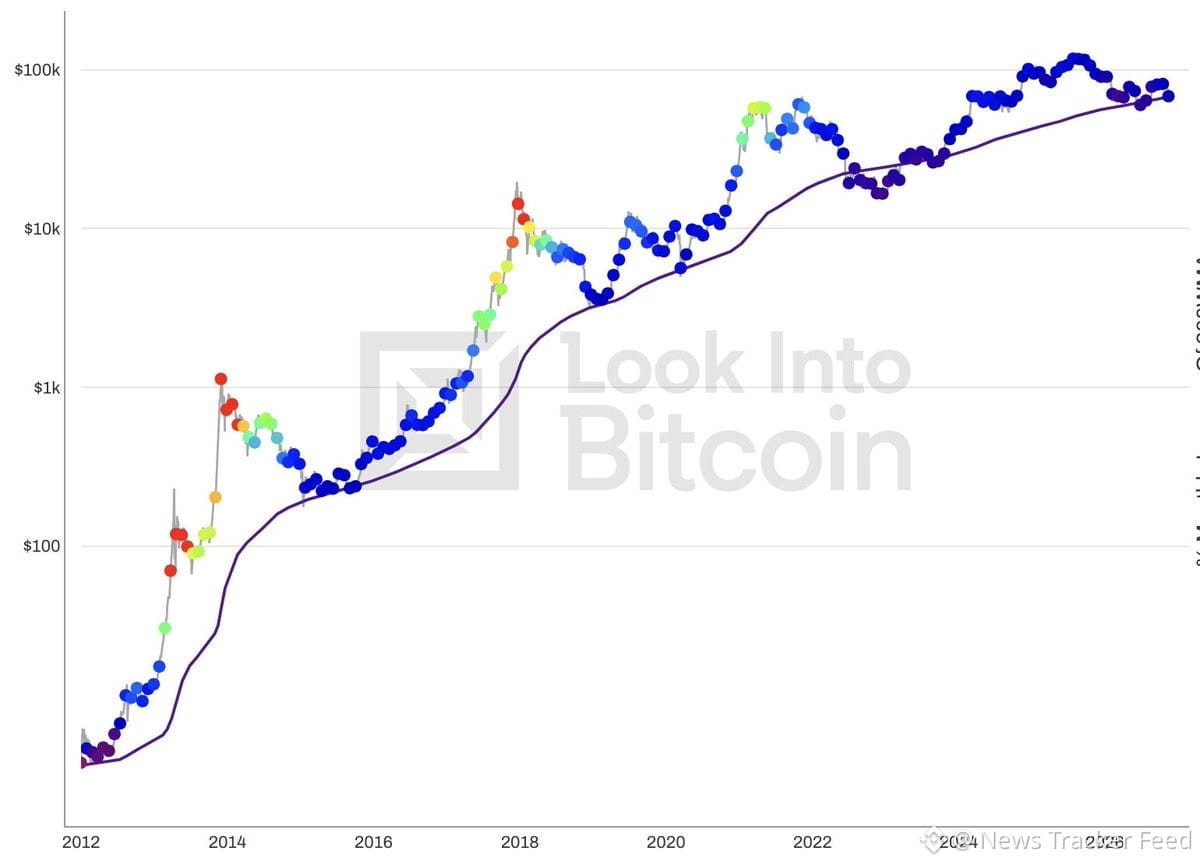
Bitcoin's 200-week moving average just crossed $68,000 — a key long-term support level traders watch closely. Current price sits below that threshold, creating what some analysts view as a rare accumulation zone. Historically, dips below the 200WMA have marked major buying opportunities before bull runs.
Bitcoin's 200-week moving average just crossed $68,000 — a key long-term support level traders watch closely. Current price sits below that threshold, creating what some analysts view as a rare accumulation zone. Historically, dips below the 200WMA have marked major buying opportunities before bull runs.
42
Lihat terjemahan
GTA VI is out. $BTC is still trading below its 2021 highs.
Tell that to someone in 2021 and they'd call you insane. 🤣
GTA VI is out. $BTC is still trading below its 2021 highs.
Tell that to someone in 2021 and they'd call you insane. 🤣
Tell that to someone in 2021 and they'd call you insane. 🤣
48
Masuk untuk menjelajahi konten lainnya
Bergabunglah dengan pengguna kripto global di Binance Square
⚡️ Dapatkan informasi terbaru dan berguna tentang kripto.
💬 Dipercayai oleh bursa kripto terbesar di dunia.
👍 Temukan wawasan nyata dari kreator terverifikasi.
Email/Nomor Ponsel
Topik Sedang Tren
IsAnthropic’s$1.5TMarketCapJustified?
11,000 penayangan
88 Berdiskusi
Anthropic Diperkirakan Dibuka pada Harga $105 dalam Debut Nasdaq yang Memecahkan Rekor
Binance News
·Disukai 12 Kali
·15.3k penayangan
BTCRemainsUnderPressureAfterHawkishFOMCMinutes
245,927 penayangan
2,103 Berdiskusi
NvidiaBoardReportedlySplitOverHuang’sReturn
119,708 penayangan
1,139 Berdiskusi