
#IBSGovAccountMints1BTokensDrains5.71M
The crypto market has seen plenty of sudden crashes, but what happened to Pots Money’s IBS token on November 29 is a reminder that sometimes the biggest threat to a cryptocurrency comes from inside its own system.
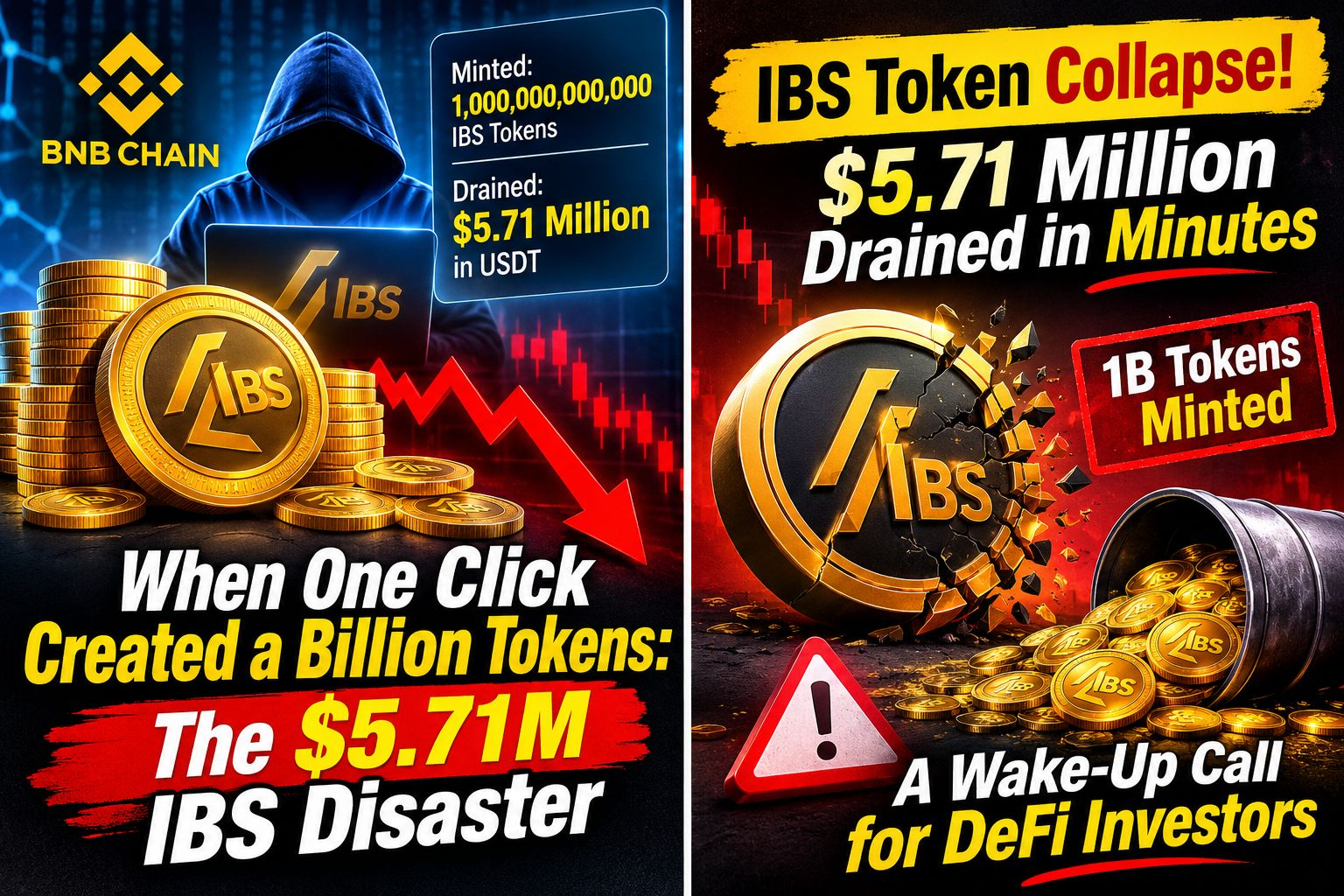
A privileged governance account reportedly minted 1 billion new IBS tokens on BNB Chain and exchanged them for approximately $5.71 million in USDT. The transactions drained almost all the stablecoin liquidity from the IBS trading pool, leaving investors facing a devastating collapse.
How Did It Happen?
According to blockchain security monitors, the incident involved two rounds of minting and selling.
The first transaction created 1 billion IBS tokens, which were immediately swapped for approximately $5.71 million in USDT. A second transaction reportedly created around 100 billion additional tokens and extracted more funds from the remaining liquidity.
The combined amount removed from the pool was approximately $5.72 million.
The most concerning detail is that the activity involved an account with privileged governance permissions. This raises serious questions about how token creation authority was controlled and whether those permissions were properly secured.
Why Did IBS Collapse So Quickly?
To understand the damage, we need to look at how liquidity pools work.
A decentralized exchange needs liquidity to allow users to buy and sell tokens. When an enormous supply of newly created tokens enters a relatively small pool, it can severely disrupt the balance between the two assets.
That is essentially what happened with IBS.
The massive token supply overwhelmed the available liquidity, allowing USDT to be withdrawn while the value of IBS collapsed.
For ordinary holders, this meant that selling their tokens became extremely difficult, especially after the pool lost most of its available USDT.
The Bigger Problem Goes Beyond $5.71 Million
This incident highlights a fundamental issue in decentralized finance: decentralization is only as strong as the permissions and controls behind a project.
Investors often focus on tokenomics, staking rewards, partnerships and price movements. However, they sometimes overlook a much more important question: Who actually has the power to create new tokens?
Even a project with an attractive concept can become extremely risky if a single privileged account has excessive control over its token supply.
At the time of the reported incident, the project's recovery plans and the possibility of returning the drained funds remained unclear.
What Should Crypto Investors Learn From This?
The IBS incident is another reason to look beyond marketing promises before investing in a DeFi project.
Check whether token minting permissions are restricted, whether governance decisions require multiple approvals, whether smart contracts have been independently audited, and whether liquidity is sufficiently protected.
No audit or security measure can guarantee complete protection, but transparency and strong access controls can reduce unnecessary risks.
The real lesson here is simple: A cryptocurrency's value is not determined only by its technology or community. Trust in its underlying system matters just as much.
What do you think? Should DeFi projects completely remove privileged minting permissions, or can controlled minting still work safely with proper governance and transparency?
#defi #BNBChain #CryptoSecurity #IBS