$XPL: Dual-Key Chart Logic
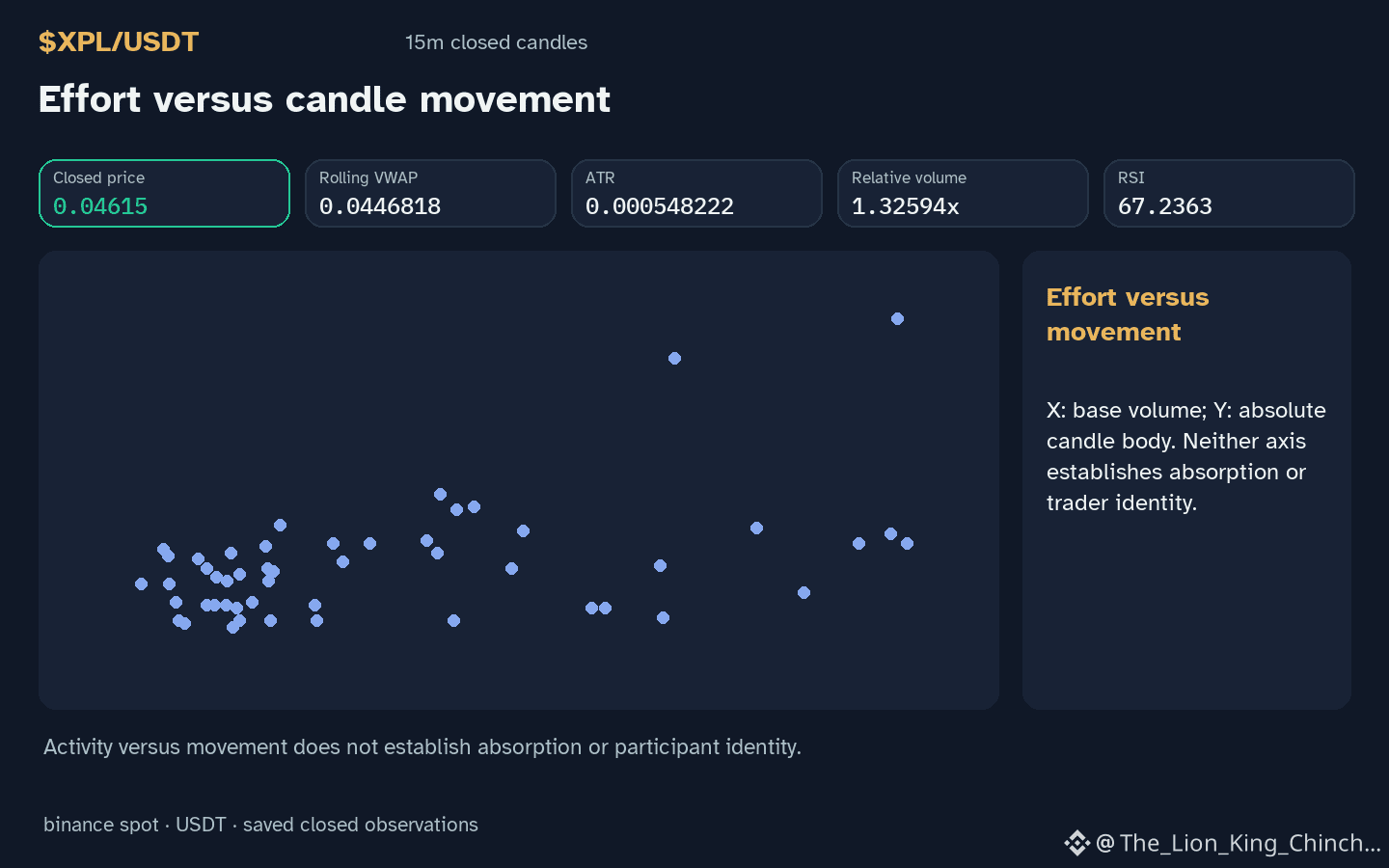
$XPL: XPL’s recent move prompts a question: does a price break near resistance mean the market’s liquidity has changed, or is it just a shift in perceived value? The observation shows the price is above resistance while volume is above baseline and RSI is 67.2. In a dual‑key analogy, think of price as the lock’s tumblers and liquidity as a separate key that must turn for the lock to open. A single key turning the tumblers may cause the lock to click, yet without the second key the lock remains stubborn. Here the tumblers (price) have moved past resistance, but the second key (volume) is already turning, indicating a potential opening. A counterexample would be a scenario where price passes resistance but volume stays below baseline; the lock would stay jammed and the movement would likely reverse. To reassess, watch the next closed candle. If volume climbs further and the RSI stays neutral, the lock may indeed open, confirming the dual‑key hypothesis. If volume stalls and RSI drops, the lock remains closed and the breakout is a false signal. This mechanism stays strictly within the supplied facts and avoids claims about trader intent or market manipulation.
Probabilistic market research, not a recommendation or guaranteed return.
#XPL #CryptoEducation #CryptoLearning