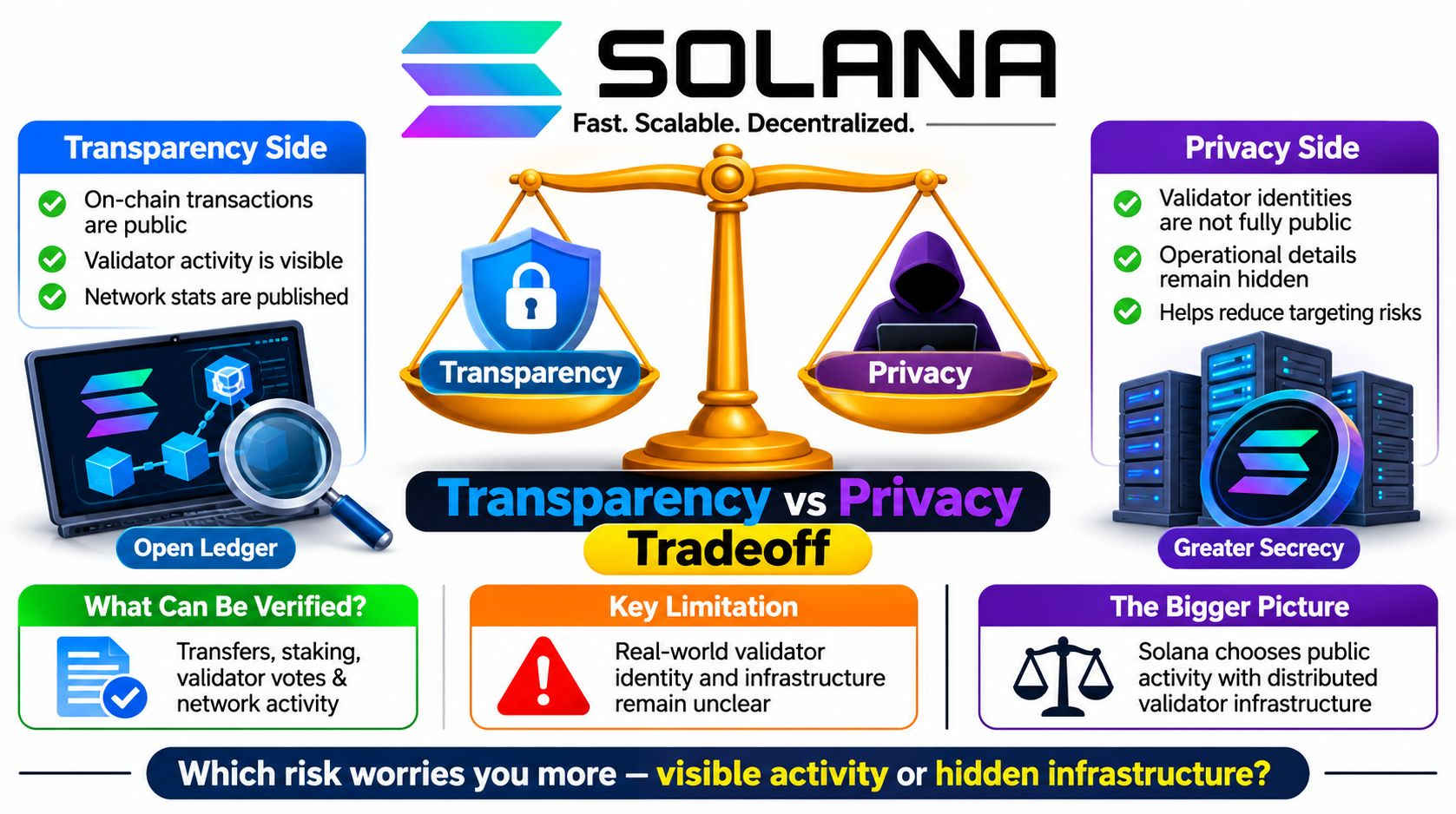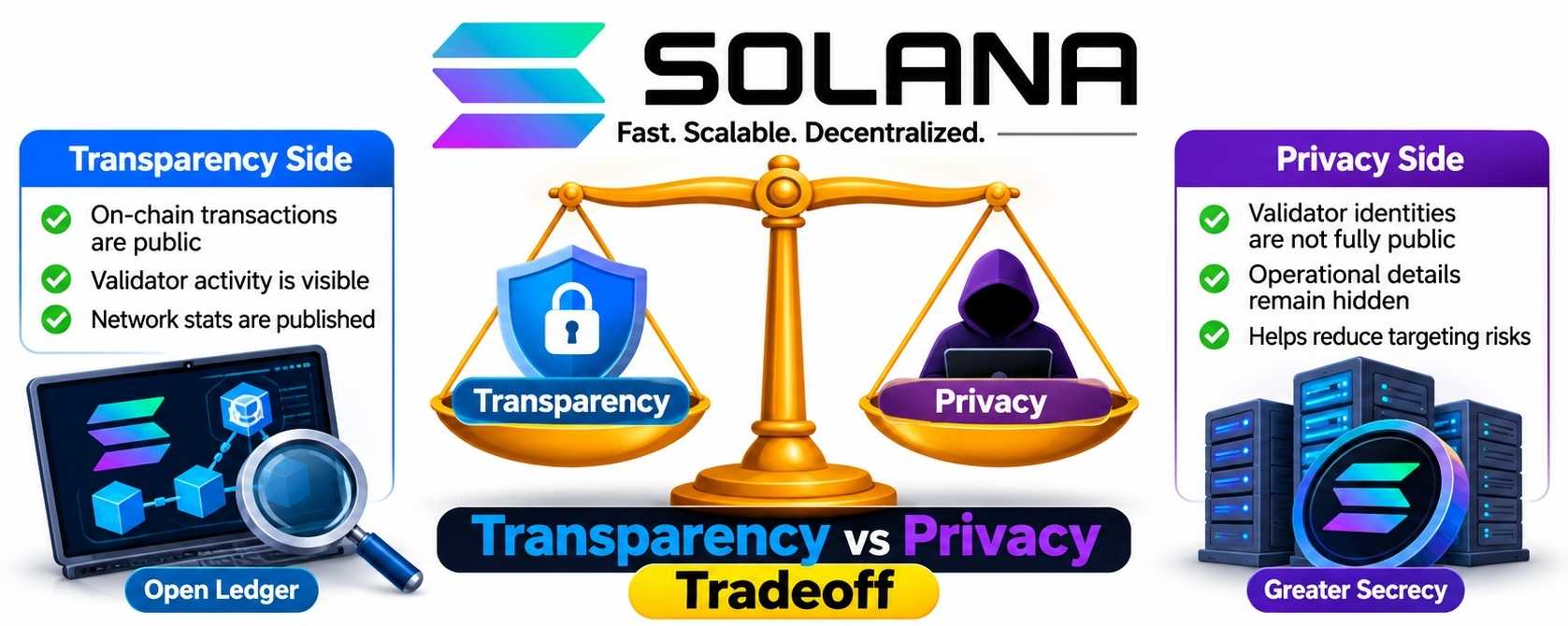

SOL makes transaction activity publicly verifiable, but one important detail remains less visible: the real-world identity and infrastructure behind every validator. That's not an oversight. It's a design tradeoff.
Solana's permissionless validator model allows independent operators to participate without requiring every operator to expose their personal identity publicly. This can reduce targeting risks and preserve operational flexibility.
But holders lose something in return: complete visibility into who controls the infrastructure, where every validator operates, and how much operational dependence exists on shared providers.
What can holders verify? SOL transfers, staking balances, validator voting accounts, token issuance, and network activity are publicly accessible on-chain.
Solana also publishes network research and validator-health reports. Its November 2026 snapshot reported approximately 650 consensus validators, an 18 Nakamoto coefficient, and 73% of SOL supply staked. These are published snapshots, not continuous independent audits. They cannot establish every operator's real-world ownership or infrastructure arrangements.
Compare that with Monero (XMR). Its protocol deliberately hides transaction amounts, senders, and recipients through RingCT, ring signatures, and stealth addresses. More privacy, in exchange for less public transaction-level scrutiny.
Neither approach removes counterparty risk.
SOL exposes transaction activity but retains validator and infrastructure dependencies. Monero protects transaction privacy but limits outside verification of individual payment flows.
SOL chooses public ledger transparency while relying on distributed validator infrastructure.
Which risk worries you more — visible financial activity with infrastructure dependencies, or private transactions with reduced