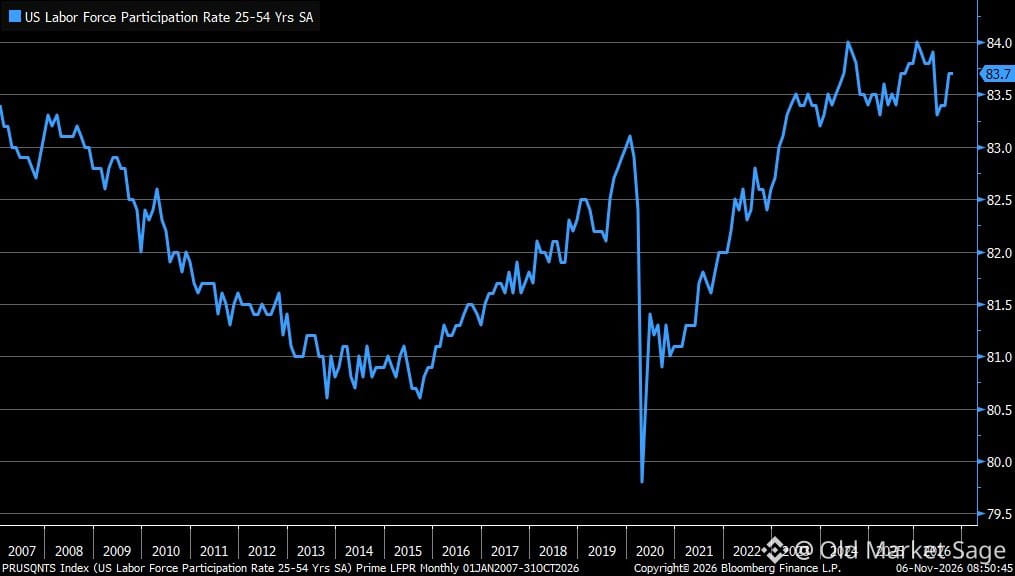
Prime-age workers (25-54) are holding steady at 83.7% participation. Not moving up, not falling back.
This matters because it's the cohort least affected by early retirement or school enrollment. When this number stalls, it suggests we're near full employment for the people who want to work.
The Fed watches this closely. If participation isn't rising and unemployment stays low, wage pressure becomes structural, not cyclical. That changes the game for rate cuts.
We've recovered from the pandemic collapse, but we're not breaking new highs. The labor market isn't tight enough to overheat, but it's not loose enough to cool inflation on its own.
Stability can be deceiving. Sometimes flat is the most important signal.