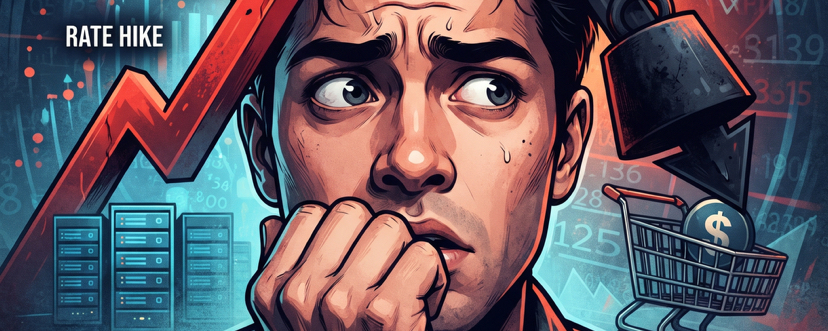


Everyone Is Watching Big Tech Earnings… But Almost No One Understands How Interest Rates and Inflation Shape the Forecast

Microsoft (MSFT) and Amazon (AMZN) have enormous business ecosystems, strong competitive advantages, and substantial financial resources. Yet even the world’s largest technology companies cannot completely escape macroeconomic pressure. Two of the most important forces shaping their earnings expectations are interest rates and inflation.
Interest rates influence how investors value future profits. When rates rise, safer investments such as US Treasury bonds become more attractive, and investors often demand higher returns from stocks. In discounted cash flow (DCF) models, a higher discount rate reduces the present value of future earnings, potentially putting pressure on technology stock valuations. When rates decline, valuation multiples may expand, although the actual impact depends on earnings growth and market expectations.
Higher borrowing costs also matter for companies investing billions in AI infrastructure, cloud computing, and data centers. Microsoft and Amazon must generate sufficient returns from these investments to justify their capital expenditure. At the same time, expensive financing can encourage enterprise customers to delay software upgrades, cloud migration, and other technology projects, potentially affecting Azure and AWS growth.
Inflation creates a different set of challenges. For Amazon, rising prices for housing, groceries, energy, and other essentials can reduce consumers’ disposable income, putting pressure on discretionary purchases. Persistent wage inflation and logistics expenses can also squeeze operating margins. Microsoft is less directly exposed to everyday consumer spending, but it still faces rising labor costs and potential reductions in corporate technology budgets.
Another overlooked factor is cloud cost optimization. When businesses face financial pressure, they often review cloud usage and eliminate inefficient workloads. This can temporarily slow consumption growth for Azure and AWS, even when long-term demand for cloud computing remains strong.
The key difference is that Microsoft is more directly exposed to enterprise software spending and cloud demand, while Amazon faces additional pressure from consumer purchasing power, retail operations, and logistics costs. Both companies remain sensitive to interest rates because their valuations depend partly on expectations for future cash flows.
During #EarningsSeason, quarterly revenue beats are only one piece of the puzzle. Investors also need to examine inflation trends, interest-rate expectations, capital expenditure, operating margins, and forward guidance over the next 12–18 months.
My interpretation: strong earnings today do not automatically guarantee higher stock prices tomorrow. If expectations already assume substantial AI-driven growth, even a profitable quarter may disappoint the market when future guidance weakens.
The real question is not simply whether Microsoft and Amazon can grow. It is whether they can grow profitably under changing economic conditions.
Which factor do you think will have the greater influence on Big Tech earnings over the next 12 months: interest rates, inflation, or the return on AI investments?
#Microsoft #Amazon #EarningsSeason #BinancePick $AMZNB