


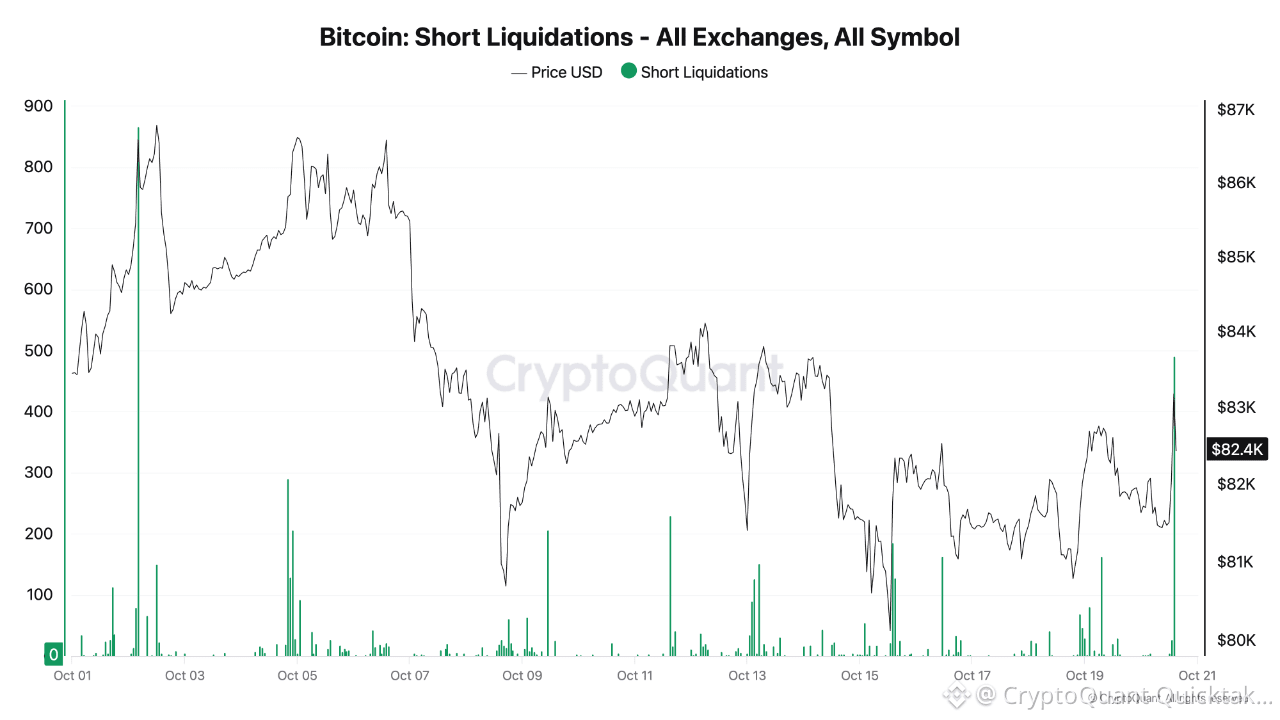
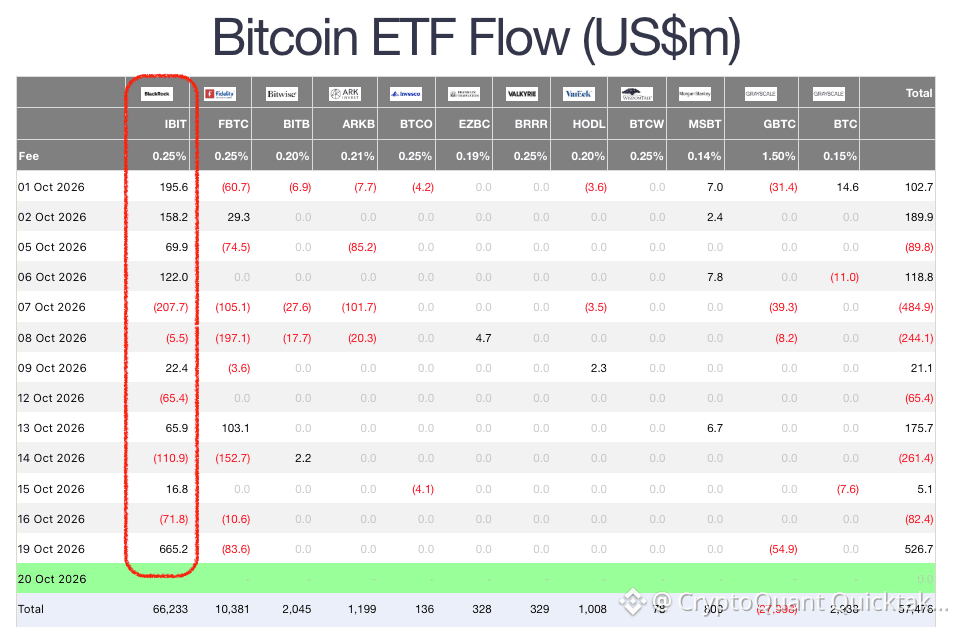
On Oct 20, BTC rebounded to around $83K, fueled mainly by short liquidations. Meanwhile, BlackRock’s IBIT saw a $665M net inflow on Oct 19, its largest daily inflow in a year.
Short-term price action is still derivatives-driven, but institutional demand is starting to show.
1. Rallies fueled by short liquidations
Throughout October, the largest short liquidation spikes mostly came near local tops, followed by quick pullbacks. Oct 20 fit the same pattern: funding rates were falling while open interest kept rising, as shorts piled up at lower levels. When price moved up, those shorts were forced out, but selling pressure returned near $83K.
2. US spot demand is missing
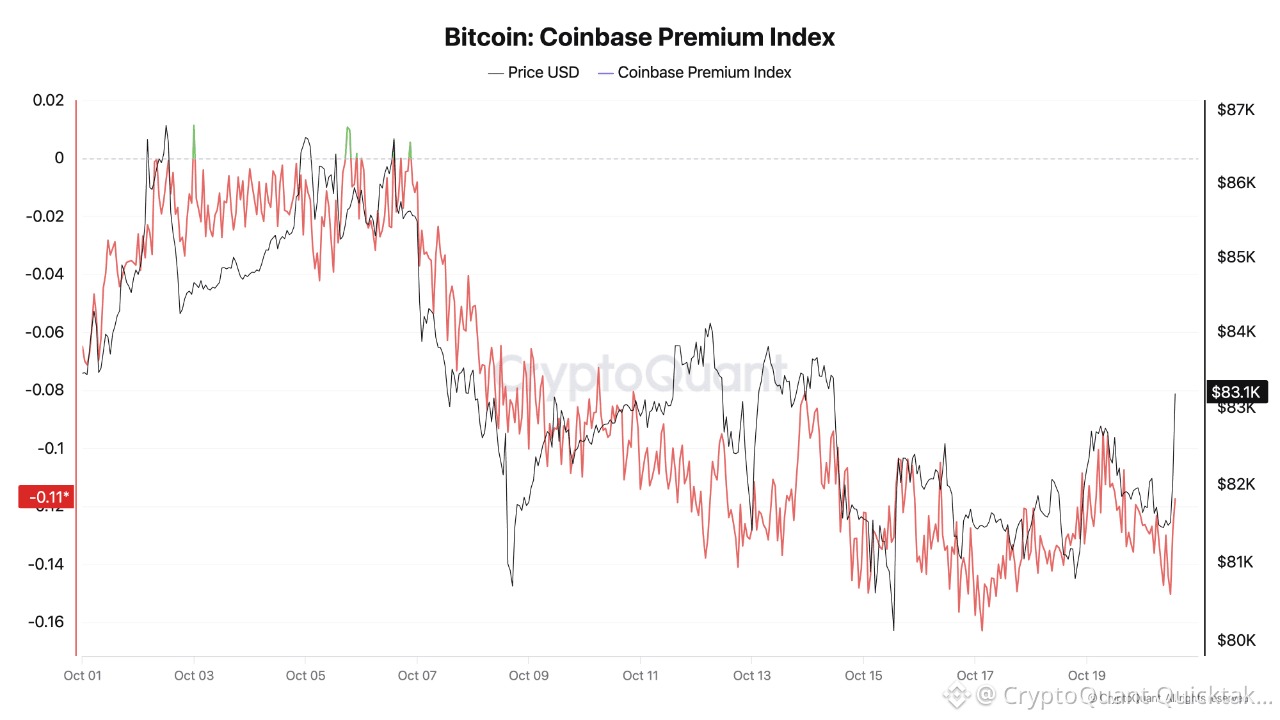
The Coinbase Premium hovered near zero from Oct 1 to 6 as BTC rallied to $86.6K. Since Oct 7, it has stayed deeply negative and never returned to zero during rebounds, including the Oct 20 squeeze.
3. Institutional signal: $665M into IBIT
That is roughly 8,100 BTC. But IBIT was the only US spot Bitcoin ETF with an inflow that day, while FBTC and GBTC saw outflows, following two weeks of net ETF outflows. For now, this is a signal, not yet a trend. (Source: Farside)
4. $84K is a break-even selling zone
Holders who bought 1 week to 1 month ago have an average cost basis near $84K, a level BTC repeatedly failed to break in mid-October. STH-SOPR has declined toward 1.0 this month, pointing to neutral-to-cautious sentiment among short-term holders.
What to watch:
- Sustained ETF inflows beyond IBIT
- Coinbase Premium recovering above zero
- BTC holding above $84K
Liquidation-driven rallies tend to fade. Spot-driven rallies, with a positive premium and ETF inflows, are more sustainable.
Written by Crypto Mommy