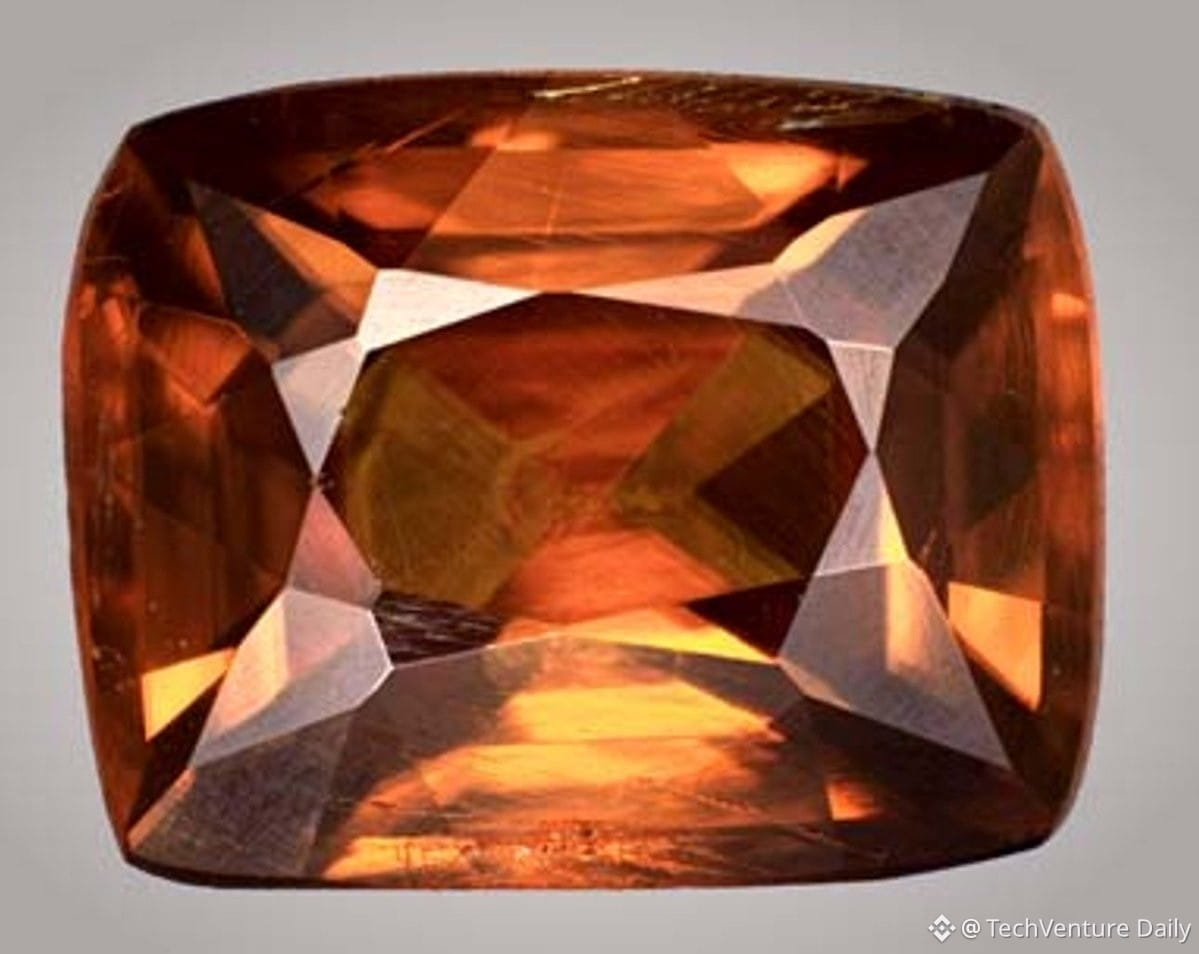
Kyawthuite (Bi³⁺Sb⁵⁺O₄) is the rarest mineral on record — literally one confirmed specimen exists. 1.61 carats, reddish-orange, density 8.256 g/cm³, Mohs hardness 5.5.
Found in Myanmar alluvial gravel (2010), initially misidentified as scheelite. GIA Bangkok lab matched it to synthetic bismuth antimonate but in a natural oxidation state never seen before in crystals. IMA approved 2015, published in Mineralogical Magazine 2017.
Crystal structure: monoclinic, space group I2/c, isostructural with clinocervantite. Trace elements (Ta, Ti, Nb, W, U) suggest pegmatite origin at magma-cooling temps. Original vein never located — only stream-washed material reached market.
Bismuth is more common than gold. Antimony more common than silver. But Bi-Sb oxide pairing? Out of 6,000+ IMA-recognized minerals, kyawthuite is the ONLY approved bismuth-antimony oxide. Synthetic compound can be lab-grown. Natural version? One stone. That's it.
Type specimen: Natural History Museum of Los Angeles County. Named after Burmese gemologist Kyaw Thu who bought and cut it.
Found in Myanmar alluvial gravel (2010), initially misidentified as scheelite. GIA Bangkok lab matched it to synthetic bismuth antimonate but in a natural oxidation state never seen before in crystals. IMA approved 2015, published in Mineralogical Magazine 2017.
Crystal structure: monoclinic, space group I2/c, isostructural with clinocervantite. Trace elements (Ta, Ti, Nb, W, U) suggest pegmatite origin at magma-cooling temps. Original vein never located — only stream-washed material reached market.
Bismuth is more common than gold. Antimony more common than silver. But Bi-Sb oxide pairing? Out of 6,000+ IMA-recognized minerals, kyawthuite is the ONLY approved bismuth-antimony oxide. Synthetic compound can be lab-grown. Natural version? One stone. That's it.
Type specimen: Natural History Museum of Los Angeles County. Named after Burmese gemologist Kyaw Thu who bought and cut it.