




Micron ($MU) is heading into its FY2026 Q4 earnings report with expectations already extremely high. Management has guided for roughly $50B in revenue, ~86% gross margin and $31 non-GAAP EPS. The real question is no longer simply whether Micron can beat estimates — it is whether the AI memory cycle can continue expanding without margins becoming the first major warning signal. #EarningsSeason
1. The 86% Margin Test
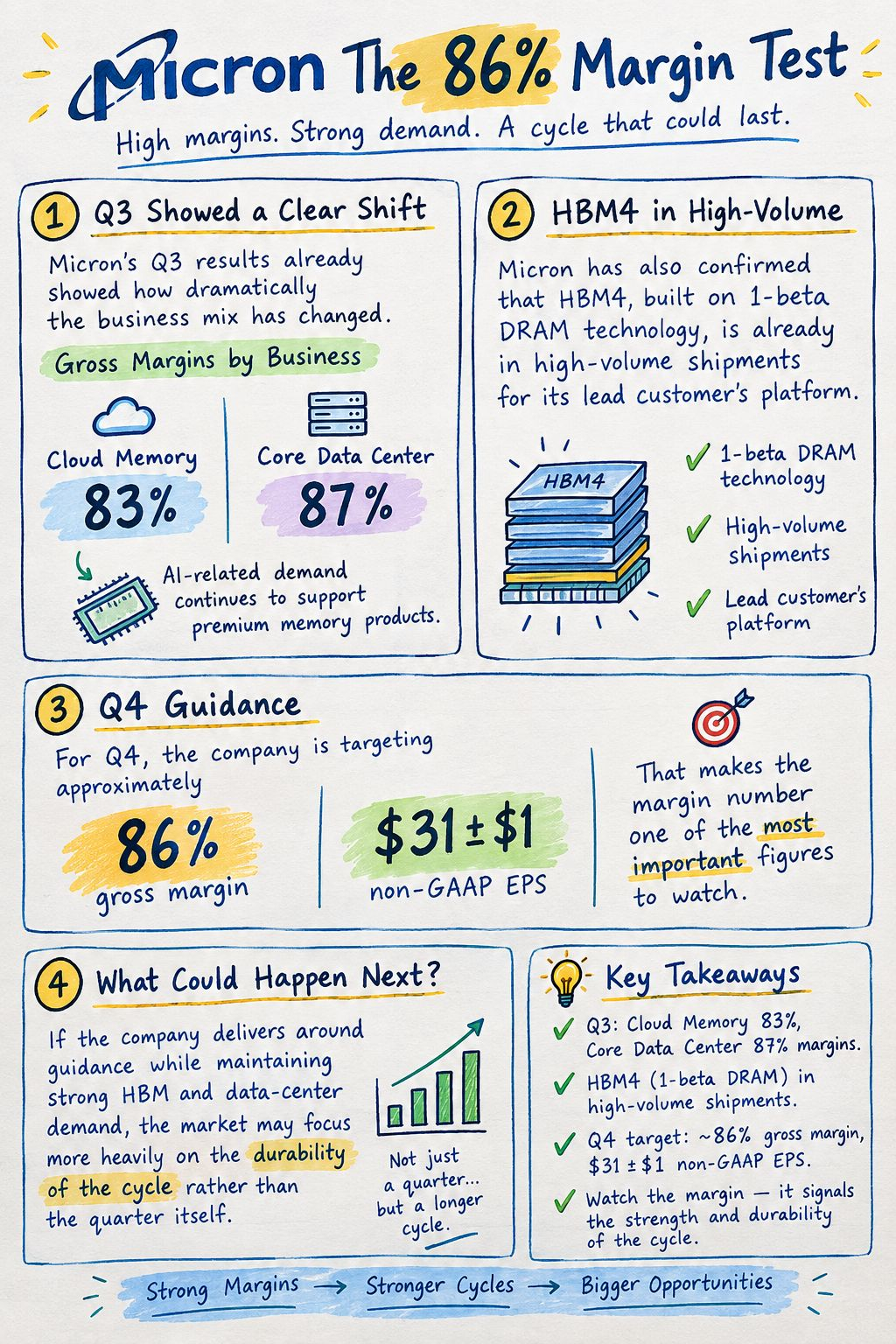
Micron's Q3 results already showed how dramatically the business mix has changed. Its Cloud Memory and Core Data Center businesses posted gross margins of 83% and 87%, respectively, while AI-related demand continues to support premium memory products. Micron has also confirmed that HBM4, built on 1-beta DRAM technology, is already in high-volume shipments for its lead customer's platform.
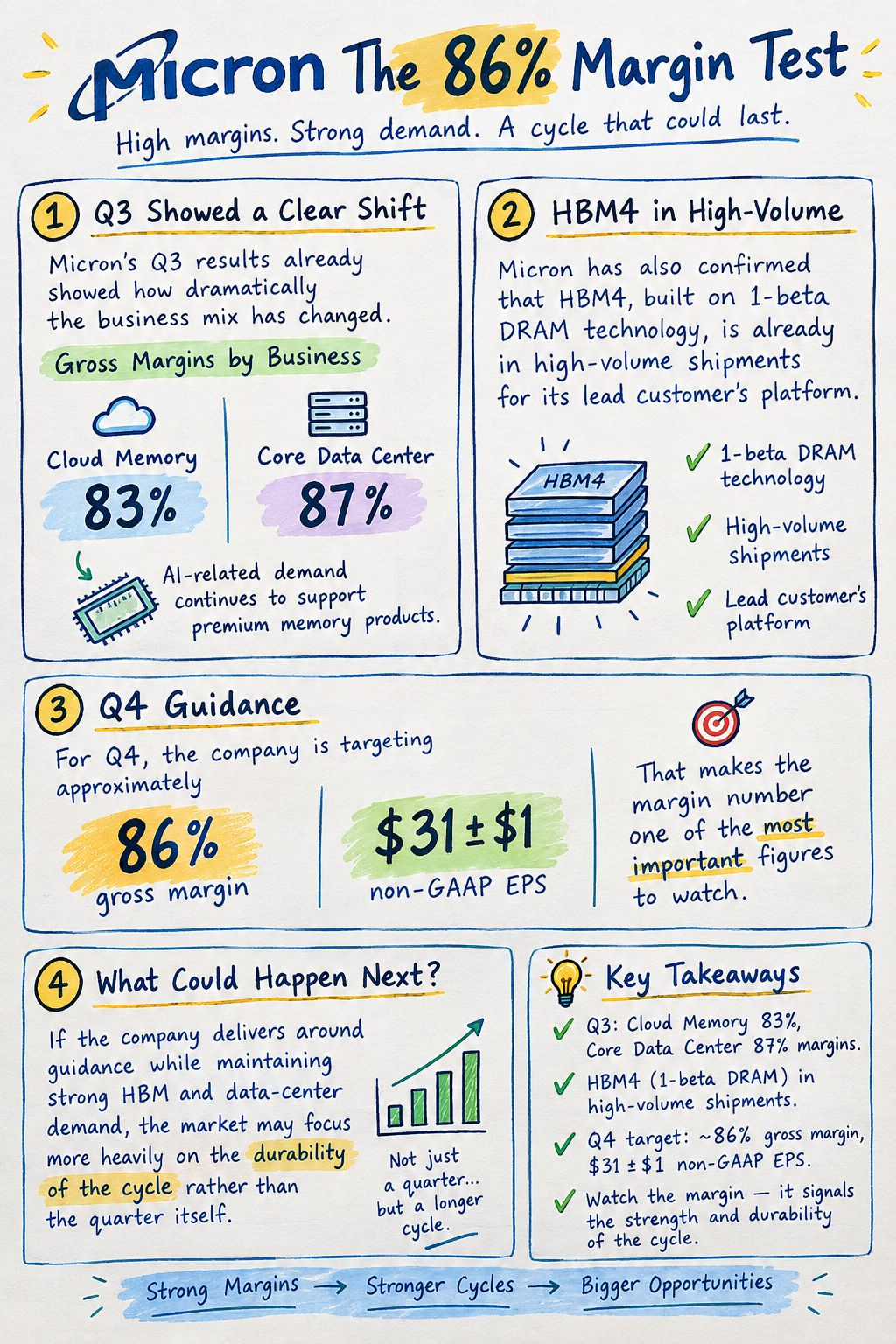
For Q4, the company is targeting approximately 86% gross margin and $31 ± $1 non-GAAP EPS. That makes the margin number one of the most important figures to watch. If the company delivers around guidance while maintaining strong HBM and data-center demand, the market may focus more heavily on the durability of the cycle rather than the quarter itself.
2. Is This Still a Normal Memory Cycle?
The traditional memory business was heavily influenced by PC and smartphone inventory cycles. The current setup is different because AI infrastructure requires enormous quantities of high-performance memory, including HBM and advanced server DRAM.
Micron is already developing HBM4E, with volume production expected in calendar 2027, while qualification samples of advanced 256GB DDR5 RDIMMs have been shipped to key server ecosystem participants. That gives investors another important question: how much of the current demand is temporary pricing strength, and how much represents a longer structural shift in memory consumption?
3. My $MU Earnings Framework
I am watching three numbers above everything else:
• Revenue: around the $50B guidance level
• Gross margin: approximately 86%
• Non-GAAP EPS: around $31
A strong result would need to be judged together with forward guidance. A headline beat alone may not be enough if management signals weaker pricing, rising production costs, or softer AI-memory demand ahead.
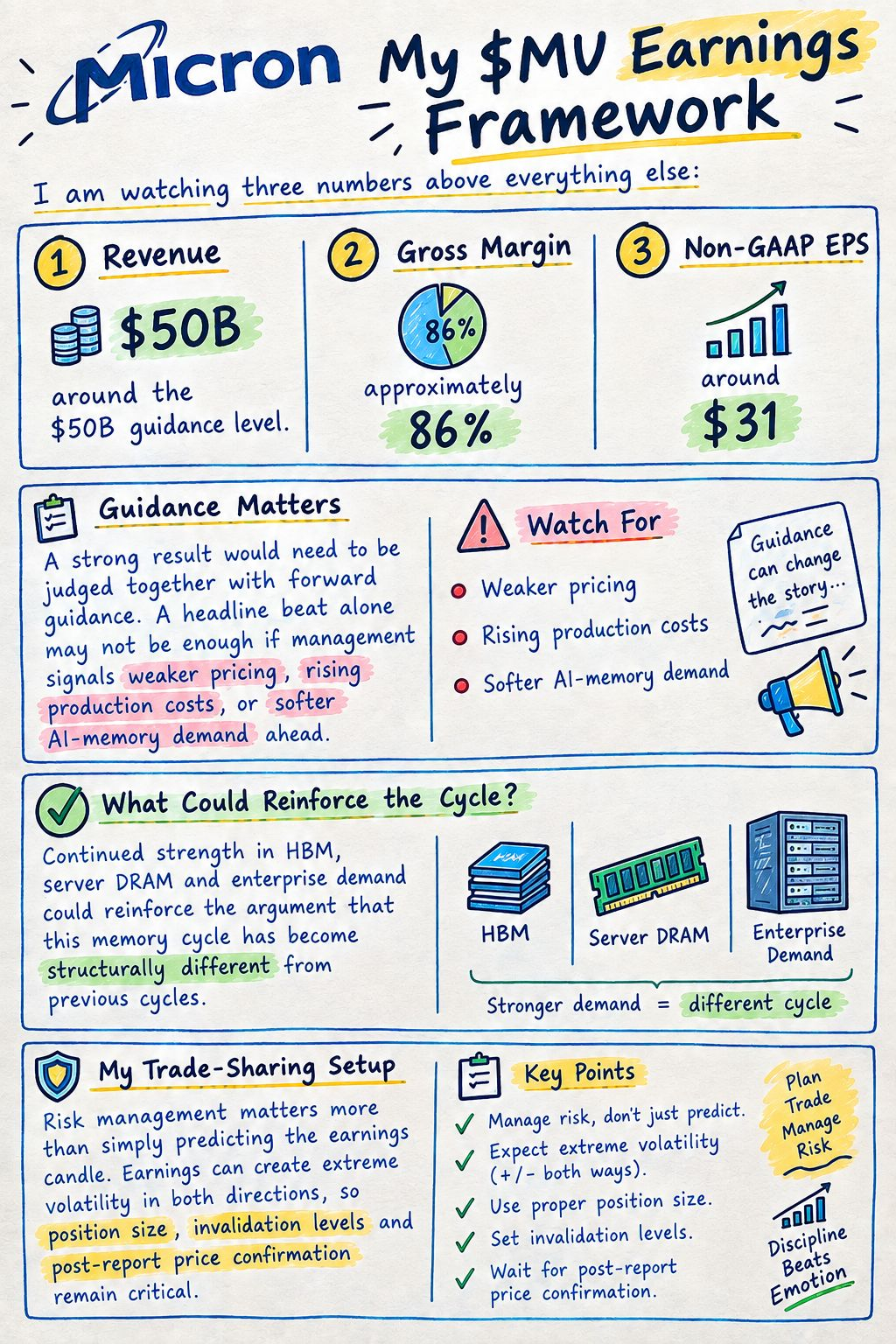

On the other hand, continued strength in HBM, server DRAM and enterprise demand could reinforce the argument that this memory cycle has become structurally different from previous cycles.
For my trade-sharing setup, risk management matters more than simply predicting the earnings candle. Earnings can create extreme volatility in both directions, so position size, invalidation levels and post-report price confirmation remain critical.
$MU #EarningsSeason #Stocks #Aİ #Semiconductors #BinanceSquare