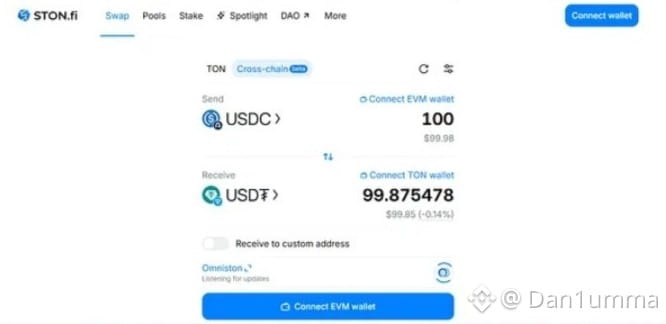
A successful swap isn't always a good swap.
A transaction can be confirmed, assets can arrive, and everything can look fine on-chain.
But you may still have lost value along the way.
This becomes especially important with cross-chain swaps.
Imagine moving $1,000 from one chain to another.
The transaction succeeds.
But then ask:
→ What price did you actually get?
→ How much value was lost to slippage?
→ What were the total fees?
→ Was there enough liquidity for your trade size?
→ How predictable was the settlement time?
→ What happens if the route fails or gets delayed?
That's the difference between transaction success and execution quality.
When I evaluate a cross-chain swap, I look beyond the confirmation screen:
1. Execution price
The quoted price is only an estimate. The final amount received matters more.
2. Slippage
Even a small difference can become meaningful on larger transactions.
3. Total execution cost
Network fees, protocol fees, and routing costs can all affect the final outcome.
4. Liquidity
A route that works for $50 doesn't necessarily work efficiently for $5,000.
5. Settlement speed
Fast is useful, but predictable execution matters just as much.
6. Reliability
How the system handles delays, failed transactions, or unexpected issues matters too.
7. Final value received
Ultimately, the question is simple: how much useful value reached the destination?
So instead of asking:
"Did my swap go through?"
I think the better question is:
"Did I get a good outcome?"
That's one reason I've been paying attention to @ston_fi.
As cross-chain infrastructure develops, simply connecting networks isn't enough.
The bigger challenge is improving the entire execution experience:
Better pricing → deeper liquidity → lower friction → more predictable outcomes
The next phase of DeFi may not be about whether cross-chain swaps are possible.
It may be about how efficiently they can be executed.
#STONfi #defi #TON
A transaction can be confirmed, assets can arrive, and everything can look fine on-chain.
But you may still have lost value along the way.
This becomes especially important with cross-chain swaps.
Imagine moving $1,000 from one chain to another.
The transaction succeeds.
But then ask:
→ What price did you actually get?
→ How much value was lost to slippage?
→ What were the total fees?
→ Was there enough liquidity for your trade size?
→ How predictable was the settlement time?
→ What happens if the route fails or gets delayed?
That's the difference between transaction success and execution quality.
When I evaluate a cross-chain swap, I look beyond the confirmation screen:
1. Execution price
The quoted price is only an estimate. The final amount received matters more.
2. Slippage
Even a small difference can become meaningful on larger transactions.
3. Total execution cost
Network fees, protocol fees, and routing costs can all affect the final outcome.
4. Liquidity
A route that works for $50 doesn't necessarily work efficiently for $5,000.
5. Settlement speed
Fast is useful, but predictable execution matters just as much.
6. Reliability
How the system handles delays, failed transactions, or unexpected issues matters too.
7. Final value received
Ultimately, the question is simple: how much useful value reached the destination?
So instead of asking:
"Did my swap go through?"
I think the better question is:
"Did I get a good outcome?"
That's one reason I've been paying attention to @ston_fi.
As cross-chain infrastructure develops, simply connecting networks isn't enough.
The bigger challenge is improving the entire execution experience:
Better pricing → deeper liquidity → lower friction → more predictable outcomes
The next phase of DeFi may not be about whether cross-chain swaps are possible.
It may be about how efficiently they can be executed.
#STONfi #defi #TON