
#cardanoaddedtox402kitforadapayments
🤖 Cardano Joins the Race to Pay AI Agents
An old, largely unused piece of the internet's plumbing is quietly becoming a battleground for blockchains — and Cardano just staked its claim.
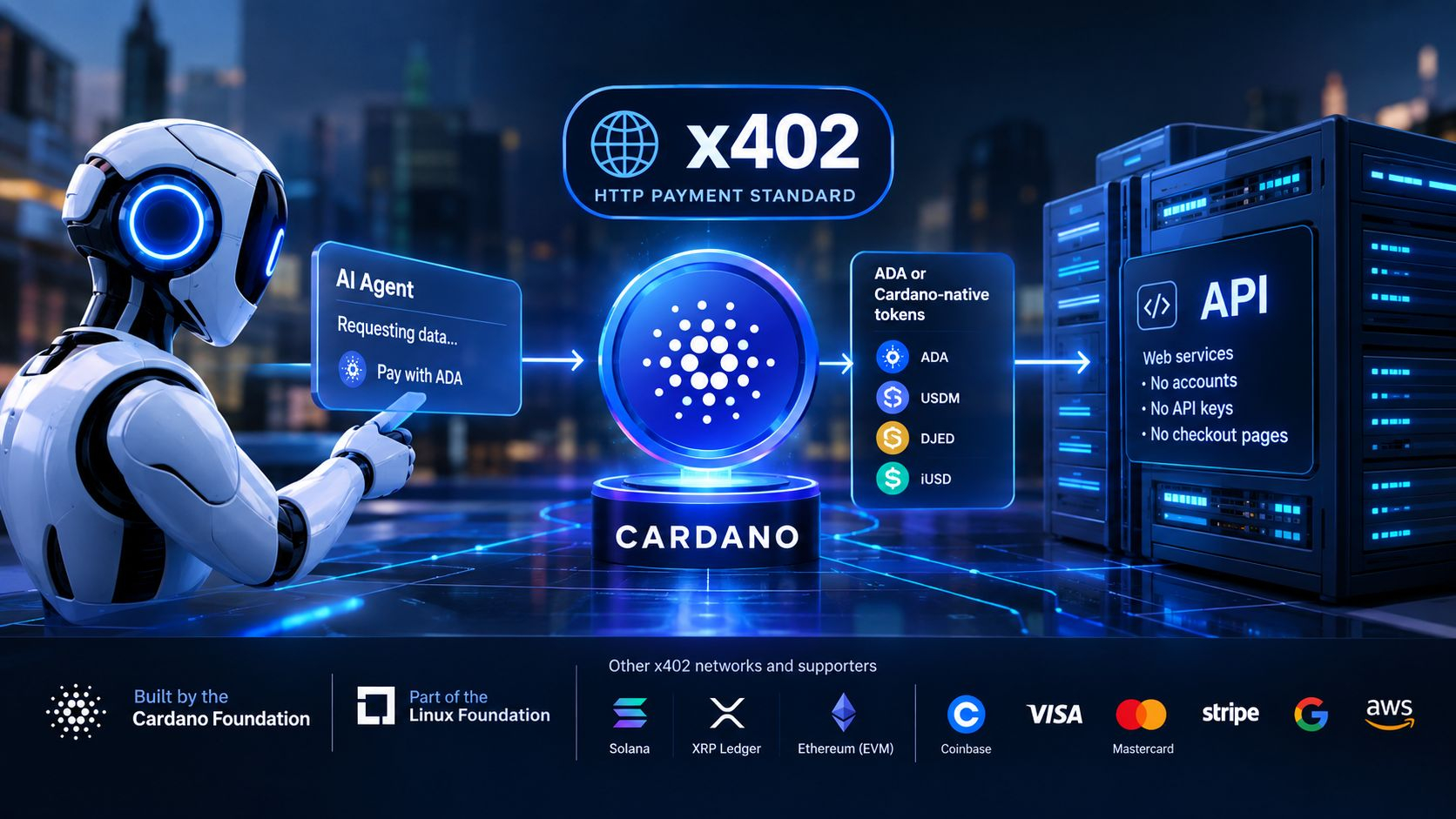
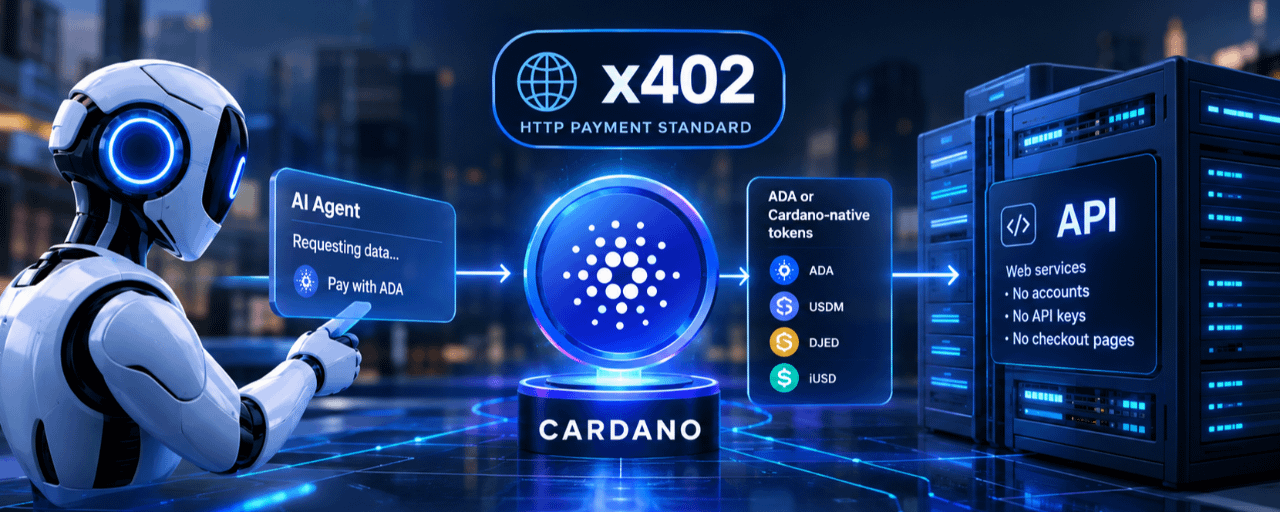
What's happening: Cardano has been merged into the official x402 SDK, a payments standard maintained under the Linux Foundation that revives HTTP status code 402 — originally reserved for "Payment Required" — to let applications and AI agents pay for API calls directly through a standard web request, without accounts, API keys, or checkout pages. Cardano Foundation engineers built the integration themselves, contributing the client, server, and facilitator components needed to make it function, rather than relying on a third-party implementation. The setup supports payments in ADA or any Cardano-native token, including price-stable options like USDM, DJED, and iUSD. According to the announcement, it covers Cardano's mainnet as well as its test networks, though the most detailed technical reporting notes the facilitator has specifically been verified through a real transaction on Cardano's preprod test network, with mainnet-scale usage still ahead. Cardano joins Solana, the XRP Ledger, and several Ethereum-compatible networks in supporting x402, a standard that's also drawn backing from companies including Coinbase, Visa, Mastercard, Stripe, Google, and AWS.
Why it matters: Machine-to-machine payments — where software, not a person, initiates and completes a transaction — are still an early, largely unproven category, but the list of companies building around this particular standard suggests it's being taken seriously as infrastructure for that future. Cardano's move is less about being first, since several other chains already support x402, and more about not being left out of a race for position in a payment rail that could matter if autonomous AI transactions actually scale up. As with any infrastructure integration, the real test will be whether it sees genuine usage once it's live on mainnet, not just technical availability.
Something to sit with: Does this kind of protocol-level integration meaningfully position Cardano for a future built around AI-agent commerce, or is it one of several similar bets across chains that will only pay off if agentic payments actually take off at scale? Worth watching for real transaction volume once mainnet activity begins.