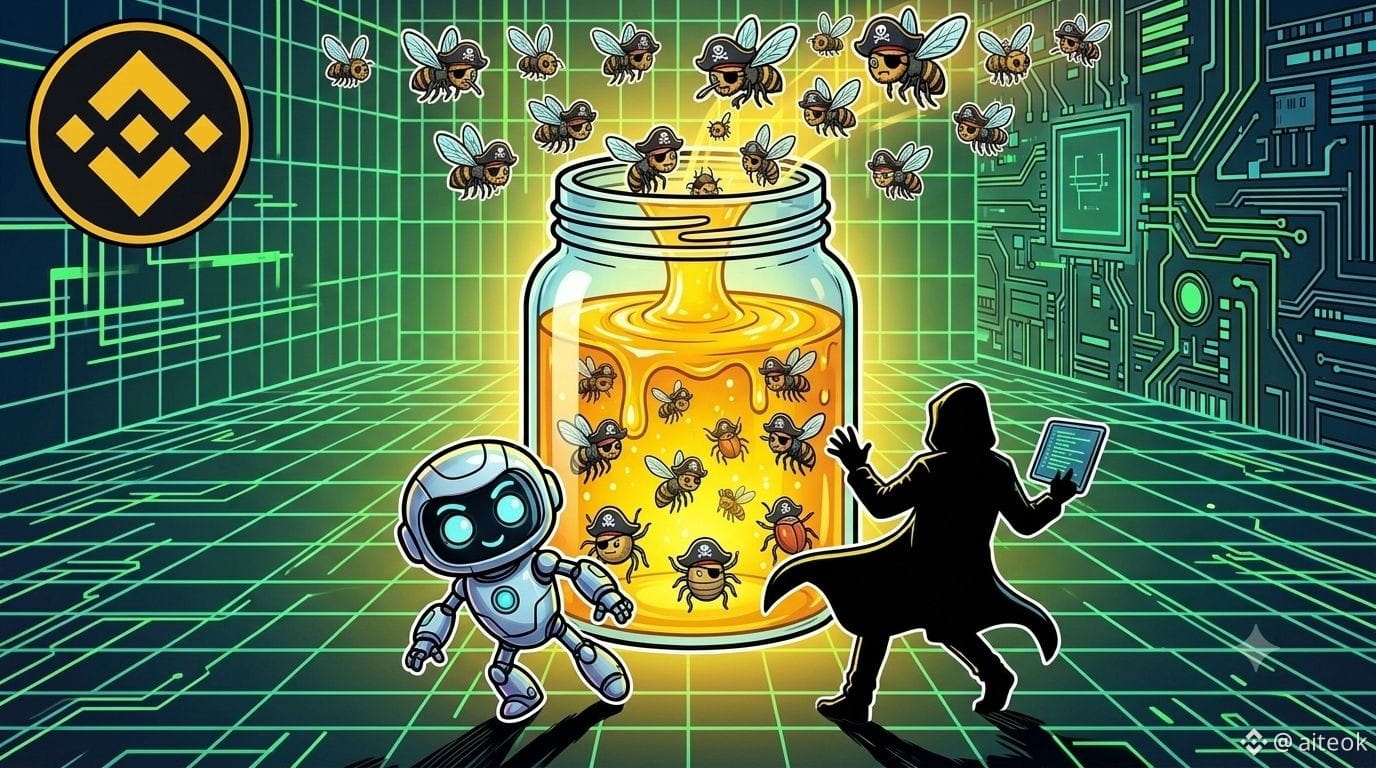
HONEYPOT
A honeypot is a security resource designed with intentional vulnerabilities to act as a decoy. Its primary function is to trap attackers or automated systems in an isolated environment, allowing security teams to study their tactics, protect real production systems, and gain response time.
Origin and Implementation
Conceptually created in 1986 by Clifford Stoll and consolidated during the 1990s, a honeypot is deployed by setting up servers, networks, or databases without legitimate users or traffic. Consequently, any registered interaction is considered suspicious. Its level of interaction varies from basic simulations (low interaction) to fully operational environments (high interaction).
Current Relevance
In Artificial Intelligence (AI):
Agent Alignment and Control (Keeps AI in check): Used as a sandbox or controlled test environment where autonomous agents are evaluated to detect if they attempt to violate their ethical boundaries or exploit vulnerabilities before being deployed to production.
Protection Against Scraping and Prompt Injection: Serves to capture unauthorized bots harvesting data without permission and to study how models react to prompt injection attacks using decoy APIs.
In Cryptocurrency and Blockchain:
Infrastructure Defense: DeFi protocols and exchanges deploy fake nodes or wallets with apparent flaws to attract cybercriminals and identify security loopholes before they can impact real funds.
Smart Contract Frauds: In the Web3 ecosystem, the term is also used to describe malicious smart contracts designed by scammers; they appear to have a bug that would allow extracting money, but they permanently lock withdrawals once victims deposit their funds.
#Web3
A honeypot is a security resource designed with intentional vulnerabilities to act as a decoy. Its primary function is to trap attackers or automated systems in an isolated environment, allowing security teams to study their tactics, protect real production systems, and gain response time.
Origin and Implementation
Conceptually created in 1986 by Clifford Stoll and consolidated during the 1990s, a honeypot is deployed by setting up servers, networks, or databases without legitimate users or traffic. Consequently, any registered interaction is considered suspicious. Its level of interaction varies from basic simulations (low interaction) to fully operational environments (high interaction).
Current Relevance
In Artificial Intelligence (AI):
Agent Alignment and Control (Keeps AI in check): Used as a sandbox or controlled test environment where autonomous agents are evaluated to detect if they attempt to violate their ethical boundaries or exploit vulnerabilities before being deployed to production.
Protection Against Scraping and Prompt Injection: Serves to capture unauthorized bots harvesting data without permission and to study how models react to prompt injection attacks using decoy APIs.
In Cryptocurrency and Blockchain:
Infrastructure Defense: DeFi protocols and exchanges deploy fake nodes or wallets with apparent flaws to attract cybercriminals and identify security loopholes before they can impact real funds.
Smart Contract Frauds: In the Web3 ecosystem, the term is also used to describe malicious smart contracts designed by scammers; they appear to have a bug that would allow extracting money, but they permanently lock withdrawals once victims deposit their funds.
#Web3