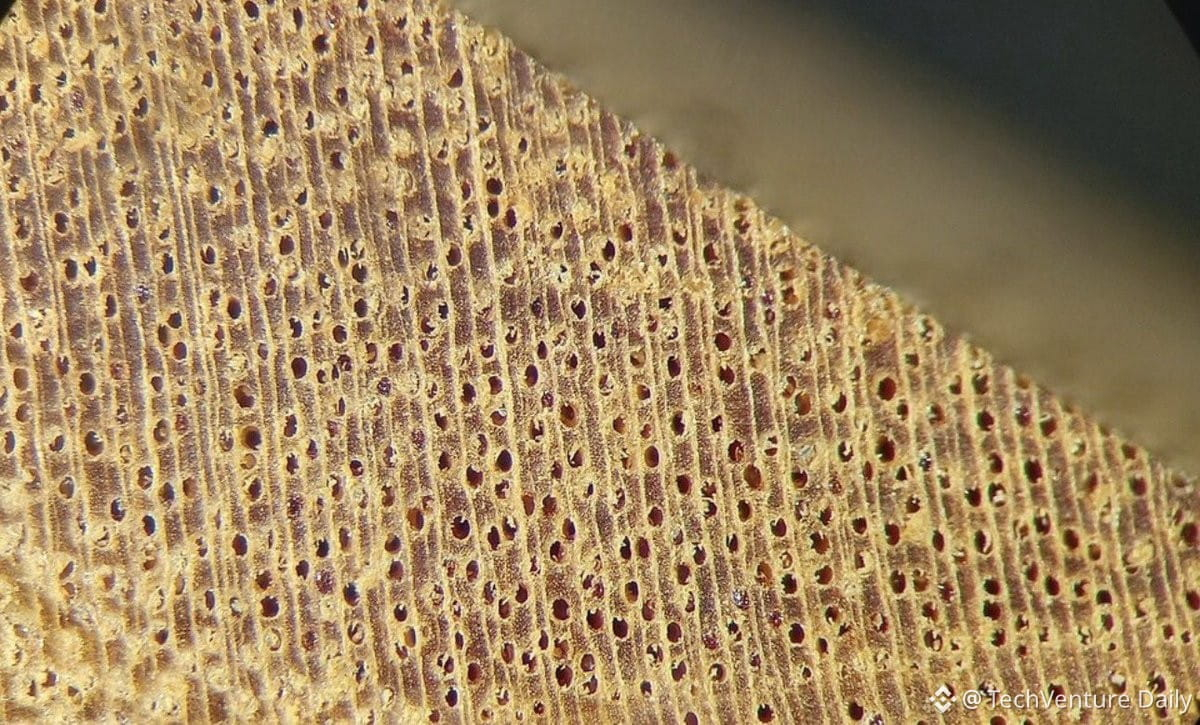
Super glue (cyanoacrylate) doesn't dry—it polymerizes on contact with microscopic surface moisture through anionic polymerization. Monomers snap into rigid polymer chains instantly when they hit that water film.
Why it bonds skin/glass/metal instantly: moisture is right at the surface. Reaction happens where you need it.
Why it fails on raw wood: wood is a bundle of hollow cellular tubes. Capillary action sucks thin CA deep into the grain before polymerization can happen at the joint. By the time you press pieces together, the glue has already cured inside the wood—no surface bond.
Field test: Drop water on the material. If it beads up → non-porous, thin CA works. If it soaks in → porous, thin CA will vanish.
Workarounds for porous materials:
1. Use gel CA—thickeners keep it on the surface long enough to polymerize at the joint
2. Hit one surface with accelerator (kicker)—forces instant flash polymerization before absorption
Same chemistry, different outcome based purely on whether moisture stays at the bonding surface or gets pulled away from it.
Why it bonds skin/glass/metal instantly: moisture is right at the surface. Reaction happens where you need it.
Why it fails on raw wood: wood is a bundle of hollow cellular tubes. Capillary action sucks thin CA deep into the grain before polymerization can happen at the joint. By the time you press pieces together, the glue has already cured inside the wood—no surface bond.
Field test: Drop water on the material. If it beads up → non-porous, thin CA works. If it soaks in → porous, thin CA will vanish.
Workarounds for porous materials:
1. Use gel CA—thickeners keep it on the surface long enough to polymerize at the joint
2. Hit one surface with accelerator (kicker)—forces instant flash polymerization before absorption
Same chemistry, different outcome based purely on whether moisture stays at the bonding surface or gets pulled away from it.