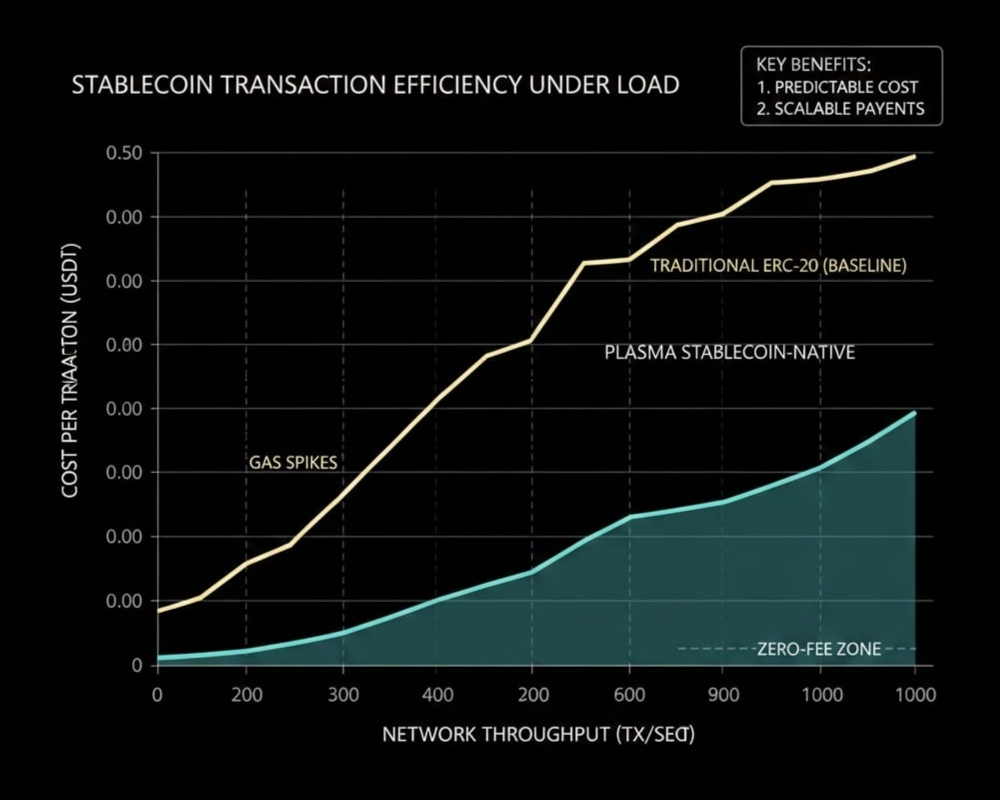
Most blockchains treat stablecoins as just another ERC-20 token. Plasma takes a very different path. From the ground up, it assumes stablecoins are the core economic unit and designs protocol-level contracts specifically for how stablecoins are actually used in the real world. This shift matters because payments, payroll, remittances, and treasury flows have very different requirements than speculative DeFi trades.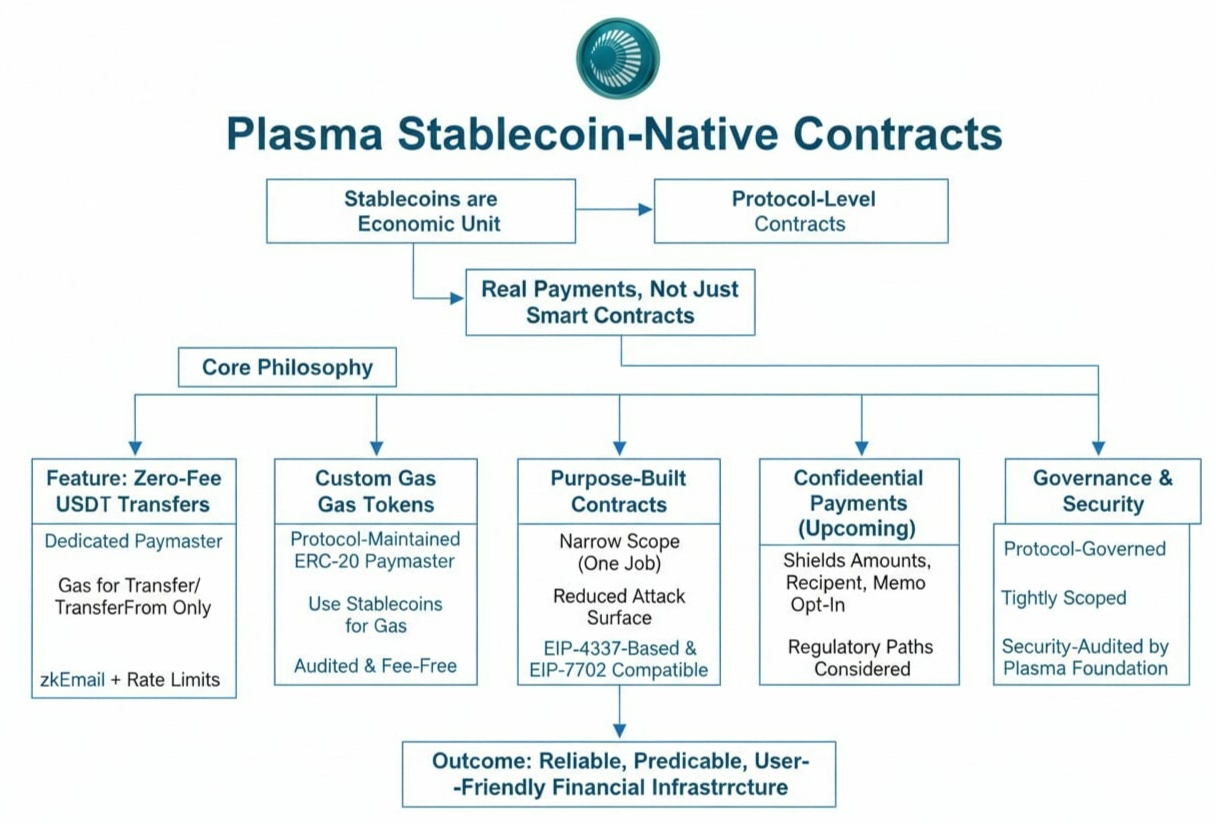
At the heart of this approach is Plasma’s set of stablecoin-native contracts. These are not random community experiments or optional libraries. They are protocol-governed, tightly scoped, security-audited contracts maintained by the Plasma Foundation. Because they evolve alongside the chain itself, they can integrate deeper into execution over time, unlocking features that typical smart contracts can’t safely achieve on their own.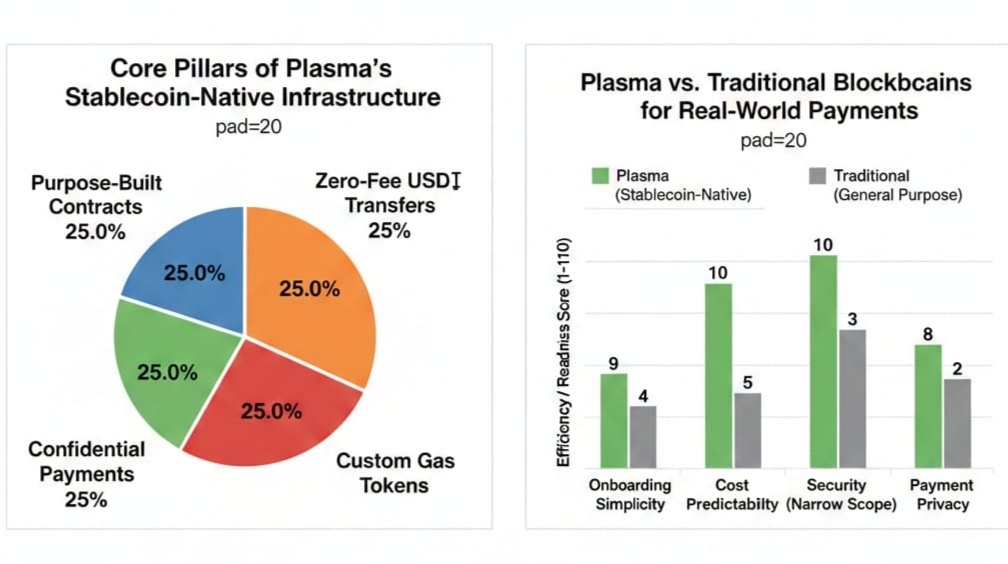
Purpose-Built, Not Over-Engineered
One thing that stands out is restraint. Plasma’s contracts are intentionally narrow in scope. Instead of supporting arbitrary calldata or complex logic, each contract does one job and does it predictably. This reduces attack surface, simplifies audits, and makes behavior easier to reason about for developers and regulators alike. These contracts are also designed to work directly with smart account wallets and modern account abstraction standards such as EIP-4337 and EIP-7702, which is crucial for onboarding non-crypto-native users.
Zero-Fee USD₮ Transfers That Actually Scale
Plasma’s zero-fee USD₮ transfer system is a strong example of pragmatic design. A dedicated paymaster sponsors gas only for transfer and transferFrom calls on the USD₮ contract. Nothing else. That limitation is intentional. By refusing to execute arbitrary logic, the system stays predictable and resistant to abuse.
Eligibility is controlled through lightweight identity checks, such as zkEmail, combined with rate limits. Gas is funded through a pre-allocated XPL allowance managed at the protocol level. For developers, this means you can offer users fee-free stablecoin transfers without exposing your app to spam or runaway costs. For users, it feels like sending money in a normal financial app, not navigating gas mechanics.
Custom Gas Tokens Without the Usual Tradeoffs
Plasma also tackles one of crypto’s most persistent UX problems: the need to hold a native token just to transact. Its protocol-maintained ERC-20 paymaster allows approved tokens, including stablecoins, to be used directly for gas. Unlike generic third-party paymasters, this system is audited, fee-free, and maintained by the protocol itself.
This matters because gas abstraction often adds hidden fees or fragile logic. Plasma avoids that by keeping the paymaster simple and governed. For applications, it means users can interact using the asset they already understand, without extra onboarding steps or confusing balances.
Confidential Payments With Practical Constraints
Privacy is another area where Plasma takes a measured approach. The upcoming confidential payments module focuses on shielding amounts, recipients, and memo data for stablecoin transfers, while remaining fully composable and compatible with existing tooling. It is opt-in and built for real financial workflows like payroll, internal treasury movements, and private settlements.
Importantly, this is being developed in standard Solidity, without custom opcodes or alternative virtual machines. That choice keeps integration straightforward for wallets and dapps and avoids fragmenting the developer ecosystem. Regulatory disclosure paths are also considered from the start, which is essential for institutions, not an afterthought.
Personal Perspective: Why This Direction Makes Sense
From my perspective, Plasma’s stablecoin-native contracts reflect a deeper understanding of how blockchains are actually used outside crypto-native circles. Instead of chasing maximal flexibility, Plasma prioritizes reliability, cost predictability, and user experience. These are exactly the qualities payment systems need, but most chains struggle to deliver consistently.
By embedding stablecoin logic directly into protocol-governed contracts, Plasma reduces friction for developers and removes unnecessary complexity for users. It feels less like an experimental sandbox and more like financial infrastructure that can realistically support everyday economic activity.
For builders focused on payments and stablecoin applications, this approach isn’t just convenient. It’s foundational.