Saya membuka pasar live TermMax USDT/GOOGLon@30SEP2026 karena “meminjam stablecoin terhadap eksposur saham” terdengar cukup sederhana.
Suku bunga pinjaman mungkin tetap. Penarikan jaminannya tidak.
Panel risiko milik TermMax mencantumkan potensi penghentian perdagangan seputar aksi korporasi atau pemeliharaan platform, keterbatasan likuiditas selama sesi melewati malam, dan pajak withholding sebesar 30% atas dividen dari perusahaan AS.
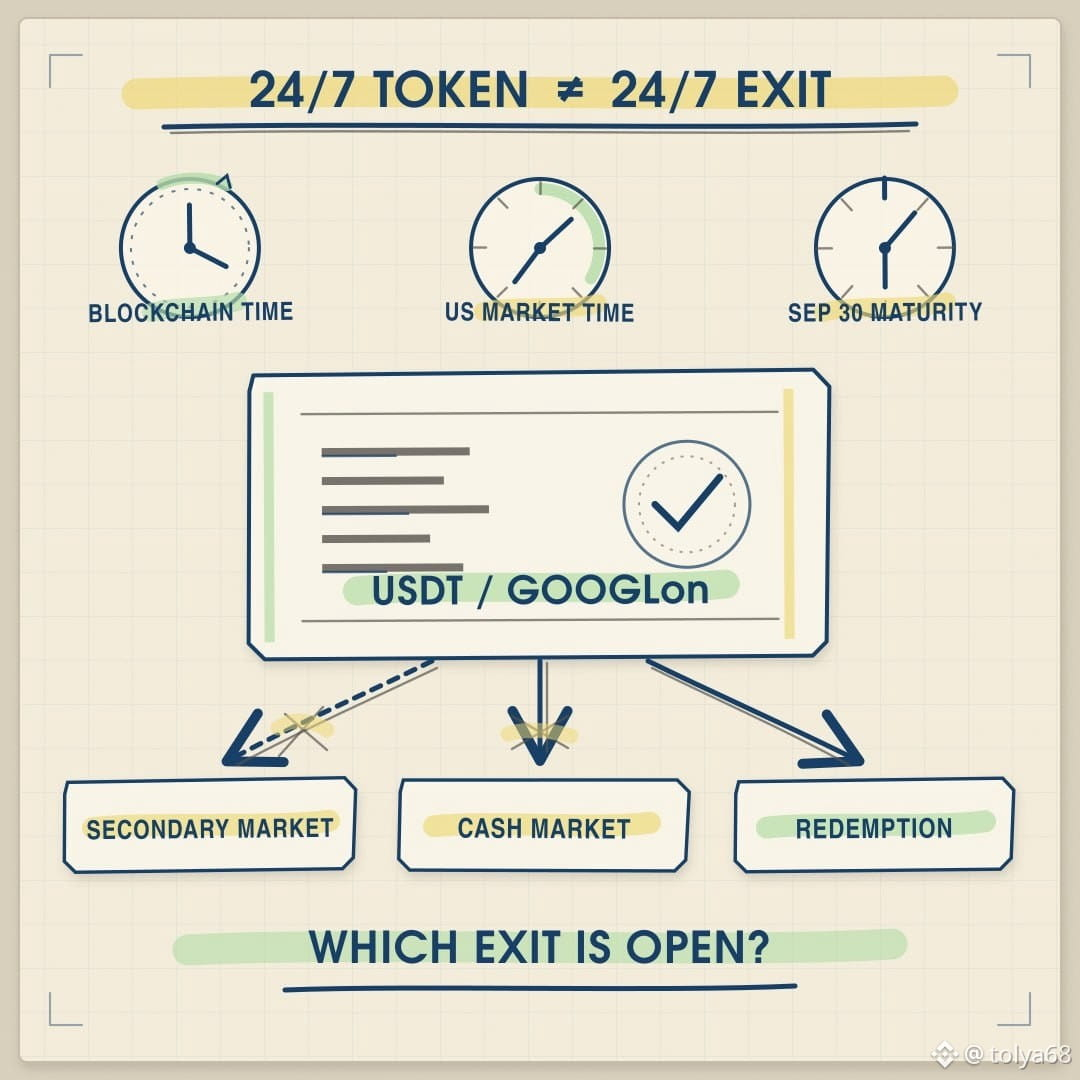
Ada satu detail lagi yang tidak akan saya abaikan. Jika likuidasi gagal dan seorang pemberi pinjaman menerima GOOGLon alih-alih USDT, mereka mungkin perlu menggunakan proses penebusan Ondo ketika tidak ada likuiditas sekunder yang tersedia.
Jadi, satu posisi ini berjalan pada tiga waktu:
1. Waktu blockchain
2. Waktu pasar saham AS
3. Jatuh tempo pinjaman 30 September
Itulah mengapa “saham token diperdagangkan 24/7” bisa menyesatkan. Token dapat bergerak kapan saja, sementara rute paling bersih untuk kembali ke aset dasarnya mungkin tidak.
Sebelum menggunakan ekuitas token sebagai jaminan, saya akan bertanya satu hal yang sangat praktis:
Jika likuidasi terjadi ketika pasar uang AS sedang tutup, jalan keluar yang benar-benar terbuka yang mana?
Onchain tidak selalu berarti tanpa hambatan.
@TermMax #TermMax
Suku bunga pinjaman mungkin tetap. Penarikan jaminannya tidak.
Panel risiko milik TermMax mencantumkan potensi penghentian perdagangan seputar aksi korporasi atau pemeliharaan platform, keterbatasan likuiditas selama sesi melewati malam, dan pajak withholding sebesar 30% atas dividen dari perusahaan AS.
Ada satu detail lagi yang tidak akan saya abaikan. Jika likuidasi gagal dan seorang pemberi pinjaman menerima GOOGLon alih-alih USDT, mereka mungkin perlu menggunakan proses penebusan Ondo ketika tidak ada likuiditas sekunder yang tersedia.
Jadi, satu posisi ini berjalan pada tiga waktu:
1. Waktu blockchain
2. Waktu pasar saham AS
3. Jatuh tempo pinjaman 30 September
Itulah mengapa “saham token diperdagangkan 24/7” bisa menyesatkan. Token dapat bergerak kapan saja, sementara rute paling bersih untuk kembali ke aset dasarnya mungkin tidak.
Sebelum menggunakan ekuitas token sebagai jaminan, saya akan bertanya satu hal yang sangat praktis:
Jika likuidasi terjadi ketika pasar uang AS sedang tutup, jalan keluar yang benar-benar terbuka yang mana?
Onchain tidak selalu berarti tanpa hambatan.
@TermMax #TermMax