#termmax @TermMax
TermMax dan Masalah Likuiditas di Balik Pasar DeFi Tarif Tetap
Saya sudah cukup lama berkecimpung di kripto untuk tahu bahwa sebuah ide yang terlihat bagus bisa terasa sangat berbeda begitu orang-orang benar-benar mulai memakainya.
DeFi tarif tetap terdengar menarik bagi saya secara teori. Kamu tahu apa yang kamu bayar, kamu tahu apa yang kamu peroleh, dan kamu tidak perlu bangun dengan bertanya-tanya ke mana suku bunga pinjaman bergerak semalam. Tapi kemudian saya memikirkan likuiditas, dan semuanya jadi kurang sederhana.
Itulah bagian dari TermMax yang terus saya pikirkan.
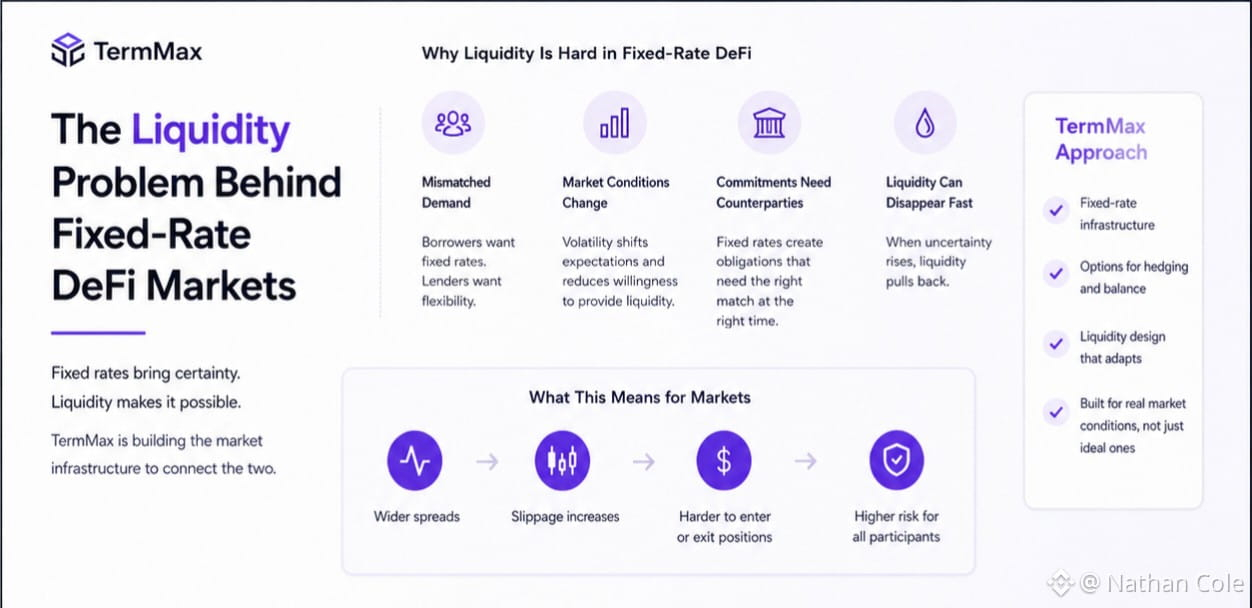
Satu hal untuk membangun protokol untuk peminjaman, pemberian pinjaman, dan opsi dengan tarif tetap. Hal lain untuk menjaga agar pasar-pasar itu tetap likuid saat orang-orang tidak semuanya mencari hal yang sama pada waktu yang bersamaan.
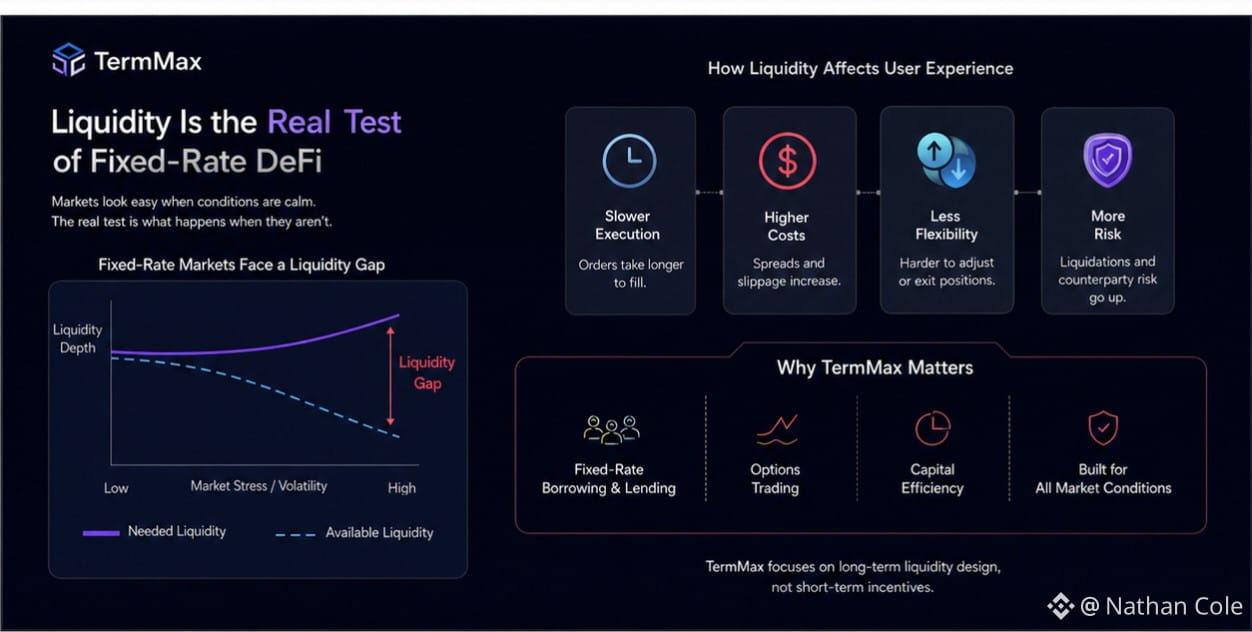
Saya sudah melihat pola ini terlalu sering. Saat pasar tenang, likuiditas terlihat sehat. Semua orang merasa nyaman. Spread terasa tidak menyakitkan. Lalu volatilitas muncul, sentimen berubah, dan tiba-tiba likuiditas yang terlihat permanen ternyata sangat bersyarat.
Itu sebabnya saya ragu dengan pasar tarif tetap secara umum. Kepastian itu berguna, tetapi seseorang tetap harus menyediakan sisi lain dari kepastian tersebut. Jika peminjam menginginkan tarif tetap jangka panjang sementara pemberi pinjaman menginginkan fleksibilitas, celah di antara dua preferensi itu tidak hilang hanya karena smart contract menangani penyelesaian.
Saya tidak mengatakan TermMax tidak bisa menyelesaikan sebagian masalah ini. Saya hanya belum yakin.
Bagi saya, pertanyaan yang menarik bukan apakah DeFi tarif tetap bekerja ketika semuanya berjalan baik. Hampir apa pun terlihat bagus pada kondisi seperti itu.
Saya ingin melihat apa yang terjadi ketika likuiditas menipis, volatilitas meningkat, dan semua orang tiba-tiba ingin keluar pada saat yang sama.
Di situlah biasanya desain yang sesungguhnya mulai terlihat.
TermMax dan Masalah Likuiditas di Balik Pasar DeFi Tarif Tetap
Saya sudah cukup lama berkecimpung di kripto untuk tahu bahwa sebuah ide yang terlihat bagus bisa terasa sangat berbeda begitu orang-orang benar-benar mulai memakainya.
DeFi tarif tetap terdengar menarik bagi saya secara teori. Kamu tahu apa yang kamu bayar, kamu tahu apa yang kamu peroleh, dan kamu tidak perlu bangun dengan bertanya-tanya ke mana suku bunga pinjaman bergerak semalam. Tapi kemudian saya memikirkan likuiditas, dan semuanya jadi kurang sederhana.
Itulah bagian dari TermMax yang terus saya pikirkan.
Satu hal untuk membangun protokol untuk peminjaman, pemberian pinjaman, dan opsi dengan tarif tetap. Hal lain untuk menjaga agar pasar-pasar itu tetap likuid saat orang-orang tidak semuanya mencari hal yang sama pada waktu yang bersamaan.
Saya sudah melihat pola ini terlalu sering. Saat pasar tenang, likuiditas terlihat sehat. Semua orang merasa nyaman. Spread terasa tidak menyakitkan. Lalu volatilitas muncul, sentimen berubah, dan tiba-tiba likuiditas yang terlihat permanen ternyata sangat bersyarat.
Itu sebabnya saya ragu dengan pasar tarif tetap secara umum. Kepastian itu berguna, tetapi seseorang tetap harus menyediakan sisi lain dari kepastian tersebut. Jika peminjam menginginkan tarif tetap jangka panjang sementara pemberi pinjaman menginginkan fleksibilitas, celah di antara dua preferensi itu tidak hilang hanya karena smart contract menangani penyelesaian.
Saya tidak mengatakan TermMax tidak bisa menyelesaikan sebagian masalah ini. Saya hanya belum yakin.
Bagi saya, pertanyaan yang menarik bukan apakah DeFi tarif tetap bekerja ketika semuanya berjalan baik. Hampir apa pun terlihat bagus pada kondisi seperti itu.
Saya ingin melihat apa yang terjadi ketika likuiditas menipis, volatilitas meningkat, dan semua orang tiba-tiba ingin keluar pada saat yang sama.
Di situlah biasanya desain yang sesungguhnya mulai terlihat.