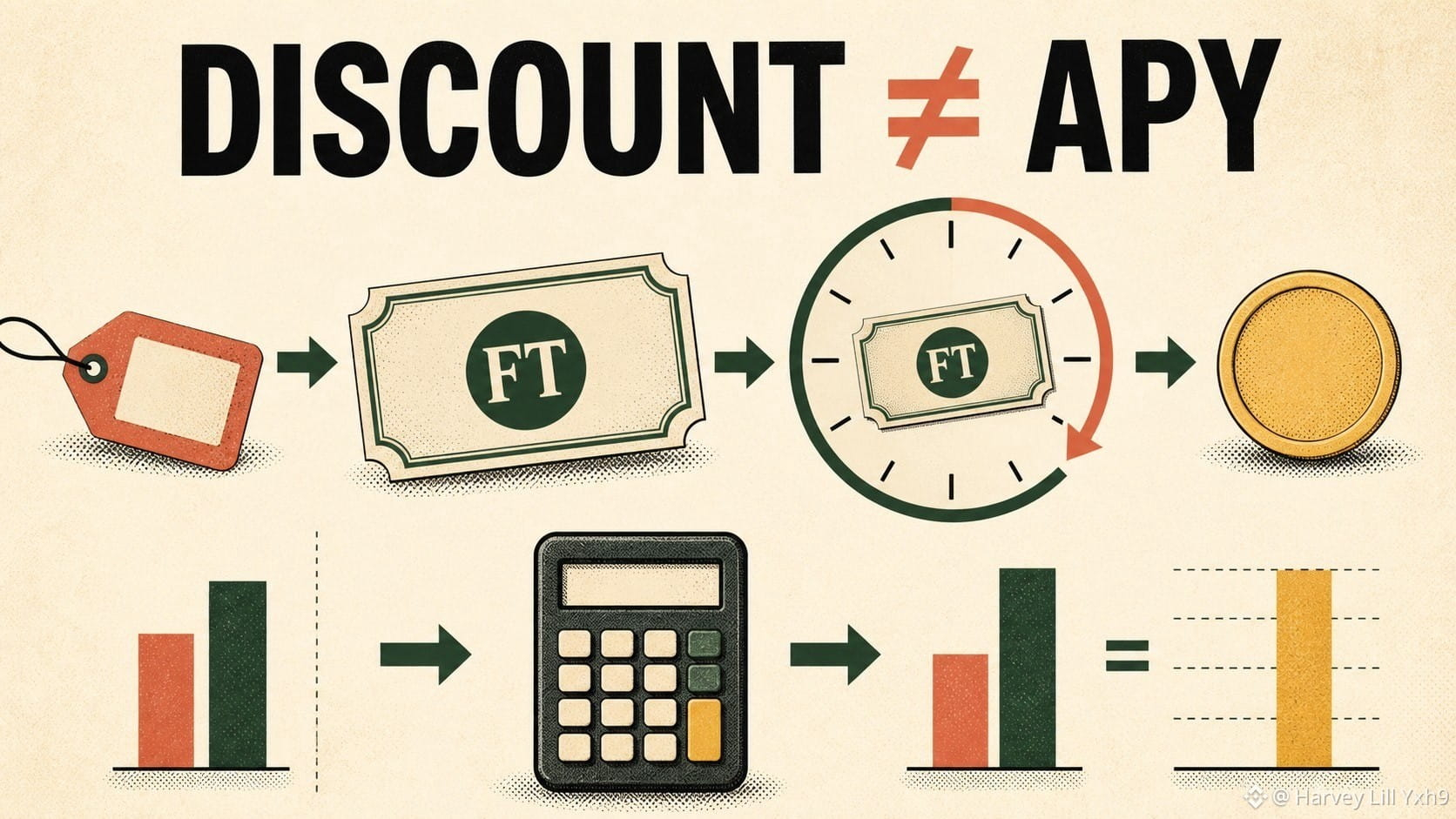
Token Harga Tetap dapat naik hingga nilai nominal yang sama dan tetap menghasilkan APY yang sangat berbeda.
Pertimbangkan TermMax FT yang sepenuhnya hipotetis yang menebus 1 token utang dalam 60 hari. Jika harganya 0,96 hari ini, return periode kepemilikannya bukanlah “4% APY.” melainkan:
(1 / 0,96 − 1) = 4,17% selama 60 hari.
Dengan menggunakan metode annualisasi sederhana dalam dokumentasi TermMax:
4,17% × 365 / 60 ≈ 25,35% yang dianualisasikan.
Harga beli 0,96 yang sama dengan sisa 30 hari saja akan menunjukkan angka yang dianualisasikan jauh lebih tinggi, meskipun pembayaran jatuh temponya tetap 1.
Karena itulah saya tidak akan pernah membandingkan dua peluang FT hanya menggunakan APY. Saya akan mencatat empat masukan: harga beli, nilai penebusan, hari tersisa, dan total biaya eksekusi. Slippage atau penjualan lebih awal dapat membuat hasil yang benar-benar terjadi berbeda dari perhitungan hold-to-maturity.
Aturan praktis saya: pertama hitung keuntungan kas untuk jangka waktu yang sebenarnya; barulah kemudian dianualisasikan.
Sumber yang dicek: TermMax Docs — Token; Fixed Rate Tokenization.
@TermMax #TermMax
Pertimbangkan TermMax FT yang sepenuhnya hipotetis yang menebus 1 token utang dalam 60 hari. Jika harganya 0,96 hari ini, return periode kepemilikannya bukanlah “4% APY.” melainkan:
(1 / 0,96 − 1) = 4,17% selama 60 hari.
Dengan menggunakan metode annualisasi sederhana dalam dokumentasi TermMax:
4,17% × 365 / 60 ≈ 25,35% yang dianualisasikan.
Harga beli 0,96 yang sama dengan sisa 30 hari saja akan menunjukkan angka yang dianualisasikan jauh lebih tinggi, meskipun pembayaran jatuh temponya tetap 1.
Karena itulah saya tidak akan pernah membandingkan dua peluang FT hanya menggunakan APY. Saya akan mencatat empat masukan: harga beli, nilai penebusan, hari tersisa, dan total biaya eksekusi. Slippage atau penjualan lebih awal dapat membuat hasil yang benar-benar terjadi berbeda dari perhitungan hold-to-maturity.
Aturan praktis saya: pertama hitung keuntungan kas untuk jangka waktu yang sebenarnya; barulah kemudian dianualisasikan.
Sumber yang dicek: TermMax Docs — Token; Fixed Rate Tokenization.
@TermMax #TermMax