
Marcus Corvinus
14.5k Posts

Marcus Corvinus
 Square Verified+
Marcus is Here. Crypto since 2015. Web3 builder. Verified KOL on Binance Square. Let's grow together: X- @CryptoBull009

Traders League Badge Beginner

Top Voices
130 Following
77.3K+ Followers
91.7K+ Liked
2 Badges
Posts
All
Quotes
PINNED

PINNED

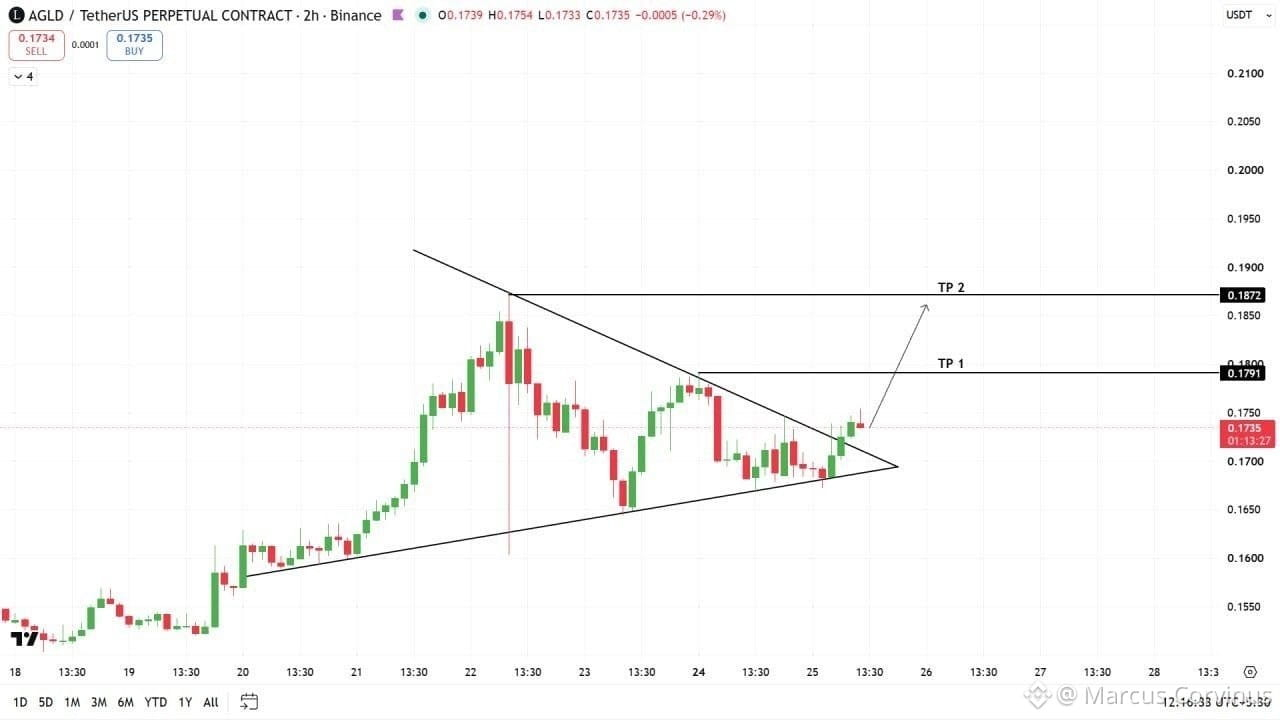
$AGLD has made its move.
The symmetrical triangle is officially broken to the upside, putting bulls firmly in control of the short-term structure.
If momentum continues to build above the breakout zone, the upper targets could come into play quickly.
A successful retest would make the setup even stronger.
$AGLD is one to track closely from here.
The symmetrical triangle is officially broken to the upside, putting bulls firmly in control of the short-term structure.
If momentum continues to build above the breakout zone, the upper targets could come into play quickly.
A successful retest would make the setup even stronger.
$AGLD is one to track closely from here.
Partly True
Polymarket is where conviction meets the future.
Every major event creates attention, disagreement and opportunity. Polymarket turns those different views into tradable probabilities.
250K–500K monthly active traders
A growing crowd actively pricing real-world outcomes.
17M+ monthly visits
Strong interest from both traders and people tracking market expectations.
Projected $18B volume in 2025
A powerful indication of how quickly prediction markets are scaling.
Now the spotlight is moving toward $POLY.
$POLY = the anticipated Polymarket ecosystem token
If officially introduced, the potential structure becomes interesting:
Activity → Utility
Participation → Incentives
Early involvement → Potential rewards
Token mechanics and any possible airdrop remain speculative until officially confirmed.
Three tokens help put the opportunity into perspective:
$PENGU → Community power turned into major token momentum.
$DOOD → Digital culture expanding into a token-driven ecosystem.
$KAITO → Information and attention becoming part of a crypto-native economy.
Polymarket brings a different foundation: real events + real opinions + market-priced probabilities.
Politics, AI, economics, crypto or sports — every niche gives knowledgeable traders somewhere to test their edge.
The crowd prices today’s probability. Smart traders are already thinking about tomorrow’s reality.
Don't Wait.Let's go 🤝
NFA + DYOR
#Polymarket #POLY
Every major event creates attention, disagreement and opportunity. Polymarket turns those different views into tradable probabilities.
250K–500K monthly active traders
A growing crowd actively pricing real-world outcomes.
17M+ monthly visits
Strong interest from both traders and people tracking market expectations.
Projected $18B volume in 2025
A powerful indication of how quickly prediction markets are scaling.
Now the spotlight is moving toward $POLY.
$POLY = the anticipated Polymarket ecosystem token
If officially introduced, the potential structure becomes interesting:
Activity → Utility
Participation → Incentives
Early involvement → Potential rewards
Token mechanics and any possible airdrop remain speculative until officially confirmed.
Three tokens help put the opportunity into perspective:
$PENGU → Community power turned into major token momentum.
$DOOD → Digital culture expanding into a token-driven ecosystem.
$KAITO → Information and attention becoming part of a crypto-native economy.
Polymarket brings a different foundation: real events + real opinions + market-priced probabilities.
Politics, AI, economics, crypto or sports — every niche gives knowledgeable traders somewhere to test their edge.
The crowd prices today’s probability. Smart traders are already thinking about tomorrow’s reality.
Don't Wait.Let's go 🤝
NFA + DYOR
#Polymarket #POLY

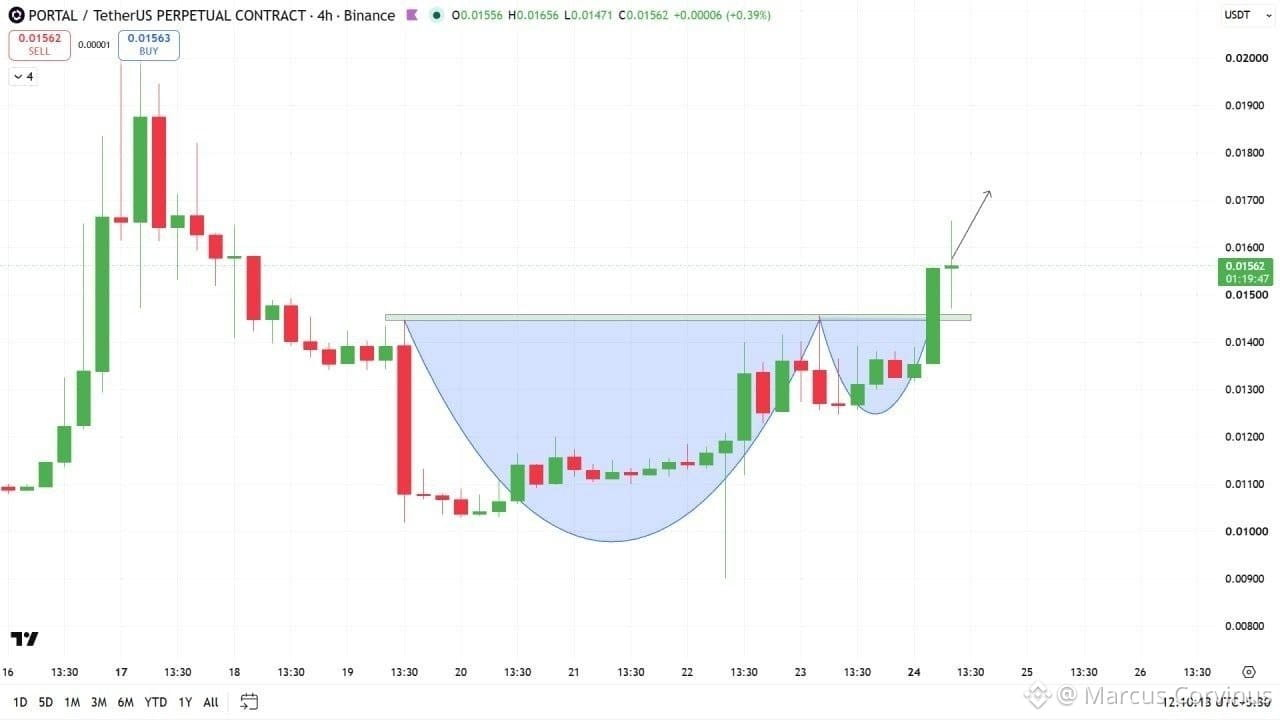
$PORTAL has already broken out of the Cup and Handle pattern.
The bullish structure is now getting interesting.
Buyers have successfully pushed price beyond the key breakout zone.
If the breakout holds, momentum could start building rapidly.
A successful retest could make the setup even stronger.
Volume expansion from here could bring another wave of attention.
The technical structure is favoring the bulls.
The next move could be much more aggressive.
$PORTAL may be preparing for a strong upside push.
Keep this one on the radar.
Track it closely.
The bullish structure is now getting interesting.
Buyers have successfully pushed price beyond the key breakout zone.
If the breakout holds, momentum could start building rapidly.
A successful retest could make the setup even stronger.
Volume expansion from here could bring another wave of attention.
The technical structure is favoring the bulls.
The next move could be much more aggressive.
$PORTAL may be preparing for a strong upside push.
Keep this one on the radar.
Track it closely.
Verified
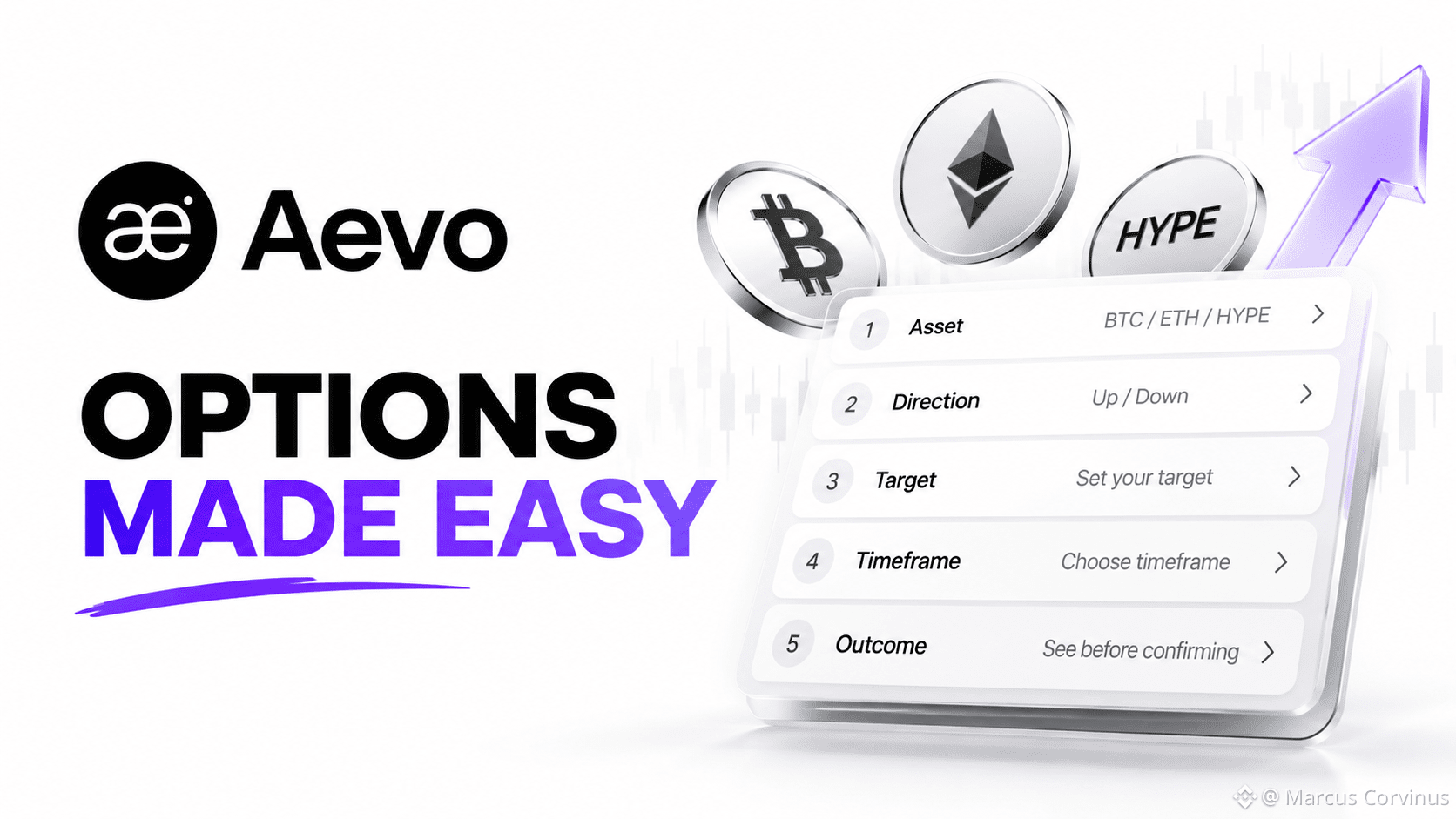
Aevo is taking the friction out of options trading.
The new Options Easy Mode turns a traditionally complicated trade into a simple breakdown:
→ Asset = $BTC / $ETH / $HYPE
→ Direction = Up or Down
→ Target = Where you expect price to move
→ Timeframe = How long you give the trade
→ Outcome = See where you win and lose before confirming
That’s the whole trade.
No need to start by navigating a complicated options chain. Underneath the simpler experience, you’re still trading real options.
$AEVO = the native token of the Aevo ecosystem, with governance and staking mechanics as part of its economic role.
For me, that’s what makes this launch interesting.
The chain was never the point. Expressing the trade clearly was.
Options, made easy.
LFG 🥂
NFA + DYOR
#Aevo #AEVO
The new Options Easy Mode turns a traditionally complicated trade into a simple breakdown:
→ Asset = $BTC / $ETH / $HYPE
→ Direction = Up or Down
→ Target = Where you expect price to move
→ Timeframe = How long you give the trade
→ Outcome = See where you win and lose before confirming
That’s the whole trade.
No need to start by navigating a complicated options chain. Underneath the simpler experience, you’re still trading real options.
$AEVO = the native token of the Aevo ecosystem, with governance and staking mechanics as part of its economic role.
For me, that’s what makes this launch interesting.
The chain was never the point. Expressing the trade clearly was.
Options, made easy.
LFG 🥂
NFA + DYOR
#Aevo #AEVO
Polymarket Information is becoming a tradable asset, and $POLY is putting a fresh spotlight on that idea.
Most crypto trading starts with price charts.
Polymarket starts somewhere else:
◆ An event happens
◆ Traders study the available information
◆ The market assigns probabilities
◆ Better judgment can create an edge
That difference caught my attention.
Instead of being limited to one sector, traders can follow markets around politics, economics, AI, sports, crypto and major global events. Someone who deeply understands one specific topic can focus on that niche rather than trying to understand everything.
Now comes the $POLY narrative.
$POLY = the anticipated Polymarket token
Its importance is less about another ticker entering the market and more about what could potentially be built around an already active prediction ecosystem.
• Possible platform utility
• Potential participation incentives
• Possible rewards for early users
The reward and airdrop angle remains speculative until officially confirmed, so I wouldn't treat participation as a guaranteed path to tokens.
Still, the setup stands out.
$PENGU showed the market's appetite for tokens backed by strong attention and community. $DOOD brought another recognizable digital brand into the token economy, while $MASK represents a different example of crypto-native utility.
Polymarket has its own advantage: people already have a reason to use the product beyond waiting for a token.
→ Real events
→ Real opinions
→ Tradable probabilities
→ $POLY anticipation layered on top
That makes this one of the more interesting prediction-market narratives developing in crypto.
Let's go 🤝
NFA + DYOR
#Polymarket #POLY
Most crypto trading starts with price charts.
Polymarket starts somewhere else:
◆ An event happens
◆ Traders study the available information
◆ The market assigns probabilities
◆ Better judgment can create an edge
That difference caught my attention.
Instead of being limited to one sector, traders can follow markets around politics, economics, AI, sports, crypto and major global events. Someone who deeply understands one specific topic can focus on that niche rather than trying to understand everything.
Now comes the $POLY narrative.
$POLY = the anticipated Polymarket token
Its importance is less about another ticker entering the market and more about what could potentially be built around an already active prediction ecosystem.
• Possible platform utility
• Potential participation incentives
• Possible rewards for early users
The reward and airdrop angle remains speculative until officially confirmed, so I wouldn't treat participation as a guaranteed path to tokens.
Still, the setup stands out.
$PENGU showed the market's appetite for tokens backed by strong attention and community. $DOOD brought another recognizable digital brand into the token economy, while $MASK represents a different example of crypto-native utility.
Polymarket has its own advantage: people already have a reason to use the product beyond waiting for a token.
→ Real events
→ Real opinions
→ Tradable probabilities
→ $POLY anticipation layered on top
That makes this one of the more interesting prediction-market narratives developing in crypto.
Let's go 🤝
NFA + DYOR
#Polymarket #POLY

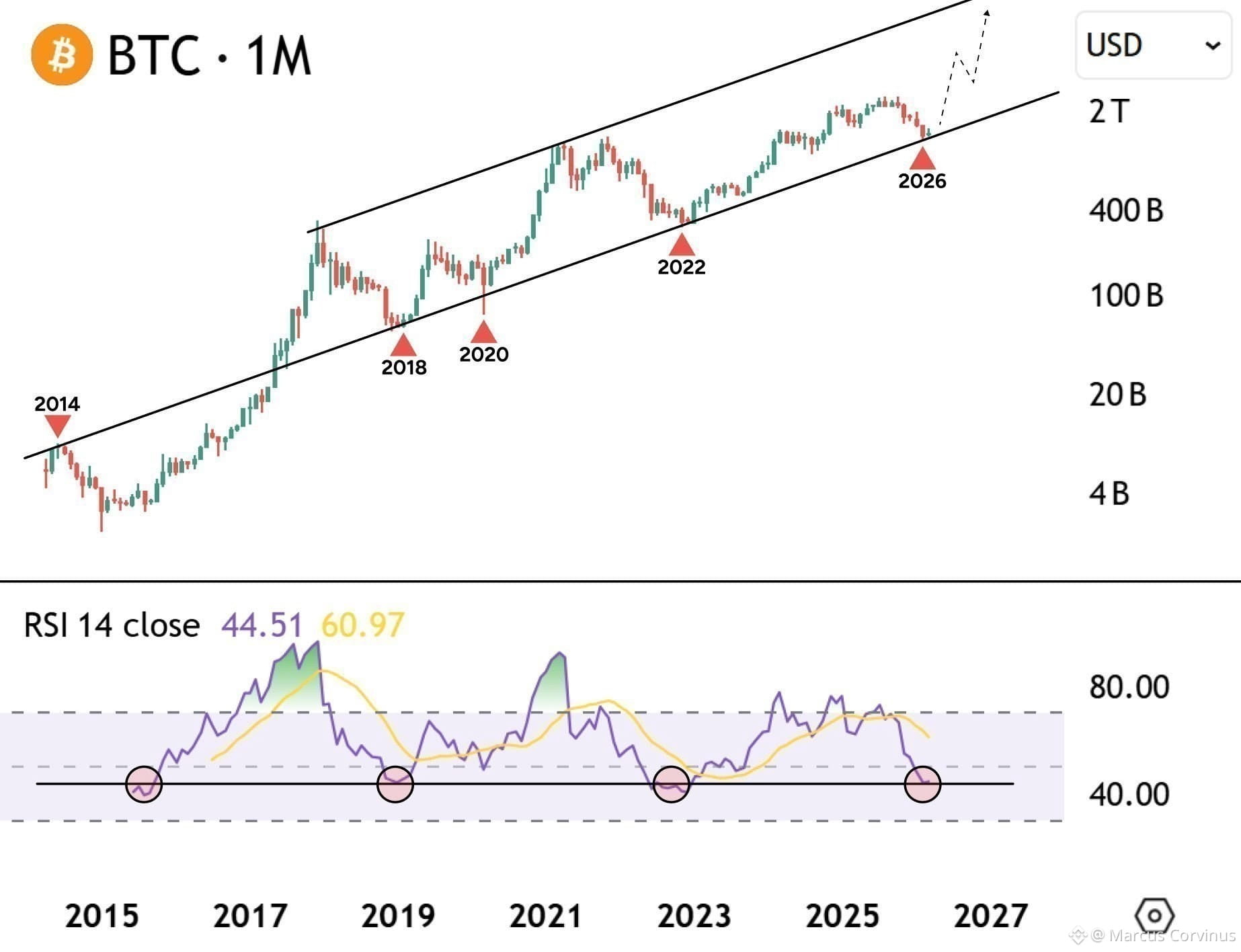
$BTC could be preparing for the BIGGEST bull run yet.
The monthly chart is flashing a pattern that’s impossible to ignore.
In 2014, 2018, 2022 — and now 2026 — Bitcoin’s monthly RSI has returned toward the same critical zone around 40.
Historically, these resets appeared near major turning points before powerful long-term expansions.
At the same time, Bitcoin continues to respect its massive ascending structure, with price once again approaching the lower boundary of the long-term channel.
If history rhymes, this may not be the end of the cycle.
It could be the reset before the next explosive phase.
The chart’s projection points toward a potential move to the upper end of the channel — territory that would represent an entirely new level for Bitcoin.
Nothing is guaranteed, and historical patterns can fail.
But if this structure holds, 2026 could become the launchpad for a bull run the market remembers for years.
Prepare accordingly.
The next major Bitcoin chapter may be just beginning.
The monthly chart is flashing a pattern that’s impossible to ignore.
In 2014, 2018, 2022 — and now 2026 — Bitcoin’s monthly RSI has returned toward the same critical zone around 40.
Historically, these resets appeared near major turning points before powerful long-term expansions.
At the same time, Bitcoin continues to respect its massive ascending structure, with price once again approaching the lower boundary of the long-term channel.
If history rhymes, this may not be the end of the cycle.
It could be the reset before the next explosive phase.
The chart’s projection points toward a potential move to the upper end of the channel — territory that would represent an entirely new level for Bitcoin.
Nothing is guaranteed, and historical patterns can fail.
But if this structure holds, 2026 could become the launchpad for a bull run the market remembers for years.
Prepare accordingly.
The next major Bitcoin chapter may be just beginning.
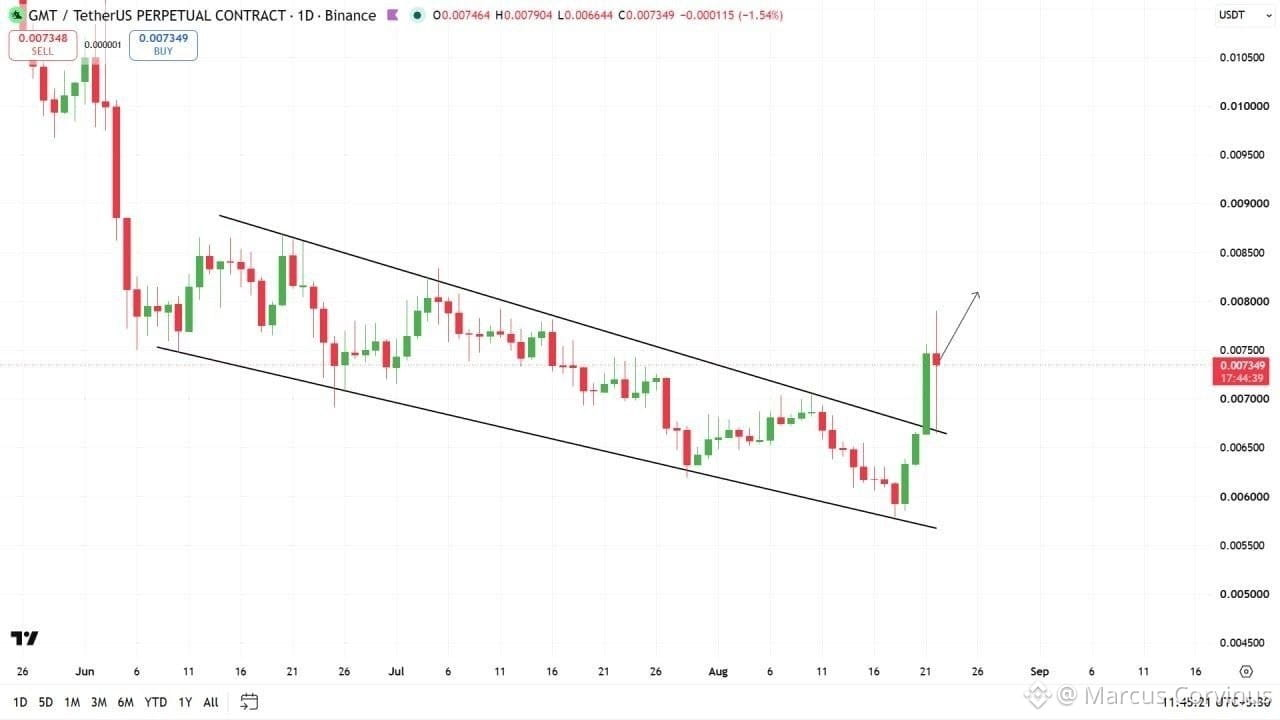
$GMT is starting to show strong bullish momentum.
The breakout is already in place, and price is holding above the previous resistance structure.
Buyers appear to be gaining control, which could lead to another short-term move higher if momentum continues.
The key now is the breakout zone. If $GMT holds this area during a retest, the bullish structure remains strong.
Increasing volume and sustained buying pressure could push price toward the next resistance levels.
For now, $GMT looks interesting. The breakout happened — now we watch for continuation.
The breakout is already in place, and price is holding above the previous resistance structure.
Buyers appear to be gaining control, which could lead to another short-term move higher if momentum continues.
The key now is the breakout zone. If $GMT holds this area during a retest, the bullish structure remains strong.
Increasing volume and sustained buying pressure could push price toward the next resistance levels.
For now, $GMT looks interesting. The breakout happened — now we watch for continuation.
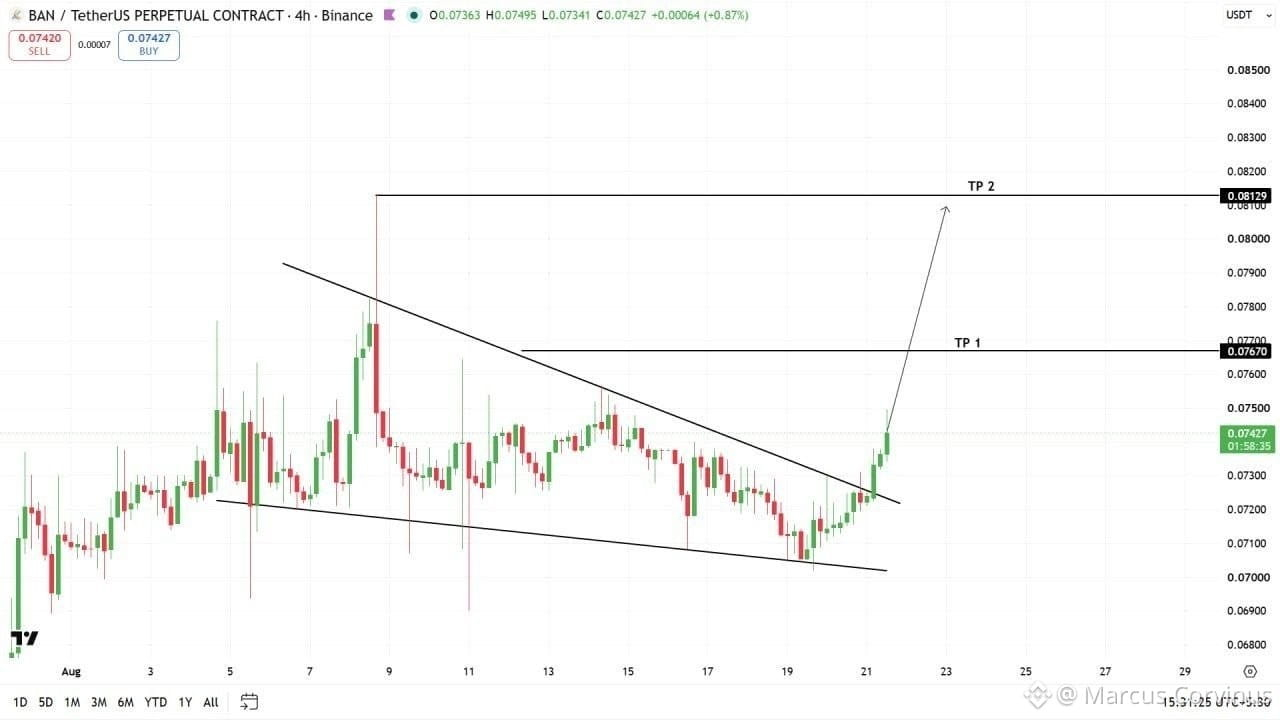
$BAN could be approaching a major expansion.
The market has been building pressure, and the next wave of buying could trigger a sharp move higher.
Upper targets remain the main area to watch if momentum continues to strengthen.
One strong push could change the pace quickly.
Eyes on $BAN .
The market has been building pressure, and the next wave of buying could trigger a sharp move higher.
Upper targets remain the main area to watch if momentum continues to strengthen.
One strong push could change the pace quickly.
Eyes on $BAN .
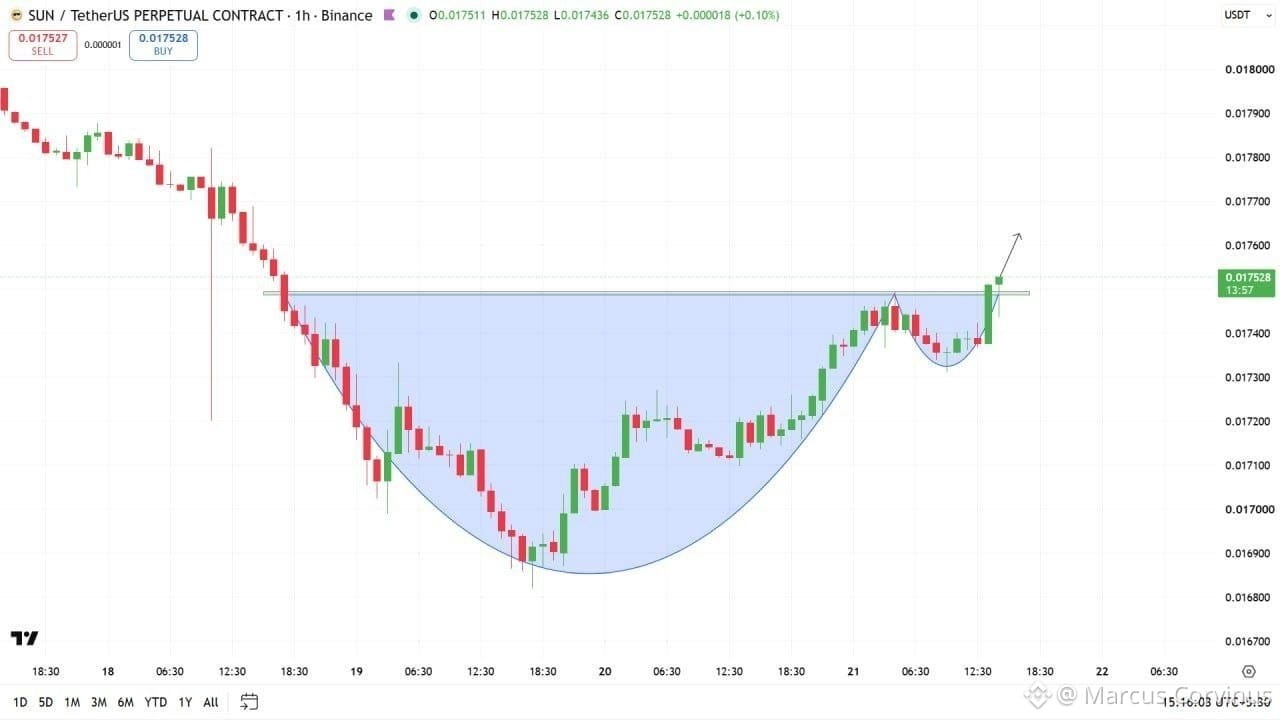
$SUN is flashing serious bullish momentum.
The Cup and Handle breakout is already confirmed, and price is holding above the key breakout zone.
If buyers keep control, the next expansion could come fast as momentum continues to build.
The structure looks strong. Now it’s all about continuation toward the higher targets.
Keep $SUN on the radar.
The Cup and Handle breakout is already confirmed, and price is holding above the key breakout zone.
If buyers keep control, the next expansion could come fast as momentum continues to build.
The structure looks strong. Now it’s all about continuation toward the higher targets.
Keep $SUN on the radar.
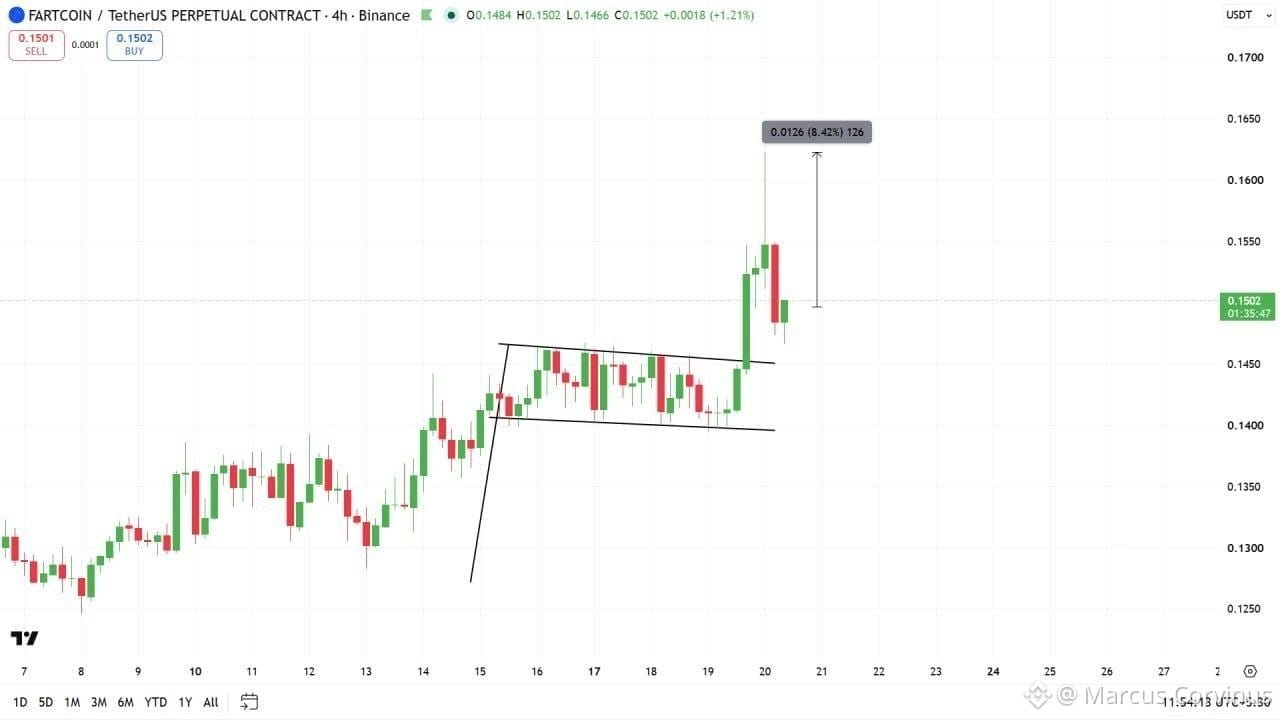
$FARTCOIN delivered a powerful move after our update.
Price surged approximately 8%, bringing strong momentum and putting the setup firmly in the spotlight.
The move came fast as buyers stepped in and pushed $FARTCOIN higher.
Those tracking our update saw the momentum unfold.
Approximately 8% pump already delivered.
Now all eyes are on what comes next.
Price surged approximately 8%, bringing strong momentum and putting the setup firmly in the spotlight.
The move came fast as buyers stepped in and pushed $FARTCOIN higher.
Those tracking our update saw the momentum unfold.
Approximately 8% pump already delivered.
Now all eyes are on what comes next.
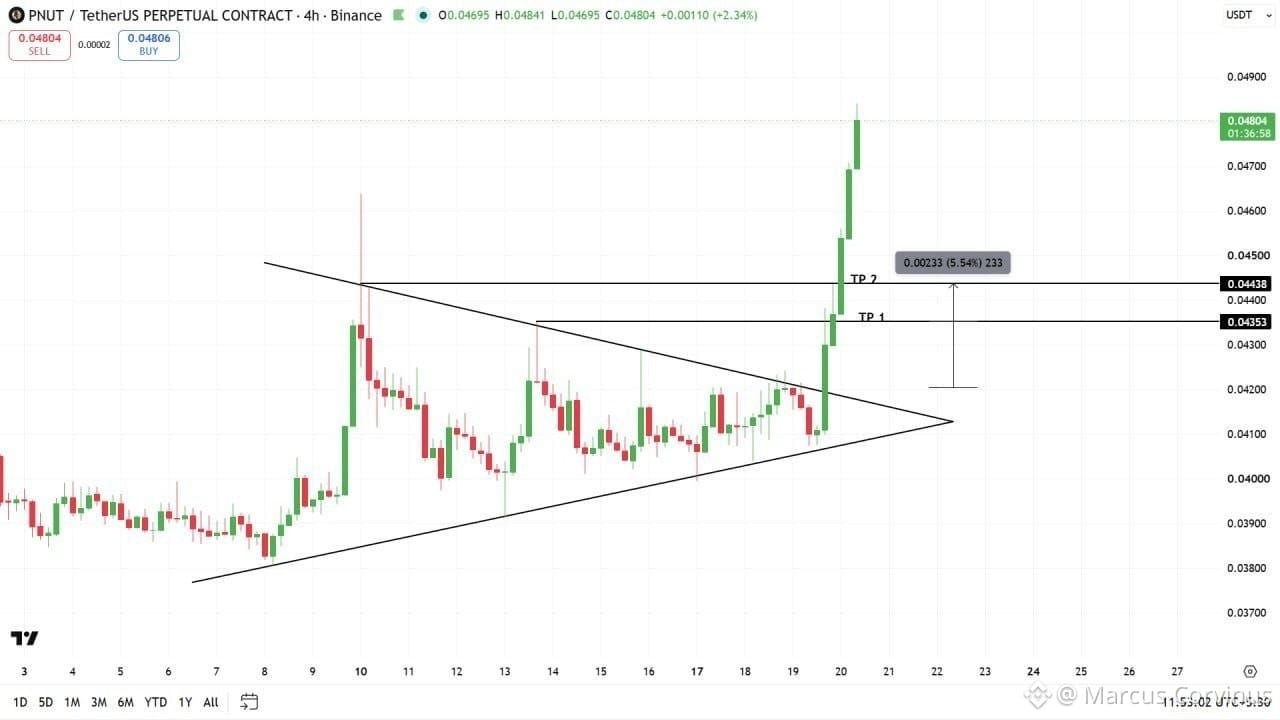
$PNUT delivered exactly what we were watching for.
All predicted targets have now been hit, with the token pumping 5% after our update.
The momentum kicked in, price pushed through the expected levels, and every mapped target was reached.
From the initial update to the final target, the move played out beautifully.
Another setup completed.
Now we move on to the next opportunity.
All predicted targets have now been hit, with the token pumping 5% after our update.
The momentum kicked in, price pushed through the expected levels, and every mapped target was reached.
From the initial update to the final target, the move played out beautifully.
Another setup completed.
Now we move on to the next opportunity.
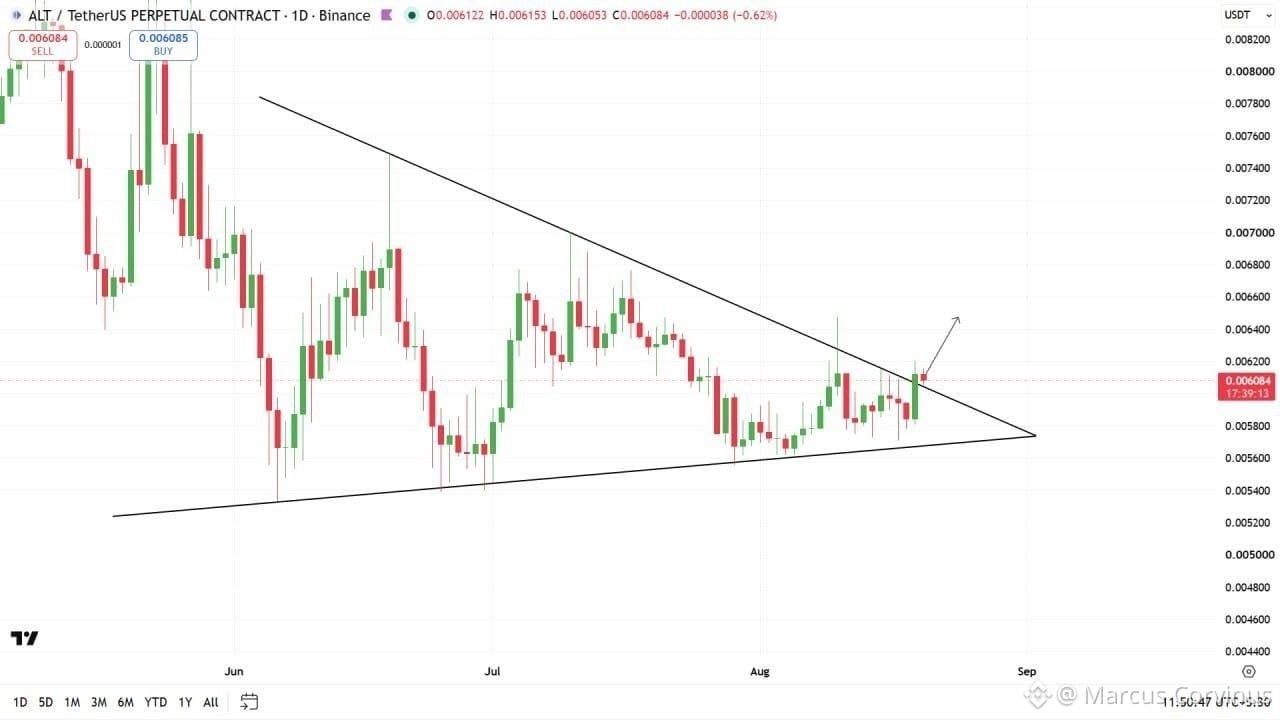
$ALT could be entering a completely new phase.
After tightening inside a symmetrical triangle, price has finally escaped the formation and opened the door for a potentially powerful move.
This is where things can get interesting.
A clean hold above the former resistance would strengthen the bullish case and could bring higher levels into play quickly.
The compression is over.
Now the market gets to show how much energy was building inside that structure.
$ALT is officially on the watchlist.
Track the momentum. The next expansion could be worth watching closely.
After tightening inside a symmetrical triangle, price has finally escaped the formation and opened the door for a potentially powerful move.
This is where things can get interesting.
A clean hold above the former resistance would strengthen the bullish case and could bring higher levels into play quickly.
The compression is over.
Now the market gets to show how much energy was building inside that structure.
$ALT is officially on the watchlist.
Track the momentum. The next expansion could be worth watching closely.
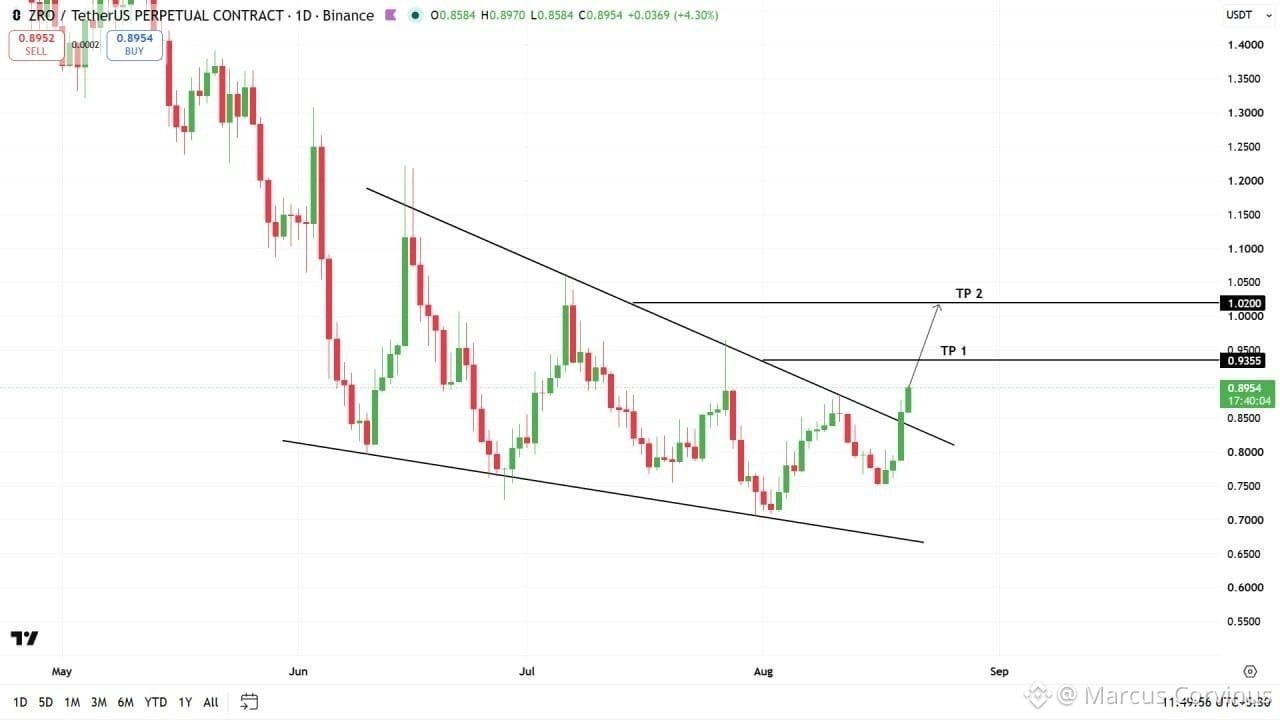
$ZRO is starting to look explosive.
The falling wedge breakout is already confirmed, and price has moved beyond the structure that was keeping it compressed.
Now the focus shifts to continuation.
If buyers maintain control above the breakout zone, the next major move could be toward the upper targets.
Momentum is building, structure has changed, and $ZRO is entering an important phase.
Keep this one on the radar.
The breakout happened. Now we track the follow-through.
The falling wedge breakout is already confirmed, and price has moved beyond the structure that was keeping it compressed.
Now the focus shifts to continuation.
If buyers maintain control above the breakout zone, the next major move could be toward the upper targets.
Momentum is building, structure has changed, and $ZRO is entering an important phase.
Keep this one on the radar.
The breakout happened. Now we track the follow-through.
Verified
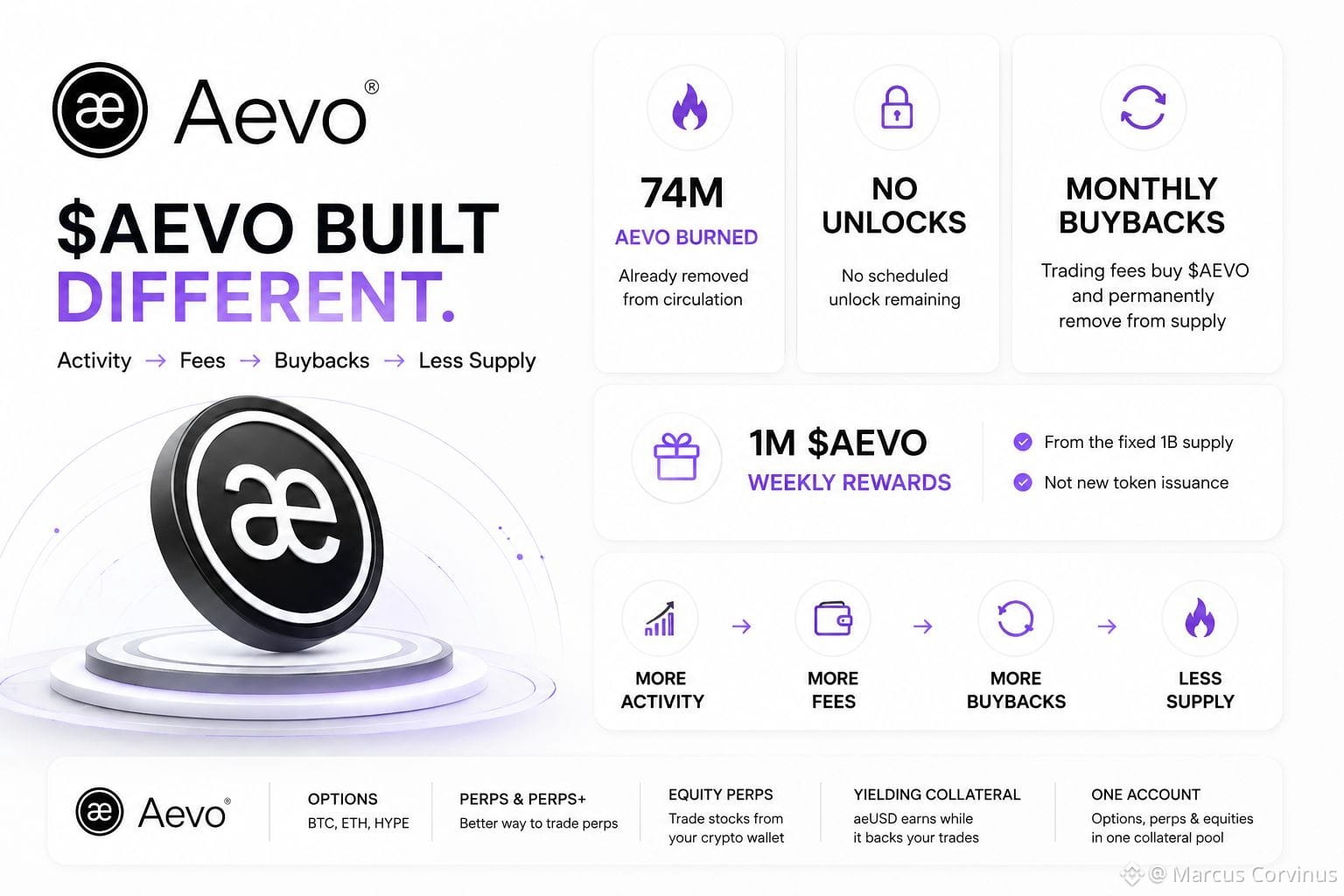
Aevo is showing what happens when a token model starts following real platform activity.
$AEVO = the native token of Aevo.
The symbol represents more than governance now. After AGP-3, AEVO became part of a broader economic structure connecting trading activity, staking, buybacks, and supply reduction.
74M AEVO has already been burned.
There are also no scheduled unlocks remaining. No VC cliff waiting ahead and no team allocation gradually entering the market through an unlock schedule.
The next part is what makes the structure interesting.
Every month, trading fees generated by the platform are used to buy AEVO from the market.
Those purchased tokens are then permanently removed.
So the mechanism is simple:
Trading activity
→ Exchange fees
→ Monthly AEVO buybacks
→ Tokens permanently removed
There is one detail worth understanding.
Aevo distributes 1M AEVO every week to active traders through epoch rewards.
But this is not new token issuance.
Those rewards come from the fixed 1B AEVO supply that already exists.
That distinction matters when looking at the supply mechanics.
While $AAVE and $AVAX are examples of established tokens whose economic models continue to evolve, Aevo has already made a major structural change to what AEVO represents.
Instead of looking only at governance, the more interesting thing to watch is the relationship between actual trading activity and the token economy.
More volume can generate more fees.
More fees can fund more buybacks.
And those buybacks permanently remove AEVO from supply.
The question is whether this kind of usage-linked structure eventually becomes something traders expect from established crypto tokens.
Let's go 🤝
NFA + DYOR
#AEVO #DeFi
$AEVO = the native token of Aevo.
The symbol represents more than governance now. After AGP-3, AEVO became part of a broader economic structure connecting trading activity, staking, buybacks, and supply reduction.
74M AEVO has already been burned.
There are also no scheduled unlocks remaining. No VC cliff waiting ahead and no team allocation gradually entering the market through an unlock schedule.
The next part is what makes the structure interesting.
Every month, trading fees generated by the platform are used to buy AEVO from the market.
Those purchased tokens are then permanently removed.
So the mechanism is simple:
Trading activity
→ Exchange fees
→ Monthly AEVO buybacks
→ Tokens permanently removed
There is one detail worth understanding.
Aevo distributes 1M AEVO every week to active traders through epoch rewards.
But this is not new token issuance.
Those rewards come from the fixed 1B AEVO supply that already exists.
That distinction matters when looking at the supply mechanics.
While $AAVE and $AVAX are examples of established tokens whose economic models continue to evolve, Aevo has already made a major structural change to what AEVO represents.
Instead of looking only at governance, the more interesting thing to watch is the relationship between actual trading activity and the token economy.
More volume can generate more fees.
More fees can fund more buybacks.
And those buybacks permanently remove AEVO from supply.
The question is whether this kind of usage-linked structure eventually becomes something traders expect from established crypto tokens.
Let's go 🤝
NFA + DYOR
#AEVO #DeFi
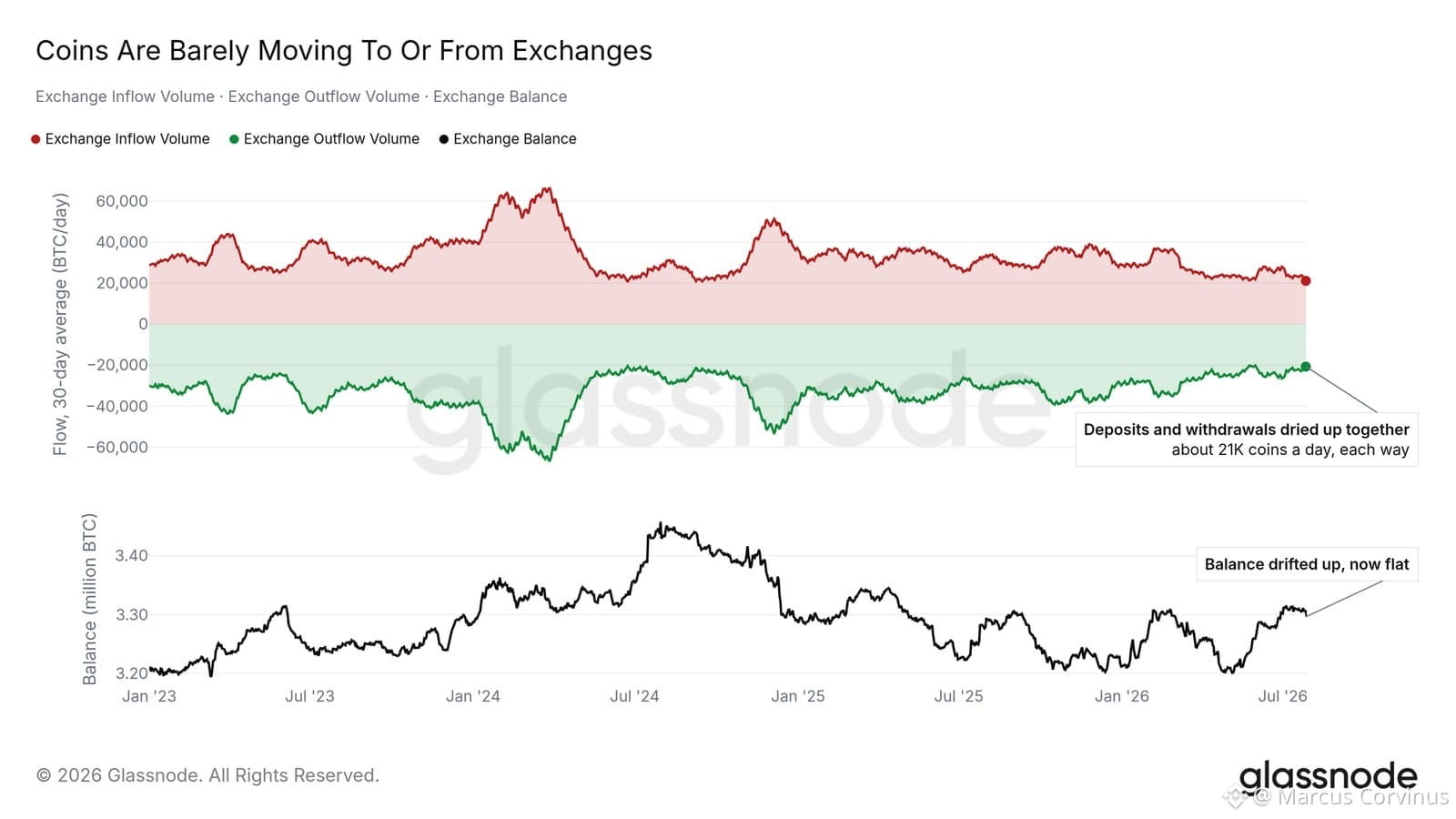
$BTC exchange activity has gone unusually quiet.
Deposits and withdrawals are both running at a modest pace, leaving combined exchange flows near some of the lowest levels of the past three years.
What makes this interesting is the balance between the two sides. There isn't a strong increase in BTC moving onto exchanges, but there also isn't aggressive withdrawal activity suggesting heavy accumulation.
Exchange balances recovered somewhat from the April lows, yet they have stayed broadly flat since early July.
That makes the current structure look less like clear accumulation or distribution and more like a period of low participation.
Fewer holders are moving $BTC . Traders appear less willing to reposition. The market is simply waiting.
This type of inactivity can show up during the quiet middle stages of weaker market cycles, when attention fades and conviction becomes harder to see in on-chain flows.
But low activity creates an interesting setup.
If relatively little BTC is actively available and demand suddenly returns, even a moderate shift in buying pressure could change market conditions quickly.
The opposite also matters. A sudden increase in exchange deposits could quickly change the current balance and bring sell-side pressure back into focus.
For now, BTC isn't showing a strong directional signal through exchange flows.
The more important question may be what finally breaks this period of inactivity: returning demand or returning sellers?
Deposits and withdrawals are both running at a modest pace, leaving combined exchange flows near some of the lowest levels of the past three years.
What makes this interesting is the balance between the two sides. There isn't a strong increase in BTC moving onto exchanges, but there also isn't aggressive withdrawal activity suggesting heavy accumulation.
Exchange balances recovered somewhat from the April lows, yet they have stayed broadly flat since early July.
That makes the current structure look less like clear accumulation or distribution and more like a period of low participation.
Fewer holders are moving $BTC . Traders appear less willing to reposition. The market is simply waiting.
This type of inactivity can show up during the quiet middle stages of weaker market cycles, when attention fades and conviction becomes harder to see in on-chain flows.
But low activity creates an interesting setup.
If relatively little BTC is actively available and demand suddenly returns, even a moderate shift in buying pressure could change market conditions quickly.
The opposite also matters. A sudden increase in exchange deposits could quickly change the current balance and bring sell-side pressure back into focus.
For now, BTC isn't showing a strong directional signal through exchange flows.
The more important question may be what finally breaks this period of inactivity: returning demand or returning sellers?
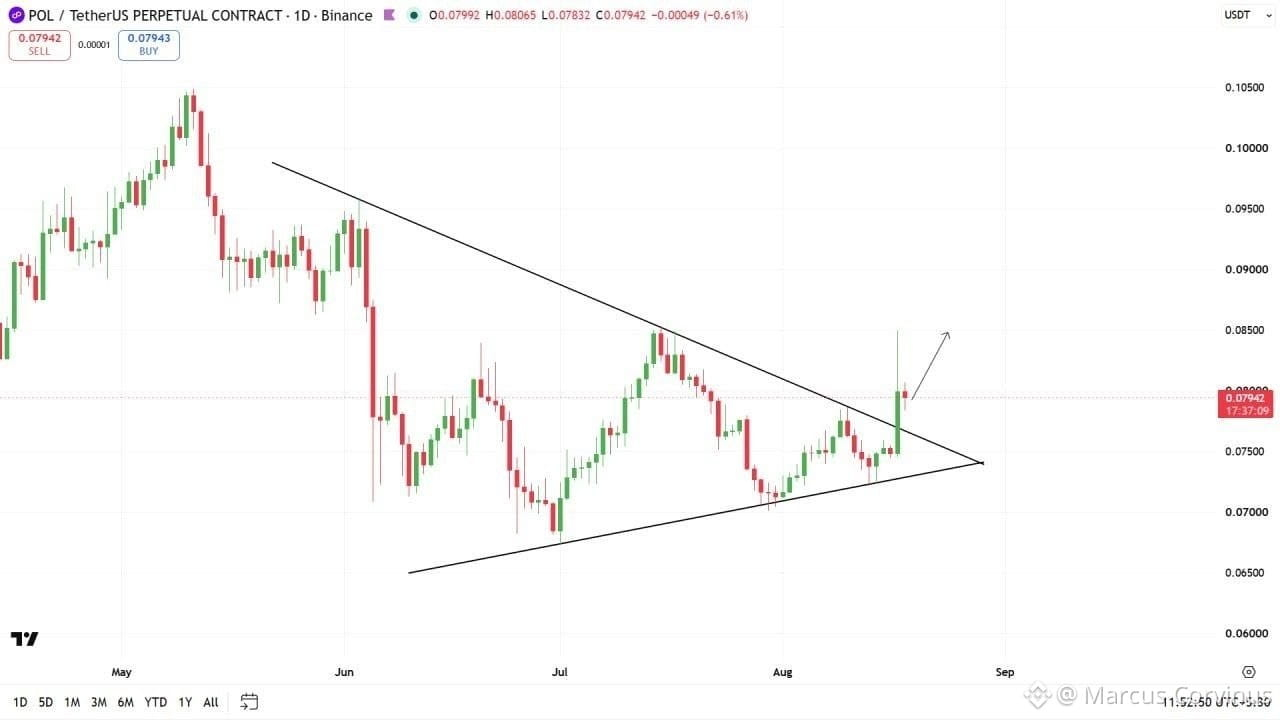
$POL is showing serious strength.
After weeks of tightening price action, the symmetrical triangle has finally given way to the upside.
This kind of breakout can trigger a sharp expansion as sidelined traders start chasing momentum.
The next few candles matter. Holding above the breakout zone would strengthen the bullish setup, while rising volume could accelerate the move.
Keep $POL on your radar.
The quiet phase may be over. The explosive phase could be next.
After weeks of tightening price action, the symmetrical triangle has finally given way to the upside.
This kind of breakout can trigger a sharp expansion as sidelined traders start chasing momentum.
The next few candles matter. Holding above the breakout zone would strengthen the bullish setup, while rising volume could accelerate the move.
Keep $POL on your radar.
The quiet phase may be over. The explosive phase could be next.
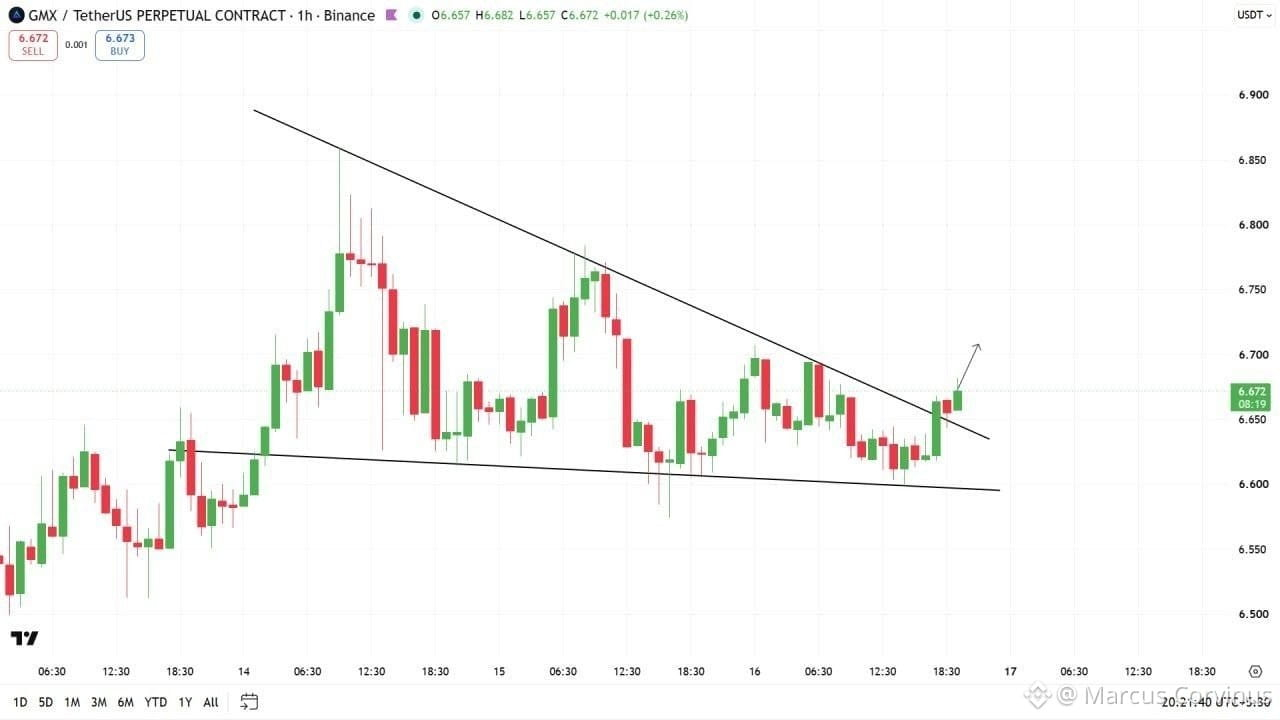
$GMX is starting to look seriously bullish.
Price has broken out of the falling wedge, a structure that often signals weakening selling pressure and a possible shift in momentum.
The breakout is the first important step. Now the key is whether buyers can defend the move instead of letting price fall straight back inside the wedge.
If $GMX holds above the breakout area and volume starts expanding, the setup could gain real strength and open the door for a larger upside move.
A failed hold would change the picture quickly, so confirmation matters more than simply chasing the first green candle.
$GMX is officially on my watchlist now.
This could get interesting fast.
Price has broken out of the falling wedge, a structure that often signals weakening selling pressure and a possible shift in momentum.
The breakout is the first important step. Now the key is whether buyers can defend the move instead of letting price fall straight back inside the wedge.
If $GMX holds above the breakout area and volume starts expanding, the setup could gain real strength and open the door for a larger upside move.
A failed hold would change the picture quickly, so confirmation matters more than simply chasing the first green candle.
$GMX is officially on my watchlist now.
This could get interesting fast.
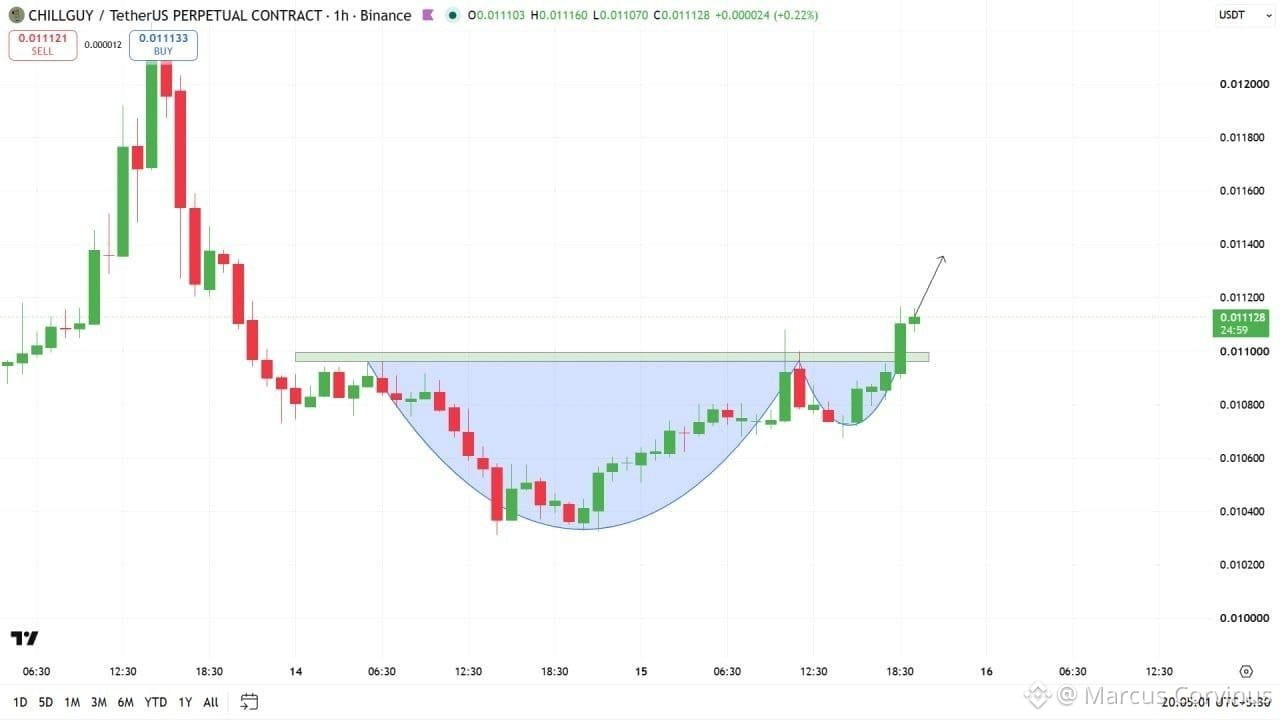
$CHILLGUY has already broken out of a clean Cup and Handle formation, and now the chart is starting to look seriously interesting.
The breakout is confirmed, but the bigger move may still be ahead.
As long as price holds above the breakout zone, bulls remain in control and momentum could start building quickly.
What makes this setup worth tracking is the structure. Cup and Handle breakouts can accelerate once buyers defend the previous resistance and turn it into support.
Now it comes down to follow-through.
If volume starts expanding and $CHILLGUY keeps holding above the breakout level, the next leg could get aggressive.
Watching this one closely. The setup is there — now the market needs to deliver.
The breakout is confirmed, but the bigger move may still be ahead.
As long as price holds above the breakout zone, bulls remain in control and momentum could start building quickly.
What makes this setup worth tracking is the structure. Cup and Handle breakouts can accelerate once buyers defend the previous resistance and turn it into support.
Now it comes down to follow-through.
If volume starts expanding and $CHILLGUY keeps holding above the breakout level, the next leg could get aggressive.
Watching this one closely. The setup is there — now the market needs to deliver.
Log in to explore more content