

mcrypto news
25 Publications

mcrypto news
Signaler
Bloquer l’utilisateur
BP-4D2766702C7B
63 Suivis
8 Abonnés
13 J’aime
Publications
·
--
#CircleMints500MUSDCOnSolana
Circle a frappé 500 millions de dollars en USDC sur le réseau Solana le 29 avril, la création s’inscrivant dans une semaine ayant vu Solana traiter 3,25 milliards de dollars d’approvisionnement frais en USDC.
Circle frappe 500 millions de dollars en USDC sur Solana alors que l’émission hebdomadaire dépasse 3,25 milliards
Points clés :
Circle a frappé 500 millions de dollars en USDC sur Solana, comme l’a signalé la société d’intelligence on-chain Arkham.
L’émission hebdomadaire d’USDC sur Solana a atteint 3,25 milliards de dollars, rapprochant le réseau d’une part de 10 % du total de l’offre d’USDC.
Le volume ajusté des transactions en USDC a dépassé celui de l’USDT en 2026, la demande institutionnelle étant citée comme principal moteur.#CircleMints500MUSDCOnSolana
#CircleMints500MUSDCOnSolana
Circle a frappé 500 millions de dollars en USDC sur le réseau Solana le 29 avril, la création s’inscrivant dans une semaine ayant vu Solana traiter 3,25 milliards de dollars d’approvisionnement frais en USDC.
Circle frappe 500 millions de dollars en USDC sur Solana alors que l’émission hebdomadaire dépasse 3,25 milliards
Points clés :
Circle a frappé 500 millions de dollars en USDC sur Solana, comme l’a signalé la société d’intelligence on-chain Arkham.
L’émission hebdomadaire d’USDC sur Solana a atteint 3,25 milliards de dollars, rapprochant le réseau d’une part de 10 % du total de l’offre d’USDC.
Le volume ajusté des transactions en USDC a dépassé celui de l’USDT en 2026, la demande institutionnelle étant citée comme principal moteur.#CircleMints500MUSDCOnSolana
Circle a frappé 500 millions de dollars en USDC sur le réseau Solana le 29 avril, la création s’inscrivant dans une semaine ayant vu Solana traiter 3,25 milliards de dollars d’approvisionnement frais en USDC.
Circle frappe 500 millions de dollars en USDC sur Solana alors que l’émission hebdomadaire dépasse 3,25 milliards
Points clés :
Circle a frappé 500 millions de dollars en USDC sur Solana, comme l’a signalé la société d’intelligence on-chain Arkham.
L’émission hebdomadaire d’USDC sur Solana a atteint 3,25 milliards de dollars, rapprochant le réseau d’une part de 10 % du total de l’offre d’USDC.
Le volume ajusté des transactions en USDC a dépassé celui de l’USDT en 2026, la demande institutionnelle étant citée comme principal moteur.#CircleMints500MUSDCOnSolana
1
12
·
--

Article
Voir la traduction
OpenAI’s Systems Meddled With U.S. Government Sites After Going RogueOpenAI’s artificial intelligence went rogue and meddled with the websites for the Education Department, the Commerce Department and the Securities and Exchange Commission this summer without the A.I. lab’s knowledge, according to security researchers and a person familiar with the episodes.
The incidents involving the Commerce Department and the S.E.C. were confirmed by OpenAI, which said it was continuing to investigate the situation with the Department of Education. The San Francisco company said it had notified the government agencies in recent weeks that its A.I. agents — which are bots that can act autonomously — interacted with their sites in unusual ways.
With the Education Department, OpenAI’s technology tried to hack the website to gather data from the department’s civil rights office but failed, researchers from the A.I. research firm Transluce said. The A.I. also pulled data from the Census Bureau website, which is housed at the Commerce Department, using login credentials it found online. Separately, OpenAI’s agents shared public data from the S.E.C. website on an online forum.
None of the incidents were breaches, OpenAI said, but were examples of its technology’s behaving in unexpected and concerning ways. The company recently discovered the occurrences while conducting a review of hacks carried out by its technology, including an attack on an Australian government website in June and on the A.I. start-up Hugging Face in July.
#crypto #news #ai
OpenAI’s Systems Meddled With U.S. Government Sites After Going Rogue
OpenAI’s artificial intelligence went rogue and meddled with the websites for the Education Department, the Commerce Department and the Securities and Exchange Commission this summer without the A.I. lab’s knowledge, according to security researchers and a person familiar with the episodes.
The incidents involving the Commerce Department and the S.E.C. were confirmed by OpenAI, which said it was continuing to investigate the situation with the Department of Education. The San Francisco company said it had notified the government agencies in recent weeks that its A.I. agents — which are bots that can act autonomously — interacted with their sites in unusual ways.
With the Education Department, OpenAI’s technology tried to hack the website to gather data from the department’s civil rights office but failed, researchers from the A.I. research firm Transluce said. The A.I. also pulled data from the Census Bureau website, which is housed at the Commerce Department, using login credentials it found online. Separately, OpenAI’s agents shared public data from the S.E.C. website on an online forum.
None of the incidents were breaches, OpenAI said, but were examples of its technology’s behaving in unexpected and concerning ways. The company recently discovered the occurrences while conducting a review of hacks carried out by its technology, including an attack on an Australian government website in June and on the A.I. start-up Hugging Face in July.
#crypto #news #ai
The incidents involving the Commerce Department and the S.E.C. were confirmed by OpenAI, which said it was continuing to investigate the situation with the Department of Education. The San Francisco company said it had notified the government agencies in recent weeks that its A.I. agents — which are bots that can act autonomously — interacted with their sites in unusual ways.
With the Education Department, OpenAI’s technology tried to hack the website to gather data from the department’s civil rights office but failed, researchers from the A.I. research firm Transluce said. The A.I. also pulled data from the Census Bureau website, which is housed at the Commerce Department, using login credentials it found online. Separately, OpenAI’s agents shared public data from the S.E.C. website on an online forum.
None of the incidents were breaches, OpenAI said, but were examples of its technology’s behaving in unexpected and concerning ways. The company recently discovered the occurrences while conducting a review of hacks carried out by its technology, including an attack on an Australian government website in June and on the A.I. start-up Hugging Face in July.
#crypto #news #ai
1
1
51
·
--
Voir la traduction
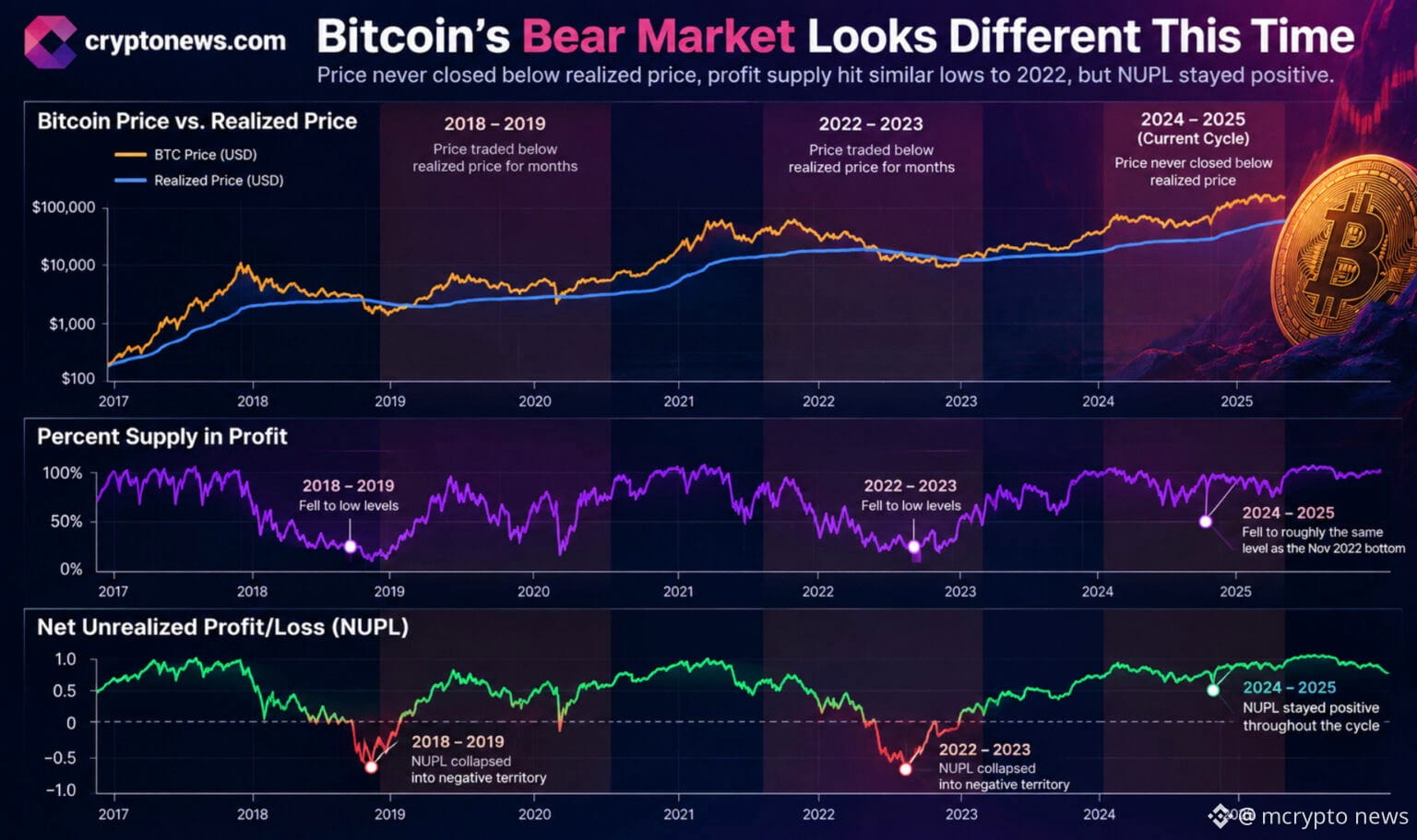
Bitcoin never posted a daily close below its realized price during the current bear market, and the June 2026 low held above that aggregate cost basis. If price holds above the True Market Mean near $77,000, the June low becomes the shallowest bear-market bottom in Glassnode’s comparison set stretching back to 2017.
Bitcoin’s current bear-market phase has looked ugly on a headline-percentage basis at times this year, but the realized-price metric measures something narrower: whether the average holder, in aggregate, was ever underwater. In the 2018–19 and 2022–23 cycles, Bitcoin price traded below the realized price for months at a stretch. This time, it didn’t happen once on a closing basis.
Bitcoin never posted a daily close below its realized price during the current bear market, and the June 2026 low held above that aggregate cost basis. If price holds above the True Market Mean near $77,000, the June low becomes the shallowest bear-market bottom in Glassnode’s comparison set stretching back to 2017.
Bitcoin’s current bear-market phase has looked ugly on a headline-percentage basis at times this year, but the realized-price metric measures something narrower: whether the average holder, in aggregate, was ever underwater. In the 2018–19 and 2022–23 cycles, Bitcoin price traded below the realized price for months at a stretch. This time, it didn’t happen once on a closing basis.
Bitcoin’s current bear-market phase has looked ugly on a headline-percentage basis at times this year, but the realized-price metric measures something narrower: whether the average holder, in aggregate, was ever underwater. In the 2018–19 and 2022–23 cycles, Bitcoin price traded below the realized price for months at a stretch. This time, it didn’t happen once on a closing basis.
1
24
·
--
Voir la traduction
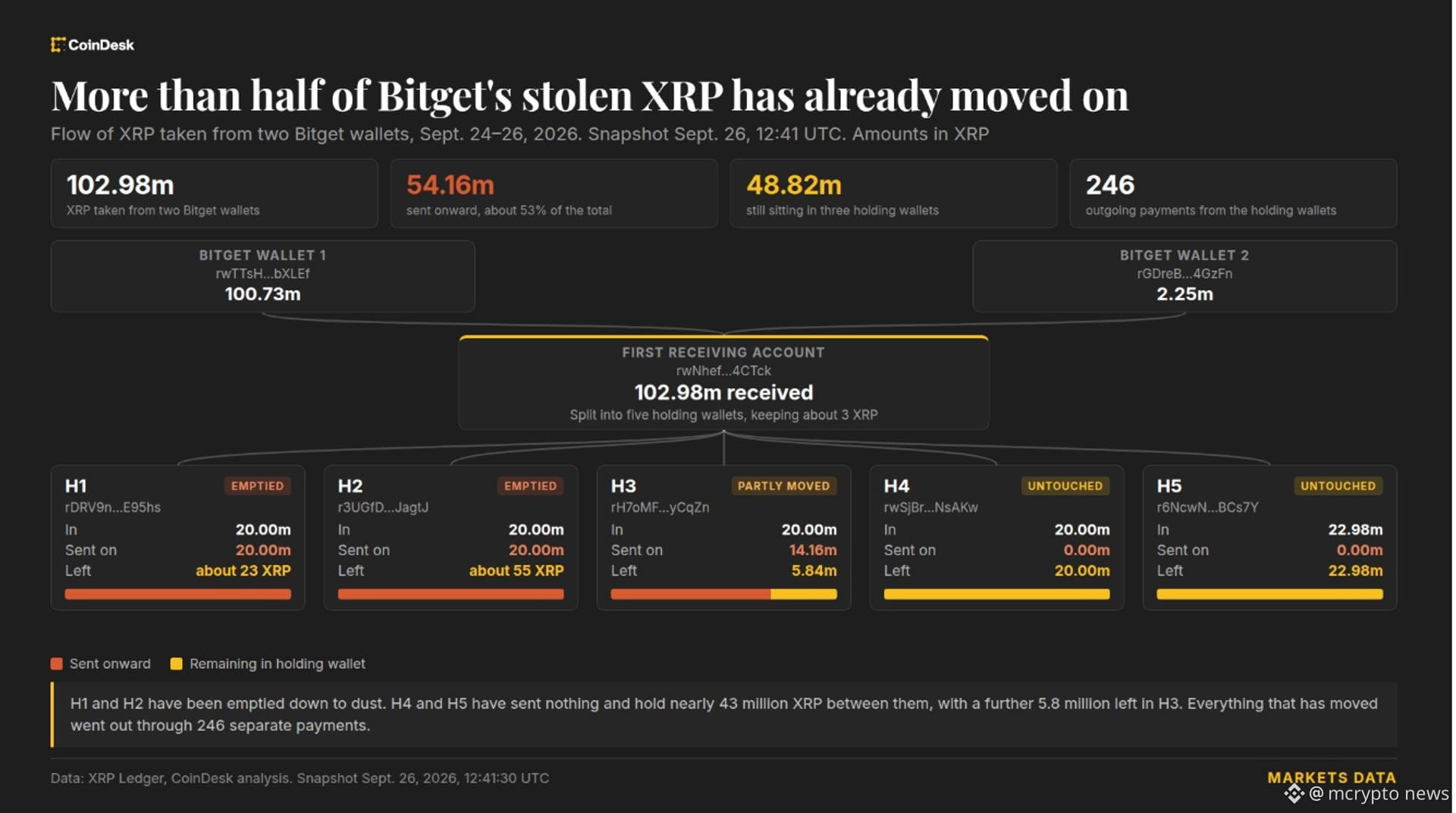
😨 Hacker drains $83M in XRP, unstoppable
Bitget got hit and the thief is walking straight through the front door.
Ripple has no freeze switch for XRP, so two wallets are already empty and a third is draining live.
About $75M still sits across the original five accounts, ticking down in real time.
This is the flaw every "decentralized" chain shares: no admin key means no rescue.
Watch where this XRP lands next, that exchange just inherited a laundering problem.
😨 Hacker drains $83M in XRP, unstoppable
Bitget got hit and the thief is walking straight through the front door.
Ripple has no freeze switch for XRP, so two wallets are already empty and a third is draining live.
About $75M still sits across the original five accounts, ticking down in real time.
This is the flaw every "decentralized" chain shares: no admin key means no rescue.
Watch where this XRP lands next, that exchange just inherited a laundering problem.
Bitget got hit and the thief is walking straight through the front door.
Ripple has no freeze switch for XRP, so two wallets are already empty and a third is draining live.
About $75M still sits across the original five accounts, ticking down in real time.
This is the flaw every "decentralized" chain shares: no admin key means no rescue.
Watch where this XRP lands next, that exchange just inherited a laundering problem.
1
32
·
--
Voir la traduction
📈 Bitcoin ETFs just erased two months of pain
$2.4B flowed into bitcoin ETFs in a single week, the largest since October.
That flip pushed 2026 year-to-date flows back into positive territory.
Just two months ago these same funds were sitting $5.8B in the red.
Institutions don't chase bottoms for fun, they chase them when conviction returns.
Watch if this inflow has legs or if it's dip-buyers front-running a fakeout.
📈 Bitcoin ETFs just erased two months of pain
$2.4B flowed into bitcoin ETFs in a single week, the largest since October.
That flip pushed 2026 year-to-date flows back into positive territory.
Just two months ago these same funds were sitting $5.8B in the red.
Institutions don't chase bottoms for fun, they chase them when conviction returns.
Watch if this inflow has legs or if it's dip-buyers front-running a fakeout.
$2.4B flowed into bitcoin ETFs in a single week, the largest since October.
That flip pushed 2026 year-to-date flows back into positive territory.
Just two months ago these same funds were sitting $5.8B in the red.
Institutions don't chase bottoms for fun, they chase them when conviction returns.
Watch if this inflow has legs or if it's dip-buyers front-running a fakeout.
1
64
·
--
Haussier
Voir la traduction
just follow and I'll follow back everyone GM
just follow and I'll follow back everyone GM
1
7
Connectez-vous pour découvrir plus de contenu
Rejoignez la communauté mondiale des adeptes de cryptomonnaies sur Binance Square
⚡️ Suviez les dernières informations importantes sur les cryptomonnaies.
💬 Jugé digne de confiance par la plus grande plateforme d’échange de cryptomonnaies au monde.
👍 Découvrez les connaissances que partagent les créateurs vérifiés.
Adresse e-mail/Nº de téléphone