

Caesar jn
75 Publications

Caesar jn
Signaler
Bloquer l’utilisateur
Crypto educator and investor, influencer and KOL manager. DM for collaboration
47 Suivis
8 Abonnés
8 J’aime
Publications
Tous
Direct
·
--
Voir la traduction
Fries before everything else.
That's the whole GM SUN posted on Oct 26, with a plate of fries spelling out S-U-N, little sun faces in sunglasses scattered around, and "made with love" written across the plate. Agree or disagree?
I agree, and not only about food.
Everyone has a "fries first" thing. The small, simple win you grab before the serious stuff starts. In DeFi that's usually the first swap. If the first swap feels heavy, slow, or confusing, most people never stay for the main course.
That's why I keep paying attention to how a brand like SUN shows up. A playful GM with a plate of snacks doesn't announce a feature, but it tells you who they're building for: regular people who want things to feel easy and a bit fun.
Put the friendly part first. Make the first step obvious. Then let people discover the deeper tools at their own pace.
"Made with love" is a strange thing to read on a crypto timeline, and that's exactly why it works. Care is visible in the details.
So yes, fries before everything else. Then we talk yields. @SunPump_meme
#TRONEcoStar
Fries before everything else.
That's the whole GM SUN posted on Oct 26, with a plate of fries spelling out S-U-N, little sun faces in sunglasses scattered around, and "made with love" written across the plate. Agree or disagree?
I agree, and not only about food.
Everyone has a "fries first" thing. The small, simple win you grab before the serious stuff starts. In DeFi that's usually the first swap. If the first swap feels heavy, slow, or confusing, most people never stay for the main course.
That's why I keep paying attention to how a brand like SUN shows up. A playful GM with a plate of snacks doesn't announce a feature, but it tells you who they're building for: regular people who want things to feel easy and a bit fun.
Put the friendly part first. Make the first step obvious. Then let people discover the deeper tools at their own pace.
"Made with love" is a strange thing to read on a crypto timeline, and that's exactly why it works. Care is visible in the details.
So yes, fries before everything else. Then we talk yields. @OfficialSUNio
#TRONEcoStar

11
·
--
Voir la traduction
JST: MORE THAN A TOKEN WITH A BUYBACK MECHANISM
When discussing JST, attention often focuses on market activity, token supply, and the ecosystem's buyback and burn programme.
While these subjects are important, they represent only part of the token's role within JUST.
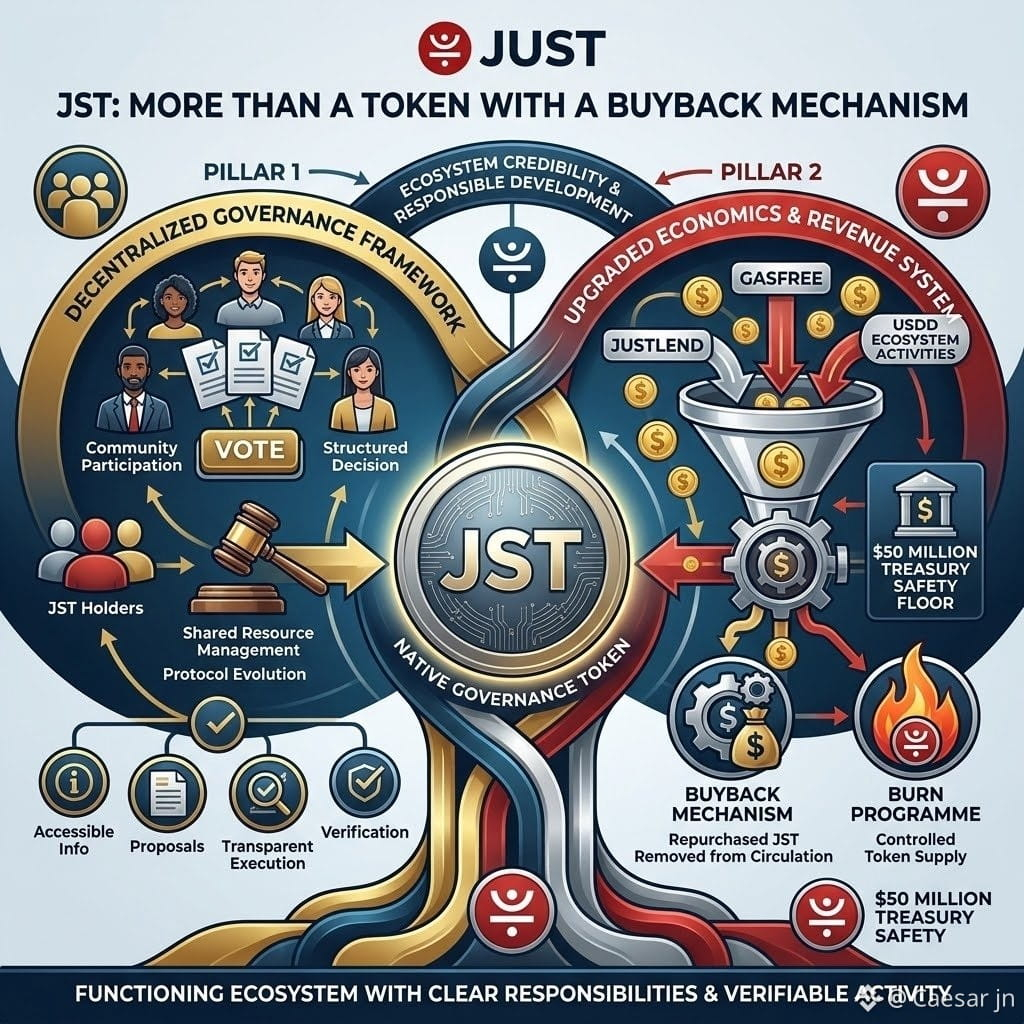
JST is the native governance token of the JUST ecosystem and provides a framework for community participation in protocol decisions.
Governance is a fundamental component of decentralized finance because protocols need mechanisms for discussing and determining how their systems should evolve.
As an ecosystem expands, decisions may involve market parameters, financial policies, product development, and the management of shared resources.
A governance token can provide a structured way for eligible holders to participate in these processes.
Within JUST, this gives JST relevance beyond its presence in the market.
The token is connected to the ecosystem's broader governance framework, while its updated buyback mechanism introduces another relationship between protocol operations and token economics.
Under the upgraded model, eligible revenue from JustLend, GasFree, and qualifying USDD ecosystem activities contributes to JST buybacks.
The repurchased tokens are subsequently removed from circulation through periodic burns.
These mechanisms serve different purposes.
Governance supports participation in ecosystem decisions, while buybacks and burns address the token's circulating supply.
It is important not to confuse the two functions or assume that a burn automatically creates additional governance rights.
For the ecosystem to remain credible, governance must be supported by accessible information, understandable proposals, transparent execution, and meaningful participation.
Token holders should be able to examine the decisions affecting the protocol and understand how approved arrangements are implemented.
The broader objective is to align the interests of the community with the responsible development of the ecosystem.
@JustinSun @DeFi_JUST #TRONEcoStar
JST: MORE THAN A TOKEN WITH A BUYBACK MECHANISM
When discussing JST, attention often focuses on market activity, token supply, and the ecosystem's buyback and burn programme.
While these subjects are important, they represent only part of the token's role within JUST.
JST is the native governance token of the JUST ecosystem and provides a framework for community participation in protocol decisions.
Governance is a fundamental component of decentralized finance because protocols need mechanisms for discussing and determining how their systems should evolve.
As an ecosystem expands, decisions may involve market parameters, financial policies, product development, and the management of shared resources.
A governance token can provide a structured way for eligible holders to participate in these processes.
Within JUST, this gives JST relevance beyond its presence in the market.
The token is connected to the ecosystem's broader governance framework, while its updated buyback mechanism introduces another relationship between protocol operations and token economics.
Under the upgraded model, eligible revenue from JustLend, GasFree, and qualifying USDD ecosystem activities contributes to JST buybacks.
The repurchased tokens are subsequently removed from circulation through periodic burns.
These mechanisms serve different purposes.
Governance supports participation in ecosystem decisions, while buybacks and burns address the token's circulating supply.
It is important not to confuse the two functions or assume that a burn automatically creates additional governance rights.
For the ecosystem to remain credible, governance must be supported by accessible information, understandable proposals, transparent execution, and meaningful participation.
Token holders should be able to examine the decisions affecting the protocol and understand how approved arrangements are implemented.
The broader objective is to align the interests of the community with the responsible development of the ecosystem.
@Justin Sun孙宇晨 @JUST DAO #TRONEcoStar
2
35
·
--
Voir la traduction
MARKET UTILIZATION: AN IMPORTANT INDICATOR IN DEFI LENDING
When evaluating a decentralized lending market, the amount of supplied liquidity is only one part of the picture.
Another important factor is utilization.
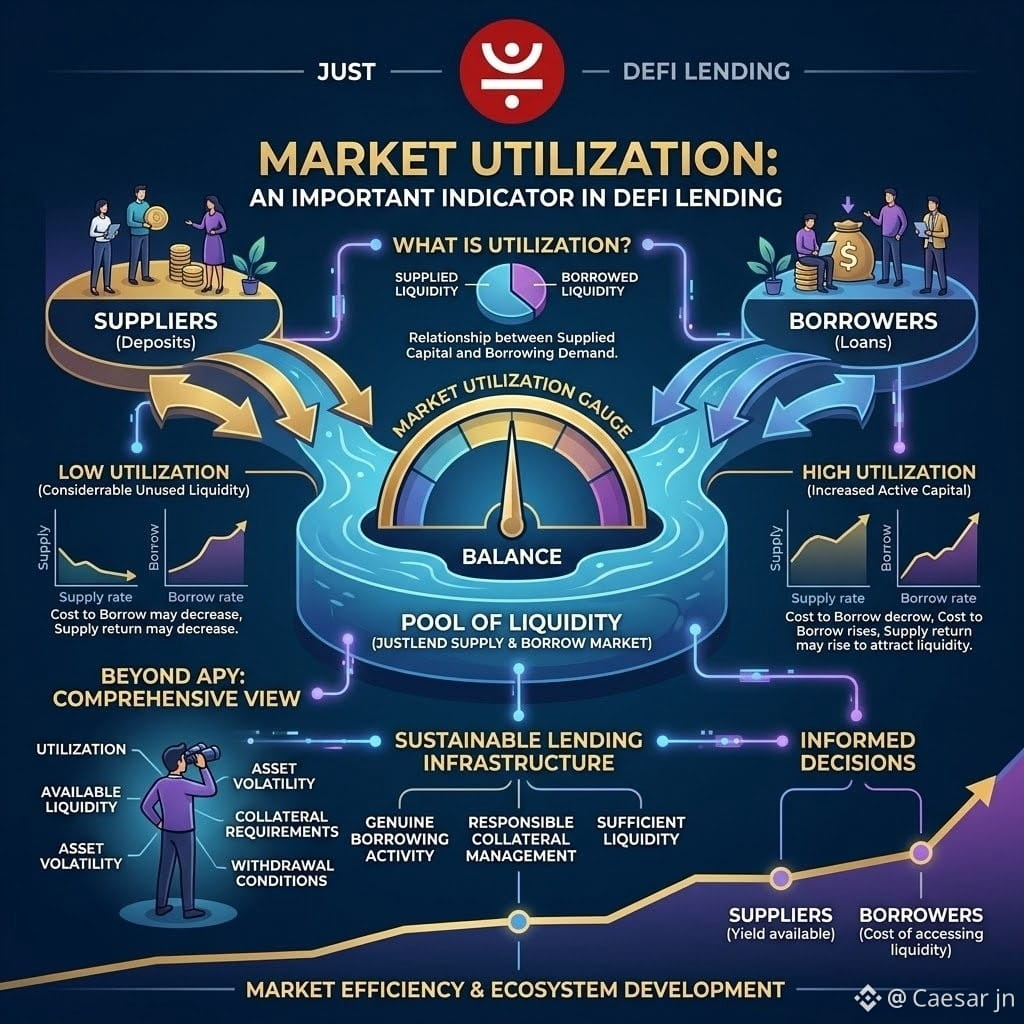
Utilization describes how much of the available supplied liquidity is currently being borrowed. It helps explain the relationship between capital provided by suppliers and demand from borrowers.
This is particularly relevant to JustLend's Supply and Borrow Market.
Consider a lending market with a substantial amount of supplied assets. If only a small portion is borrowed, the market has considerable unused liquidity.
However, when borrowing demand increases, more of the supplied capital becomes active.
This changes the market's utilization level and can influence interest rates.
In many lending protocols, borrowing rates respond to utilization through predefined interest-rate models. As utilization increases, borrowing costs may rise to balance demand and encourage additional supply. Supplier returns are also influenced by the amount of capital being borrowed and the interest generated.
This relationship is important because suppliers and borrowers depend on the same pool of liquidity.
For suppliers, utilization can affect the yield available from their deposits. For borrowers, it influences the cost of accessing liquidity.
Understanding this mechanism helps users make more informed decisions instead of evaluating a market based on APY figures alone.
A high supply APY may attract attention, but users should also examine utilization, available liquidity, asset volatility, collateral requirements, and withdrawal conditions.
Likewise, borrowers should consider whether the borrowing cost is appropriate for their intended financial activity.
Market utilization is therefore not simply a technical statistic. It provides insight into how actively a lending market is being used.
For JustLend, maintaining a balanced relationship between supply and borrowing demand is an important
@DeFi_JUST @JustinSun #TRONEcoStar
MARKET UTILIZATION: AN IMPORTANT INDICATOR IN DEFI LENDING
When evaluating a decentralized lending market, the amount of supplied liquidity is only one part of the picture.
Another important factor is utilization.
Utilization describes how much of the available supplied liquidity is currently being borrowed. It helps explain the relationship between capital provided by suppliers and demand from borrowers.
This is particularly relevant to JustLend's Supply and Borrow Market.
Consider a lending market with a substantial amount of supplied assets. If only a small portion is borrowed, the market has considerable unused liquidity.
However, when borrowing demand increases, more of the supplied capital becomes active.
This changes the market's utilization level and can influence interest rates.
In many lending protocols, borrowing rates respond to utilization through predefined interest-rate models. As utilization increases, borrowing costs may rise to balance demand and encourage additional supply. Supplier returns are also influenced by the amount of capital being borrowed and the interest generated.
This relationship is important because suppliers and borrowers depend on the same pool of liquidity.
For suppliers, utilization can affect the yield available from their deposits. For borrowers, it influences the cost of accessing liquidity.
Understanding this mechanism helps users make more informed decisions instead of evaluating a market based on APY figures alone.
A high supply APY may attract attention, but users should also examine utilization, available liquidity, asset volatility, collateral requirements, and withdrawal conditions.
Likewise, borrowers should consider whether the borrowing cost is appropriate for their intended financial activity.
Market utilization is therefore not simply a technical statistic. It provides insight into how actively a lending market is being used.
For JustLend, maintaining a balanced relationship between supply and borrowing demand is an important
@JUST DAO @Justin Sun孙宇晨 #TRONEcoStar
1
10
·
--
Voir la traduction
𝗪𝗛𝗔𝗧 𝗠𝗜𝗟𝗟𝗜𝗢𝗡𝗦 𝗢𝗙 𝗗𝗔𝗜𝗟𝗬 𝗨𝗦𝗘𝗥𝗦 𝗧𝗘𝗟𝗟 𝗨𝗦 𝗔𝗕𝗢𝗨𝗧 𝗕𝗜𝗧𝗧𝗢𝗥𝗥𝗘𝗡𝗧
A product's popularity is interesting.
But how frequently people return to use it can reveal something even more useful.
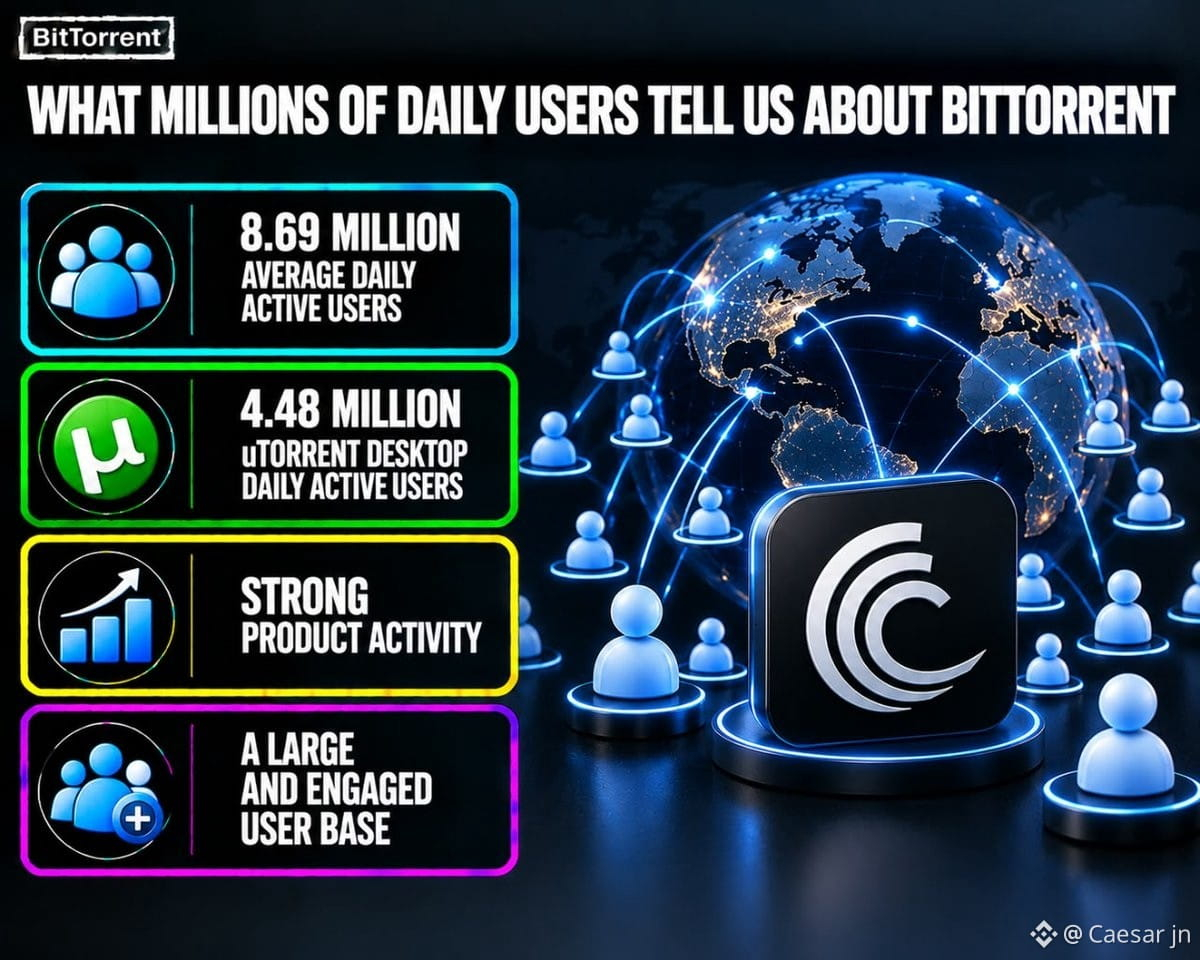
BitTorrent's reported October client matrix recorded 8.69 million average daily active users across its listed products.
uTorrent Desktop accounted for 4.48 million of those daily active users.
These figures offer a useful perspective on the established software activity behind the BitTorrent name.
They also highlight why product-level metrics deserve attention.
A large audience is valuable, but long-term product relevance depends on more than initial adoption.
Users need reasons to keep returning.
That means reliable performance, practical features, accessible interfaces, and products that continue meeting everyday needs.
For an ecosystem exploring new areas such as decentralized computing, its existing software presence remains an important part of the bigger picture.
The real opportunity is to keep turning product usefulness into sustained engagement.
Explore BitTorrent: bittorrent.com
@BitTorrent_Official @JustinSun #TRONEcoStar
𝗪𝗛𝗔𝗧 𝗠𝗜𝗟𝗟𝗜𝗢𝗡𝗦 𝗢𝗙 𝗗𝗔𝗜𝗟𝗬 𝗨𝗦𝗘𝗥𝗦 𝗧𝗘𝗟𝗟 𝗨𝗦 𝗔𝗕𝗢𝗨𝗧 𝗕𝗜𝗧𝗧𝗢𝗥𝗥𝗘𝗡𝗧
A product's popularity is interesting.
But how frequently people return to use it can reveal something even more useful.
BitTorrent's reported October client matrix recorded 8.69 million average daily active users across its listed products.
uTorrent Desktop accounted for 4.48 million of those daily active users.
These figures offer a useful perspective on the established software activity behind the BitTorrent name.
They also highlight why product-level metrics deserve attention.
A large audience is valuable, but long-term product relevance depends on more than initial adoption.
Users need reasons to keep returning.
That means reliable performance, practical features, accessible interfaces, and products that continue meeting everyday needs.
For an ecosystem exploring new areas such as decentralized computing, its existing software presence remains an important part of the bigger picture.
The real opportunity is to keep turning product usefulness into sustained engagement.
Explore BitTorrent: bittorrent.com
@BitTorrent_Official @Justin Sun孙宇晨 #TRONEcoStar
2
·
--
Voir la traduction
𝗧𝗛𝗘 𝗣𝗢𝗪𝗘𝗥 𝗢𝗙 𝗔 𝗟𝗜𝗚𝗛𝗧𝗘𝗥 𝗔𝗡𝗗 𝗦𝗠𝗔𝗥𝗧𝗘𝗥 𝗕𝗜𝗧𝗧𝗢𝗥𝗥𝗘𝗡𝗧 𝗘𝗫𝗣𝗘𝗥𝗜𝗘𝗡𝗖𝗘
More features don't automatically make an application better.
Sometimes, the best software is the one that gives users what they need without making the experience unnecessarily complicated.
This is an important part of BitTorrent Neo's approach.
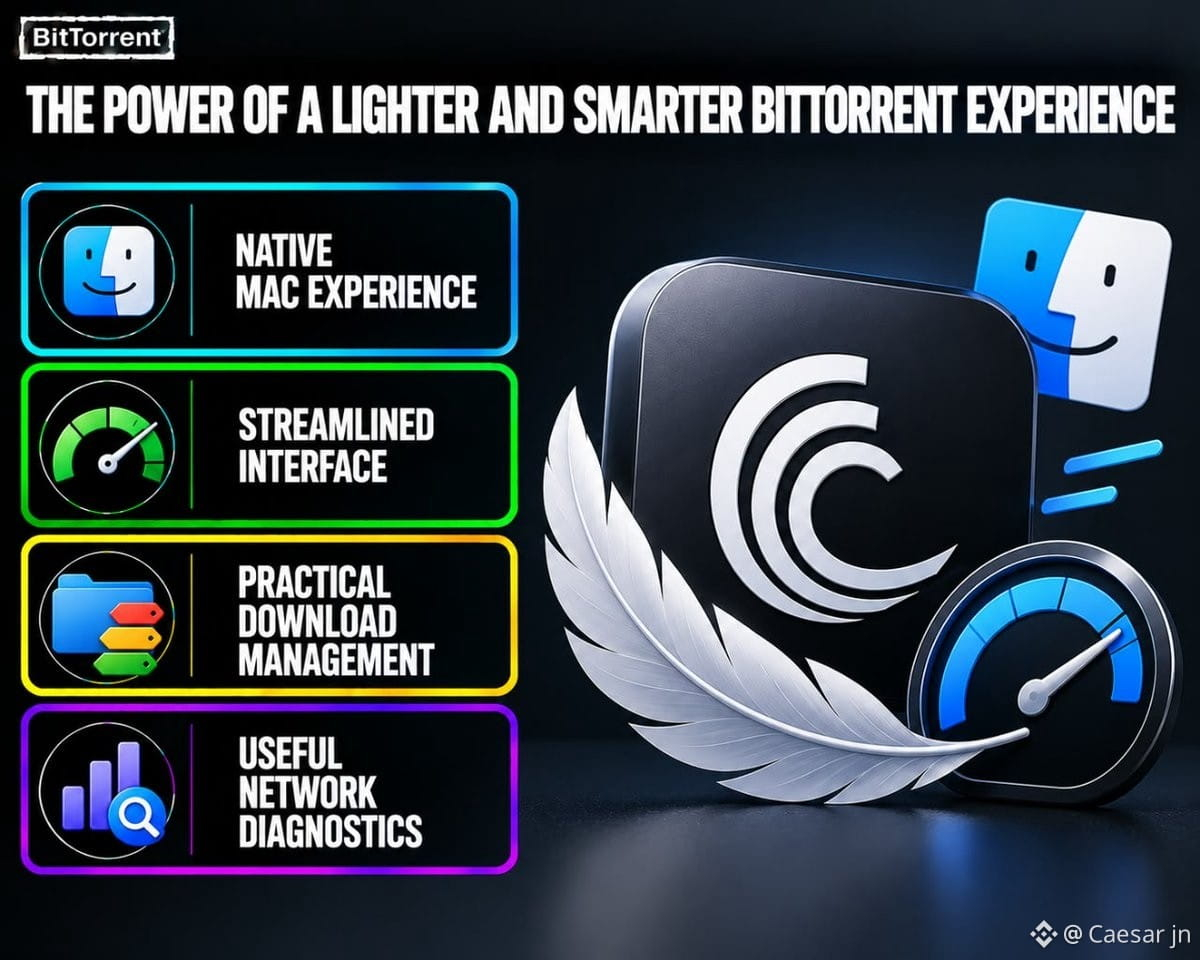
Built natively for macOS, Neo focuses on a streamlined interface and an experience designed around the Mac environment.
That matters because desktop applications operate within a wider system of running processes, available memory, storage, and user workflows.
A well-designed client should complement that environment.
The combination of native design, practical download management, and useful network diagnostics gives Neo a distinct place within BitTorrent's product lineup.
The lesson extends beyond torrent software.
As applications become more capable, efficiency and simplicity should remain part of the design conversation.
Explore BitTorrent Neo: bittorrent.com/products/mac/
@BitTorrent_Official @JustinSun
#TRONEcoStar
𝗧𝗛𝗘 𝗣𝗢𝗪𝗘𝗥 𝗢𝗙 𝗔 𝗟𝗜𝗚𝗛𝗧𝗘𝗥 𝗔𝗡𝗗 𝗦𝗠𝗔𝗥𝗧𝗘𝗥 𝗕𝗜𝗧𝗧𝗢𝗥𝗥𝗘𝗡𝗧 𝗘𝗫𝗣𝗘𝗥𝗜𝗘𝗡𝗖𝗘
More features don't automatically make an application better.
Sometimes, the best software is the one that gives users what they need without making the experience unnecessarily complicated.
This is an important part of BitTorrent Neo's approach.
Built natively for macOS, Neo focuses on a streamlined interface and an experience designed around the Mac environment.
That matters because desktop applications operate within a wider system of running processes, available memory, storage, and user workflows.
A well-designed client should complement that environment.
The combination of native design, practical download management, and useful network diagnostics gives Neo a distinct place within BitTorrent's product lineup.
The lesson extends beyond torrent software.
As applications become more capable, efficiency and simplicity should remain part of the design conversation.
Explore BitTorrent Neo: bittorrent.com/products/mac/
@BitTorrent_Official @Justin Sun孙宇晨
#TRONEcoStar
6
·
--
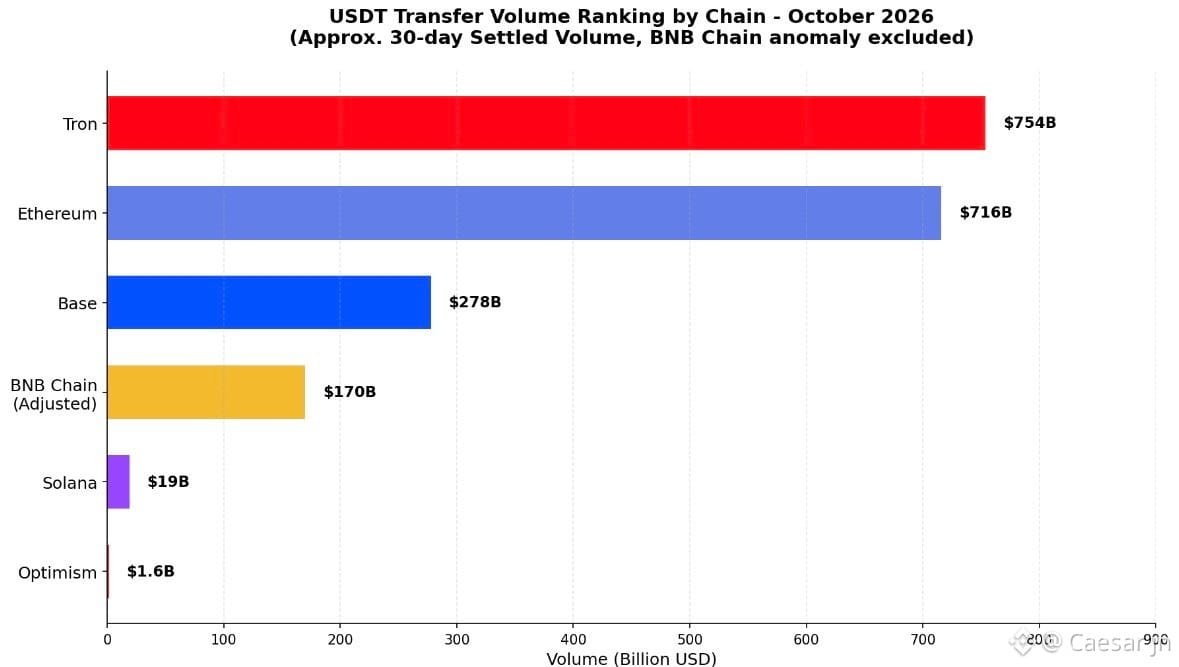
En octobre, TRON reste la blockchain publique la plus active pour l’USDT !
D’après les données publiques des principales blockchains 📊
Au cours des 30 derniers jours, la blockchain TRON a traité un volume de transactions de transfert de 754 milliards de dollars, soit 42 % du volume total des transferts d’USDT sur les blockchains publiques du réseau !
TRON a dépassé les volumes de transfert d’USDT des principales blockchains publiques, devenant ainsi le terrain de prédilection incontesté des transferts d’USDT !
@TRONDAO @JustinSun #TRONEcostar
En octobre, TRON reste la blockchain publique la plus active pour l’USDT !
D’après les données publiques des principales blockchains 📊
Au cours des 30 derniers jours, la blockchain TRON a traité un volume de transactions de transfert de 754 milliards de dollars, soit 42 % du volume total des transferts d’USDT sur les blockchains publiques du réseau !
TRON a dépassé les volumes de transfert d’USDT des principales blockchains publiques, devenant ainsi le terrain de prédilection incontesté des transferts d’USDT !
@TRON DAO @Justin Sun孙宇晨 #TRONEcostar
37
·
--
Voir la traduction
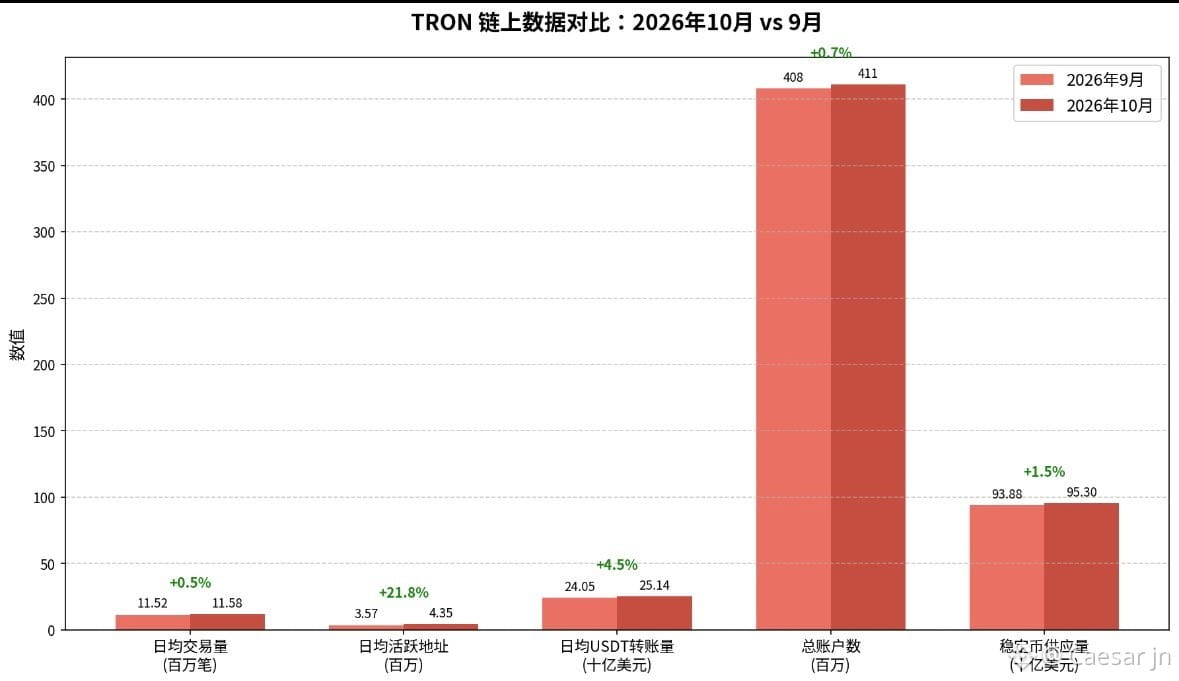
TRON's October On-Chain Data Shows Strong Growth! Active Addresses Surge Nearly 22%!
Just finished compiling TRON's October vs. September on-chain data, and the core takeaways are crystal clear:
• Daily Active Addresses: 3.57M → 4.35M (+21.8%)
• Daily USDT Transfer Volume: $240B → $251B (+4.5%)
• Daily Transaction Count: Steady at 11.5M, consistently running at high levels
• Total Account Count: Has broken through 411M
• Cumulative Transaction Count: Officially surpassed 16B
TRON continues to hold its throne as the world's largest stablecoin settlement network, with its low fees + high throughput advantages steadily drawing in real users and capital inflows. The clear rebound in activity signals that ecosystem usage is accelerating!
Data Sources: Nansen / TRONSCAN / DefiLlama
@JustinSun @TRONDAO #TRONEcoStar
TRON's October On-Chain Data Shows Strong Growth! Active Addresses Surge Nearly 22%!
Just finished compiling TRON's October vs. September on-chain data, and the core takeaways are crystal clear:
• Daily Active Addresses: 3.57M → 4.35M (+21.8%)
• Daily USDT Transfer Volume: $240B → $251B (+4.5%)
• Daily Transaction Count: Steady at 11.5M, consistently running at high levels
• Total Account Count: Has broken through 411M
• Cumulative Transaction Count: Officially surpassed 16B
TRON continues to hold its throne as the world's largest stablecoin settlement network, with its low fees + high throughput advantages steadily drawing in real users and capital inflows. The clear rebound in activity signals that ecosystem usage is accelerating!
Data Sources: Nansen / TRONSCAN / DefiLlama
@Justin Sun孙宇晨 @TRON DAO #TRONEcoStar
11
·
--
Voir la traduction
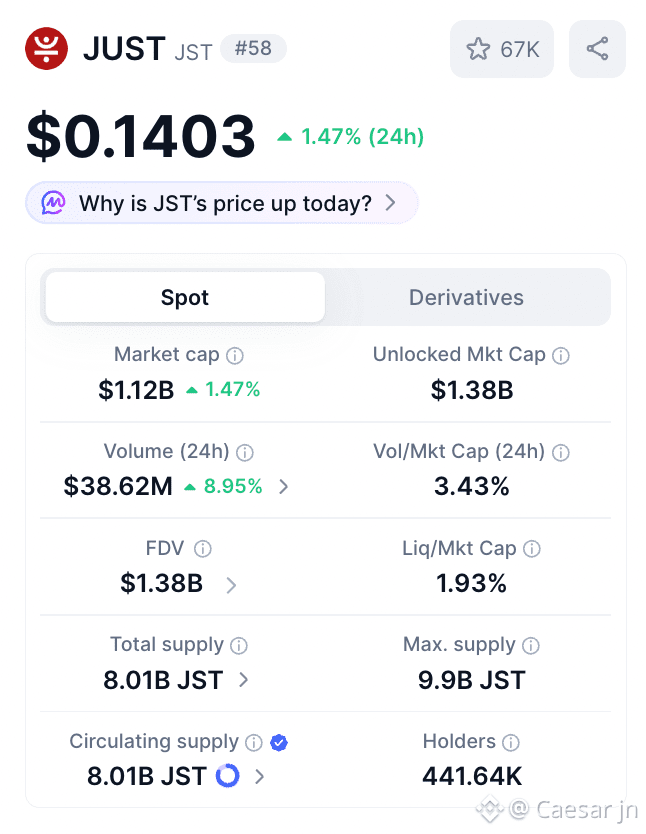
𝗝𝗦𝗧: 𝗥𝗲𝗮𝗱𝗶𝗻𝗴 𝘁𝗵𝗲 𝗔𝗰𝘁𝗶𝘃𝗶𝘁𝘆 𝗦𝗶𝗴𝗻𝗮𝗹𝘀 𝗼𝗻 𝗧𝗥𝗢𝗡
Prices move. Volume tells you who showed up.
The latest snapshot shared by @CoinMarketCap_official shows more market activity forming around $JST, the token at the heart of @DeFi_JUST
𝗧𝗵𝗲 𝗦𝗻𝗮𝗽𝘀𝗵𝗼𝘁
→ Market Cap: $943.04M
→ 24h Volume: $49.71M (+8.16%)
→ 24h Price Change: +1.68%
Volume climbing faster than price is a sign of more hands trading, not just a quiet drift.
𝗪𝗵𝘆 𝗩𝗼𝗹𝘂𝗺𝗲 𝗗𝗲𝘀𝗲𝗿𝘃𝗲𝘀 𝗔𝘁𝘁𝗲𝗻𝘁𝗶𝗼𝗻
Trading volume shows how actively an asset is changing hands.
It turns a single price number into a story about participation.
𝗥𝗲𝗮𝗱𝗶𝗻𝗴 𝗝𝗦𝗧 𝗶𝗻 𝗖𝗼𝗻𝘁𝗲𝘅𝘁
A clearer picture comes from watching:
→ Trading volume
→ Market capitalization
→ Price movement
→ Activity across the wider JUST ecosystem
𝗦𝘁𝗮𝘆 𝗖𝘂𝗿𝗿𝗲𝗻𝘁
These numbers change fast.
The latest data is always worth checking directly at the source.
𝗧𝗵𝗲 𝗕𝗶𝗴𝗴𝗲𝗿 𝗣𝗶𝗰𝘁𝘂𝗿𝗲
Price shows direction.
Volume shows participation.
Market cap shows scale.
Together they give a fuller read on where JST sits within the JUST ecosystem on TRON.
Check the data.
Read the context.
@JustinSun @DeFi_JUST #TRONEcoStar
𝗝𝗦𝗧: 𝗥𝗲𝗮𝗱𝗶𝗻𝗴 𝘁𝗵𝗲 𝗔𝗰𝘁𝗶𝘃𝗶𝘁𝘆 𝗦𝗶𝗴𝗻𝗮𝗹𝘀 𝗼𝗻 𝗧𝗥𝗢𝗡
Prices move. Volume tells you who showed up.
The latest snapshot shared by @CoinMarketCap shows more market activity forming around $JST, the token at the heart of @JUST DAO
𝗧𝗵𝗲 𝗦𝗻𝗮𝗽𝘀𝗵𝗼𝘁
→ Market Cap: $943.04M
→ 24h Volume: $49.71M (+8.16%)
→ 24h Price Change: +1.68%
Volume climbing faster than price is a sign of more hands trading, not just a quiet drift.
𝗪𝗵𝘆 𝗩𝗼𝗹𝘂𝗺𝗲 𝗗𝗲𝘀𝗲𝗿𝘃𝗲𝘀 𝗔𝘁𝘁𝗲𝗻𝘁𝗶𝗼𝗻
Trading volume shows how actively an asset is changing hands.
It turns a single price number into a story about participation.
𝗥𝗲𝗮𝗱𝗶𝗻𝗴 𝗝𝗦𝗧 𝗶𝗻 𝗖𝗼𝗻𝘁𝗲𝘅𝘁
A clearer picture comes from watching:
→ Trading volume
→ Market capitalization
→ Price movement
→ Activity across the wider JUST ecosystem
𝗦𝘁𝗮𝘆 𝗖𝘂𝗿𝗿𝗲𝗻𝘁
These numbers change fast.
The latest data is always worth checking directly at the source.
𝗧𝗵𝗲 𝗕𝗶𝗴𝗴𝗲𝗿 𝗣𝗶𝗰𝘁𝘂𝗿𝗲
Price shows direction.
Volume shows participation.
Market cap shows scale.
Together they give a fuller read on where JST sits within the JUST ecosystem on TRON.
Check the data.
Read the context.
@Justin Sun孙宇晨 @JUST DAO #TRONEcoStar
32
·
--
Voir la traduction
A buyback program means more when the community can examine how it works, where its funding comes from, and what happens after each execution.
That is why transparency matters to WINkLink’s $WIN Buyback Program.
Here are the key elements to follow:
→ Revenue Source: Revenue generated by WINkLink oracle services.
→ Execution Schedule: Quarterly buybacks using ecosystem revenue, according to the program’s stated mechanism.
→ On-Chain Verifiability: Published transaction and burn records can help the community track program activity and verify reported actions.
These details give the community a clearer framework for evaluating whether the program is being carried out as described.
The important distinction is between a stated commitment and a verifiable result. Actual buyback transactions, amounts spent, and token burns should be assessed through available records and official updates.
Transparency does not guarantee token price appreciation, but it helps build accountability by making the process easier to examine.
For a long-term ecosystem, clear mechanisms and verifiable execution matter.
Clear process. Verifiable records. Consistent accountability.
That is the standard worth watching as the $WIN buyback program progresses.
@WINkLink_Official @JustinSun #TRONEcoStar
A buyback program means more when the community can examine how it works, where its funding comes from, and what happens after each execution.
That is why transparency matters to WINkLink’s $WIN Buyback Program.
Here are the key elements to follow:
→ Revenue Source: Revenue generated by WINkLink oracle services.
→ Execution Schedule: Quarterly buybacks using ecosystem revenue, according to the program’s stated mechanism.
→ On-Chain Verifiability: Published transaction and burn records can help the community track program activity and verify reported actions.
These details give the community a clearer framework for evaluating whether the program is being carried out as described.
The important distinction is between a stated commitment and a verifiable result. Actual buyback transactions, amounts spent, and token burns should be assessed through available records and official updates.
Transparency does not guarantee token price appreciation, but it helps build accountability by making the process easier to examine.
For a long-term ecosystem, clear mechanisms and verifiable execution matter.
Clear process. Verifiable records. Consistent accountability.
That is the standard worth watching as the $WIN buyback program progresses.
@WINkLink_Official @Justin Sun孙宇晨 #TRONEcoStar

83
·
--
Voir la traduction
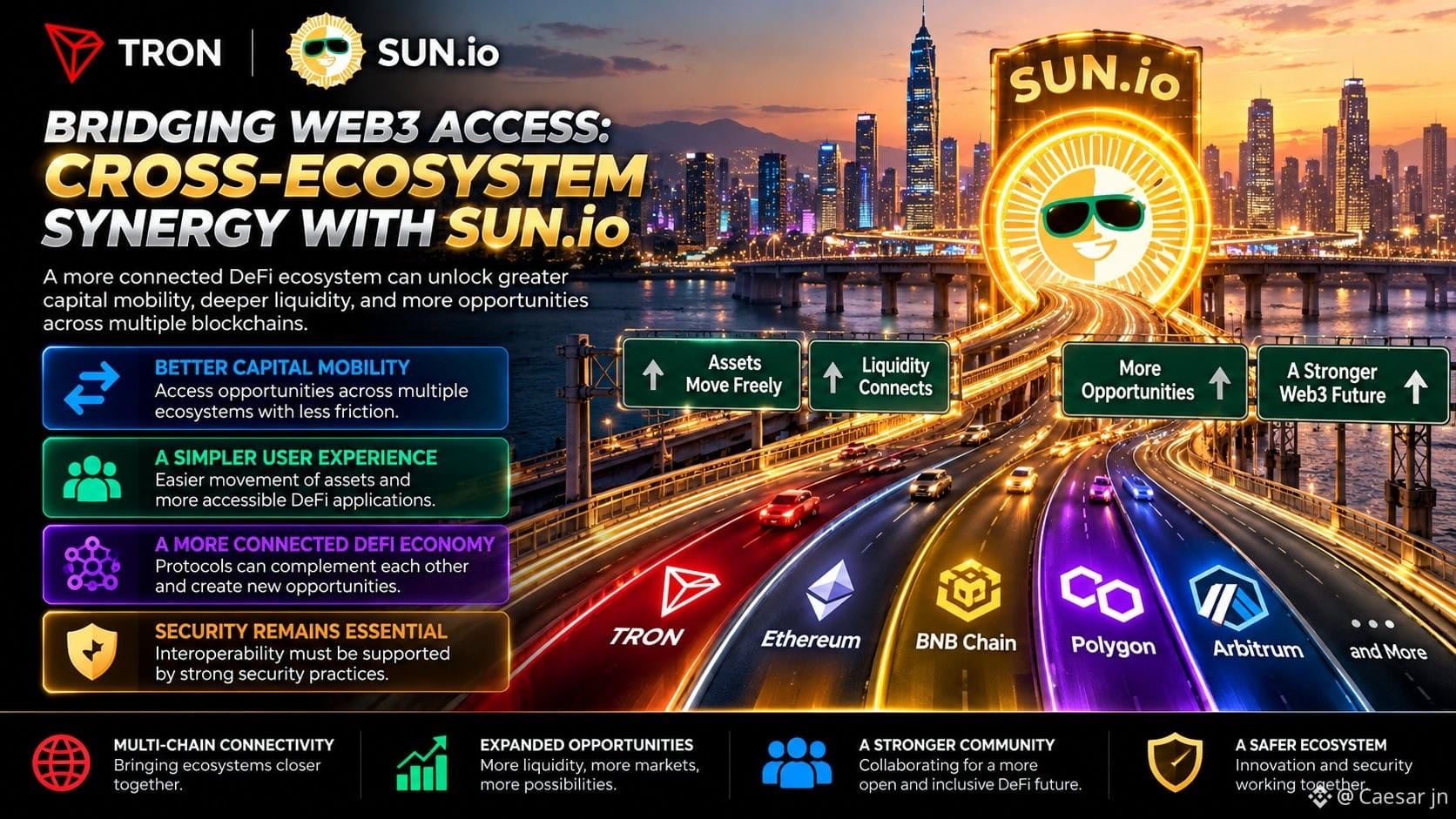
𝗪𝗲𝗯𝟯 𝗖𝗮𝗻𝗻𝗼𝘁 𝗥𝗲𝗮𝗰𝗵 𝗜𝘁𝘀 𝗙𝘂𝗹𝗹 𝗣𝗼𝘁𝗲𝗻𝘁𝗶𝗮𝗹 𝗪𝗵𝗶𝗹𝗲 𝗕𝗹𝗼𝗰𝗸𝗰𝗵𝗮𝗶𝗻𝘀 𝗥𝗲𝗺𝗮𝗶𝗻 𝗜𝘀𝗼𝗹𝗮𝘁𝗲𝗱.
One of the biggest challenges facing decentralized finance isn't a lack of innovation. It's fragmentation.
Today, different blockchain ecosystems host valuable assets, liquidity pools, lending markets, decentralized exchanges, and financial applications. Yet moving between these environments can still introduce unnecessary complexity.
Capital may exist across multiple networks, but accessing opportunities efficiently is another challenge.
This is where cross-ecosystem connectivity becomes increasingly important.
Why Does Interoperability Matter?
Consider three important areas:
1. BETTER CAPITAL MOBILITY
Liquidity becomes more useful when users can access opportunities across different blockchain environments.
Improved interoperability can reduce friction and help capital move toward applications where it can be utilized more effectively.
2. A BETTER USER EXPERIENCE
Users shouldn't need to understand complicated infrastructure every time they interact with another ecosystem.
Simpler asset movement, clearer interfaces, and more accessible DeFi applications can make Web3 significantly easier to navigate.
3. A MORE CONNECTED DEFI ECONOMY
Interoperability creates opportunities for protocols to complement one another instead of operating in isolated environments.
This can encourage collaboration, expand market access, and create more possibilities for developers and users.
Where Does SUN.io Fit Into This Picture?
Within the TRON ecosystem, SUN.io contributes to decentralized trading and liquidity infrastructure.
Its role becomes particularly interesting when viewed alongside the broader objective of improving how users access decentralized financial services.
However, connectivity must be supported by strong security practices. Bridge vulnerabilities,
@SunPump_meme @JustinSun
#TRONEcoStar
𝗪𝗲𝗯𝟯 𝗖𝗮𝗻𝗻𝗼𝘁 𝗥𝗲𝗮𝗰𝗵 𝗜𝘁𝘀 𝗙𝘂𝗹𝗹 𝗣𝗼𝘁𝗲𝗻𝘁𝗶𝗮𝗹 𝗪𝗵𝗶𝗹𝗲 𝗕𝗹𝗼𝗰𝗸𝗰𝗵𝗮𝗶𝗻𝘀 𝗥𝗲𝗺𝗮𝗶𝗻 𝗜𝘀𝗼𝗹𝗮𝘁𝗲𝗱.
One of the biggest challenges facing decentralized finance isn't a lack of innovation. It's fragmentation.
Today, different blockchain ecosystems host valuable assets, liquidity pools, lending markets, decentralized exchanges, and financial applications. Yet moving between these environments can still introduce unnecessary complexity.
Capital may exist across multiple networks, but accessing opportunities efficiently is another challenge.
This is where cross-ecosystem connectivity becomes increasingly important.
Why Does Interoperability Matter?
Consider three important areas:
1. BETTER CAPITAL MOBILITY
Liquidity becomes more useful when users can access opportunities across different blockchain environments.
Improved interoperability can reduce friction and help capital move toward applications where it can be utilized more effectively.
2. A BETTER USER EXPERIENCE
Users shouldn't need to understand complicated infrastructure every time they interact with another ecosystem.
Simpler asset movement, clearer interfaces, and more accessible DeFi applications can make Web3 significantly easier to navigate.
3. A MORE CONNECTED DEFI ECONOMY
Interoperability creates opportunities for protocols to complement one another instead of operating in isolated environments.
This can encourage collaboration, expand market access, and create more possibilities for developers and users.
Where Does SUN.io Fit Into This Picture?
Within the TRON ecosystem, SUN.io contributes to decentralized trading and liquidity infrastructure.
Its role becomes particularly interesting when viewed alongside the broader objective of improving how users access decentralized financial services.
However, connectivity must be supported by strong security practices. Bridge vulnerabilities,
@OfficialSUNio @Justin Sun孙宇晨
#TRONEcoStar
27
·
--
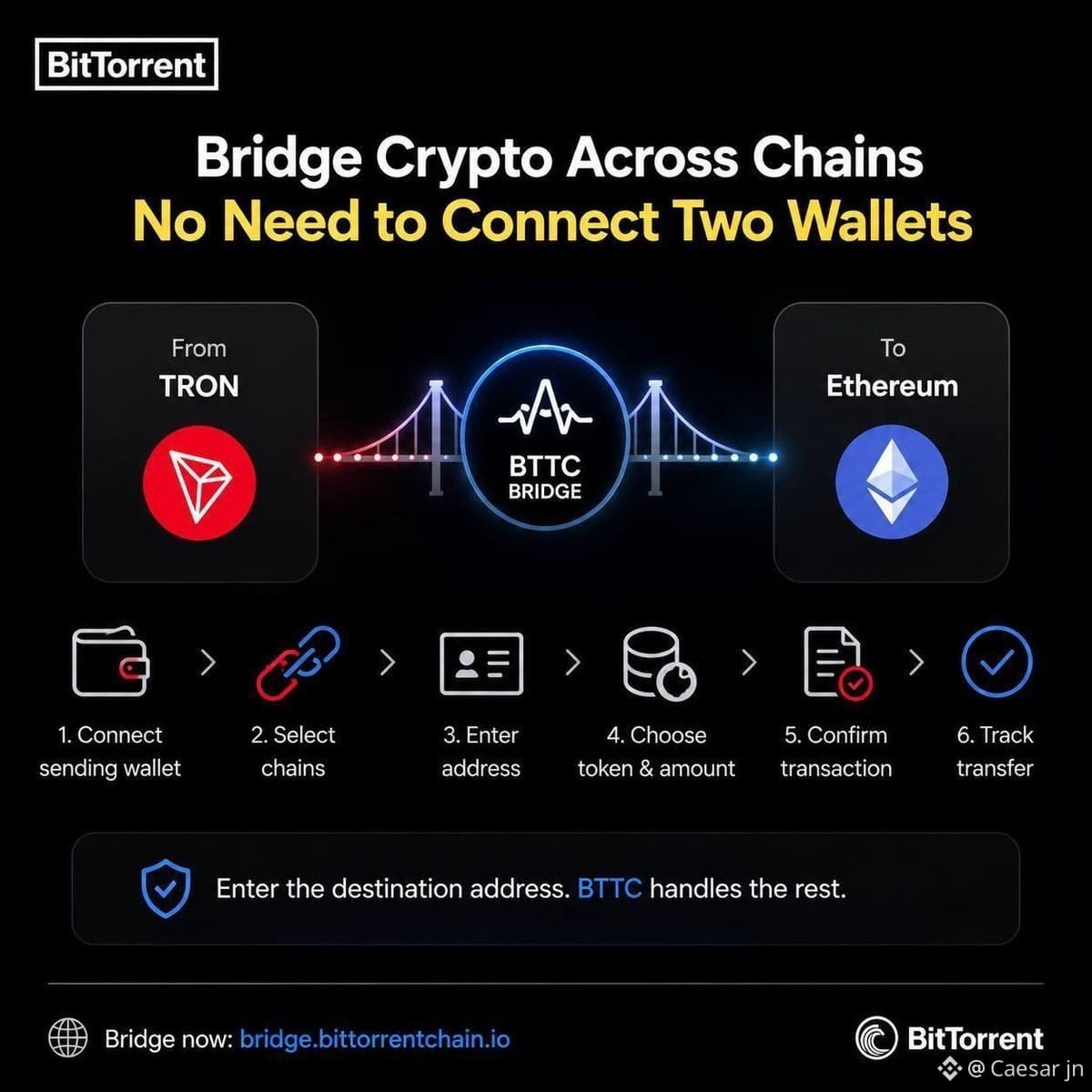
𝐁𝐓𝐓𝐂 𝐫𝐞𝐧𝐝 𝐥𝐞𝐬 𝐭𝐫𝐚𝐧𝐬𝐟𝐞𝐫𝐭𝐬 𝐢𝐧𝐭𝐞𝐫-𝐜𝐡𝐚î𝐧𝐞𝐬 𝐩𝐥𝐮𝐬 𝐟𝐥𝐞𝐱𝐢𝐛𝐥𝐞𝐬
Transférer des actifs entre des blockchains ne devrait pas toujours nécessiter de connecter tous les portefeuilles concernés. Avec les transferts pris en charge par BTTC Bridge, les utilisateurs peuvent indiquer directement l’adresse du portefeuille de destination, ce qui facilite l’envoi d’actifs entre différents réseaux ou leur transfert vers le portefeuille d’une autre personne.
𝐂𝐨𝐦𝐦𝐞𝐧𝐭 𝐟𝐨𝐧𝐜𝐭𝐢𝐨𝐧𝐧𝐞 𝐥𝐞 𝐩𝐫𝐨𝐜𝐞𝐬𝐬𝐮𝐬
➞ 𝐂𝐨𝐧𝐧𝐞𝐜𝐭𝐞𝐳 𝐯𝐨𝐭𝐫𝐞 𝐩𝐨𝐫𝐭𝐞𝐟𝐞𝐮𝐢𝐥𝐥𝐞 𝐝'𝐞𝐧𝐯𝐨𝐢 : ouvrez le site officiel de BTTC Bridge et connectez le portefeuille qui détient vos actifs.
➞ 𝐒é𝐥𝐞𝐜𝐭𝐢𝐨𝐧𝐧𝐞𝐳 𝐯𝐨𝐬 𝐫é𝐬𝐞𝐚𝐮𝐱 : choisissez les blockchains source et de destination prises en charge.
➞ 𝐒𝐚𝐢𝐬𝐢𝐬𝐬𝐞𝐳 𝐥'𝐚𝐝𝐫𝐞𝐬𝐬𝐞 𝐝𝐞 𝐫é𝐜𝐞𝐩𝐭𝐢𝐨𝐧 : indiquez l'adresse de destination sans nécessairement connecter le portefeuille correspondant.
➞ 𝐂𝐡𝐨𝐢𝐬𝐢𝐬𝐬𝐞𝐳 𝐞𝐭 𝐜𝐨𝐧𝐟𝐢𝐫𝐦𝐞𝐳 : sélectionnez l'actif pris en charge, saisissez le montant, vérifiez les frais et les détails, puis autorisez la transaction.
➞ 𝐒𝐮𝐢𝐯𝐞𝐳 𝐥𝐞 𝐭𝐫𝐚𝐧𝐬𝐟𝐞𝐫𝐭 : suivez sa progression jusqu'à ce que le pont en confirme la réalisation.
𝐏𝐨𝐮𝐫𝐪𝐮𝐨𝐢 𝐜'𝐞𝐬𝐭 𝐢𝐦𝐩𝐨𝐫𝐭𝐚𝐧𝐭
Cette approche offre une flexibilité pratique. Vous pouvez envoyer des actifs vers un portefeuille sur un autre appareil, transférer des fonds entre vos propres adresses ou envoyer des jetons pris en charge à un autre destinataire sans qu'il ait besoin de connecter son portefeuille à votre session.
Moins d'étapes de connexion peuvent simplifier l'expérience, mais les utilisateurs doivent tout de même comprendre le fonctionnement des transferts inter-chaînes.
𝐕é𝐫𝐢𝐟𝐢𝐞𝐳 𝐚𝐯𝐚𝐧𝐭 𝐝𝐞 𝐭𝐫𝐚𝐧𝐬𝐟é𝐫𝐞𝐫 𝐯𝐨𝐬 𝐚𝐜𝐭𝐢𝐟𝐬
Vérifiez toujours le réseau de destination, l'adresse du portefeuille, le jeton pris en charge, les frais et les détails de la transaction. Une adresse erronée ou une destination incompatible peut entraîner une perte définitive de vos fonds.
@BitTorrent_Official @JustinSun #TRONEcoStar
𝐁𝐓𝐓𝐂 𝐫𝐞𝐧𝐝 𝐥𝐞𝐬 𝐭𝐫𝐚𝐧𝐬𝐟𝐞𝐫𝐭𝐬 𝐢𝐧𝐭𝐞𝐫-𝐜𝐡𝐚î𝐧𝐞𝐬 𝐩𝐥𝐮𝐬 𝐟𝐥𝐞𝐱𝐢𝐛𝐥𝐞𝐬
Transférer des actifs entre des blockchains ne devrait pas toujours nécessiter de connecter tous les portefeuilles concernés. Avec les transferts pris en charge par BTTC Bridge, les utilisateurs peuvent indiquer directement l’adresse du portefeuille de destination, ce qui facilite l’envoi d’actifs entre différents réseaux ou leur transfert vers le portefeuille d’une autre personne.
𝐂𝐨𝐦𝐦𝐞𝐧𝐭 𝐟𝐨𝐧𝐜𝐭𝐢𝐨𝐧𝐧𝐞 𝐥𝐞 𝐩𝐫𝐨𝐜𝐞𝐬𝐬𝐮𝐬
➞ 𝐂𝐨𝐧𝐧𝐞𝐜𝐭𝐞𝐳 𝐯𝐨𝐭𝐫𝐞 𝐩𝐨𝐫𝐭𝐞𝐟𝐞𝐮𝐢𝐥𝐥𝐞 𝐝'𝐞𝐧𝐯𝐨𝐢 : ouvrez le site officiel de BTTC Bridge et connectez le portefeuille qui détient vos actifs.
➞ 𝐒é𝐥𝐞𝐜𝐭𝐢𝐨𝐧𝐧𝐞𝐳 𝐯𝐨𝐬 𝐫é𝐬𝐞𝐚𝐮𝐱 : choisissez les blockchains source et de destination prises en charge.
➞ 𝐒𝐚𝐢𝐬𝐢𝐬𝐬𝐞𝐳 𝐥'𝐚𝐝𝐫𝐞𝐬𝐬𝐞 𝐝𝐞 𝐫é𝐜𝐞𝐩𝐭𝐢𝐨𝐧 : indiquez l'adresse de destination sans nécessairement connecter le portefeuille correspondant.
➞ 𝐂𝐡𝐨𝐢𝐬𝐢𝐬𝐬𝐞𝐳 𝐞𝐭 𝐜𝐨𝐧𝐟𝐢𝐫𝐦𝐞𝐳 : sélectionnez l'actif pris en charge, saisissez le montant, vérifiez les frais et les détails, puis autorisez la transaction.
➞ 𝐒𝐮𝐢𝐯𝐞𝐳 𝐥𝐞 𝐭𝐫𝐚𝐧𝐬𝐟𝐞𝐫𝐭 : suivez sa progression jusqu'à ce que le pont en confirme la réalisation.
𝐏𝐨𝐮𝐫𝐪𝐮𝐨𝐢 𝐜'𝐞𝐬𝐭 𝐢𝐦𝐩𝐨𝐫𝐭𝐚𝐧𝐭
Cette approche offre une flexibilité pratique. Vous pouvez envoyer des actifs vers un portefeuille sur un autre appareil, transférer des fonds entre vos propres adresses ou envoyer des jetons pris en charge à un autre destinataire sans qu'il ait besoin de connecter son portefeuille à votre session.
Moins d'étapes de connexion peuvent simplifier l'expérience, mais les utilisateurs doivent tout de même comprendre le fonctionnement des transferts inter-chaînes.
𝐕é𝐫𝐢𝐟𝐢𝐞𝐳 𝐚𝐯𝐚𝐧𝐭 𝐝𝐞 𝐭𝐫𝐚𝐧𝐬𝐟é𝐫𝐞𝐫 𝐯𝐨𝐬 𝐚𝐜𝐭𝐢𝐟𝐬
Vérifiez toujours le réseau de destination, l'adresse du portefeuille, le jeton pris en charge, les frais et les détails de la transaction. Une adresse erronée ou une destination incompatible peut entraîner une perte définitive de vos fonds.
@BitTorrent_Official @Justin Sun孙宇晨 #TRONEcoStar
1
173
·
--
Voir la traduction
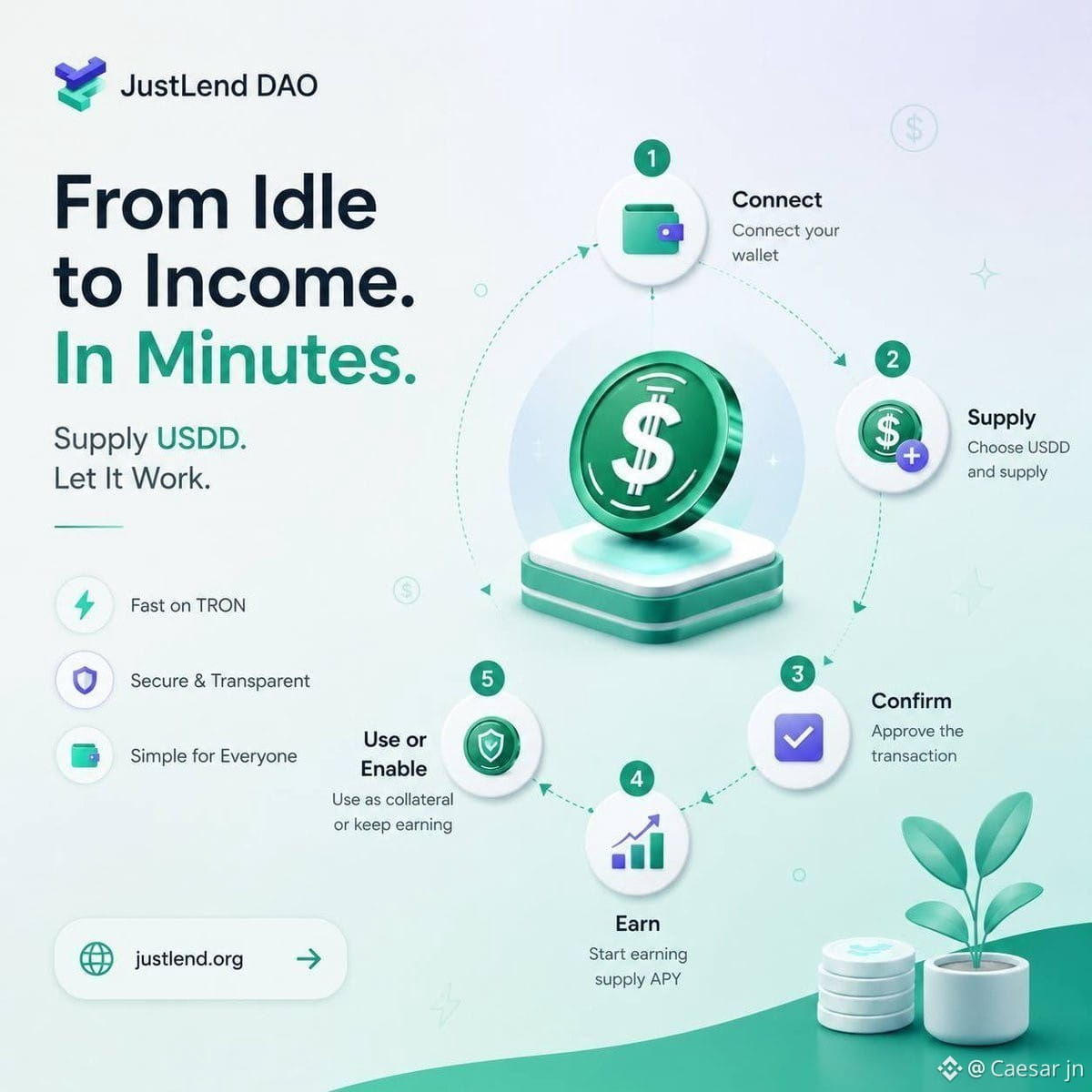
𝐇𝐨𝐰 𝐉𝐮𝐬𝐭𝐋𝐞𝐧𝐝 𝐃𝐀𝐎 𝐏𝐮𝐭𝐬 𝐔𝐒𝐃𝐃 𝐋𝐢𝐪𝐮𝐢𝐝𝐢𝐭𝐲 𝐓𝐨 𝐖𝐨𝐫𝐤 𝐎𝐧 𝐓𝐑𝐎𝐍
Stablecoins are useful for more than holding value or transferring funds. Through DeFi lending, they can also contribute to on-chain liquidity by supplying capital that borrowers can access.
JustLend DAO makes this possible for eligible USDD holders on TRON.
𝐅𝐫𝐨𝐦 𝐖𝐚𝐥𝐥𝐞𝐭 𝐓𝐨 𝐋𝐞𝐧𝐝𝐢𝐧𝐠 𝐏𝐨𝐨𝐥
➞ Visit justlend.org and connect a supported wallet, such as TronLink or another wallet currently compatible with the platform.
➞ Find the USDD market, select the supply option, and enter the amount you want to deposit. Review the displayed terms before confirming.
𝐖𝐡𝐚𝐭 𝐇𝐚𝐩𝐩𝐞𝐧𝐬 𝐀𝐟𝐭𝐞𝐫 𝐘𝐨𝐮 𝐒𝐮𝐩𝐩𝐥𝐲?
Your USDD contributes to the lending pool, where eligible borrowers can access available liquidity. Suppliers may receive interest based on borrowing demand and the protocol’s current rate model.
The important distinction is that returns are variable. Supplying does not guarantee a fixed APY, and smart-contract, liquidity, and stablecoin risks remain.
𝐂𝐨𝐥𝐥𝐚𝐭𝐞𝐫𝐚𝐥 𝐀𝐝𝐝𝐬 𝐀𝐧𝐨𝐭𝐡𝐞𝐫 𝐎𝐩𝐭𝐢𝐨𝐧
If the market and protocol settings permit, supplied assets may be enabled as collateral for borrowing. This offers additional flexibility, but borrowing introduces repayment obligations and liquidation risk if collateral conditions deteriorate.
𝐖𝐡𝐲 𝐈𝐭 𝐌𝐚𝐭𝐭𝐞𝐫𝐬
The bigger idea is capital efficiency. Suppliers can contribute liquidity, borrowers gain access to funds, and lending activity helps power the wider DeFi ecosystem.
A simple user journey can support a much larger financial system.
Explore at justlend.org.
@WINkLink_Official @JustinSun #TRONEcoStar
𝐇𝐨𝐰 𝐉𝐮𝐬𝐭𝐋𝐞𝐧𝐝 𝐃𝐀𝐎 𝐏𝐮𝐭𝐬 𝐔𝐒𝐃𝐃 𝐋𝐢𝐪𝐮𝐢𝐝𝐢𝐭𝐲 𝐓𝐨 𝐖𝐨𝐫𝐤 𝐎𝐧 𝐓𝐑𝐎𝐍
Stablecoins are useful for more than holding value or transferring funds. Through DeFi lending, they can also contribute to on-chain liquidity by supplying capital that borrowers can access.
JustLend DAO makes this possible for eligible USDD holders on TRON.
𝐅𝐫𝐨𝐦 𝐖𝐚𝐥𝐥𝐞𝐭 𝐓𝐨 𝐋𝐞𝐧𝐝𝐢𝐧𝐠 𝐏𝐨𝐨𝐥
➞ Visit justlend.org and connect a supported wallet, such as TronLink or another wallet currently compatible with the platform.
➞ Find the USDD market, select the supply option, and enter the amount you want to deposit. Review the displayed terms before confirming.
𝐖𝐡𝐚𝐭 𝐇𝐚𝐩𝐩𝐞𝐧𝐬 𝐀𝐟𝐭𝐞𝐫 𝐘𝐨𝐮 𝐒𝐮𝐩𝐩𝐥𝐲?
Your USDD contributes to the lending pool, where eligible borrowers can access available liquidity. Suppliers may receive interest based on borrowing demand and the protocol’s current rate model.
The important distinction is that returns are variable. Supplying does not guarantee a fixed APY, and smart-contract, liquidity, and stablecoin risks remain.
𝐂𝐨𝐥𝐥𝐚𝐭𝐞𝐫𝐚𝐥 𝐀𝐝𝐝𝐬 𝐀𝐧𝐨𝐭𝐡𝐞𝐫 𝐎𝐩𝐭𝐢𝐨𝐧
If the market and protocol settings permit, supplied assets may be enabled as collateral for borrowing. This offers additional flexibility, but borrowing introduces repayment obligations and liquidation risk if collateral conditions deteriorate.
𝐖𝐡𝐲 𝐈𝐭 𝐌𝐚𝐭𝐭𝐞𝐫𝐬
The bigger idea is capital efficiency. Suppliers can contribute liquidity, borrowers gain access to funds, and lending activity helps power the wider DeFi ecosystem.
A simple user journey can support a much larger financial system.
Explore at justlend.org.
@WINkLink_Official @Justin Sun孙宇晨 #TRONEcoStar
11
·
--
Voir la traduction
A blockchain transaction may take only a moment to execute, but the decision behind it can depend on information from far beyond the chain.
A DeFi protocol may need the latest asset price. A blockchain game may require verifiable randomness. Another application might need information from an external API before its smart contract can perform a predefined action.
The challenge is that blockchains cannot natively access most off-chain information.
𝗧𝗵𝗮𝘁’𝘀 𝗪𝗵𝗲𝗿𝗲 𝗢𝗿𝗮𝗰𝗹𝗲 𝗜𝗻𝗳𝗿𝗮𝘀𝘁𝗿𝘂𝗰𝘁𝘂𝗿𝗲 𝗖𝗼𝗺𝗲𝘀 𝗜𝗻.
Oracle networks help bridge the gap between external information and on-chain execution, giving smart contracts access to inputs they cannot obtain independently.
WINkLink provides this kind of infrastructure within the TRON ecosystem through services that include price feeds, verifiable randomness, external API connectivity, and smart-contract automation.
The result is a broader range of possibilities for developers building decentralized applications that need to interact with changing conditions beyond the blockchain.
Of course, the quality of the outcome still depends on reliable data sources, appropriate configurations, and sound contract logic.
The blockchain handles execution. The oracle helps deliver the information. The application brings those pieces together to perform its intended function.
This is an important part of the infrastructure that often goes unnoticed by users but helps make more capable Web3 applications possible.
𝗪𝗲𝗯𝟯 𝗶𝘀𝗻’𝘁 𝗷𝘂𝘀𝘁 𝗮𝗯𝗼𝘂𝘁 𝘄𝗵𝗮𝘁 𝗵𝗮𝗽𝗽𝗲𝗻𝘀 𝗼𝗻-𝗰𝗵𝗮𝗶𝗻. 𝗜𝘁’𝘀 𝗮𝗹𝘀𝗼 𝗮𝗯𝗼𝘂𝘁 𝗴𝗶𝘃𝗶𝗻𝗴 𝘀𝗺𝗮𝗿𝘁 𝗰𝗼𝗻𝘁𝗿𝗮𝗰𝘁𝘀 𝘁𝗵𝗲 𝗶𝗻𝗳𝗼𝗿𝗺𝗮𝘁𝗶𝗼𝗻 𝘁𝗵𝗲𝘆 𝗻𝗲𝗲𝗱 𝘁𝗼 𝗮𝗰𝘁.
@WINkLink_Official @JustinSun
#TRON #TRONEcoStar
A blockchain transaction may take only a moment to execute, but the decision behind it can depend on information from far beyond the chain.
A DeFi protocol may need the latest asset price. A blockchain game may require verifiable randomness. Another application might need information from an external API before its smart contract can perform a predefined action.
The challenge is that blockchains cannot natively access most off-chain information.
𝗧𝗵𝗮𝘁’𝘀 𝗪𝗵𝗲𝗿𝗲 𝗢𝗿𝗮𝗰𝗹𝗲 𝗜𝗻𝗳𝗿𝗮𝘀𝘁𝗿𝘂𝗰𝘁𝘂𝗿𝗲 𝗖𝗼𝗺𝗲𝘀 𝗜𝗻.
Oracle networks help bridge the gap between external information and on-chain execution, giving smart contracts access to inputs they cannot obtain independently.
WINkLink provides this kind of infrastructure within the TRON ecosystem through services that include price feeds, verifiable randomness, external API connectivity, and smart-contract automation.
The result is a broader range of possibilities for developers building decentralized applications that need to interact with changing conditions beyond the blockchain.
Of course, the quality of the outcome still depends on reliable data sources, appropriate configurations, and sound contract logic.
The blockchain handles execution. The oracle helps deliver the information. The application brings those pieces together to perform its intended function.
This is an important part of the infrastructure that often goes unnoticed by users but helps make more capable Web3 applications possible.
𝗪𝗲𝗯𝟯 𝗶𝘀𝗻’𝘁 𝗷𝘂𝘀𝘁 𝗮𝗯𝗼𝘂𝘁 𝘄𝗵𝗮𝘁 𝗵𝗮𝗽𝗽𝗲𝗻𝘀 𝗼𝗻-𝗰𝗵𝗮𝗶𝗻. 𝗜𝘁’𝘀 𝗮𝗹𝘀𝗼 𝗮𝗯𝗼𝘂𝘁 𝗴𝗶𝘃𝗶𝗻𝗴 𝘀𝗺𝗮𝗿𝘁 𝗰𝗼𝗻𝘁𝗿𝗮𝗰𝘁𝘀 𝘁𝗵𝗲 𝗶𝗻𝗳𝗼𝗿𝗺𝗮𝘁𝗶𝗼𝗻 𝘁𝗵𝗲𝘆 𝗻𝗲𝗲𝗱 𝘁𝗼 𝗮𝗰𝘁.
@WINkLink_Official @Justin Sun孙宇晨
#TRON #TRONEcoStar

26
·
--
Voir la traduction
AI can produce convincing answers, analyze complex problems, and make recommendations in seconds. But confidence in an answer is not proof that the information behind it is correct.
Outdated prices, incomplete records, and unreliable external sources can all lead AI systems toward flawed conclusions.
That makes data quality a critical part of building useful AI.
This is where oracle infrastructure becomes relevant.
WINkLink helps connect external data with blockchain applications, creating opportunities for AI-powered systems and smart contracts to work with information beyond the blockchain itself.
But connecting AI to external data is only part of the solution. The sources must be appropriate, the information must be timely, and the system needs ways to assess reliability before acting on the results.
AI can interpret information and generate insights. Oracle infrastructure can help retrieve and deliver external data. Smart contracts can execute predefined actions based on the information they receive.
Each layer has a different role, and weaknesses in one can affect the entire process.
The goal isn't simply to give AI access to more data. It's to make sure the information feeding intelligent systems is fit for the decisions they need to support.
𝗕𝗲𝗰𝗮𝘂𝘀𝗲 𝘀𝗺𝗮𝗿𝘁𝗲𝗿 𝗔𝗜 𝗻𝗲𝗲𝗱𝘀 𝗺𝗼𝗿𝗲 𝘁𝗵𝗮𝗻 𝘀𝗺𝗮𝗿𝘁𝗲𝗿 𝗺𝗼𝗱𝗲𝗹𝘀. 𝗜𝘁 𝗻𝗲𝗲𝗱𝘀 𝗿𝗲𝗹𝗶𝗮𝗯𝗹𝗲 𝗶𝗻𝗽𝘂𝘁𝘀, 𝘁𝗼𝗼.
@WINkLink_Official @JustinSun
#WINkLink #TRON #TRONEcoStar
AI can produce convincing answers, analyze complex problems, and make recommendations in seconds. But confidence in an answer is not proof that the information behind it is correct.
Outdated prices, incomplete records, and unreliable external sources can all lead AI systems toward flawed conclusions.
That makes data quality a critical part of building useful AI.
This is where oracle infrastructure becomes relevant.
WINkLink helps connect external data with blockchain applications, creating opportunities for AI-powered systems and smart contracts to work with information beyond the blockchain itself.
But connecting AI to external data is only part of the solution. The sources must be appropriate, the information must be timely, and the system needs ways to assess reliability before acting on the results.
AI can interpret information and generate insights. Oracle infrastructure can help retrieve and deliver external data. Smart contracts can execute predefined actions based on the information they receive.
Each layer has a different role, and weaknesses in one can affect the entire process.
The goal isn't simply to give AI access to more data. It's to make sure the information feeding intelligent systems is fit for the decisions they need to support.
𝗕𝗲𝗰𝗮𝘂𝘀𝗲 𝘀𝗺𝗮𝗿𝘁𝗲𝗿 𝗔𝗜 𝗻𝗲𝗲𝗱𝘀 𝗺𝗼𝗿𝗲 𝘁𝗵𝗮𝗻 𝘀𝗺𝗮𝗿𝘁𝗲𝗿 𝗺𝗼𝗱𝗲𝗹𝘀. 𝗜𝘁 𝗻𝗲𝗲𝗱𝘀 𝗿𝗲𝗹𝗶𝗮𝗯𝗹𝗲 𝗶𝗻𝗽𝘂𝘁𝘀, 𝘁𝗼𝗼.
@WINkLink_Official @Justin Sun孙宇晨
#WINkLink #TRON #TRONEcoStar

18
·
--
Voir la traduction
𝗦𝗨𝗡.𝗶𝗼: 𝗧𝗵𝗲 𝗗𝗲𝗙𝗶 𝗜𝗻𝗳𝗿𝗮𝘀𝘁𝗿𝘂𝗰𝘁𝘂𝗿𝗲 𝗖𝗼𝗻𝗻𝗲𝗰𝘁𝗶𝗻𝗴 𝗧𝗥𝗢𝗡’𝘀 𝗧𝗿𝗮𝗱𝗶𝗻𝗴 𝗘𝗰𝗼𝘀𝘆𝘀𝘁𝗲𝗺
A blockchain becomes more useful when its users have meaningful ways to exchange assets, provide liquidity, and participate in decentralized markets.
That is where @SunPump_meme fits into the broader TRON ecosystem.
SUN.io brings together multiple DeFi functions designed to support different forms of on-chain activity. Rather than serving a single purpose, its ecosystem provides several entry points for users who want to explore decentralized finance on TRON.
Here is how its components contribute to that infrastructure:
🔹 SunSwap — Decentralized Trading
SunSwap enables users to exchange supported tokens through decentralized liquidity mechanisms. It provides an alternative to relying exclusively on centralized trading platforms.
🔹 SunCurve — Stablecoin Swaps
Stablecoin-focused swapping helps facilitate exchanges between supported assets designed to maintain relatively stable values. Actual prices and execution depend on liquidity and market conditions.
🔹 Liquidity Pools — Supporting Markets
Liquidity providers contribute assets to eligible pools, helping facilitate decentralized swaps. In return, they may receive a share of trading fees under the applicable pool rules, while remaining exposed to risks such as impermanent loss.
🔹 Farming Opportunities — Incentivizing Participation
Eligible farming programs can provide additional incentives for supplying liquidity or participating in supported protocols. However, rewards can change, and incentives should never be confused with guaranteed returns.
🔹 SunPump — Meme-Token Launches
SunPump offers infrastructure for launching meme tokens on TRON, expanding the range of community-driven token projects entering the ecosystem. Token launches also carry substantial risks, including volatility, liquidity
@JustinSun @SunPump_meme
#TRONEcoStar
𝗦𝗨𝗡.𝗶𝗼: 𝗧𝗵𝗲 𝗗𝗲𝗙𝗶 𝗜𝗻𝗳𝗿𝗮𝘀𝘁𝗿𝘂𝗰𝘁𝘂𝗿𝗲 𝗖𝗼𝗻𝗻𝗲𝗰𝘁𝗶𝗻𝗴 𝗧𝗥𝗢𝗡’𝘀 𝗧𝗿𝗮𝗱𝗶𝗻𝗴 𝗘𝗰𝗼𝘀𝘆𝘀𝘁𝗲𝗺
A blockchain becomes more useful when its users have meaningful ways to exchange assets, provide liquidity, and participate in decentralized markets.
That is where @OfficialSUNio fits into the broader TRON ecosystem.
SUN.io brings together multiple DeFi functions designed to support different forms of on-chain activity. Rather than serving a single purpose, its ecosystem provides several entry points for users who want to explore decentralized finance on TRON.
Here is how its components contribute to that infrastructure:
🔹 SunSwap — Decentralized Trading
SunSwap enables users to exchange supported tokens through decentralized liquidity mechanisms. It provides an alternative to relying exclusively on centralized trading platforms.
🔹 SunCurve — Stablecoin Swaps
Stablecoin-focused swapping helps facilitate exchanges between supported assets designed to maintain relatively stable values. Actual prices and execution depend on liquidity and market conditions.
🔹 Liquidity Pools — Supporting Markets
Liquidity providers contribute assets to eligible pools, helping facilitate decentralized swaps. In return, they may receive a share of trading fees under the applicable pool rules, while remaining exposed to risks such as impermanent loss.
🔹 Farming Opportunities — Incentivizing Participation
Eligible farming programs can provide additional incentives for supplying liquidity or participating in supported protocols. However, rewards can change, and incentives should never be confused with guaranteed returns.
🔹 SunPump — Meme-Token Launches
SunPump offers infrastructure for launching meme tokens on TRON, expanding the range of community-driven token projects entering the ecosystem. Token launches also carry substantial risks, including volatility, liquidity
@Justin Sun孙宇晨 @OfficialSUNio
#TRONEcoStar
·
--
Voir la traduction
𝗪𝗛𝗘𝗡 𝗧𝗥𝗨𝗦𝗧 𝗜𝗡 𝗖𝗘𝗡𝗧𝗥𝗔𝗟𝗜𝗭𝗘𝗗 𝗦𝗬𝗦𝗧𝗘𝗠𝗦 𝗙𝗔𝗗𝗘𝗦, 𝗗𝗘𝗖𝗘𝗡𝗧𝗥𝗔𝗟𝗜𝗭𝗔𝗧𝗜𝗢𝗡 𝗕𝗘𝗖𝗢𝗠𝗘𝗦 𝗠𝗢𝗥𝗘 𝗧𝗛𝗔𝗡 𝗔 𝗡𝗔𝗥𝗥𝗔𝗧𝗜𝗩𝗘
For years, the digital world has operated around centralized platforms.
A few organizations control infrastructure, manage access, coordinate resources and determine how information moves.
This model has delivered convenience and scale, but it also creates structural dependencies.
What happens when access is restricted?
What happens when a central service experiences disruption?
What happens when users have little control over the systems they depend on?
These questions are becoming increasingly important as the internet evolves.
DECENTRALIZATION IS A DIFFERENT WAY OF BUILDING THE INTERNET.
Rather than concentrating control in a single authority, decentralized infrastructure distributes participation, resources and responsibilities across networks of independent contributors.
This shift introduces several important advantages.
1. DISTRIBUTED PARTICIPATION
A decentralized network can allow multiple participants to contribute resources instead of depending entirely on one central provider.
This creates a more collaborative infrastructure model.
2. REDUCED SINGLE-POINT DEPENDENCY
Centralized systems can create vulnerabilities when too much activity depends on one organization or infrastructure provider.
Distributed architectures can reduce certain single-point dependencies, although they still require effective coordination and security.
3. GREATER USER PARTICIPATION
Decentralization creates opportunities for individuals to become contributors rather than remaining passive consumers.
This changes the relationship between users and the infrastructure they rely on.
4. RESILIENCE THROUGH DISTRIBUTION
A well-designed distributed network can continue operating even when individual participants become
@BitTorrent_Official @JustinSun #TRONEcoStar
𝗪𝗛𝗘𝗡 𝗧𝗥𝗨𝗦𝗧 𝗜𝗡 𝗖𝗘𝗡𝗧𝗥𝗔𝗟𝗜𝗭𝗘𝗗 𝗦𝗬𝗦𝗧𝗘𝗠𝗦 𝗙𝗔𝗗𝗘𝗦, 𝗗𝗘𝗖𝗘𝗡𝗧𝗥𝗔𝗟𝗜𝗭𝗔𝗧𝗜𝗢𝗡 𝗕𝗘𝗖𝗢𝗠𝗘𝗦 𝗠𝗢𝗥𝗘 𝗧𝗛𝗔𝗡 𝗔 𝗡𝗔𝗥𝗥𝗔𝗧𝗜𝗩𝗘
For years, the digital world has operated around centralized platforms.
A few organizations control infrastructure, manage access, coordinate resources and determine how information moves.
This model has delivered convenience and scale, but it also creates structural dependencies.
What happens when access is restricted?
What happens when a central service experiences disruption?
What happens when users have little control over the systems they depend on?
These questions are becoming increasingly important as the internet evolves.
DECENTRALIZATION IS A DIFFERENT WAY OF BUILDING THE INTERNET.
Rather than concentrating control in a single authority, decentralized infrastructure distributes participation, resources and responsibilities across networks of independent contributors.
This shift introduces several important advantages.
1. DISTRIBUTED PARTICIPATION
A decentralized network can allow multiple participants to contribute resources instead of depending entirely on one central provider.
This creates a more collaborative infrastructure model.
2. REDUCED SINGLE-POINT DEPENDENCY
Centralized systems can create vulnerabilities when too much activity depends on one organization or infrastructure provider.
Distributed architectures can reduce certain single-point dependencies, although they still require effective coordination and security.
3. GREATER USER PARTICIPATION
Decentralization creates opportunities for individuals to become contributors rather than remaining passive consumers.
This changes the relationship between users and the infrastructure they rely on.
4. RESILIENCE THROUGH DISTRIBUTION
A well-designed distributed network can continue operating even when individual participants become
@BitTorrent_Official @Justin Sun孙宇晨 #TRONEcoStar
·
--
Voir la traduction
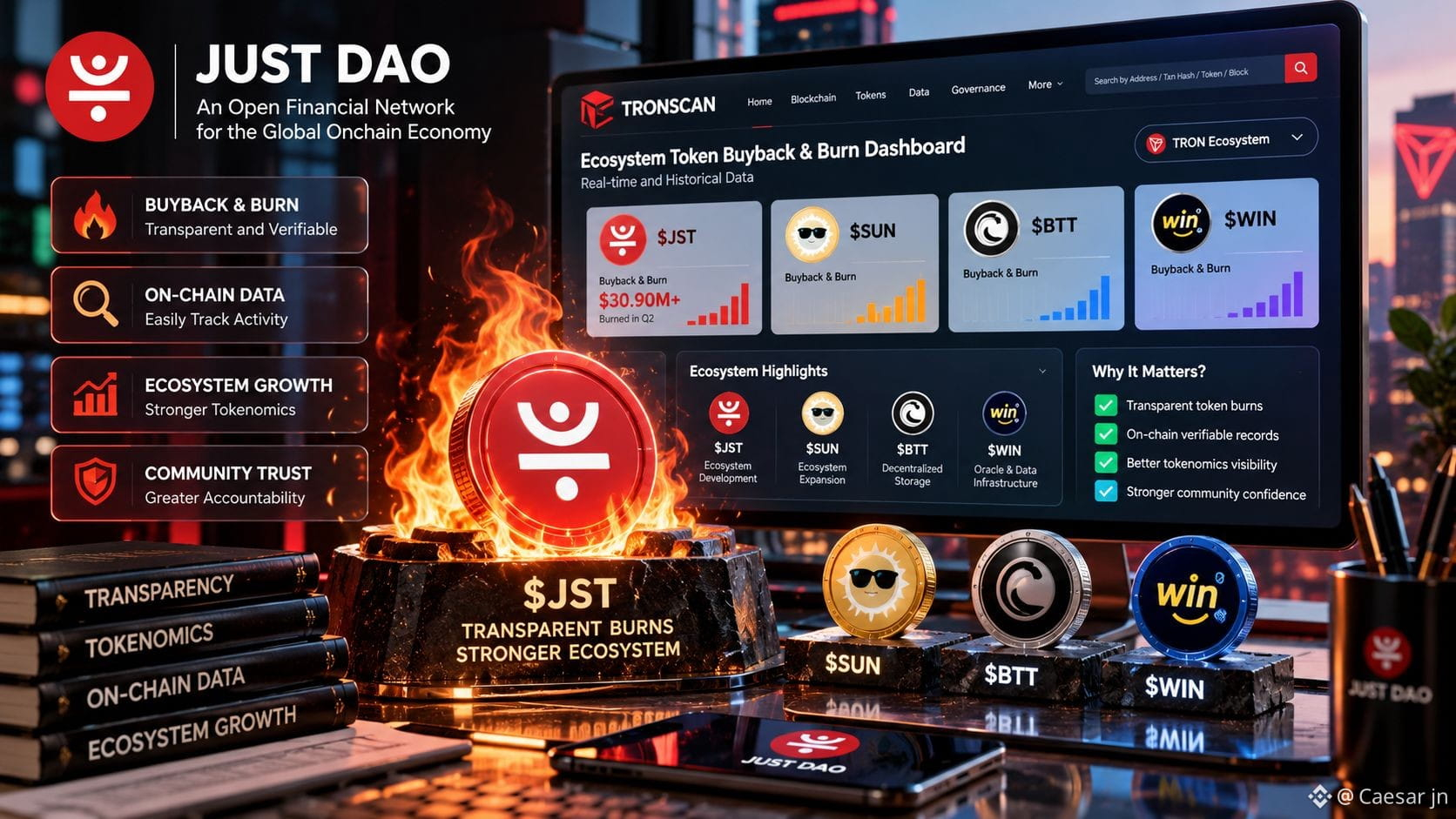
𝗧𝗥𝗔𝗡𝗦𝗣𝗔𝗥𝗘𝗡𝗖𝗬 𝗖𝗛𝗔𝗡𝗚𝗘𝗦 𝗛𝗢𝗪 𝗪𝗘 𝗘𝗩𝗔𝗟𝗨𝗔𝗧𝗘 𝗧𝗢𝗞𝗘𝗡 𝗘𝗖𝗢𝗡𝗢𝗠𝗜𝗖𝗦. 🔍🔥
In crypto, announcements are easy to make.
But verifiable actions are what deserve attention.
One important development in the TRON ecosystem is the inclusion of $JST in TRONSCAN's Ecosystem Token Buyback and Burn Dashboard.
Why does this matter?
Because transparency gives the community a better way to examine what is happening behind a project's token economics.
Token buybacks and burns are frequently discussed in decentralized finance, but their real significance goes beyond the announcement itself.
The ability to independently track activity is equally important.
Consider three reasons why this matters.
1. ACCOUNTABILITY BECOMES EASIER
When buyback and burn information is accessible through an on-chain explorer, community members have a clearer path to examining historical activity rather than relying exclusively on promotional statements.
2. TOKENOMICS BECOMES MORE UNDERSTANDABLE
Understanding token supply requires more than looking at market prices. Supply movements, circulating tokens, burns, and historical records all contribute to a more complete picture.
3. COMMUNITY CONFIDENCE BENEFITS FROM VERIFIABILITY
Transparency does not automatically guarantee token value or future performance. However, making relevant information easier to inspect creates a stronger foundation for informed participation.
There is also a bigger ecosystem perspective worth considering.
JUST DAO's broader buyback and burn ecosystem highlights the importance of tracking token-related activities across projects, including $JST, $SUN, $BTT, and $WIN.
The interesting part is not simply that these activities exist.
It is that better access to information allows users to examine the underlying activity for themselves.
And that distinction matters.
I believe the next stage of blockchain adoption will require
@DeFi_JUST @JustinSun #TRONEcoStar
𝗧𝗥𝗔𝗡𝗦𝗣𝗔𝗥𝗘𝗡𝗖𝗬 𝗖𝗛𝗔𝗡𝗚𝗘𝗦 𝗛𝗢𝗪 𝗪𝗘 𝗘𝗩𝗔𝗟𝗨𝗔𝗧𝗘 𝗧𝗢𝗞𝗘𝗡 𝗘𝗖𝗢𝗡𝗢𝗠𝗜𝗖𝗦. 🔍🔥
In crypto, announcements are easy to make.
But verifiable actions are what deserve attention.
One important development in the TRON ecosystem is the inclusion of $JST in TRONSCAN's Ecosystem Token Buyback and Burn Dashboard.
Why does this matter?
Because transparency gives the community a better way to examine what is happening behind a project's token economics.
Token buybacks and burns are frequently discussed in decentralized finance, but their real significance goes beyond the announcement itself.
The ability to independently track activity is equally important.
Consider three reasons why this matters.
1. ACCOUNTABILITY BECOMES EASIER
When buyback and burn information is accessible through an on-chain explorer, community members have a clearer path to examining historical activity rather than relying exclusively on promotional statements.
2. TOKENOMICS BECOMES MORE UNDERSTANDABLE
Understanding token supply requires more than looking at market prices. Supply movements, circulating tokens, burns, and historical records all contribute to a more complete picture.
3. COMMUNITY CONFIDENCE BENEFITS FROM VERIFIABILITY
Transparency does not automatically guarantee token value or future performance. However, making relevant information easier to inspect creates a stronger foundation for informed participation.
There is also a bigger ecosystem perspective worth considering.
JUST DAO's broader buyback and burn ecosystem highlights the importance of tracking token-related activities across projects, including $JST, $SUN, $BTT, and $WIN.
The interesting part is not simply that these activities exist.
It is that better access to information allows users to examine the underlying activity for themselves.
And that distinction matters.
I believe the next stage of blockchain adoption will require
@JUST DAO @Justin Sun孙宇晨 #TRONEcoStar
54
·
--
Voir la traduction
𝗜𝗡 𝗗𝗘𝗖𝗘𝗡𝗧𝗥𝗔𝗟𝗜𝗭𝗘𝗗 𝗦𝗧𝗢𝗥𝗔𝗚𝗘, 𝗧𝗥𝗨𝗦𝗧 𝗦𝗛𝗢𝗨𝗟𝗗 𝗕𝗘 𝗦𝗨𝗣𝗣𝗢𝗥𝗧𝗘𝗗 𝗕𝗬 𝗩𝗘𝗥𝗜𝗙𝗜𝗔𝗕𝗟𝗘 𝗗𝗔𝗧𝗔.
Uploading a file is only the beginning of a storage service.
The more important question is what happens afterward. Can the network establish that participating nodes are online? Can relevant storage information be checked? Can users and developers gain confidence in the system beyond simply trusting a service provider's promise?
These questions are central to the development of decentralized storage.
BTFS documentation describes an Online Proof Contract that stores the Merkle root of daily online-proof data for network nodes and provides an interface through which proof information can be verified.
It also describes smart-contract-based file metadata management, giving relevant records a more transparent and auditable foundation.
Why does this matter?
Because decentralized infrastructure depends on accountability. A network may have many participating nodes, but the number of nodes alone does not establish the quality or reliability of the service.
Verification mechanisms help create a framework for checking information and evaluating participation. They can also make it easier to identify performance issues and improve the way infrastructure is managed.
This does not mean every storage risk disappears. Online proofs and metadata records are components of a broader reliability system, not a universal guarantee that every file will always be available.
Still, building verification into infrastructure is a meaningful step.
BTFS is working toward a storage environment where trust is supported by transparent mechanisms rather than assumptions alone.
@BitTorrent_Official @JustinSun
#TRONEcoStar
𝗜𝗡 𝗗𝗘𝗖𝗘𝗡𝗧𝗥𝗔𝗟𝗜𝗭𝗘𝗗 𝗦𝗧𝗢𝗥𝗔𝗚𝗘, 𝗧𝗥𝗨𝗦𝗧 𝗦𝗛𝗢𝗨𝗟𝗗 𝗕𝗘 𝗦𝗨𝗣𝗣𝗢𝗥𝗧𝗘𝗗 𝗕𝗬 𝗩𝗘𝗥𝗜𝗙𝗜𝗔𝗕𝗟𝗘 𝗗𝗔𝗧𝗔.
Uploading a file is only the beginning of a storage service.
The more important question is what happens afterward. Can the network establish that participating nodes are online? Can relevant storage information be checked? Can users and developers gain confidence in the system beyond simply trusting a service provider's promise?
These questions are central to the development of decentralized storage.
BTFS documentation describes an Online Proof Contract that stores the Merkle root of daily online-proof data for network nodes and provides an interface through which proof information can be verified.
It also describes smart-contract-based file metadata management, giving relevant records a more transparent and auditable foundation.
Why does this matter?
Because decentralized infrastructure depends on accountability. A network may have many participating nodes, but the number of nodes alone does not establish the quality or reliability of the service.
Verification mechanisms help create a framework for checking information and evaluating participation. They can also make it easier to identify performance issues and improve the way infrastructure is managed.
This does not mean every storage risk disappears. Online proofs and metadata records are components of a broader reliability system, not a universal guarantee that every file will always be available.
Still, building verification into infrastructure is a meaningful step.
BTFS is working toward a storage environment where trust is supported by transparent mechanisms rather than assumptions alone.
@BitTorrent_Official @Justin Sun孙宇晨
#TRONEcoStar
8
·
--
Voir la traduction
𝗗𝗘𝗖𝗘𝗡𝗧𝗥𝗔𝗟𝗜𝗭𝗘𝗗 𝗦𝗧𝗢𝗥𝗔𝗚𝗘 𝗡𝗘𝗘𝗗𝗦 𝗠𝗢𝗥𝗘 𝗧𝗛𝗔𝗡 𝗦𝗢𝗙𝗧𝗪𝗔𝗥𝗘. 𝗜𝗧 𝗡𝗘𝗘𝗗𝗦 𝗥𝗘𝗟𝗜𝗔𝗕𝗟𝗘 𝗣𝗔𝗥𝗧𝗜𝗖𝗜𝗣𝗔𝗡𝗧𝗦.
One of the most important parts of a decentralized infrastructure network is the people and resources that keep it operating.
In the BTFS ecosystem, storage providers play a central role. They contribute storage capacity and help make decentralized file storage possible. Rather than treating storage as a service delivered by one central operator, BTFS builds around a network of participating providers.
The BTFS 4.0 architecture introduced a more defined operational model through dedicated Storage Providers. The upgrade also included smart-contract-based file metadata management and mechanisms intended to improve transparency and auditability.
This is an important infrastructure decision.
A decentralized storage network needs more than available disk space. It needs a way to identify service providers, manage storage arrangements, track relevant information, and create accountability around the services being delivered.
BTFS uses blockchain-connected mechanisms to support parts of this process. Its documentation describes smart contracts for metadata management, storage payments, and online-proof verification.
For storage providers, this creates a more structured environment for contributing resources. For developers and users, it provides a clearer framework for understanding how storage services are coordinated.
The long-term opportunity is to build a network where infrastructure participation is measurable, services are easier to verify, and storage resources can be coordinated across a wider ecosystem.
That is the kind of foundation decentralized applications need as their data requirements grow.
@BitTorrent_Official @JustinSun
#TRONEcoStar
𝗗𝗘𝗖𝗘𝗡𝗧𝗥𝗔𝗟𝗜𝗭𝗘𝗗 𝗦𝗧𝗢𝗥𝗔𝗚𝗘 𝗡𝗘𝗘𝗗𝗦 𝗠𝗢𝗥𝗘 𝗧𝗛𝗔𝗡 𝗦𝗢𝗙𝗧𝗪𝗔𝗥𝗘. 𝗜𝗧 𝗡𝗘𝗘𝗗𝗦 𝗥𝗘𝗟𝗜𝗔𝗕𝗟𝗘 𝗣𝗔𝗥𝗧𝗜𝗖𝗜𝗣𝗔𝗡𝗧𝗦.
One of the most important parts of a decentralized infrastructure network is the people and resources that keep it operating.
In the BTFS ecosystem, storage providers play a central role. They contribute storage capacity and help make decentralized file storage possible. Rather than treating storage as a service delivered by one central operator, BTFS builds around a network of participating providers.
The BTFS 4.0 architecture introduced a more defined operational model through dedicated Storage Providers. The upgrade also included smart-contract-based file metadata management and mechanisms intended to improve transparency and auditability.
This is an important infrastructure decision.
A decentralized storage network needs more than available disk space. It needs a way to identify service providers, manage storage arrangements, track relevant information, and create accountability around the services being delivered.
BTFS uses blockchain-connected mechanisms to support parts of this process. Its documentation describes smart contracts for metadata management, storage payments, and online-proof verification.
For storage providers, this creates a more structured environment for contributing resources. For developers and users, it provides a clearer framework for understanding how storage services are coordinated.
The long-term opportunity is to build a network where infrastructure participation is measurable, services are easier to verify, and storage resources can be coordinated across a wider ecosystem.
That is the kind of foundation decentralized applications need as their data requirements grow.
@BitTorrent_Official @Justin Sun孙宇晨
#TRONEcoStar
4
·
--
Voir la traduction
𝗗𝗜𝗚𝗜𝗧𝗔𝗟 𝗦𝗧𝗢𝗥𝗔𝗚𝗘 𝗦𝗛𝗢𝗨𝗟𝗗 𝗡𝗢𝗧 𝗗𝗘𝗣𝗘𝗡𝗗 𝗢𝗡 𝗔 𝗦𝗜𝗡𝗚𝗟𝗘 𝗣𝗢𝗜𝗡𝗧 𝗢𝗙 𝗙𝗔𝗜𝗟𝗨𝗥𝗘.
As more applications move toward Web3, the way digital information is stored becomes just as important as the technology used to process it.
Traditional cloud storage has made accessing and managing files convenient, but it also introduces dependencies on centralized providers. Service interruptions, restricted access, vendor lock-in, and single points of failure can create challenges for applications that need dependable data availability.
This is where the BitTorrent File System (BTFS) offers an alternative approach.
BTFS is designed around decentralized storage, connecting storage providers across a distributed network instead of depending entirely on one central server. Its architecture allows participants to contribute storage resources while applications and users access the network's storage capabilities.
The significance goes beyond simply finding another place to upload files.
A distributed storage model can support greater infrastructure diversity, improve redundancy, and give developers another option when designing applications that require persistent digital content.
BTFS also connects with the broader BitTorrent ecosystem, creating opportunities for storage, file sharing, and blockchain-based services to work together.
Of course, decentralization does not automatically eliminate every storage risk. Provider reliability, redundancy, data protection, and network performance remain important considerations.
But the direction is meaningful: digital infrastructure should be built with resilience and broader participation in mind.
BitTorrent's experience in peer-to-peer technology gives this development an important foundation as decentralized storage continues to evolve.
@BitTorrent_Official @JustinSun
#TRONEcoStar
𝗗𝗜𝗚𝗜𝗧𝗔𝗟 𝗦𝗧𝗢𝗥𝗔𝗚𝗘 𝗦𝗛𝗢𝗨𝗟𝗗 𝗡𝗢𝗧 𝗗𝗘𝗣𝗘𝗡𝗗 𝗢𝗡 𝗔 𝗦𝗜𝗡𝗚𝗟𝗘 𝗣𝗢𝗜𝗡𝗧 𝗢𝗙 𝗙𝗔𝗜𝗟𝗨𝗥𝗘.
As more applications move toward Web3, the way digital information is stored becomes just as important as the technology used to process it.
Traditional cloud storage has made accessing and managing files convenient, but it also introduces dependencies on centralized providers. Service interruptions, restricted access, vendor lock-in, and single points of failure can create challenges for applications that need dependable data availability.
This is where the BitTorrent File System (BTFS) offers an alternative approach.
BTFS is designed around decentralized storage, connecting storage providers across a distributed network instead of depending entirely on one central server. Its architecture allows participants to contribute storage resources while applications and users access the network's storage capabilities.
The significance goes beyond simply finding another place to upload files.
A distributed storage model can support greater infrastructure diversity, improve redundancy, and give developers another option when designing applications that require persistent digital content.
BTFS also connects with the broader BitTorrent ecosystem, creating opportunities for storage, file sharing, and blockchain-based services to work together.
Of course, decentralization does not automatically eliminate every storage risk. Provider reliability, redundancy, data protection, and network performance remain important considerations.
But the direction is meaningful: digital infrastructure should be built with resilience and broader participation in mind.
BitTorrent's experience in peer-to-peer technology gives this development an important foundation as decentralized storage continues to evolve.
@BitTorrent_Official @Justin Sun孙宇晨
#TRONEcoStar

6
Connectez-vous pour découvrir plus de contenu
Rejoignez la communauté mondiale des adeptes de cryptomonnaies sur Binance Square
⚡️ Suviez les dernières informations importantes sur les cryptomonnaies.
💬 Jugé digne de confiance par la plus grande plateforme d’échange de cryptomonnaies au monde.
👍 Découvrez les connaissances que partagent les créateurs vérifiés.
Adresse e-mail/Nº de téléphone
Sujets d’actualité
BinanceProcesses$4.65BWithdrawals
26,608 vues
123 mentions
Binance traite 4,65 milliards de dollars de retraits après la réouverture, pour une sortie nette de 3,64 milliards de dollars, soit 2,1 % de ses 171 milliards de dollars d’actifs
Binance News
·44 mentions J’aime
·12.6k vues
WithdrawalsBack: 15 networks live
8,019 vues
129 mentions
BinanceUpdatesProofofReservesAddresses
130,326 vues
1,576 mentions