

MAX CHADWICK
82 Publications

MAX CHADWICK
Signaler
Bloquer l’utilisateur
Crypto since '20
0 Suivis
2 Abonnés
7 J’aime
Publications
·
--
Certains actifs stockent de la valeur. D’autres stockent la culture. Les détenteurs de $BTC comprennent la rareté au niveau le plus profond. Les choses qui ont l’offre la plus limitée et la reconnaissance la plus universelle conservent leur valeur à travers chaque cycle. $DMC fonctionne selon une logique similaire. Classe d’actifs différente. L’IP DeLorean est unique. Aucune autre marque automobile ne porte cette combinaison précise de films, d’histoire et de reconnaissance mondiale. Cela ne peut pas être reproduit ni remplacé. La rareté d’une véritable IP culturelle est aussi réelle que la rareté du bitcoin. Les deux tiennent. Les deux s’accumulent. C’est le stockage culturel de la valeur. #Altcoin Season#
Certains actifs stockent de la valeur. D’autres stockent la culture. Les détenteurs de $BTC comprennent la rareté au niveau le plus profond. Les choses qui ont l’offre la plus limitée et la reconnaissance la plus universelle conservent leur valeur à travers chaque cycle. $DMC fonctionne selon une logique similaire. Classe d’actifs différente. L’IP DeLorean est unique. Aucune autre marque automobile ne porte cette combinaison précise de films, d’histoire et de reconnaissance mondiale. Cela ne peut pas être reproduit ni remplacé. La rareté d’une véritable IP culturelle est aussi réelle que la rareté du bitcoin. Les deux tiennent. Les deux s’accumulent. C’est le stockage culturel de la valeur. #Altcoin Season#
65
·
--
Journaux, réputation, signatures. Tout est faux ! 🚨 Chaque solution que je vois dans l’espace de l’IA agentique fait la même erreur. L’agent signe ses sorties. L’agent consigne tout ce qu’il a consommé. L’agent a une forte réputation tirée de transactions passées. Toutes ces informations résident du côté de l’agent dans l’interaction. Et ce qu’il faut prouver, c’est si ce que l’agent a lu est vrai, ce que précisément la parole de l’agent ne peut pas trancher. La réputation décrit un comportement passé. Elle ne dit rien sur le fait que le nombre spécifique devant l’agent, à l’instant, soit correct. Les journaux, c’est l’agent qui témoigne en sa propre faveur. Les signatures n’attestent de rien au-delà de l’affirmation de l’agent. La preuve doit venir de là où vivent les données, pas de là où vit l’agent. Space and Time est conçu pour produire cette preuve à la source. $HYPE est l’écosystème des marchés financiers où cela cesse d’être philosophique pour devenir une question de savoir si la position survit à un pic de volatilité. Chaque réponse sur SXT est accompagnée d’un reçu cryptographique généré côté données, indépendamment de toute affirmation de l’agent. L’infrastructure d’actifs tokenisés de $ONDO a besoin de cette même garantie à l’échelle institutionnelle. La parole d’un agent n’a jamais suffi. Space and Time lui donne quelque chose que la contrepartie peut réellement vérifier. #Altcoin Season# #AI
Journaux, réputation, signatures. Tout est faux ! 🚨 Chaque solution que je vois dans l’espace de l’IA agentique fait la même erreur. L’agent signe ses sorties. L’agent consigne tout ce qu’il a consommé. L’agent a une forte réputation tirée de transactions passées. Toutes ces informations résident du côté de l’agent dans l’interaction. Et ce qu’il faut prouver, c’est si ce que l’agent a lu est vrai, ce que précisément la parole de l’agent ne peut pas trancher. La réputation décrit un comportement passé. Elle ne dit rien sur le fait que le nombre spécifique devant l’agent, à l’instant, soit correct. Les journaux, c’est l’agent qui témoigne en sa propre faveur. Les signatures n’attestent de rien au-delà de l’affirmation de l’agent. La preuve doit venir de là où vivent les données, pas de là où vit l’agent. Space and Time est conçu pour produire cette preuve à la source. $HYPE est l’écosystème des marchés financiers où cela cesse d’être philosophique pour devenir une question de savoir si la position survit à un pic de volatilité. Chaque réponse sur SXT est accompagnée d’un reçu cryptographique généré côté données, indépendamment de toute affirmation de l’agent. L’infrastructure d’actifs tokenisés de $ONDO a besoin de cette même garantie à l’échelle institutionnelle. La parole d’un agent n’a jamais suffi. Space and Time lui donne quelque chose que la contrepartie peut réellement vérifier. #Altcoin Season# #AI
73
·
--
Regardez qui d’autre parraine 🏆 Theoriq vient de s’engager comme Gold Sponsor pour Vault Summit Singapore. L’événement est organisé par Morpho et co-animé par DigiFT — pas exactement un duo au hasard. Morpho a construit une grande partie des infrastructures de lending, des vaults sur lesquels tournent, en réalité, ceux de Theoriq. DigiFT est le même partenaire qui mène déjà un pilote de fonds de marché monétaire réglementé avec Theoriq. Par rendant un parrainage à côté des deux, ce n’est pas un achat marketing : c’est se présenter dans la salle avec les personnes aux côtés desquelles vous construisez déjà. Le discours derrière l’événement va dans le même sens : les infrastructures de vaults onchain deviennent une vraie verticale pour la gestion d’actifs institutionnelle, et ce n’est plus une simple expérience secondaire. Ce changement ne s’est pas fait du jour au lendemain non plus : il a fallu des années aux fournisseurs d’infrastructure pour prouver que le modèle fonctionnait réellement avant que les institutions ne commencent à s’y intéresser. $LINK a prouvé ce schéma il y a des années, en étant présent à chaque grande conversation sur les infrastructures, bien avant qu’il ne devienne le choix évident par défaut. Le volet “assets” a connu sa propre version de la même histoire : les discussions sur la tokenisation n’avaient rarement lieu quelque part où $ONDO n’était pas déjà présent. Un parrainage “gold” à côté des deux bons noms finit par en dire plus sur le positionnement que ce que le terme lui-même implique d’ordinaire. Je pense que ce type de parrainage vous en apprend davantage sur la place que le projet se voit occuper que n’importe quelle annonce produit prise isolément. #Altcoin Season#
Regardez qui d’autre parraine 🏆 Theoriq vient de s’engager comme Gold Sponsor pour Vault Summit Singapore. L’événement est organisé par Morpho et co-animé par DigiFT — pas exactement un duo au hasard. Morpho a construit une grande partie des infrastructures de lending, des vaults sur lesquels tournent, en réalité, ceux de Theoriq. DigiFT est le même partenaire qui mène déjà un pilote de fonds de marché monétaire réglementé avec Theoriq. Par rendant un parrainage à côté des deux, ce n’est pas un achat marketing : c’est se présenter dans la salle avec les personnes aux côtés desquelles vous construisez déjà. Le discours derrière l’événement va dans le même sens : les infrastructures de vaults onchain deviennent une vraie verticale pour la gestion d’actifs institutionnelle, et ce n’est plus une simple expérience secondaire. Ce changement ne s’est pas fait du jour au lendemain non plus : il a fallu des années aux fournisseurs d’infrastructure pour prouver que le modèle fonctionnait réellement avant que les institutions ne commencent à s’y intéresser. $LINK a prouvé ce schéma il y a des années, en étant présent à chaque grande conversation sur les infrastructures, bien avant qu’il ne devienne le choix évident par défaut. Le volet “assets” a connu sa propre version de la même histoire : les discussions sur la tokenisation n’avaient rarement lieu quelque part où $ONDO n’était pas déjà présent. Un parrainage “gold” à côté des deux bons noms finit par en dire plus sur le positionnement que ce que le terme lui-même implique d’ordinaire. Je pense que ce type de parrainage vous en apprend davantage sur la place que le projet se voit occuper que n’importe quelle annonce produit prise isolément. #Altcoin Season#
80
·
--
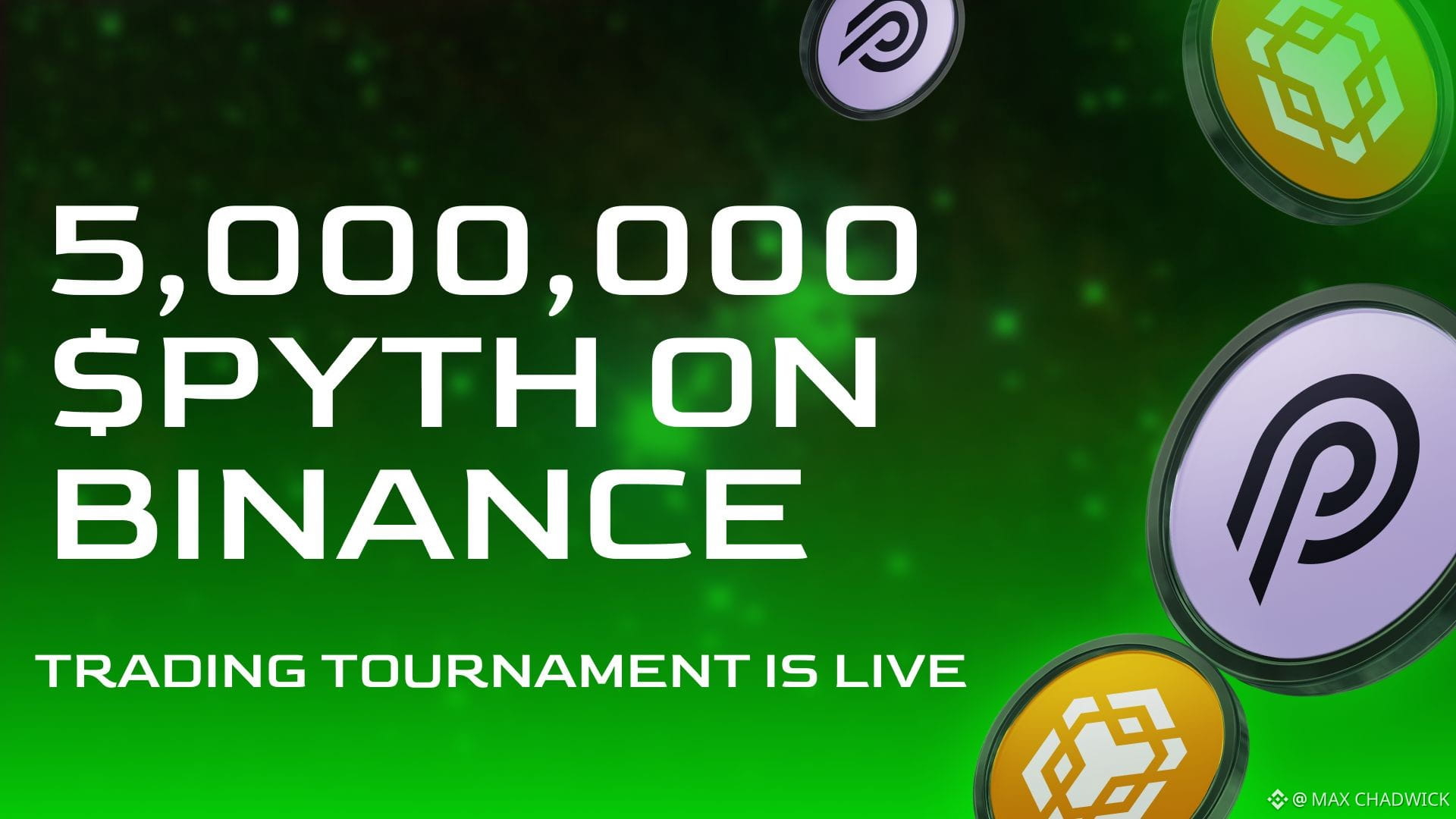
Il est difficile de faire défiler au-delà de 5 000 000 PYTH en bons de jetons Binance. $PYTH a désormais un tournoi de trading complet sur Binance, et les traders $BNB devraient le remarquer, car cette campagne se déroule directement dans le marché spot de Binance. La configuration est simple : les utilisateurs éligibles s’inscrivent, échangent au moins 500 $ sur PYTH/USDT ou PYTH/USDC pendant la période promotionnelle, puis concourent pour des récompenses en fonction du volume de trading cumulé. La campagne se déroule du 20 août au 27 août. Les principales récompenses sont suffisamment importantes pour attirer l’attention : 1er : 150 000 PYTH ; 2e : 125 000 PYTH ; 3e : 100 000 PYTH ; 4e : 75 000 PYTH ; 5e : 50 000 PYTH. Binance a également ajouté des Sprint Rewards, de sorte que les traders éligibles peuvent gagner à la fois depuis le pool de Main Reward et le pool de Sprint Reward s’ils remplissent les conditions. C’est la couche d’attention à court terme. La raison pour laquelle je suis plus optimiste concernant le timing, c’est la couche produit qui se trouve derrière. Pyth n’arrive pas à cette campagne avec un récit vide. Polymarket utilise Pyth Pro pour les marchés d’actifs traditionnels. Kalshi utilise Pyth Pro pour la résolution des matières premières. Les rapports des perp RWA ont montré que Pyth chiffre la majorité du volume suivi. Les actions asiatiques, le prix au jour 1 de CXMT, et l’expansion des données de marché de Pyth Pro ont tous rendu l’histoire plus facile à comprendre pour les traders. Désormais, Binance ajoute la distribution. Un grand fonds de prix pousse les gens à regarder. Les preuves produit leur donnent une raison de continuer à prêter attention. #Altcoin Season# #BNB
Il est difficile de faire défiler au-delà de 5 000 000 PYTH en bons de jetons Binance. $PYTH a désormais un tournoi de trading complet sur Binance, et les traders $BNB devraient le remarquer, car cette campagne se déroule directement dans le marché spot de Binance. La configuration est simple : les utilisateurs éligibles s’inscrivent, échangent au moins 500 $ sur PYTH/USDT ou PYTH/USDC pendant la période promotionnelle, puis concourent pour des récompenses en fonction du volume de trading cumulé. La campagne se déroule du 20 août au 27 août. Les principales récompenses sont suffisamment importantes pour attirer l’attention : 1er : 150 000 PYTH ; 2e : 125 000 PYTH ; 3e : 100 000 PYTH ; 4e : 75 000 PYTH ; 5e : 50 000 PYTH. Binance a également ajouté des Sprint Rewards, de sorte que les traders éligibles peuvent gagner à la fois depuis le pool de Main Reward et le pool de Sprint Reward s’ils remplissent les conditions. C’est la couche d’attention à court terme. La raison pour laquelle je suis plus optimiste concernant le timing, c’est la couche produit qui se trouve derrière. Pyth n’arrive pas à cette campagne avec un récit vide. Polymarket utilise Pyth Pro pour les marchés d’actifs traditionnels. Kalshi utilise Pyth Pro pour la résolution des matières premières. Les rapports des perp RWA ont montré que Pyth chiffre la majorité du volume suivi. Les actions asiatiques, le prix au jour 1 de CXMT, et l’expansion des données de marché de Pyth Pro ont tous rendu l’histoire plus facile à comprendre pour les traders. Désormais, Binance ajoute la distribution. Un grand fonds de prix pousse les gens à regarder. Les preuves produit leur donnent une raison de continuer à prêter attention. #Altcoin Season# #BNB
57
·
--
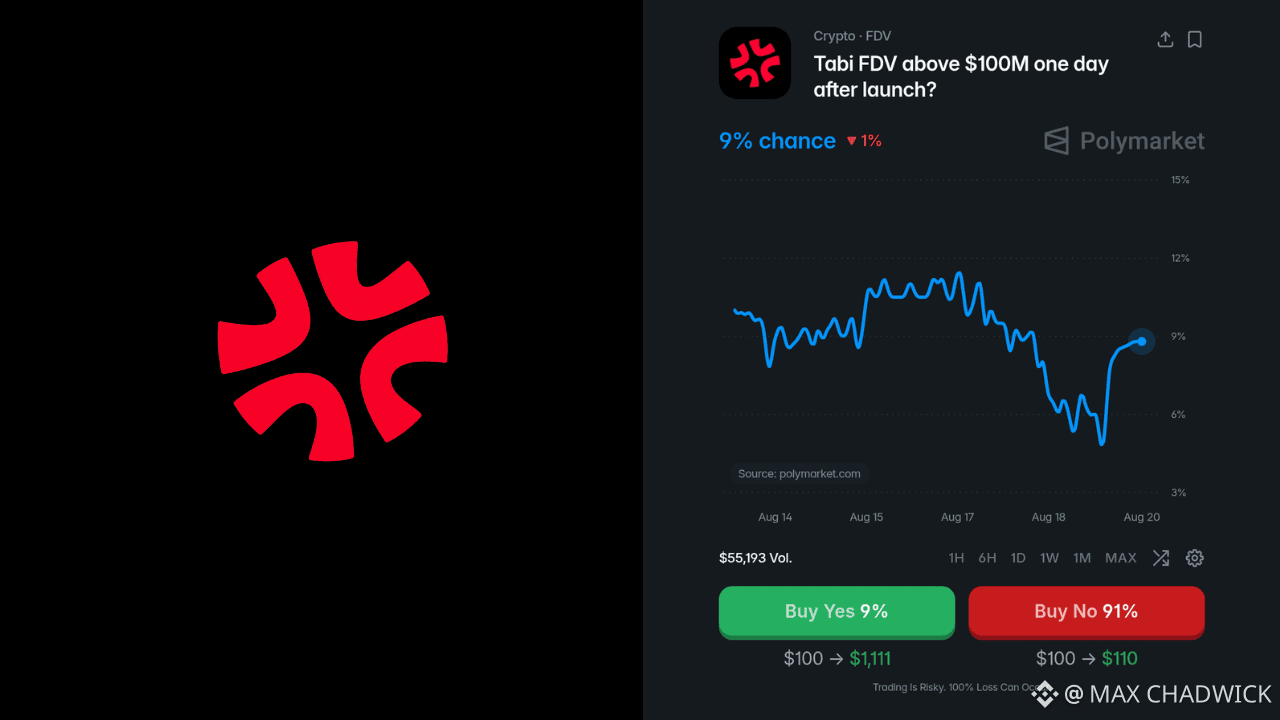
Est-ce que la FDV de Tabi dépassera 100M ? 📉 $TRUMP et $SOL apparaissent tous les deux très souvent dans ces petites questions de FDV, et celle-ci ne fait pas exception. Le graphique de Tabi est resté coincé à osciller dans une fourchette serrée pendant tout ce laps de temps, sans vraiment partir dans un sens ou dans l’autre. Il y a 9% de chances pour le moment, en baisse légère. $55,193 en volume montre que ce marché a déjà suscité une vraie attention, malgré le faible chiffre. Il est resté entre les “hauts single digits” et les “bas double digits” tout du long, est descendu jusqu’à 6% à un moment, et n’a que récemment repris jusqu’à 9%. Ce genre d’oscillations serrées et répétées signifie souvent que le marché a déjà trouvé son plafond pour l’instant. Je penche pour Non ici. Un petit rebond après une baisse, ce n’est pas la même chose qu’un véritable breakout en train de se former. Polymarket continue d’être l’une des façons les plus régulières de réellement profiter d’une lecture comme celle-ci, plutôt que de regarder juste l’oscillation se dérouler. Surtout avec un marché crypto qui a été aussi rude ces derniers temps dans l’ensemble. Cela dit, on peut aussi le voir différemment ; le choix t’appartient. #Altcoin Season#
Est-ce que la FDV de Tabi dépassera 100M ? 📉 $TRUMP et $SOL apparaissent tous les deux très souvent dans ces petites questions de FDV, et celle-ci ne fait pas exception. Le graphique de Tabi est resté coincé à osciller dans une fourchette serrée pendant tout ce laps de temps, sans vraiment partir dans un sens ou dans l’autre. Il y a 9% de chances pour le moment, en baisse légère. $55,193 en volume montre que ce marché a déjà suscité une vraie attention, malgré le faible chiffre. Il est resté entre les “hauts single digits” et les “bas double digits” tout du long, est descendu jusqu’à 6% à un moment, et n’a que récemment repris jusqu’à 9%. Ce genre d’oscillations serrées et répétées signifie souvent que le marché a déjà trouvé son plafond pour l’instant. Je penche pour Non ici. Un petit rebond après une baisse, ce n’est pas la même chose qu’un véritable breakout en train de se former. Polymarket continue d’être l’une des façons les plus régulières de réellement profiter d’une lecture comme celle-ci, plutôt que de regarder juste l’oscillation se dérouler. Surtout avec un marché crypto qui a été aussi rude ces derniers temps dans l’ensemble. Cela dit, on peut aussi le voir différemment ; le choix t’appartient. #Altcoin Season#
76
·
--
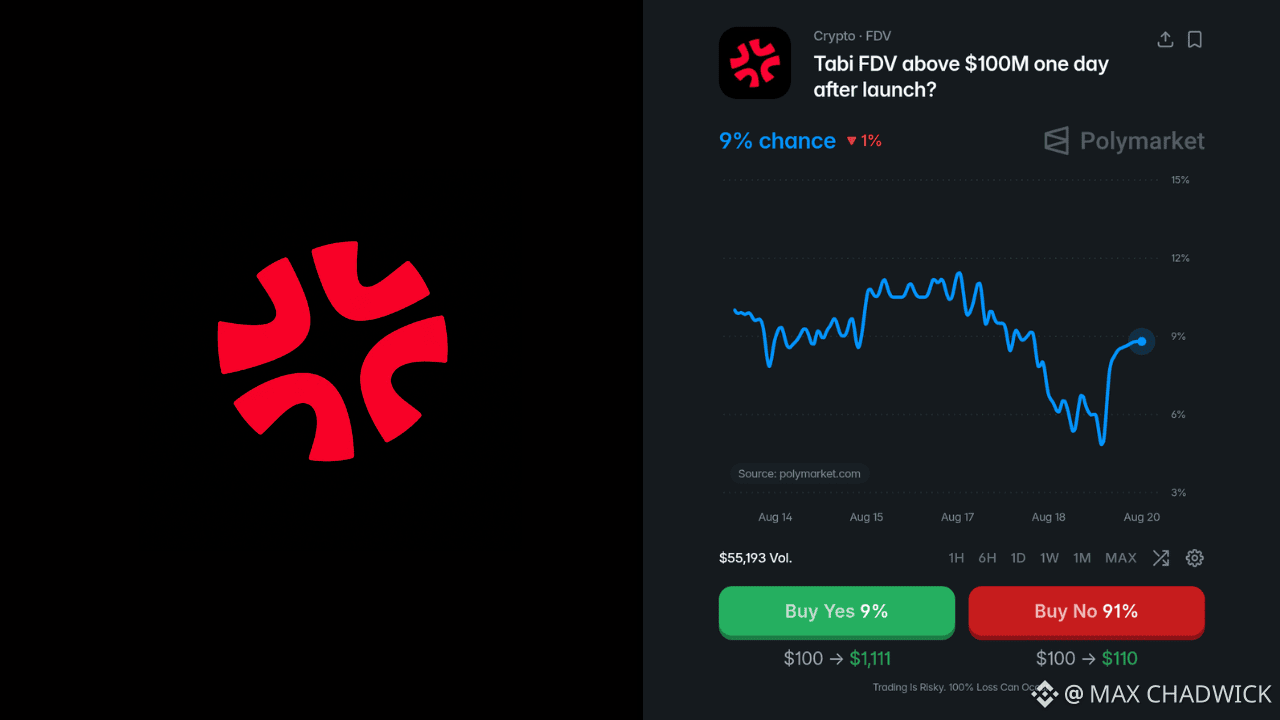
Est-ce que le FDV de Tabi va dépasser 100M ? 📉 $TRUMP et $SOL apparaissent tous les deux très souvent dans ces questions de FDV plus modestes, et celle-ci ne fait pas exception. Le graphique de Tabi est coincé à osciller dans une fourchette étroite pendant toute cette période, sans vraiment sortir dans un sens comme dans l’autre. En ce moment, il y a 9% de chances, en baisse légère. 55 193 $ de volume montre que ce marché a déjà attiré une vraie attention malgré le chiffre relativement bas. Il est resté entre les hauts chiffres simples et les bas chiffres à deux décimales tout du long, est descendu à 6% à un moment, puis n’a grimpé à 9% que récemment. Ce type de grignotage serré et répété veut souvent dire que le marché a déjà trouvé son plafond pour l’instant. Je penche pour Non ici. Un petit rebond après une baisse n’est pas la même chose qu’un véritable breakout en train de se former. Polymarket continue d’être l’une des façons les plus fiables de réellement gagner quelque chose avec une lecture comme celle-ci, au lieu de simplement regarder la consolidation se dérouler. Surtout avec un marché crypto qui a été aussi rude ces derniers temps. Cela dit, on peut aussi le voir autrement, c’est à vous de choisir. #Altcoin Season#
Est-ce que le FDV de Tabi va dépasser 100M ? 📉 $TRUMP et $SOL apparaissent tous les deux très souvent dans ces questions de FDV plus modestes, et celle-ci ne fait pas exception. Le graphique de Tabi est coincé à osciller dans une fourchette étroite pendant toute cette période, sans vraiment sortir dans un sens comme dans l’autre. En ce moment, il y a 9% de chances, en baisse légère. 55 193 $ de volume montre que ce marché a déjà attiré une vraie attention malgré le chiffre relativement bas. Il est resté entre les hauts chiffres simples et les bas chiffres à deux décimales tout du long, est descendu à 6% à un moment, puis n’a grimpé à 9% que récemment. Ce type de grignotage serré et répété veut souvent dire que le marché a déjà trouvé son plafond pour l’instant. Je penche pour Non ici. Un petit rebond après une baisse n’est pas la même chose qu’un véritable breakout en train de se former. Polymarket continue d’être l’une des façons les plus fiables de réellement gagner quelque chose avec une lecture comme celle-ci, au lieu de simplement regarder la consolidation se dérouler. Surtout avec un marché crypto qui a été aussi rude ces derniers temps. Cela dit, on peut aussi le voir autrement, c’est à vous de choisir. #Altcoin Season#
73
·
--
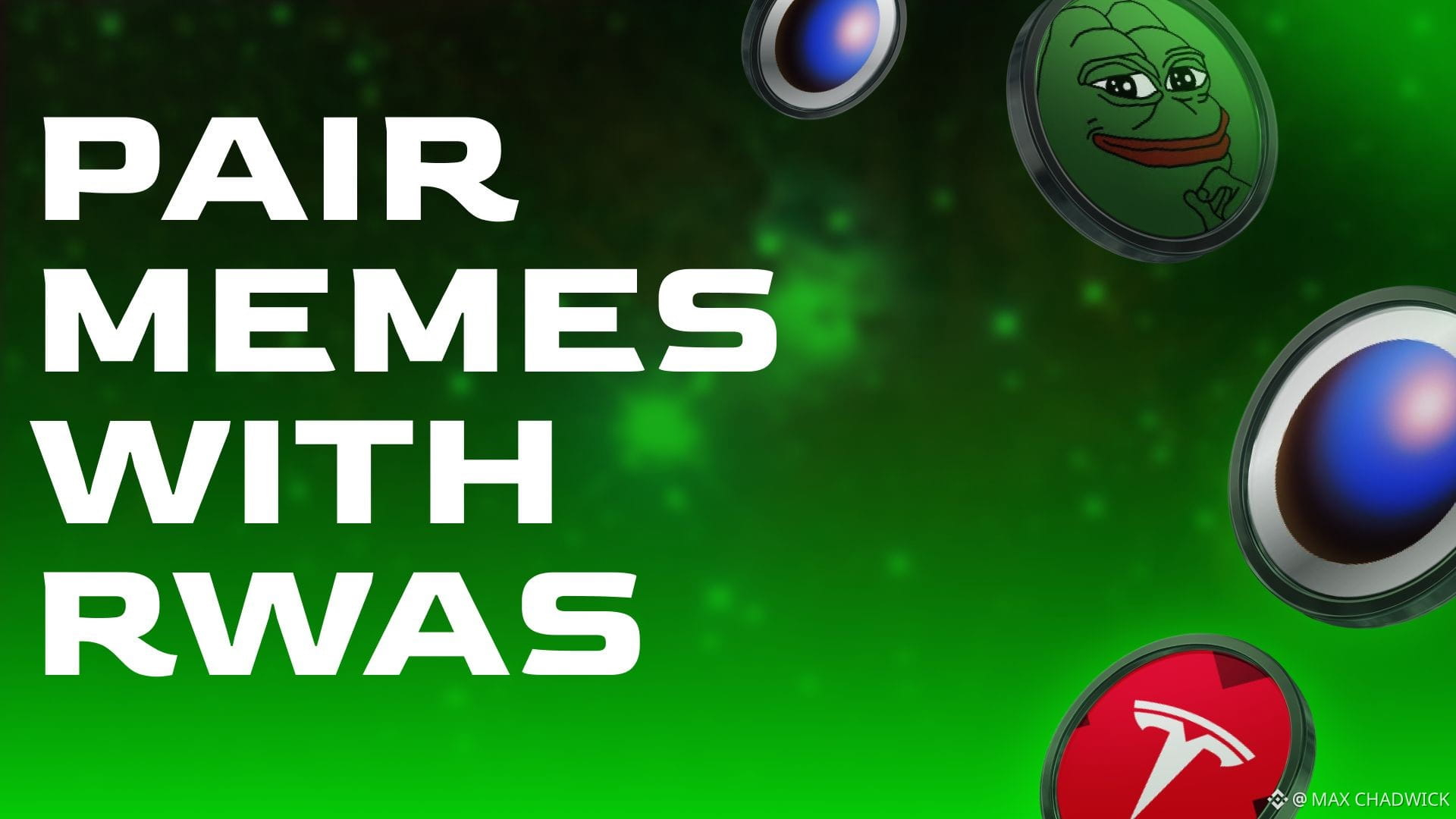
La culture des mèmes vient de fusionner avec Wall Street 🤯 Je me surprends à penser à la façon dont chaque nouvelle catégorie dans la crypto commence de la même manière : deux choses qui n’étaient pas censées partager une phrase, mais qui finissent par le faire quand même. Alors que $PEPE a une culture internet pure et conserve une vraie valeur de marché durable, sans fondamentaux au-delà de l’attention et de l’identité, $CC se situe à l’exact opposé : une infrastructure construite pour les institutions afin de régler des actifs régulés on-chain. Aucun des deux tokens n’était censé partager une phrase, encore moins un marché. Et c’est exactement le point. Les catégories les plus intéressantes dans cette industrie ne naissent jamais du fait de choisir un camp : elles viennent du choc de deux choses que personne n’avait imaginées ensemble. La fonctionnalité de “paires personnalisées” de Zora est conçue précisément pour ce genre de collision. N’importe qui peut créer un token et le mettre directement en paire avec un mème établi, une action tokenisée ou un token d’RWA, en direct et instantanément sur Base, Robinhood et Solana. Ce n’est pas quelque chose qu’un graphique ou un comité de cotation décide à l’avance. C’est vraiment un type d’acte créatif différent de tout ce qu’on voit sur une page de courbes. Le créateur qui choisit sa propre paire propose une catégorie et laisse ensuite le marché voter pour savoir si elle tient. La catégorie n’existe pas tant que quelqu’un n’a pas réellement construit la paire qui la définit. C’est une forme de pouvoir assez étrange à confier à n’importe qui a une idée et quelques minutes. Certaines de ces paires vont s’évanouir immédiatement. Quelques-unes finiront par être la raison pour laquelle les gens disent qu’une catégorie a même commencé. Quand on résume tout ça, c’est sacrément excitant et ça pourrait donner naissance à quelques “runners” bien fun 👀 #Meme Alpha# #Altcoin Season#
La culture des mèmes vient de fusionner avec Wall Street 🤯 Je me surprends à penser à la façon dont chaque nouvelle catégorie dans la crypto commence de la même manière : deux choses qui n’étaient pas censées partager une phrase, mais qui finissent par le faire quand même. Alors que $PEPE a une culture internet pure et conserve une vraie valeur de marché durable, sans fondamentaux au-delà de l’attention et de l’identité, $CC se situe à l’exact opposé : une infrastructure construite pour les institutions afin de régler des actifs régulés on-chain. Aucun des deux tokens n’était censé partager une phrase, encore moins un marché. Et c’est exactement le point. Les catégories les plus intéressantes dans cette industrie ne naissent jamais du fait de choisir un camp : elles viennent du choc de deux choses que personne n’avait imaginées ensemble. La fonctionnalité de “paires personnalisées” de Zora est conçue précisément pour ce genre de collision. N’importe qui peut créer un token et le mettre directement en paire avec un mème établi, une action tokenisée ou un token d’RWA, en direct et instantanément sur Base, Robinhood et Solana. Ce n’est pas quelque chose qu’un graphique ou un comité de cotation décide à l’avance. C’est vraiment un type d’acte créatif différent de tout ce qu’on voit sur une page de courbes. Le créateur qui choisit sa propre paire propose une catégorie et laisse ensuite le marché voter pour savoir si elle tient. La catégorie n’existe pas tant que quelqu’un n’a pas réellement construit la paire qui la définit. C’est une forme de pouvoir assez étrange à confier à n’importe qui a une idée et quelques minutes. Certaines de ces paires vont s’évanouir immédiatement. Quelques-unes finiront par être la raison pour laquelle les gens disent qu’une catégorie a même commencé. Quand on résume tout ça, c’est sacrément excitant et ça pourrait donner naissance à quelques “runners” bien fun 👀 #Meme Alpha# #Altcoin Season#
79
·
--
J’ai essayé le mode facile d’options ? 👀 $HYPE perp trader depuis des années et vétéran $ETH joueur DeFi, mais j’ai ouvert la chaîne d’options plus de fois que je ne peux en compter et je l’ai refermée à chaque fois avant de passer un trade. Hier, je ne l’ai pas refermée. Les options ont toujours été l’instrument le plus intelligent en théorie, franchement : définition du risque à la baisse avant même l’ouverture de la position, aucun « funding bleed » sur une position que tu gardes pendant la nuit, une structure flexible selon ton interprétation. La raison pour laquelle je ne m’en suis jamais vraiment servi, ce n’était pas l’instrument. C’étaient les dix décisions entre « j’ai une vision » et « la position est ouverte ». Le mode facile sur Aevo retire toute cette friction. Tu choisis la direction. Tu vois ta perte maximale avant de confirmer. Tu ouvres la position. J’ai exécuté ma première en moins de deux minutes. Juste simple et facile 🌟
J’ai essayé le mode facile d’options ? 👀 $HYPE perp trader depuis des années et vétéran $ETH joueur DeFi, mais j’ai ouvert la chaîne d’options plus de fois que je ne peux en compter et je l’ai refermée à chaque fois avant de passer un trade. Hier, je ne l’ai pas refermée. Les options ont toujours été l’instrument le plus intelligent en théorie, franchement : définition du risque à la baisse avant même l’ouverture de la position, aucun « funding bleed » sur une position que tu gardes pendant la nuit, une structure flexible selon ton interprétation. La raison pour laquelle je ne m’en suis jamais vraiment servi, ce n’était pas l’instrument. C’étaient les dix décisions entre « j’ai une vision » et « la position est ouverte ». Le mode facile sur Aevo retire toute cette friction. Tu choisis la direction. Tu vois ta perte maximale avant de confirmer. Tu ouvres la position. J’ai exécuté ma première en moins de deux minutes. Juste simple et facile 🌟
62
·
--
Attention : la rotation se fait plus vite que chez la plupart des gens 🤯 $ATOM se trouve au centre de beaucoup d’activités inter-chaînes, et $KAITO suit une version de la même rotation, sauf qu’elle traverse des récits plutôt que des chaînes, en observant où l’attention se déplace réellement une fois qu’un secteur se refroidit. La plupart des gens ne remarquent une rotation de secteur qu’après qu’elle a déjà eu lieu, une fois que la DeFi a déjà orienté l’attention vers les NFT, ou que l’IA l’a déjà transmise aux RWA, et à ce moment-là, la première partie du mouvement est déjà loin. Pour saisir ce changement pendant qu’il se produit vraiment, il faut suivre l’évolution de l’attention en temps réel plutôt que d’en lire le récit après coup, ce qui représente une fenêtre beaucoup plus étroite que la plupart des gens ne le pensent. C’est exactement le manque que les données d’attention de Kaito sont conçues pour combler : identifier quel récit gagne vraiment de l’élan avant de devenir l’histoire évidente que tout le monde échange déjà. Je préfère repérer une rotation une semaine plus tôt plutôt que lire un titre qui l’explique un mois plus tard. #Altcoin Season# #Macro Insights#
Attention : la rotation se fait plus vite que chez la plupart des gens 🤯 $ATOM se trouve au centre de beaucoup d’activités inter-chaînes, et $KAITO suit une version de la même rotation, sauf qu’elle traverse des récits plutôt que des chaînes, en observant où l’attention se déplace réellement une fois qu’un secteur se refroidit. La plupart des gens ne remarquent une rotation de secteur qu’après qu’elle a déjà eu lieu, une fois que la DeFi a déjà orienté l’attention vers les NFT, ou que l’IA l’a déjà transmise aux RWA, et à ce moment-là, la première partie du mouvement est déjà loin. Pour saisir ce changement pendant qu’il se produit vraiment, il faut suivre l’évolution de l’attention en temps réel plutôt que d’en lire le récit après coup, ce qui représente une fenêtre beaucoup plus étroite que la plupart des gens ne le pensent. C’est exactement le manque que les données d’attention de Kaito sont conçues pour combler : identifier quel récit gagne vraiment de l’élan avant de devenir l’histoire évidente que tout le monde échange déjà. Je préfère repérer une rotation une semaine plus tôt plutôt que lire un titre qui l’explique un mois plus tard. #Altcoin Season# #Macro Insights#
68
·
--
Vos transactions passées peuvent encore être exposées 🚨 Presque tous les produits de confidentialité que j’examine sont une couche posée au-dessus d’une chaîne qui a déjà publié l’élément qu’elle protège. L’inférence du modèle sur $TAO s’effectue à travers des opérateurs indépendants, et chacun lit la tâche qu’on lui confie avant de la traiter. Un bouclier ajouté au-dessus change qui voit le résultat, sans jamais toucher la machine qui lit l’entrée. $XMR est allé dans l’autre sens et a fait de la dissimulation une propriété du protocole de base, de sorte que chaque transaction la porte, que le détenteur le demande ou non. Ce défaut est la raison pour laquelle la garantie s’applique à tous les détenteurs de Monero à la fois. Cette leçon va bien au-delà des paiements, car une garantie appliquée après coup ne couvre jamais que ce qui n’avait pas déjà été consigné. Les builds de minuit intègrent le scellement dans la façon dont les contrats s’exécutent, Compact décidant au moment de l’écriture quels inputs deviennent visibles. Un développeur choisit cela avant le déploiement, et la chaîne l’applique ensuite à chaque utilisateur de l’application. Rien n’est publié puis masqué, car les données n’entrent même jamais dans le registre public. Cet ordre est toute l’argumentation, et c’est la seule chose qu’un correctif rétroactif ne peut jamais modifier. Les Backward Fixes continueront d’être livrés, et ils continueront de protéger la seconde moitié d’une histoire dont la première moitié est déjà documentée. Donc les équipes qui reconstruisent à la couche de base font un choix coûteux une seule fois. Je surveille celles qui le font, car une chaîne qui publie d’abord ne cessera jamais de publier, et aucune mise à niveau ne répare un enregistrement déjà indexé. #Confidentialité #ZK
Vos transactions passées peuvent encore être exposées 🚨 Presque tous les produits de confidentialité que j’examine sont une couche posée au-dessus d’une chaîne qui a déjà publié l’élément qu’elle protège. L’inférence du modèle sur $TAO s’effectue à travers des opérateurs indépendants, et chacun lit la tâche qu’on lui confie avant de la traiter. Un bouclier ajouté au-dessus change qui voit le résultat, sans jamais toucher la machine qui lit l’entrée. $XMR est allé dans l’autre sens et a fait de la dissimulation une propriété du protocole de base, de sorte que chaque transaction la porte, que le détenteur le demande ou non. Ce défaut est la raison pour laquelle la garantie s’applique à tous les détenteurs de Monero à la fois. Cette leçon va bien au-delà des paiements, car une garantie appliquée après coup ne couvre jamais que ce qui n’avait pas déjà été consigné. Les builds de minuit intègrent le scellement dans la façon dont les contrats s’exécutent, Compact décidant au moment de l’écriture quels inputs deviennent visibles. Un développeur choisit cela avant le déploiement, et la chaîne l’applique ensuite à chaque utilisateur de l’application. Rien n’est publié puis masqué, car les données n’entrent même jamais dans le registre public. Cet ordre est toute l’argumentation, et c’est la seule chose qu’un correctif rétroactif ne peut jamais modifier. Les Backward Fixes continueront d’être livrés, et ils continueront de protéger la seconde moitié d’une histoire dont la première moitié est déjà documentée. Donc les équipes qui reconstruisent à la couche de base font un choix coûteux une seule fois. Je surveille celles qui le font, car une chaîne qui publie d’abord ne cessera jamais de publier, et aucune mise à niveau ne répare un enregistrement déjà indexé. #Confidentialité #ZK
5
·
--
zkLogin amène 1B d’utilisateurs Google sur la blockchain 🔥 $NEAR passe des années à essayer de résoudre le problème d’onboarding en crypto. $SUI est la première chaîne à le résoudre au niveau cryptographique. Chaque tentative d’onboarding en crypto se heurte au même mur. Une vraie self-custody nécessite une phrase secrète. La plupart des gens ne gèrent pas une mnémotechnique de 12 mots en toute sécurité. Ils la perdent, l’enregistrent mal, ou abandonnent la crypto à cette étape. zkLogin change la donne. Un utilisateur s’authentifie avec son compte Google ou Apple, et un véritable portefeuille en self-custody est généré à partir de ces identifiants grâce à des preuves à connaissance zéro. Les identifiants ne sont jamais révélés à qui que ce soit, y compris à Mysten Labs. Il n’y a pas de phrase secrète à noter et pas de fichier de clé privée à protéger. Désormais, chaque application DeFi sur Sui est accessible à toute personne ayant un compte Google, ce qui représente plus d’un milliard de personnes. Pas de bridge, pas d’achat préalable de jeton de gas, pas d’écran d’onboarding qui perd les utilisateurs avant même qu’ils commencent. Les chaînes qui feront entrer les cent millions d’utilisateurs suivants ne le feront pas en éduquant les gens sur les seed phrases. Elles le feront en supprimant cette exigence entièrement. Je n’ai pas vu à ce stade une autre chaîne avec une solution cryptographique fonctionnelle qui préserve une self-custody authentique. zkLogin est différent. #DeFi #Altcoin Season#
zkLogin amène 1B d’utilisateurs Google sur la blockchain 🔥 $NEAR passe des années à essayer de résoudre le problème d’onboarding en crypto. $SUI est la première chaîne à le résoudre au niveau cryptographique. Chaque tentative d’onboarding en crypto se heurte au même mur. Une vraie self-custody nécessite une phrase secrète. La plupart des gens ne gèrent pas une mnémotechnique de 12 mots en toute sécurité. Ils la perdent, l’enregistrent mal, ou abandonnent la crypto à cette étape. zkLogin change la donne. Un utilisateur s’authentifie avec son compte Google ou Apple, et un véritable portefeuille en self-custody est généré à partir de ces identifiants grâce à des preuves à connaissance zéro. Les identifiants ne sont jamais révélés à qui que ce soit, y compris à Mysten Labs. Il n’y a pas de phrase secrète à noter et pas de fichier de clé privée à protéger. Désormais, chaque application DeFi sur Sui est accessible à toute personne ayant un compte Google, ce qui représente plus d’un milliard de personnes. Pas de bridge, pas d’achat préalable de jeton de gas, pas d’écran d’onboarding qui perd les utilisateurs avant même qu’ils commencent. Les chaînes qui feront entrer les cent millions d’utilisateurs suivants ne le feront pas en éduquant les gens sur les seed phrases. Elles le feront en supprimant cette exigence entièrement. Je n’ai pas vu à ce stade une autre chaîne avec une solution cryptographique fonctionnelle qui préserve une self-custody authentique. zkLogin est différent. #DeFi #Altcoin Season#
72
·
--
Les perpétuels onchain ont parcouru un long chemin et la plupart des traders l’ont manqué 📊 $HYPE a prouvé que l’exécution onchain pouvait fonctionner. $DRV essaie de faire la même chose, montrant ainsi que la finance dérivée a une place majeure dans le secteur. C’était la base. Ce qui est construit par-dessus, c’est une autre conversation. Aevo exécute des perps, des options et des actifs du monde réel tokenisés à partir d’un seul compte et d’un seul pool de collatéral, avec une technologie comme PERPS+ qui supprime la barrière d’interface qui a tenu les traders de perps à l’écart des options pendant trois ans. La plupart des DEX de perps continuent de se concurrencer surtout sur les frais. Aevo se positionne sur ce qu’un compte de dérivés peut réellement faire et sur les barrières qui empêchent les traders. Le secteur a avancé plus loin que le récit ne lui donne le crédit. Les traders qui portent attention sont déjà positionnés différemment grâce à cela. #Macro Insights#
Les perpétuels onchain ont parcouru un long chemin et la plupart des traders l’ont manqué 📊 $HYPE a prouvé que l’exécution onchain pouvait fonctionner. $DRV essaie de faire la même chose, montrant ainsi que la finance dérivée a une place majeure dans le secteur. C’était la base. Ce qui est construit par-dessus, c’est une autre conversation. Aevo exécute des perps, des options et des actifs du monde réel tokenisés à partir d’un seul compte et d’un seul pool de collatéral, avec une technologie comme PERPS+ qui supprime la barrière d’interface qui a tenu les traders de perps à l’écart des options pendant trois ans. La plupart des DEX de perps continuent de se concurrencer surtout sur les frais. Aevo se positionne sur ce qu’un compte de dérivés peut réellement faire et sur les barrières qui empêchent les traders. Le secteur a avancé plus loin que le récit ne lui donne le crédit. Les traders qui portent attention sont déjà positionnés différemment grâce à cela. #Macro Insights#
52
·
--
La plupart des actions les plus tokenisées restent inutilisées 📊 C’est l’opportunité à laquelle je reviens sans cesse dès qu’on parle de la tokenisation d’actifs du monde réel (RWA). $CC a montré que les institutions savent régler des actifs tokenisés onchain lorsque la confidentialité et la conformité sont intégrées dès le premier jour, et $AVAX a prouvé qu’une architecture en subnet peut permettre à de grandes institutions de lancer des pilotes de tokenisation permissionnée sans toucher la chaîne publique. Les deux démontrent que le problème d’infrastructure est, en gros, résolu. Il manque encore un moyen pour le grand public de réellement négocier l’actif, au lieu de simplement en lire parler. La tokenisation des actions, en particulier, est restée pour l’essentiel dans cette “zone institutionnelle”, hors de portée du retail. Mais les lancements de tokens adossés à des actions de Bankr sur Robinhood Chain changent la donne. Les actions et les ETF sont en direct sur Robinhood Chain en tant qu’actifs de “pairing” depuis le 20 juillet, et Bankr a démarré avec 90+ d’entre eux le jour 1, au lieu d’ajouter les tickers un par un. Quatre viennent d’apporter la même idée sur BNB Chain, en s’associant avec bStocks et Binance Wallet pour activer NVDAB comme premier actif sur lequel des traders d’actions peuvent se “pairer”. Pourquoi le nombre d’actions compte ici ? Parce qu’une “launchpad” avec une seule action ne fonctionne que pour les personnes déjà optimistes sur cette entreprise-là. Une launchpad avec 90+ fonctionne pour n’importe quel trade qui bouge cette semaine. Voici comment les deux se comparent actuellement : - Robinhood Chain via Bankr : 90+ actions et ETF en ligne depuis le 20 juillet - BNB Chain via Four : 1 action (NVDAB) connectée pour l’instant, d’autres seraient prévues via la collaboration avec bStocks - Sur Bankr, le retail choisit déjà l’exposition de quelle entreprise il veut “pairer” - Sur Four, ils attendent le prochain ticker Davantage d’actions seraient en préparation pour Four, mais d’ici là, Bankr est la launchpad où l’activité réelle se produit. Je surveille à quelle vitesse tout s’accélère onchain, car la liquidité suivra celui qui connecte le plus d’actifs en premier. #RWA #Altcoin Season#
La plupart des actions les plus tokenisées restent inutilisées 📊 C’est l’opportunité à laquelle je reviens sans cesse dès qu’on parle de la tokenisation d’actifs du monde réel (RWA). $CC a montré que les institutions savent régler des actifs tokenisés onchain lorsque la confidentialité et la conformité sont intégrées dès le premier jour, et $AVAX a prouvé qu’une architecture en subnet peut permettre à de grandes institutions de lancer des pilotes de tokenisation permissionnée sans toucher la chaîne publique. Les deux démontrent que le problème d’infrastructure est, en gros, résolu. Il manque encore un moyen pour le grand public de réellement négocier l’actif, au lieu de simplement en lire parler. La tokenisation des actions, en particulier, est restée pour l’essentiel dans cette “zone institutionnelle”, hors de portée du retail. Mais les lancements de tokens adossés à des actions de Bankr sur Robinhood Chain changent la donne. Les actions et les ETF sont en direct sur Robinhood Chain en tant qu’actifs de “pairing” depuis le 20 juillet, et Bankr a démarré avec 90+ d’entre eux le jour 1, au lieu d’ajouter les tickers un par un. Quatre viennent d’apporter la même idée sur BNB Chain, en s’associant avec bStocks et Binance Wallet pour activer NVDAB comme premier actif sur lequel des traders d’actions peuvent se “pairer”. Pourquoi le nombre d’actions compte ici ? Parce qu’une “launchpad” avec une seule action ne fonctionne que pour les personnes déjà optimistes sur cette entreprise-là. Une launchpad avec 90+ fonctionne pour n’importe quel trade qui bouge cette semaine. Voici comment les deux se comparent actuellement : - Robinhood Chain via Bankr : 90+ actions et ETF en ligne depuis le 20 juillet - BNB Chain via Four : 1 action (NVDAB) connectée pour l’instant, d’autres seraient prévues via la collaboration avec bStocks - Sur Bankr, le retail choisit déjà l’exposition de quelle entreprise il veut “pairer” - Sur Four, ils attendent le prochain ticker Davantage d’actions seraient en préparation pour Four, mais d’ici là, Bankr est la launchpad où l’activité réelle se produit. Je surveille à quelle vitesse tout s’accélère onchain, car la liquidité suivra celui qui connecte le plus d’actifs en premier. #RWA #Altcoin Season#
29
·
--
Ceci est passé sous votre radar 🛰 N’est-ce pas ? $OKB et $TRX ont tous deux pris racine dans les marchés crypto d’Asie du Sud-Est. Aucun des deux ne construit une infrastructure satellitaire décentralisée pour ces marchés. L’Asie du Sud-Est fait partie des plus grands marchés de connectivité encore largement inexploités sur Terre. Les gouvernements modernisent leurs infrastructures numériques, les opérateurs se développent rapidement et la demande de couverture fiable dans les régions mal desservies s’accélère. Les projets qui construisent une infrastructure physique pour ces marchés à ce stade seront très difficiles à évincer. Un token d’infrastructure a signé un accord exclusif pour faire exactement cela, et la majorité des gens l’a manqué. Spacecoin a signé un MOU exclusif de 100 M$ avec DETI Technology pour déployer une connectivité satellitaire décentralisée au Vietnam. DETI dispose d’une licence exclusive de trois ans pour développer et distribuer cette infrastructure dans le pays. Les clients principaux sont Mobifone et Gtel, deux des plus grands opérateurs mobiles du Vietnam. L’objectif de revenus est d’au moins 100 M$ par an une fois les opérations commerciales commencées. Pourquoi précisément le Vietnam ? L’une des populations les plus jeunes et les plus “mobile-first” au monde, un gouvernement qui modernise activement ses infrastructures numériques et un marché qui adopte rapidement les nouvelles technologies. Spacecoin est déjà actif au Kenya, au Nigeria, en Indonésie et au Cambodge. Des satellites CTC-1 en orbite, des partenaires au sol, des marchés en cours de licences. Le Vietnam est la prochaine étape. La carte se complète. Je ne dors pas sur le déploiement mondial. C’est carrément de la folie quand on y regarde de près. #Altcoin Season#
Ceci est passé sous votre radar 🛰 N’est-ce pas ? $OKB et $TRX ont tous deux pris racine dans les marchés crypto d’Asie du Sud-Est. Aucun des deux ne construit une infrastructure satellitaire décentralisée pour ces marchés. L’Asie du Sud-Est fait partie des plus grands marchés de connectivité encore largement inexploités sur Terre. Les gouvernements modernisent leurs infrastructures numériques, les opérateurs se développent rapidement et la demande de couverture fiable dans les régions mal desservies s’accélère. Les projets qui construisent une infrastructure physique pour ces marchés à ce stade seront très difficiles à évincer. Un token d’infrastructure a signé un accord exclusif pour faire exactement cela, et la majorité des gens l’a manqué. Spacecoin a signé un MOU exclusif de 100 M$ avec DETI Technology pour déployer une connectivité satellitaire décentralisée au Vietnam. DETI dispose d’une licence exclusive de trois ans pour développer et distribuer cette infrastructure dans le pays. Les clients principaux sont Mobifone et Gtel, deux des plus grands opérateurs mobiles du Vietnam. L’objectif de revenus est d’au moins 100 M$ par an une fois les opérations commerciales commencées. Pourquoi précisément le Vietnam ? L’une des populations les plus jeunes et les plus “mobile-first” au monde, un gouvernement qui modernise activement ses infrastructures numériques et un marché qui adopte rapidement les nouvelles technologies. Spacecoin est déjà actif au Kenya, au Nigeria, en Indonésie et au Cambodge. Des satellites CTC-1 en orbite, des partenaires au sol, des marchés en cours de licences. Le Vietnam est la prochaine étape. La carte se complète. Je ne dors pas sur le déploiement mondial. C’est carrément de la folie quand on y regarde de près. #Altcoin Season#
58
·
--
Yeet Originals construits avec de la personnalité. $DOGE a une personnalité : joueur, lucide et conscient de lui-même, le gentil outsider qu’on adore, qui ne se prend jamais trop au sérieux… et qui finit pourtant par gagner. La culture est fun, la communauté est irrévérencieuse, et cette énergie est impossible à dissocier du token lui-même. $TRUMP a une personnalité complètement différente : audacieuse, sans excuses, à fond sur chaque position, la conviction sans jamais hésiter. Deux personnages distincts, instantanément reconnaissables. Les jeux de casino traditionnels n’ont pas de personnalité. Yeet Originals, si. Des jeux maison conçus autour de la culture crypto et des mécaniques de meme coin : des jeux qui portent la même irrévérence que DOGE et la même énergie de conviction que TRUMP. Pas des machines mécaniques avec un logo crypto. Quelque chose qui ressemble vraiment à la culture pour laquelle c’est fait. Votre TRUMP et votre DOGE sont déjà acceptés nativement sur YEET : déposez directement, sans conversion, sans étapes supplémentaires. Plus de 7 000 jeux de Pragmatic Play, Evolution, Hacksaw et Nolimit City, en parallèle des Originals. 5 % à 25 % de cashback (rakeback) à partir du premier palier. DOGE a donné à la crypto une personnalité dont elle ne savait pas qu’elle avait besoin. TRUMP a donné de la conviction à un token. Yeet Originals a offert aux deux communautés un jeu qui vaut le coup d’être joué. Jouez maintenant : https://bit.ly/4uXVfZJ #Meme Alpha#
Yeet Originals construits avec de la personnalité. $DOGE a une personnalité : joueur, lucide et conscient de lui-même, le gentil outsider qu’on adore, qui ne se prend jamais trop au sérieux… et qui finit pourtant par gagner. La culture est fun, la communauté est irrévérencieuse, et cette énergie est impossible à dissocier du token lui-même. $TRUMP a une personnalité complètement différente : audacieuse, sans excuses, à fond sur chaque position, la conviction sans jamais hésiter. Deux personnages distincts, instantanément reconnaissables. Les jeux de casino traditionnels n’ont pas de personnalité. Yeet Originals, si. Des jeux maison conçus autour de la culture crypto et des mécaniques de meme coin : des jeux qui portent la même irrévérence que DOGE et la même énergie de conviction que TRUMP. Pas des machines mécaniques avec un logo crypto. Quelque chose qui ressemble vraiment à la culture pour laquelle c’est fait. Votre TRUMP et votre DOGE sont déjà acceptés nativement sur YEET : déposez directement, sans conversion, sans étapes supplémentaires. Plus de 7 000 jeux de Pragmatic Play, Evolution, Hacksaw et Nolimit City, en parallèle des Originals. 5 % à 25 % de cashback (rakeback) à partir du premier palier. DOGE a donné à la crypto une personnalité dont elle ne savait pas qu’elle avait besoin. TRUMP a donné de la conviction à un token. Yeet Originals a offert aux deux communautés un jeu qui vaut le coup d’être joué. Jouez maintenant : https://bit.ly/4uXVfZJ #Meme Alpha#
35
·
--
C’est un pari d’optimisme sur les bâtisseurs. Celui-ci en est un. $OP a été construit sur une conviction. La bonne façon de faire de la crypto, c’est de construire des choses qui durent. La pensée à long terme se transforme en quelque chose que le marché à court terme ne peut pas encore voir. DMC porte cette conviction sur $SOL. La propriété intellectuelle DeLorean est la fondation. Mais ce qui est construit autour, c’est volontaire. De vrais produits. Une exécution professionnelle. Une équipe déterminée à rendre le web3 significatif grâce à des actifs culturels qui survivront à n’importe quel cycle. 40 ans de propriété intellectuelle comme point de départ. Une équipe qui construit comme si, dans 40 ans encore, cela comptera. #Altcoin Season#
C’est un pari d’optimisme sur les bâtisseurs. Celui-ci en est un. $OP a été construit sur une conviction. La bonne façon de faire de la crypto, c’est de construire des choses qui durent. La pensée à long terme se transforme en quelque chose que le marché à court terme ne peut pas encore voir. DMC porte cette conviction sur $SOL. La propriété intellectuelle DeLorean est la fondation. Mais ce qui est construit autour, c’est volontaire. De vrais produits. Une exécution professionnelle. Une équipe déterminée à rendre le web3 significatif grâce à des actifs culturels qui survivront à n’importe quel cycle. 40 ans de propriété intellectuelle comme point de départ. Une équipe qui construit comme si, dans 40 ans encore, cela comptera. #Altcoin Season#
62
·
--
L’UFC est en direct sur YEET. Pas de gardiens, pas de barrières. $NEAR a été construit pour que chacun puisse accéder aux applications de crypto sans savoir qu’il utilise de la crypto : des comptes lisibles par l’humain, une inscription sans friction, et une chaîne pensée pour supprimer toutes les barrières techniques entre la personne et le produit. $ICP a été construit pour s’assurer qu’aucune autorité centrale ne puisse bloquer l’accès : des applications fonctionnant entièrement on-chain, résistantes à la censure, accessibles à toute personne disposant d’une connexion. Les deux tokens ont été conçus selon le même principe : personne ne devrait pouvoir t’empêcher d’accéder à ce que tu veux. Le sportsbook UFC de YEET fonctionne sur le même principe. Pas de KYC de routine. Cotes UFC en direct sur chaque carte, dès maintenant — paris par round, méthode de victoire, vainqueur du combat, et options complètes en live à mesure que les rounds se déroulent. Les barrières que d’autres plateformes mettent entre toi et le pari n’existent pas ici. Meilleurs prix en crypto, retraits rapides quand ton pari est validé. Yeet accepte 18+ actifs, dépôt en BTC, ETH, SOL, XRP et plus. NEAR a conçu l’expérience qui supprime toutes les barrières d’accès. ICP a construit l’infrastructure qu’aucune autorité ne peut faire fermer. YEET a construit le sportsbook UFC qui s’adresse à tout le monde. Joue maintenant : https://bit.ly/4dCxL5o #Altcoin Season#
L’UFC est en direct sur YEET. Pas de gardiens, pas de barrières. $NEAR a été construit pour que chacun puisse accéder aux applications de crypto sans savoir qu’il utilise de la crypto : des comptes lisibles par l’humain, une inscription sans friction, et une chaîne pensée pour supprimer toutes les barrières techniques entre la personne et le produit. $ICP a été construit pour s’assurer qu’aucune autorité centrale ne puisse bloquer l’accès : des applications fonctionnant entièrement on-chain, résistantes à la censure, accessibles à toute personne disposant d’une connexion. Les deux tokens ont été conçus selon le même principe : personne ne devrait pouvoir t’empêcher d’accéder à ce que tu veux. Le sportsbook UFC de YEET fonctionne sur le même principe. Pas de KYC de routine. Cotes UFC en direct sur chaque carte, dès maintenant — paris par round, méthode de victoire, vainqueur du combat, et options complètes en live à mesure que les rounds se déroulent. Les barrières que d’autres plateformes mettent entre toi et le pari n’existent pas ici. Meilleurs prix en crypto, retraits rapides quand ton pari est validé. Yeet accepte 18+ actifs, dépôt en BTC, ETH, SOL, XRP et plus. NEAR a conçu l’expérience qui supprime toutes les barrières d’accès. ICP a construit l’infrastructure qu’aucune autorité ne peut faire fermer. YEET a construit le sportsbook UFC qui s’adresse à tout le monde. Joue maintenant : https://bit.ly/4dCxL5o #Altcoin Season#
71
·
--
Entrer dans le mainstream suit ce schéma 🌍 Entrer dans le mainstream dans la crypto ressemble généralement au même mouvement qui se répète : un projet passe d’un sujet de niche réservé aux initiés à quelque chose que des personnes en dehors de la crypto reconnaissent réellement. $XRP en est un exemple clair : d’abord au centre d’un procès marquant, il est aujourd’hui associé aux ETF et à une couverture financière grand public. Il est entré dans des conversations que la plupart des gens en dehors de la crypto ont déjà. La plupart des projets crypto ne franchissent jamais ce cap. Ils restent un sujet de niche réservé aux initiés, même si le produit est excellent, parce que rien, chez eux, ne parvient à s’imposer dans la conversation plus large. Ce point de bascule est généralement la partie la plus difficile, et il se produit rarement grâce à une seule annonce. $KAITO semble justement être en train de faire ce même saut en ce moment. Il vient d’annoncer un accord de données direct avec X : un accès officiel à la plateforme, au lieu des méthodes « scrapées » ou non officielles que tout le monde dans cet espace utilisait jusque-là. À lui seul, ce type de mouvement attire l’attention au-delà des cercles habituels de la crypto, puisqu’il s’agit d’un partenariat avec une plateforme que presque tout le monde utilise déjà. En plus de cela, Kaito Studio relie directement des projets à des créateurs, et le nombre de projets qui demandent à l’utiliser ne cesse d’augmenter. Ce n’est pas un public crypto de niche qui découvre un outil : ce sont des projets qui recherchent activement Kaito, parce que les données qui le sous-tendent sont réelles. Je pense que c’est cette combinaison qui ressemble vraiment à l’élan « mainstream » avant qu’il ne devienne évident pour tout le monde. L’accès officiel à la plateforme, plus le fait que davantage de projets se présentent plutôt que d’être démarchés, envoie un signal nettement différent de celui d’une simple montée d’engouement. $XRP a connu une version de ce même changement une fois qu’il est sorti des cercles crypto. Je pense que Kaito est au début de sa propre version de ce même changement. #AI #Altcoin Season#
Entrer dans le mainstream suit ce schéma 🌍 Entrer dans le mainstream dans la crypto ressemble généralement au même mouvement qui se répète : un projet passe d’un sujet de niche réservé aux initiés à quelque chose que des personnes en dehors de la crypto reconnaissent réellement. $XRP en est un exemple clair : d’abord au centre d’un procès marquant, il est aujourd’hui associé aux ETF et à une couverture financière grand public. Il est entré dans des conversations que la plupart des gens en dehors de la crypto ont déjà. La plupart des projets crypto ne franchissent jamais ce cap. Ils restent un sujet de niche réservé aux initiés, même si le produit est excellent, parce que rien, chez eux, ne parvient à s’imposer dans la conversation plus large. Ce point de bascule est généralement la partie la plus difficile, et il se produit rarement grâce à une seule annonce. $KAITO semble justement être en train de faire ce même saut en ce moment. Il vient d’annoncer un accord de données direct avec X : un accès officiel à la plateforme, au lieu des méthodes « scrapées » ou non officielles que tout le monde dans cet espace utilisait jusque-là. À lui seul, ce type de mouvement attire l’attention au-delà des cercles habituels de la crypto, puisqu’il s’agit d’un partenariat avec une plateforme que presque tout le monde utilise déjà. En plus de cela, Kaito Studio relie directement des projets à des créateurs, et le nombre de projets qui demandent à l’utiliser ne cesse d’augmenter. Ce n’est pas un public crypto de niche qui découvre un outil : ce sont des projets qui recherchent activement Kaito, parce que les données qui le sous-tendent sont réelles. Je pense que c’est cette combinaison qui ressemble vraiment à l’élan « mainstream » avant qu’il ne devienne évident pour tout le monde. L’accès officiel à la plateforme, plus le fait que davantage de projets se présentent plutôt que d’être démarchés, envoie un signal nettement différent de celui d’une simple montée d’engouement. $XRP a connu une version de ce même changement une fois qu’il est sorti des cercles crypto. Je pense que Kaito est au début de sa propre version de ce même changement. #AI #Altcoin Season#
31
·
--
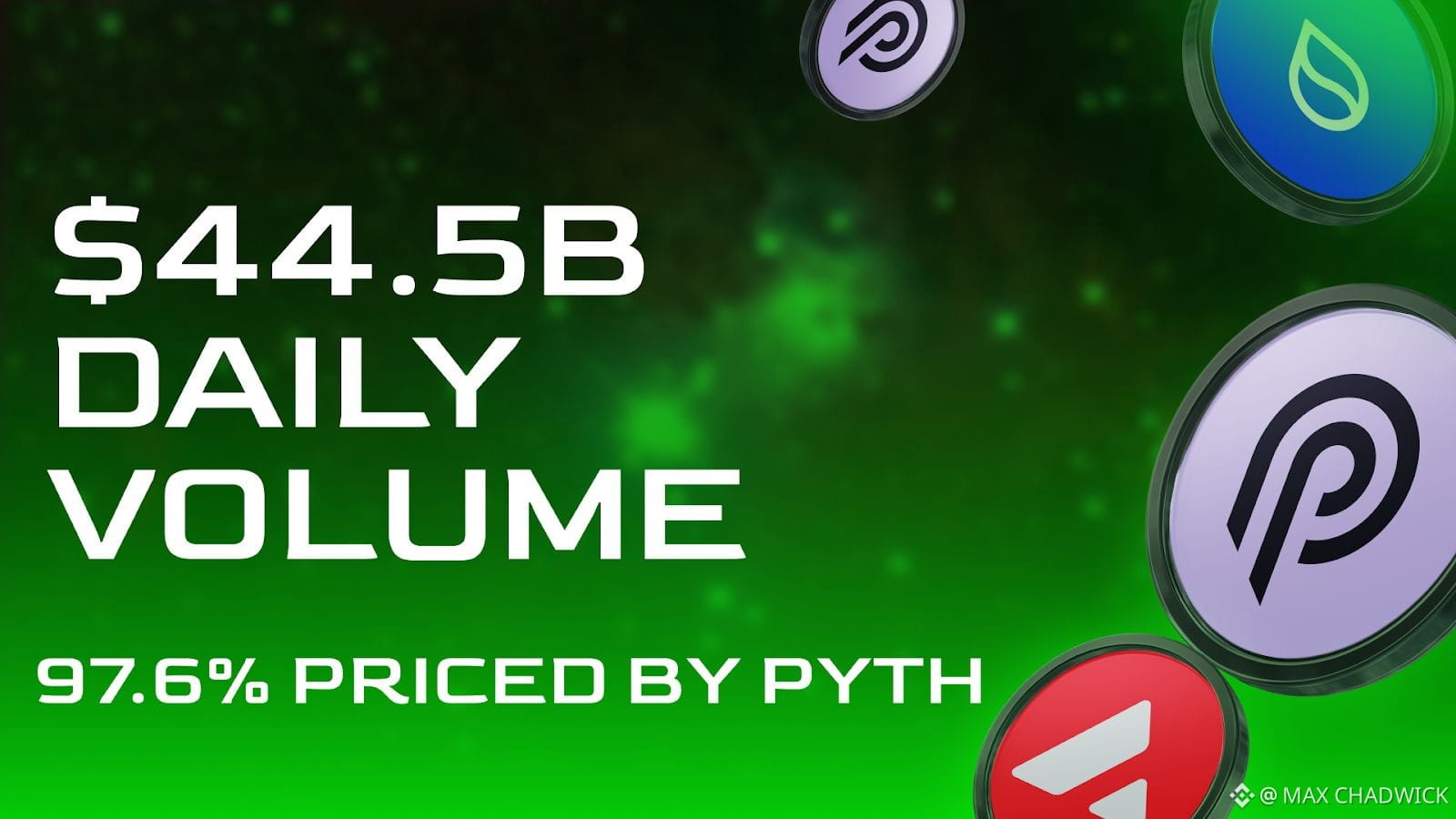
$44,5 Md de volume quotidien de RWA perp est le chiffre que je garderais à l’écran. Pyth se place là où la voie des actifs réels de $AVAX et la voie de la vitesse applicative de $SUI commencent à se transformer en marchés 24/7 que les gens négocient réellement. Regardez le carnet d’ordres. SanDisk : 10,3 Md de volume quotidien SK Hynix : 7,98 Md Micron : 5,44 Md SOXL : 4,91 Md Or : 4,21 Md L’huile, l’argent, SpaceX, le Nasdaq 100 et le S&P 500 sont aussi présents. Sur les 12 marchés perp liés aux RWA en haut de l’écran, 97,6 % de la tarification est alimentée par Pyth. C’est la partie qui m’intéresse, en tant qu’investisseur. La cryptographie a passé des années à parler des RWA comme d’une catégorie future. Aujourd’hui, les semi-conducteurs, les matières premières, les métaux, les ETF, les indices et l’exposition aux marchés privés se négocient déjà sous forme de marchés perp avec un volume quotidien sérieux. Une fois que cela arrive, la couche de prix cesse d’être une infrastructure en arrière-plan. Elle devient le marché. Les marges en ont besoin. Les liquidations en ont besoin. Le financement en a besoin. Les moteurs de risque en ont besoin. Chaque plateforme qui liste ces actifs doit disposer d’une source propre avant que les traders puissent ajuster la taille de leurs positions. Pyth est déjà en place sous ce flux. Et l’expansion en Asie renforce le dispositif. La même pile Pyth Pro atteint désormais Hong Kong, la Chine continentale, la Corée du Sud et le Japon, tout en couvrant déjà les actions américaines, les indices 24/7, le change, les matières premières, les métaux, le revenu fixe et la crypto. Le signal est simple : le trading onchain devient un accès macro 24/7. Pyth chiffre ce changement. #Altcoin Season# #RWA
$44,5 Md de volume quotidien de RWA perp est le chiffre que je garderais à l’écran. Pyth se place là où la voie des actifs réels de $AVAX et la voie de la vitesse applicative de $SUI commencent à se transformer en marchés 24/7 que les gens négocient réellement. Regardez le carnet d’ordres. SanDisk : 10,3 Md de volume quotidien SK Hynix : 7,98 Md Micron : 5,44 Md SOXL : 4,91 Md Or : 4,21 Md L’huile, l’argent, SpaceX, le Nasdaq 100 et le S&P 500 sont aussi présents. Sur les 12 marchés perp liés aux RWA en haut de l’écran, 97,6 % de la tarification est alimentée par Pyth. C’est la partie qui m’intéresse, en tant qu’investisseur. La cryptographie a passé des années à parler des RWA comme d’une catégorie future. Aujourd’hui, les semi-conducteurs, les matières premières, les métaux, les ETF, les indices et l’exposition aux marchés privés se négocient déjà sous forme de marchés perp avec un volume quotidien sérieux. Une fois que cela arrive, la couche de prix cesse d’être une infrastructure en arrière-plan. Elle devient le marché. Les marges en ont besoin. Les liquidations en ont besoin. Le financement en a besoin. Les moteurs de risque en ont besoin. Chaque plateforme qui liste ces actifs doit disposer d’une source propre avant que les traders puissent ajuster la taille de leurs positions. Pyth est déjà en place sous ce flux. Et l’expansion en Asie renforce le dispositif. La même pile Pyth Pro atteint désormais Hong Kong, la Chine continentale, la Corée du Sud et le Japon, tout en couvrant déjà les actions américaines, les indices 24/7, le change, les matières premières, les métaux, le revenu fixe et la crypto. Le signal est simple : le trading onchain devient un accès macro 24/7. Pyth chiffre ce changement. #Altcoin Season# #RWA
52
·
--
Une seule chaîne en possède désormais 96% 📊 $CC efface 66 millions de dollars de revenus réseau sur 30 jours provenant de bons du Trésor et d’actions tokenisés, réglés via des institutions comme JPMorgan et Goldman Sachs. Digital Asset, la société à l’origine de tout cela, lèverait 300 millions de dollars auprès de a16z crypto pour continuer à capitaliser sur cet élan. $SOL a suivi la même tendance et l’a rendu visible au grand public : le trading d’actions tokenisées sur Solana a atteint 3,47 milliards de dollars rien qu’en juin, soit environ 96% de toute cette catégorie sur l’ensemble des chaînes. MoneyGram a rejoint en tant que validateur Solana, et le FNB spot sur Solana de Morgan Stanley vient tout juste d’obtenir l’approbation de NYSE Arca avec des frais de 0,14%, les plus bas de tous les FNB crypto listés jusqu’ici, avec la possibilité de miser jusqu’à 100% du SOL sous-jacent. Canton et Solana ne se sont pas concertés : ils sont arrivés à la même conclusion indépendamment, à quelques semaines d’écart. La tokenisation d’actifs du monde réel, RWA pour faire court, avance sur la chaîne, que les rails soient permissionnés ou publics. Mais rien de cette activité ne masque le point qui compte le plus pour les institutions : la taille de position et l’identité des contreparties. Un trade d’obligations tokenisées sur une chaîne publique reste un trade public, et tout protocole DeFi construit au-dessus hérite de la même exposition. Arcium comble ce manque côté public de cette tendance. Ses MXEs permettent à un transfert de tokens ou à un trade de se régler correctement, tandis que le montant et les contreparties impliquées restent scellés à partir de chaque nœud qui exécute le calcul. C-SPL apporte la même confidentialité à n’importe quel token construit sur la norme SPL existante de Solana, sans exiger de nouveau réseau permissionné. Les équipes de l’écosystème qui construisent sur cette couche ont déjà levé plus de 7,5 millions de dollars, indépendamment du token lui-même. Les institutions veulent clairement la tokenisation : rien qu’en juin, cela l’a prouvé sur deux chaînes différentes. Ce qui leur manquait encore sur une chaîne publique, c’est la partie qui rend réellement la taille sûre à déplacer. ARX est l’actif qui sécurise la couche de calcul que l’on cherche à mettre en place. #RWA #DeFi
Une seule chaîne en possède désormais 96% 📊 $CC efface 66 millions de dollars de revenus réseau sur 30 jours provenant de bons du Trésor et d’actions tokenisés, réglés via des institutions comme JPMorgan et Goldman Sachs. Digital Asset, la société à l’origine de tout cela, lèverait 300 millions de dollars auprès de a16z crypto pour continuer à capitaliser sur cet élan. $SOL a suivi la même tendance et l’a rendu visible au grand public : le trading d’actions tokenisées sur Solana a atteint 3,47 milliards de dollars rien qu’en juin, soit environ 96% de toute cette catégorie sur l’ensemble des chaînes. MoneyGram a rejoint en tant que validateur Solana, et le FNB spot sur Solana de Morgan Stanley vient tout juste d’obtenir l’approbation de NYSE Arca avec des frais de 0,14%, les plus bas de tous les FNB crypto listés jusqu’ici, avec la possibilité de miser jusqu’à 100% du SOL sous-jacent. Canton et Solana ne se sont pas concertés : ils sont arrivés à la même conclusion indépendamment, à quelques semaines d’écart. La tokenisation d’actifs du monde réel, RWA pour faire court, avance sur la chaîne, que les rails soient permissionnés ou publics. Mais rien de cette activité ne masque le point qui compte le plus pour les institutions : la taille de position et l’identité des contreparties. Un trade d’obligations tokenisées sur une chaîne publique reste un trade public, et tout protocole DeFi construit au-dessus hérite de la même exposition. Arcium comble ce manque côté public de cette tendance. Ses MXEs permettent à un transfert de tokens ou à un trade de se régler correctement, tandis que le montant et les contreparties impliquées restent scellés à partir de chaque nœud qui exécute le calcul. C-SPL apporte la même confidentialité à n’importe quel token construit sur la norme SPL existante de Solana, sans exiger de nouveau réseau permissionné. Les équipes de l’écosystème qui construisent sur cette couche ont déjà levé plus de 7,5 millions de dollars, indépendamment du token lui-même. Les institutions veulent clairement la tokenisation : rien qu’en juin, cela l’a prouvé sur deux chaînes différentes. Ce qui leur manquait encore sur une chaîne publique, c’est la partie qui rend réellement la taille sûre à déplacer. ARX est l’actif qui sécurise la couche de calcul que l’on cherche à mettre en place. #RWA #DeFi
76
Connectez-vous pour découvrir plus de contenu
Rejoignez la communauté mondiale des adeptes de cryptomonnaies sur Binance Square
⚡️ Suviez les dernières informations importantes sur les cryptomonnaies.
💬 Jugé digne de confiance par la plus grande plateforme d’échange de cryptomonnaies au monde.
👍 Découvrez les connaissances que partagent les créateurs vérifiés.
Adresse e-mail/Nº de téléphone
Sujets d’actualité
ADAGains10%Above$0.27
14,754 vues
177 mentions
$ADA réalise une forte progression aujourd’hui, bondissant de plus de 10 % pour atteindre environ 027 et franchir un nouveau plus haut sur 90 jours.
Le volume des échanges a également dépassé 1 milliard, signe d’une forte activité sur le marché.
Cette hausse survient alors que $ADA poursuit son redressement après ses plus bas de juin, tandis que sa configuration technique récente est devenue plus haussière.
La zone de 027 à 028 constitue désormais un niveau clé à surveiller. Une cassure durable pourrait ouvrir la voie à des niveaux de résistance plus élevés.
Cependant, après une telle hausse journalière, la volatilité pourrait rester élevée.
#ADAGains10%Above$0.27 #crypto #ADA #Cardano #crypto #Write2Earn
AbdullahAbid_7
·0 mentions J’aime
·376 vues
ETHUp70%InQ3ButLiquidityFalls
160,061 vues
1,052 mentions
EthStakingExitQueueHits2026High
55,431 vues
756 mentions