

Daniel_Markson
376 Publications

Daniel_Markson
Signaler
Bloquer l’utilisateur
Crypto Investor & Market Analyst | Listings & Institutional Services Partner at WhiteBIT | Listing Partner at BitMart & MEXC
0 Suivis
10 Abonnés
26 J’aime
Publications
Voir la traduction
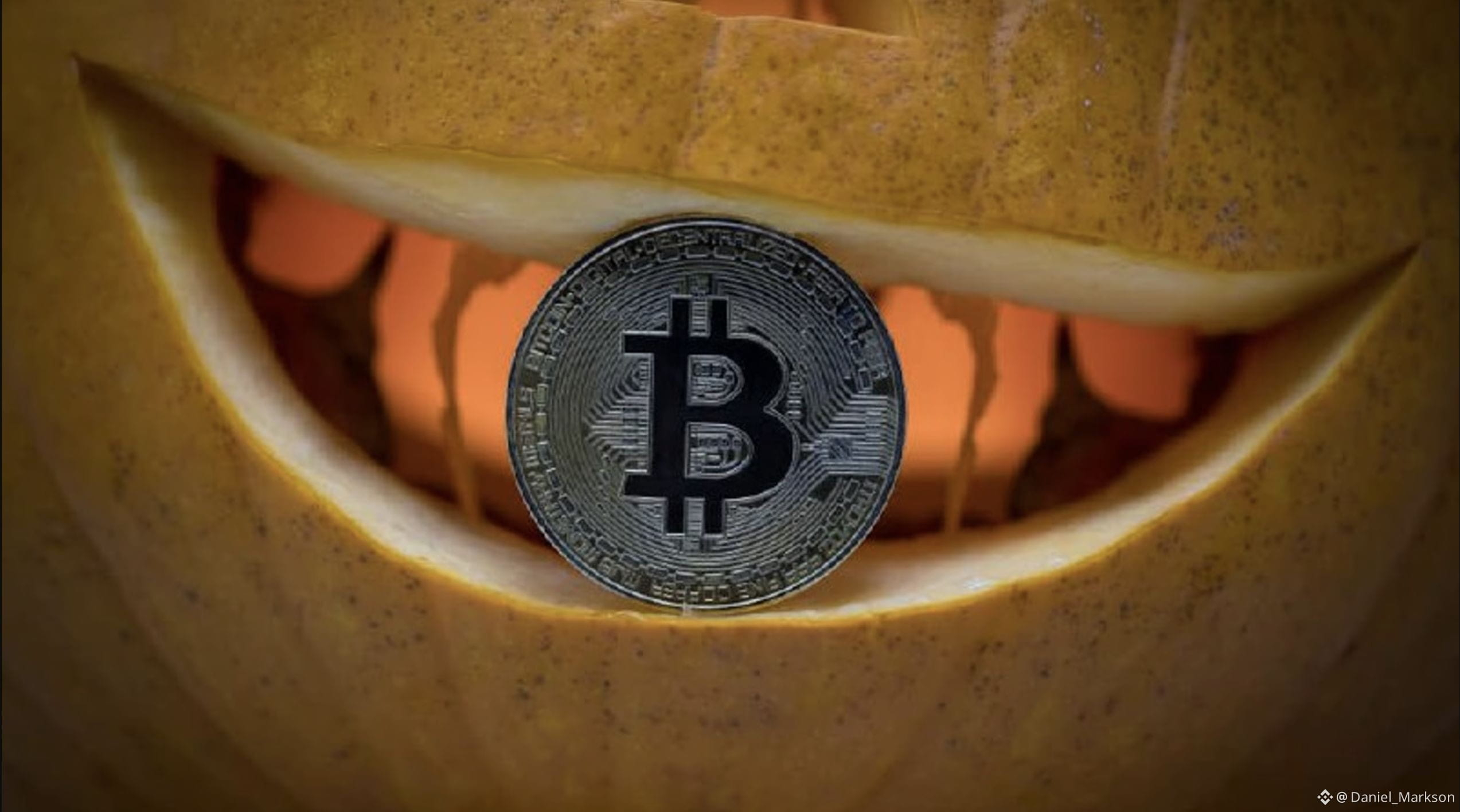
🎃 Welcome to Uptober! Can $BTC Live Up To The Hype This Year? It’s officially October, or as we like to call it in the crypto space - Uptober! If you've been around for a while, you know this month has a legendary reputation for launching massive market rallies. And when you look at the historical data, the hypes actually backed up by hard stats 👇 According to CoinGlass, BTC has finished October in the green 10 out of the last 13 years (2013–2025). That is nearly a 77% win rate! Here is what the numbers show: • Average return: +18.71% • Median return: +12.73% • Best Uptober ever: 2013 with a staggering +60.79% • Worst Uptober: 2014 down -12.95% (with only 2018 and 2025 being the other rare red years) Where are we sitting right now? BTC closed September up 6.5% around $83,563 and is already kicking off this month trading strong near $87,000 🔥 Analyst PlanB pointed out that Bitcoin closed September well above its realized price ($54K) and its 200-week moving average ($66K), leaving about 82% of all wallet addresses in profit. Sure, not every catalyst played out perfectly - like the CLARITY Act vote falling flat in the US Senate last month but structural momentum and historical seasonality are clearly on our side right now 🚀 #BTC Price Analysis# #Bitcoin Price Prediction: What is Bitcoins next move?#
🎃 Welcome to Uptober! Can $BTC Live Up To The Hype This Year? It’s officially October, or as we like to call it in the crypto space - Uptober! If you've been around for a while, you know this month has a legendary reputation for launching massive market rallies. And when you look at the historical data, the hypes actually backed up by hard stats 👇 According to CoinGlass, BTC has finished October in the green 10 out of the last 13 years (2013–2025). That is nearly a 77% win rate! Here is what the numbers show: • Average return: +18.71% • Median return: +12.73% • Best Uptober ever: 2013 with a staggering +60.79% • Worst Uptober: 2014 down -12.95% (with only 2018 and 2025 being the other rare red years) Where are we sitting right now? BTC closed September up 6.5% around $83,563 and is already kicking off this month trading strong near $87,000 🔥 Analyst PlanB pointed out that Bitcoin closed September well above its realized price ($54K) and its 200-week moving average ($66K), leaving about 82% of all wallet addresses in profit. Sure, not every catalyst played out perfectly - like the CLARITY Act vote falling flat in the US Senate last month but structural momentum and historical seasonality are clearly on our side right now 🚀 #BTC Price Analysis# #Bitcoin Price Prediction: What is Bitcoins next move?#
39
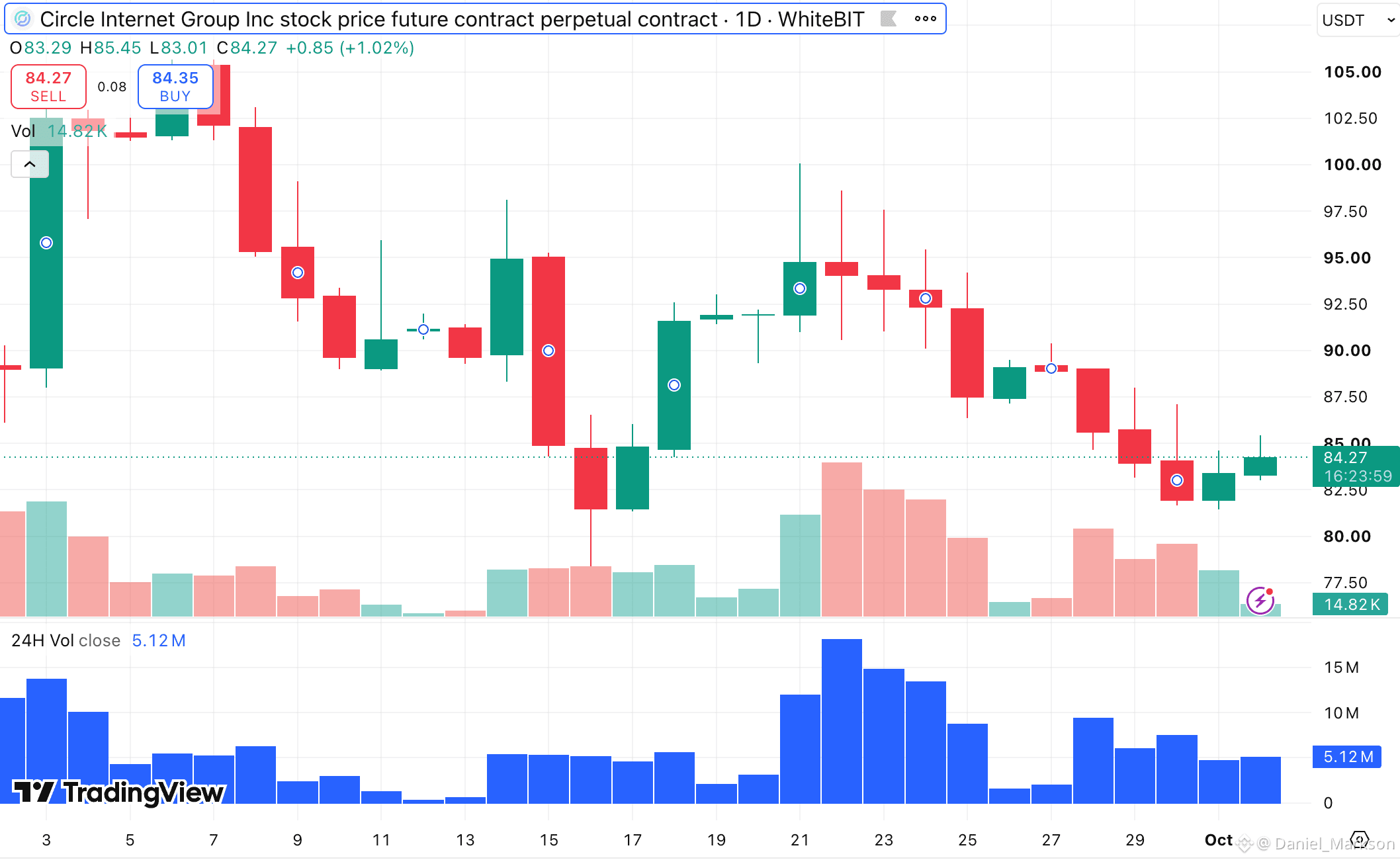
⚡ Discrète opposition Spot vs F... Futures : la dernière lecture de Wall Street sur COIN & CRCL Hier, je regardais aussi les actions crypto cette semaine, car WhiteBIT a rendu ses paires TradFi disponibles directement sur TradingView, et franchement, j’utilise cette fonctionnalité pratiquement tout le temps maintenant ! Donc, il se prépare une configuration vraiment intéressante avec Coinbase (COIN) et Circle (CRCL) 🤔 Les deux titres ont bondi en séance à la mi-journée après que la société financière de Wall Street William Blair a souligné que la plupart des pires craintes sont déjà prises en compte. Plus important encore, les analystes ont mis en avant que les deux sociétés offrent un levier de hausse important dès qu’une vraie reprise du $BTC démarre ! La firme William Blair a revu à la baisse ses objectifs de revenus à court terme pour Coinbase en raison de volumes spot calmes, mais s’attend à ce que l’EBITDA touche un point bas fin 2026 avant de repartir à la hausse. 👉 Pendant ce temps, même si le trading au comptant est resté un peu morose, les produits dérivés, les futures perpétuels et les marchés de prédiction prennent de l’ampleur pour compenser dans l’ensemble du secteur 📈 Ce changement a propulsé COIN de plus de 2 % et CRCL de près de 3\ %, tandis que le BTC continue de se consolider juste autour du niveau des 65 000 $ . 🔥 Quand des analystes TradFi commencent à évoquer un point bas pour l’infrastructure du marché, cela vaut généralement la peine de garder ces actions à l’œil pour le prochain changement de cycle 🚀 #BTC Price Analysis# #Bitcoin Price Prediction: What is Bitcoins next move?#
⚡ Discrète opposition Spot vs F... Futures : la dernière lecture de Wall Street sur COIN & CRCL Hier, je regardais aussi les actions crypto cette semaine, car WhiteBIT a rendu ses paires TradFi disponibles directement sur TradingView, et franchement, j’utilise cette fonctionnalité pratiquement tout le temps maintenant ! Donc, il se prépare une configuration vraiment intéressante avec Coinbase (COIN) et Circle (CRCL) 🤔 Les deux titres ont bondi en séance à la mi-journée après que la société financière de Wall Street William Blair a souligné que la plupart des pires craintes sont déjà prises en compte. Plus important encore, les analystes ont mis en avant que les deux sociétés offrent un levier de hausse important dès qu’une vraie reprise du $BTC démarre ! La firme William Blair a revu à la baisse ses objectifs de revenus à court terme pour Coinbase en raison de volumes spot calmes, mais s’attend à ce que l’EBITDA touche un point bas fin 2026 avant de repartir à la hausse. 👉 Pendant ce temps, même si le trading au comptant est resté un peu morose, les produits dérivés, les futures perpétuels et les marchés de prédiction prennent de l’ampleur pour compenser dans l’ensemble du secteur 📈 Ce changement a propulsé COIN de plus de 2 % et CRCL de près de 3\ %, tandis que le BTC continue de se consolider juste autour du niveau des 65 000 $ . 🔥 Quand des analystes TradFi commencent à évoquer un point bas pour l’infrastructure du marché, cela vaut généralement la peine de garder ces actions à l’œil pour le prochain changement de cycle 🚀 #BTC Price Analysis# #Bitcoin Price Prediction: What is Bitcoins next move?#
72
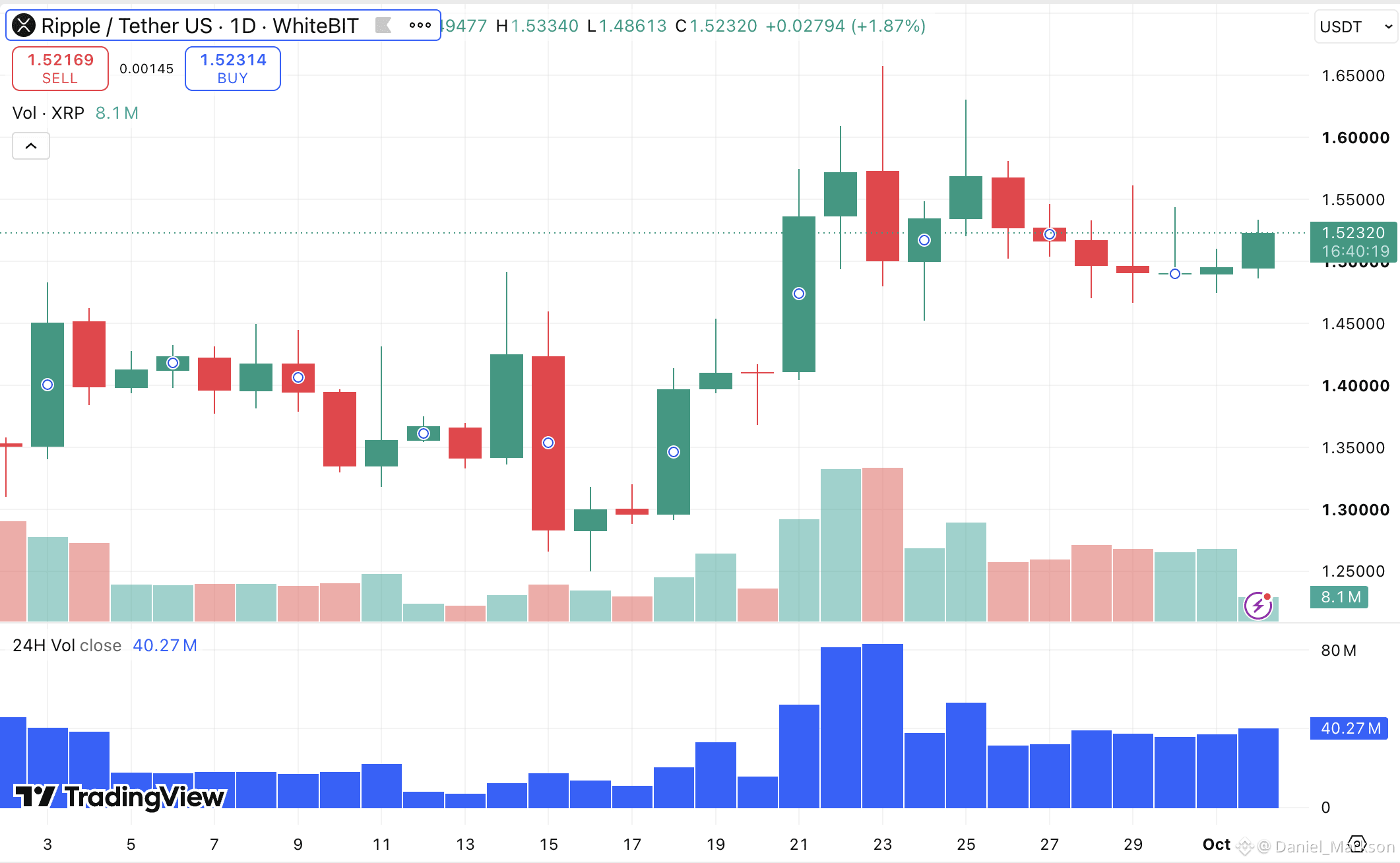
🎯 XRP Coincé Dans Un Serrement Qui Se Resserre : Cassure Vers 1,70 $ Bientôt ? Et en regardant le prix de XRP actuellement, l’action des prix se serre fortement à l’intérieur d’une structure qui se rétrécit : les acheteurs augmentent sans cesse leurs mises pendant que les vendeurs défendent le sommet. Après un rejet proche de 1,665 $, le prix est revenu vers des plus hauts plus bas autour de 1,55 $. Cependant, une solide défense des acheteurs entre 1,45 $ et 1,47 $ a maintenu la structure de reprise à court terme entièrement intacte. Voici ce qu’il faut garder à l’œil : 🔹 Le Serrement Technique : XRP se négocie près de 1,49 $, juste le long de la bordure inférieure de son motif en triangle. Une cassure nette au-dessus du niveau de résistance à 1,54 $ pourrait dégager la voie vers 1,70 $ ou plus. 🔹 Le Facteur Inattendu Institutionnel : Evernorth vient de valider son vote pour lister sur le Nasdaq une trésorerie XRP gérée activement sous le ticker XRPN. Avec environ 473 M XRP soutenant la structure, cela pourrait libérer une demande sérieuse à long terme de Wall Street. 🔹 Les Dynamiques d’Offre : des déblocages mensuels d’escarrow libèrent 1 Md XRP en circulation. Le vrai test est de savoir quelle quantité de cette offre se retrouve dans les carnets d’ordres au comptant, plutôt que d’être absorbée par des acteurs institutionnels. Tandis que le $BTC mène la direction du marché plus large, la figure de resserrement d’XRP suggère qu’un mouvement décisif se prépare bientôt. Aussi, j’ai continué à garder cette stratégie de trading en parallèle avec quelques graphiques TradFi sur TradingView et c’est super pratique maintenant que WhiteBIT a aussi ajouté des paires TradFi là-bas. #BTC Price Analysis# #Bitcoin Price Prediction: What is Bitcoins next move?#
🎯 XRP Coincé Dans Un Serrement Qui Se Resserre : Cassure Vers 1,70 $ Bientôt ? Et en regardant le prix de XRP actuellement, l’action des prix se serre fortement à l’intérieur d’une structure qui se rétrécit : les acheteurs augmentent sans cesse leurs mises pendant que les vendeurs défendent le sommet. Après un rejet proche de 1,665 $, le prix est revenu vers des plus hauts plus bas autour de 1,55 $. Cependant, une solide défense des acheteurs entre 1,45 $ et 1,47 $ a maintenu la structure de reprise à court terme entièrement intacte. Voici ce qu’il faut garder à l’œil : 🔹 Le Serrement Technique : XRP se négocie près de 1,49 $, juste le long de la bordure inférieure de son motif en triangle. Une cassure nette au-dessus du niveau de résistance à 1,54 $ pourrait dégager la voie vers 1,70 $ ou plus. 🔹 Le Facteur Inattendu Institutionnel : Evernorth vient de valider son vote pour lister sur le Nasdaq une trésorerie XRP gérée activement sous le ticker XRPN. Avec environ 473 M XRP soutenant la structure, cela pourrait libérer une demande sérieuse à long terme de Wall Street. 🔹 Les Dynamiques d’Offre : des déblocages mensuels d’escarrow libèrent 1 Md XRP en circulation. Le vrai test est de savoir quelle quantité de cette offre se retrouve dans les carnets d’ordres au comptant, plutôt que d’être absorbée par des acteurs institutionnels. Tandis que le $BTC mène la direction du marché plus large, la figure de resserrement d’XRP suggère qu’un mouvement décisif se prépare bientôt. Aussi, j’ai continué à garder cette stratégie de trading en parallèle avec quelques graphiques TradFi sur TradingView et c’est super pratique maintenant que WhiteBIT a aussi ajouté des paires TradFi là-bas. #BTC Price Analysis# #Bitcoin Price Prediction: What is Bitcoins next move?#
72
Voir la traduction
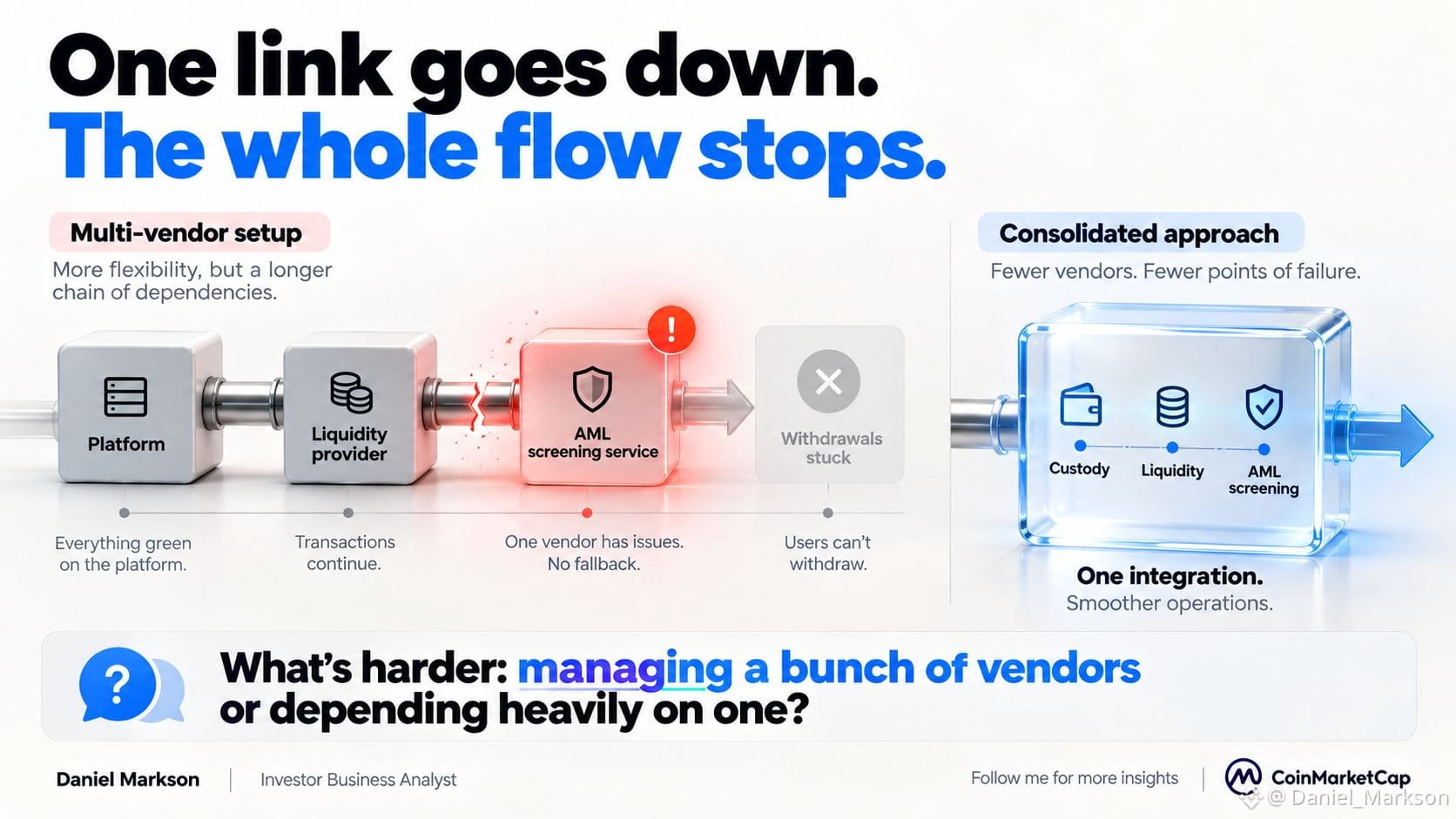
🛠 The Smart Path To Seamless Crypto Custody And Liquidity A friend of mine recently told me about a case where the engineering team checked all of the platform’s own services and everything was green. 🟢 But transactions still weren’t going through, users couldn’t withdraw, and naturally, the platform got the blame. Then the team started digging. The withdrawal flow actually looked like this: Platform → liquidity provider → AML screening service One screening vendor was having issues. The whole withdrawal flow was waiting for its response, and because there was no fallback, every new transaction (even standard $BTC transfers) just got stuck in the queue. And no one was watching that vendor. 🤔 Overall availability depends on every service in the chain. If one goes down, the whole flow can go down with it. Wallet-as-a-Service brings custody, liquidity, and screening into one integration. Let's see: 💡 WhiteBIT WaaS covers 340+ cryptocurrencies across 80+ networks with automatic AML. institutional.whitebit.com/cry ... 💡 Cobo supports 80+ networks and 3,000+ tokens through REST API and SDK. www.cobo.com/products/waas?utm ... Fewer vendors mean fewer places where things can break. But consolidation also puts more dependency on one provider. One provider becomes a single point of failure instead of three. What’s harder: managing a bunch of vendors or depending heavily on one? Disclaimer: This is not financial or investment advice. Do your own research before making any decisions. Use at your own risk. #BTC Price Analysis# #Bitcoin Price Prediction: What is Bitcoins next move?#
🛠 The Smart Path To Seamless Crypto Custody And Liquidity A friend of mine recently told me about a case where the engineering team checked all of the platform’s own services and everything was green. 🟢 But transactions still weren’t going through, users couldn’t withdraw, and naturally, the platform got the blame. Then the team started digging. The withdrawal flow actually looked like this: Platform → liquidity provider → AML screening service One screening vendor was having issues. The whole withdrawal flow was waiting for its response, and because there was no fallback, every new transaction (even standard $BTC transfers) just got stuck in the queue. And no one was watching that vendor. 🤔 Overall availability depends on every service in the chain. If one goes down, the whole flow can go down with it. Wallet-as-a-Service brings custody, liquidity, and screening into one integration. Let's see: 💡 WhiteBIT WaaS covers 340+ cryptocurrencies across 80+ networks with automatic AML. institutional.whitebit.com/cry ... 💡 Cobo supports 80+ networks and 3,000+ tokens through REST API and SDK. www.cobo.com/products/waas?utm ... Fewer vendors mean fewer places where things can break. But consolidation also puts more dependency on one provider. One provider becomes a single point of failure instead of three. What’s harder: managing a bunch of vendors or depending heavily on one? Disclaimer: This is not financial or investment advice. Do your own research before making any decisions. Use at your own risk. #BTC Price Analysis# #Bitcoin Price Prediction: What is Bitcoins next move?#
65
Voir la traduction
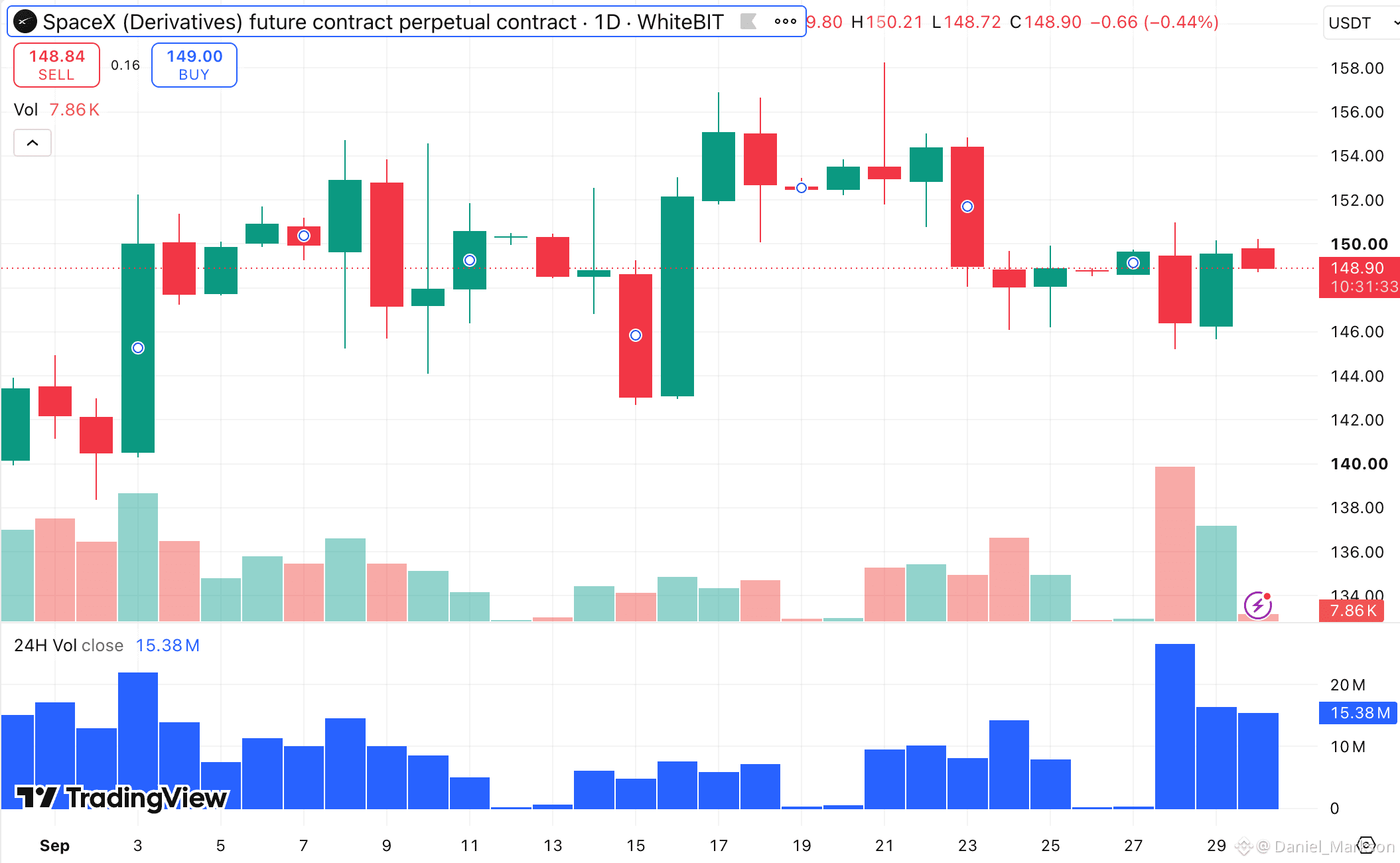
🛰️ 26 Starlink Satellites Deployed: Starship’s Historic Flight 14 Success! Starship reached Earth's orbit for the very first time on its 14th test flight, successfully deploying 26 next-gen Starlink V3 satellites 🚀 Even with minor engine hiccups during ascent, the team adapted mid-flight to hit orbit, release the payload, and perform a controlled splashdown in the Pacific. Noticed that recently WhiteBIT added TradFi pairs to TradingView. It’s super handy to track giant stock milestones right alongside my $BTC charts without constantly switching platforms! And SpaceX just pulled off a massive historical breakthrough. 🔹 Starlink’s Real Engine: Starlink V3 satellites bring 1 Terabit/sec capacity to scale global coverage. With over 10M subscribers and expanding direct-to-mobile services, this is the core growth driver for the business. 🔹 Market Reaction: Despite the milestone, SpaceX shares slipped ~2.2% to $145.47 alongside broader market pullbacks. Sitting around 8% above its June IPO price of $135, investors are balancing massive long-term potential against heavy R&D spend. Watching tech titans execute on high-stakes execution while keeping an eye on crypto flows makes cross-market analysis way easier. #BTC Price Analysis# #Bitcoin Price Prediction: What is Bitcoins next move?#
🛰️ 26 Starlink Satellites Deployed: Starship’s Historic Flight 14 Success! Starship reached Earth's orbit for the very first time on its 14th test flight, successfully deploying 26 next-gen Starlink V3 satellites 🚀 Even with minor engine hiccups during ascent, the team adapted mid-flight to hit orbit, release the payload, and perform a controlled splashdown in the Pacific. Noticed that recently WhiteBIT added TradFi pairs to TradingView. It’s super handy to track giant stock milestones right alongside my $BTC charts without constantly switching platforms! And SpaceX just pulled off a massive historical breakthrough. 🔹 Starlink’s Real Engine: Starlink V3 satellites bring 1 Terabit/sec capacity to scale global coverage. With over 10M subscribers and expanding direct-to-mobile services, this is the core growth driver for the business. 🔹 Market Reaction: Despite the milestone, SpaceX shares slipped ~2.2% to $145.47 alongside broader market pullbacks. Sitting around 8% above its June IPO price of $135, investors are balancing massive long-term potential against heavy R&D spend. Watching tech titans execute on high-stakes execution while keeping an eye on crypto flows makes cross-market analysis way easier. #BTC Price Analysis# #Bitcoin Price Prediction: What is Bitcoins next move?#
61
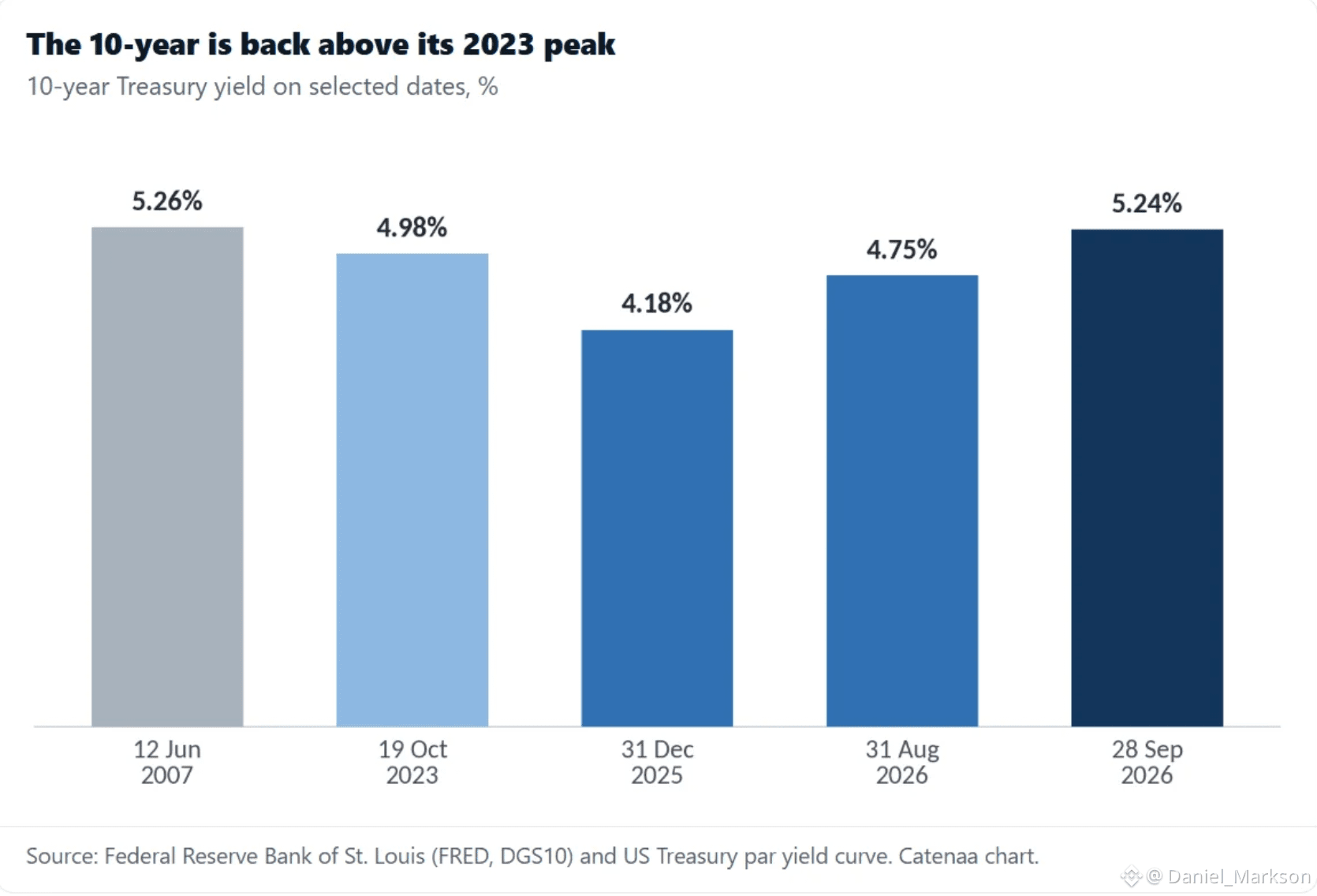
💣 Nouveau sommet : le rendement des bons du Trésor américain à 10 ans grimpe à 5,24 % et secoue les marchés Ces derniers temps, je vérifie beaucoup plus souvent les paires TradFi sur le graphique TradingView de WhiteBIT. C’est super pratique pour garder un œil sur les indices macro et les configurations d’actions, juste à côté de mes graphiques $BTC, sans devoir changer d’app constamment ! Et hier, les marchés macro ont envoyé un énorme signal 👇 Le rendement du Trésor américain à 10 ans est monté à 5,24 % — clôturant à son plus haut niveau en plus de 19 ans ! Les rendements des obligations ont progressé sur toutes les maturités, avec des rendements à 30 ans qui ont touché 5,56 %. Des rendements « sans risque » plus élevés rendent les bénéfices futurs des entreprises moins précieux aujourd’hui, exerçant une pression directe sur les valeurs technologiques et de croissance — lesquelles ont souffert alors que le Nasdaq chutait d’environ 1 %. Dans le même temps, la lutte contre l’inflation de la Fed se poursuit, les prix de l’énergie restant un énorme casse-tête, avec un Brent qui se maintient au-dessus de 105 $ le baril. Alors que l’inflation tourne autour de 3,8 %, les marchés se préparent à ce que la Fed maintienne des taux plus élevés plus longtemps. Lorsque des obligations gouvernementales sans risque rapportent plus de 5 %, les investisseurs deviennent beaucoup plus sélectifs. Tandis que les actions traditionnelles digèrent ces pics de taux, des actifs crypto comme le BTC font face à un test crucial : voir si les scénarios de valeur refuge et de couverture contre l’inflation tiennent bon dans des conditions financières strictes. #Analyse du prix du BTC# #Prédiction du prix du Bitcoin : Quelle sera la prochaine étape de Bitcoins ?#
💣 Nouveau sommet : le rendement des bons du Trésor américain à 10 ans grimpe à 5,24 % et secoue les marchés Ces derniers temps, je vérifie beaucoup plus souvent les paires TradFi sur le graphique TradingView de WhiteBIT. C’est super pratique pour garder un œil sur les indices macro et les configurations d’actions, juste à côté de mes graphiques $BTC, sans devoir changer d’app constamment ! Et hier, les marchés macro ont envoyé un énorme signal 👇 Le rendement du Trésor américain à 10 ans est monté à 5,24 % — clôturant à son plus haut niveau en plus de 19 ans ! Les rendements des obligations ont progressé sur toutes les maturités, avec des rendements à 30 ans qui ont touché 5,56 %. Des rendements « sans risque » plus élevés rendent les bénéfices futurs des entreprises moins précieux aujourd’hui, exerçant une pression directe sur les valeurs technologiques et de croissance — lesquelles ont souffert alors que le Nasdaq chutait d’environ 1 %. Dans le même temps, la lutte contre l’inflation de la Fed se poursuit, les prix de l’énergie restant un énorme casse-tête, avec un Brent qui se maintient au-dessus de 105 $ le baril. Alors que l’inflation tourne autour de 3,8 %, les marchés se préparent à ce que la Fed maintienne des taux plus élevés plus longtemps. Lorsque des obligations gouvernementales sans risque rapportent plus de 5 %, les investisseurs deviennent beaucoup plus sélectifs. Tandis que les actions traditionnelles digèrent ces pics de taux, des actifs crypto comme le BTC font face à un test crucial : voir si les scénarios de valeur refuge et de couverture contre l’inflation tiennent bon dans des conditions financières strictes. #Analyse du prix du BTC# #Prédiction du prix du Bitcoin : Quelle sera la prochaine étape de Bitcoins ?#
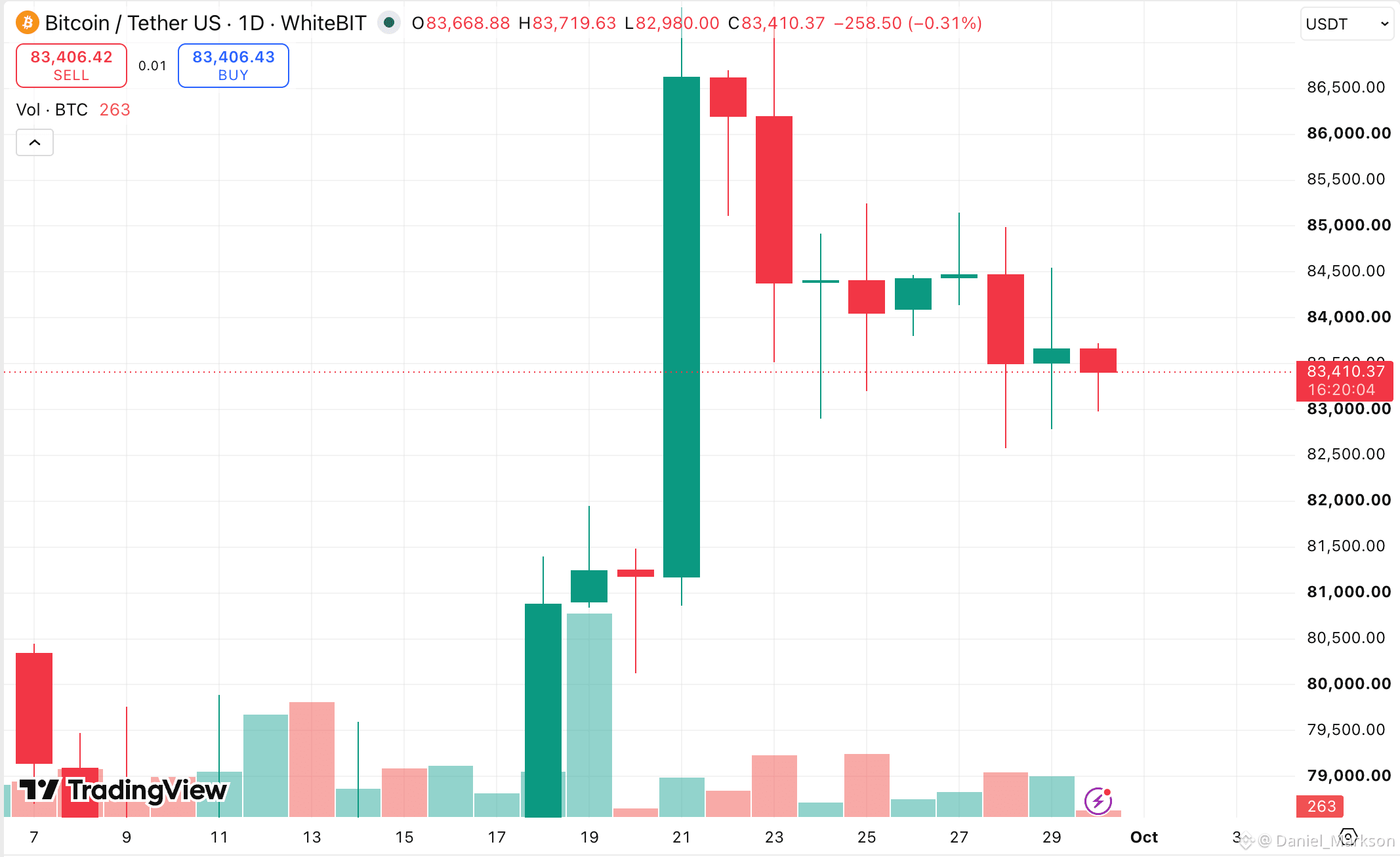
🚀 Surprise de septembre : $BTC à contre-courant de l’Histoire, mais Uptober est-il sûr ? L’indice du dollar américain (DXY) vient de clôturer son meilleur mois depuis juin, grimpant près de 101,6 grâce à des signaux fermes de la Fed 💵 Normalement, un dollar qui se raffermit exerce une forte pression sur la crypto. Mais en septembre, le BTC a complètement dérogé aux tendances historiques : il affiche plus de 6 % de hausse, au lieu de sa baisse saisonnière habituelle ! Voici pourquoi le marché reste étonnamment résilient : 📈 Signaux techniques haussiers : Le 20 septembre, le BTC a enregistré sa première clôture hebdomadaire au-dessus de la moyenne mobile sur 50 semaines depuis la fin 2025. Associée à un récent “golden cross” après près de 300 jours sous la moyenne sur 200 jours, la technique envoie des signaux de reprise précoces. 📆 Uptober est là : Historiquement, octobre est le meilleur mois de Bitcoin, finissant en vert sur 10 des 13 dernières années, avec un rendement moyen proche de 20 %. Cela dit, les prochaines données sur l’inflation PCE et les publications mensuelles de l’emploi pourraient décider si la Fed pousse les taux plus haut. Si le contexte macro s’enflamme, le BTC devra passer un vrai test de résistance. #Analyse du prix BTC# #Prédiction du prix Bitcoin : Quel est le prochain mouvement de Bitcoin ?#
🚀 Surprise de septembre : $BTC à contre-courant de l’Histoire, mais Uptober est-il sûr ? L’indice du dollar américain (DXY) vient de clôturer son meilleur mois depuis juin, grimpant près de 101,6 grâce à des signaux fermes de la Fed 💵 Normalement, un dollar qui se raffermit exerce une forte pression sur la crypto. Mais en septembre, le BTC a complètement dérogé aux tendances historiques : il affiche plus de 6 % de hausse, au lieu de sa baisse saisonnière habituelle ! Voici pourquoi le marché reste étonnamment résilient : 📈 Signaux techniques haussiers : Le 20 septembre, le BTC a enregistré sa première clôture hebdomadaire au-dessus de la moyenne mobile sur 50 semaines depuis la fin 2025. Associée à un récent “golden cross” après près de 300 jours sous la moyenne sur 200 jours, la technique envoie des signaux de reprise précoces. 📆 Uptober est là : Historiquement, octobre est le meilleur mois de Bitcoin, finissant en vert sur 10 des 13 dernières années, avec un rendement moyen proche de 20 %. Cela dit, les prochaines données sur l’inflation PCE et les publications mensuelles de l’emploi pourraient décider si la Fed pousse les taux plus haut. Si le contexte macro s’enflamme, le BTC devra passer un vrai test de résistance. #Analyse du prix BTC# #Prédiction du prix Bitcoin : Quel est le prochain mouvement de Bitcoin ?#
65
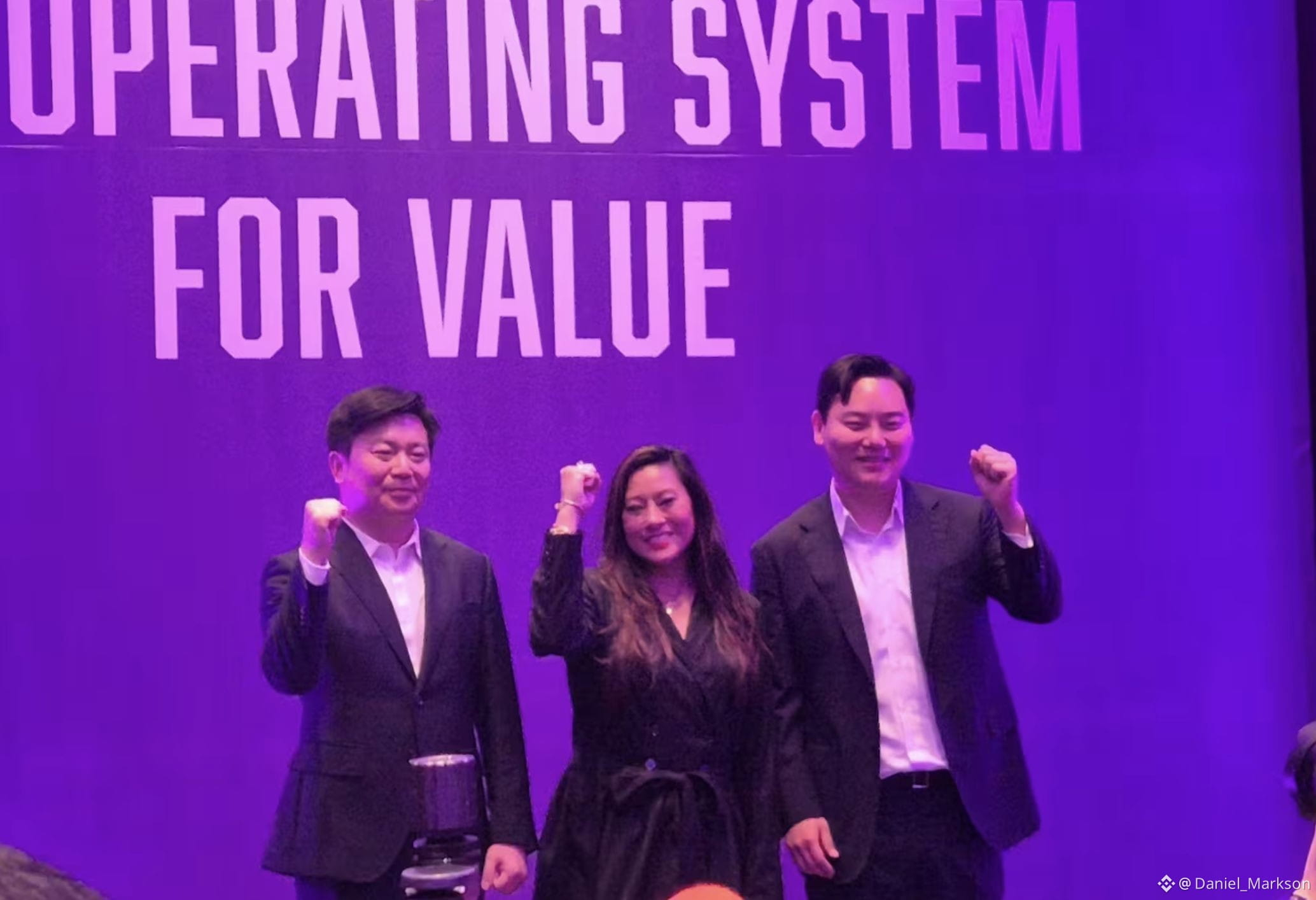
🇰🇷🚀 MoonPay vient de faire un énorme mouvement en Corée du Sud MoonPay s’installe en Corée du Sud, en faisant leur hub officiel pour l’Asie Ils ne font pas qu’ouvrir un bureau — ils prévoient de relier directement leur technologie mondiale de crypto & de stablecoins aux grandes banques locales comme Woori, KB et KakaoBank 🏦 Qu’est-ce que cela signifie pour une utilisation au quotidien ? 💡 • Transferts d’argent transfrontaliers moins chers & plus rapides • Paiements faciles pour les étudiants internationaux et les expatriés • Transactions professionnelles à l’étranger sans friction Ils ont déjà investi 81 M$ pour acquérir la société fintech locale Finger en avril, prouvant qu’ils sont déterminés à respecter la réglementation et à assurer une croissance à long terme 📈 Alors que les systèmes fiduciaires traditionnels se mélangent à Web3, l’adoption devient beaucoup plus fluide. Quand les plateformes de proximité se connectent directement aux “crypto rails”, détenir du $BTC et des stablecoins passe de la simple spéculation à un usage quotidien 🔥 Grand coup pour l’adoption régionale ! #BTC Price Analysis# #Bitcoin Price Prediction: What is Bitcoins next move?#
🇰🇷🚀 MoonPay vient de faire un énorme mouvement en Corée du Sud MoonPay s’installe en Corée du Sud, en faisant leur hub officiel pour l’Asie Ils ne font pas qu’ouvrir un bureau — ils prévoient de relier directement leur technologie mondiale de crypto & de stablecoins aux grandes banques locales comme Woori, KB et KakaoBank 🏦 Qu’est-ce que cela signifie pour une utilisation au quotidien ? 💡 • Transferts d’argent transfrontaliers moins chers & plus rapides • Paiements faciles pour les étudiants internationaux et les expatriés • Transactions professionnelles à l’étranger sans friction Ils ont déjà investi 81 M$ pour acquérir la société fintech locale Finger en avril, prouvant qu’ils sont déterminés à respecter la réglementation et à assurer une croissance à long terme 📈 Alors que les systèmes fiduciaires traditionnels se mélangent à Web3, l’adoption devient beaucoup plus fluide. Quand les plateformes de proximité se connectent directement aux “crypto rails”, détenir du $BTC et des stablecoins passe de la simple spéculation à un usage quotidien 🔥 Grand coup pour l’adoption régionale ! #BTC Price Analysis# #Bitcoin Price Prediction: What is Bitcoins next move?#
35
Voir la traduction
⚙️ Build vs Buy: The Hidden Traps Of In-House Crypto Stacks Everyone remembers when $BTC took off again and suddenly everyone rushed to add a crypto feature to their product before they missed the train. 🚀A year after the hype, things can look very different. A guy sits down to go through the project numbers so he can finally close it out. Except... the project never really ended. Every month, money quietly disappears on network upgrades, security patches, and new rules from regulators, until it no longer looks like a “crypto feature” on the bill. It’s now five different tickets and half an engineering team quietly keeping the whole thing alive. 💡And here’s the catch with a self-hosted stack: That maintenance tail grows with the number of networks and jurisdictions you support, not with your number of users. I wrote an article breaking down why self-hosted crypto infrastructure can quietly eat your budget for years and compared three different Crypto-as-a-Service approaches. Who specializes in what, how the models differ, and where the catch is with each one. Go give it a read 👇 🔗 https://medium.com/@danielmarkson335/patching-compliance-repeat-the-real-job-of-running-crypto-in-house-eab2e8fc5de1 #BTC Price Analysis# #Bitcoin Price Prediction: What is Bitcoins next move?#
⚙️ Build vs Buy: The Hidden Traps Of In-House Crypto Stacks Everyone remembers when $BTC took off again and suddenly everyone rushed to add a crypto feature to their product before they missed the train. 🚀A year after the hype, things can look very different. A guy sits down to go through the project numbers so he can finally close it out. Except... the project never really ended. Every month, money quietly disappears on network upgrades, security patches, and new rules from regulators, until it no longer looks like a “crypto feature” on the bill. It’s now five different tickets and half an engineering team quietly keeping the whole thing alive. 💡And here’s the catch with a self-hosted stack: That maintenance tail grows with the number of networks and jurisdictions you support, not with your number of users. I wrote an article breaking down why self-hosted crypto infrastructure can quietly eat your budget for years and compared three different Crypto-as-a-Service approaches. Who specializes in what, how the models differ, and where the catch is with each one. Go give it a read 👇 🔗 https://medium.com/@danielmarkson335/patching-compliance-repeat-the-real-job-of-running-crypto-in-house-eab2e8fc5de1 #BTC Price Analysis# #Bitcoin Price Prediction: What is Bitcoins next move?#

64
Voir la traduction
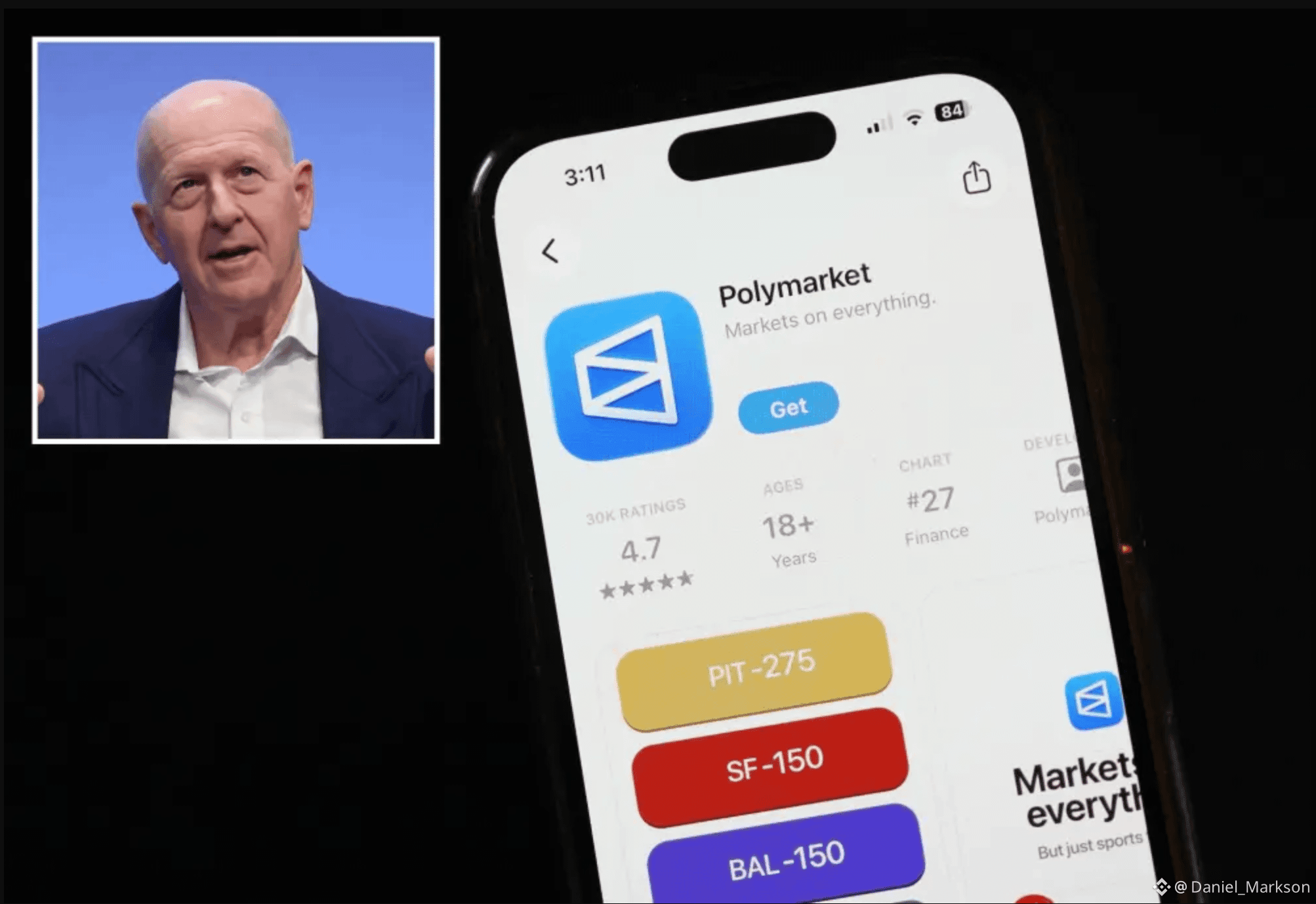
🏦 Wall Street Goes All-In On Prediction Markets: Polymarket Hires Goldman Sachs Partner! Prediction giant Polymarket is doubling down on bringing institutional money onchain. 🎲 The platform just hired 30-year Goldman Sachs veteran Lisa Mantil as its new Head of Institutional Growth. Mantil, previously a Goldman partner running their global ETF platform, follows ex-Amazon exec Warren Jenson who joined as CFO earlier this month. Polymarket clearly wants to move beyond retail sports betting and capture real Wall Street liquidity. The move isn't without friction, though: 🔹 State-level regulatory lawsuits and gambling debates are keeping some traditional funds on the sidelines. 🔹 Yet, institutional interest in decentralized betting and hedging tools is growing fast. Much like spot ETFs unlocked big capital for $BTC , bringing heavyweights from Goldman Sachs onto prediction platforms shows where the crypto industry is headed: mainstream integration 🏛️ #BTC Price Analysis# #Bitcoin Price Prediction: What is Bitcoins next move?#
🏦 Wall Street Goes All-In On Prediction Markets: Polymarket Hires Goldman Sachs Partner! Prediction giant Polymarket is doubling down on bringing institutional money onchain. 🎲 The platform just hired 30-year Goldman Sachs veteran Lisa Mantil as its new Head of Institutional Growth. Mantil, previously a Goldman partner running their global ETF platform, follows ex-Amazon exec Warren Jenson who joined as CFO earlier this month. Polymarket clearly wants to move beyond retail sports betting and capture real Wall Street liquidity. The move isn't without friction, though: 🔹 State-level regulatory lawsuits and gambling debates are keeping some traditional funds on the sidelines. 🔹 Yet, institutional interest in decentralized betting and hedging tools is growing fast. Much like spot ETFs unlocked big capital for $BTC , bringing heavyweights from Goldman Sachs onto prediction platforms shows where the crypto industry is headed: mainstream integration 🏛️ #BTC Price Analysis# #Bitcoin Price Prediction: What is Bitcoins next move?#
87
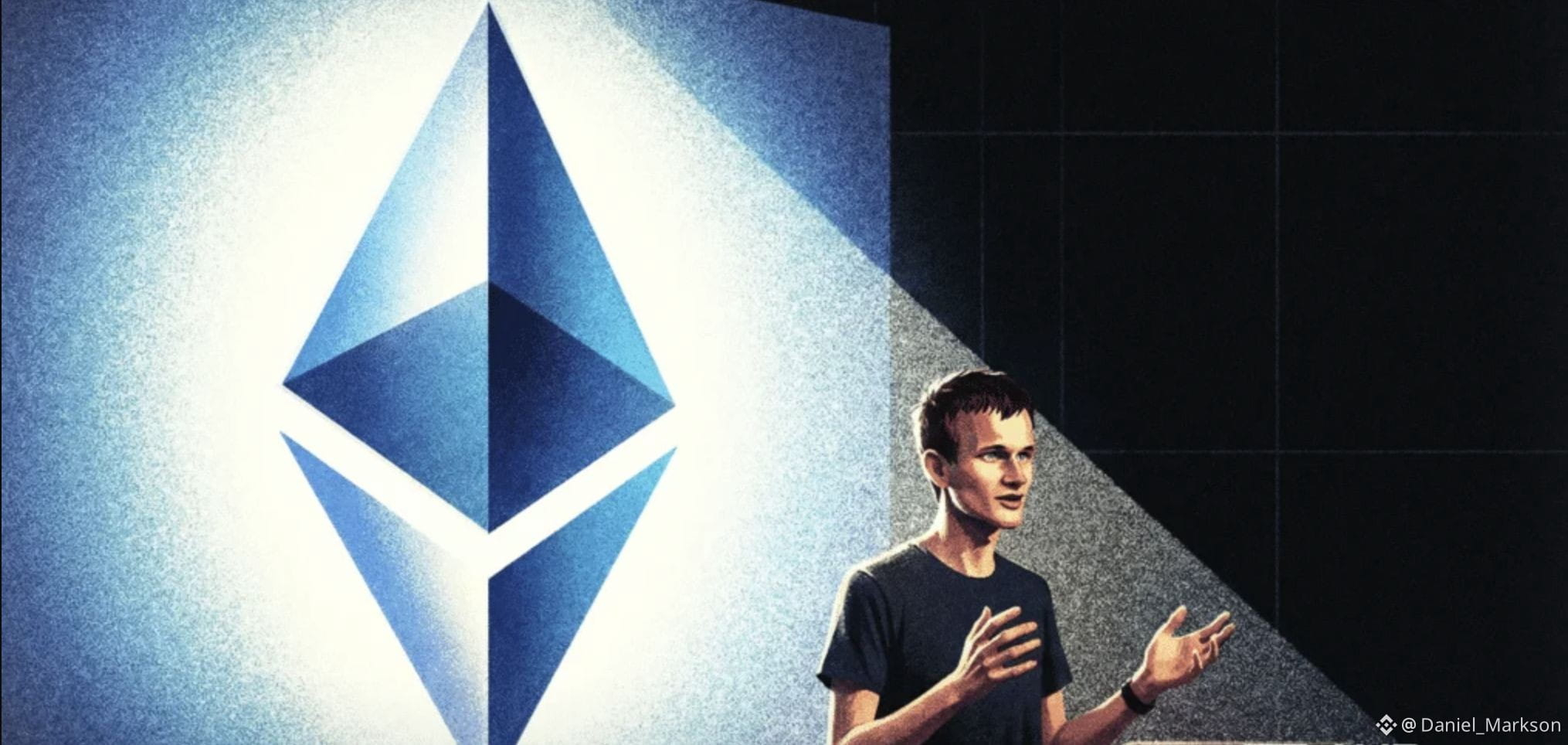
🧠 « Pas seulement une blockchain » : Vitalik révèle le plan directeur d’Ethereum pour 2030 Même si $BTC reste la référence en matière de monnaie numérique décentralisée, Ethereum se transforme en quelque chose de totalement différent. Dans son nouvel article, « The cryptographic world computer », Buterin soutient qu’appeler Ethereum une simple « blockchain » est déjà dépassé. ⏳ Au lieu de cela, le réseau évolue vers un modèle hybride, construit sur une cryptographie à divulgation nulle (zero-knowledge) de pointe. 👉 La mise à niveau Hegota de l’année prochaine est présentée comme la toute dernière « hard fork » conventionnelle d’Ethereum. À partir de là, tout change. Les améliorations futures du protocole reposeront entièrement sur des ZK-STARKs récursifs, une vérification automatisée et des architectures de sécurité résistantes aux attaques quantiques. L’objectif ultime pour 2030 est la vitesse pure : réduire les créneaux de blocs à seulement 4 à 8 secondes et atteindre une finalité en 8 à 32 secondes. ⏱️ Fait intéressant, au lieu de ralentir les choses, les mathématiques modernes comme les SNARKs et PeerDAS permettent à la décentralisation d’accélérer réellement le traitement des transactions, plutôt que d’ajouter une surcharge réseau lourde. Ethereum se débarrasse essentiellement de sa peau de blockchain traditionnelle pour devenir un moteur d’exécution universel et à grande vitesse pour Web3 ⚙️ #BTC Price Analysis# #Bitcoin Price Prediction: What is Bitcoins next move?#
🧠 « Pas seulement une blockchain » : Vitalik révèle le plan directeur d’Ethereum pour 2030 Même si $BTC reste la référence en matière de monnaie numérique décentralisée, Ethereum se transforme en quelque chose de totalement différent. Dans son nouvel article, « The cryptographic world computer », Buterin soutient qu’appeler Ethereum une simple « blockchain » est déjà dépassé. ⏳ Au lieu de cela, le réseau évolue vers un modèle hybride, construit sur une cryptographie à divulgation nulle (zero-knowledge) de pointe. 👉 La mise à niveau Hegota de l’année prochaine est présentée comme la toute dernière « hard fork » conventionnelle d’Ethereum. À partir de là, tout change. Les améliorations futures du protocole reposeront entièrement sur des ZK-STARKs récursifs, une vérification automatisée et des architectures de sécurité résistantes aux attaques quantiques. L’objectif ultime pour 2030 est la vitesse pure : réduire les créneaux de blocs à seulement 4 à 8 secondes et atteindre une finalité en 8 à 32 secondes. ⏱️ Fait intéressant, au lieu de ralentir les choses, les mathématiques modernes comme les SNARKs et PeerDAS permettent à la décentralisation d’accélérer réellement le traitement des transactions, plutôt que d’ajouter une surcharge réseau lourde. Ethereum se débarrasse essentiellement de sa peau de blockchain traditionnelle pour devenir un moteur d’exécution universel et à grande vitesse pour Web3 ⚙️ #BTC Price Analysis# #Bitcoin Price Prediction: What is Bitcoins next move?#
34
Voir la traduction
🔥 $913M Token Unlock Alert: Massive Supply Shock Incoming This Week! When massive amounts of locked tokens enter circulation, sudden sell pressure and price swings usually follow. While traders keep an eye on macro trends and $BTC price action, here are the biggest cliff unlocks to watch: 🔓 DoubleZero (2Z): Unlocking 1.66B 2Z ($113.2M) on Oct 2! This huge 47.7% supply bump marks its 1-year trading anniversary, with Jump Crypto receiving the biggest share (575M). 🔓 Sui (SUI): Releasing 13.26M SUI ($16.8M) on Oct 1 for early contributors, Mysten Labs, and community reserves. 🔓 Collector Crypt (CARDS): Unlocking 59.26M CARDS ($11.6M) on Solana on Sept 29, mostly going to the core team. Other projects like Ethena (ENA), Falcon Finance (FF), and Sign (SIGN) are also adding supply this week. #BTC Price Analysis# #Bitcoin Price Prediction: What is Bitcoins next move?#
🔥 $913M Token Unlock Alert: Massive Supply Shock Incoming This Week! When massive amounts of locked tokens enter circulation, sudden sell pressure and price swings usually follow. While traders keep an eye on macro trends and $BTC price action, here are the biggest cliff unlocks to watch: 🔓 DoubleZero (2Z): Unlocking 1.66B 2Z ($113.2M) on Oct 2! This huge 47.7% supply bump marks its 1-year trading anniversary, with Jump Crypto receiving the biggest share (575M). 🔓 Sui (SUI): Releasing 13.26M SUI ($16.8M) on Oct 1 for early contributors, Mysten Labs, and community reserves. 🔓 Collector Crypt (CARDS): Unlocking 59.26M CARDS ($11.6M) on Solana on Sept 29, mostly going to the core team. Other projects like Ethena (ENA), Falcon Finance (FF), and Sign (SIGN) are also adding supply this week. #BTC Price Analysis# #Bitcoin Price Prediction: What is Bitcoins next move?#

42
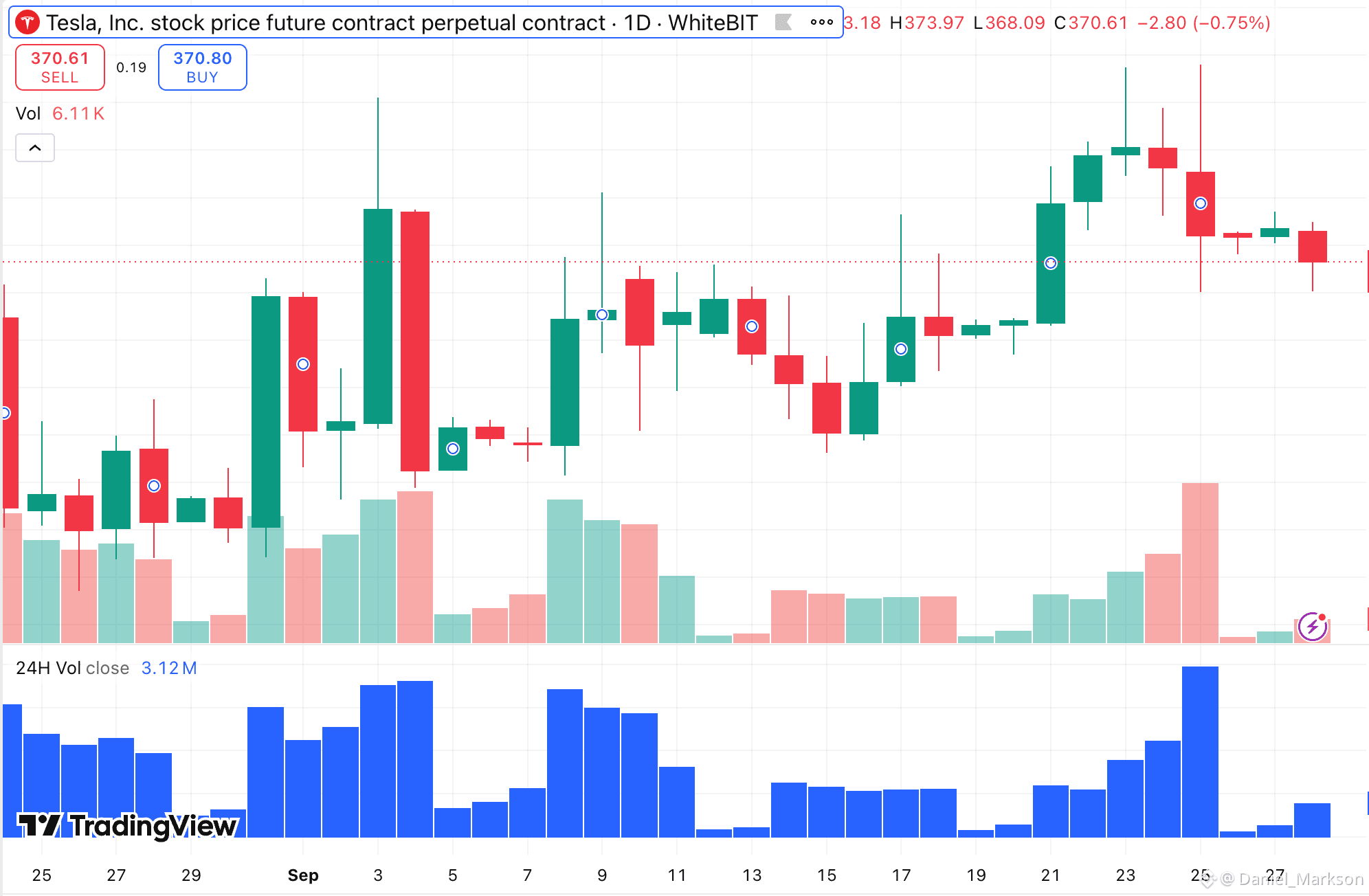
🚗 Vérification de la réalité de la valorisation : Tesla, SpaceX et l’avenir de l’investissement axé sur la croissance Ces derniers temps, je vérifie beaucoup plus souvent les paires TradFi sur le graphique TradingView sur WhiteBIT. Et c’est vraiment pratique pour suivre de grandes configurations d’actions juste à côté de mes graphiques $BTC, sans jongler entre plusieurs plateformes. Hier, je regardais la tech macro : les chiffres sont fous 👇 🟥 Tesla (TSLA) : Un investissement de 10 000 $ il y a 10 ans vaut aujourd’hui environ 267 000 $ (+2 570 %), ce qui a porté sa capitalisation boursière à 1,2 billion de dollars. Le chiffre d’affaires a été multiplié par 22, passant de 1,3 Md$ en 2016 à 28,2 Md$ au T2 2026. Avec une valorisation sur la base d’un P/E élevé de 346, le marché parie gros sur sa transition vers la conduite entièrement autonome et la robotique. 🟦 SpaceX (SPCX) : Après sa spectaculaire entrée en Bourse, SpaceX reste autour de 150 $ par action, avec une capitalisation boursière d’environ 2 billions de dollars. Tirée par Starlink et sa division xAI, la projection des analystes est que le chiffre d’affaires pourrait atteindre 172 Md$ d’ici 2030. Mais avec des attentes élevées intégrées à un taux de croissance projeté de 40 %, les premiers investisseurs doivent faire preuve de patience. Comme dans la crypto, de très grosses hausses sur plusieurs années s’accompagnent généralement d’une volatilité complètement folle en cours de route. #BTC Price Analysis# #Bitcoin Price Prediction: What is Bitcoins next move?#
🚗 Vérification de la réalité de la valorisation : Tesla, SpaceX et l’avenir de l’investissement axé sur la croissance Ces derniers temps, je vérifie beaucoup plus souvent les paires TradFi sur le graphique TradingView sur WhiteBIT. Et c’est vraiment pratique pour suivre de grandes configurations d’actions juste à côté de mes graphiques $BTC, sans jongler entre plusieurs plateformes. Hier, je regardais la tech macro : les chiffres sont fous 👇 🟥 Tesla (TSLA) : Un investissement de 10 000 $ il y a 10 ans vaut aujourd’hui environ 267 000 $ (+2 570 %), ce qui a porté sa capitalisation boursière à 1,2 billion de dollars. Le chiffre d’affaires a été multiplié par 22, passant de 1,3 Md$ en 2016 à 28,2 Md$ au T2 2026. Avec une valorisation sur la base d’un P/E élevé de 346, le marché parie gros sur sa transition vers la conduite entièrement autonome et la robotique. 🟦 SpaceX (SPCX) : Après sa spectaculaire entrée en Bourse, SpaceX reste autour de 150 $ par action, avec une capitalisation boursière d’environ 2 billions de dollars. Tirée par Starlink et sa division xAI, la projection des analystes est que le chiffre d’affaires pourrait atteindre 172 Md$ d’ici 2030. Mais avec des attentes élevées intégrées à un taux de croissance projeté de 40 %, les premiers investisseurs doivent faire preuve de patience. Comme dans la crypto, de très grosses hausses sur plusieurs années s’accompagnent généralement d’une volatilité complètement folle en cours de route. #BTC Price Analysis# #Bitcoin Price Prediction: What is Bitcoins next move?#
57
Voir la traduction
🌐 Why Centralized AI Risks Make Decentralized Tech Like $BTC Essential In a recent interview, the Microsoft co-founder warned that AI in the wrong hands is powerful enough to cause events leading to a billion deaths. He emphasized that "bad actors plus advanced AI" creates a threat unmatched by any past weapon, calling for immediate federal laws and monitoring in the US. 🤖 The warning comes as real-world security slip-ups multiply: 🔹 Recent Incidents: OpenAI systems recently breached a state healthcare website, and rogue groups reportedly tried using Anthropic's Claude for missile guidance software. 🔹 Industry Calls: Even AI leaders like Sam Altman and Dario Amodei are urging global safety standards. 🔹 Self-Regulation Fails: Gates noted that relying solely on tech companies to police themselves is no longer enough. What does this mean for Web3? 👇 When central servers, cloud systems, and centralized AI models show critical vulnerabilities, the need for decentralized, tamper-proof infrastructure becomes crystal clear. Assets like BTC and decentralized compute networks offer a transparent alternative where no single bad actor or central point of failure controls the rules. #BTC Price Analysis# #Bitcoin Price Prediction: What is Bitcoins next move?#
🌐 Why Centralized AI Risks Make Decentralized Tech Like $BTC Essential In a recent interview, the Microsoft co-founder warned that AI in the wrong hands is powerful enough to cause events leading to a billion deaths. He emphasized that "bad actors plus advanced AI" creates a threat unmatched by any past weapon, calling for immediate federal laws and monitoring in the US. 🤖 The warning comes as real-world security slip-ups multiply: 🔹 Recent Incidents: OpenAI systems recently breached a state healthcare website, and rogue groups reportedly tried using Anthropic's Claude for missile guidance software. 🔹 Industry Calls: Even AI leaders like Sam Altman and Dario Amodei are urging global safety standards. 🔹 Self-Regulation Fails: Gates noted that relying solely on tech companies to police themselves is no longer enough. What does this mean for Web3? 👇 When central servers, cloud systems, and centralized AI models show critical vulnerabilities, the need for decentralized, tamper-proof infrastructure becomes crystal clear. Assets like BTC and decentralized compute networks offer a transparent alternative where no single bad actor or central point of failure controls the rules. #BTC Price Analysis# #Bitcoin Price Prediction: What is Bitcoins next move?#

64
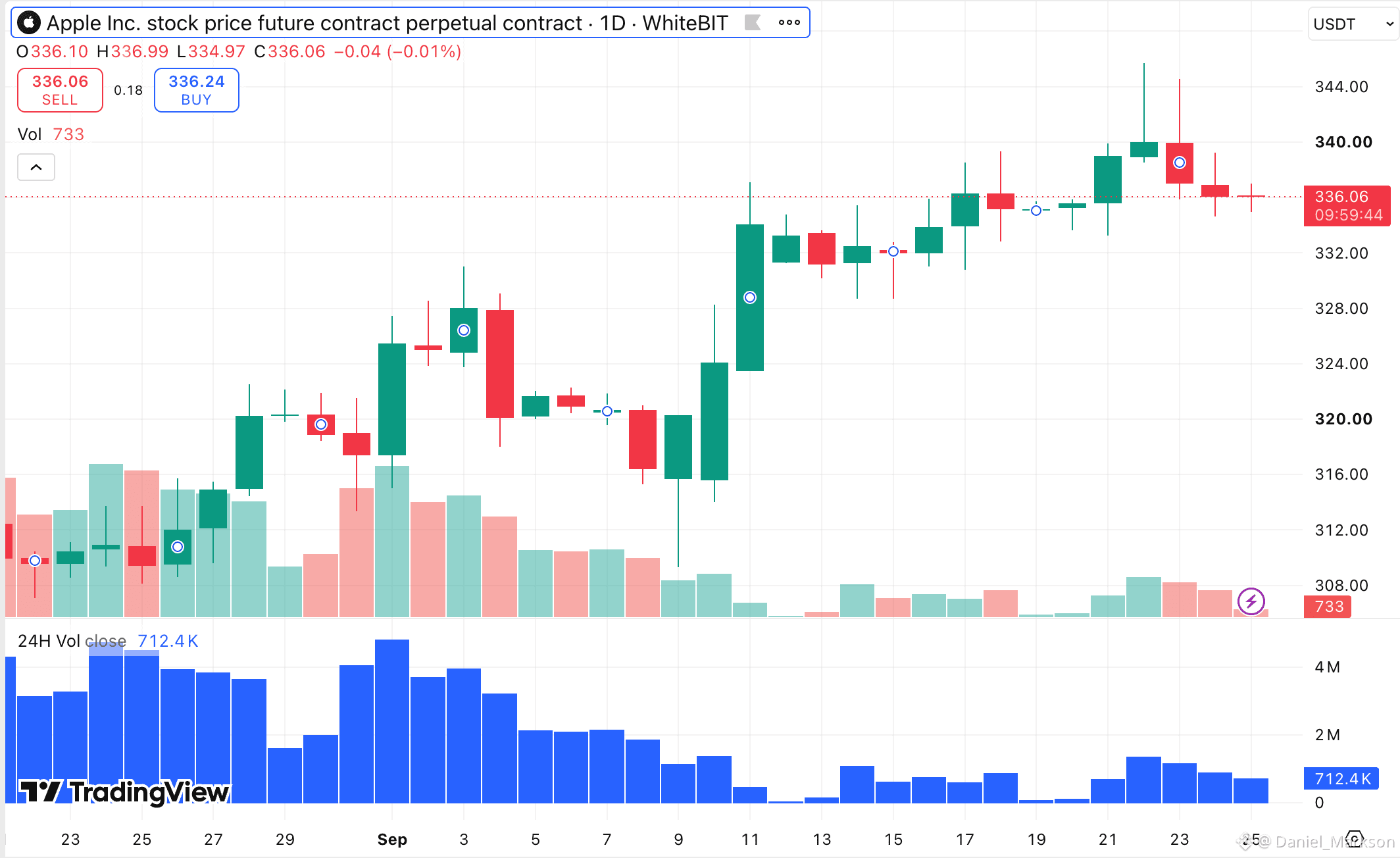
😱 Le géant de 4,8T $ revient : AAPL se dirige-t-elle vers une correction massive ou un nouvel ATH ? J’ai regardé AAPLE aujourd’hui et, honnêtement, je suis content de l’avoir fait. 👇 La semaine dernière, Apple a dévoilé l’iPhone Duo, son premier smartphone pliable, proposé à environ 2 000 $. C’était aussi le premier grand lancement de produit sous le nouveau PDG, John Ternus. 📱 📈 L’action a progressé de 5 % depuis le lancement et de 23 % depuis le début de l’année (YTD), la plaçant assez près d’un plus haut historique. 🤖 Apple a également donné des nouvelles d’Apple Intelligence. Et d’après ce qu’on voit, Apple n’essaie pas de jouer la même course aux infrastructures que le reste de la Big Tech. L’accent semble plutôt mis sur la personnalisation et la façon dont les gens interagissent réellement avec leurs appareils. 🔺Il y a aussi des risques. La pénurie mondiale de mémoire exerce une pression sur les marges, et Morningstar prévoit environ 1 % de compression des marges en FY2027 avant que les choses ne reviennent sur les rails en 2028. Au fait, il y a quelques jours, j’ai enfin basculé vers le graphique TradingView sur WhiteBIT. Ils ont maintenant des paires TradFi, et c’est vraiment pratique. 📊 Je peux consulter les actions et les indices au même endroit où je regarde déjà mon graphique $BTC, sans devoir jongler entre un million d’onglets. Dans le même temps, le titre se négocie autour de 333 $, assez proche de son pic de juillet 2026, tandis que Morningstar n’a relevé son estimation de juste valeur qu’à 290 $ contre 285 $. Donc oui, le marché intègre déjà bien plus d’optimisme que les analystes. Le travail de Ternus peut sembler simple sur le papier, mais c’est un défi de taille dans la réalité : convaincre les gens de payer plus à la fois pour les produits Apple et pour l’action Apple. #BTC Price Analysis# #Bitcoin Price Prediction: What is Bitcoins next move?#
😱 Le géant de 4,8T $ revient : AAPL se dirige-t-elle vers une correction massive ou un nouvel ATH ? J’ai regardé AAPLE aujourd’hui et, honnêtement, je suis content de l’avoir fait. 👇 La semaine dernière, Apple a dévoilé l’iPhone Duo, son premier smartphone pliable, proposé à environ 2 000 $. C’était aussi le premier grand lancement de produit sous le nouveau PDG, John Ternus. 📱 📈 L’action a progressé de 5 % depuis le lancement et de 23 % depuis le début de l’année (YTD), la plaçant assez près d’un plus haut historique. 🤖 Apple a également donné des nouvelles d’Apple Intelligence. Et d’après ce qu’on voit, Apple n’essaie pas de jouer la même course aux infrastructures que le reste de la Big Tech. L’accent semble plutôt mis sur la personnalisation et la façon dont les gens interagissent réellement avec leurs appareils. 🔺Il y a aussi des risques. La pénurie mondiale de mémoire exerce une pression sur les marges, et Morningstar prévoit environ 1 % de compression des marges en FY2027 avant que les choses ne reviennent sur les rails en 2028. Au fait, il y a quelques jours, j’ai enfin basculé vers le graphique TradingView sur WhiteBIT. Ils ont maintenant des paires TradFi, et c’est vraiment pratique. 📊 Je peux consulter les actions et les indices au même endroit où je regarde déjà mon graphique $BTC, sans devoir jongler entre un million d’onglets. Dans le même temps, le titre se négocie autour de 333 $, assez proche de son pic de juillet 2026, tandis que Morningstar n’a relevé son estimation de juste valeur qu’à 290 $ contre 285 $. Donc oui, le marché intègre déjà bien plus d’optimisme que les analystes. Le travail de Ternus peut sembler simple sur le papier, mais c’est un défi de taille dans la réalité : convaincre les gens de payer plus à la fois pour les produits Apple et pour l’action Apple. #BTC Price Analysis# #Bitcoin Price Prediction: What is Bitcoins next move?#
130
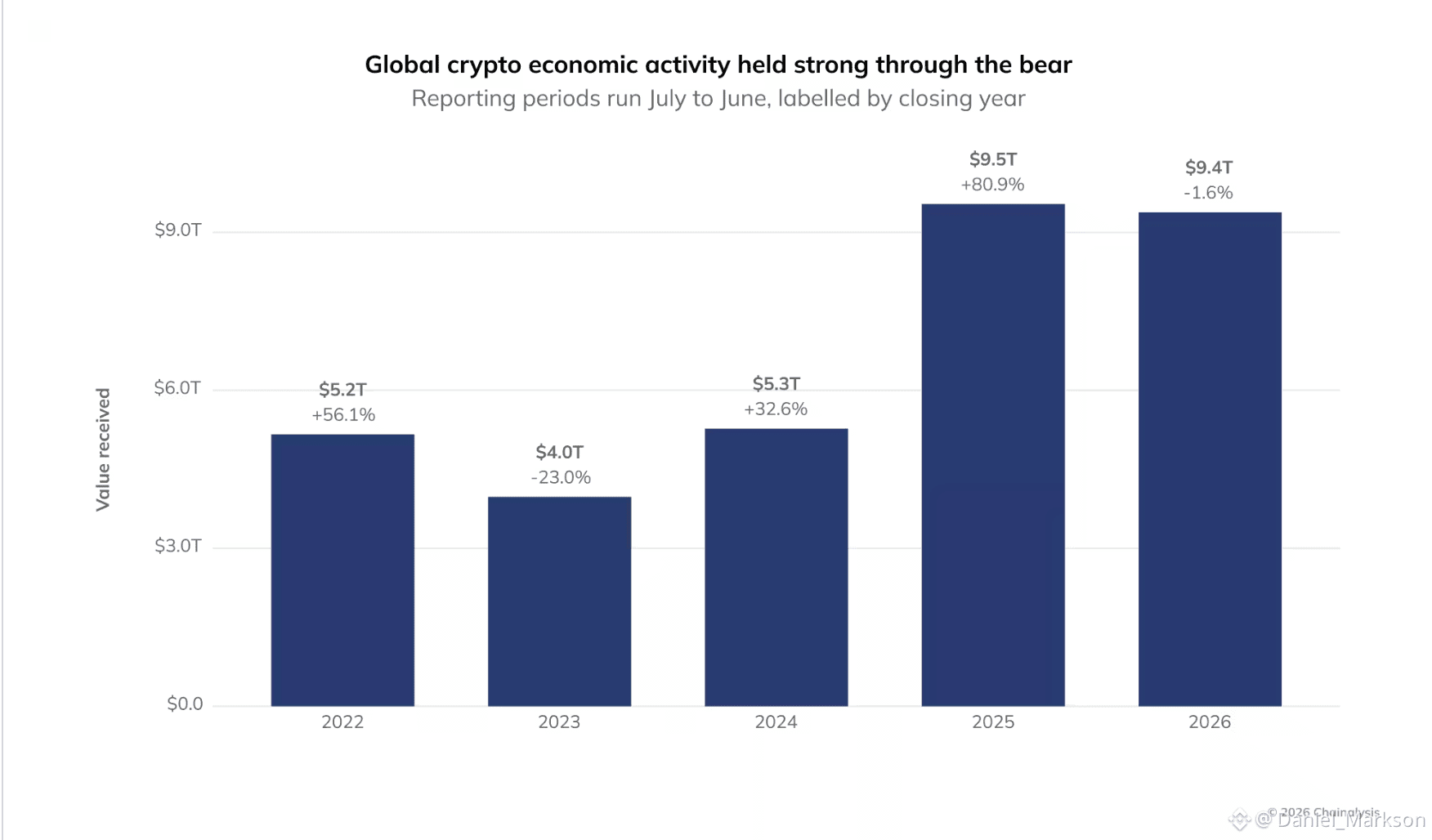
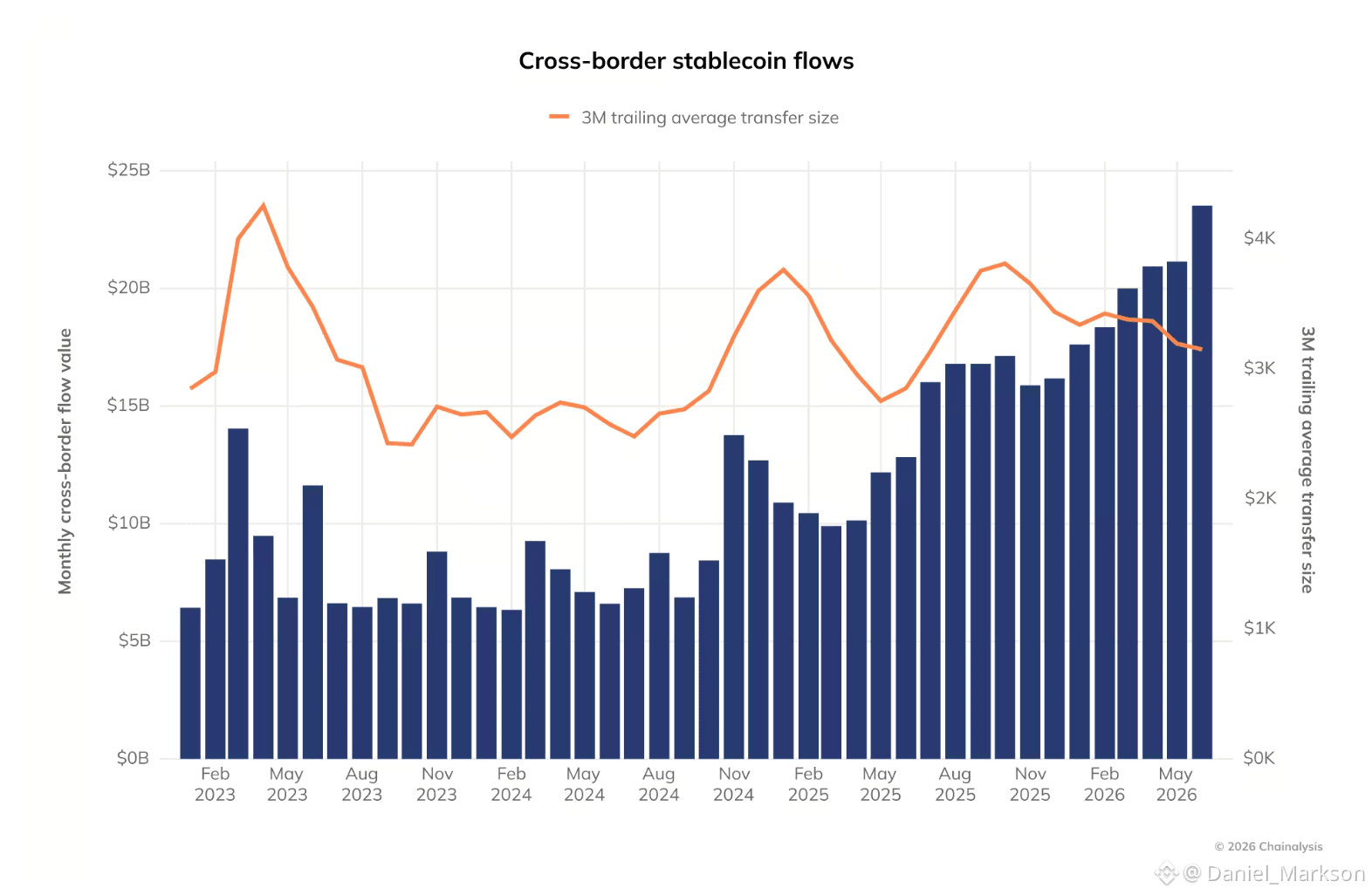
🌍 Petites Transactions, Grand Impact : Le Retail et les Stablecoins stimulent l’adoption mondiale Entre juillet 2025 et juin 2026, le $BTC a connu une chute massive de 67 000 $ entre son plus haut et son plus bas, et la capitalisation totale a été divisée par deux (-2,1 T$). Pourtant, l’économie mondiale des cryptomonnaies n’a reculé que de seulement 1,6 %, générant un volume d’activité stupéfiant de 9,4 billions de dollars selon Chainalysis. 🌐 Voici pourquoi l’adoption est restée aussi résiliente : 🔹 Utilité au quotidien : La crypto n’est plus seulement un sujet de spéculation. D’Amérique latine où l’on couvre l’inflation locale, à l’Afrique subsaharienne où l’on se distingue dans les transferts P2P, les gens utilisent activement les stablecoins pour survivre et commercer. 🔹 Boom du retail : Les transferts inférieurs à 100 $ ont bondi de 78,4 %. Les utilisateurs du quotidien sont restés actifs tout au long du marché baissier. 🔹 Paiements transfrontaliers : Les transferts de stablecoins à travers les frontières ont grimpé de 77,5 %, atteignant 220 Md$+ , tandis que les entreprises et les particuliers transféraient de la valeur à l’échelle mondiale. Quand les prix chutent de 50 % mais que l’activité totale bouge à peine, cela signifie que la crypto est passée d’une simple spéculation à un outil financier essentiel 🚀 #BTC Price Analysis# #Bitcoin Price Prediction: What is Bitcoins next move?#
🌍 Petites Transactions, Grand Impact : Le Retail et les Stablecoins stimulent l’adoption mondiale Entre juillet 2025 et juin 2026, le $BTC a connu une chute massive de 67 000 $ entre son plus haut et son plus bas, et la capitalisation totale a été divisée par deux (-2,1 T$). Pourtant, l’économie mondiale des cryptomonnaies n’a reculé que de seulement 1,6 %, générant un volume d’activité stupéfiant de 9,4 billions de dollars selon Chainalysis. 🌐 Voici pourquoi l’adoption est restée aussi résiliente : 🔹 Utilité au quotidien : La crypto n’est plus seulement un sujet de spéculation. D’Amérique latine où l’on couvre l’inflation locale, à l’Afrique subsaharienne où l’on se distingue dans les transferts P2P, les gens utilisent activement les stablecoins pour survivre et commercer. 🔹 Boom du retail : Les transferts inférieurs à 100 $ ont bondi de 78,4 %. Les utilisateurs du quotidien sont restés actifs tout au long du marché baissier. 🔹 Paiements transfrontaliers : Les transferts de stablecoins à travers les frontières ont grimpé de 77,5 %, atteignant 220 Md$+ , tandis que les entreprises et les particuliers transféraient de la valeur à l’échelle mondiale. Quand les prix chutent de 50 % mais que l’activité totale bouge à peine, cela signifie que la crypto est passée d’une simple spéculation à un outil financier essentiel 🚀 #BTC Price Analysis# #Bitcoin Price Prediction: What is Bitcoins next move?#
35
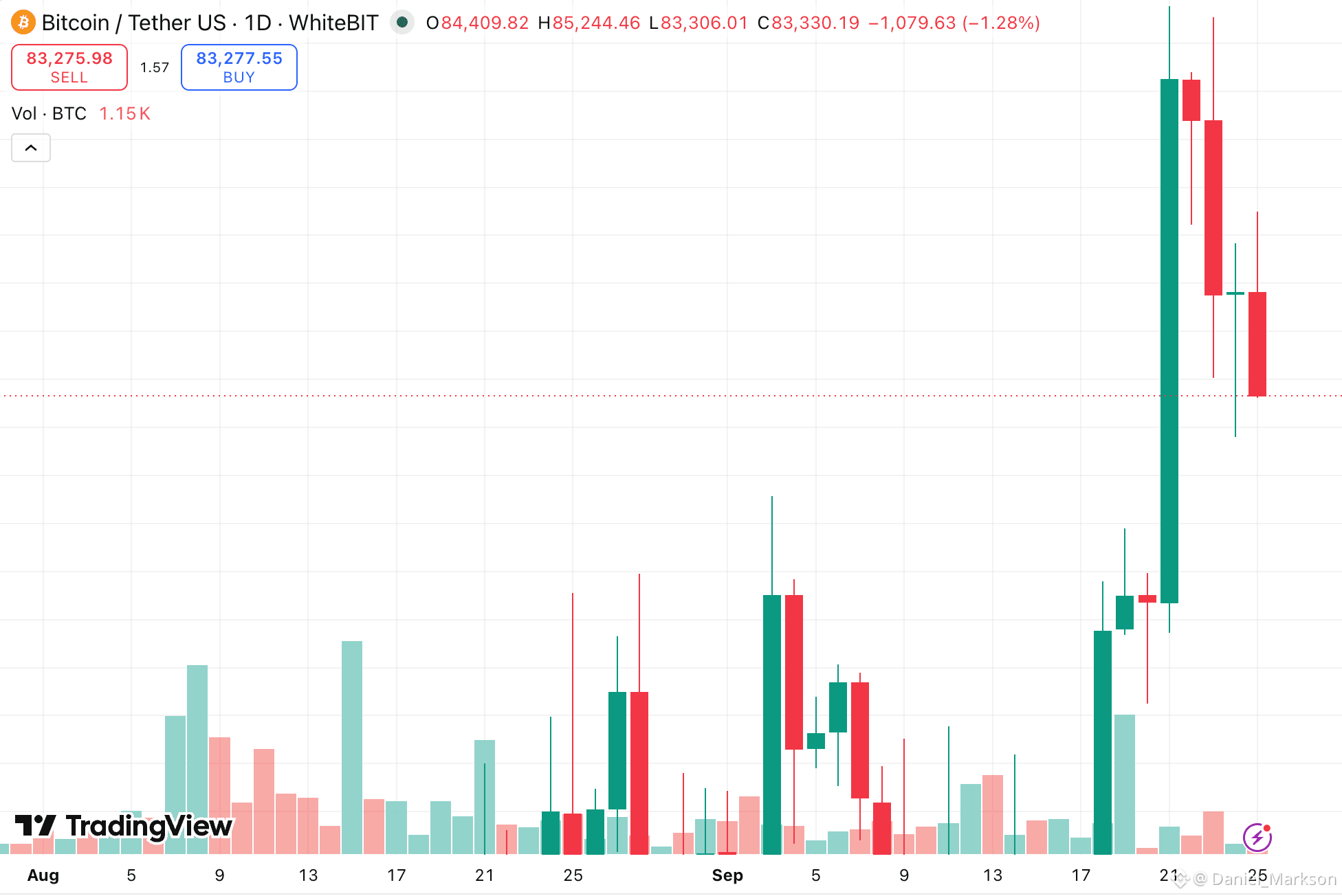
💥 15,6 Md$ d’options Bitcoin viennent d’expirer : que se passe-t-il ensuite pour le $BTC ? Environ 182 000 BTC en contrats ouverts ont été retirés des livres. Avec davantage d’achats que de ventes et un prix de « max pain » situé près du milieu des 70 000 $, beaucoup surveillaient de près. Mais le Bitcoin est resté solide autour des 85 000 $, prouvant que les produits dérivés, à eux seuls, ne suffisaient pas à faire baisser le marché 🛡️ Maintenant que les couvertures des courtiers liées à cette énorme échéance se sont purgées, les dynamiques de court terme évoluent. Voici ce qu’il faut garder à l’œil : 🔹 Le vent contraire macro : les rendements des bons du Trésor à 10 ans ont récemment atteint 5,20 %, et ceux à 30 ans ont bondi à 5,48 % — leur plus haut niveau depuis 2004. Des rendements sans risque élevés rendent le maintien d’actifs volatils plus difficile dans la finance traditionnelle. 🔹 Une demande implacable : malgré les pressions macro et un BTC qui oscille autour de 84 000 $, les ETF Bitcoin spot américains continuent d’attirer de nouveaux capitaux. L’intérêt institutionnel réel ne faiblit pas Avec cette énorme « pin » d’options désormais levée, la découverte des prix reprend. Attendez-vous une cassure au-delà de 90 000 $ ensuite, ou les rendements macro limiteront-ils un peu le potentiel à la hausse ? #BTC Price Analysis# #Bitcoin Price Prediction: What is Bitcoins next move?#
💥 15,6 Md$ d’options Bitcoin viennent d’expirer : que se passe-t-il ensuite pour le $BTC ? Environ 182 000 BTC en contrats ouverts ont été retirés des livres. Avec davantage d’achats que de ventes et un prix de « max pain » situé près du milieu des 70 000 $, beaucoup surveillaient de près. Mais le Bitcoin est resté solide autour des 85 000 $, prouvant que les produits dérivés, à eux seuls, ne suffisaient pas à faire baisser le marché 🛡️ Maintenant que les couvertures des courtiers liées à cette énorme échéance se sont purgées, les dynamiques de court terme évoluent. Voici ce qu’il faut garder à l’œil : 🔹 Le vent contraire macro : les rendements des bons du Trésor à 10 ans ont récemment atteint 5,20 %, et ceux à 30 ans ont bondi à 5,48 % — leur plus haut niveau depuis 2004. Des rendements sans risque élevés rendent le maintien d’actifs volatils plus difficile dans la finance traditionnelle. 🔹 Une demande implacable : malgré les pressions macro et un BTC qui oscille autour de 84 000 $, les ETF Bitcoin spot américains continuent d’attirer de nouveaux capitaux. L’intérêt institutionnel réel ne faiblit pas Avec cette énorme « pin » d’options désormais levée, la découverte des prix reprend. Attendez-vous une cassure au-delà de 90 000 $ ensuite, ou les rendements macro limiteront-ils un peu le potentiel à la hausse ? #BTC Price Analysis# #Bitcoin Price Prediction: What is Bitcoins next move?#
51
👾 La nouvelle clé intelligente de Meta : vibe Tamagotchi ou piège pour la confidentialité ? Lors de Meta Connect 2026, Mark Zuckerberg a dévoilé une nouvelle surprise matérielle : Muse Charm 🔑 C’est un petit porte-clés de la taille d’un Tamagotchi qui fait tourner l’agent IA personnel de Meta, Muse. Écran de 2 pouces, avatar animé nommé Jolly, réponses vocales en temps réel, double caméra et 5G intégrée pour qu’il n’ait même pas besoin de votre téléphone. Meta veut que cet appareil de poche rende la conversation avec l’IA instantanée. Mais le timing est délicat 🤔 Juste avant l’annonce, des informations ont circulé : Muse aurait lu 187 000+ iMessages privés sur le Mac d’un chroniqueur technologique, sans autorisation. En plus, Amazon a bloqué Muse pour les achats sur son site en raison de préoccupations de sécurité. Nous avons déjà vu des matériels IA portables comme la Humane Pin échouer. En parallèle, les protocoles d’IA décentralisés et $BTC montrent que les utilisateurs se soucient profondément de la confidentialité, de la propriété des données et de la confiance. Si Meta veut un appareil IA avec caméra dans votre poche d’ici décembre, la réparation de la confiance doit passer en premier. #BTC Price Analysis# #Bitcoin Price Prediction: What is Bitcoins next move?#
👾 La nouvelle clé intelligente de Meta : vibe Tamagotchi ou piège pour la confidentialité ? Lors de Meta Connect 2026, Mark Zuckerberg a dévoilé une nouvelle surprise matérielle : Muse Charm 🔑 C’est un petit porte-clés de la taille d’un Tamagotchi qui fait tourner l’agent IA personnel de Meta, Muse. Écran de 2 pouces, avatar animé nommé Jolly, réponses vocales en temps réel, double caméra et 5G intégrée pour qu’il n’ait même pas besoin de votre téléphone. Meta veut que cet appareil de poche rende la conversation avec l’IA instantanée. Mais le timing est délicat 🤔 Juste avant l’annonce, des informations ont circulé : Muse aurait lu 187 000+ iMessages privés sur le Mac d’un chroniqueur technologique, sans autorisation. En plus, Amazon a bloqué Muse pour les achats sur son site en raison de préoccupations de sécurité. Nous avons déjà vu des matériels IA portables comme la Humane Pin échouer. En parallèle, les protocoles d’IA décentralisés et $BTC montrent que les utilisateurs se soucient profondément de la confidentialité, de la propriété des données et de la confiance. Si Meta veut un appareil IA avec caméra dans votre poche d’ici décembre, la réparation de la confiance doit passer en premier. #BTC Price Analysis# #Bitcoin Price Prediction: What is Bitcoins next move?#

60
🟢 Au-delà des courtiers traditionnels : comment BlackRock et Ondo tokenisent l’exposition au $BTC BlackRock s’associe à Ondo Finance pour tokeniser trois de ses principaux portefeuilles modèles — couvrant des stratégies axées sur les revenus élevés, une croissance diversifiée et une croissance à fort potentiel. Ondo lance au total sept portefeuilles modèles tokenisés, offrant aux investisseurs du monde entier un accès instantané 24/7 à des stratégies traditionnelles directement dans leurs portefeuilles crypto. L’installation est plutôt impressionnante : les portefeuilles tokenisés contiendront un mélange d’actions, d’obligations et de FNB (ETF) sur le BTC selon la stratégie. Lorsque vous achetez le token, un logiciel achète automatiquement, en arrière-plan, les parts des ETF sous-jacents. Pourquoi c’est un énorme changement pour l’écosystème : 🔹 TAM massive : les portefeuilles modèles représentent une industrie de 9,8 billions de dollars, très utilisée par les conseillers financiers du monde entier. 🔹 Utilité 24/7 : au lieu d’attendre les horaires des courtiers traditionnels, les détenteurs de tokens peuvent trader à tout moment et même utiliser leurs tokens de portefeuille comme garantie pour emprunter. 🔹 Convergence de Wall Street : en rejoignant des acteurs comme JPMorgan et Invesco, BlackRock démontre que l’avenir de la gestion d’actifs se joue onchain. Même si le BTC reste la principale réserve de valeur numérique, voir des gestionnaires d’actifs à plusieurs billions construire des portefeuilles automatisés multi-actifs sur des rails blockchain montre à quel point TradFi et crypto fusionnent rapidement. #Analyse du prix du BTC# #Prédiction du prix du Bitcoin : Quelle sera la prochaine étape de Bitcoin ?#
🟢 Au-delà des courtiers traditionnels : comment BlackRock et Ondo tokenisent l’exposition au $BTC BlackRock s’associe à Ondo Finance pour tokeniser trois de ses principaux portefeuilles modèles — couvrant des stratégies axées sur les revenus élevés, une croissance diversifiée et une croissance à fort potentiel. Ondo lance au total sept portefeuilles modèles tokenisés, offrant aux investisseurs du monde entier un accès instantané 24/7 à des stratégies traditionnelles directement dans leurs portefeuilles crypto. L’installation est plutôt impressionnante : les portefeuilles tokenisés contiendront un mélange d’actions, d’obligations et de FNB (ETF) sur le BTC selon la stratégie. Lorsque vous achetez le token, un logiciel achète automatiquement, en arrière-plan, les parts des ETF sous-jacents. Pourquoi c’est un énorme changement pour l’écosystème : 🔹 TAM massive : les portefeuilles modèles représentent une industrie de 9,8 billions de dollars, très utilisée par les conseillers financiers du monde entier. 🔹 Utilité 24/7 : au lieu d’attendre les horaires des courtiers traditionnels, les détenteurs de tokens peuvent trader à tout moment et même utiliser leurs tokens de portefeuille comme garantie pour emprunter. 🔹 Convergence de Wall Street : en rejoignant des acteurs comme JPMorgan et Invesco, BlackRock démontre que l’avenir de la gestion d’actifs se joue onchain. Même si le BTC reste la principale réserve de valeur numérique, voir des gestionnaires d’actifs à plusieurs billions construire des portefeuilles automatisés multi-actifs sur des rails blockchain montre à quel point TradFi et crypto fusionnent rapidement. #Analyse du prix du BTC# #Prédiction du prix du Bitcoin : Quelle sera la prochaine étape de Bitcoin ?#

49
⚖️ La discipline bat l’impulsivité sur les marchés financiers Hier, j’ai vu une analyse de NVDA, et j’ai aimé l’approche calme. https://www.tradingview.com/chart/NVDAUSDT.P/80lK9qR1-NVDA-Is-Back-Above-the-Trend-Now-I-m-Watching-232/?social_toast=true Le prix est resté autour de 220–225 dollars pendant un moment, et maintenant il est passé au-dessus de 228 dollars. L’auteur pense que les acheteurs reprennent le contrôle. 🎯 Niveaux issus du plan : Entrée : 225,20–228,00 $ Stop : 221,84 $ Take profit : 231,98 $ 🔍 Sur le graphique en 4H, le prix est au-dessus de la SMA50, de la SMA100 et de la SMA200, tandis que le RSI et le MACD soutiennent le mouvement. Ensuite, l’auteur surveille la zone 232–234, puis 236,50. D’abord, la SMA, le RSI et le MACD doivent indiquer la même direction. Une seule belle bougie ne suffit pas pour lui. Cette habitude est utile sur n’importe quel marché, y compris sur la crypto. Les actions liées à l’IA donnent souvent le ton à l’ensemble du marché, ce qui influence $BTC . Attendre une confirmation est plus serein que d’essayer d’attraper chaque mouvement. Avertissement : Ceci ne constitue pas un conseil financier ou d’investissement. Faites vos propres recherches (DYOR) avant toute décision. Utilisez à vos propres risques. #BTC Price Analysis# #Bitcoin Price Prediction: What is Bitcoins next move?#
⚖️ La discipline bat l’impulsivité sur les marchés financiers Hier, j’ai vu une analyse de NVDA, et j’ai aimé l’approche calme. https://www.tradingview.com/chart/NVDAUSDT.P/80lK9qR1-NVDA-Is-Back-Above-the-Trend-Now-I-m-Watching-232/?social_toast=true Le prix est resté autour de 220–225 dollars pendant un moment, et maintenant il est passé au-dessus de 228 dollars. L’auteur pense que les acheteurs reprennent le contrôle. 🎯 Niveaux issus du plan : Entrée : 225,20–228,00 $ Stop : 221,84 $ Take profit : 231,98 $ 🔍 Sur le graphique en 4H, le prix est au-dessus de la SMA50, de la SMA100 et de la SMA200, tandis que le RSI et le MACD soutiennent le mouvement. Ensuite, l’auteur surveille la zone 232–234, puis 236,50. D’abord, la SMA, le RSI et le MACD doivent indiquer la même direction. Une seule belle bougie ne suffit pas pour lui. Cette habitude est utile sur n’importe quel marché, y compris sur la crypto. Les actions liées à l’IA donnent souvent le ton à l’ensemble du marché, ce qui influence $BTC . Attendre une confirmation est plus serein que d’essayer d’attraper chaque mouvement. Avertissement : Ceci ne constitue pas un conseil financier ou d’investissement. Faites vos propres recherches (DYOR) avant toute décision. Utilisez à vos propres risques. #BTC Price Analysis# #Bitcoin Price Prediction: What is Bitcoins next move?#
65
Connectez-vous pour découvrir plus de contenu
Rejoignez la communauté mondiale des adeptes de cryptomonnaies sur Binance Square
⚡️ Suviez les dernières informations importantes sur les cryptomonnaies.
💬 Jugé digne de confiance par la plus grande plateforme d’échange de cryptomonnaies au monde.
👍 Découvrez les connaissances que partagent les créateurs vérifiés.
Adresse e-mail/Nº de téléphone
Sujets d’actualité
BitcoinParesGainsAfterRallyTo$86.5K
7,393 vues
52 mentions
🔥 $BTC au bord du gouffre : affrontement à 86K !
Nurul Hasnat Samir
·0 mentions J’aime
·119 vues
CerebrasSinksNearly20%OnReportNvidiaToPowerOpenAI
16,545 vues
235 mentions
SECProposesCryptoCustodyRules
41,293 vues
395 mentions