

CRYPTONIC 1
525 Publications

CRYPTONIC 1
Signaler
Bloquer l’utilisateur
Technical Analyst | Trader | tg: Cryptonhic
0 Suivis
8 Abonnés
26 J’aime
Publications
·
--
Voir la traduction
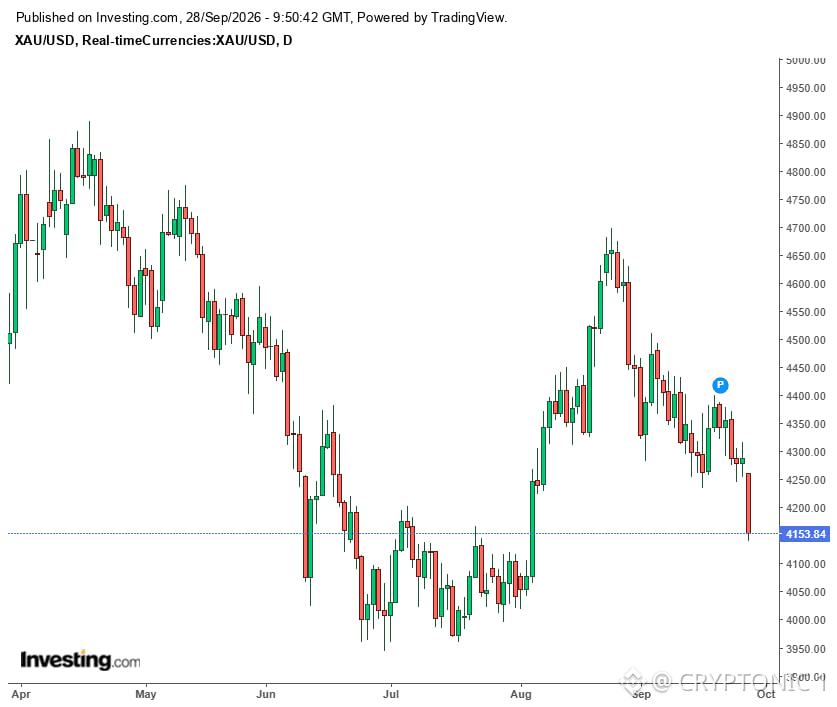
Gold has fallen below $4,150, down roughly 3.2% from the previous close, marking one of its sharpest daily drops in recent months. The selloff comes as higher oil prices and rising inflation concerns strengthen expectations for another Fed rate hike, pushing bond yields higher and making non yielding gold less attractive. This is a notable reversal for gold, which had been trading near record levels earlier this year. #BTC Price Analysis# #Gold $XAUt $BTC
Gold has fallen below $4,150, down roughly 3.2% from the previous close, marking one of its sharpest daily drops in recent months. The selloff comes as higher oil prices and rising inflation concerns strengthen expectations for another Fed rate hike, pushing bond yields higher and making non yielding gold less attractive. This is a notable reversal for gold, which had been trading near record levels earlier this year. #BTC Price Analysis# #Gold $XAUt $BTC
66
·
--
Voir la traduction
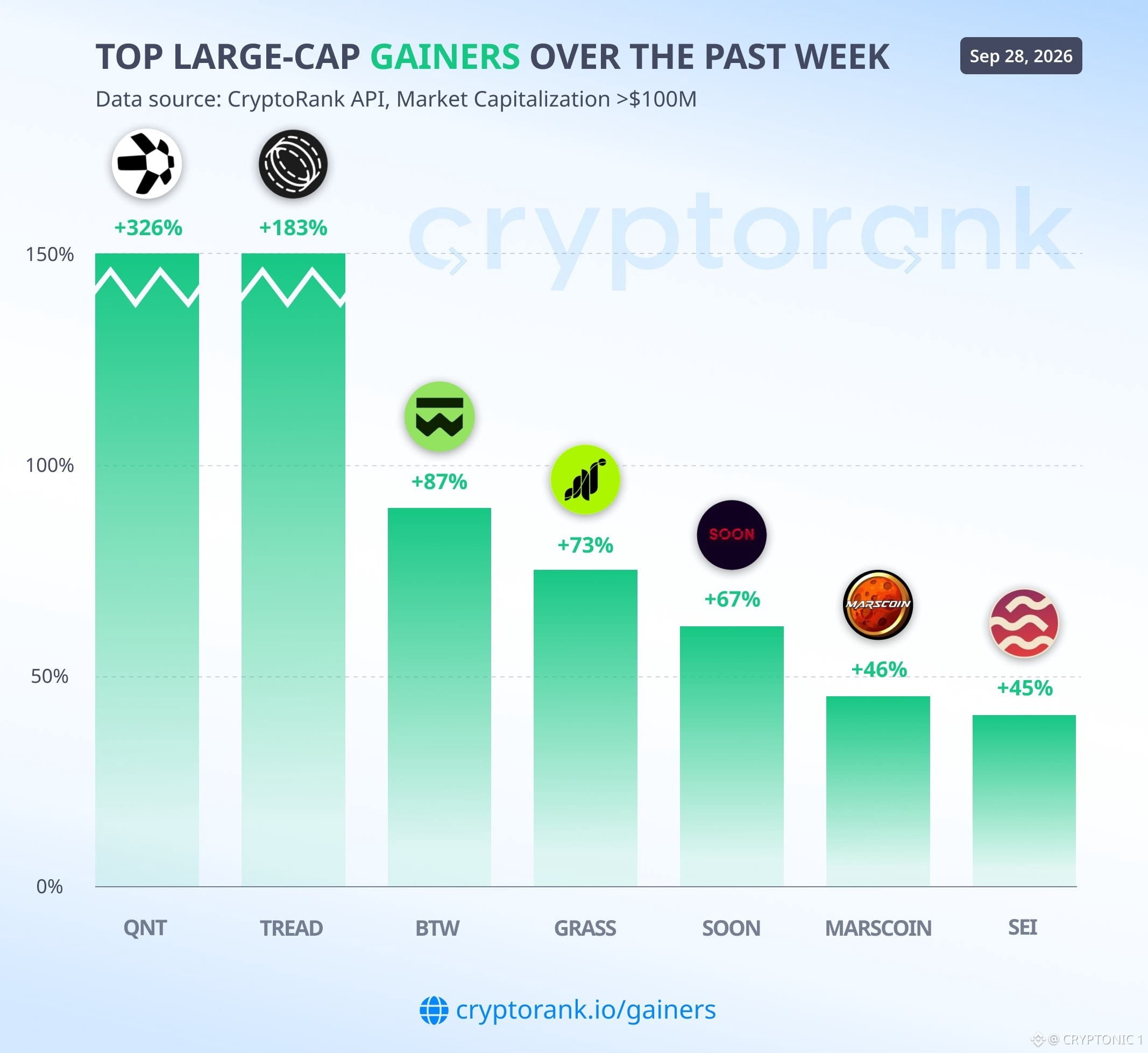
🔥 ALTCOINS JUST HAD A WILD WEEK The risk on move across crypto pushed several largecap tokens into massive weekly gains, with QNT leading the pack at +326%. TREAD followed with +183%, while BTW gained 87%, GRASS 73%, SOON 67%, MARSCOIN 46%, and SEI 45%. The interesting part is the breadth of the move. This wasn’t just Bitcoin pushing the market higher, speculative capital rotated aggressively into higher beta altcoins, with some tokens posting triple digit gains in just days. Current market data also shows QNT among the strongest large cap performers, although the exact weekly percentages can vary by snapshot and exchange. Moves this large can attract serious FOMO, but they also leave these tokens vulnerable to sharp profit taking. Risk appetite is clearly back. The question is how long this altcoin momentum can hold. #BTC Price Analysis# #Macro Insights# $QNT $SEI
🔥 ALTCOINS JUST HAD A WILD WEEK The risk on move across crypto pushed several largecap tokens into massive weekly gains, with QNT leading the pack at +326%. TREAD followed with +183%, while BTW gained 87%, GRASS 73%, SOON 67%, MARSCOIN 46%, and SEI 45%. The interesting part is the breadth of the move. This wasn’t just Bitcoin pushing the market higher, speculative capital rotated aggressively into higher beta altcoins, with some tokens posting triple digit gains in just days. Current market data also shows QNT among the strongest large cap performers, although the exact weekly percentages can vary by snapshot and exchange. Moves this large can attract serious FOMO, but they also leave these tokens vulnerable to sharp profit taking. Risk appetite is clearly back. The question is how long this altcoin momentum can hold. #BTC Price Analysis# #Macro Insights# $QNT $SEI
58
·
--
Voir la traduction
spot ETFs for BTC, ETH, SOL and XRP all recorded net inflows last week, bringing billions of dollars of fresh capital into the market. BTC: $2.39B ETH: $689.88M SOL: $188.22M XRP: $75.59M That’s roughly $3.34B in combined inflows for the week of September 21–25. Bitcoin led the move, posting its strongest weekly inflow since October 2025, while Ethereum reversed the previous week’s $140M outflow. What stands out is that the buying wasn’t limited to Bitcoin. ETH, SOL and XRP all attracted positive flows at the same time, suggesting broader demand through regulated investment products. $3.34B flowing into four crypto ETF categories in one week. That’s a serious liquidity signal. #BTC Price Analysis# #BTC Above 60K# $BTC $ETH
spot ETFs for BTC, ETH, SOL and XRP all recorded net inflows last week, bringing billions of dollars of fresh capital into the market. BTC: $2.39B ETH: $689.88M SOL: $188.22M XRP: $75.59M That’s roughly $3.34B in combined inflows for the week of September 21–25. Bitcoin led the move, posting its strongest weekly inflow since October 2025, while Ethereum reversed the previous week’s $140M outflow. What stands out is that the buying wasn’t limited to Bitcoin. ETH, SOL and XRP all attracted positive flows at the same time, suggesting broader demand through regulated investment products. $3.34B flowing into four crypto ETF categories in one week. That’s a serious liquidity signal. #BTC Price Analysis# #BTC Above 60K# $BTC $ETH
80
·
--
comment voyez-vous le marché cette nouvelle semaine ? #Analyse du prix du BTC# #BTC au-dessus de 60K# $BTC $ETH
comment voyez-vous le marché cette nouvelle semaine ? #Analyse du prix du BTC# #BTC au-dessus de 60K# $BTC $ETH
29
·
--
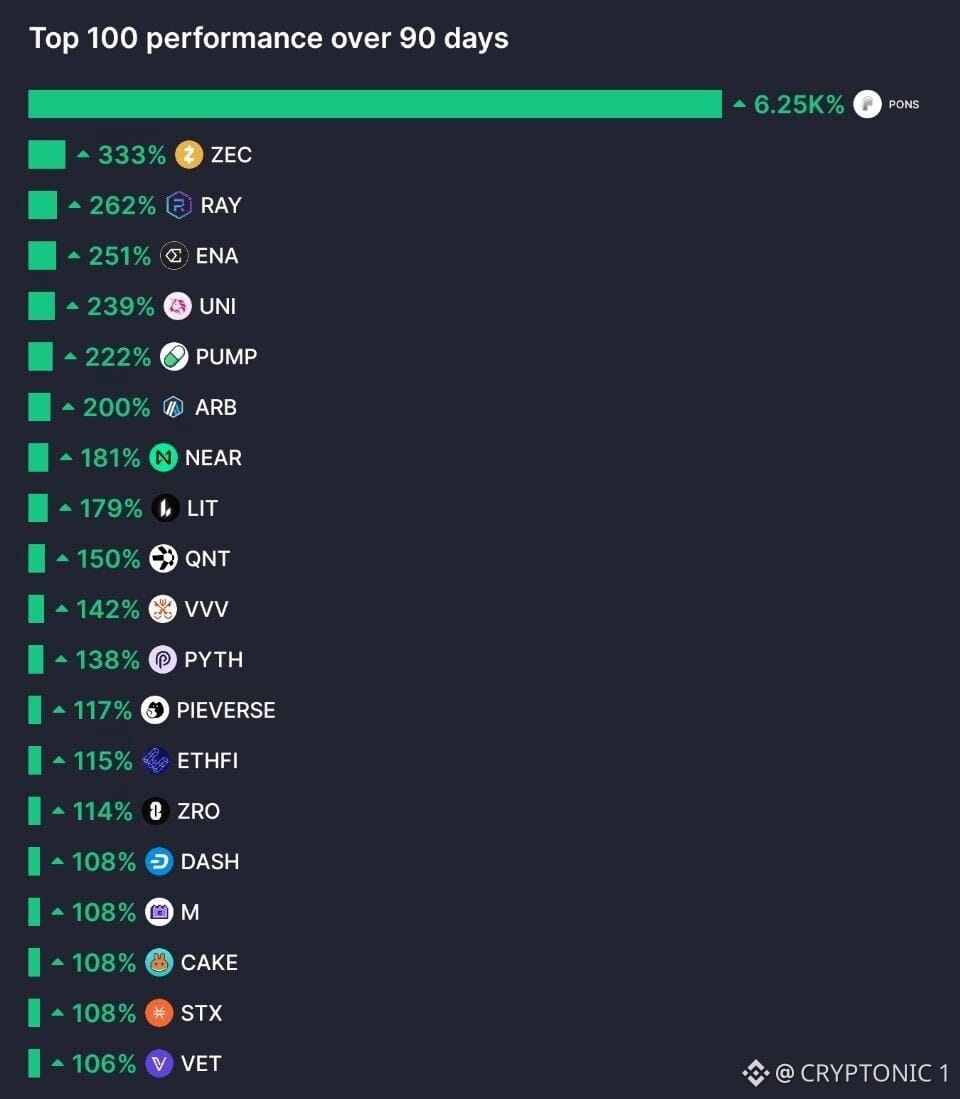
⚡️ LES ALTCOINS MONTRENT UNE FORTE VIGUEUR Parmi les 100 premiers altcoins, seuls 9 sont dans le rouge au cours des 90 derniers jours, tandis que 22 ont progressé d’au moins 100%. Une telle ampleur est remarquable. Ce n’est pas seulement quelques gros tokens à grande capitalisation qui portent le marché : un groupe beaucoup plus large d’altcoins participe à la hausse. Glassnode a récemment indiqué que son Indicateur de Cycle des Altcoins était passé en « altcoin season », avec une reprise qui s’étend à une partie plus large du marché. La rotation devient de plus en plus difficile à ignorer. La performance sur 90 jours raconte actuellement une histoire très différente pour les altcoins. #Analyse du prix du BTC# #Saison des altcoins# $ZEC $ARB
⚡️ LES ALTCOINS MONTRENT UNE FORTE VIGUEUR Parmi les 100 premiers altcoins, seuls 9 sont dans le rouge au cours des 90 derniers jours, tandis que 22 ont progressé d’au moins 100%. Une telle ampleur est remarquable. Ce n’est pas seulement quelques gros tokens à grande capitalisation qui portent le marché : un groupe beaucoup plus large d’altcoins participe à la hausse. Glassnode a récemment indiqué que son Indicateur de Cycle des Altcoins était passé en « altcoin season », avec une reprise qui s’étend à une partie plus large du marché. La rotation devient de plus en plus difficile à ignorer. La performance sur 90 jours raconte actuellement une histoire très différente pour les altcoins. #Analyse du prix du BTC# #Saison des altcoins# $ZEC $ARB
5
·
--
Voir la traduction
Having stablecoins on chain is one thing. Being able to move them where you actually need them is another. As more networks develop their own liquidity and applications, users can end up holding the same stablecoin across different ecosystems. That creates another layer of friction when you want to move from one network to another. Arc is now part of that cross-chain flow through STON.fi . Through Omniston, users can now swap USDC on Arc across TON and other supported networks without handling each part of the process separately. The supported ecosystem already includes networks such as Ethereum, BNB Chain, Base, Avalanche, Arbitrum, Polygon, TON and TRON, with Arc now added to the mix. One detail to keep in mind, Arc swaps are currently limited to $1,000 per transaction during the initial rollout. More connected liquidity means fewer isolated networks, and a simpler path for moving stablecoin value between them. #BTC Price Analysis# #Macro Insights# $GRAM $ZEC
Having stablecoins on chain is one thing. Being able to move them where you actually need them is another. As more networks develop their own liquidity and applications, users can end up holding the same stablecoin across different ecosystems. That creates another layer of friction when you want to move from one network to another. Arc is now part of that cross-chain flow through STON.fi . Through Omniston, users can now swap USDC on Arc across TON and other supported networks without handling each part of the process separately. The supported ecosystem already includes networks such as Ethereum, BNB Chain, Base, Avalanche, Arbitrum, Polygon, TON and TRON, with Arc now added to the mix. One detail to keep in mind, Arc swaps are currently limited to $1,000 per transaction during the initial rollout. More connected liquidity means fewer isolated networks, and a simpler path for moving stablecoin value between them. #BTC Price Analysis# #Macro Insights# $GRAM $ZEC
7
·
--
Voir la traduction
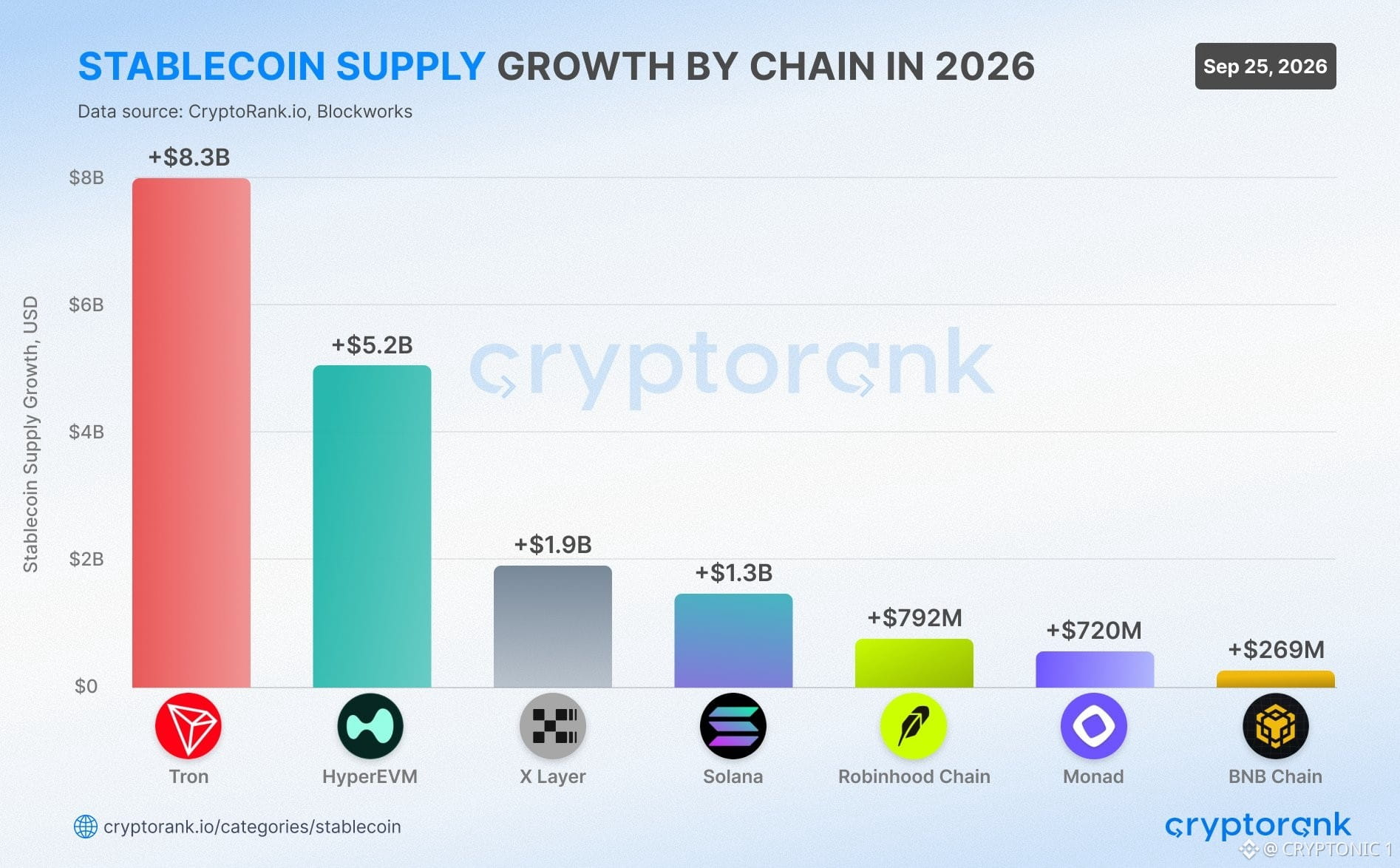
STABLECOIN LIQUIDITY IS EXPANDING ACROSS THE MARKET Stablecoin supply has continued to grow across multiple chains in 2026, but the pace of expansion varies significantly from one ecosystem to another. TRON leads in absolute growth, adding roughly $8.35B in stablecoin supply. Meanwhile, Hyperliquid EVM stands out on a percentage basis, with its stablecoin supply surging 753%. That difference is important. Established networks are attracting billions in additional liquidity, while newer ecosystems are growing much faster from smaller starting bases. For traders, stablecoin supply is worth watching because it provides a view of how much onchain dollar liquidity is available for trading, DeFi and other activity. #BTC Price Analysis# #Altcoin Season# $BTC $ZEC
STABLECOIN LIQUIDITY IS EXPANDING ACROSS THE MARKET Stablecoin supply has continued to grow across multiple chains in 2026, but the pace of expansion varies significantly from one ecosystem to another. TRON leads in absolute growth, adding roughly $8.35B in stablecoin supply. Meanwhile, Hyperliquid EVM stands out on a percentage basis, with its stablecoin supply surging 753%. That difference is important. Established networks are attracting billions in additional liquidity, while newer ecosystems are growing much faster from smaller starting bases. For traders, stablecoin supply is worth watching because it provides a view of how much onchain dollar liquidity is available for trading, DeFi and other activity. #BTC Price Analysis# #Altcoin Season# $BTC $ZEC
43
·
--
Voir la traduction
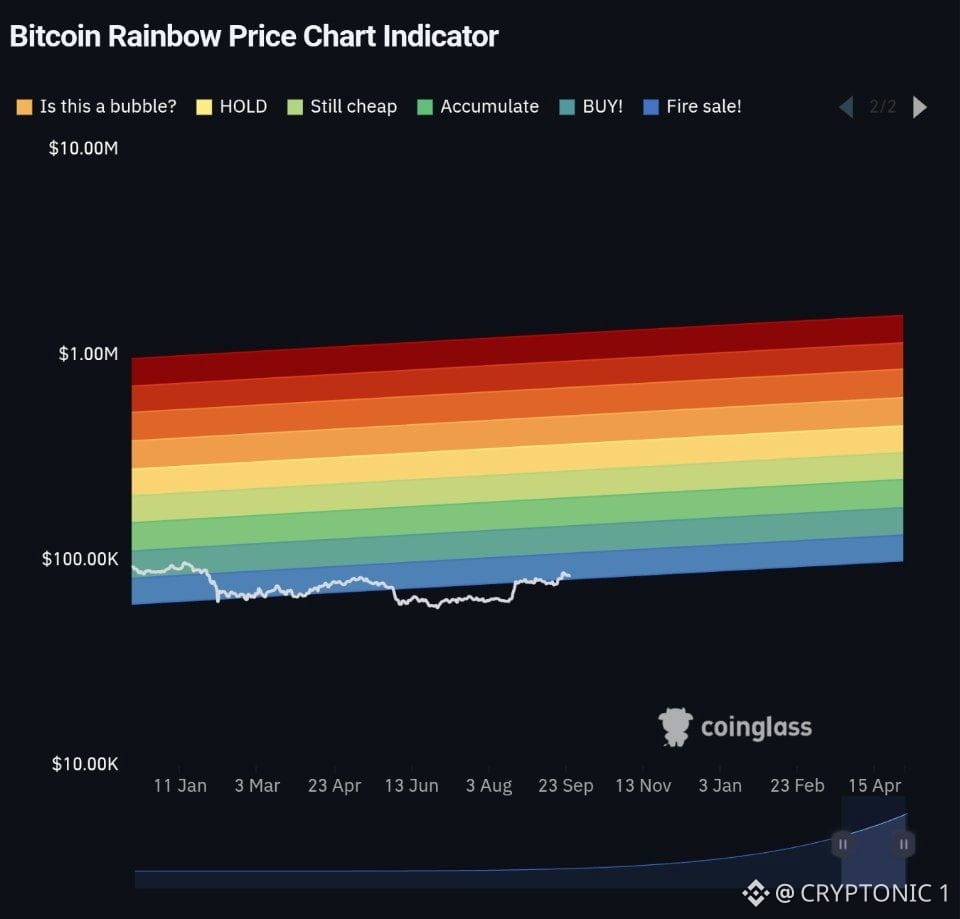
🔥 BTC IS STILL IN A FIRE SALE Bitcoin is trading around $84.8K, still roughly 33% below its October 2025 all-time high of $126K. After recently pushing above $87K, BTC has pulled back and is now consolidating around the $84K area. For traders, the important levels are becoming clearer. $83K is a key support zone, while reclaiming the $87K area would put the recent highs back in focus. #BTC Price Analysis# #BTC Above 60K# $BTC $ETH
🔥 BTC IS STILL IN A FIRE SALE Bitcoin is trading around $84.8K, still roughly 33% below its October 2025 all-time high of $126K. After recently pushing above $87K, BTC has pulled back and is now consolidating around the $84K area. For traders, the important levels are becoming clearer. $83K is a key support zone, while reclaiming the $87K area would put the recent highs back in focus. #BTC Price Analysis# #BTC Above 60K# $BTC $ETH
27
·
--
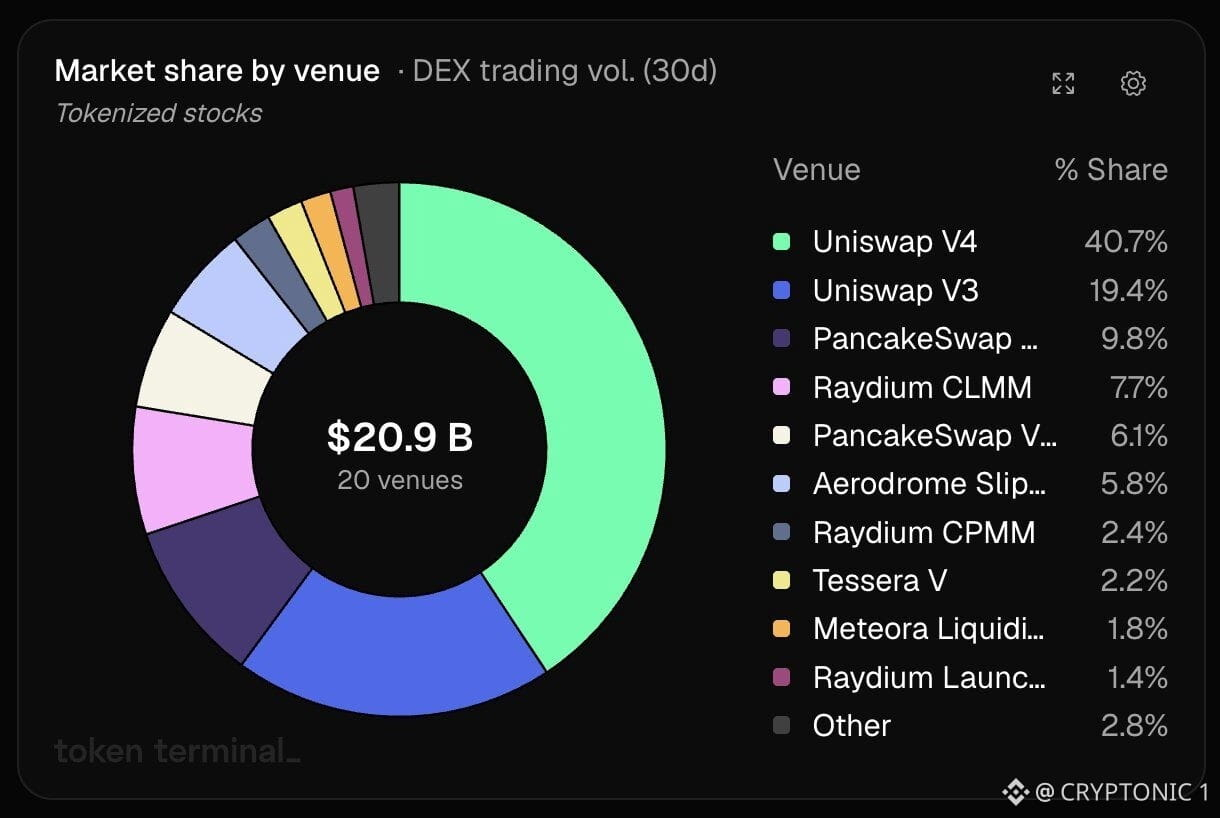
Les actions tokenisées ont généré 20,9 Md$ de volume sur les DEX au cours des 30 derniers jours, et Uniswap en a représenté environ 12,6 Md$. Cela signifie qu’Uniswap a capturé environ 60 % du marché total, V4 à elle seule étant responsable de 40,7 % et V3 ajoutant encore 19,4 %. Les chiffres montrent à quelle vitesse les actions tokenisées passent d’un récit RWA de niche à un marché onchain activement négocié. Uniswap a déjà intégré des titres tokenisés, notamment Apple, Tesla et NVIDIA, dans l’ensemble de ses produits. 20,9 Md$ échangés. 12,6 Md$ via Uniswap. Les actions tokenisées deviennent un volume réel sur les DEX, et Uniswap en détient actuellement une part considérable. #Analyse du prix du BTC# #Perspectives macro# $UNI $ETH
Les actions tokenisées ont généré 20,9 Md$ de volume sur les DEX au cours des 30 derniers jours, et Uniswap en a représenté environ 12,6 Md$. Cela signifie qu’Uniswap a capturé environ 60 % du marché total, V4 à elle seule étant responsable de 40,7 % et V3 ajoutant encore 19,4 %. Les chiffres montrent à quelle vitesse les actions tokenisées passent d’un récit RWA de niche à un marché onchain activement négocié. Uniswap a déjà intégré des titres tokenisés, notamment Apple, Tesla et NVIDIA, dans l’ensemble de ses produits. 20,9 Md$ échangés. 12,6 Md$ via Uniswap. Les actions tokenisées deviennent un volume réel sur les DEX, et Uniswap en détient actuellement une part considérable. #Analyse du prix du BTC# #Perspectives macro# $UNI $ETH
174
·
--
Voir la traduction
Binance has acquired a $100 million stake in Circle, the company behind USDC, and signed a new five year agreement to expand the USDC adoption across its platform. Under the deal, Binance will promote USDC to its global user base, while Circle provides infrastructure to support holding and using the stablecoin. The bigger story is the scale of distribution. Binance gives USDC access to one of crypto’s largest trading ecosystems, potentially strengthening its role in trading, payments and cross-border transfers, particularly across emerging markets. This also creates a closer strategic relationship between a major exchange and one of the largest stablecoin issuers. Binance is no longer just listing USDC. It is investing in the company behind it and committing five years to expanding its reach. #BTC Price Analysis# #Macro Insights# $BNB $USDC
Binance has acquired a $100 million stake in Circle, the company behind USDC, and signed a new five year agreement to expand the USDC adoption across its platform. Under the deal, Binance will promote USDC to its global user base, while Circle provides infrastructure to support holding and using the stablecoin. The bigger story is the scale of distribution. Binance gives USDC access to one of crypto’s largest trading ecosystems, potentially strengthening its role in trading, payments and cross-border transfers, particularly across emerging markets. This also creates a closer strategic relationship between a major exchange and one of the largest stablecoin issuers. Binance is no longer just listing USDC. It is investing in the company behind it and committing five years to expanding its reach. #BTC Price Analysis# #Macro Insights# $BNB $USDC
48
·
--
Voir la traduction
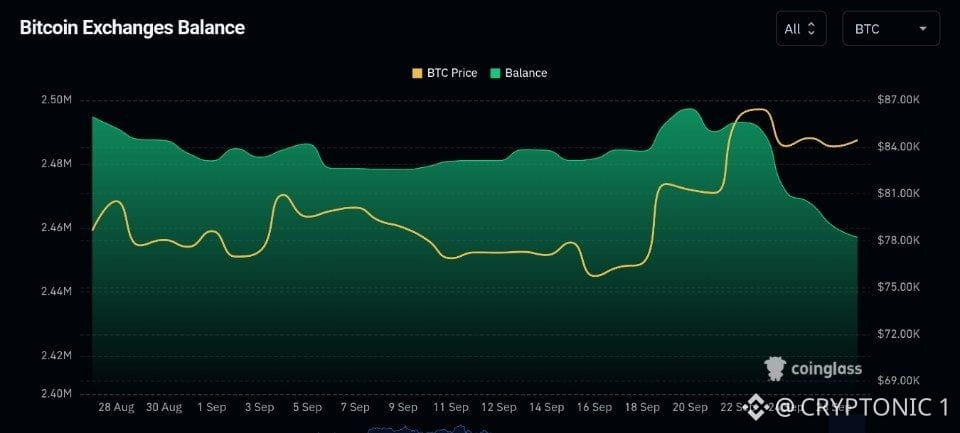
Around 30,000 BTC reportedly flowed out of centralized exchanges over the past seven days, worth roughly $2.5 billion at current prices. That’s a notable shift in exchange balances. When large amounts of BTC are withdrawn, it can reduce the supply immediately available for trading, especially if those coins are being moved into long term custody. But exchange outflows alone don’t guarantee a price rally. Coins can be moved for many reasons, and the real signal comes from whether the withdrawals remain consistent alongside demand and accumulation. $2.5B worth of BTC left exchanges in one week. That’s a flow worth watching. #BTC Price Analysis# #Macro Insights# $BTC $ETH
Around 30,000 BTC reportedly flowed out of centralized exchanges over the past seven days, worth roughly $2.5 billion at current prices. That’s a notable shift in exchange balances. When large amounts of BTC are withdrawn, it can reduce the supply immediately available for trading, especially if those coins are being moved into long term custody. But exchange outflows alone don’t guarantee a price rally. Coins can be moved for many reasons, and the real signal comes from whether the withdrawals remain consistent alongside demand and accumulation. $2.5B worth of BTC left exchanges in one week. That’s a flow worth watching. #BTC Price Analysis# #Macro Insights# $BTC $ETH
75
·
--
Voir la traduction
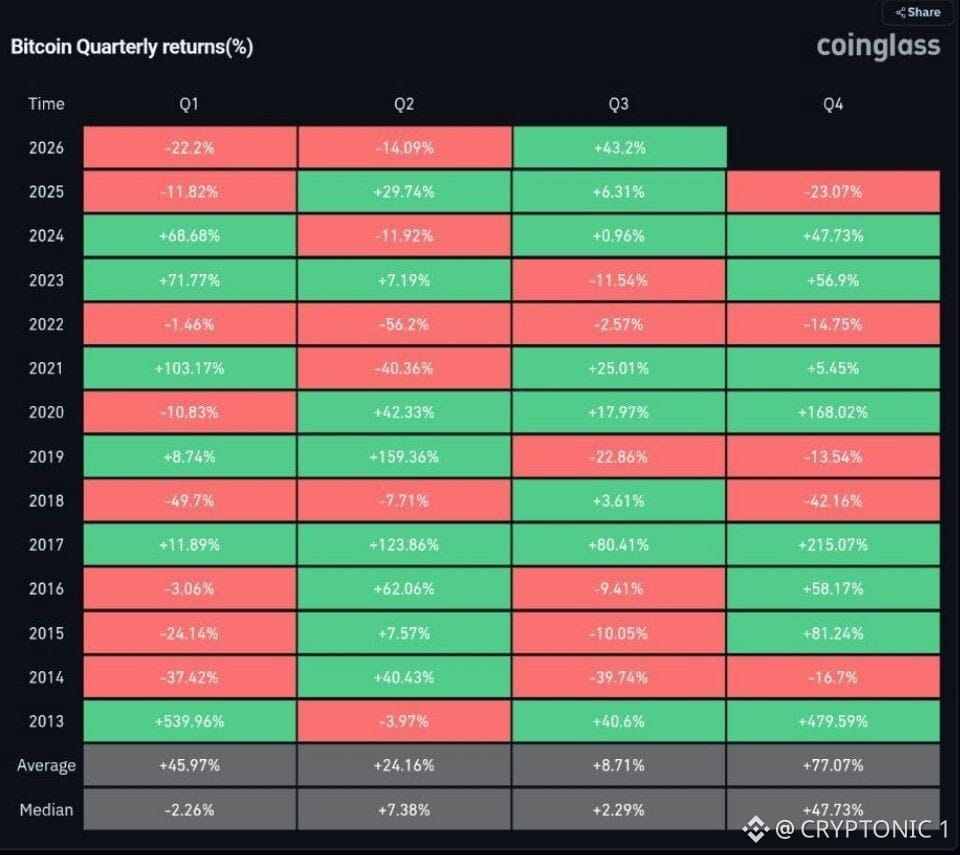
Bitcoin has rallied roughly 50% in Q3, moving from around $57.8K at the start of the quarter to above $86K this week. That would make Q3 2026 one of Bitcoin’s strongest quarterly performances on record, with only Q3 2017 posting a larger gain at around 80%. The move is especially notable after Bitcoin went through three consecutive quarters of losses. From a brutal first half to one of BTC’s strongest quarters ever. #BTC Price Analysis# #BTC Above 60K# $BTC
Bitcoin has rallied roughly 50% in Q3, moving from around $57.8K at the start of the quarter to above $86K this week. That would make Q3 2026 one of Bitcoin’s strongest quarterly performances on record, with only Q3 2017 posting a larger gain at around 80%. The move is especially notable after Bitcoin went through three consecutive quarters of losses. From a brutal first half to one of BTC’s strongest quarters ever. #BTC Price Analysis# #BTC Above 60K# $BTC
26
·
--
Voir la traduction
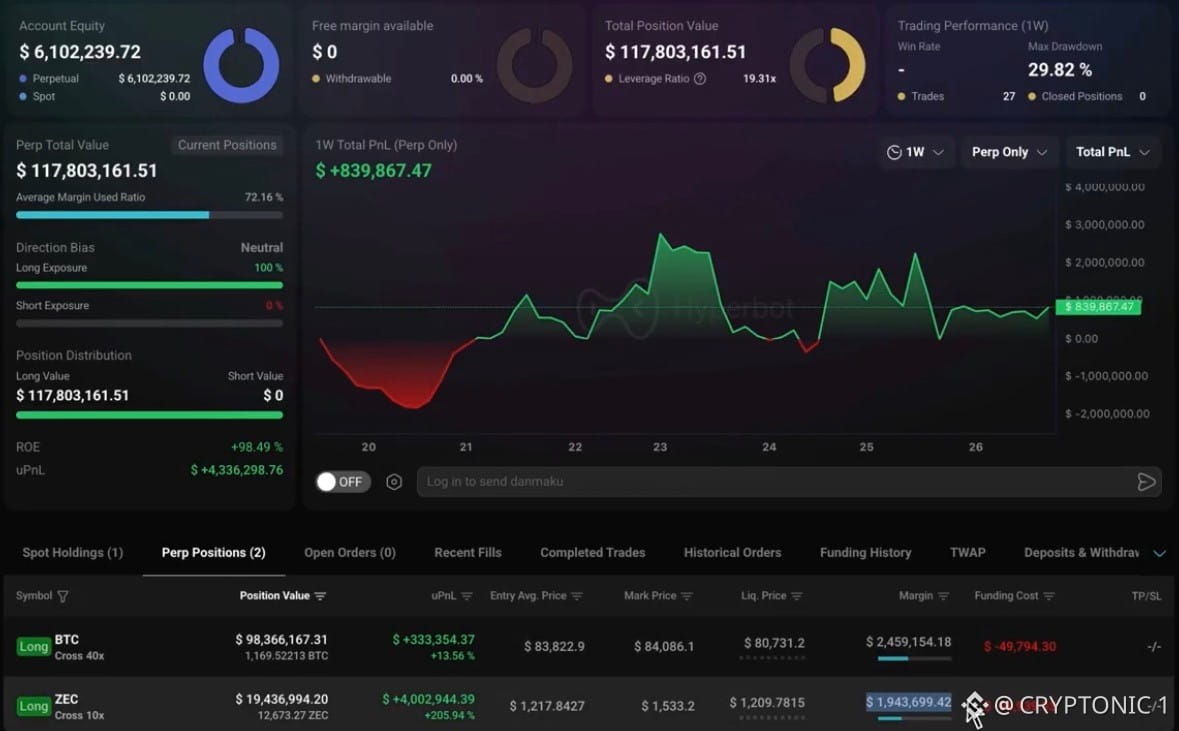
🚨 SOMEONE JUST WENT ALL IN A trader has opened roughly $117.8 million in long positions, with $98.3M on BTC and another $19.4M on ZEC. That’s a serious amount of leverage betting on further upside. The BTC position makes up the vast majority of the trade, while the ZEC position adds another high-beta bet to the portfolio. If prices move against these positions, the liquidation levels could become important for the market to watch. For now, this is simply one trader taking a very aggressive bullish position, it doesn’t guarantee where BTC or ZEC go next. $117.8M in longs, that’s really massive $BTC $ZEC #BTC Price Analysis# #BTC Above 60K#
🚨 SOMEONE JUST WENT ALL IN A trader has opened roughly $117.8 million in long positions, with $98.3M on BTC and another $19.4M on ZEC. That’s a serious amount of leverage betting on further upside. The BTC position makes up the vast majority of the trade, while the ZEC position adds another high-beta bet to the portfolio. If prices move against these positions, the liquidation levels could become important for the market to watch. For now, this is simply one trader taking a very aggressive bullish position, it doesn’t guarantee where BTC or ZEC go next. $117.8M in longs, that’s really massive $BTC $ZEC #BTC Price Analysis# #BTC Above 60K#
26
·
--
À mesure que les applications DeFi deviennent plus connectées, les développeurs se posent une question simple : chaque nouveau produit doit-il construire sa propre infrastructure pour chaque fonction qu’il souhaite prendre en charge ? Le trading inter-chaînes en est un bon exemple. Le prendre en charge ne consiste pas seulement à ajouter un bouton à une interface. Il faut gérer le routage, la liquidité, l’exécution et le règlement en coulisses. C’est là que l’infrastructure partagée peut faire la différence. TONCO a intégré directement dans son interface des échanges inter-chaînes Omniston, donnant ainsi aux utilisateurs accès à des fonctionnalités inter-chaînes sans que TONCO doive construire l’intégralité de la couche d’exécution elle-même. La configuration se connecte aussi à l’écosystème existant de liquidité TON, avec des pools TONCO disponibles sur STON.fi. Pour les concepteurs, ce modèle est intéressant car une application peut se concentrer sur son produit principal tout en s’appuyant sur une infrastructure qui gère déjà les parties plus complexes de la chaîne de trading. Pour les utilisateurs, le résultat peut être beaucoup plus simple : davantage de fonctionnalités dans la même interface, sans avoir à comprendre tout ce qui se passe en dessous. À mesure que la DeFi sur TON s’étend, ces connexions d’infrastructure pourraient devenir tout aussi importantes que les applications construites au-dessus. #Analyse du prix BTC# #Connaissances macro# $GRAM $POND
À mesure que les applications DeFi deviennent plus connectées, les développeurs se posent une question simple : chaque nouveau produit doit-il construire sa propre infrastructure pour chaque fonction qu’il souhaite prendre en charge ? Le trading inter-chaînes en est un bon exemple. Le prendre en charge ne consiste pas seulement à ajouter un bouton à une interface. Il faut gérer le routage, la liquidité, l’exécution et le règlement en coulisses. C’est là que l’infrastructure partagée peut faire la différence. TONCO a intégré directement dans son interface des échanges inter-chaînes Omniston, donnant ainsi aux utilisateurs accès à des fonctionnalités inter-chaînes sans que TONCO doive construire l’intégralité de la couche d’exécution elle-même. La configuration se connecte aussi à l’écosystème existant de liquidité TON, avec des pools TONCO disponibles sur STON.fi. Pour les concepteurs, ce modèle est intéressant car une application peut se concentrer sur son produit principal tout en s’appuyant sur une infrastructure qui gère déjà les parties plus complexes de la chaîne de trading. Pour les utilisateurs, le résultat peut être beaucoup plus simple : davantage de fonctionnalités dans la même interface, sans avoir à comprendre tout ce qui se passe en dessous. À mesure que la DeFi sur TON s’étend, ces connexions d’infrastructure pourraient devenir tout aussi importantes que les applications construites au-dessus. #Analyse du prix BTC# #Connaissances macro# $GRAM $POND
63
·
--
Voir la traduction
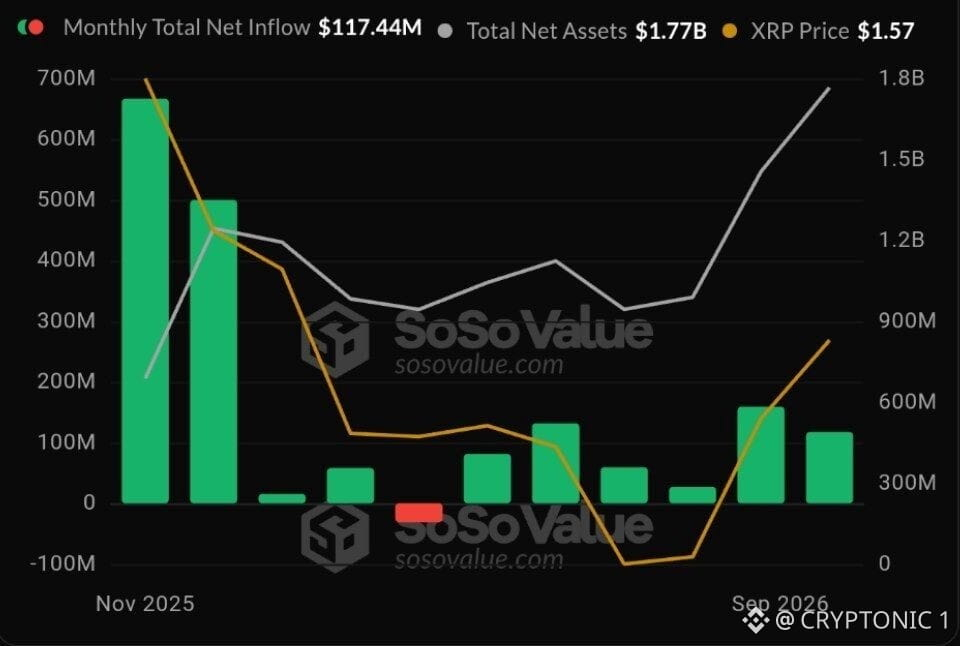
🔥 ETF DEMAND IS STAYING STRONG ACROSS CRYPTO Bitcoin, Ethereum, Solana and XRP ETFs have now recorded monthly net inflows for at least three consecutive months, according to the latest flow data. But XRP stands out even more. XRP ETFs have now maintained six straight months of positive monthly flows, showing that demand for XRP exposure through traditional investment products has remained remarkably consistent. That doesn’t mean every month has been equally strong, but the consistency is notable. Even during periods when BTC and ETH ETF flows weakened, XRP funds continued attracting capital. Four major crypto assets. Three+ months of monthly inflows. XRP at six. Institutional demand is clearly becoming broader than just Bitcoin. #BTC Price Analysis# #BTC Above 60K# $BTC $ETH
🔥 ETF DEMAND IS STAYING STRONG ACROSS CRYPTO Bitcoin, Ethereum, Solana and XRP ETFs have now recorded monthly net inflows for at least three consecutive months, according to the latest flow data. But XRP stands out even more. XRP ETFs have now maintained six straight months of positive monthly flows, showing that demand for XRP exposure through traditional investment products has remained remarkably consistent. That doesn’t mean every month has been equally strong, but the consistency is notable. Even during periods when BTC and ETH ETF flows weakened, XRP funds continued attracting capital. Four major crypto assets. Three+ months of monthly inflows. XRP at six. Institutional demand is clearly becoming broader than just Bitcoin. #BTC Price Analysis# #BTC Above 60K# $BTC $ETH
45
·
--
Voir la traduction
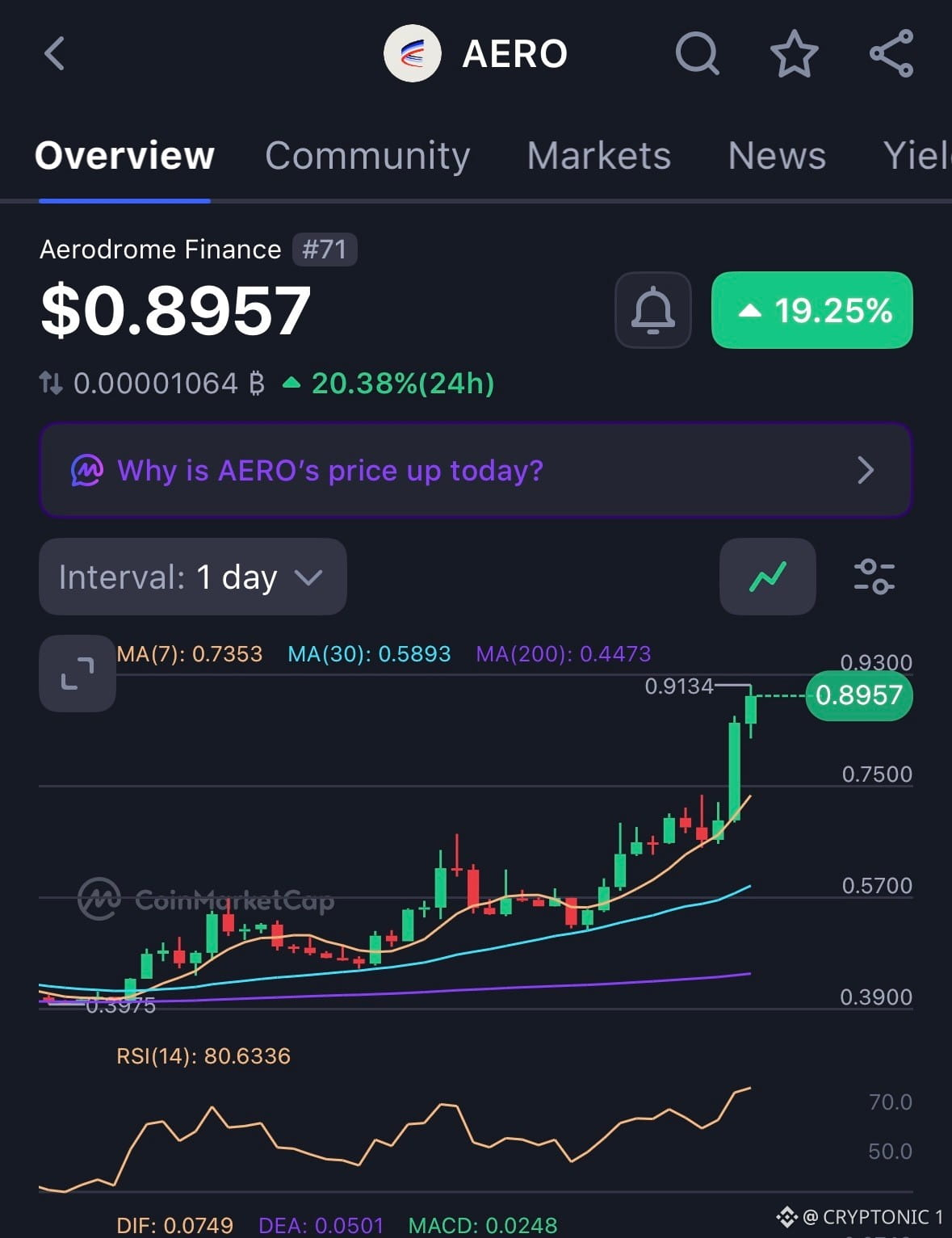
🔥 AERO IS PUMPING 20%+ AERO is making a major move today, and this time there are several catalysts behind it. The biggest one is Aerodrome’s upcoming merger with Velodrome, alongside the rollout of Slipstream V3 and expansion across multiple chains. The protocol is also seeing increased trading activity as the broader Base DeFi narrative heats up. AERO has now pushed toward the $0.85 area, putting it close to its highest levels of the year after gaining more than 20% in the latest session. The catalyst is clear. Now the question is whether AERO can hold the breakout after the initial hype fades. #BTC Price Analysis# #Macro Insights# $AERO
🔥 AERO IS PUMPING 20%+ AERO is making a major move today, and this time there are several catalysts behind it. The biggest one is Aerodrome’s upcoming merger with Velodrome, alongside the rollout of Slipstream V3 and expansion across multiple chains. The protocol is also seeing increased trading activity as the broader Base DeFi narrative heats up. AERO has now pushed toward the $0.85 area, putting it close to its highest levels of the year after gaining more than 20% in the latest session. The catalyst is clear. Now the question is whether AERO can hold the breakout after the initial hype fades. #BTC Price Analysis# #Macro Insights# $AERO
53
·
--
Voir la traduction
🔥 GRAYSCALE’S ZCASH ETF JUST HIT $1 BILLION IN AUM Grayscale’s Zcash ETF, ZCSH, has now crossed the $1 billion AUM mark just one month after launching on NYSE Arca. The milestone comes as ZEC has exploded higher, pushing the value of the fund’s existing holdings up sharply alongside fresh inflows. Grayscale says Zcash is among the assets “defining the next era of digital finance,” highlighting the growing institutional interest around privacy focused assets. But there’s an important detail, the $1B AUM figure isn’t the same as $1B of new investor money. The fund had existing ZEC holdings when it converted to an ETF, while ZEC’s price surge has also significantly increased its asset value. $1B AUM in a month. Zcash is officially getting serious institutional attention. #BTC Price Analysis# #Macro Insights# $ZEC $SOL
🔥 GRAYSCALE’S ZCASH ETF JUST HIT $1 BILLION IN AUM Grayscale’s Zcash ETF, ZCSH, has now crossed the $1 billion AUM mark just one month after launching on NYSE Arca. The milestone comes as ZEC has exploded higher, pushing the value of the fund’s existing holdings up sharply alongside fresh inflows. Grayscale says Zcash is among the assets “defining the next era of digital finance,” highlighting the growing institutional interest around privacy focused assets. But there’s an important detail, the $1B AUM figure isn’t the same as $1B of new investor money. The fund had existing ZEC holdings when it converted to an ETF, while ZEC’s price surge has also significantly increased its asset value. $1B AUM in a month. Zcash is officially getting serious institutional attention. #BTC Price Analysis# #Macro Insights# $ZEC $SOL

1
·
--
Voir la traduction
🚨 OVER $360M IN CRYPTO HAS BEEN HIT BY HACKS IN 24 HOURS The latest attacks include roughly $351.6M from Bitget, $7M from Duelbits, and another reported $8.5M involving Magic Eden, putting the combined figure above $360M. Bitget’s breach is by far the largest, with unauthorized transfers from its hot wallets. The exchange says the loss is covered by its User Protection Fund, which holds more than $464M. Duelbits also suffered a hot wallet compromise across multiple chains. Three major incidents in such a short window is a serious reminder of the risks sitting behind centralized crypto infrastructure. #BTC Price Analysis# #Altcoin Season# $BGB $BTC
🚨 OVER $360M IN CRYPTO HAS BEEN HIT BY HACKS IN 24 HOURS The latest attacks include roughly $351.6M from Bitget, $7M from Duelbits, and another reported $8.5M involving Magic Eden, putting the combined figure above $360M. Bitget’s breach is by far the largest, with unauthorized transfers from its hot wallets. The exchange says the loss is covered by its User Protection Fund, which holds more than $464M. Duelbits also suffered a hot wallet compromise across multiple chains. Three major incidents in such a short window is a serious reminder of the risks sitting behind centralized crypto infrastructure. #BTC Price Analysis# #Altcoin Season# $BGB $BTC


26
·
--
Voir la traduction
One of the frustrating parts of DeFi is having to leave the platform you’re using just because the asset you want is on another network. You might need to find a bridge, move funds somewhere else, then return to the DEX before you can complete the trade. The more steps involved, the more room there is for confusion and unnecessary friction. TONCO is now taking a different approach by integrating Omniston cross-chain swaps directly into its interface. That means TONCO users can access cross chain execution without having to handle the entire process separately. There’s already a connection on the liquidity side too, with TONCO pools available on STON.fi. The interesting part here is the infrastructure model. DeFi applications don’t necessarily need to build their own cross chain execution layer from scratch. They can connect to existing infrastructure and focus more on the experience they want to provide. For users, that can mean fewer steps between finding a trade and actually executing it. #BTC Price Analysis# #Macro Insights# $GRAM $SOL
One of the frustrating parts of DeFi is having to leave the platform you’re using just because the asset you want is on another network. You might need to find a bridge, move funds somewhere else, then return to the DEX before you can complete the trade. The more steps involved, the more room there is for confusion and unnecessary friction. TONCO is now taking a different approach by integrating Omniston cross-chain swaps directly into its interface. That means TONCO users can access cross chain execution without having to handle the entire process separately. There’s already a connection on the liquidity side too, with TONCO pools available on STON.fi. The interesting part here is the infrastructure model. DeFi applications don’t necessarily need to build their own cross chain execution layer from scratch. They can connect to existing infrastructure and focus more on the experience they want to provide. For users, that can mean fewer steps between finding a trade and actually executing it. #BTC Price Analysis# #Macro Insights# $GRAM $SOL
24
·
--
Voir la traduction
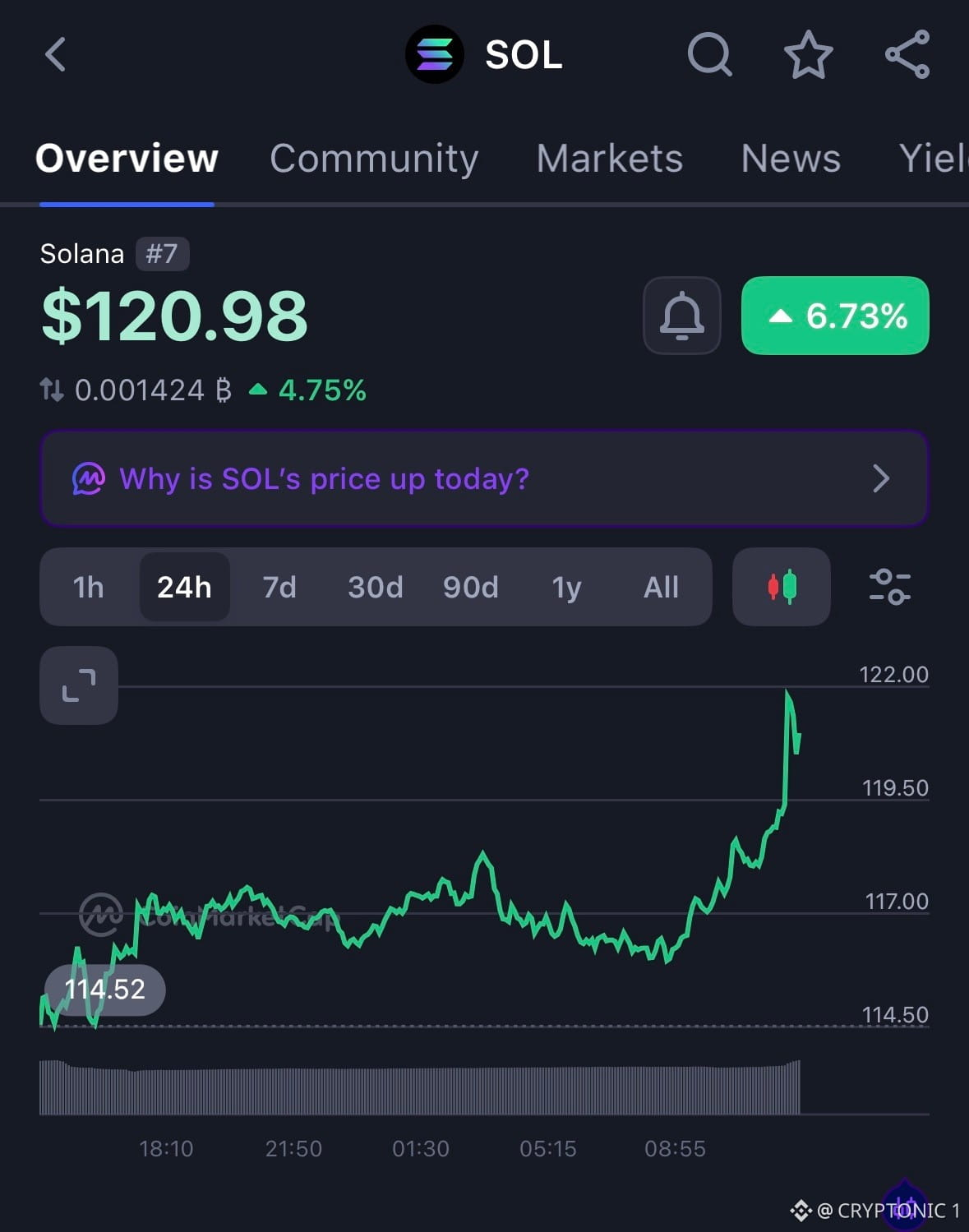
🔥 SOL JUST TOUCHED $120 AGAIN Solana has pushed back to the $120 area for the first time in nearly eight months, extending one of the stronger altcoin recoveries of September. SOL has climbed sharply from below $100, with the latest move putting it back at levels not seen since earlier this year. The move is also notable because SOL had spent much of the year struggling below $110. Now, $120 is becoming the level to watch. A clean break above that zone could open the door toward higher levels, while another rejection could send SOL back toward the $112–$115 support area. Solana is finally waking up. The next question is whether $120 becomes support or another rejection zone. #BTC Price Analysis# #Solana $SOL
🔥 SOL JUST TOUCHED $120 AGAIN Solana has pushed back to the $120 area for the first time in nearly eight months, extending one of the stronger altcoin recoveries of September. SOL has climbed sharply from below $100, with the latest move putting it back at levels not seen since earlier this year. The move is also notable because SOL had spent much of the year struggling below $110. Now, $120 is becoming the level to watch. A clean break above that zone could open the door toward higher levels, while another rejection could send SOL back toward the $112–$115 support area. Solana is finally waking up. The next question is whether $120 becomes support or another rejection zone. #BTC Price Analysis# #Solana $SOL
45
Connectez-vous pour découvrir plus de contenu
Rejoignez la communauté mondiale des adeptes de cryptomonnaies sur Binance Square
⚡️ Suviez les dernières informations importantes sur les cryptomonnaies.
💬 Jugé digne de confiance par la plus grande plateforme d’échange de cryptomonnaies au monde.
👍 Découvrez les connaissances que partagent les créateurs vérifiés.
Adresse e-mail/Nº de téléphone