
Hurain_BTC
752 Publications

Hurain_BTC
Signaler
Bloquer l’utilisateur
crypto lover Hurain_BTC
76 Suivis
103 Abonnés
390 J’aime
Publications
Tous
Citations
Vidéos
·
--
Article
Voir la traduction
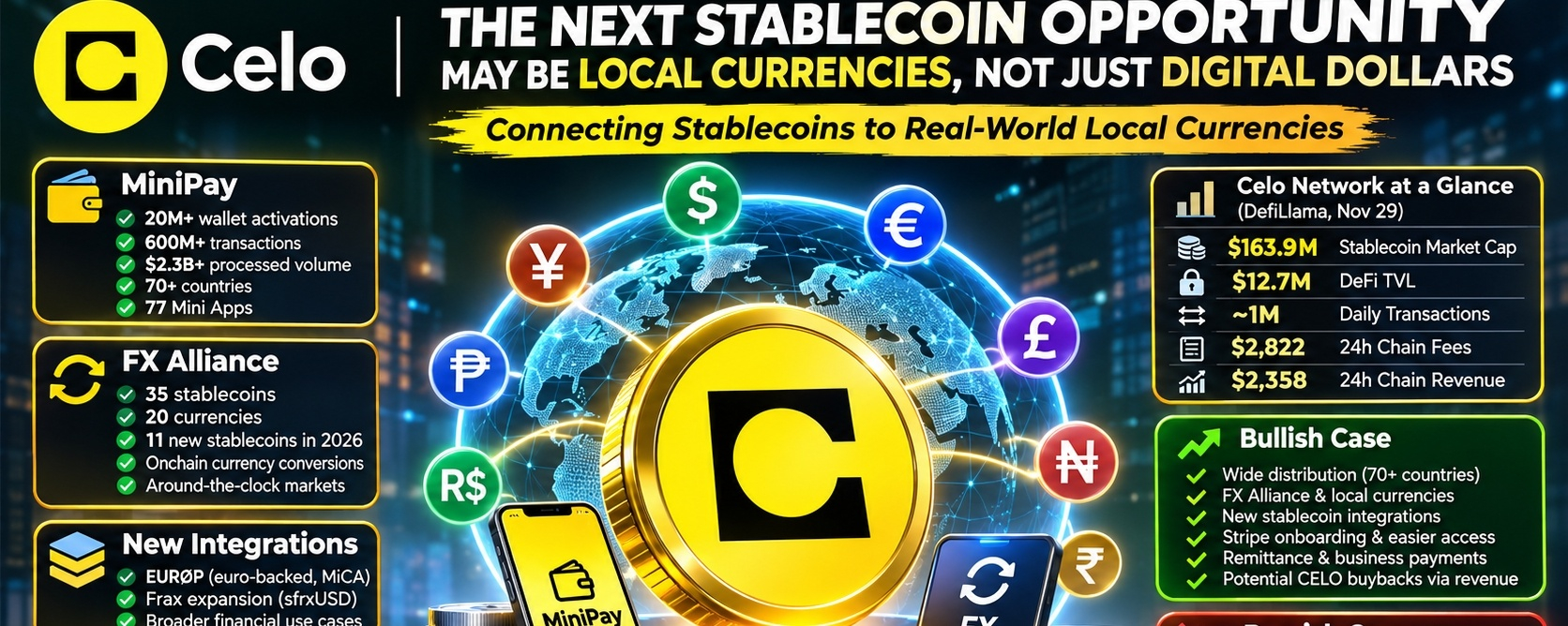
CELO: THE NEXT STABLECOIN OPPORTUNITY MAY BE LOCAL CURRENCIES, NOT JUST DIGITAL DOLLARSThe real test of stablecoins is not how many wallets exist, but how people actually use them.
Celo's recent developments have caught my attention because the network is pursuing a different direction from the traditional stablecoin competition. Instead of focusing only on dollar liquidity, cheaper transfers and transaction speed, Celo is working to connect digital dollars with local currencies, payment applications and onchain foreign-exchange markets.
This approach could give the network a more practical role in everyday financial activity. However, the key question remains: Can this growing infrastructure generate sustainable economic value, or will it simply increase the number of assets available onchain?
MiniPay: Adoption Beyond Wallet Creation
One of Celo's strongest distribution channels is MiniPay, Opera's self-custodial wallet.
Its Q3 2026 update reported more than 20 million wallet activations, over 600 million transactions processed and approximately $2.3 billion in cumulative transaction volume across more than 70 countries. The ecosystem also reported 77 active Mini Apps.
These numbers indicate that Celo has developed meaningful distribution for stablecoin applications. However, wallet activations should not be confused with active users.
The more important indicators are recurring payments, user retention, transaction frequency and the share of activity coming from genuine transfers rather than automated or internal operations.
The FX Alliance: Connecting Local Currency Markets
The November 28 announcement is arguably one of Celo's most interesting recent developments.
The network introduced its FX Alliance, bringing together stablecoin issuers, payment providers, wallets and liquidity participants. The initial ecosystem includes 35 stablecoins representing 20 currencies, with 11 new stablecoins added during 2026.
Consider a business receiving payments internationally. It might receive a stablecoin in one currency but need another currency to pay employees or suppliers. Traditional conversion can involve several intermediaries, banking-hour restrictions and additional costs.
Celo aims to enable direct conversions between local-currency stablecoins through onchain markets, potentially operating around the clock.
Founding participants include Opera, Frax, Schuman Financial, VNX Global, Ripio, IDRX, cNGN, Minteo and Textile FX.
The real opportunity is not simply the number of participants. It is whether they provide enough liquidity to make these markets competitive and useful for real-world payments.
New Stablecoin Integrations Expand the Ecosystem
The FX Alliance is not the only development expanding Celo's stablecoin infrastructure.
On November 28, Schuman Financial announced plans to deploy EURØP, its euro-backed stablecoin, on Celo. It is described as the 36th stablecoin launching on the network and is issued under Europe's MiCA regulatory framework by an authorised electronic money institution.
Frax also announced the expansion of its stablecoin and asset suite onto Celo on November 24, including sfrxUSD.
These integrations could support a wider range of financial activity. Dollar stablecoins, euro-denominated liquidity and regional currencies address different payment needs.
However, adding more stablecoins does not automatically create deep liquidity. Adoption will depend on market depth, redemption access, distribution and whether applications actually use these assets.
Making Stablecoins Easier to Access
MiniPay's integration with Link by Stripe is another development worth monitoring.
Announced on November 12, it allows eligible MiniPay users in Europe and the United States to purchase stablecoins using familiar payment methods such as cards, Apple Pay and Google Pay.
On November 19, MiniPay also announced an upgrade to Stripe-owned Privy wallet infrastructure, designed to simplify account access while preserving self-custodial functionality.
These developments address a major barrier to stablecoin adoption: onboarding.
People need a simple way to enter the ecosystem and access applications they understand. But easier access alone is not enough. Continued holding, transferring and spending will determine whether these integrations create lasting value.
Does Network Activity Translate Into Economic Value?
This is where I would remain cautious.
According to DefiLlama's November 29 data, Celo had approximately $163.9 million in stablecoin market capitalization, $12.7 million in DeFi TVL and close to 1 million daily transactions.
The dashboard also reported approximately $2,822 in 24-hour chain fees and $2,358 in chain revenue.
This highlights an important distinction: a network can facilitate substantial stablecoin activity without generating equally substantial revenue.
Celo's revenue mechanism directs net sequencer revenue to the Community Fund, with the stated mechanism supporting CELO buybacks. But gross fees alone do not reveal the amount available after Ethereum posting costs and the OP Stack revenue share.
More stablecoin transfers are encouraging. Sustainable economics, however, require recurring activity that produces meaningful net revenue.
Bullish and Bearish Considerations 🟢🔴
Bullish considerations 🟢
- MiniPay provides an established distribution channel across more than 70 countries.
- The FX Alliance connects local-currency stablecoins with a broader payment opportunity.
- New stablecoin integrations expand the network's financial infrastructure.
- Stripe integrations could simplify onboarding and stablecoin funding.
- Direct currency conversions may support remittances and international business payments.
- Network revenue creates a potential connection between usage and CELO buybacks.
Bearish considerations 🔴
- Wallet activations do not prove long-term user retention.
- More supported stablecoins do not guarantee sufficient market liquidity.
- FX markets require competitive spreads and reliable redemption infrastructure.
- Stablecoin adoption does not automatically create demand for CELO.
- Current network revenue remains relatively small compared with the broader payment narrative.
- Competition from established payment networks and other stablecoin ecosystems remains significant.
My View
I believe Celo's most compelling opportunity is becoming infrastructure for moving money between local currencies, rather than competing only on cheaper stablecoin transfers.
MiniPay has already established meaningful distribution, while the FX Alliance introduces a more ambitious vision: connecting local currencies through accessible, around-the-clock markets.
Still, infrastructure development should not be mistaken for proven economic success.
The next evidence I want to see is actual currency-pair volume, deeper liquidity, recurring payment activity and improving net network revenue.
If these indicators grow together, Celo could establish a more differentiated position in the global stablecoin economy.
For now, the direction is promising. The real question is whether individuals and businesses will use these markets consistently enough to make the infrastructure economically sustainable.
That's what I will be watching. 👀
Key Figures
20M+ — MiniPay wallet activations
600M+ — MiniPay transactions processed
$2.3B+ — MiniPay cumulative processed volume
70+ — Countries reached by MiniPay
77 — Mini Apps reported in the Q3 update
35 — Stablecoins initially included in the FX Alliance
20 — Currencies represented in the FX Alliance
11 — Stablecoins added during 2026, as of November 28
36th — EURØP's planned position among Celo stablecoin deployments
$163.9M — Celo stablecoin market capitalization
$12.7M — DeFi total value locked
~1M — Daily transactions
$2,822 — 24-hour chain fees
$2,358 — 24-hour chain revenue
Q1 2027 — Target for the FX Alliance public dashboard
@celo
$CELO #CELO #Binance #CeloEcosystem #BNB #Blockchain
CELO: THE NEXT STABLECOIN OPPORTUNITY MAY BE LOCAL CURRENCIES, NOT JUST DIGITAL DOLLARS
The real test of stablecoins is not how many wallets exist, but how people actually use them.
Celo's recent developments have caught my attention because the network is pursuing a different direction from the traditional stablecoin competition. Instead of focusing only on dollar liquidity, cheaper transfers and transaction speed, Celo is working to connect digital dollars with local currencies, payment applications and onchain foreign-exchange markets.
This approach could give the network a more practical role in everyday financial activity. However, the key question remains: Can this growing infrastructure generate sustainable economic value, or will it simply increase the number of assets available onchain?
MiniPay: Adoption Beyond Wallet Creation
One of Celo's strongest distribution channels is MiniPay, Opera's self-custodial wallet.
Its Q3 2026 update reported more than 20 million wallet activations, over 600 million transactions processed and approximately $2.3 billion in cumulative transaction volume across more than 70 countries. The ecosystem also reported 77 active Mini Apps.
These numbers indicate that Celo has developed meaningful distribution for stablecoin applications. However, wallet activations should not be confused with active users.
The more important indicators are recurring payments, user retention, transaction frequency and the share of activity coming from genuine transfers rather than automated or internal operations.
The FX Alliance: Connecting Local Currency Markets
The November 28 announcement is arguably one of Celo's most interesting recent developments.
The network introduced its FX Alliance, bringing together stablecoin issuers, payment providers, wallets and liquidity participants. The initial ecosystem includes 35 stablecoins representing 20 currencies, with 11 new stablecoins added during 2026.
Consider a business receiving payments internationally. It might receive a stablecoin in one currency but need another currency to pay employees or suppliers. Traditional conversion can involve several intermediaries, banking-hour restrictions and additional costs.
Celo aims to enable direct conversions between local-currency stablecoins through onchain markets, potentially operating around the clock.
Founding participants include Opera, Frax, Schuman Financial, VNX Global, Ripio, IDRX, cNGN, Minteo and Textile FX.
The real opportunity is not simply the number of participants. It is whether they provide enough liquidity to make these markets competitive and useful for real-world payments.
New Stablecoin Integrations Expand the Ecosystem
The FX Alliance is not the only development expanding Celo's stablecoin infrastructure.
On November 28, Schuman Financial announced plans to deploy EURØP, its euro-backed stablecoin, on Celo. It is described as the 36th stablecoin launching on the network and is issued under Europe's MiCA regulatory framework by an authorised electronic money institution.
Frax also announced the expansion of its stablecoin and asset suite onto Celo on November 24, including sfrxUSD.
These integrations could support a wider range of financial activity. Dollar stablecoins, euro-denominated liquidity and regional currencies address different payment needs.
However, adding more stablecoins does not automatically create deep liquidity. Adoption will depend on market depth, redemption access, distribution and whether applications actually use these assets.
Making Stablecoins Easier to Access
MiniPay's integration with Link by Stripe is another development worth monitoring.
Announced on November 12, it allows eligible MiniPay users in Europe and the United States to purchase stablecoins using familiar payment methods such as cards, Apple Pay and Google Pay.
On November 19, MiniPay also announced an upgrade to Stripe-owned Privy wallet infrastructure, designed to simplify account access while preserving self-custodial functionality.
These developments address a major barrier to stablecoin adoption: onboarding.
People need a simple way to enter the ecosystem and access applications they understand. But easier access alone is not enough. Continued holding, transferring and spending will determine whether these integrations create lasting value.
Does Network Activity Translate Into Economic Value?
This is where I would remain cautious.
According to DefiLlama's November 29 data, Celo had approximately $163.9 million in stablecoin market capitalization, $12.7 million in DeFi TVL and close to 1 million daily transactions.
The dashboard also reported approximately $2,822 in 24-hour chain fees and $2,358 in chain revenue.
This highlights an important distinction: a network can facilitate substantial stablecoin activity without generating equally substantial revenue.
Celo's revenue mechanism directs net sequencer revenue to the Community Fund, with the stated mechanism supporting CELO buybacks. But gross fees alone do not reveal the amount available after Ethereum posting costs and the OP Stack revenue share.
More stablecoin transfers are encouraging. Sustainable economics, however, require recurring activity that produces meaningful net revenue.
Bullish and Bearish Considerations 🟢🔴
Bullish considerations 🟢
- MiniPay provides an established distribution channel across more than 70 countries.
- The FX Alliance connects local-currency stablecoins with a broader payment opportunity.
- New stablecoin integrations expand the network's financial infrastructure.
- Stripe integrations could simplify onboarding and stablecoin funding.
- Direct currency conversions may support remittances and international business payments.
- Network revenue creates a potential connection between usage and CELO buybacks.
Bearish considerations 🔴
- Wallet activations do not prove long-term user retention.
- More supported stablecoins do not guarantee sufficient market liquidity.
- FX markets require competitive spreads and reliable redemption infrastructure.
- Stablecoin adoption does not automatically create demand for CELO.
- Current network revenue remains relatively small compared with the broader payment narrative.
- Competition from established payment networks and other stablecoin ecosystems remains significant.
My View
I believe Celo's most compelling opportunity is becoming infrastructure for moving money between local currencies, rather than competing only on cheaper stablecoin transfers.
MiniPay has already established meaningful distribution, while the FX Alliance introduces a more ambitious vision: connecting local currencies through accessible, around-the-clock markets.
Still, infrastructure development should not be mistaken for proven economic success.
The next evidence I want to see is actual currency-pair volume, deeper liquidity, recurring payment activity and improving net network revenue.
If these indicators grow together, Celo could establish a more differentiated position in the global stablecoin economy.
For now, the direction is promising. The real question is whether individuals and businesses will use these markets consistently enough to make the infrastructure economically sustainable.
That's what I will be watching. 👀
Key Figures
20M+ — MiniPay wallet activations
600M+ — MiniPay transactions processed
$2.3B+ — MiniPay cumulative processed volume
70+ — Countries reached by MiniPay
77 — Mini Apps reported in the Q3 update
35 — Stablecoins initially included in the FX Alliance
20 — Currencies represented in the FX Alliance
11 — Stablecoins added during 2026, as of November 28
36th — EURØP's planned position among Celo stablecoin deployments
$163.9M — Celo stablecoin market capitalization
$12.7M — DeFi total value locked
~1M — Daily transactions
$2,822 — 24-hour chain fees
$2,358 — 24-hour chain revenue
Q1 2027 — Target for the FX Alliance public dashboard
@celo
$CELO #CELO #Binance #CeloEcosystem #BNB #Blockchain
1
11
·
--
Les amis, j’ouvre une GROSSE POSITION SHORT sur $PORTAL ici. Cette hausse pourrait annoncer une correction brutale 🚨
TP : 0,02550 $ SL : 0,05485 $ 👇🏻
J’ai partagé mon avis baissier sur $PORTAL hier, mais j’attendais le bon moment pour ouvrir ma position short. Cette hausse massive a enfin créé la configuration que je recherchais.
Regardez à quel point le prix a grimpé agressivement avant d’être rejeté à des niveaux plus élevés. Après un mouvement aussi fort, je veux voir si les acheteurs peuvent maintenir cette dynamique ou si les vendeurs commencent à prendre le contrôle.
Ce rejet mérite d’être surveillé. Les acheteurs tardifs pourraient se retrouver piégés si le prix continue de faiblir, tandis que la liquidité située sous le prix actuel pourrait devenir la prochaine cible.
Si la pression vendeuse se poursuit et que le prix ne parvient pas à reconquérir la zone de rejet, je m’attends à une correction plus profonde. Dans ce scénario, le marché pourrait se diriger vers mon TP sans avoir besoin d’une longue phase de consolidation.
C’est pourquoi je prends cette position short. Cette configuration repose sur le rejet et sur la possibilité d’un changement de dynamique après une hausse extrême.
Je vais surveiller la réaction du prix autour des niveaux clés. Si la structure baissière échoue, je respecterai mon stop loss plutôt que de forcer le trade.
Gérez votre risque avec prudence. Une forte hausse peut créer une excellente opportunité, mais elle peut aussi entraîner une forte volatilité.
1
1
589
·
--
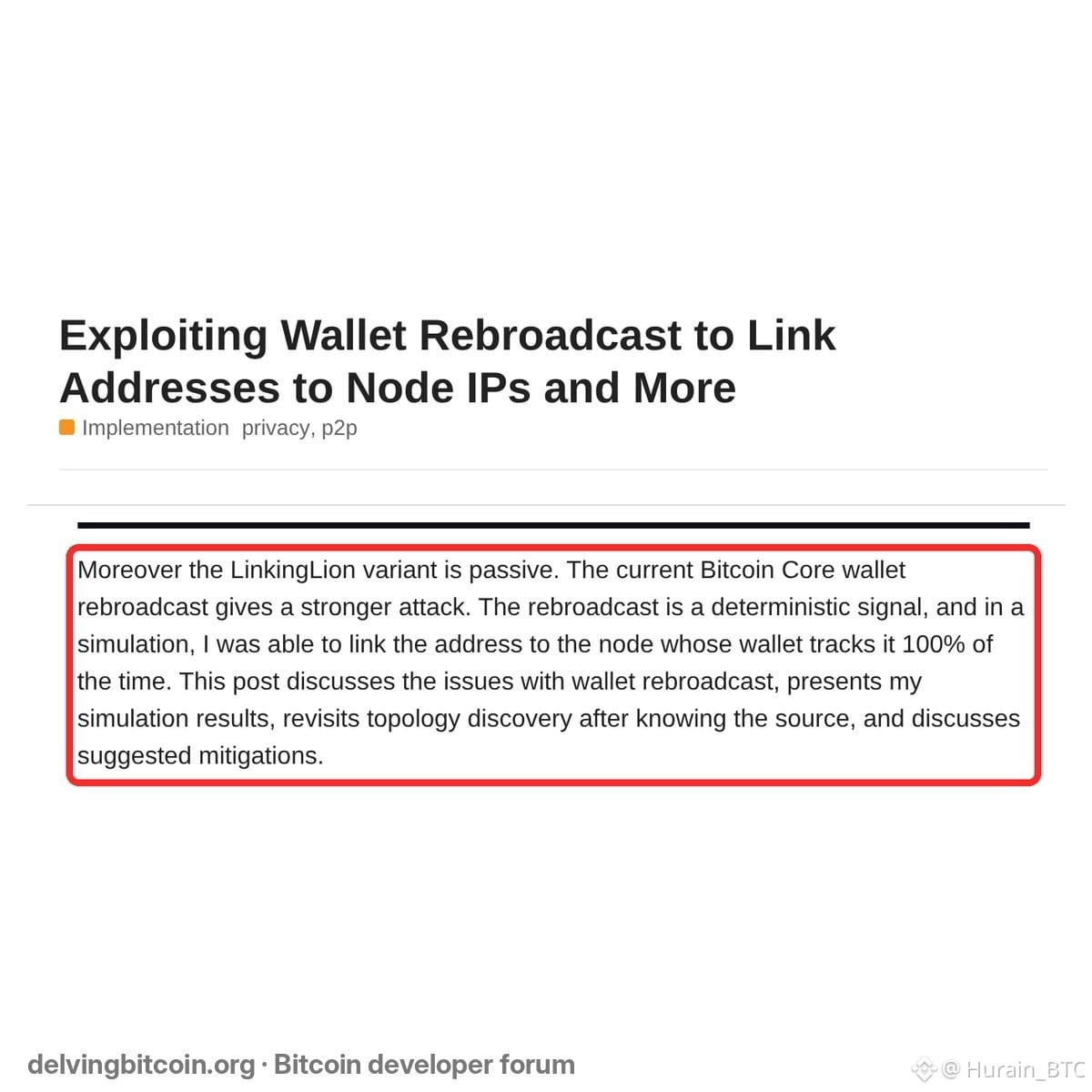
🚨 AVERTISSEMENT : UN PAIEMENT DE MOINS DE 35 CENTIMES PEUT RÉVÉLER L’ADRESSE INTERNET DERRIÈRE VOTRE PORTEFEUILLE #BITCOIN . ET CE N’EST PAS CORRIGÉ.
Un contributeur de Bitcoin Core l’a démontré cette semaine.
→ L’ATTAQUANT ENVOIE UN PETIT PAIEMENT À FAIBLES FRAIS À UNE ADRESSE QUE VOUS AVEZ DÉJÀ UTILISÉE
→ IL RESTE BLOQUÉ, SI BIEN QUE 12 À 36 HEURES PLUS TARD, VOTRE PORTEFEUILLE LE DIFFUSE À NOUVEAU
→ L’ATTAQUANT OBSERVE QUEL ORDINATEUR LE FAIT
→ LORS DE SES TESTS, IL A IDENTIFIÉ LE BON ORDINATEUR 30 FOIS SUR 30
→ UNE ADRESSE IP PEUT INDIQUER VOTRE FOURNISSEUR D’ACCÈS INTERNET, VOTRE VILLE, ET PARFOIS VOTRE DOMICILE
QUI EST EXPOSÉ :
→ LES PORTEFEUILLES BITCOIN CORE
→ SPARROW EN MODE CORE, SPECTER, LIANA, JOINMARKET, ELECTRUM PERSONAL SERVER
→ LES NŒUDS SUR TOR QUI MAINTIENNENT AUSSI DES CONNEXIONS INTERNET NORMALES
LA SOLUTION EST TOUJOURS EN DISCUSSION. UN AUTRE CONTRIBUTEUR DE CORE AFFIRME QU’UN CHANGEMENT PROPOSÉ « NE FAIT QU’AUGMENTER LÉGÈREMENT LE COÛT DE L’ATTAQUE ACTIVE ».
LA SOLUTION DE CONTOURNEMENT POUR L’INSTANT : DÉSACTIVEZ LA DIFFUSION AUTOMATIQUE DES TRANSACTIONS DE VOTRE PORTEFEUILLE ET ENVOYEZ CHAQUE TRANSACTION MANUELLEMENT.
LE TEST A ÉTÉ EFFECTUÉ SUR UN RÉSEAU DE TEST. PERSONNE NE L’A ENCORE MESURÉ SUR LE RÉSEAU EN SERVICE.
ALORS, COMBIEN DE PERSONNES SAVENT DÉJÀ OÙ SE TROUVENT VOS BITCOINS ? 👀
146
·
--
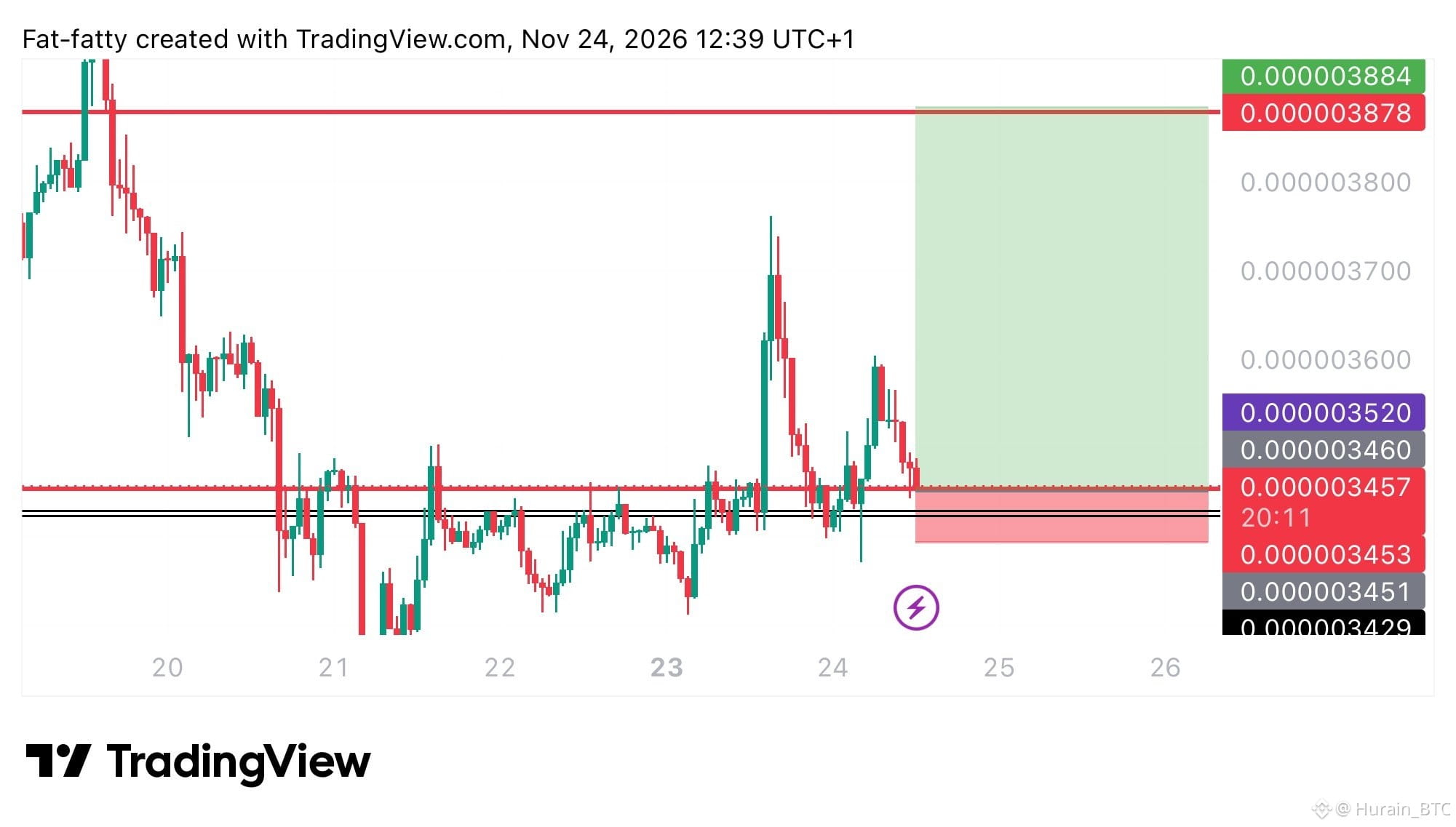
$PEPE POSITION LONGUE
ENTRÉE : 0.345
OBJECTIF : 0.3875
STOP-LOSS : 0.3385
$PEPE POSITION LONGUE
ENTRÉE : 0.345
OBJECTIF : 0.3875
STOP-LOSS : 0.3385
ENTRÉE : 0.345
OBJECTIF : 0.3875
STOP-LOSS : 0.3385
74
·
--
⚡ $HYPE : HYPERLIQUID A ENREGISTRÉ 1,09 Md$ D’ÉCHANGES EN 24 H
HYPE a enregistré un volume d’échanges de 1,09 milliard de dollars en 24 h.
Cela représente 7,5 % de sa capitalisation boursière de 14,5 milliards de dollars.
C’est la 10e cryptomonnaie et l’un des altcoins les plus échangés en dehors des principales cryptomonnaies.
Le volume reste élevé même en période de peur extrême.
Qu’est-ce qui maintient HYPE aussi actif ?

229
·
--
🧠 $TAO : LA CRYPTOMONNAIE D’IA À L’OFFRE SIMILAIRE À CELLE DU BITCOIN
Bittensor a une offre maximale de 21 millions, tout comme Bitcoin.
11,7 millions de TAO sont en circulation, soit environ 56 %.
Le TAO s’échange à 185,33 $, soit 75,5 % de moins que son plus haut historique de 757,60 $.
Sa capitalisation boursière s’élève à 2,17 milliards de dollars.
Le TAO pourrait-il être le Bitcoin de l’IA décentralisée ?
1
304
·
--
$ONDO montre une possible figure de triple creux ! 🟣
Le prix évolue autour de 0,2621 $ après une forte baisse quotidienne de 7 %.
📉 Résistance : 0,40–0,45 $
🟢 Support : 0,25–0,26 $
🚀 Objectif haussier en cas de cassure : 1,40 $
⚠️ Invalidation clé : passage sous 0,25 $.
ONDO approche de son troisième test majeur du support. Un retournement réussi, suivi d’une cassure au-dessus de la ligne de cou située près de 0,78 $, pourrait ouvrir la voie à une reprise importante.
Attendez une confirmation avant de prendre position. 👀
399
·
--
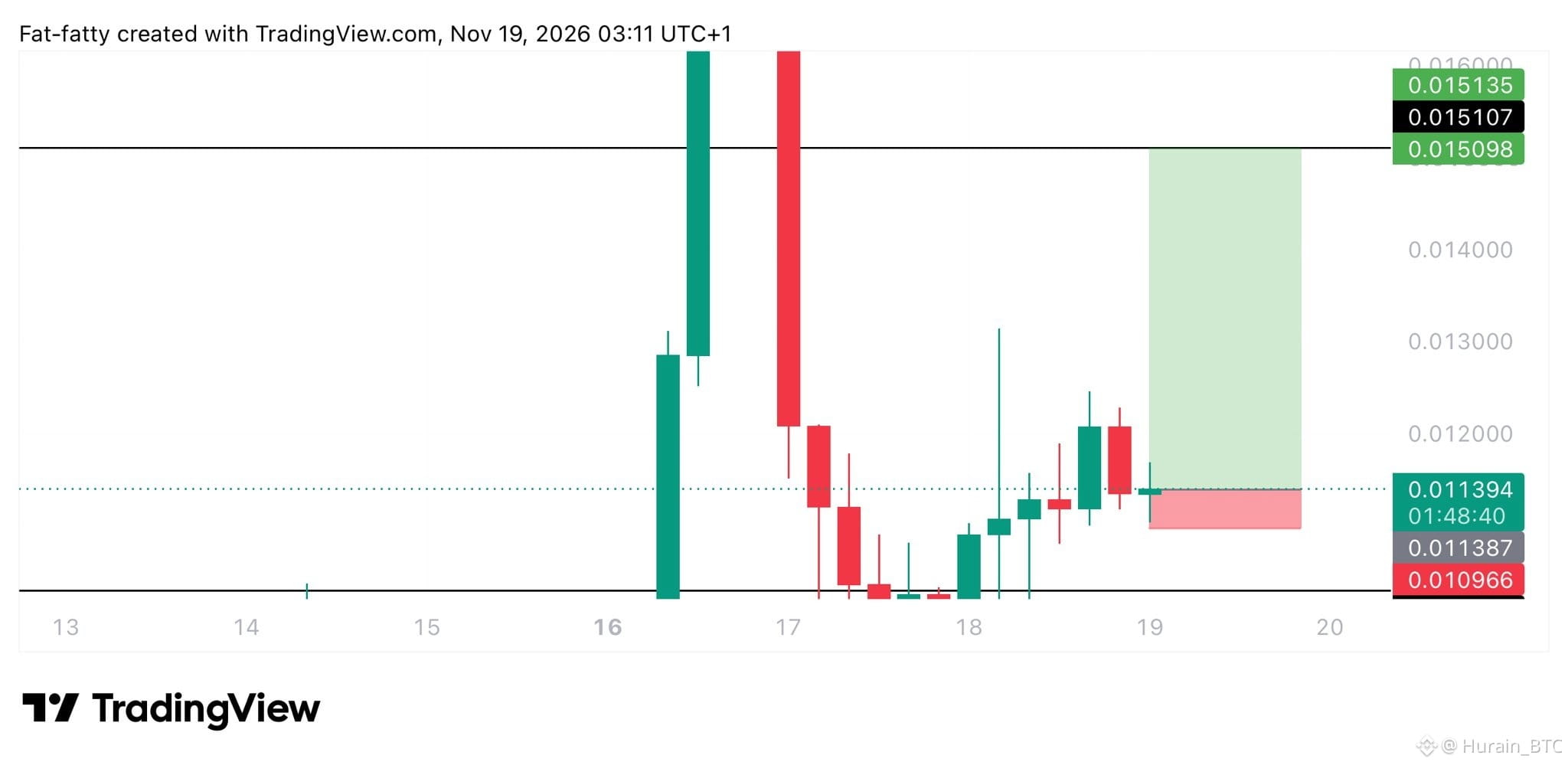
$BLESS POSITION LONGUE
ENTRÉE : 0.0114
OBJECTIF : 0.0151
STOP-LOSS : 0.010935
$BLESS POSITION LONGUE
ENTRÉE : 0.0114
OBJECTIF : 0.0151
STOP-LOSS : 0.010935
ENTRÉE : 0.0114
OBJECTIF : 0.0151
STOP-LOSS : 0.010935
1
165
·
--
📊 UNI A ÉCHANGÉ 255 M$ EN 24 H, PLUS QUE LINK, ADA ET XLM
LINK a enregistré 177 M$ d’échanges, ADA 198 M$ et XLM 82 M$.
UNI a également terminé la période en hausse de 3,09 %.
Une cryptomonnaie DeFi qui dépasse des noms plus importants en volume est le signe d’une rotation vers le trading on-chain.
Voyez si le volume reste au-dessus de ces niveaux lors des prochaines séances.
Quelle cryptomonnaie DeFi vous inspire le plus confiance ? 👇

209
·
--
Vérifié
🇸🇬 $ONDO : ONDO FINANCE REJOINT L’INITIATIVE GUARDIAN DE LA MAS À SINGAPOUR
Guardian réunit des organismes de réglementation, des groupes sectoriels et des institutions financières internationales pour créer des marchés tokenisés.
Selon RWA.xyz, Ondo est désormais la plus grande plateforme de tokenisation au monde.
La valeur totale verrouillée (TVL) des actifs émis par Ondo a dépassé 4 milliards de dollars cette année.
Ondo Stocks est passé d’environ 300 millions de dollars un mois après son lancement à 1,34 milliard de dollars fin octobre.
La TVL d’Ondo Intelligent Portfolios a dépassé 75 millions de dollars en environ deux mois.
L’unité technologique de Fidelity est désormais un vérificateur obligatoire sur Ondo Bridge.
Et pourtant, $ONDO a perdu plus de 15 % en 7 jours.
Les organismes de réglementation ou les traders ont-ils raison au sujet de $ONDO ? 👇
298
·
--
Vérifié
📉 LE NASDAQ CHUTE DE 1,5 % ALORS QUE LA VENTE MASSIVE DE NVIDIA S’INTENSIFIE
En cours de séance lundi, le S&P 500 a reculé d’environ 0,9 %, le Nasdaq a chuté de 1,5 % et le Dow a cédé environ 0,1 %.
$NVDA a reculé d’environ 2,4 %, ce que l’article attribue au départ du PDG Jensen Huang la semaine dernière.
Broadcom et AMD ont également baissé, même si Broadcom avait gagné plus de 18 % la semaine précédente.
Le rendement des bons du Trésor à 10 ans se situait autour de 5,13 %, après avoir atteint 5,15 % le 13 novembre.
Nvidia publiera ses résultats le 17 novembre, après avoir prévu un chiffre d’affaires d’environ 108 milliards de dollars, contre un record de 96,2 milliards de dollars au trimestre dernier.
Le $BTC se situait autour de 64 000 dollars après avoir plongé vers les 62 000 dollars.
Les résultats permettront-ils de stabiliser le secteur tech ou accentueront-ils la baisse ? 👇

222
·
--
⚔️ $LINK contre $UNI
LIEN : capitalisation boursière de 6,87 milliards de dollars, volume sur 24 h de 430,03 millions de dollars.
UNI : capitalisation boursière de 3,21 milliards de dollars, volume sur 24 h de 668,36 millions de dollars.
La capitalisation de LINK est 2,1 fois plus élevée, mais UNI a enregistré 1,6 fois plus d’échanges.
Une capitalisation plus élevée ou plus d’activité ?
Qui l’emporte ?

398
·
--
Vérifié
🔥 $XRP L’activité du Ledger vient d’atteindre de nouveaux records en novembre
L’utilisation des lots a atteint 1,962 M le 3 novembre, moins d’un mois après leur mise en service le 9 octobre.
L’utilisation des tickets a atteint 1,553 M le 7 novembre, établissant également un record pour le mois de novembre.
En 24 heures, le nombre de transactions a augmenté de 75,9 % pour atteindre 4,3 M, et le nombre de comptes actifs a bondi de 128 %.
Le volume des paiements a grimpé de 137 % pour atteindre 1 Md $, et la quantité de XRP brûlée sous forme de frais a augmenté de 136 %.
La capitalisation boursière du RLUSD a progressé de 96 % cette année, passant de 1,4 Md $ en janvier à 2,7 Md $.
Les ETF XRP au comptant américains détiennent désormais plus de 1,16 Md de XRP.
XRPL est-il en train de devenir discrètement une couche de règlement incontournable ? 👇
135
·
--
😱 $INJ était le pire des 14 altcoins aujourd'hui
a chuté de 12,6 % à 7,01 $.
Le volume sur 24 h s'élevait à 196,3 M$.
Avec une capitalisation boursière de 701 M$, cela représente 28 % de la capitalisation totale échangée en une journée.
$INJ se situe maintenant environ 87 % sous son plus haut historique de 52,94 $.
C'est un niveau de rotation digne d'une panique pour une cryptomonnaie de cette taille.
Un volume de panique se termine généralement par un rebond marqué ou un nouveau plus bas.
Vous détenez toujours $INJ ou avez-vous abandonné ?

1
547
·
--
Vérifié
🔐 $FLR mise sur le seul enjeu sur lequel les institutions ne feront aucun compromis : la confidentialité
Les institutions arrivent dans la crypto, et la confidentialité compte pour elles.
Hugo Philion, cofondateur de Flare, s’est entretenu avec Thinking Crypto pour expliquer quelle est la place de Flare.
Tout commence avec Flare Confidential Compute.
Ensuite, les possibilités s’étendent à des cas d’usage plus larges des données.
Les grands investisseurs ne confieront pas de données sensibles à une blockchain où tout le monde peut tout voir.
Les blockchains qui résoudront d’abord le problème de la confidentialité pourraient bien être celles que les institutions choisiront.
La confidentialité est-elle le prochain grand thème autour de $FLR ?

47
·
--
🏔️ $AVAX a chuté de près de 10 %, avec un volume bien supérieur à la normale
$AVAX a enregistré un volume de 423,6 M$ en 24 h.
Cela représente environ 13 % de sa capitalisation boursière de 3,22 Md$.
Le cours est à 7,22 $, en baisse de 9,8 % en 24 h.
Le RSI journalier est autour de 30, juste au seuil de survente.
Un volume élevé en zone de survente peut signaler une purge, ou le début d’une baisse plus profonde.
La zone des 7 $ déterminera lequel des deux scénarios se réalisera.
Dans quelle direction $AVAX va-t-il casser : vers 9 $ ou 6 $ ?
736
·
--
Partiellement vrai
🔓 $FIL vient de perdre sa plus grande source de nouveaux tokens… et presque personne ne l’a remarqué 👇
La période d’acquisition sur six ans des tokens genesis de Filecoin a officiellement pris fin le 14 octobre.
Au cours des trois mois qui ont précédé, cette période a libéré 17,1 M de FIL.
Les récompenses de bloc n’ont libéré que 5,4 M de FIL sur la même période.
Cela signifie que cette période représentait plus de 75 % de tous les nouveaux FIL mis sur le marché.
Désormais, ce flux est définitivement tari.
Moins de pression sur l’offre, même réseau.
Est-ce la configuration discrète que les détenteurs de $FIL attendaient ?

1
2
1.4k
·
--
Vérifié
🏛️ La SEC vient de considérer le Canton Coin $CC comme une matière première numérique
Le personnel de la SEC a publié une lettre de non-intervention le 3 novembre.
Canton a généré plus de 155 M$ de frais au troisième trimestre.
Chaque frais entraîne la destruction de CC.
À partir de 2027, toutes les applications en production détruiront des CC en fonction de leur utilisation du réseau.
CNTN, cotée au Nasdaq, a commencé à régler des transactions sur Canton le 2 novembre.
Pourtant, le CC s’échange autour de 0,095 $, soit plus de 50 % sous son sommet de février.
Clarté réglementaire + mécanisme de destruction à moitié prix par rapport aux sommets… géant endormi ou piège à valeur ?
CC-1,12%
CNTNUS+4,01%
72
·
--
Vérifié
⛏️ $LTC Le mineur Luxxfolio accumule discrètement du Litecoin
Luxxfolio affirme détenir désormais environ 26 838 LTC dans ses réserves.
Cela représente environ 1,3 million de dollars.
Ce mineur spécialisé dans le Litecoin n’a commencé à miner qu’au premier trimestre de cette année.
Il a miné 3 599 LTC jusqu’à présent.
Environ 1 514 LTC ont été minés au cours du seul mois dernier.
Le rythme s’accélère.
D’autres mineurs vont-ils commencer à constituer des réserves de Litecoin ?
380
·
--
Vérifié
🦄 $UNI vient de connecter directement des liquidités externes à Uniswap
Uniswap a lancé les Aggregator Hooks le 22 octobre.
Sept sources de liquidité externes sont désormais connectées.
Elles couvrent Ethereum, Base et Robinhood Chain.
Les liquidités externes apparaissent sous forme de pools v4.
Le routeur peut ainsi exécuter l’intégralité du parcours d’échange en une seule transaction.
Un échange. Une transaction. Bien plus de liquidités.
Uniswap v4 est-il en train de devenir le hub de liquidité de la DeFi ?

117
Connectez-vous pour découvrir plus de contenu
Rejoignez la communauté mondiale des adeptes de cryptomonnaies sur Binance Square
⚡️ Suviez les dernières informations importantes sur les cryptomonnaies.
💬 Jugé digne de confiance par la plus grande plateforme d’échange de cryptomonnaies au monde.
👍 Découvrez les connaissances que partagent les créateurs vérifiés.
Adresse e-mail/Nº de téléphone
Sujets d’actualité
EvolveAtBinanceBlockchainWeek
2.7M vues
21,644 mentions
La Binance Blockchain Week a officiellement commencé ! 🌍
Les 28 et 29 novembre, que vous soyez à Bangkok ou que vous suiviez l’événement à distance, regardez les diffusions en direct et participez à la conversation sur Binance Square !
Voici ce qui vous attend 👇
📺 Regardez le main stage live
Pendant ces deux journées, suivez les interventions des acteurs du secteur qui partageront leurs points de vue sur le thème de cette année, « Évoluer ». De l’innovation technologique aux applications concrètes, découvrez ce qui attend la crypto.
⚔️ Regardez deux compétitions de trading
Le Aster Open Qualifier et le Binance Trading Master Tournament seront diffusés en direct. Suivez les traders en pleine action.
🏆 Regardez le Blockchain 100 Awards Ceremony
La liste Blockchain 100 a été sélectionnée par la communauté. Joignez-vous à nous pour célébrer les créateurs et les idées qu’ils partagent !
💬 Participez à la conversation de la communauté
Utilisez #EvolveAtBinanceBlockchainWeek dans une publication accompagnée d’une photo pour partager ce que vous attendez avec impatience, votre point de vue sur le secteur ou vos moments préférés de l’événement.
Le event page est maintenant en direct ! Abonnez-vous à toutes les diffusions en direct en un seul clic pour ne rien manquer 👏
Binance Blockchain Week
·641 mentions J’aime
·1M vues
IBSGovAccountMints1BTokensDrains5.71M
28,539 vues
326 mentions
OPECReportedlyKeepsOilQuotasUnchangedForQ1
3,824 vues
99 mentions