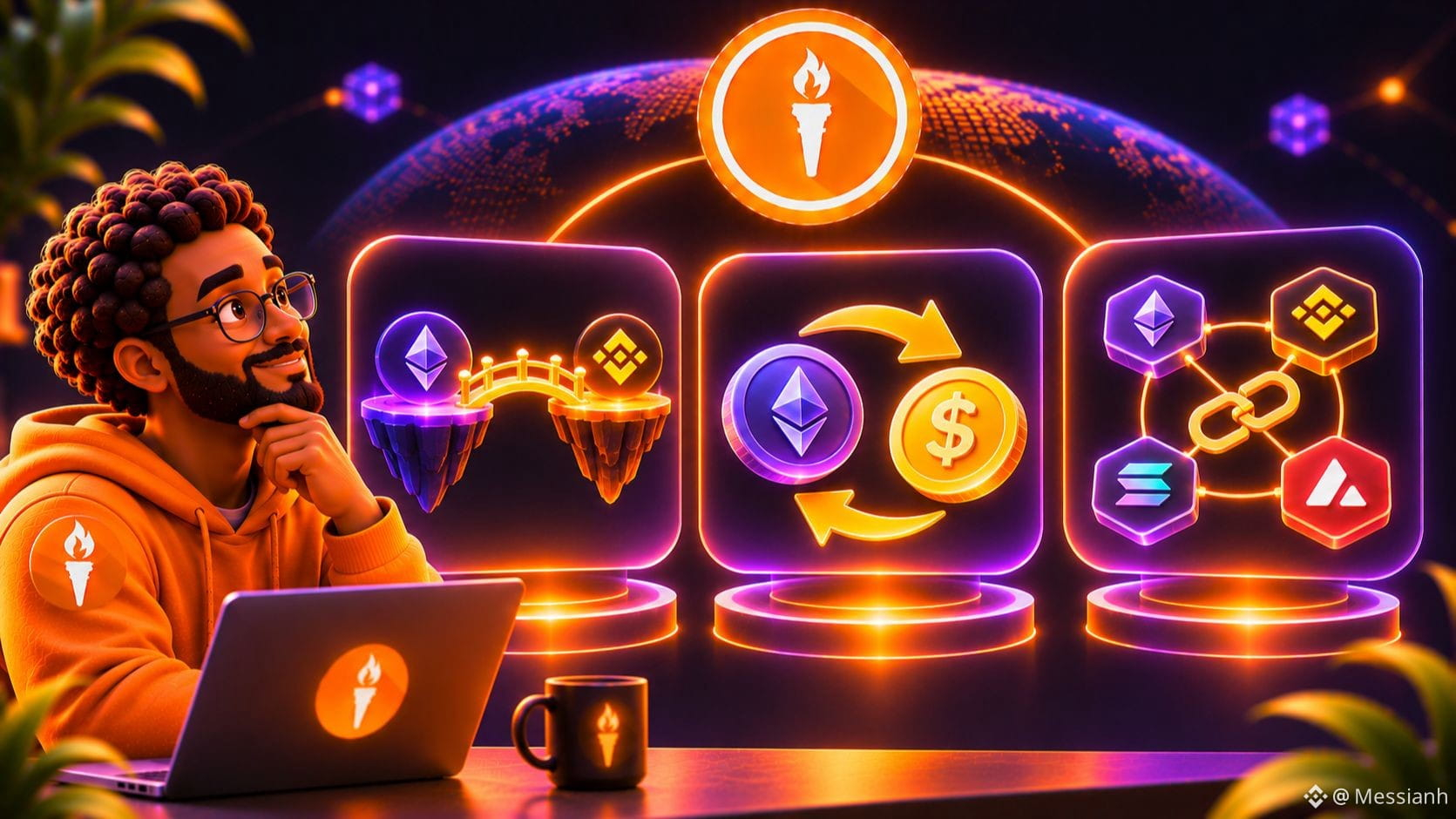
Bridges, swaps and cross-chain transactions.
They are closely related, but they don't mean the same thing.
What is a blockchain bridge?
A bridge connects two blockchain networks.
It allows assets or information to move between different ecosystems. For example, moving an asset from Ethereum to another supported network. The exact mechanism depends on the bridge.
What is a crypto swap?
A swap is the exchange of one digital asset for another. For example:
ETH → USDC
You exchange one token for another, usually through a decentralized exchange or another trading mechanism. A swap doesn't necessarily involve multiple blockchains.
What is a cross-chain transaction?
A cross-chain transaction involves an operation across different blockchain networks. It could involve:
• Moving assets between networks.
• Exchanging tokens across chains.
• Sending information between ecosystems.
The goal is to make different blockchain environments interact.
How are they connected?
Think of it this way:
🌉 Bridge = Connects blockchain networks.
🔄 Swap = Exchanges one asset for another.
🌐 Cross-chain transaction = An operation involving multiple blockchains.
A cross-chain swap can combine bridging and exchanging assets.
Why does this matter?
Because users shouldn't have to think about blockchain boundaries every time they want to access another ecosystem.
Better interoperability can help reduce friction and make Web3 more accessible.
But security, liquidity, fees and execution still matter.
Where does NEAR Intents fit into this discussion?
NEAR Intents introduces an intent-based approach to interacting with blockchain ecosystems. Instead of focusing only on the sequence of technical steps, users can express the outcome they want. This is an interesting direction for simplifying multi-chain interactions.
And what about Liberdus?
NEAR Intents is among the developments announced for integration into Liberdus.
The stated objective is to enable cross-chain transactions. We're looking forward to seeing how this integration takes shape.
#Liberdus $XRP