$DEXE
📈 Why Price Moves: Understanding Order Books vs. Liquidity Pools! 📊
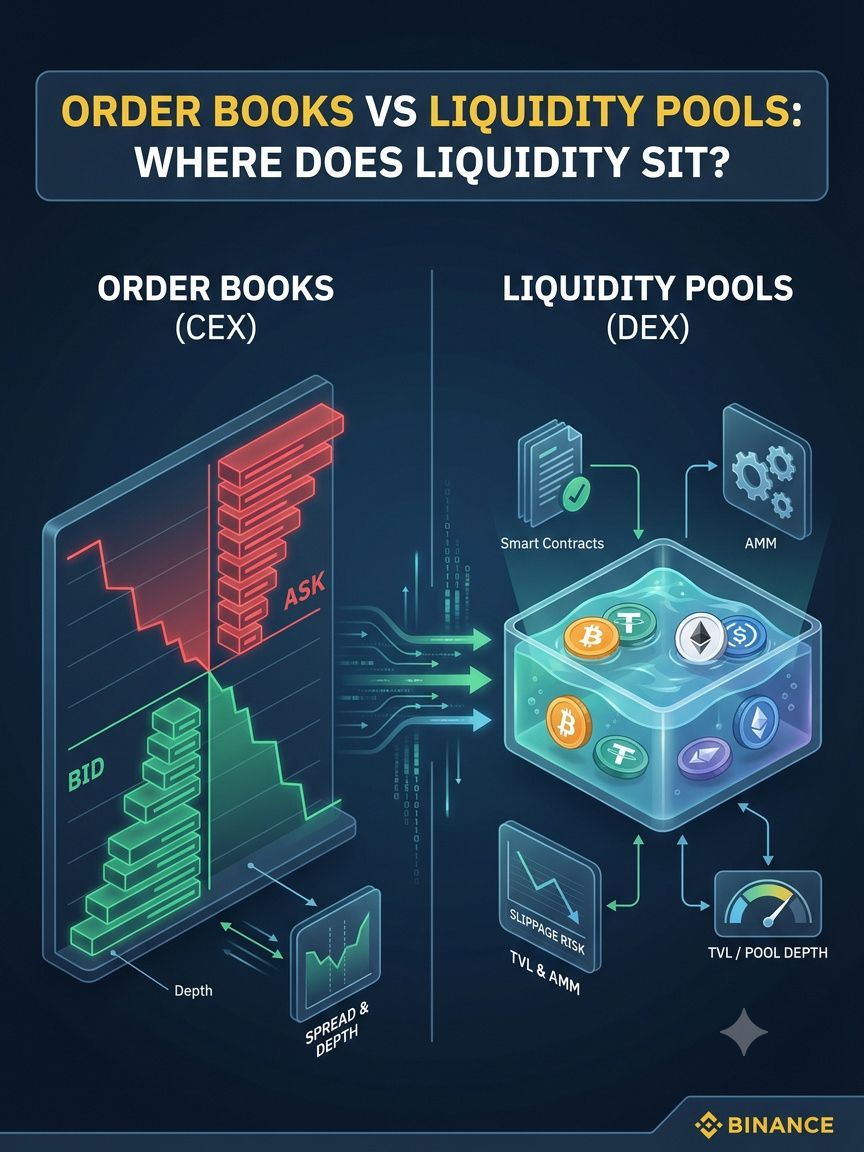
Have you ever wondered why a token price suddenly spikes, dumps, or experiences heavy slippage? To trade effectively, you must understand the two primary engines of crypto liquidity: Centralized Order Books and Decentralized Liquidity Pools.
🔍 1. Order Books (CEXs like Binance):
• How it works: Buyers and sellers post limit orders at specific prices (Bids vs. Asks).
• Key Metrics: Market Depth (the volume of orders near the current price) and Spread (gap between highest bid and lowest ask).
• Why it matters: Deep order books prevent sudden price slippage during large trades.
🌊 2. Liquidity Pools (DEXs / AMMs):
• How it works: Automated Market Makers (AMMs) use pools of paired tokens (e.g., SOL/USDC) locked in smart contracts.
• Key Metrics: Total Value Locked (TVL) and Price Impact.
• Why it matters: In low-liquidity pools, even small trades can cause massive price swings (slippage).
💡 The Trader's Takeaway:
Never market-buy an asset without checking depth first. Knowing where liquidity sits helps you avoid terrible fills and spot where real support or resistance is likely to hold.
Do you trade mostly on deep exchange order books or explore on-chain liquidity pools? Drop your experience below! 👇
#CryptoEducation #Liquidity #DEX #TradingTips #BinanceSquare