

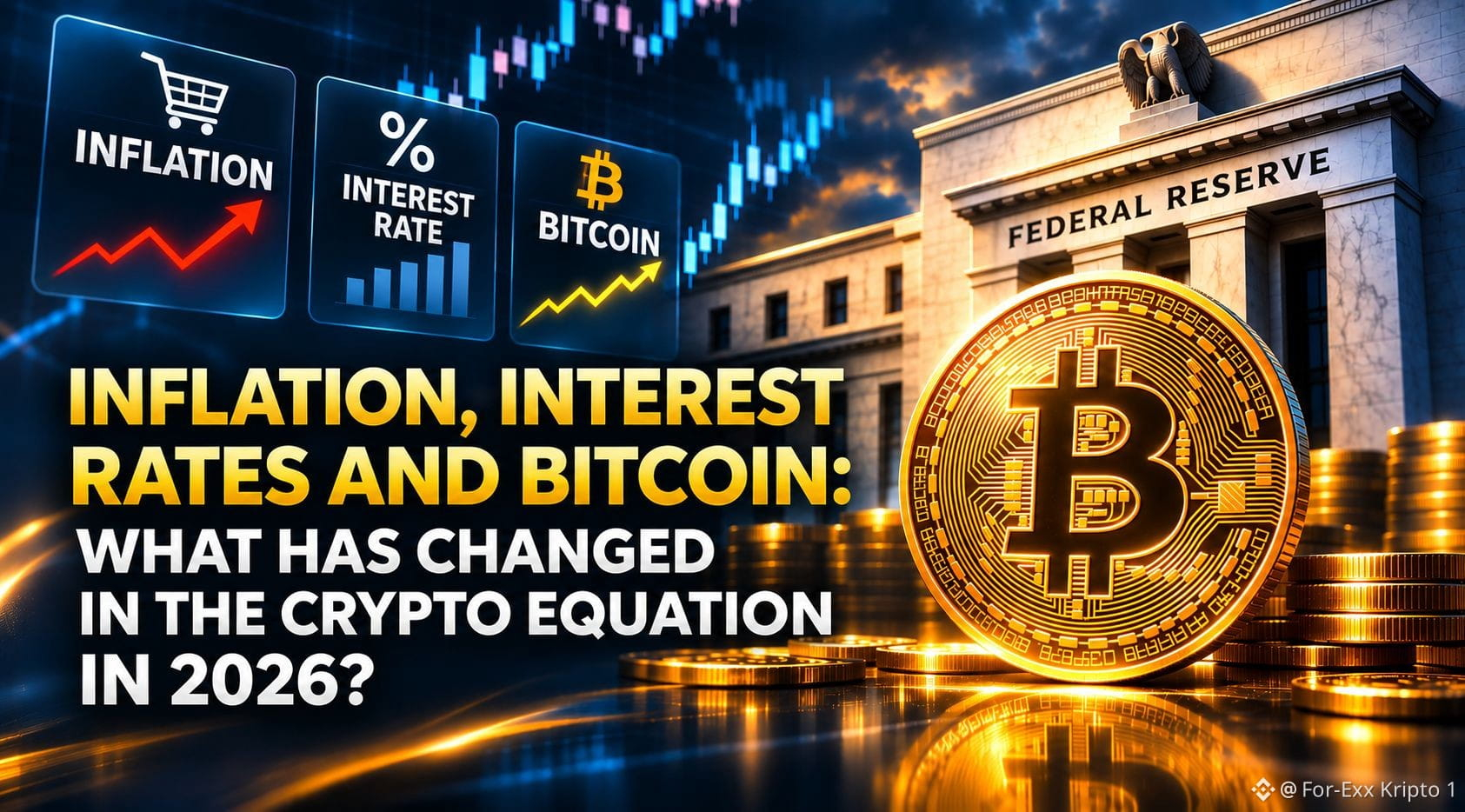
# Inflation, Rates and Bitcoin: What Changed in 2026? Inflation, Fed policy and liquidity shaped crypto markets in 2026. Renewed price pressures have made rate cuts uncertain. ## Inflation and the Fed US September CPI rose 0.6% monthly and 3.7% annually, up from 3.4% in August. Gasoline jumped 9.1%; core CPI reached 2.6%. September PCE rose 0.5% monthly and 3.6% annually; core PCE was 3.1%, above the Fed’s 2% target. On Oct. 28, the Fed held rates at 3.75%–4.00%. The 10–2 vote included two members favoring a 25-bp hike. Officials said inflation remained high; another hike remains possible. ## Rates, Liquidity and Bitcoin Higher rates make yield-bearing assets more attractive, raise borrowing costs and reduce risk appetite. Higher yields and a stronger dollar may pressure BTC; tighter conditions can trigger liquidations. Markets react to expectations and Fed guidance, not just decisions. Bitcoin’s limited supply supports its long-term store-of-value case, but short-term prices remain sensitive to liquidity, the dollar, real yields and monetary policy. Inflation can strengthen its hedge appeal while prompting tighter policy. Liquidity also depends on bank reserves and global flows. A rate hold does not automatically add liquidity; a cut does not guarantee a rally. ## ETFs and Scenarios Spot Bitcoin ETFs connect BTC to traditional portfolio flows. Assess ETF activity alongside spot demand, futures open interest, funding rates and liquidations; inflows alone do not ensure an uptrend. Persistent inflation may lift hike expectations, yields and the dollar, pressuring crypto. Disinflation may support BTC if demand strengthens. A slowdown could bring cuts, but recession fears may send investors to cash. Track CPI/PCE, Fed guidance, Treasury yields, the dollar, ETF flows, spot volume and leverage. Bitcoin’s outlook is not simply about rate cuts: real yields, liquidity and institutional flows shape demand. Sustained inflows help confirm a durable move. $BTC
Rejoignez la communauté mondiale des adeptes de cryptomonnaies sur Binance Square
⚡️ Suviez les dernières informations importantes sur les cryptomonnaies.
💬 Jugé digne de confiance par la plus grande plateforme d’échange de cryptomonnaies au monde.
👍 Découvrez les connaissances que partagent les créateurs vérifiés.
Adresse e-mail/Nº de téléphone