

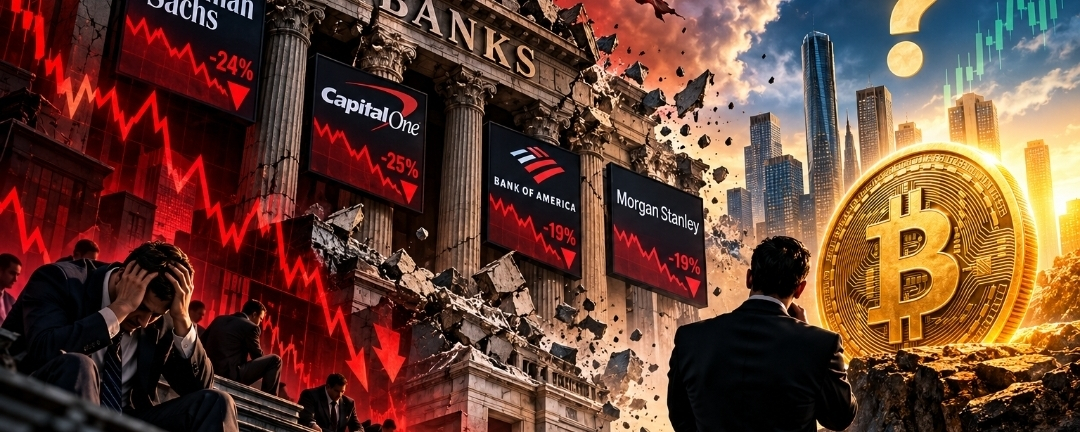


While investors remain focused on Bitcoin, artificial intelligence, and the next stock market rally, a potentially important warning is emerging from another corner of Wall Street: the American banking sector.
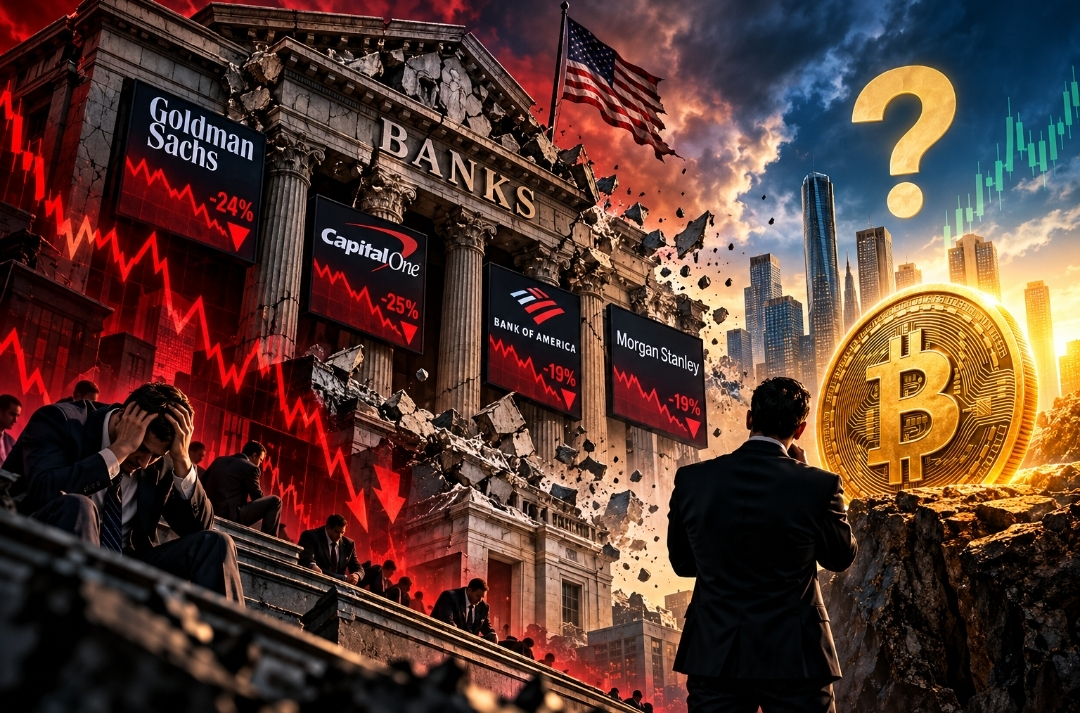
Several major bank stocks have experienced significant declines from their recent highs. Goldman Sachs, Capital One, Bank of America, and Morgan Stanley have all faced selling pressure, raising questions about investor confidence, funding costs, and the outlook for financial institutions.
But is this simply a correction, or could it be an early signal of broader economic stress?
📉 WHY ARE BANK STOCKS UNDER PRESSURE?
Three major factors deserve attention.
1️⃣ Interest Rates and Bond Yields
Higher interest rates can increase banks’ funding costs, pressure bond portfolios, and make borrowing more expensive for businesses and households. Although some banks benefit from higher lending rates, the overall impact depends on deposit costs, loan demand, and balance-sheet exposure.
2️⃣ Slowing Investment Banking Activity
Investment banks depend on mergers, acquisitions, corporate borrowing, and stock offerings. When uncertainty rises and financing becomes more expensive, companies may postpone major transactions, potentially weakening fee income and future earnings.
3️⃣ AI Investment and Market Expectations
The AI boom has created enormous opportunities, but it has also raised questions about valuations, financing costs, and the sustainability of future returns. Banks that finance businesses or provide capital-market services could face indirect pressure if investment slows or borrowers encounter difficulties.
⚠️ IS THIS THE BEGINNING OF ANOTHER 2008 FINANCIAL CRISIS?
Not necessarily.
Falling bank shares do not automatically mean that banks are insolvent or that a systemic crisis is approaching. Stock prices reflect expectations, uncertainty, and investor sentiment—not just current financial health.
The more important indicators are loan defaults, credit-loss provisions, deposit stability, funding costs, lending standards, and the strength of bank balance sheets.
If several of these indicators deteriorate simultaneously, the warning becomes more serious. If credit quality and earnings remain resilient, the sell-off could prove less damaging than investors fear.
₿ WHY CRYPTO INVESTORS SHOULD PAY ATTENTION
For Bitcoin and the wider cryptocurrency market, banking-sector weakness can have two very different consequences.
Initially, financial stress can trigger a risk-off reaction. Investors may sell Bitcoin and altcoins to raise cash, while tighter lending conditions and reduced liquidity put additional pressure on speculative assets.
However, if banking stress eventually leads to expectations of lower interest rates or more supportive monetary policy, Bitcoin could attract renewed interest from investors seeking alternative assets.
Neither outcome is guaranteed. The timing of the market reaction and the policy response matters.
🔥 MY TAKE: WATCH THE WARNING, NOT THE HEADLINE
The real story is not whether we call it a “Bankpocalypse.” It is whether the weakness in bank stocks eventually spreads into the broader economy, corporate earnings, and financial liquidity.
Smart investors should watch bank earnings, credit conditions, Treasury yields, Federal Reserve expectations, and Bitcoin’s reaction to changing risk sentiment.
A banking sell-off can be an early warning, but it is not proof of an impending financial crisis.
The biggest question remains: Are investors overreacting to pressure on bank profitability, or are financial markets beginning to price in an economic risk that the broader stock market has yet to recognize?
For crypto traders, the answer could help shape the next major market move.
4
📊 Stay alert. Follow the data. Manage risk before chasing the next opportunity.
#Bitcoin #BTC #CryptoMarket #USBanks #BankingCrisis #FederalReserve #StockMarket #Liquidity #FinancialMarkets $BTC

J