


The battlefield is no longer just about territory. It is also about oil, global trade, and the money flowing through financial markets.
Ukraine’s long-range strikes against Russian strategic infrastructure are creating another question for investors: how much economic pressure can Russia absorb before global markets begin to feel the consequences?
Russia’s Black Sea ports are important not only for military logistics but also for exports. A major Ukrainian attack on Novorossiysk in August disrupted naval facilities and temporarily halted operations at two major grain terminals, raising concerns about global supply chains. Reuters reporting
But what does any of this have to do with Bitcoin?
Three possible connections matter.
1. Oil prices can change the mood across financial markets.
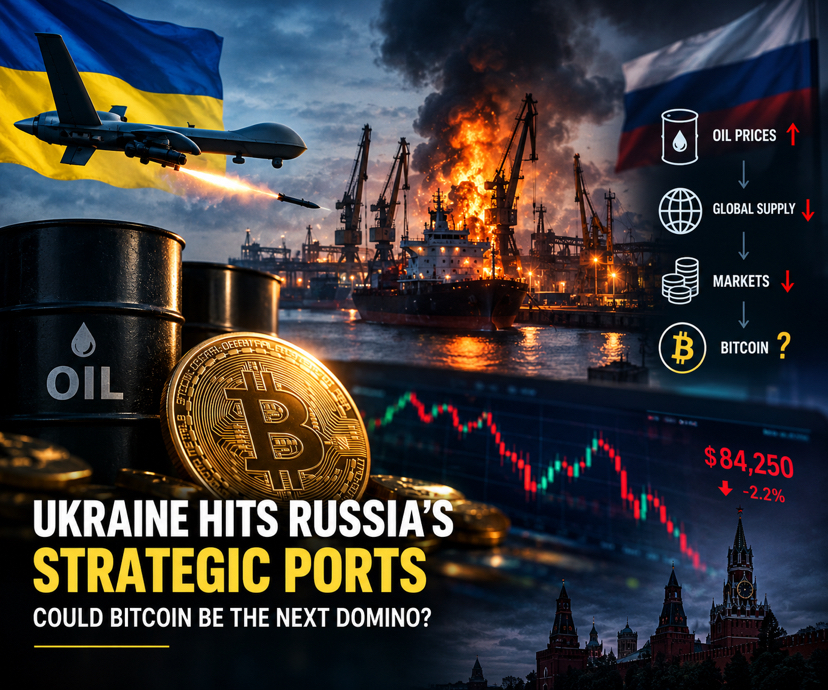
If attacks disrupt energy infrastructure or shipping routes, oil prices may rise. More expensive energy can increase inflationary pressure, complicate central-bank decisions, and make investors more cautious about risky assets.
That is particularly relevant right now. On October 14, Brent crude settled at $106.06 per barrel as geopolitical tensions in the Middle East raised concerns about supply disruptions. Reuters
2. Bitcoin is not automatically a safe haven.
Bitcoin can attract investors looking for alternatives to traditional financial systems. But during periods of sudden uncertainty, traders may also sell crypto to reduce risk or raise cash.
We have already seen this dynamic play out. On October 12, Bitcoin briefly reached $84,250 before falling by as much as 2.2%, amid rising oil prices and doubts surrounding the proposed Russia-Ukraine energy ceasefire. Cointelegraph
The lesson? A geopolitical escalation does not automatically mean Bitcoin goes up. Sometimes the first reaction is the opposite.
3. Trump could become part of the market equation again.
Washington’s position matters because energy prices have become a political issue. Trump has supported increasing Russian diesel supplies to global markets, while Ukraine’s strikes on Russian oil infrastructure have become part of the wider dispute over fuel prices and pressure on Moscow.
If Washington pushes for de-escalation, markets could respond differently than if the conflict expands and energy supplies become less predictable.
For crypto traders, the key question is whether these developments change inflation expectations, interest-rate expectations, or appetite for risk.
So, what should Bitcoin investors watch?
Not just the next headline about a drone strike.
Watch whether oil prices continue rising, whether shipping and export operations are genuinely disrupted, and whether Bitcoin holds up when traditional markets become nervous.
A single attack may have little lasting impact on crypto. A prolonged disruption to energy supplies, combined with tighter financial conditions, could matter much more.
My takeaway: The connection between war and Bitcoin is real, but it is indirect. The strongest signal is not the explosion itself — it is what happens to energy prices, monetary policy, and investor confidence afterward.
What do you think: if pressure on Russian infrastructure continues and oil stays above $100, will Bitcoin eventually benefit from the uncertainty, or will investors move away from risk first?


#Bitcoin #BTC #Crypto #Ukraine #Russia #Trump