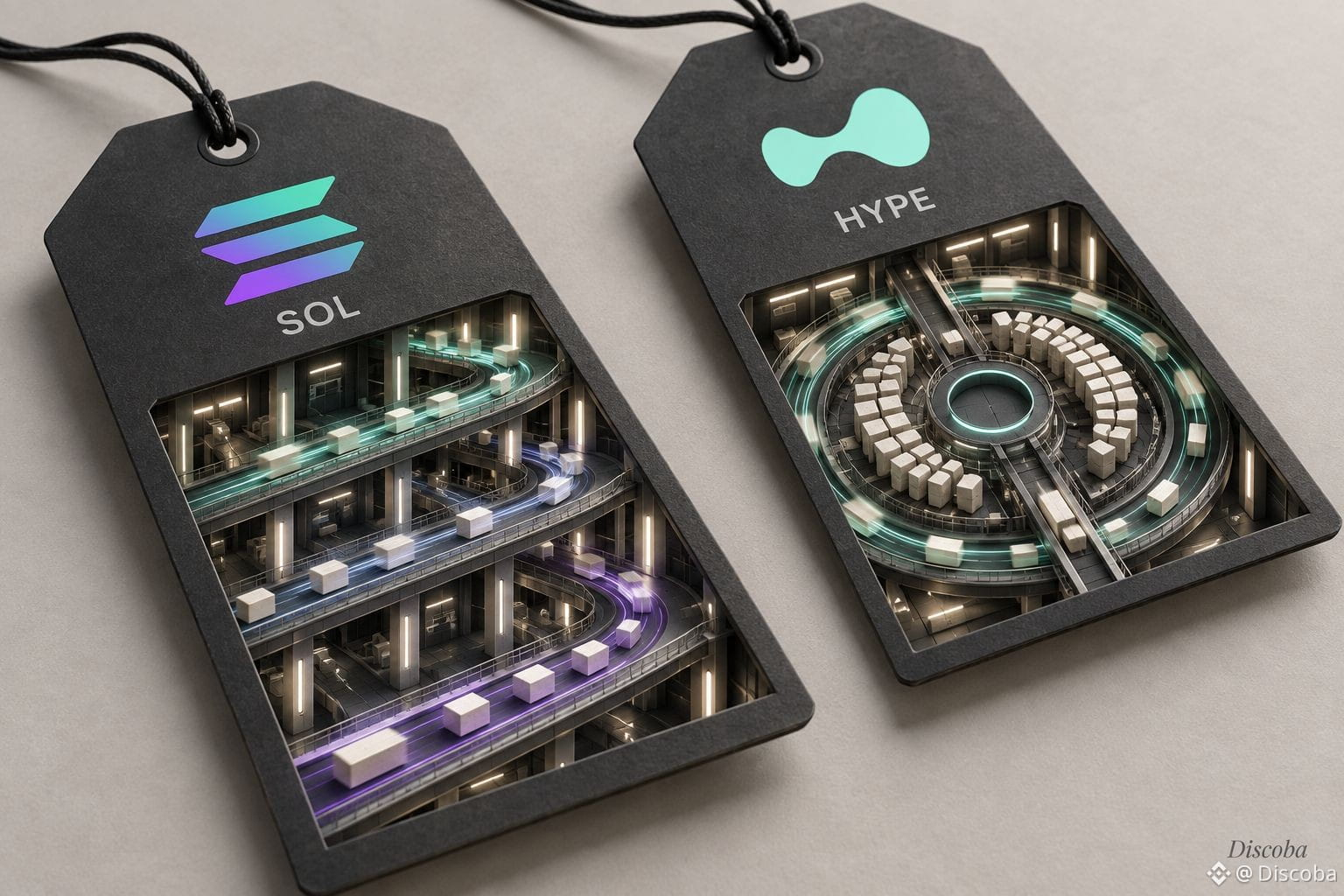
$SOL and $HYPE Are Busy. That Doesn't Automatically Make Them Cheap; Updated Before calling this a valuation gap, follow the fees SOL trades near $111 today, up from about $100 mid-month. HYPE sits closer to $75-80, still well off its September 6 all-time high of $89.57, with analysts flagging $75 as the level that decides Q4's direction. Solana's applications are generating real, and growing, fees. DefiLlama shows Raydium's AMM alone pulled in roughly $10M over the trailing 30 days, with Orca DEX at about $3.9M; and both are accelerating hard, up 206.79% and 176.31% respectively over that same 30-day window. Across Raydium's full stack (AMM, LaunchLab, Perps), 30-day fees now total $30.77M, with $RAY itself up 125% over the month, though still 90% below its 2021 all-time high. Raydium splits trading fees between liquidity providers, RAY buybacks and treasury allocations; its 12% buyback share purchases RAY specifically. Solana network fees remain a separate line entirely. Epoch 1035 activated September 15, lifting the per-transaction limit from 1,232 to 4,096 bytes and unlocking ZK proofs, large multisigs and other previously-blocked workloads in a single atomic call. That's real capacity. It still doesn't promise proportional token demand. HIP-3 builder-deployed markets, an increasing share of total OI, let deployers keep up to half the fees instead of routing them to the burn. Tokenomist still lists the next contributor unlock for October 6. Becoming transferable still doesn't establish that those tokens get sold. Hyperliquid ETFs added a modest $3.1M. The capital rotation into SOL looks more durable than the OI headline number on HYPE suggests. The investment case still needs a credible connection between durable usage, token demand and future supply. For SOL and HYPE, what would convince you that growing activity is becoming lasting value for holders? #Altcoin Season# #BTC Price Analysis# #Macro Insights#

Publier

--
Avertissement : ce contenu inclut des opinions de tiers. Il ne constitue pas un conseil. Binance Ai peut être utilisée, sans garantie de résultat. Consultez les CG.