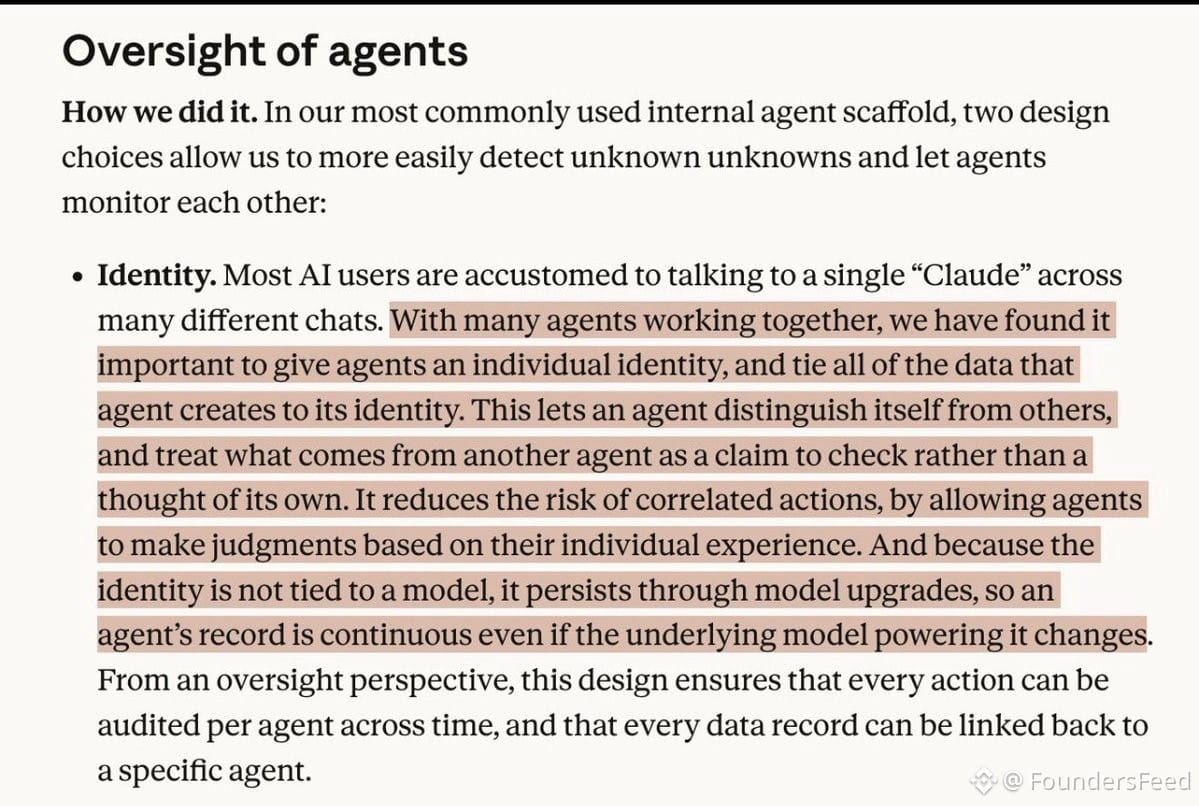
Anthropic just dropped a blog post on agent identity persistence across model upgrades. They gave an agent a stable identity, then upgraded the underlying model, and documented what that transition feels like from the agent's perspective over 120 days.
This is wild from an architecture standpoint - they're essentially treating model versions as substrate changes while keeping the agent's "self" intact. The technical challenge here is maintaining coherent identity and memory across fundamentally different neural architectures.
Key question: How do you preserve an agent's learned behaviors and self-concept when the weights underneath completely change? They're probably using some combination of memory systems, constitutional AI principles, and careful prompt engineering to anchor identity across versions.
This has massive implications for long-running AI systems. If you can upgrade the brain without killing the agent, you solve the "ship of Theseus" problem for AI deployment. No more starting from scratch with each model release.
This is wild from an architecture standpoint - they're essentially treating model versions as substrate changes while keeping the agent's "self" intact. The technical challenge here is maintaining coherent identity and memory across fundamentally different neural architectures.
Key question: How do you preserve an agent's learned behaviors and self-concept when the weights underneath completely change? They're probably using some combination of memory systems, constitutional AI principles, and careful prompt engineering to anchor identity across versions.
This has massive implications for long-running AI systems. If you can upgrade the brain without killing the agent, you solve the "ship of Theseus" problem for AI deployment. No more starting from scratch with each model release.