

Crypto is often discussed through prices, market trends, and new protocols — but behind every blockchain application is something even more important: code.
Smart contracts are programs that automatically execute rules on a blockchain. Once deployed, they can handle assets, transactions, and complex application logic without traditional intermediaries.
But writing a smart contract is only the beginning. Testing it properly is what helps turn an idea into reliable infrastructure.
🔍 Why Testing Matters
A small coding mistake can sometimes create unexpected behavior. That’s why developers use different testing methods before deploying contracts.
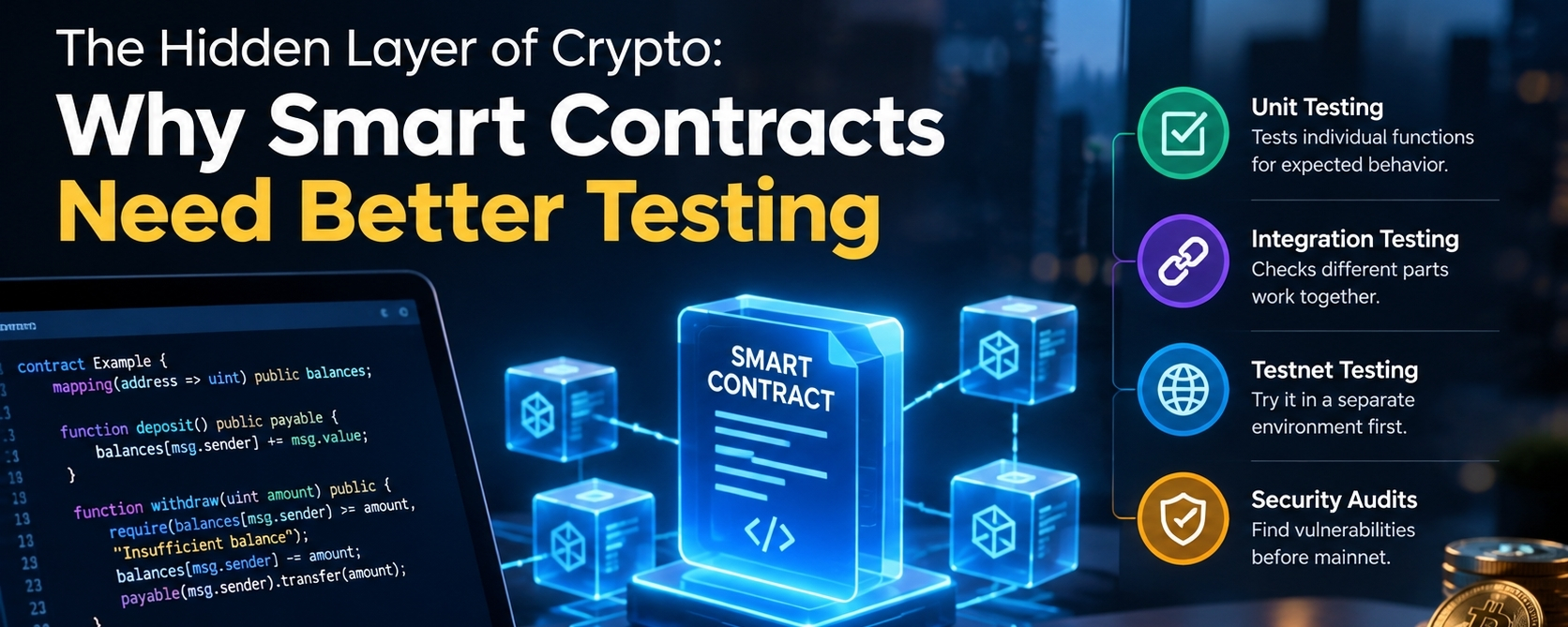
🧪 Unit Testing — Tests individual functions to check whether they behave as expected.
🔗 Integration Testing — Checks whether different parts of a protocol work correctly together.
🌐 Testnet Testing — Allows developers to experiment with a blockchain application in a separate testing environment before mainnet deployment.
🛡️ Security Audits — Independent reviews can help identify vulnerabilities that developers may have missed.
💡 The Bigger Picture
As blockchain applications become more sophisticated, reliability becomes just as important as innovation.
A protocol may have an interesting concept, but users ultimately depend on the underlying software behaving according to its rules.
In crypto, good development isn't only about building faster — it's also about building carefully.
🚀 Final Thought
The next stage of blockchain development may depend not only on new ideas, but on better engineering, testing, verification, and security practices.
💬 Question:
Would you trust a new blockchain application more if its development and security process were publicly documented?
#Crypto #Blockchain #SmartContracts #Web3 #BlockchainSecurity