
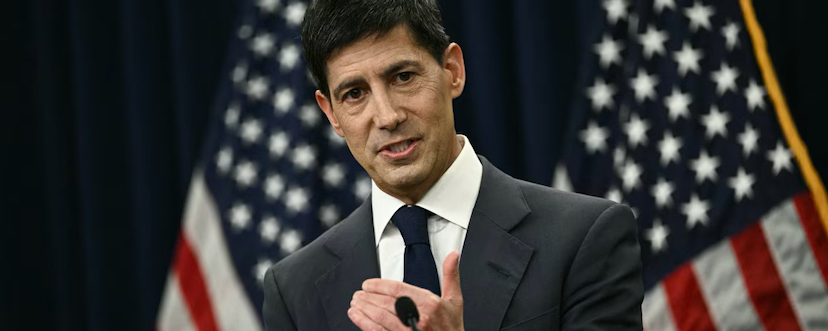

Kevin Warsh delivered his first Jackson Hole speech as Fed Chair — and while he explicitly refused to call it forward guidance, the message for markets was pretty clear:
Inflation remains the Fed’s #1 problem.
PCE inflation is running at 3.7% YoY, while the 6-month pace is even hotter at 4.1%. Warsh dismissed the recent softer CPI/PCE prints, saying they don’t show that underlying inflation has meaningfully improved. And the details matter: 54% of PCE components are still rising above 3%, far above the pre-pandemic average. His message? The 2% target is firm and fixed, and the Fed needs clear evidence that inflation is moving toward it before declaring victory. But inflation wasn’t the only hawkish signal.
Warsh argued that financial conditions are not restrictive. Credit spreads remain tight, lending standards are relatively easy, and credit markets show little evidence that monetary policy is actually slowing the economy significantly. Meanwhile, he sees the labor market as consistent with full employment, despite weaker monthly job gains. Then there’s growth: equipment and intangible investment is running around 9% YoY, S&P 500 profits are up 20%+, and private domestic final purchases are growing close to 3%.
In other words:
Inflation → still too high.
Jobs → still healthy.
Financial conditions → not restrictive.
Growth → resilient.
That’s not exactly the setup for aggressive rate cuts.
And then came the interesting part: forward guidance. Warsh believes the Fed has relied too heavily on communicating future policy decisions and that this can trap the central bank into following yesterday’s assumptions instead of reacting to tomorrow’s data.
His philosophy is essentially: “Watch the data, not the promises.” For markets, that creates more uncertainty around the next move — and potentially more volatility in rates, the dollar and risk assets.
🪙 What does this mean for crypto?
This is where it gets interesting. Bitcoin has rallied roughly 9% this week, while September hike expectations have actually increased. Spot Bitcoin ETFs have also recorded around $2.8B in inflows across eight consecutive sessions. So crypto is currently showing strength despite a less-dovish Fed narrative. That’s bullish from a positioning perspective — but it also creates a potential vulnerability. If inflation remains sticky and the Fed keeps rates higher for longer, lower yields and a weaker dollar may not have enough fundamental support to continue driving the rally indefinitely. So I wouldn’t read Warsh as “sell crypto.” I’d read it as: The Fed is not giving the market the dovish confirmation it wanted. And that means the next move in inflation, yields and the DXY could be much more important for Bitcoin than the headlines themselves. The Fed isn’t promising a rate cut.
It’s promising to keep watching the data. And for risk assets, that difference matters.
#bitcoin #crypto #FederalReserve #JacksonHole #Inflation