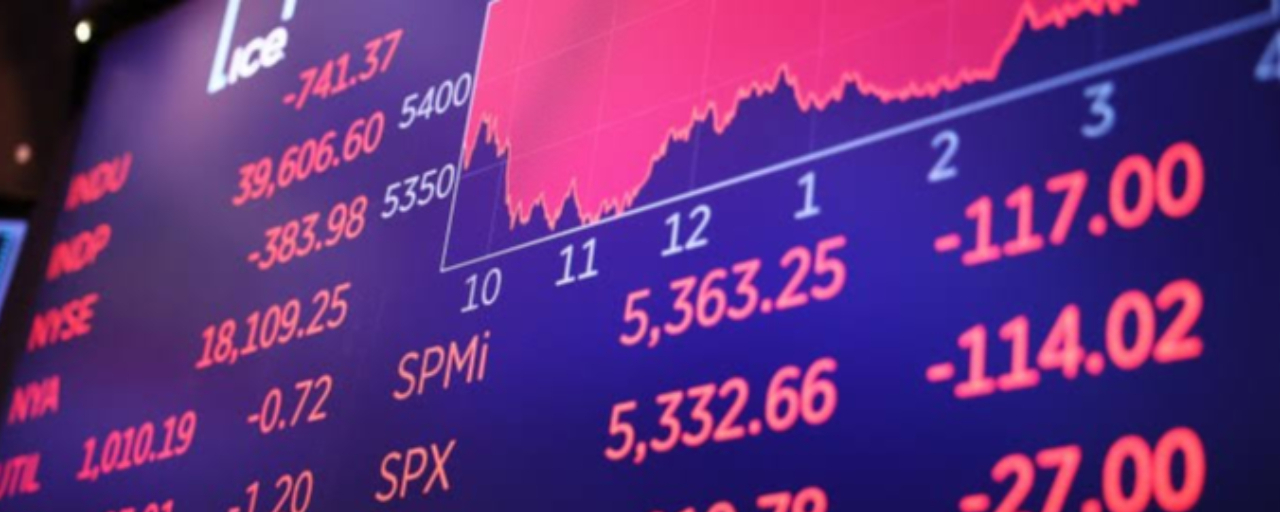

Wall Street opened the week on a downbeat note Monday. Easing Treasury yields and a pullback in oil prices should have offered some cushion, but a fresh selloff in chipmakers outweighed both, with renewed weakness in semiconductor and AI-linked names dragging on the technology-heavy averages.
Traders spent the session parsing Treasury Secretary Scott Bessent's newly unveiled sanctions campaign against Iran, which he framed as an "economic D-Day." President Trump is personally calling world leaders with specific requests to sever economic ties with Tehran, according to Bessent, who said countries now face a "cure period" to comply before facing unilateral U.S. action. Nearly 60 companies, individuals and vessels were named in the first wave, and Bessent said at least one major financial institution could be added within the week.
The broader market found some support from a report that the Treasury may tap roughly $1 trillion from its General Account to help fund a bond-buyback operation, which pulled yields lower through the morning. The relief was uneven, though the 2-year yield held firm, and Fed hike expectations actually edged higher ahead of Kevin Warsh's Friday address at Jackson Hole, an odd split-screen with the Treasury working to hold yields down even as traders price rising odds the Fed's next move is up, not down.
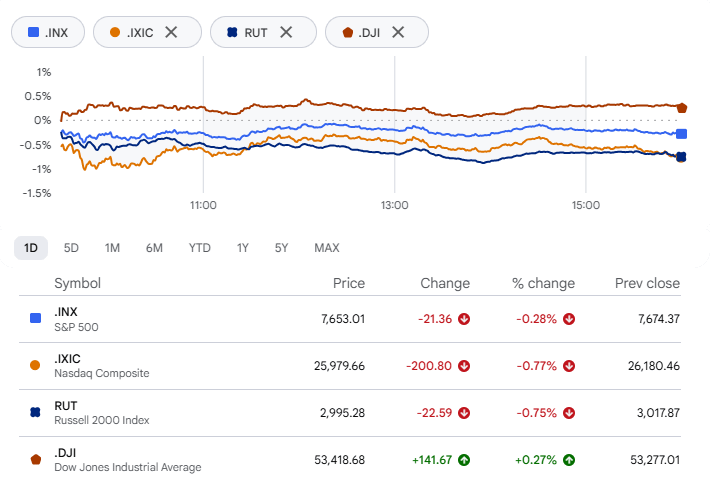
By the close, the S&P 500 fell 0.28% at 7,652.86, while the Nasdaq Composite lost 0.76% to settle at 25,980.19, weighed down by chip stocks. Small caps sided with the losers the Russell 2000 fell 0.76%. The 30-stocks Dow Jones Industrial Average bucked the trend, edging up 0.26% to 53,417.16, aided by
Chips Lead the Slide
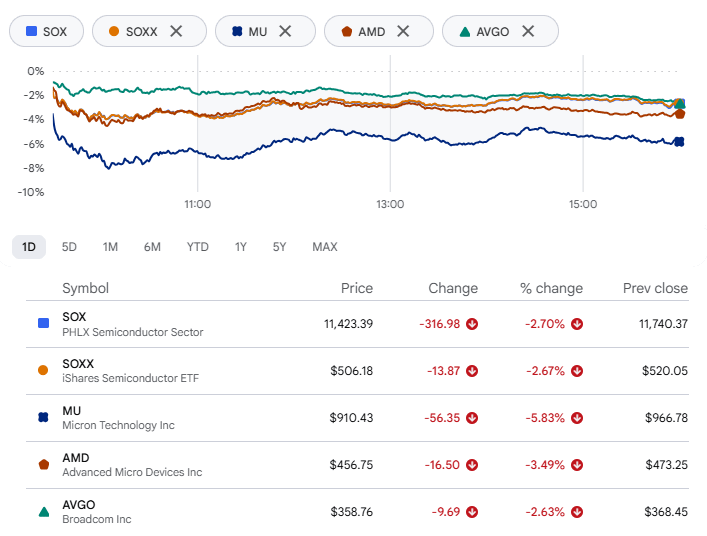
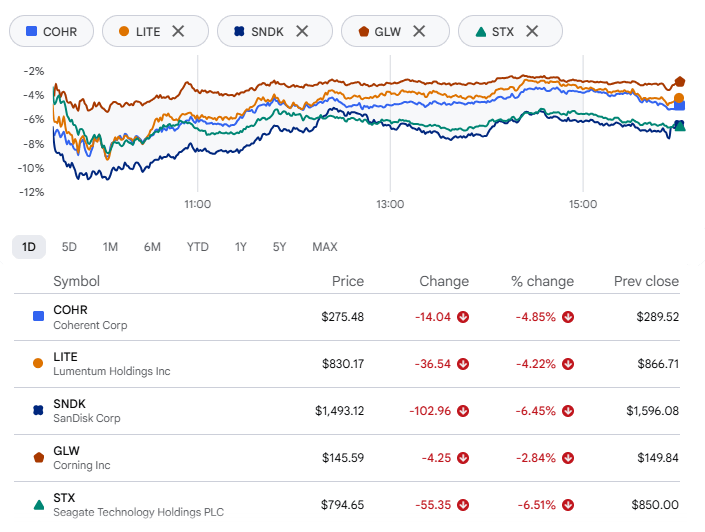
Semiconductors bore the brunt of it. The PHLX Semiconductor Index dropped another 2.7% Monday and has now shed close to a tenth of its value over the past week. The pressure compounded a separate, unrelated milestone already circulating on trading desks: the S&P 500's Shiller P/E ratio crossed 40 this month for only the second time since the metric's data begins in 1871 the first being the dot-com bubble feeding a broader debate over stretched valuations even as the AI trade wobbles. The individual moves were steep. Micron Technology shed 5.8%, while Advanced Micro Devices and Broadcom pulled back more than 3% and 2%, respectively. The iShares Semiconductor ETF (SOXX) slid 2.7%.
Other tech names fell alongside them. Coherent and Lumentum dropped more than 4% each, while Sandisk dropped 6%. Corning moved down almost 3%, and Seagate Technology declined 6.5%.
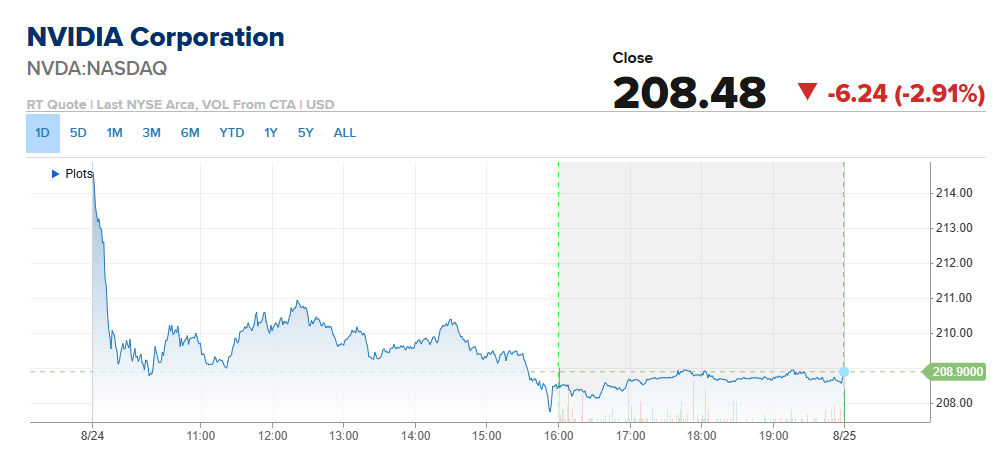
Nvidia extended its own losing streak to seven sessions ahead of Wednesday's earnings its longest run of declines since September 2022 as investors turned cautious ahead of a report that could set the tone for the AI trade heading into the fall.
Steel and Copper Touch Records, Then Give It Back
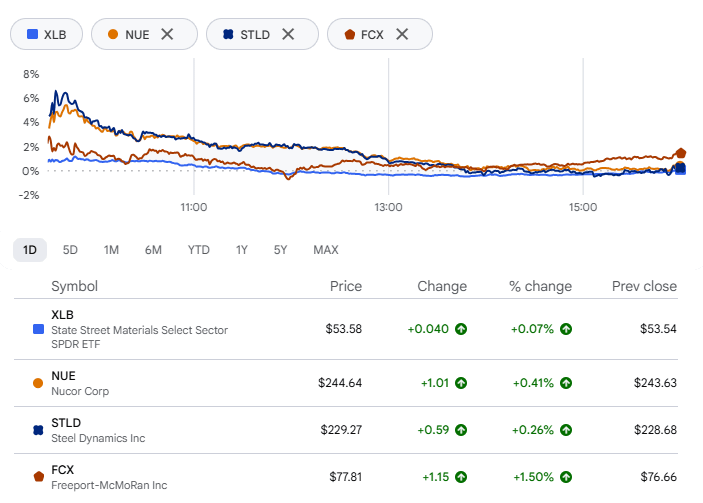
The State Street Materials Select Sector SPDR ETF (XLB) hit a new intraday all-time high early Monday its first since Feb. 12 before fading and closing in the red as the broader tape rolled over.
Steelmakers Nucor and Steel Dynamics still finished the day up 0.4% and 0.3% respectively, riding a wave of enthusiasm after trade talks between Washington and Ottawa collapsed last week. Copper miner Freeport-McMoRan added 1.5% and also touched a fresh intraday high, pacing a four-day winning streak of more than 16%.
Alibaba's AI Bill Comes Due
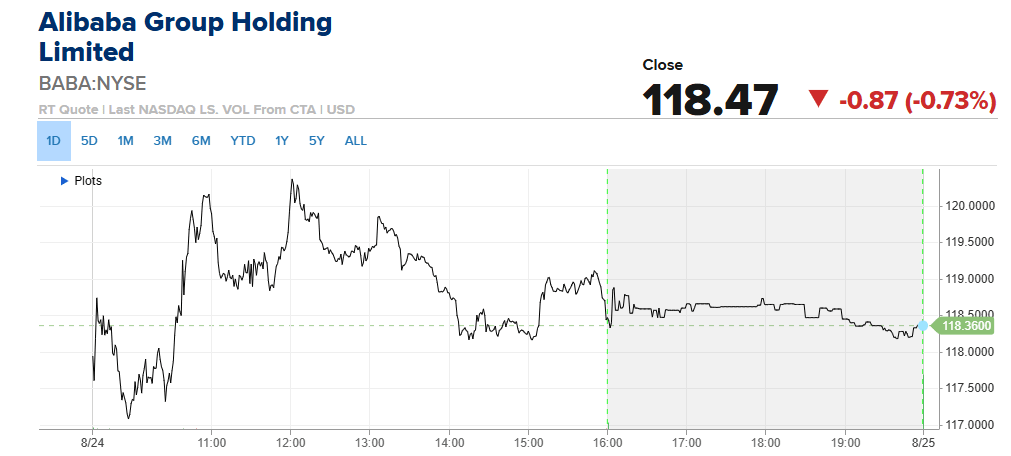
Alibaba shares plunged after the company priced a 10.2 billion dollars share placement 710 million new shares at an 8.4% discount to Friday's close to fund its artificial intelligence buildout. Hong Kong-listed shares fell as much as 10%, and the U.S.-listed stock closed down by a similar margin, compounding pressure on Chinese tech stocks already contending with a 75% drop in Alibaba's quarterly profit, driven by AI-related capital spending.
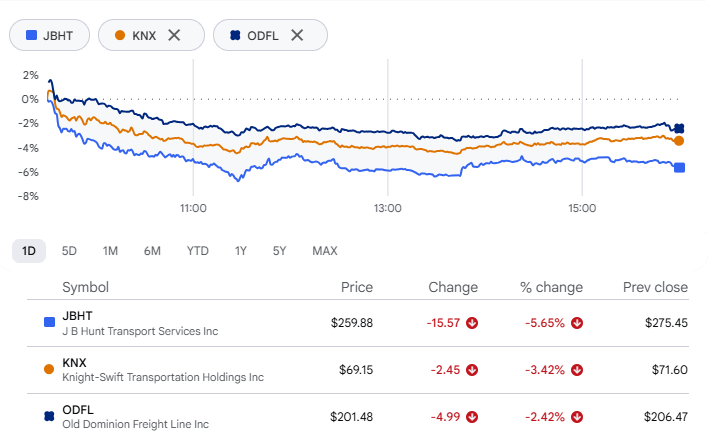
Trucking stocks tumbled after President Trump said the U.S. will raise tariffs on Canadian cars, trucks, auto parts and steel to 50%, starting Jan. 1, 2027 roughly doubling the current rate on non-U.S. vehicle content. J.B. Hunt Transport lost nearly 6%, while Knight-Swift fell more than 3%. Old Dominion Freight Line slid 2%.
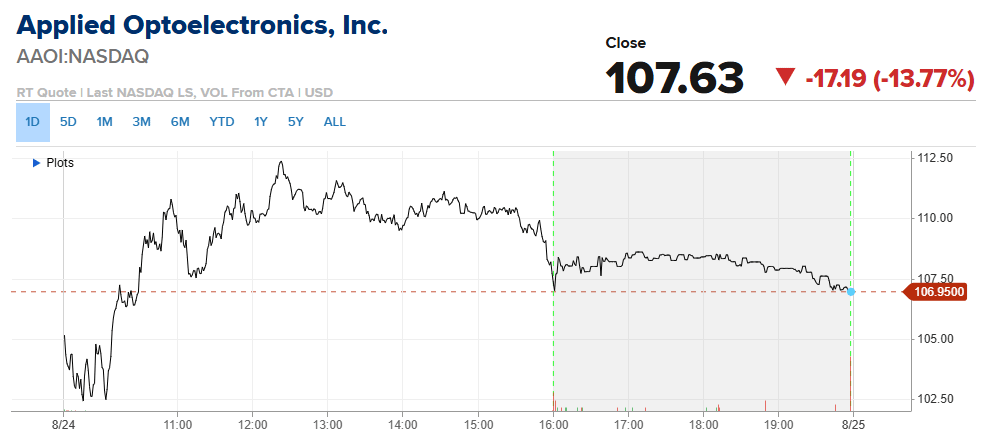
Applied Optoelectronics tumbled 11% after the optical components provider set up an at-the-market program allowing it to sell up to $600 million "from time to time" through Raymond James & Associates and Needham, according to a filing with the Securities and Exchange Commission.
Sector Analysis
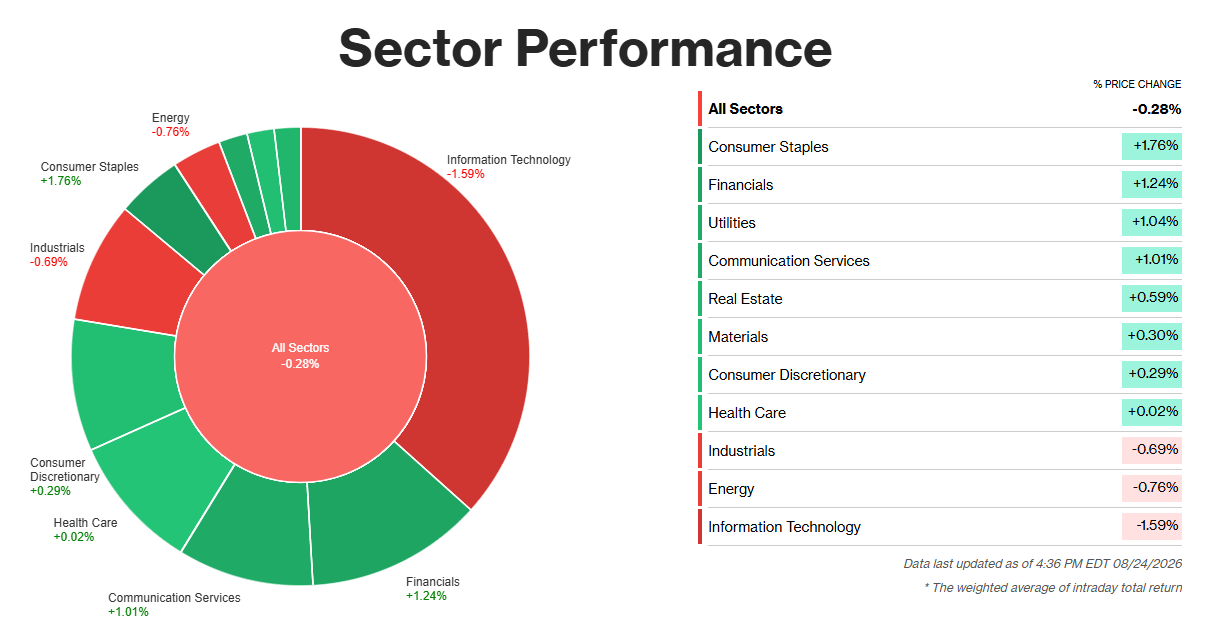
Tech weakness offset an otherwise firmer tape. Materials and other cyclical groups outperformed even as chip and AI-linked names dragged the headline indexes lower, a split that left the Dow the least tech-heavy of the three majors as the only major average to close in positive territory.
Best-Performing Sectors
Consumer Staples topped the board, up 1.76%, as investors leaned into household names just as semiconductor stocks buckled. Monster Beverage's advance gave the group tangible earnings support rather than pure defensive positioning: the energy drink maker gained 2.3% following record second-quarter 2026 earnings and strong international momentum. The sector has spent much of 2026 catching bids whenever technology wobbles, and Monday fit that pattern.
Financials rose 1.24%, helped by a pullback in Treasury yields. Yields fell after CNBC reported that the Treasury could tap its $1 trillion General Account to fund an expanded government bond buyback program, with the 10-year note dropping more than three basis points to 4.704%. Cheaper long-term borrowing costs eased pressure on bank balance sheets ahead of Fed Chair Kevin Warsh's first Jackson Hole keynote later this week.
Utilities gained 1.04% for a related reason. As a bond-proxy sector, utilities move inversely with long rates, and Monday's decline made dividend income relatively more attractive. Communication services and financials led the day's gainers while technology, energy, and industrials lagged, underscoring how directly the rate move shaped sector leadership.
Worst-Performing Sectors
Information Technology led the laggards, down 1.59%, as a semiconductor selloff intensified ahead of Nvidia's earnings Wednesday. SanDisk tumbled 10% on reports that Apple could shift memory sourcing to Chinese suppliers, Seagate lost 8% amid profit-taking after a multi-month rally, and Micron fell 7.5% amid broader sector weakness and rising bond yields. The moves point to valuation skepticism around AI infrastructure spending rather than any single company stumbling.
Energy slipped 0.76% despite geopolitical tension that would typically support crude. Oil prices fell Monday even after the U.S. rolled out its toughest-ever sanctions campaign against Iran, with WTI declining about 2.5% to $84.89 a barrel and Brent losing the same amount to $92.06. Supply and demand concerns outweighed the sanctions headline.
Industrials fell 0.69% on a narrower, company-specific catalyst. Trucking shares sold off after President Trump said auto tariffs on Canada would rise to 50% starting January 1, 2027, with J.B. Hunt losing 5%, Knight-Swift falling more than 3%, and Old Dominion sliding 2%, dragging the broader transport complex lower.