

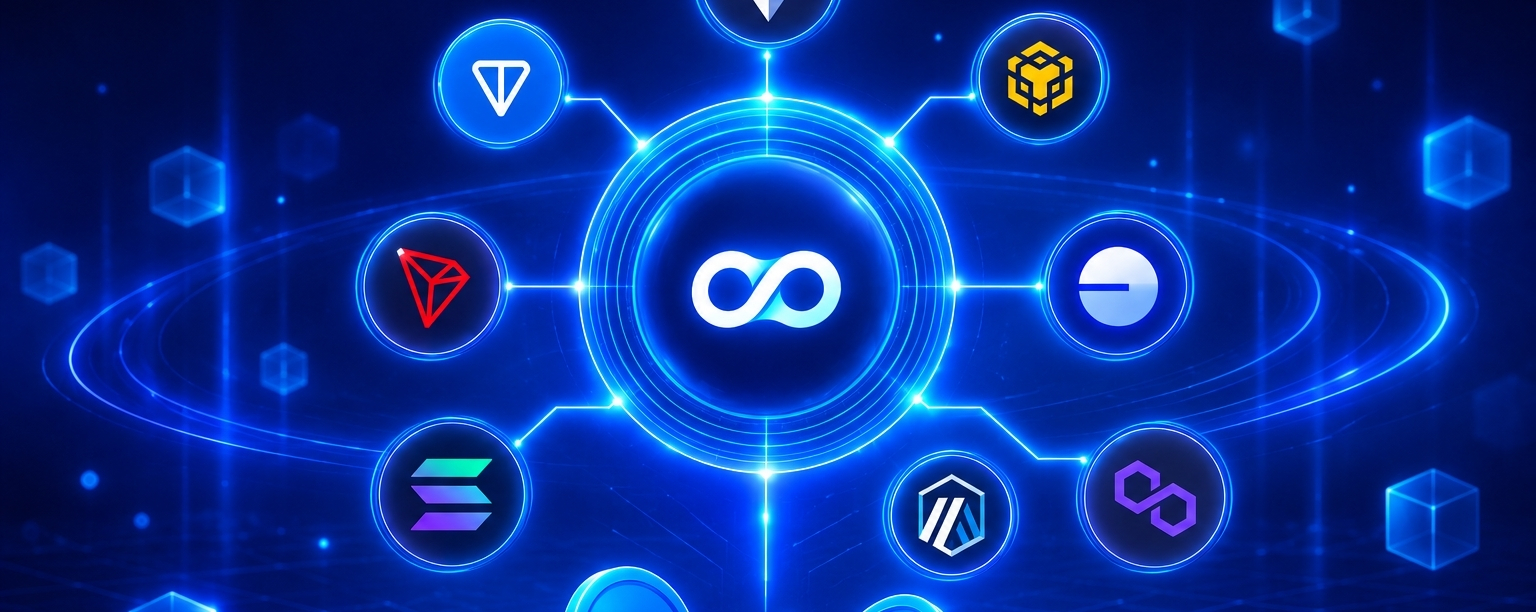

Comment Omniston réécrit la liquidité inter-chaînes
Pendant des années, l’interopérabilité inter-chaînes a été expliquée par un seul mot simple : des ponts (bridges).
Verrouiller des actifs sur un réseau, recevoir une représentation équivalente sur un autre, et faire confiance à l’infrastructure qui détient la liquidité. Même si ce modèle a aidé à relier différents écosystèmes, il a aussi introduit de la complexité, une liquidité fragmentée et des hypothèses de sécurité supplémentaires.
Omniston adopte une approche différente.
Plutôt que d’agir comme un autre pont (bridge) traditionnel, Omniston se concentre sur l’exécution inter-chaînes et l’acheminement de la liquidité. Au lieu d’exiger que les utilisateurs passent par un coffre de liquidité partagé, il connecte les utilisateurs avec des fournisseurs de liquidité indépendants appelés résolveurs.
Voici pourquoi ce modèle est intéressant.
1. Une liquidité concurrentielle via RFQ
Lorsqu’un utilisateur souhaite exécuter un échange inter-chaînes, Omniston peut demander des cotations exécutables à son réseau de résolveurs.
Les résolveurs se disputent pour exécuter la transaction en utilisant leur propre liquidité. Cela crée un marché concurrentiel où les fournisseurs de liquidité ont intérêt à proposer une exécution attrayante plutôt que de dépendre d’un seul pool centralisé.
Le résultat est un modèle qui traite la liquidité inter-chaînes davantage comme un marché d’exécution ouvert.
2. Un règlement atomique avec des HTLC
Le mécanisme de règlement est une autre partie importante de l’architecture.
En utilisant des contrats de verrouillage temporel hachés (HTLC), la transaction peut être sécurisée via des conditions cryptographiques et des time locks.
L’utilisateur verrouille l’actif source tandis que le résolveur s’engage à livrer l’actif destination. Un secret partagé permet le processus de règlement, tandis que le mécanisme de time-lock offre une voie de récupération si les conditions requises ne sont pas accomplies.
Cela réduit le besoin de s’appuyer sur un intermédiaire central pour coordonner les deux côtés de la transaction.
3. Une exécution prévisible
Les échanges inter-chaînes s’accompagnent souvent d’une incertitude concernant le slippage, la profondeur de liquidité et l’exécution.
Le modèle d’Omniston basé sur des résolveurs aborde cela différemment en travaillant avec des cotations exécutables.
Au lieu de simplement estimer ce qu’un pool pourrait fournir, l’utilisateur peut recevoir un montant défini auprès d’un résolveur. Si cette exécution exacte ne peut pas être réalisée, la transaction ne se dégrade pas simplement en un remplissage partiel inattendu.
Cela crée une expérience utilisateur beaucoup plus fluide.
4. Une liquidité sans pool unique
L’idée peut-être la plus importante est la séparation entre l’agrégation de liquidité et la centralisation de la liquidité.
Omniston peut connecter différents fournisseurs de liquidité à travers des écosystèmes, tout en permettant à ces fournisseurs de conserver le contrôle sur leur propre capital.
Cela crée un marché où la liquidité peut se faire concurrence pour les utilisateurs sans que tout le monde doive déposer des fonds dans un seul pool partagé.
Ce modèle pourrait devenir de plus en plus important à mesure que l’activité inter-chaînes s’étend sur des réseaux tels que les écosystèmes TON, TRON et EVM.
Le panorama global
L’infrastructure inter-chaînes va au-delà de la simple idée de transférer des actifs de la chaîne A vers la chaîne B.
Le défi principal, c’est l’exécution : comment les utilisateurs peuvent-ils accéder à la liquidité sur plusieurs réseaux tout en minimisant les hypothèses de confiance, les étapes inutiles et l’inefficacité du capital ?
L’approche d’Omniston est intéressante parce qu’elle traite ce problème comme un défi d’exécution et d’acheminement de liquidité, plutôt que comme un simple problème de ponts (bridges).
Si les réseaux de résolveurs continuent de se développer, on pourrait voir un avenir où les utilisateurs n’ont pas besoin de se demander de quel réseau provient leur liquidité. Ils choisissent simplement ce qu’ils veulent échanger, tandis que les fournisseurs de liquidité font gérer l’exécution en coulisses.
Cela pourrait rendre la DeFi inter-chaînes moins fragmentée et beaucoup plus semblable à un seul marché de liquidité interconnecté.
La prochaine évolution de l’interopérabilité ne concerne peut-être pas la construction de ponts plus grands. Il s’agira peut-être de construire des couches d’exécution plus intelligentes.
Et Omniston fait un pas intéressant dans cette direction.