#dusk $DUSK @Dusk La plupart des projets crypto finissent par se présenter comme « favorables à la réglementation ». Très peu citent les cadres concrets sur lesquels ils se construisent.
Dusk le fait.
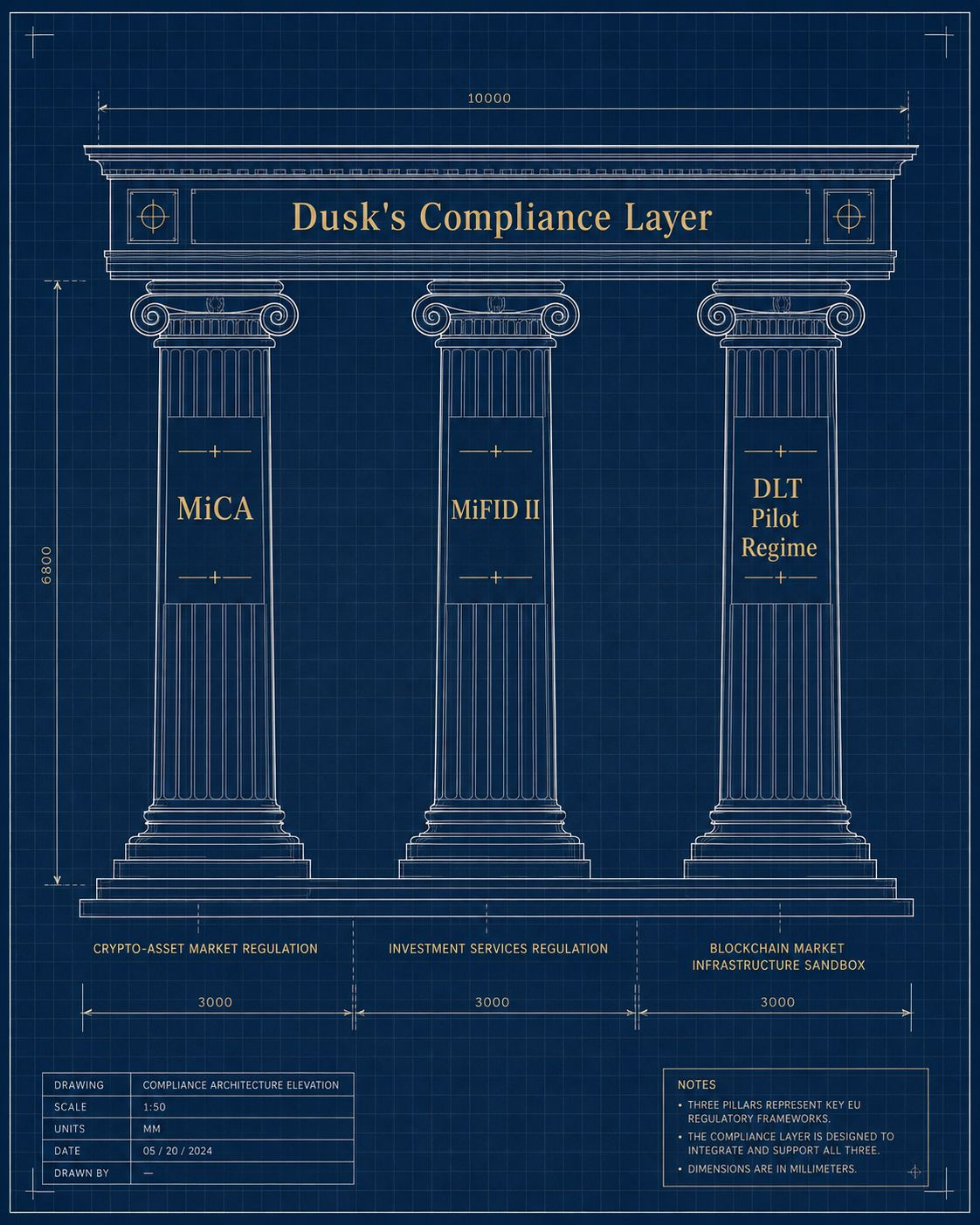
Son positionnement réglementaire renvoie à trois cadres européens à plusieurs reprises : MiCA, qui encadre les marchés d’actifs crypto ; MiFID II, qui couvre les services d’investissement et les instruments financiers ; et le DLT Pilot Regime, le cadre de l’UE pour expérimenter une infrastructure de marché fondée sur la blockchain.
Cette précision peut s’interpréter de deux manières très différentes.
La lecture optimiste, c’est que Dusk a fait ses devoirs. Si l’objectif est de faire entrer en chaîne des titres et d’autres actifs réglementés, des promesses vagues concernant « la conformité » ne suffisent pas. Il faut comprendre comment l’émission, la négociation, la divulgation et le règlement s’insèrent dans le droit existant.
La lecture la plus sceptique, elle, consiste à dire que citer MiCA, MiFID II et le DLT Pilot Regime relève aussi d’un puissant marketing. Trois acronymes réglementaires aisément reconnaissables donnent à une blockchain un air prêt pour les institutions, bien avant que des observateurs extérieurs puissent mesurer dans quelle mesure cette compatibilité se traduit réellement par une adoption.
Vu de l’extérieur, ces deux explications peuvent presque se ressembler.
Il y a un autre arbitrage.
La thèse réglementaire de Dusk est très fortement européenne.
C’est un atout. Construire en profondeur à partir d’un environnement réglementaire relativement défini peut être plus réaliste que de prétendre qu’un seul modèle de conformité fonctionne partout.
Mais c’est aussi pari régional.
Les États-Unis disposent d’une structure réglementaire très différente, et les marchés asiatiques varient considérablement en matière d’autorisations, de classification des valeurs mobilières et de règles relatives aux actifs numériques. Un système qui s’inscrit sans heurts dans le cadre européen pourrait néanmoins nécessiter de lourdes adaptations ailleurs.
La vraie question, donc, est de savoir si l’Europe devient le tremplin de Dusk pour une adoption institutionnelle mondiale — ou une architecture réglementaire difficile à exporter.
Et la réglementation elle-même n’est pas une infrastructure permanente. Les cadres sont modifiés, interprétés et réécrits.
Si des règles comme MiCA évoluent plus tard, qui absorbera finalement ce risque — le protocole, les émetteurs qui s’appuient dessus, ou les utilisateurs qui détiennent les actifs ?
Dusk le fait.
Son positionnement réglementaire renvoie à trois cadres européens à plusieurs reprises : MiCA, qui encadre les marchés d’actifs crypto ; MiFID II, qui couvre les services d’investissement et les instruments financiers ; et le DLT Pilot Regime, le cadre de l’UE pour expérimenter une infrastructure de marché fondée sur la blockchain.
Cette précision peut s’interpréter de deux manières très différentes.
La lecture optimiste, c’est que Dusk a fait ses devoirs. Si l’objectif est de faire entrer en chaîne des titres et d’autres actifs réglementés, des promesses vagues concernant « la conformité » ne suffisent pas. Il faut comprendre comment l’émission, la négociation, la divulgation et le règlement s’insèrent dans le droit existant.
La lecture la plus sceptique, elle, consiste à dire que citer MiCA, MiFID II et le DLT Pilot Regime relève aussi d’un puissant marketing. Trois acronymes réglementaires aisément reconnaissables donnent à une blockchain un air prêt pour les institutions, bien avant que des observateurs extérieurs puissent mesurer dans quelle mesure cette compatibilité se traduit réellement par une adoption.
Vu de l’extérieur, ces deux explications peuvent presque se ressembler.
Il y a un autre arbitrage.
La thèse réglementaire de Dusk est très fortement européenne.
C’est un atout. Construire en profondeur à partir d’un environnement réglementaire relativement défini peut être plus réaliste que de prétendre qu’un seul modèle de conformité fonctionne partout.
Mais c’est aussi pari régional.
Les États-Unis disposent d’une structure réglementaire très différente, et les marchés asiatiques varient considérablement en matière d’autorisations, de classification des valeurs mobilières et de règles relatives aux actifs numériques. Un système qui s’inscrit sans heurts dans le cadre européen pourrait néanmoins nécessiter de lourdes adaptations ailleurs.
La vraie question, donc, est de savoir si l’Europe devient le tremplin de Dusk pour une adoption institutionnelle mondiale — ou une architecture réglementaire difficile à exporter.
Et la réglementation elle-même n’est pas une infrastructure permanente. Les cadres sont modifiés, interprétés et réécrits.
Si des règles comme MiCA évoluent plus tard, qui absorbera finalement ce risque — le protocole, les émetteurs qui s’appuient dessus, ou les utilisateurs qui détiennent les actifs ?