#termmax The liquidation mechanism most DeFi lending markets use is the exact thing that makes bad days worse, and TermMax built around that on purpose. ⚠️
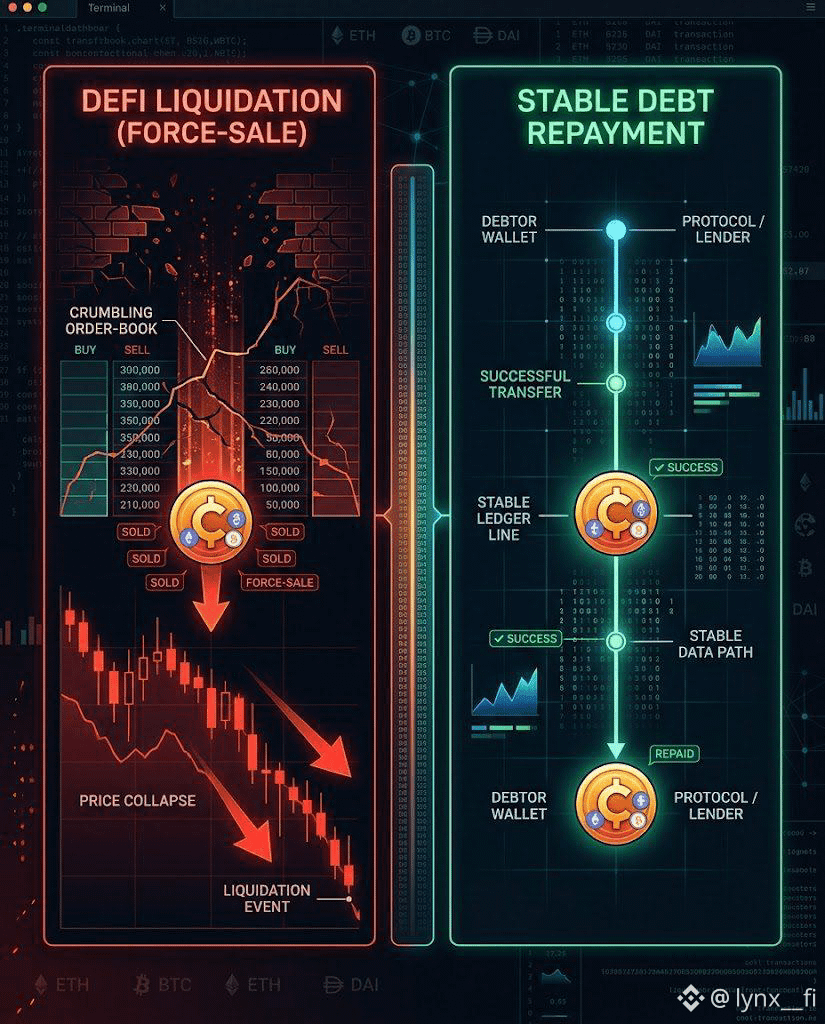
Standard liquidation: your position gets flagged, a liquidator dumps your collateral on the open market to cover the debt. In a low-liquidity or high-volatility moment, that dump eats slippage on the way down — and if enough positions liquidate at once, each sale pushes price further against the next liquidation in line. 📉🔁 That's the cascade mechanic behind a lot of the ugliest DeFi liquidation events.
TermMax's alternative is called physical delivery: in conditions of significant volatility or low liquidity, collateral gets delivered directly to the lender as compensation instead of being force-sold into a thin order book. 🔒 No forced market dump, no slippage cascade contributing to the exact price move that triggered the liquidation in the first place.
Rough illustration of why that matters: if a normal liquidation realizes collateral at, say, 8% slippage in a thin market, that's an 8% loss eaten by the system on top of the actual price move — pure friction, not risk. Physical delivery is designed to route around that friction by settling in the asset itself rather than whatever price the open market happens to offer at that exact moment. 🧮
Doesn't mean risk disappears — the lender now holds a different asset than they lent out, at a moment volatile enough to trigger this in the first place. It just relocates the risk instead of adding market-impact friction on top of it.
🔄Would you rather receive the collateral directly in a bad scenario, or take your chances with a market-sold liquidation?
🤔 Has anyone here actually been on the receiving end of a physical delivery event, lender or borrower side?
@TermMax #TermMax
Standard liquidation: your position gets flagged, a liquidator dumps your collateral on the open market to cover the debt. In a low-liquidity or high-volatility moment, that dump eats slippage on the way down — and if enough positions liquidate at once, each sale pushes price further against the next liquidation in line. 📉🔁 That's the cascade mechanic behind a lot of the ugliest DeFi liquidation events.
TermMax's alternative is called physical delivery: in conditions of significant volatility or low liquidity, collateral gets delivered directly to the lender as compensation instead of being force-sold into a thin order book. 🔒 No forced market dump, no slippage cascade contributing to the exact price move that triggered the liquidation in the first place.
Rough illustration of why that matters: if a normal liquidation realizes collateral at, say, 8% slippage in a thin market, that's an 8% loss eaten by the system on top of the actual price move — pure friction, not risk. Physical delivery is designed to route around that friction by settling in the asset itself rather than whatever price the open market happens to offer at that exact moment. 🧮
Doesn't mean risk disappears — the lender now holds a different asset than they lent out, at a moment volatile enough to trigger this in the first place. It just relocates the risk instead of adding market-impact friction on top of it.
🔄Would you rather receive the collateral directly in a bad scenario, or take your chances with a market-sold liquidation?
🤔 Has anyone here actually been on the receiving end of a physical delivery event, lender or borrower side?
@TermMax #TermMax