
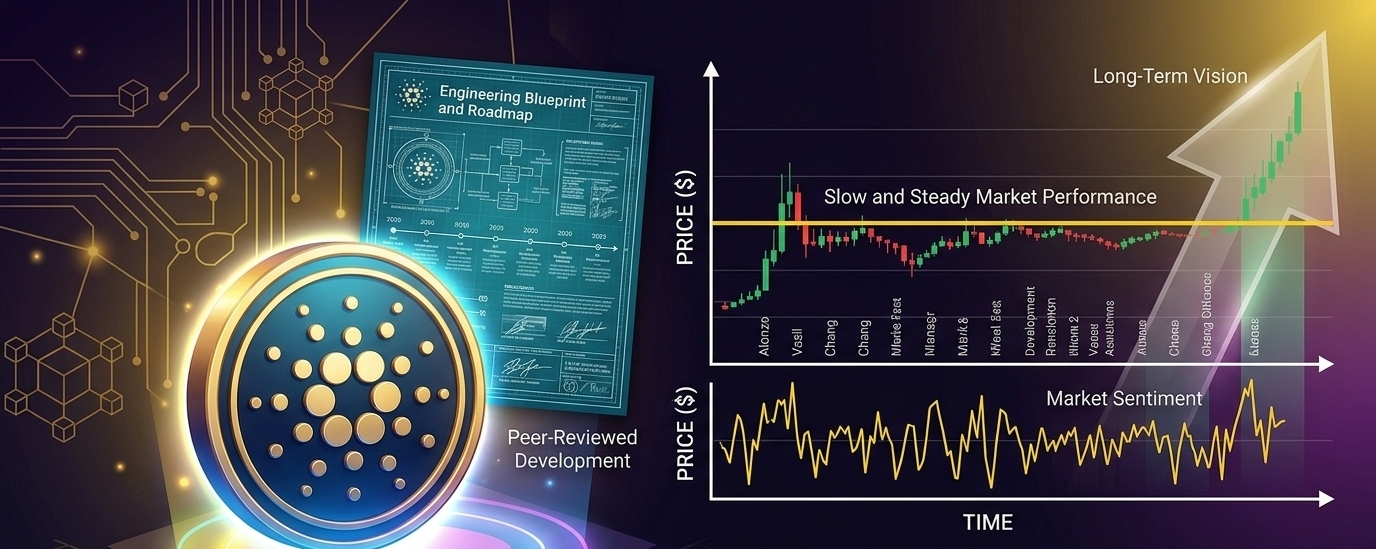
# Cardano's Slow-and-Steady Approach Still Divides the Market
Cardano has spent years building a reputation as crypto's most academically rigorous chain — peer-reviewed research, formal verification methods, and a deliberately cautious rollout process. In 2026, that approach continues to draw both praise and criticism in roughly equal measure.
The praise: Cardano's development philosophy has produced a network with a strong security track record and a governance structure — including on-chain voting through its Voltaire-era tooling — that genuinely decentralizes decision-making rather than leaving it with a core team. For a project that's weathered multiple bear markets without a major protocol failure, that stability counts for something.
The criticism: that same caution has repeatedly cost Cardano first-mover advantage. Smart contract functionality arrived years after competitors, and DeFi TVL on the network remains a fraction of what chains like Solana or even newer L2s command. "Building it right" and "building it fast enough to matter" have been in tension for most of Cardano's history, and the market has generally rewarded speed.
Where Cardano continues to find real traction is in specific verticals — supply chain tracking, identity verification, and partnerships in emerging markets where its emphasis on formal correctness and lower resource requirements is a genuine selling point rather than an academic nicety.
Whether that's enough to close the gap with faster-moving L1s remains the open question that's followed ADA for years.

v

i

ce. DYOR.*