À quoi ressemble réellement un bon contrepartiste
La plupart des guides de sécurité vous demandent de mémoriser des signaux d’alerte. Mais la reconnaissance des schémas fonctionne mieux à l’envers. Au lieu de chercher à quoi ressemble une mauvaise transaction, demandez-vous à quoi ressemble une transaction modèle, puis traitez toute déviation comme un signal pour ralentir.
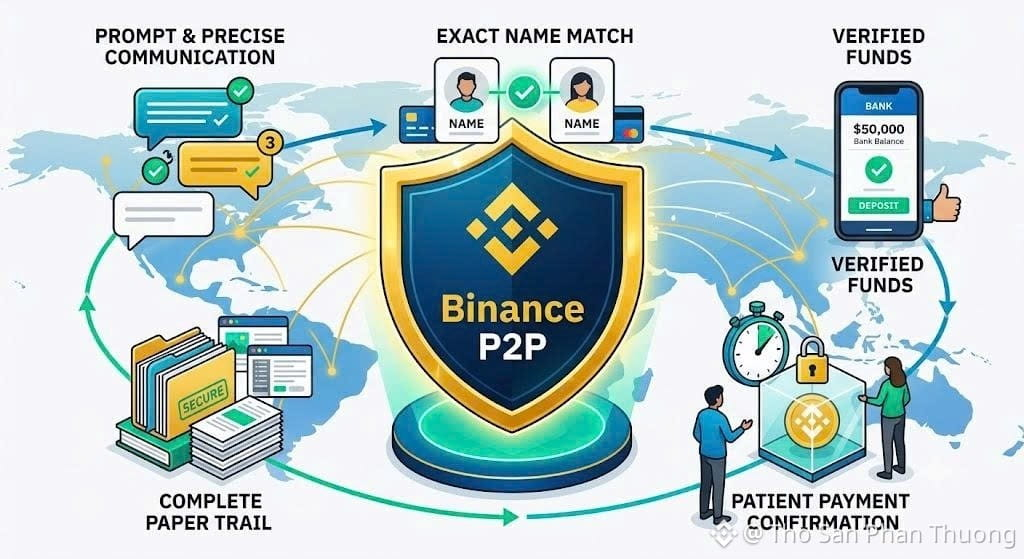
Imaginez une commande Binance P2P parfaitement exécutée, de l’ouverture à la clôture. Dès que le chat s’ouvre, votre contrepartie répond avec des détails pertinents pour la commande elle-même, et non avec des phrases génériques prêtes à l’emploi. Elle confirme le montant exact et fait référence à la note, sans que vous ayez besoin de le demander. Cette clarté compte : les escrocs s’appuient souvent sur des réponses vagues et retardées pour créer juste assez de confusion afin qu’un faux reçu passe inaperçu. Une contrepartie réactive et précise démontre déjà sa bonne foi avant qu’un seul dong ne soit déplacé.
Ensuite vient la vérification. Dans une transaction propre, le nom figurant sur le virement bancaire entrant correspond exactement, caractère pour caractère, au nom du compte Binance enregistré. Cette concordance stricte des noms est votre première ligne de vérification de la contrepartie, et elle ne prend que quelques secondes à comparer avec les détails de la commande à l’écran. Une transaction modèle ne vous demandera jamais de passer cette étape, ni de faire confiance à une capture d’écran à la place.
Puis vient la partie que les escrocs veulent le plus faire aller vite : la confirmation de paiement. Dans une vraie transaction, les deux parties attendent calmement pendant que vous ouvrez votre application bancaire réelle et confirmez que les fonds se sont bien libérés et ont été crédités, pas seulement que la notification est apparue. Le séquestre (escrow) fait ici son travail : il conserve les crypto en toute sécurité pour qu’aucune des deux parties n’ait à agir sous la panique. Aucune pression de décompte, aucune affirmation sur un système retardé, aucune urgence à libérer quoi que ce soit avant que vous ayez vérifié vous-même le dépôt.
Enfin, une transaction modèle se termine avec un historique complet pour les deux parties : conversation (chat) intacte, identifiant de transaction enregistré, captures d’écran sauvegardées. Rien à cacher, rien à supprimer en urgence.
Quand une vraie transaction s’écarte de ce tableau, cette divergence est votre donnée clé. Ouvrez le chat, utilisez Appeal, ou contactez le support Binance avant de libérer quoi que ce soit.
@Binance Vietnam #BinanceP2PAnToan
La plupart des guides de sécurité vous demandent de mémoriser des signaux d’alerte. Mais la reconnaissance des schémas fonctionne mieux à l’envers. Au lieu de chercher à quoi ressemble une mauvaise transaction, demandez-vous à quoi ressemble une transaction modèle, puis traitez toute déviation comme un signal pour ralentir.
Imaginez une commande Binance P2P parfaitement exécutée, de l’ouverture à la clôture. Dès que le chat s’ouvre, votre contrepartie répond avec des détails pertinents pour la commande elle-même, et non avec des phrases génériques prêtes à l’emploi. Elle confirme le montant exact et fait référence à la note, sans que vous ayez besoin de le demander. Cette clarté compte : les escrocs s’appuient souvent sur des réponses vagues et retardées pour créer juste assez de confusion afin qu’un faux reçu passe inaperçu. Une contrepartie réactive et précise démontre déjà sa bonne foi avant qu’un seul dong ne soit déplacé.
Ensuite vient la vérification. Dans une transaction propre, le nom figurant sur le virement bancaire entrant correspond exactement, caractère pour caractère, au nom du compte Binance enregistré. Cette concordance stricte des noms est votre première ligne de vérification de la contrepartie, et elle ne prend que quelques secondes à comparer avec les détails de la commande à l’écran. Une transaction modèle ne vous demandera jamais de passer cette étape, ni de faire confiance à une capture d’écran à la place.
Puis vient la partie que les escrocs veulent le plus faire aller vite : la confirmation de paiement. Dans une vraie transaction, les deux parties attendent calmement pendant que vous ouvrez votre application bancaire réelle et confirmez que les fonds se sont bien libérés et ont été crédités, pas seulement que la notification est apparue. Le séquestre (escrow) fait ici son travail : il conserve les crypto en toute sécurité pour qu’aucune des deux parties n’ait à agir sous la panique. Aucune pression de décompte, aucune affirmation sur un système retardé, aucune urgence à libérer quoi que ce soit avant que vous ayez vérifié vous-même le dépôt.
Enfin, une transaction modèle se termine avec un historique complet pour les deux parties : conversation (chat) intacte, identifiant de transaction enregistré, captures d’écran sauvegardées. Rien à cacher, rien à supprimer en urgence.
Quand une vraie transaction s’écarte de ce tableau, cette divergence est votre donnée clé. Ouvrez le chat, utilisez Appeal, ou contactez le support Binance avant de libérer quoi que ce soit.
@Binance Vietnam #BinanceP2PAnToan