

When you look at , what stands out is not just that it is a Layer 1, but how it approaches adoption. Many blockchains begin with technical goals like higher throughput or lower latency. Vanar seems to start from a different place. The design feels centered on how people actually use digital platforms, then works backward into the technology needed to support that experience. No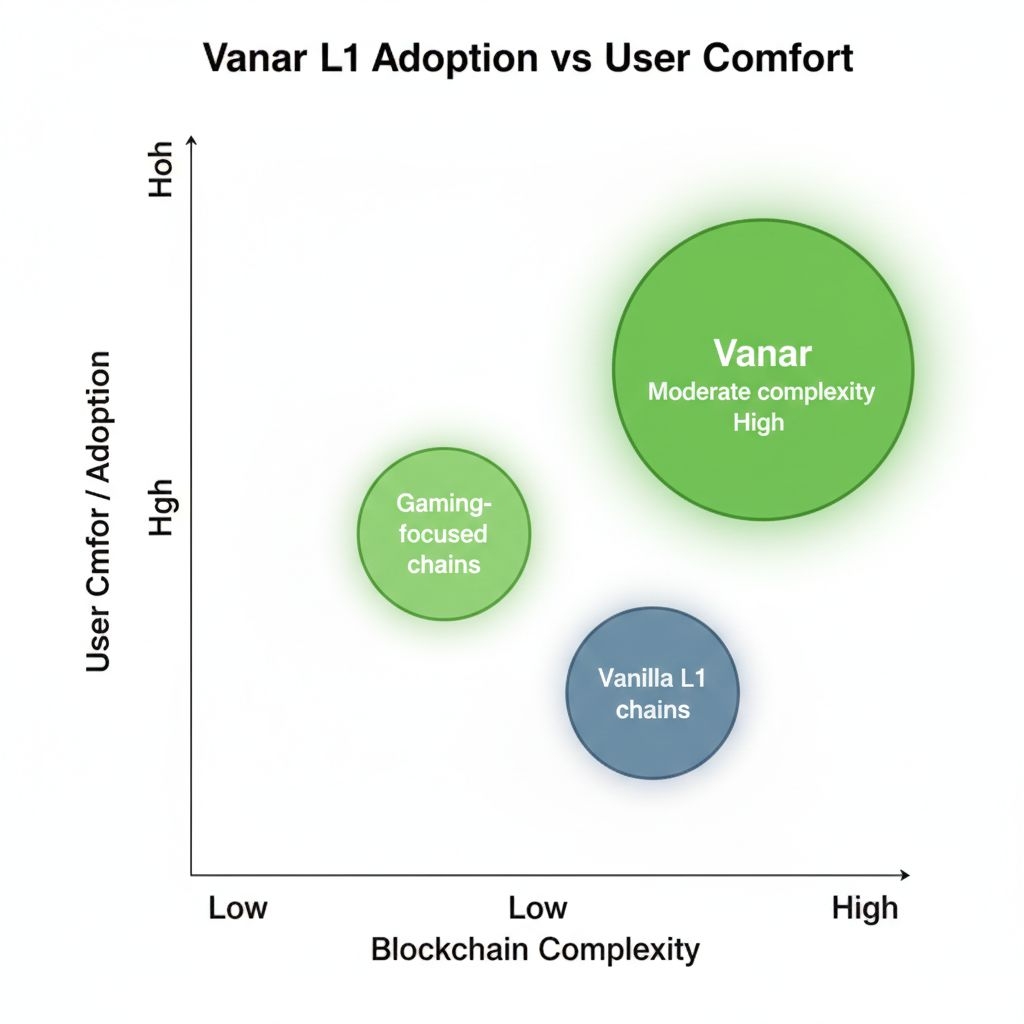
That shift in perspective makes a difference. Instead of treating users like engineers who must adapt to complex systems, the goal appears to be making blockchain services blend into familiar digital environments.
From to a Dedicated Layer 1
Vanar did not begin as a traditional infrastructure project. Its origins trace back to Virtua, a platform focused on digital collectibles, gaming, and interactive online spaces. The transition into a standalone blockchain reflected a need for more control over performance and scalability. Moving from the earlier TVK token into VANRY marked a broader shift toward building a full network rather than just applications.
That background still shapes the project. Teams that come from entertainment platforms tend to think differently about friction. Small delays or complicated steps can push users away quickly, so the technology has to stay in the background while the experience stays smooth.
Infrastructure Aimed at Practical Deploymen.
As a Layer 1 network, Vanar handles its own consensus and transaction processing. This gives it flexibility in how the chain evolves and how performance can be tuned over time. The focus is not only on speed, but on keeping transactions predictable and affordable enough for frequent activity.
Several technical features support that direction:
• Quick confirmation times designed for interactive applications
• Low transaction costs suited for frequent on chain activity
• Compatibility with tools from ecosystems
• Support for developers building consumer facing applications
These elements lower the barrier for teams that want to deploy without rebuilding everything from the ground up.
Ecosystems Built Around User Activity
Part of Vanar’s identity comes from environments where users interact regularly rather than occasionally. Gaming platforms, virtual spaces, and digital ownership systems all require networks that can handle repeated small actions without slowing down or becoming expensive
In these settings, blockchain becomes part of the infrastructure rather than the focus. Users often interact with assets or experiences first, while the chain operates quietly underneath. That approach can make adoption feel more natural because people engage with the product rather than the technology itself.
The Role of VANRY
The VANRY token acts as the operational layer of the network. It is used for transaction fees and supports network activity through staking and participation incentives. As the ecosystem develops, the token is expected to remain tied to usage across applications and services built on the chain.
Distribution and staking mechanisms are structured to support validators and encourage ongoing participation. This helps maintain the network while also aligning incentives between users and infrastructure providers.
Adoption as the Long Term Focus
A lot of blockchain projects compete on headline metrics. Faster speeds. Higher throughput. Bigger numbers. Vanar’s approach seems more grounded in whether people actually use what gets built.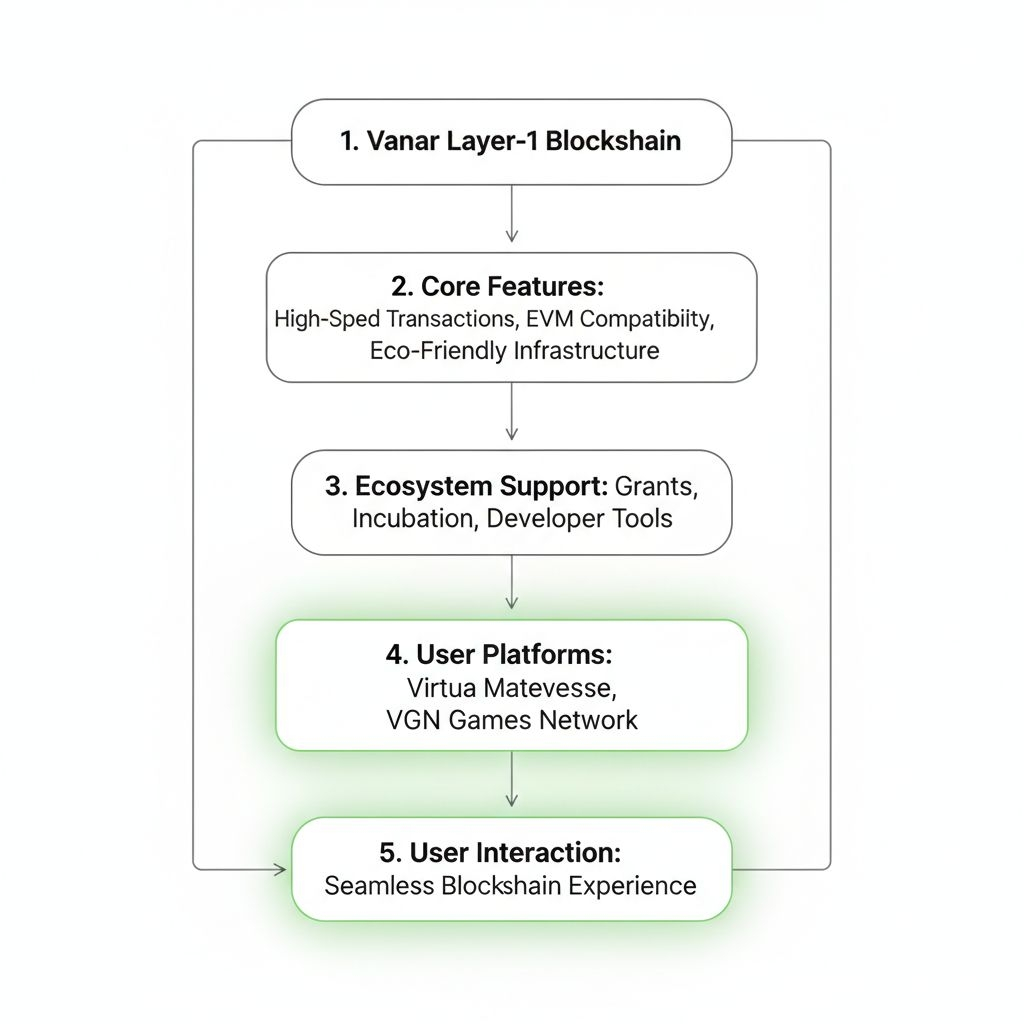
By focusing on environments where digital interaction already exists, the network tries to fit into habits people already have. Instead of requiring users to adapt to blockchain, the goal is to make blockchain adapt to users.
That direction may not always be the loudest in the market, but it reflects a practical idea. Technology tends to last longer when it solves real problems instead of only improving theoretical performance.
